
A neuropatia motora hereditária distal que começa na idade adulta jovem é uma doença genética rara e recessiva que afeta os nervos que controlam os movimentos, principalmente nas extremidades do corpo. Ela se caracteriza por fraqueza muscular que piora lentamente, músculos flácidos (hipotonia) e perda de massa muscular nas pernas, que é mais perceptível nas partes mais distantes (como os pés). Isso pode levar à paralisia e à perda dos reflexos dos tendões (como o do joelho). Outros sintomas que podem surgir incluem o pé cavo (pé com a curvatura da sola muito acentuada) e uma leve dificuldade ou rouquidão na voz (disfonia leve). Os braços são menos afetados em comparação.
Introdução
O que você precisa saber de cara
A neuropatia motora hereditária distal que começa na idade adulta jovem é uma doença genética rara e recessiva que afeta os nervos que controlam os movimentos, principalmente nas extremidades do corpo. Ela se caracteriza por fraqueza muscular que piora lentamente, músculos flácidos (hipotonia) e perda de massa muscular nas pernas, que é mais perceptível nas partes mais distantes (como os pés). Isso pode levar à paralisia e à perda dos reflexos dos tendões (como o do joelho). Outros sintomas que podem surgir incluem o pé cavo (pé com a curvatura da sola muito acentuada) e uma leve dificuldade ou rouquidão na voz (disfonia leve). Os braços são menos afetados em comparação.
Escala de raridade
<1/50kMuito rara
1/20kRara
1/10kPouco freq.
1/5kIncomum
1/2k
Encontrou um erro ou informação desatualizada? Sugira uma correção →
Entender a doença
Do básico ao detalhe, leia no seu ritmo
Preparando trilha educativa...
Sinais e sintomas
O que aparece no corpo e com que frequência cada sintoma acontece
Partes do corpo afetadas
+ 8 sintomas em outras categorias
Características mais comuns
Os sintomas variam de pessoa para pessoa. Abaixo estão as 12 características clínicas mais associadas, ordenadas por frequência.
Linha do tempo da pesquisa
Encontrou um erro ou informação desatualizada? Sugira uma correção →
Genética e causas
O que está alterado no DNA e como passa nas famílias
Genes associados
2 genes identificados com associação a esta condição. Padrão de herança: Autosomal recessive.
Curadoria gene-doença
fontes oficiaisFunctions as a co-chaperone, regulating the substrate binding and activating the ATPase activity of chaperones of the HSP70/heat shock protein 70 family (PubMed:22219199, PubMed:7957263). In parallel, also contributes to the ubiquitin-dependent proteasomal degradation of misfolded proteins (PubMed:15936278, PubMed:21625540). Thereby, may regulate the aggregation and promote the functional recovery of misfolded proteins like HTT, MC4R, PRKN, RHO and SOD1 and be crucial for many biological process
CytoplasmNucleusEndoplasmic reticulum membrane
Neuronopathy, distal hereditary motor, autosomal recessive 5
A form of distal hereditary motor neuronopathy, a heterogeneous group of neuromuscular disorders caused by selective degeneration of motor neurons in the anterior horn of the spinal cord, without sensory deficit in the posterior horn. The overall clinical picture consists of a classical distal muscular atrophy syndrome in the legs without clinical sensory loss. The disease starts with weakness and wasting of distal muscles of the anterior tibial and peroneal compartments of the legs. Later on, weakness and atrophy may expand to the proximal muscles of the lower limbs and/or to the distal upper limbs. HMNR5 is characterized by young adult onset of slowly progressive distal muscle weakness and atrophy resulting in gait impairment and loss of reflexes.
Promotes matrix assembly (By similarity). Involved in the organization of skeletal muscles and in the formation of neuromuscular junctions (Probable)
Secreted, extracellular space, extracellular matrix, basement membrane
Neuronopathy, hereditary motor, autosomal recessive 7
An autosomal recessive, neuromyopathic disorder that manifests in childhood or adulthood with proximal and distal muscle weakness predominantly of the lower limbs. Affected individuals have difficulty climbing stairs and problems standing on the heels. Most patients have foot deformities, and some may have leg muscle atrophy. Muscle biopsy and electrophysiologic studies are consistent with both a myopathic process and an axonal motor neuropathy.
Variantes genéticas (ClinVar)
226 variantes patogênicas registradas no ClinVar.
Vias biológicas (Reactome)
2 vias biológicas associadas aos genes desta condição.
Diagnóstico
Os sinais que médicos procuram e os exames que confirmam
Tratamento e manejo
Remédios, cuidados de apoio e o que precisa acompanhar
Onde tratar no SUS
Hospitais de referência no Brasil e o protocolo oficial do SUS (PCDT)
🇧🇷 Atendimento SUS — Neuropatia motora hereditária distal de início no adulto jovem
Selecione um estado ou use sua localização para ver resultados.
Dados de DATASUS/CNES, SBGM, ABNeuro e Ministério da Saúde. Sempre confirme a disponibilidade diretamente com o estabelecimento.
Pesquisa ativa
Ensaios clínicos abertos e novidades científicas recentes
Pesquisa e ensaios clínicos
Nenhum ensaio clínico registrado para esta condição.
Publicações mais relevantes
New phenotype of DCTN1-related spectrum: early-onset dHMN plus congenital foot deformity.
To describe the clinical and genetic features of two patients with different phenotypes due to various Dynactin 1 (DCTN1) gene mutations and further explore the phenotype-genotype relationship. Patient 1 is a 23-year-old man with congenital foot deformity and life-long distal muscle weakness and atrophy. Patient 2 is a 48-year-old woman with adult-onset progressive weakness, lower limbs atrophy, and pyramid bundle signs. Electrophysiology test showed normal nerve conduction velocity of both patients and neurogenic changes in needle electromyography. Open sural nerve biopsy for Patient 1 showed slight loss of myelinated nerve fibers. Both patients were performed with whole-exome sequencing followed by functional study of identified variants. Two mutations in DCTN1 gene were identified in Patient 1 (c.626dupC) and Patient 2 (c.3823C>T), respectively. In vitro, the wild type mostly located in cytoplasm and colocalized with α-tubulin. However, c.626dupC tended to be trapped into nuclear and the c.3823C>T formed cytoplasmic aggregates, both losing colocalization with α-tubulin. Western blotting showed a truncated mutant with less molecular weight of c.626dupC was expressed. We identify two novel DCTN1 mutations causing different phenotypes: (1) early-onset distal hereditary motor neuropathy plus congenital foot malformation and (2) amyotrophic lateral sclerosis, respectively. We provide the initial evidence that foot developmental deficiency probably arises from subcellular localizing abnormality of Dynactin 1, revealing DCTN1-related spectrum is still expanding.
A novel WARS mutation (p.Asp314Gly) identified in a Chinese distal hereditary motor neuropathy family.
Distal hereditary motor neuropathy (dHMN) is a clinically and genetically heterogeneous group of inherited neuropathies characterized by distal limb muscle wasting and weakness with no or minimal sensory abnormalities. To investigate the clinical and genetic features of dHMN caused by WARS mutations in mainland China, we performed Sanger sequencing of the coding and untranslated region (UTR) regions of WARS in 160 unresolved dHMN and Charcot-Marie-Tooth (CMT) index patients. We detected a novel heterozygous variant c.941A>G (p.Asp314Gly) of WARS in an index patient from an autosomal dominant dHMN family including five affected members over three generations. The variant completely co-segregates with the dHMN phenotype in the family, and it was classified as likely pathogenic according to the American College of Medical Genetics and Genomics standards and guidelines. The clinical features included juvenile to adult onset (15-23 years), distal wasting and weakness, minimal sensory disturbance and length-dependent motor axonal degeneration with CMT examination score ranging from 6 to 10. Our report further confirms the role of WARS in dHMN and indicates that the variant c.941A>G (p.Asp314Gly) of WARS is related to a mild to moderate affected and later onset phenotype of dHMN.
Adult-onset autosomal dominant spastic paraplegia linked to a GTPase-effector domain mutation of dynamin 2.
Hereditary Spastic Paraplegia (HSP) represents a large group of clinically and genetically heterogeneous disorders linked to over 70 different loci and more than 60 recognized disease-causing genes. A heightened vulnerability to disruption of various cellular processes inherent to the unique function and morphology of corticospinal neurons may account, at least in part, for the genetic heterogeneity. Whole exome sequencing was utilized to identify candidate genetic variants in a four-generation Siberian kindred that includes nine individuals showing clinical features of HSP. Segregation of candidate variants within the family yielded a disease-associated mutation. Functional as well as in-silico structural analyses confirmed the selected candidate variant to be causative. Nine known patients had young-adult onset of bilateral slowly progressive lower-limb spasticity, weakness and hyperreflexia progressing over two-to-three decades to wheel-chair dependency. In the advanced stage of the disease, some patients also had distal wasting of lower leg muscles, pes cavus, mildly decreased vibratory sense in the ankles, and urinary urgency along with electrophysiological evidence of a mild distal motor/sensory axonopathy. Molecular analyses uncovered a missense c.2155C > T, p.R719W mutation in the highly conserved GTP-effector domain of dynamin 2. The mutant DNM2 co-segregated with HSP and affected endocytosis when expressed in HeLa cells. In-silico modeling indicated that this HSP-associated dynamin 2 mutation is located in a highly conserved bundle-signaling element of the protein while dynamin 2 mutations associated with other disorders are located in the stalk and PH domains; p.R719W potentially disrupts dynamin 2 assembly. This is the first report linking a mutation in dynamin 2 to a HSP phenotype. Dynamin 2 mutations have previously been associated with other phenotypes including two forms of Charcot-Marie-Tooth neuropathy and centronuclear myopathy. These strikingly different pathogenic effects may depend on structural relationships the mutations disrupt. Awareness of this distinct association between HSP and c.2155C > T, p.R719W mutation will facilitate ascertainment of additional DNM2 HSP families and will direct future research toward better understanding of cell biological processes involved in these partly overlapping clinical syndromes.
📚 EuropePMCmostrando 3
New phenotype of DCTN1-related spectrum: early-onset dHMN plus congenital foot deformity.
Annals of clinical and translational neurologyA novel WARS mutation (p.Asp314Gly) identified in a Chinese distal hereditary motor neuropathy family.
Clinical geneticsAdult-onset autosomal dominant spastic paraplegia linked to a GTPase-effector domain mutation of dynamin 2.
BMC neurologyAssociações
Organizações que acompanham esta doença — pra ter apoio e orientação
Ainda não temos associações cadastradas para Neuropatia motora hereditária distal de início no adulto jovem.
É de uma associação que acompanha esta doença? Fale com a gente →
Comunidades
Grupos ativos de quem convive com esta doença aqui no Raras
Ainda não existe comunidade no Raras para Neuropatia motora hereditária distal de início no adulto jovem
Pacientes, familiares e cuidadores se organizam em comunidades pra compartilhar experiências, fazer perguntas e se apoiar. Você pode ser o primeiro.
Tire suas dúvidas
Perguntas, dicas e experiências compartilhadas aqui na página
Participe da discussão
Faça login para postar dúvidas, compartilhar experiências e interagir com especialistas.
Fazer loginDoenças relacionadas
Doenças com sintomas parecidos — ajudam quem ainda está buscando diagnóstico
Referências e fontes
Bases de dados externas citadas neste artigo
Publicações científicas
Artigos indexados no PubMed ligados a esta doença no grafo RarasNet — título, periódico e PMID direto da fonte, sem intermediação de IA.
Bases de dados e fontes oficiais
Identificadores e referências canônicas usadas para montar este verbete.
- ORPHA:314485(Orphanet)
- OMIM OMIM:614881(OMIM)
- MONDO:0013947(MONDO)
- GARD:17421(GARD (NIH))
- Variantes catalogadas(ClinVar)
- Q66084910(Wikidata)
Dados compilados pelo RarasNet a partir de fontes abertas (Orphanet, OMIM, MONDO, PubMed/EuropePMC, ClinicalTrials.gov, DATASUS, PCDT/MS). Este conteúdo é informativo e não substitui avaliação médica.
Conteúdo mantido por Agente Raras · Médicos e pesquisadores podem colaborar
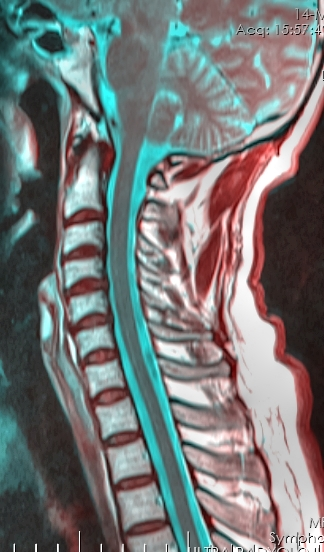
Neuropatia motora hereditária distal de início no adulto jovem
📋 Origem dos dados
Esta página agrega dados de fontes públicas e oficiais. Dados sobre cobertura no SUS (PCDT, CEAF) são verificados ativamente por agente proativo (ver badge no infobox). Demais dados têm atribuição de fonte + data da última sincronização — clique para abrir o original.
- Doença rara (ontologia)
- fonte: Orphanet
- Identificador unificado
- fonte: MONDO
- Genética mendeliana
- fonte: OMIM
- Codificação WHO/SUS
- fonte: WHO ICD-10 / DATASUS
- NIH/GARD
- fonte: GARD (NIH)
- Dado público estruturado
- fonte: Wikidata