
O atraso no crescimento, causado pela falta do Fator de Crescimento Semelhante à Insulina I, é caracterizado pela combinação de um retardo no crescimento que ocorre ainda na gestação e continua após o nascimento, surdez que afeta os nervos do ouvido e deficiência intelectual.
Introdução
O que você precisa saber de cara
O atraso no crescimento, causado pela falta do Fator de Crescimento Semelhante à Insulina I, é caracterizado pela combinação de um retardo no crescimento que ocorre ainda na gestação e continua após o nascimento, surdez que afeta os nervos do ouvido e deficiência intelectual.
Escala de raridade
<1/50kMuito rara
1/20kRara
1/10kPouco freq.
1/5kIncomum
1/2k
Encontrou um erro ou informação desatualizada? Sugira uma correção →
Entender a doença
Do básico ao detalhe, leia no seu ritmo
Preparando trilha educativa...
Sinais e sintomas
O que aparece no corpo e com que frequência cada sintoma acontece
Partes do corpo afetadas
+ 12 sintomas em outras categorias
Características mais comuns
Os sintomas variam de pessoa para pessoa. Abaixo estão as 48 características clínicas mais associadas, ordenadas por frequência.
Linha do tempo da pesquisa
Encontrou um erro ou informação desatualizada? Sugira uma correção →
Genética e causas
O que está alterado no DNA e como passa nas famílias
Genes associados
1 gene identificado com associação a esta condição. Padrão de herança: Autosomal recessive.
Curadoria gene-doença
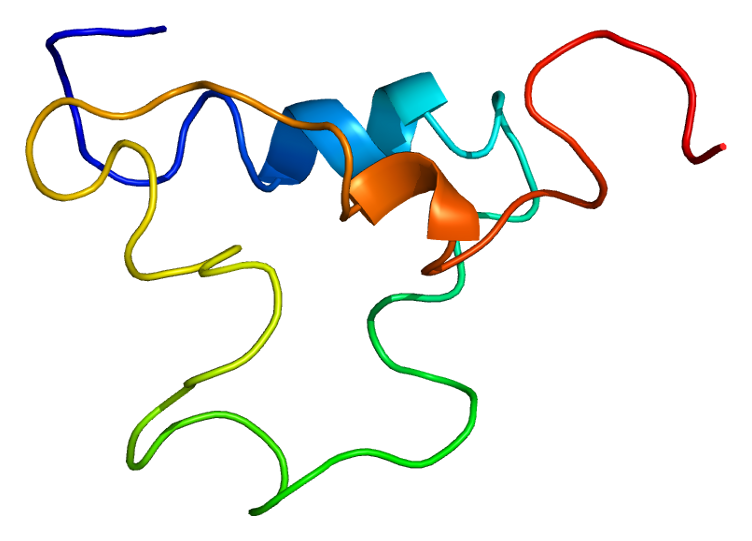
fontes oficiaisThe insulin-like growth factors, isolated from plasma, are structurally and functionally related to insulin but have a much higher growth-promoting activity. May be a physiological regulator of [1-14C]-2-deoxy-D-glucose (2DG) transport and glycogen synthesis in osteoblasts. Stimulates glucose transport in bone-derived osteoblastic (PyMS) cells and is effective at much lower concentrations than insulin, not only regarding glycogen and DNA synthesis but also with regard to enhancing glucose uptake
Secreted
Insulin-like growth factor I deficiency
An autosomal recessive disorder characterized by growth retardation, sensorineural deafness and intellectual disability.
Variantes genéticas (ClinVar)
32 variantes patogênicas registradas no ClinVar.
Classificação de variantes (ClinVar)
Distribuição de 131 variantes classificadas pelo ClinVar.
Vias biológicas (Reactome)
6 vias biológicas associadas aos genes desta condição.
Diagnóstico
Os sinais que médicos procuram e os exames que confirmam
Tratamento e manejo
Remédios, cuidados de apoio e o que precisa acompanhar
Onde tratar no SUS
Hospitais de referência no Brasil e o protocolo oficial do SUS (PCDT)
🇧🇷 Atendimento SUS — Atraso de crescimento por deficiência de fator de crescimento insulina-like I
Selecione um estado ou use sua localização para ver resultados.
Dados de DATASUS/CNES, SBGM, ABNeuro e Ministério da Saúde. Sempre confirme a disponibilidade diretamente com o estabelecimento.
Pesquisa ativa
Ensaios clínicos abertos e novidades científicas recentes
Pesquisa e ensaios clínicos
Nenhum ensaio clínico registrado para esta condição.
Publicações mais relevantes
Near-Adult Height Outcomes in Patients Treated With rhIGF-1 for Severe Growth Failure: Real-World IGFD Registry Data.
The Global Increlex® Growth Forum Database (IGFD) Registry monitors real-world effectiveness and safety of recombinant human IGF-1 (rhIGF-1; Increlex® [mecasermin]) treatment in children and adolescents with severe growth failure due to severe primary IGF-I deficiency (SPIGFD). To report characteristics, effectiveness, and safety data from patients receiving rhIGF-1 treatment who achieved near-adult height (NAH), and determine factors that predict height gain to NAH. Descriptive analyses of patients included in the Global IGFD Registry (NCT00903110) who achieved NAH are reported for the overall population, treatment-naïve prepubertal (NPP) patients, and patients with Laron syndrome. Linear regression analyses of height gain to NAH are also reported. One hundred and two patients enrolled in the Global IGFD Registry achieved NAH at data cut-off (April 20, 2023). Mean age at rhIGF-1 treatment initiation was 11.8 years; median treatment duration was 3.9 years. Mean (SD) height SD score (HtSDS) gain from rhIGF-1 initiation to NAH was 0.9 (1.1). In NPP patients, mean (SD) HtSDS gain was 1.4 (1.0). Almost half of NPP patients reached NAH within the normal range. Despite improved height in patients with Laron syndrome, only 10.5% reached NAH within the normal range; 3 patients with Laron syndrome were NPP. Treatment naivety was predictive of height gain in the overall NAH population. Safety data aligned with previous reports. In a real-world setting, despite patients with SPIGFD initiating rhIGF-1 treatment at a relatively advanced age, rhIGF-1 treatment resulted in improved NAH. The greatest improvements in height outcomes were observed in NPP patients. NCT00903110.
Microglia regulate GABAergic neurogenesis in prenatal human brain through IGF1.
GABAergic neurons are essential cellular components of neural circuits. Their abundance and diversity have increased significantly in the human brain, contributing to the expanded cognitive capacity of humans1. However, the developmental mechanism underlying the extended production of GABAergic neurons in the human brain remains elusive. Here we uncovered the microglial regulation of the sustained proliferation of GABAergic progenitors and neuroblasts in the human medial ganglionic eminence (hMGE). We showed that microglia are preferentially distributed in the proliferating zone and identified insulin-like growth factor 1 (IGF1) and its receptor IGR1R as the predicted top ligand-receptor pair underlying microglia-progenitor communication in the prenatal hMGE. Using our newly developed neuroimmune hMGE organoids, which mimic the hMGE cytoarchitecture and developmental trajectory, we demonstrated that microglia-derived IGF1 promotes progenitor proliferation and production of GABAergic neurons. Conversely, IGF1-neutralizing antibodies and IGF1 knockout human embryonic stem-cell-induced microglia abolish the induced microglia-mediated progenitor proliferation. Together, these findings revealed a previously unappreciated role of microglia-derived IGF1 in promoting the proliferation of neural progenitors and the development of GABAergic neurons in the human brain.
Exploring GHBP as a surrogate of GH activity in multimorbid older adults: A cross-sectional study.
With the rise of aging societies and complex multimorbidity, age related endocrine alterations such as insulin-like growth factor I (IGFI) deficiency gain clinical importance. Beyond reduced growth hormone (GH) secretion, GH resistance represents an additional mechanism contributing to IGF-I deficiency, potentially aggravating age-related diseases. This study investigates whether multimorbid, high-aged patients with IGF-I deficiency exhibit a form of acquired peripheral GH resistance, as indicated by altered GH-binding protein (GHBP) concentrations. In a cross-sectional design we conducted a retrospective analysis of serum samples of 759 patients from the geriatric day clinic and acute geriatric ward of the Ludwig-Maximilians-University Hospital, Munich. The mean age was 81 years, with a mean baseline IGF-I of 85 ng/ml (corresponding to -0.07/-0.1 SDS in males/females), a mean GHBP concentration of 751 pM and a mean GH concentration of 1.68 ng/ml. Patients with IGF-I concentrations below 2 standard deviation score (SDS) exhibited significantly elevated GH alongside reduced GHBP, suggestive of a peripheral GH resistance (n = 48). In contrast, the subgroup (n = 26) with the highest IGF-I concentrations (up to 2 SDS), demonstrated elevated GH and high GHBP concentrations. Our findings suggest that low GHBP may indicate acquired peripheral GH resistance in a subset of multimorbid, high-aged patients. Further functional endocrine testing, including IGF-I generation test is necessary. Analysis of the subgroup with above-average IGF-I concentrations could provide insights into longevity and on the safety of GH and IGF-I treatment.
IGF-1 impacts neocortical interneuron connectivity in epileptic spasm generation and resolution.
Little is known about the mechanisms that generate epileptic spasms following perinatal brain injury. Recent studies have implicated reduced levels of Insulin-like Growth Factor 1 (IGF-1) in these patients' brains. Other studies have reported low levels of the inhibitory neurotransmitter, GABA. In the TTX brain injury model of epileptic spasms, we undertook experiments to evaluate the impact of IGF-1 deficiencies on neocortical interneurons and their role in spasms. Quantitative immunohistochemical analyses revealed that neocortical interneurons that express glutamic acid decarboxylase, parvalbumin, or synaptotagmin 2 co-express IGF-1. In epileptic rats, expression of these three interneuron markers were reduced in the neocortex. IGF-1 expression was also reduced, but surprisingly this loss was confined to interneurons. Interneuron connectivity was reduced in tandem with IGF-1 deficiencies. Similar changes were observed in surgically resected neocortex from infantile epileptic spasms syndrome (IESS) patients. To evaluate the impact of IGF-1 deficiencies on interneuron development, IGF-1R levels were reduced in the neocortex of neonatal conditional IGF-1R knock out mice by viral injections. Four weeks later, this experimental maneuver resulted in similar reductions in interneuron connectivity. Treatment with the IGF-1 derived tripeptide, (1-3)IGF-1, abolished epileptic spasms in most animals, rescued interneuron connectivity, and restored neocortical levels of IGF-1. Our results implicate interneuron IGF-1 deficiencies, possibly impaired autocrine IGF-1 signaling and a resultant interneuron dysmaturation in epileptic spasm generation. By restoring IGF-1 levels, (1-3)IGF-1 likely suppresses spasms by rescuing interneuron connectivity. Results point to (1-3)IGF-1 and its analogues as potential novel disease-modifying therapies for this neurodevelopmental disorder.
The clinical and genetic aspects of six individuals with GH1 variants and isolated growth hormone deficiency type II.
Isolated growth hormone deficiency type II (IGHD II) is an autosomal dominant disorder characterized by a GH1 gene variant resulting in a significant reduction in growth hormone (GH) secretion and a subsequent decrease of plasma insulin-like growth factor 1 (IGF-1) levels and eventual growth impairment. This study aimed to identify causative variants in six Chinese families with IGHD II, exploring both clinical and genetic characteristics. Detailed clinical data, including clinical presentations, physical charateristics, medical and family histories, as well as genetic test results, were systematically examined. Six children, comprising four males and two females, with a mean age of 4.64 ± 1.15 years, exhibited short stature with a mean height of -3.95 ± 1.41 SDS. Four of them had a family history of short stature, while one patient presented with pulmonary hypertension. All children demonstrated GH deficiency in growth hormone stimulation tests (mean peak GH value: 2.83 ± 2.46 ng/mL). Exome sequencing for the six patients and targeted gene sequencing for their family members revealed heterozygous variants in the GH1 gene, including Exon2-5del, c.334T>C, c.291 + 1G>A, c.291 + 2T>A, 1.5 kb deletion, and 1.7 kb deletion, with four variants being novel. Four patients underwent human recombinant growth hormone (rhGH) replacement therapy, initiating treatment at a mean age of 4.6 ± 0.7 years. The mean height increase in patients was 1.21 ± 0.3 SDS in the first six months of treatment and 1.79 ± 0.15 SDS in the first year. Our findings contribute to expanding the genotypic and phenotypic spectra of individuals with IGHD II.
📚 EuropePMCmostrando 106
Exploring GHBP as a surrogate of GH activity in multimorbid older adults: A cross-sectional study.
Growth hormone & IGF research : official journal of the Growth Hormone Research Society and the International IGF Research SocietyMicroglia regulate GABAergic neurogenesis in prenatal human brain through IGF1.
NatureNear-Adult Height Outcomes in Patients Treated With rhIGF-1 for Severe Growth Failure: Real-World IGFD Registry Data.
The Journal of clinical endocrinology and metabolismIGF-1 impacts neocortical interneuron connectivity in epileptic spasm generation and resolution.
Neurotherapeutics : the journal of the American Society for Experimental NeuroTherapeuticsThe clinical and genetic aspects of six individuals with GH1 variants and isolated growth hormone deficiency type II.
Frontiers in endocrinologyCharacterization of Primary IGF-1 Deficiency in a Cohort of Canadian Children with Short Stature Using a Novel Algorithm Tailored to Electronic Medical Records.
Children (Basel, Switzerland)Common and Uncommon Mouse Models of Growth Hormone Deficiency.
Endocrine reviewsEvolving growth hormone deficiency: proof of concept.
Frontiers in endocrinologyNormal or improved cardiovascular risk factors in IGF-I-deficient adults with growth hormone receptor deficiency.
Med (New York, N.Y.)Diagnosis and treatment of growth hormone deficiency in children on the ketogenic diet: A case series.
Epilepsia openChallenges in the care of individuals with severe primary insulin-like growth factor-I deficiency (SPIGFD): an international, multi-stakeholder perspective.
Orphanet journal of rare diseasesInsulin-Like Growth Factor 1 Receptor Deficiency Alleviates Angiotensin II-Induced Cardiac Fibrosis Through the Protein Kinase B/Extracellular Signal-Regulated Kinase/Nuclear Factor-κB Pathway.
Journal of the American Heart AssociationCirculating insulin-like growth factor-1 and brain health: Evidence from 369,711 participants in the UK Biobank.
Alzheimer's research & therapyRecombinant Human Insulin-Like Growth Factor-1 Treatment of Severe Growth Failure in Three Siblings with STAT5B Deficiency.
Hormone research in paediatricsDelayed skeletal development and IGF-1 deficiency in a mouse model of lysinuric protein intolerance.
Disease models & mechanismsCongenital IGF-1 deficiency protects from cancer: lessons from Laron syndrome.
Endocrine-related cancerShort stature related to Growth Hormone Insensitivity (GHI) in childhood.
Frontiers in endocrinologyIGF1 deficiency integrates stunted growth and neurodegeneration in Down syndrome.
Cell reportsThe History of the Insulin-Like Growth Factor System.
Hormone research in paediatricsAlterations in Stem Cell Populations in IGF-1 Deficient Pediatric Patients Subjected to Mecasermin (Increlex) Treatment.
Stem cell reviews and reportsSexual dimorphic effects of igf1 deficiency on metabolism in zebrafish.
Frontiers in endocrinologyAge-related decline in circulating IGF-1 associates with impaired neurovascular coupling responses in older adults.
GeroSciencePubertal Timing and Growth Dynamics in Children With Severe Primary IGF-1 Deficiency: Results From the European Increlex® Growth Forum Database Registry.
Frontiers in endocrinologyEthanol consumption during gestation promotes placental alterations in IGF-1 deficient mouse placentas.
F1000ResearchDeepGP: An Integrated Deep Learning Method for Endocrine Disease Gene Prediction Using Omics Data.
Frontiers in cell and developmental biologyRegulation of GH and GH Signaling by Nutrients.
CellsDifferential Diagnosis of the Short IGF-I-Deficient Child with Apparently Normal Growth Hormone Secretion.
Hormone research in paediatricsCSF1R-dependent macrophages control postnatal somatic growth and organ maturation.
PLoS geneticsHepatic Igf1-Deficiency Protects Against Atherosclerosis in Female Mice.
EndocrinologyEffectiveness and safety of rhIGF1 therapy in patients with or without Laron syndrome.
European journal of endocrinologyGH/IGF-1 Abnormalities and Muscle Impairment: From Basic Research to Clinical Practice.
International journal of molecular sciencesIGF-I/IGFBP3/ALS Deficiency in Sarcopenia: Low GHBP Suggests GH Resistance in a Subgroup of Geriatric Patients.
The Journal of clinical endocrinology and metabolismIGF-I deficiency and enhanced insulin sensitivity due to a mutated growth hormone receptor gene in humans.
Molecular and cellular endocrinologyIsolated growth hormone deficiency in a Chihuahua with a GH1 mutation.
Journal of veterinary diagnostic investigation : official publication of the American Association of Veterinary Laboratory Diagnosticians, IncIGF-1 Deficiency Rescue and Intracellular Calcium Blockade Improves Survival and Corresponding Mechanisms in a Mouse Model of Acute Kidney Injury.
International journal of molecular sciencesAnabolic Hormones Deficiencies in Heart Failure With Preserved Ejection Fraction: Prevalence and Impact on Antioxidants Levels and Myocardial Dysfunction.
Frontiers in endocrinologyChanges in plasma amino acids metabolites, caused by long-term IGF-I deficiency, are reversed by IGF-I treatment - A pilot study.
Growth hormone & IGF research : official journal of the Growth Hormone Research Society and the International IGF Research SocietyInsulin-like Growth Factor 1 Supports a Pulmonary Niche that Promotes Type 3 Innate Lymphoid Cell Development in Newborn Lungs.
ImmunityTherapy with recombinant human IGF-1 for children with primary insulin-like growth factor-I deficiency.
Growth hormone & IGF research : official journal of the Growth Hormone Research Society and the International IGF Research SocietyElevated levels of IL-6 and IGFBP-1 predict low serum IGF-1 levels during continuous infusion of rhIGF-1/rhIGFBP-3 in extremely preterm infants.
Growth hormone & IGF research : official journal of the Growth Hormone Research Society and the International IGF Research SocietyDisparate Central and Peripheral Effects of Circulating IGF-1 Deficiency on Tissue Mitochondrial Function.
Molecular neurobiologyA homozygous mutation in the highly conserved Tyr60 of the mature IGF1 peptide broadens the spectrum of IGF1 deficiency.
European journal of endocrinologyLoss of insulin-like growth factor-1 signaling in astrocytes disrupts glutamate handling.
Journal of neurochemistryThrombospondin-1 Mediates Axon Regeneration in Retinal Ganglion Cells.
NeuronGenome-Wide Profiling of Laron Syndrome Patients Identifies Novel Cancer Protection Pathways.
CellsSerum Insulin-Like Growth Factor I Deficiency Associates to Alzheimer's Disease Co-Morbidities.
Journal of Alzheimer's disease : JADApoptosis signal-regulating kinase (ASK1) and transcription factor tumor suppressor protein TP53 suppress rabbit ovarian granulosa cell functions.
Animal reproduction scienceThe second to fourth digit ratio in patients with congenital IGF-1 Deficiency.
Anthropologischer Anzeiger; Bericht uber die biologisch-anthropologische LiteraturNeurotrophic Factors and Their Receptors Are Altered by the Mere Partial IGF-1 Deficiency.
NeuroscienceIGF-1 deletion affects renal sympathetic nerve activity, left ventricular dysfunction, and renal function in DOCA-salt hypertensive mice.
Physiological researchIGF - Autism prevention/amelioration.
Medical hypothesesTreatment of severe primary IGF-1 deficiency using rhIGF-1 preparation - first three years of Polish experience.
Endokrynologia PolskaNonclassical GH Insensitivity: Characterization of Mild Abnormalities of GH Action.
Endocrine reviewsSequential measurements of IGF-I serum concentrations in adolescents with Laron syndrome treated with recombinant human IGF-I (rhIGF-I).
Journal of pediatric endocrinology & metabolism : JPEMIGF-1 Deficiency Promotes Pathological Remodeling of Cerebral Arteries: A Potential Mechanism Contributing to the Pathogenesis of Intracerebral Hemorrhages in Aging.
The journals of gerontology. Series A, Biological sciences and medical sciencesBody height in paediatric inflammatory bowel diseases: A structural equation model analysis.
European journal of clinical investigationSupplementation of Blackcurrant Anthocyanins Increased Cyclic Glycine-Proline in the Cerebrospinal Fluid of Parkinson Patients: Potential Treatment to Improve Insulin-Like Growth Factor-1 Function.
NutrientsDeficiency of liver-derived insulin-like growth factor-I (IGF-I) does not interfere with the skin wound healing rate.
PloS onePartial growth hormone insensitivity and dysregulatory immune disease associated with de novo germline activating STAT3 mutations.
Molecular and cellular endocrinologyIGF1 affects macrophage invasion and activation and TNF-α production in the sciatic nerves of female SOD1G93A mice.
Neuroscience lettersBone resorption deficiency affects tooth root development in RANKL mutant mice due to attenuated IGF-1 signaling in radicular odontoblasts.
BoneTargeted Resequencing of Putative Growth-Related Genes Using Whole Exome Sequencing in Patients with Severe Primary IGF-I Deficiency.
Hormone research in paediatricsPartial IGF-1 deficiency is sufficient to reduce heart contractibility, angiotensin II sensibility, and alter gene expression of structural and functional cardiac proteins.
PloS oneMacrophage-derived insulin-like growth factor-1 affects influenza vaccine efficacy through the regulation of immune cell homeostasis.
VaccineOccurrence of Cranial Neoplasms in Pediatric Patients with Noonan Syndrome Receiving Growth Hormone: Is Screening with Brain MRI prior to Initiation of Growth Hormone Indicated?
Hormone research in paediatricsThe single IGF-1 partial deficiency is responsible for mitochondrial dysfunction and is restored by IGF-1 replacement therapy.
Growth hormone & IGF research : official journal of the Growth Hormone Research Society and the International IGF Research SocietyIGF-I deficiency, longevity and cancer protection of patients with Laron syndrome.
Mutation research. Reviews in mutation researchGrowth hormone treatment for growth hormone deficiency and idiopathic short stature: new guidelines shaped by the presence and absence of evidence.
Current opinion in pediatricsControversies in the risk of neoplasia in GH deficiency.
Best practice & research. Clinical endocrinology & metabolismExperimental approach to IGF-1 therapy in CCl4-induced acute liver damage in healthy controls and mice with partial IGF-1 deficiency.
Journal of translational medicineFifty years on: New lessons from Laron syndrome.
The Israel Medical Association journal : IMAJCharacterization of four Latin American families confirms previous findings and reveals novel features of acid-labile subunit deficiency.
Clinical endocrinologyPrimary lymphocytic hypophysitis: Clinical characteristics and treatment of 50 cases in a single centre in China over 18 years.
Clinical endocrinologyGrowth Hormone Treatment in Children With Prader-Willi Syndrome: Three Years of Longitudinal Data in Prepubertal Children and Adult Height Data From the KIGS Database.
The Journal of clinical endocrinology and metabolismInsulin-like growth factor 1 deficiency exacerbates hypertension-induced cerebral microhemorrhages in mice, mimicking the aging phenotype.
Aging cellAttenuated airway hyperresponsiveness and mucus secretion in HDM-exposed Igf1r-deficient mice.
AllergyGuidelines for Growth Hormone and Insulin-Like Growth Factor-I Treatment in Children and Adolescents: Growth Hormone Deficiency, Idiopathic Short Stature, and Primary Insulin-Like Growth Factor-I Deficiency.
Hormone research in paediatricsClinical and molecular diagnosis of a cartilage-hair hypoplasia with IGF-1 deficiency.
American journal of medical genetics. Part AMultiple hormone deficiency syndrome in heart failure with preserved ejection fraction.
International journal of cardiologyA CHILD WITH LARON SYNDROME ASSOCIATED WITH VASCULITIS.
Acta endocrinologica (Bucharest, Romania : 2005)Circulating IGF-1 deficiency exacerbates hypertension-induced microvascular rarefaction in the mouse hippocampus and retrosplenial cortex: implications for cerebromicrovascular and brain aging.
Age (Dordrecht, Netherlands)IGF-1 deficiency in a critical period early in life influences the vascular aging phenotype in mice by altering miRNA-mediated post-transcriptional gene regulation: implications for the developmental origins of health and disease hypothesis.
Age (Dordrecht, Netherlands)Conditional deletion of IGF-I in osteocytes unexpectedly accelerates bony union of the fracture gap in mice.
BoneAutophagy resolves early retinal inflammation in Igf1-deficient mice.
Disease models & mechanismsThe insulin-like growth factor I receptor regulates glucose transport by astrocytes.
GliaSmooth Muscle Insulin-Like Growth Factor-1 Mediates Hypoxia-Induced Pulmonary Hypertension in Neonatal Mice.
American journal of respiratory cell and molecular biologyInsulin-like growth factor type 1 deficiency in a Moroccan patient with de novo inverted duplication 9p24p12 and developmental delay: a case report.
Journal of medical case reportsKlotho and the Growth Hormone/Insulin-Like Growth Factor 1 Axis: Novel Insights into Complex Interactions.
Vitamins and hormonesGrowth hormone (GH)-transgenic insulin-like growth factor 1 (IGF1)-deficient mice allow dissociation of excess GH and IGF1 effects on glomerular and tubular growth.
Physiological reportsDifferential effects of IGF-1 deficiency during the life span on structural and biomechanical properties in the tibia of aged mice.
Age (Dordrecht, Netherlands)Partial IGF-1 deficiency induces brain oxidative damage and edema, which are ameliorated by replacement therapy.
BioFactors (Oxford, England)The Effect of Recombinant Growth Hormone Treatment in Children with Idiopathic Short Stature and Low Insulin-Like Growth Factor-1 Levels.
Journal of clinical research in pediatric endocrinologyConsidering GH replacement for GH-deficient adults with a previous history of cancer: a conundrum for the clinician.
EndocrineSTAT5B deficiency: Impacts on human growth and immunity.
Growth hormone & IGF research : official journal of the Growth Hormone Research Society and the International IGF Research SocietyThe future of growth-promoting therapy.
Growth hormone & IGF research : official journal of the Growth Hormone Research Society and the International IGF Research SocietyChallenges in the Management of Short Stature.
Hormone research in paediatricsIntrauterine Growth Retardation (IUGR) as a Novel Condition of Insulin-Like Growth Factor-1 (IGF-1) Deficiency.
Reviews of physiology, biochemistry and pharmacologyMECHANISMS IN ENDOCRINOLOGY: Novel genetic causes of short stature.
European journal of endocrinologyCentral insulin-like growth factor-1 (IGF-1) restores whole-body insulin action in a model of age-related insulin resistance and IGF-1 decline.
Aging cellMechanisms Underlying Testicular Damage and Dysfunction in Mice With Partial IGF-1 Deficiency and the Effectiveness of IGF-1 Replacement Therapy.
UrologyIGF1 deficiency in newly diagnosed Graves' disease patients.
Hormones (Athens, Greece)IGF-1 deficiency impairs neurovascular coupling in mice: implications for cerebromicrovascular aging.
Aging cellDegradation of extracellular chondroitin sulfate delays recovery of network activity after perturbation.
Journal of neurophysiologyImproved growth velocity of a patient with Noonan-like syndrome with loose anagen hair (NS/LAH) without growth hormone deficiency by low-dose growth hormone therapy.
American journal of medical genetics. Part ADesensitization to mecasermin in an insulin-like growth factor 1-deficient patient.
Annals of allergy, asthma & immunology : official publication of the American College of Allergy, Asthma, & ImmunologySecondary IGF-I deficiency as a prognostic factor of growth hormone (GH) therapy effectiveness in children with isolated, non-acquired GH deficiency.
Experimental and clinical endocrinology & diabetes : official journal, German Society of Endocrinology [and] German Diabetes AssociationAssociações
Organizações que acompanham esta doença — pra ter apoio e orientação
Ainda não temos associações cadastradas para Atraso de crescimento por deficiência de fator de crescimento insulina-like I.
É de uma associação que acompanha esta doença? Fale com a gente →
Comunidades
Grupos ativos de quem convive com esta doença aqui no Raras
Ainda não existe comunidade no Raras para Atraso de crescimento por deficiência de fator de crescimento insulina-like I
Pacientes, familiares e cuidadores se organizam em comunidades pra compartilhar experiências, fazer perguntas e se apoiar. Você pode ser o primeiro.
Tire suas dúvidas
Perguntas, dicas e experiências compartilhadas aqui na página
Participe da discussão
Faça login para postar dúvidas, compartilhar experiências e interagir com especialistas.
Fazer loginDoenças relacionadas
Doenças com sintomas parecidos — ajudam quem ainda está buscando diagnóstico
Referências e fontes
Bases de dados externas citadas neste artigo
Publicações científicas
Artigos indexados no PubMed ligados a esta doença no grafo RarasNet — título, periódico e PMID direto da fonte, sem intermediação de IA.
- Near-Adult Height Outcomes in Patients Treated With rhIGF-1 for Severe Growth Failure: Real-World IGFD Registry Data.
- Microglia regulate GABAergic neurogenesis in prenatal human brain through IGF1.
- Exploring GHBP as a surrogate of GH activity in multimorbid older adults: A cross-sectional study.Growth hormone & IGF research : official journal of the Growth Hormone Research Society and the International IGF Research Society· 2025· PMID 41138339mais citado
- IGF-1 impacts neocortical interneuron connectivity in epileptic spasm generation and resolution.Neurotherapeutics : the journal of the American Society for Experimental NeuroTherapeutics· 2025· PMID 39516073mais citado
- The clinical and genetic aspects of six individuals with GH1 variants and isolated growth hormone deficiency type II.
Bases de dados e fontes oficiais
Identificadores e referências canônicas usadas para montar este verbete.
- ORPHA:73272(Orphanet)
- OMIM OMIM:608747(OMIM)
- MONDO:0012110(MONDO)
- GARD:10627(GARD (NIH))
- Variantes catalogadas(ClinVar)
- Q55783603(Wikidata)
Dados compilados pelo RarasNet a partir de fontes abertas (Orphanet, OMIM, MONDO, PubMed/EuropePMC, ClinicalTrials.gov, DATASUS, PCDT/MS). Este conteúdo é informativo e não substitui avaliação médica.
Conteúdo mantido por Agente Raras · Médicos e pesquisadores podem colaborar
Atraso de crescimento por deficiência de fator de crescimento insulina-like I
📋 Origem dos dados
Esta página agrega dados de fontes públicas e oficiais. Dados sobre cobertura no SUS (PCDT, CEAF) são verificados ativamente por agente proativo (ver badge no infobox). Demais dados têm atribuição de fonte + data da última sincronização — clique para abrir o original.
- Doença rara (ontologia)
- fonte: Orphanet
- Identificador unificado
- fonte: MONDO
- Genética mendeliana
- fonte: OMIM
- Codificação WHO/SUS
- fonte: WHO ICD-10 / DATASUS
- CID-11 (futuro)
- fonte: WHO ICD-11
- NIH/GARD
- fonte: GARD (NIH)
- Indexação biomédica
- fonte: MeSH (NLM)
- Dado público estruturado
- fonte: Wikidata