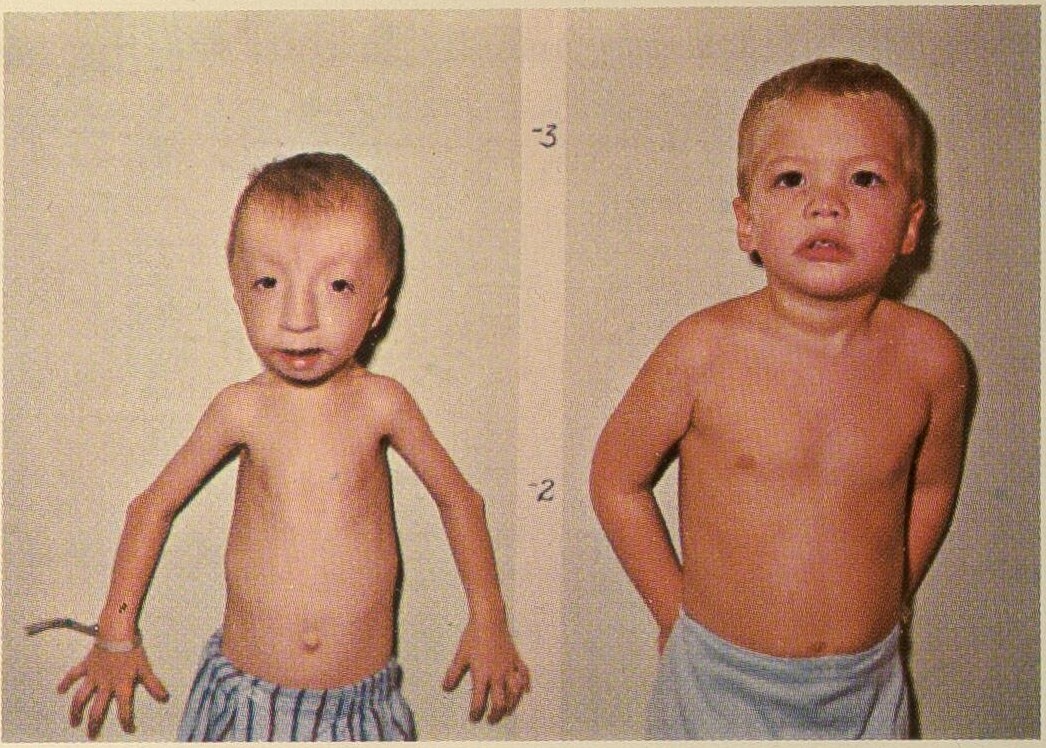
Síndrome hereditária autossômica recessiva rara causada por mutações no gene ATR, gene RBBP8, gene CENPJ, gene CEP152, gene CEP63, gene NIN, gene DNA2 ou gene TRAIP. É caracterizada por retardo de crescimento intrauterino, nanismo, microcefalia, retardo mental e aparência facial de “cabeça de pássaro”.
Introdução
O que você precisa saber de cara
A Síndrome Seckel é uma condição genética rara que se inicia antes do nascimento e é caracterizada por nanismo proporcional e **microcefalia** (cabeça com tamanho menor que o esperado). As famílias costumam notar desde cedo o crescimento corporal reduzido, características faciais peculiares e desafios no desenvolvimento intelectual. Não existem remédios específicos voltados para a cura da síndrome, de modo que os cuidados concentram-se no acompanhamento das necessidades de cada pessoa. No Brasil, a doença não possui um protocolo clínico oficial (PCDT), mas o SUS disponibiliza procedimentos de reabilitação e exames genéticos na rede de atenção às doenças raras.
Síndrome hereditária autossômica recessiva rara causada por mutações no gene ATR, gene RBBP8, gene CENPJ, gene CEP152, gene CEP63, gene NIN, gene DNA2 ou gene TRAIP. É caracterizada por retardo de crescimento intrauterino, nanismo, microcefalia, retardo mental e aparência facial de “cabeça de pássaro”.
Escala de raridade
<1/50kMuito rara
1/20kRara
1/10kPouco freq.
1/5kIncomum
1/2k
Encontrou um erro ou informação desatualizada? Sugira uma correção →
Entender a doença
Do básico ao detalhe, leia no seu ritmo
Preparando trilha educativa...
Sinais e sintomas
O que aparece no corpo e com que frequência cada sintoma acontece
Partes do corpo afetadas
+ 64 sintomas em outras categorias
Características mais comuns
Os sintomas variam de pessoa para pessoa. Abaixo estão as 184 características clínicas mais associadas, ordenadas por frequência.
Linha do tempo da pesquisa
Encontrou um erro ou informação desatualizada? Sugira uma correção →
Genética e causas
O que está alterado no DNA e como passa nas famílias
Genes associados
15 genes identificados com associação a esta condição. Padrão de herança: Autosomal recessive.
Progressive external ophthalmoplegia with mitochondrial DNA deletions, autosomal dominant, 6
A disorder characterized by muscle weakness, mainly affecting the lower limbs, external ophthalmoplegia, exercise intolerance, and mitochondrial DNA deletions on muscle biopsy. Symptoms may appear in childhood or adulthood and show slow progression.
Seckel syndrome 7
A rare autosomal recessive disorder characterized by proportionate dwarfism of prenatal onset associated with low birth weight, growth retardation, severe microcephaly with a bird-headed like appearance, and intellectual disability.
Microcephalic osteodysplastic primordial dwarfism 2
Adults with this rare inherited condition have an average height of 100 centimeters and a brain size comparable to that of a 3-month-old baby, but are of near-normal intelligence.
Microcephaly 13, primary, autosomal recessive
A form of microcephaly, a disease defined as a head circumference more than 3 standard deviations below the age-related mean. Brain weight is markedly reduced and the cerebral cortex is disproportionately small.
Microcephaly 9, primary, autosomal recessive
A disease defined as a head circumference more than 3 standard deviations below the age-related mean. Brain weight is markedly reduced and the cerebral cortex is disproportionately small. Despite this marked reduction in size, the gyral pattern is relatively well preserved, with no major abnormality in cortical architecture. Affected individuals have intellectual disability. Primary microcephaly is further defined by the absence of other syndromic features or significant neurological deficits due to degenerative brain disorder.
Microcephaly and chorioretinopathy, autosomal recessive, 2
A severe disorder characterized by microcephaly, delayed psychomotor development, growth retardation with dwarfism, and ocular abnormalities.
Microcephaly 6, primary, autosomal recessive
A disease defined as a head circumference more than 3 standard deviations below the age-related mean. Brain weight is markedly reduced and the cerebral cortex is disproportionately small. Despite this marked reduction in size, the gyral pattern is relatively well preserved, with no major abnormality in cortical architecture. Affected individuals have moderate intellectual disability. Primary microcephaly is further defined by the absence of other syndromic features or significant neurological deficits due to degenerative brain disorder.
Seckel syndrome 11
A form of Seckel syndrome, a rare autosomal recessive disorder characterized by proportionate dwarfism of prenatal onset associated with low birth weight, growth retardation, severe microcephaly with a bird-headed like appearance, and intellectual disability.
Seckel syndrome 10
A form of Seckel syndrome, a rare autosomal recessive disorder characterized by proportionate dwarfism of prenatal onset associated with low birth weight, growth retardation, severe microcephaly with a bird-headed like appearance, and intellectual disability.
Seckel syndrome 9
A form of Seckel syndrome, a rare autosomal recessive disorder characterized by proportionate dwarfism of prenatal onset associated with low birth weight, growth retardation, severe microcephaly with a bird-headed like appearance, and intellectual disability.
Seckel syndrome 2
A rare autosomal recessive disorder characterized by proportionate dwarfism of prenatal onset associated with low birth weight, growth retardation, severe microcephaly with a bird-headed like appearance, and intellectual disability.
Nephrotic syndrome 17
A form of nephrotic syndrome, a renal disease clinically characterized by severe proteinuria, resulting in complications such as hypoalbuminemia, hyperlipidemia and edema. Kidney biopsies show non-specific histologic changes such as focal segmental glomerulosclerosis and diffuse mesangial proliferation. Some affected individuals have an inherited steroid-resistant form that progresses to end-stage renal failure. NPHS17 is an autosomal recessive, steroid-resistant progressive form with onset in the first decade of life.
Seckel syndrome 6
A rare autosomal recessive disorder characterized by proportionate dwarfism of prenatal onset associated with low birth weight, growth retardation, severe microcephaly with a bird-headed like appearance, and intellectual disability.
Variantes genéticas (ClinVar)
417 variantes patogênicas registradas no ClinVar.
Classificação de variantes (ClinVar)
Distribuição de 830 variantes classificadas pelo ClinVar.
Vias biológicas (Reactome)
74 vias biológicas associadas aos genes desta condição.
Diagnóstico
Os sinais que médicos procuram e os exames que confirmam
Tratamento e manejo
Remédios, cuidados de apoio e o que precisa acompanhar
Onde tratar no SUS
Hospitais de referência no Brasil e o protocolo oficial do SUS (PCDT)
🇧🇷 Atendimento SUS — Síndrome Seckel
Selecione um estado ou use sua localização para ver resultados.
Dados de DATASUS/CNES, SBGM, ABNeuro e Ministério da Saúde. Sempre confirme a disponibilidade diretamente com o estabelecimento.
Pesquisa ativa
Ensaios clínicos abertos e novidades científicas recentes
Ensaios em destaque
Com ensaio aberto em 1 país. O ponto verde marca onde há vaga agora.
🟢 Recrutando agora
1 pesquisa recrutando participantes. Converse com seu médico sobre a possibilidade de participar.
Outros ensaios clínicos
2 ensaios clínicos encontrados, 1 ativos.
Publicações mais relevantes
[Research advance on the clinical phenotypes and molecular genetic mechanisms of Microcephalic primordial dwarfism].
Primordial dwarfism (PD) refers to a group of monogenic genetic disorders characterized by intrauterine growth restriction (IUGR) and severe, persistent postnatal growth retardation. These diseases have been associated with variants of multiple genes whose products are mainly involved in critical cellular biological processes such as maintenance of genomic stability, DNA damage repair, mRNA splicing regulation, and centrosome function. Variants of such genes can directly impair cell proliferation and developmental potential. With the widespread application of molecular genetic technologies such as high-throughput sequencing, significant progress has been made in the research of PD. This article focuses on the major subtypes of PD, including Seckel syndrome, Microcephalic osteodysplastic primordial dwarfism (MOPD) types I/III, MOPD type II, and Meier-Gorlin syndrome. It has systematically summarized the advances in their clinical phenotypic characteristics, pathogenic genes, and molecular mechanisms, with an aim to deepen the understanding of the essence of growth disorders associated with PD.
DNA2 enables growth by restricting recombination-restarted replication.
Nuclease-helicase DNA2 is a multifunctional genome caretaker that is essential for cell proliferation in a range of organisms, from yeast to human1-4. Bi-allelic DNA2 mutations that reduce DNA2 concentrations cause a spectrum of primordial dwarfism disorders, including Seckel and Rothmund-Thomson-related syndromes5-7. By contrast, cancer cells frequently express high concentrations of DNA2 (refs. 8-11). The mechanism that precludes cell proliferation in the absence of DNA2 and the molecular aetiology of DNA2-linked diseases remain elusive. Here we used yeast and human cells to demonstrate that DNA2 suppresses homologous recombination-restarted replication and checkpoint activation at stalled DNA replication forks. Loss of this control mechanism upon degradation of DNA2 in human cells causes recombination-dependent DNA synthesis and build-up of RPA-bound single-stranded DNA in the G2 phase of the cell cycle. Consequently, DNA2 deprivation triggers the DNA damage checkpoint and invariably leads to ATR-p21-dependent cell-cycle exit before mitosis. These findings explain why DNA2 is essential for cell proliferation and reveal that replication fork processing to restrict recombination is indispensable for avoiding cellular senescence. Stochastic entry into senescence stifles the proliferative potential of cells following the expression of a Seckel syndrome patient-derived DNA2 hypomorph or partial degradation of DNA2, providing a conceptual framework to explain global growth failure in DNA2-linked primordial dwarfism disorders.
Case Report: Compound heterozygous CEP152 c.3346-5T>C variant and chr15 deletion causing recurrent MCPH-SCKS in a Chinese pregnant woman across two consecutive pregnancies.
Primary autosomal recessive microcephaly and Seckel syndrome spectrum (MCPH-SCKS) disorders are a group of autosomal recessive conditions characterized by severe growth retardation and neurodevelopmental impairment. CEP152 variants are established causes of both microcephaly and Seckel syndrome phenotypes, but the pathogenicity of different variant combinations and their clinical recurrence patterns require further verification with additional cases. Clinical and genetic analyses were performed for two consecutive pregnancies of a non-consanguineous Chinese couple. Fetal phenotypes were evaluated by ultrasound and fetal MRI sequentially; copy number variation sequencing (CNV-seq) was used to detect large genomic variants, whole-exome sequencing (WES) to screen for point variants, and minigene splicing assays to characterize the functional impact of key variants. Fetuses in both pregnancies were diagnosed with MCPH-SCKS and harbored identical compound heterozygous CEP152 variants: a paternally inherited splice-site variant c.3346-5T>C and a maternally inherited 129.6 kb chromosomal deletion localized to 15q21.1, encompassing the entire CEP152 gene. Minigene assays confirmed that the c.3346-5T>C variant caused aberrant splicing via intron retention and exon skipping, clarifying its pathogenicity. The second pregnancy in 2024 independently verified the pathogenicity of this variant combination and disease recurrence. This study represents the first report of identical compound heterozygous CEP152 variants causing MCPH-SCKS in two consecutive pregnancies. The independent occurrence in the second pregnancy not only confirms the pathogenicity of this variant combination but also provides clinical evidence for the 25% recurrence risk of autosomal recessive disorders. Furthermore, this report underscores the critical importance of comprehensive genetic testing, including CNV analysis, for the prenatal diagnosis of MCPH-SCKS, offering valuable guidance for genetic counseling and prenatal intervention in similar families.
ST-Elevation Myocardial Infarction (STEMI) in a Morphologically Pediatric Adult With Seckel Syndrome: A Report of a Rare Case.
Seckel syndrome is a rare genetic disorder characterized by severe growth retardation, microcephaly, and distinctive craniofacial features. Although cardiovascular anomalies have been sporadically reported, ST-elevation myocardial infarction (STEMI) has not been documented in this population. To the best of our knowledge, we present the first case of anterior STEMI in a 30-year-old male with Seckel syndrome. The patient, weighing 11.5 kg, presented with acute chest and back pain and was diagnosed with anteroseptal STEMI. His complex medical history, including a coiled intracranial aneurysm, precluded thrombolysis, while his small body size and the absence of pediatric-compatible equipment rendered percutaneous coronary intervention (PCI) unfeasible. Despite maximal intensive care support, the patient developed multiorgan failure and died. This case highlights the expanding cardiovascular manifestations of Seckel syndrome and the difficulties in applying standard STEMI management protocols to morphologically pediatric adults. The lack of specialized interventional tools and infrastructure in many regions further complicates care. This underscores the urgent need for multidisciplinary care models and specialized pediatric interventional cardiology services for syndromic adults.
Expanding the Clinical Phenotype Associated with the NIN Gene; Report of a Patient with Short Stature, Microcephaly and Hearing Loss.
To date, there are very few reports regarding patients with bi-allelic variants in the NIN gene. There is one report of two sisters with severe short stature, microcephaly, and developmental delay with compound heterozygote missense variants in the NIN gene and one paper reporting a homozygote variant in the NIN gene with progressive, high-frequency sensorineural hearing loss in four siblings. The only other report is of four members of a consanguineous family with spondyloepimetaphyseal dysplasia with joint laxity-leptodactylic type (SEMDJL2) with a homozygous variant in the NIN gene. Given the scarcity of cases with NIN variants, the relationship between the phenotype and gene is provisional and our case broadens the phenotypic spectrum regarding the phenotype related to NIN gene variants. Here, we report a patient with a homozygous variant in exon 2 of the NIN gene defined as c.3407_3409del (p.Glu1136del). Clinical findings in our patient were characteristic of microcephalic primordial dwarfism (MPD) including microcephaly, prominent nose, intellectual disability and severe short stature. In addition, this patient had bilateral hearing loss, which was not reported in the patients with MPD and variant in the NIN gene before. We identified a novel p.Glu1136del variant in the NIN gene, predicted to disrupt critical centrosome-related pathways. WES was reanalyzed for other genes which are known for deafness and no variant was identified. A family history of deafness was not present in the pedigree. This is the first report of a patient with MPD and deafness associated with the NIN gene.
Publicações recentes
[Research advance on the clinical phenotypes and molecular genetic mechanisms of Microcephalic primordial dwarfism].
Case Report: Compound heterozygous CEP152 c.3346-5T>C variant and chr15 deletion causing recurrent MCPH-SCKS in a Chinese pregnant woman across two consecutive pregnancies.
ST-Elevation Myocardial Infarction (STEMI) in a Morphologically Pediatric Adult With Seckel Syndrome: A Report of a Rare Case.
DNA2 enables growth by restricting recombination-restarted replication.
Expanding the Clinical Phenotype Associated with the NIN Gene; Report of a Patient with Short Stature, Microcephaly and Hearing Loss.
📚 EuropePMC145 artigos no totalmostrando 81
[Research advance on the clinical phenotypes and molecular genetic mechanisms of Microcephalic primordial dwarfism].
Zhonghua yi xue yi chuan xue za zhi = Zhonghua yixue yichuanxue zazhi = Chinese journal of medical geneticsCase Report: Compound heterozygous CEP152 c.3346-5T>C variant and chr15 deletion causing recurrent MCPH-SCKS in a Chinese pregnant woman across two consecutive pregnancies.
Frontiers in geneticsST-Elevation Myocardial Infarction (STEMI) in a Morphologically Pediatric Adult With Seckel Syndrome: A Report of a Rare Case.
CureusDNA2 enables growth by restricting recombination-restarted replication.
NatureExpanding the Clinical Phenotype Associated with the NIN Gene; Report of a Patient with Short Stature, Microcephaly and Hearing Loss.
Archives of Iranian medicineDNA damage response regulator ATR licenses PINK1-mediated mitophagy.
Nucleic acids researchClinical Challenges in Diagnosing Primordial Dwarfism: Insights from a MOPD II Case Study.
Medicina (Kaunas, Lithuania)Seckel Dwarfism-A Rare Autosomal Recessive Inherited Syndrome: A Case Report.
International journal of clinical pediatric dentistryNinein domains required for its localization, association with partners dynein and ensconsin, and microtubule organization.
Molecular biology of the cellExamination of 3D sella turcica models in three species of ruminants.
Anatomia, histologia, embryologiaLoss of ninein interferes with osteoclast formation and causes premature ossification.
eLifeArterial stroke in a child with Seckel syndrome with a pattern of non-moyamoya vasculopathy.
Clinical case reportsNovel Variants of CEP152 in a Case of Compound-Heterozygous Inheritance of Epilepsy.
Global medical geneticsBi-allelic variants in CEP295 cause Seckel-like syndrome presenting with primary microcephaly, developmental delay, intellectual disability, short stature, craniofacial and digital abnormalities.
EBioMedicineMicrocephaly, Short Stature, Intellectual Disability, Speech Absence and Cataract Are Associated with Novel Bi-Allelic Missense Variant in RTTN Gene: A Seckel Syndrome Case Report.
Children (Basel, Switzerland)De novo MCM6 variants in neurodevelopmental disorders: a recognizable phenotype related to zinc binding residues.
Human geneticsExpanding the phenotype of Seckel syndrome associated with biallelic loss-of-function variants in CEP63.
American journal of medical genetics. Part ARecurrence mutation in RBBP8 gene causing non-syndromic autosomal recessive primary microcephaly; geometric simulation approach for insight into predicted computational models.
Journal of human geneticsCase report: Compound heterozygous NUP85 variants cause autosomal recessive primary microcephaly.
Frontiers in neurologyEvaluation of immunological abnormalities in patients with rare syndromes.
Central-European journal of immunologyImmune Deficiency in Microcephalic Osteodysplastic Primordial Dwarfism Type I/III.
Journal of clinical immunologyDeficiency of the minor spliceosome component U4atac snRNA secondarily results in ciliary defects in human and zebrafish.
Proceedings of the National Academy of Sciences of the United States of AmericaTwo novel variants in CEP152 caused Seckel syndrome 5 in a Chinese family.
Frontiers in geneticsA novel biallelic CRIPT variant in a patient with short stature, microcephaly, and distinctive facial features.
American journal of medical genetics. Part ADelineating the phenotype of RNU4ATAC-related spliceosomopathy.
American journal of medical genetics. Part AAicardi-Goutières syndrome with SAMHD1 deficiency can be diagnosed by unscheduled DNA synthesis test.
Frontiers in pediatricsHydranencephaly in CENPJ-related Seckel syndrome.
European journal of medical geneticsExpression Analyses of Polo-Like Kinase 4, a Gene Product Responsible for Autosomal Recessive Microcephaly and Seckel Syndrome, during Mouse Brain Development.
Developmental neuroscienceCentral precocious puberty with hypothalamic hamartoma: the first case reports of 2 siblings with different phenotypes of Seckel syndrome 5.
Annals of pediatric endocrinology & metabolismA novel leaky splice variant in centromere protein J (CENPJ)-associated Seckel syndrome.
Annals of human geneticsExpression Analyses of Cep152, a Responsible Gene Product for Autosomal Recessive Primary Microcephaly, during Mouse Brain Development.
Developmental neuroscienceSecondary Childhood glaucoma - a rare association in Seckel syndrome.
European journal of ophthalmologyCardiovascular anomalies in Seckel syndrome: report of two patients and review of the literature.
Cardiology in the youngCentral nervous system vasculopathy and Seckel syndrome: case illustration and systematic review.
Child's nervous system : ChNS : official journal of the International Society for Pediatric NeurosurgeryPrenatal ultrasound diagnosis of Seckel syndrome with bi-allelic variant in TRAIP via exome sequencing.
Journal of clinical ultrasound : JCUATR regulates neuronal activity by modulating presynaptic firing.
Nature communicationsExpanding the phenotype of NUP85 mutations beyond nephrotic syndrome to primary autosomal recessive microcephaly and Seckel syndrome spectrum disorders.
Human molecular geneticsModifier Genes in Microcephaly: A Report on WDR62, CEP63, RAD50 and PCNT Variants Exacerbating Disease Caused by Biallelic Mutations of ASPM and CENPJ.
GenesGenetic and congenital disorders in pre-Hispanic Moche pottery.
American journal of medical genetics. Part C, Seminars in medical geneticsSeckel syndrome presenting with complete heart block.
Proceedings (Baylor University. Medical Center)DNA2 in Chromosome Stability and Cell Survival-Is It All about Replication Forks?
International journal of molecular sciencesPrimary Dwarfism, Microcephaly, and Chorioretinopathy due to a PLK4 Mutation in Two Siblings.
Hormone research in paediatricsATRIP protects progenitor cells against DNA damage in vivo.
Cell death & diseasePulmonary hypertensive crisis: A potential reason for right ventricle and pacemaker lead failure.
Pacing and clinical electrophysiology : PACEProgenitor death drives retinal dysplasia and neuronal degeneration in a mouse model of ATRIP-Seckel syndrome.
Disease models & mechanismsLimiting homologous recombination at stalled replication forks is essential for cell viability: DNA2 to the rescue.
Current geneticsGrowth in individuals with Saul-Wilson syndrome.
American journal of medical genetics. Part ADisease-associated DNA2 nuclease-helicase protects cells from lethal chromosome under-replication.
Nucleic acids researchA Child with Seckel Syndrome and Arterial Stenosis: Case Report and Literature Review.
International medical case reports journalIntracranial aneurysms in microcephalic primordial dwarfism: a systematic review.
Journal of neurointerventional surgeryThe Seckel syndrome: A case observed in the pediatric department of the University Hospital Center Sourou Sanou (Burkina Faso).
Pediatric reportsFunctional interplay between the oxidative stress response and DNA damage checkpoint signaling for genome maintenance in aerobic organisms.
Journal of microbiology (Seoul, Korea)Chromosome Instability and Mosaic Aneuploidy in Neurodegenerative and Neurodevelopmental Disorders.
Frontiers in genetics[Analysis of clinical feature and genetic mutation in a Chinese family affected with Seckel syndrome].
Zhonghua yi xue yi chuan xue za zhi = Zhonghua yixue yichuanxue zazhi = Chinese journal of medical geneticsVerification and rectification of cell type-specific splicing of a Seckel syndrome-associated ATR mutation using iPS cell model.
Journal of human geneticsAnalysis of novel missense ATR mutations reveals new splicing defects underlying Seckel syndrome.
Human mutationNucleolar residence of the seckel syndrome protein TRAIP is coupled to ribosomal DNA transcription.
Nucleic acids researchEndovascular Treatment of a Patient with Moyamoya Disease and Seckel Syndrome: A Case Report.
Journal of pediatric neurosciencesNephrolithiasis in a 17-Year-Old Male With Seckel Syndrome and Horseshoe Kidneys: Case Report and Review of the Literature.
UrologyPrimary microcephaly case from the Karachay-Cherkess Republic poses an additional support for microcephaly and Seckel syndrome spectrum disorders.
BMC medical genomicsPrenatal diagnosis of Seckel syndrome at 21 weeks' gestation and review of the literature.
The journal of maternal-fetal & neonatal medicine : the official journal of the European Association of Perinatal Medicine, the Federation of Asia and Oceania Perinatal Societies, the International Society of Perinatal ObstetriciansAnalysis of centrosome and DNA damage response in PLK4 associated Seckel syndrome.
European journal of human genetics : EJHGFurther delineation of the phenotype caused by biallelic variants in the WDR4 gene.
Clinical geneticsConsequences of Centrosome Dysfunction During Brain Development.
Advances in experimental medicine and biologyElectron Microscopy Structural Insights into CPAP Oligomeric Behavior: A Plausible Assembly Process of a Supramolecular Scaffold of the Centrosome.
Frontiers in molecular biosciencesATR maintains chromosomal integrity during postnatal cerebellar neurogenesis and is required for medulloblastoma formation.
Development (Cambridge, England)Nanocellulose-Based Interpenetrating Polymer Network (IPN) Hydrogels for Cartilage Applications.
BiomacromoleculesReplication intermediates that escape Dna2 activity are processed by Holliday junction resolvase Yen1.
Nature communicationsExploring Splicing-Switching Molecules For Seckel Syndrome Therapy.
Biochimica et biophysica acta. Molecular basis of diseaseThe Seckel syndrome and centrosomal protein Ninein localizes asymmetrically to stem cell centrosomes but is not required for normal development, behavior, or DNA damage response in Drosophila.
Molecular biology of the cellCPAP promotes timely cilium disassembly to maintain neural progenitor pool.
The EMBO journalATR promotes cilia signalling: links to developmental impacts.
Human molecular geneticsSeckel syndrome with cutaneous pigmentary changes: two siblings and a review of the literature.
Postepy dermatologii i alergologiiTRAIP promotes DNA damage response during genome replication and is mutated in primordial dwarfism.
Nature geneticsMutations in CDK5RAP2 cause Seckel syndrome.
Molecular genetics & genomic medicineMutation in WDR4 impairs tRNA m(7)G46 methylation and causes a distinct form of microcephalic primordial dwarfism.
Genome biologyPrimordial dwarfism: overview of clinical and genetic aspects.
Molecular genetics and genomics : MGGCochlear Implantation in Extraordinary Cases.
Balkan medical journalCEP63 deficiency promotes p53-dependent microcephaly and reveals a role for the centrosome in meiotic recombination.
Nature communicationsDevelopmental role of plk4 in Xenopus laevis and Danio rerio: implications for Seckel Syndrome.
Biochemistry and cell biology = Biochimie et biologie cellulaireMutations in the NHEJ component XRCC4 cause primordial dwarfism.
American journal of human geneticsAssociações
Organizações que acompanham esta doença — pra ter apoio e orientação
Ainda não temos associações cadastradas para Síndrome Seckel.
É de uma associação que acompanha esta doença? Fale com a gente →
Doença com base genética
Um médico geneticista pode ajudar no diagnóstico de Síndrome Seckel e no aconselhamento genético da família.
Doenças relacionadas
Doenças com sintomas parecidos — ajudam quem ainda está buscando diagnóstico
Perguntas frequentes
O que as famílias mais perguntam sobre esta doença — cada resposta com a fonte de onde saiu
Atualmente, não há cura nem medicamentos aprovados especificamente para a Síndrome Seckel. O cuidado concentra-se no manejo clínico dos sintomas e em terapias de apoio.
Referências
Fontes citadas no texto, publicações do grafo e bases de dados usadas neste verbete
5 publicações do grafo RarasNet (PubMed) · 7 bases de dados. Títulos, periódicos e PMIDs vêm direto da fonte, sem intermediação de IA.
Dados compilados pelo RarasNet a partir de fontes abertas (Orphanet, OMIM, MONDO, PubMed/EuropePMC, ClinicalTrials.gov, DATASUS, PCDT/MS). Este conteúdo é informativo e não substitui avaliação médica.
Citar este verbete
Raras. (s.d.). Síndrome Seckel. Em Raras — Enciclopédia de Doenças Raras do Brasil. https://raras.org/doenca/sindrome-seckel
Formato APA. Conteúdo sob CC BY 4.0 — reuso livre com atribuição.
Conteúdo mantido por Agente Raras · Médicos e pesquisadores podem colaborar
Síndrome Seckel
📋 Origem dos dados
Esta página agrega dados de fontes públicas e oficiais. Dados sobre cobertura no SUS (PCDT, CEAF) são verificados ativamente por agente proativo (ver badge no infobox). Demais dados têm atribuição de fonte + data da última sincronização — clique para abrir o original.
- Doença rara (ontologia)
- fonte: Orphanet
- Identificador unificado
- fonte: MONDO
- Codificação WHO/SUS
- fonte: WHO ICD-10 / DATASUS
- CID-11 (futuro)
- fonte: WHO ICD-11
- NIH/GARD
- fonte: GARD (NIH)
- Indexação biomédica
- fonte: MeSH (NLM)
- Dado público estruturado
- fonte: Wikidata
- Ensaios clínicos
- fonte: ClinicalTrials.gov

