
A deficiência de piruvato desidrogenase E1-alfa é a forma mais comum da deficiência de piruvato desidrogenase (DPDH), caracterizada por acidez no sangue que varia (devido ao excesso de ácido láctico), atraso no desenvolvimento mental e motor, fraqueza muscular e problemas no funcionamento do cérebro e dos nervos.
Introdução
O que você precisa saber de cara
A deficiência de piruvato desidrogenase E1-alfa é a forma mais comum da deficiência de piruvato desidrogenase (DPDH), caracterizada por acidez no sangue que varia (devido ao excesso de ácido láctico), atraso no desenvolvimento mental e motor, fraqueza muscular e problemas no funcionamento do cérebro e dos nervos.
Escala de raridade
<1/50kMuito rara
1/20kRara
1/10kPouco freq.
1/5kIncomum
1/2k
Encontrou um erro ou informação desatualizada? Sugira uma correção →
Entender a doença
Do básico ao detalhe, leia no seu ritmo
Preparando trilha educativa...
Sinais e sintomas
O que aparece no corpo e com que frequência cada sintoma acontece
Partes do corpo afetadas
+ 40 sintomas em outras categorias
Características mais comuns
Os sintomas variam de pessoa para pessoa. Abaixo estão as 79 características clínicas mais associadas, ordenadas por frequência.
Linha do tempo da pesquisa
Encontrou um erro ou informação desatualizada? Sugira uma correção →
Genética e causas
O que está alterado no DNA e como passa nas famílias
Genes associados
2 genes identificados com associação a esta condição. Padrão de herança: X-linked dominant.
Curadoria gene-doença
fontes oficiaisATP-dependent serine protease that mediates the selective degradation of misfolded, unassembled or oxidatively damaged polypeptides as well as certain short-lived regulatory proteins in the mitochondrial matrix (PubMed:12198491, PubMed:15870080, PubMed:17579211, PubMed:37327776, PubMed:8248235). Endogenous substrates include mitochondrial steroidogenic acute regulatory (StAR) protein, DELE1, helicase Twinkle (TWNK) and the large ribosomal subunit protein MRPL32/bL32m (PubMed:17579211, PubMed:283
Mitochondrion matrix
CODAS syndrome
A rare syndrome characterized by the combination of cerebral, ocular, dental, auricular, and skeletal features. These include developmental delay, craniofacial anomalies, cataracts, ptosis, median nasal groove, delayed tooth eruption, hearing loss, short stature, delayed epiphyseal ossification, metaphyseal hip dysplasia, and vertebral coronal clefts.
Together with PDHB forms the heterotetrameric E1 subunit of the pyruvate dehydrogenase (PDH) complex (PubMed:17474719, PubMed:19081061). The PDH complex catalyzes the overall conversion of pyruvate to acetyl-CoA and CO(2), and thereby links cytoplasmic glycolysis and the mitochondrial tricarboxylic acid (TCA) cycle (PubMed:19081061, PubMed:7782287). It contains multiple copies of three enzymatic components: pyruvate dehydrogenase (E1), dihydrolipoamide acetyltransferase (E2) and dihydrolipoamide
Mitochondrion matrix
Pyruvate dehydrogenase E1-alpha deficiency
An enzymatic defect causing primary lactic acidosis in children. It is associated with a broad clinical spectrum ranging from fatal lactic acidosis in the newborn to chronic neurologic dysfunction with structural abnormalities in the central nervous system without systemic acidosis.
Variantes genéticas (ClinVar)
709 variantes patogênicas registradas no ClinVar.
Classificação de variantes (ClinVar)
Distribuição de 766 variantes classificadas pelo ClinVar.
Vias biológicas (Reactome)
5 vias biológicas associadas aos genes desta condição.
Diagnóstico
Os sinais que médicos procuram e os exames que confirmam
Tratamento e manejo
Remédios, cuidados de apoio e o que precisa acompanhar
Onde tratar no SUS
Hospitais de referência no Brasil e o protocolo oficial do SUS (PCDT)
🇧🇷 Atendimento SUS — Deficiência de piruvato desidrogenase E1-alfa
Selecione um estado ou use sua localização para ver resultados.
Dados de DATASUS/CNES, SBGM, ABNeuro e Ministério da Saúde. Sempre confirme a disponibilidade diretamente com o estabelecimento.
Pesquisa ativa
Ensaios clínicos abertos e novidades científicas recentes
Pesquisa e ensaios clínicos
1 ensaios clínicos encontrados.
Publicações mais relevantes
Case Report: A novel hemizygous missense PDHA1 variant in a Vietnamese boy with pyruvate dehydrogenase E1-alpha deficiency.
A pyruvate dehydrogenase complex deficiency causes a reduction in adenosine triphosphate production and energy insufficiency, leading to neurological disorders. An abnormal E1-alpha protein originating from the PDHA1 gene with pathogenic variants is unable to communicate with E1-beta for the formation of the E1 enzyme, decreasing pyruvate dehydrogenase complex activity. In this study, we report a Vietnamese boy with lethargy, severe metabolic acidosis, increased serum lactate, hyperalaninemia, lactic acidosis, and globus pallidus lesions. Whole-exome sequencing and variant filtering identified a hemizygous missense variant NM000284.4 (PDHA1): c.479T>G (p.Phe160Cys) in the patient. The variant c.479T>G caused a single nucleotide substitution on exon 5 and was predicted to be a disease-causing variant in the in silico analyses. We present the first report with a genetic analysis of a Vietnamese patient with pyruvate dehydrogenase E1-alpha deficiency (PDHAD). Sanger sequencing demonstrated that the patient inherited the variant from his mother who harbored the variant in a heterozygous state, but no PDHAD symptoms were observed in her. In addition, a prenatal test of the patient's mother revealed a fetus with a normal genotype. Furthermore, the patient's father and sister both carried a normal allele. Based on the American College of Medical Genetics criteria, the variant c.479T>G was predicted to be a likely pathogenic variant. Using the combination of the patient's genotype and phenotype, he was definitively diagnosed with pyruvate dehydrogenase E1-alpha deficiency. Our findings expand the mutational spectrum of neurological disorders and provide the scientific basis for genetic counseling for the patient's family.
Acute Flaccid Paralysis due to Pyruvate Dehydrogenase E1-Alpha Deficiency.
X-linked pyruvate dehydrogenase complex deficiency due to a novel PDHA1 variant associated with structural brain abnormalities in a fetus.
We report a case of pyruvate dehydrogenase E1 alpha subunit deficiency associated with a novel hemizygous PDHA1 variant presenting prenatally as multiple structural brain abnormalities in a male fetus. A healthy Finnish couple was initially referred to the Fetomaternal Medical Center because of suspected fetal choroid plexus cyst at 11 + 2 weeks of pregnancy. At 20 + 0 weeks, multiple abnormalities were observed with ultrasound including narrow thorax, slightly enlarged heart, hypoplastic cerebellum, absent cerebellar vermis and ventriculomegaly. Autopsy and genetic analyses were performed after the termination of pregnancy. The findings of macroscopic examination included cleft palate, abnormally overlapping position of fingers and toes and dysmorphic facial features. Neuropathological examination confirmed the absence of corpus callosum, cerebellar hypoplasia and ventriculomegaly. Nodular neuronal heterotopia was also observed. Trio exome sequencing revealed a novel hemizygous de novo variant c.1144C>T p.(Gln382*) in the PDHA1 gene, classified as likely pathogenic. We suggest that inherited metabolic disorders should be kept in mind as differential diagnoses in fetuses with structural brain abnormalities.
Clinical manifestations in two patients with pyruvate dehydrogenase deficiency and long-term survival.
Pyruvate dehydrogenase E1-alpha deficiency (PDHAD) results in lactic acidosis and hyperpyruvatemia. Two patients with PDHAD, a man with a p.R263Q mutation, and a girl with a p.C145del mutation in PDHE1α, presented with lactic acidosis with neurological disorder. These patients were able to survive for a long period under careful nursing care. Herein, we discuss the factors contributing to their relatively stable clinical course, albeit with intellectual disability.
Pyruvate dehydrogenase-E1α deficiency presenting as recurrent acute proximal muscle weakness of upper and lower extremities in an 8-year-old boy.
The mitochondrial pyruvate dehydrogenase enzyme complex (PDHC) plays an important role in aerobic energy metabolism and acid-base equilibrium. PDHC contains of 5 enzymes, 3 catalytic (E1, E2, E3) and 2 regulatory, as well as 3 cofactors and an additional protein (E3-binding protein) encoded by nuclear genes. The clinical presentation of PDHC deficiency ranges from fatal neonatal lactic acidosis to chronic neurologic dysfunction without lactic acidosis. Paroxysmal neurologic problems such as intermittent ataxia, episodic weakness, exercise-induced dystonia and recurrent demyelination may also be seen although they are rare. Here, we present an 8-year-old boy complaining of acute proximal muscle weakness of upper and lower extremities with normal mental status. He had a history of Guillain-Barré-like syndrome at the age of 2 years. Electrophysiologic studies showed sensorial polyneuropathy findings in the first attack and sensorimotor axonal polyneuropathy findings in the last attack. The genetic analysis revealed a previously reported hemizygote novel mutation of the PDHA1 gene (p.A353T/c.1057G > A), which encodes the E1α subunit of PDHC. Thiamine was ordered (15 mg/kg/day), dietary carbohydrates were restricted and clinical findings improved in a few weeks. This rare phenotype of PDHC deficiency is discussed.
Publicações recentes
Case Report: A novel hemizygous missense PDHA1 variant in a Vietnamese boy with pyruvate dehydrogenase E1-alpha deficiency.
Acute Flaccid Paralysis due to Pyruvate Dehydrogenase E1-Alpha Deficiency.
Clinical manifestations in two patients with pyruvate dehydrogenase deficiency and long-term survival.
MRI features of 4 female patients with pyruvate dehydrogenase E1 alpha deficiency.
Analysis of exonic mutations leading to exon skipping in patients with pyruvate dehydrogenase E1 alpha deficiency.
📚 EuropePMC12 artigos no totalmostrando 5
Case Report: A novel hemizygous missense PDHA1 variant in a Vietnamese boy with pyruvate dehydrogenase E1-alpha deficiency.
Frontiers in pediatricsAcute Flaccid Paralysis due to Pyruvate Dehydrogenase E1-Alpha Deficiency.
Indian journal of pediatricsX-linked pyruvate dehydrogenase complex deficiency due to a novel PDHA1 variant associated with structural brain abnormalities in a fetus.
Prenatal diagnosisClinical manifestations in two patients with pyruvate dehydrogenase deficiency and long-term survival.
Human genome variationPyruvate dehydrogenase-E1α deficiency presenting as recurrent acute proximal muscle weakness of upper and lower extremities in an 8-year-old boy.
Neuromuscular disorders : NMDAssociações
Organizações que acompanham esta doença — pra ter apoio e orientação
Ainda não temos associações cadastradas para Deficiência de piruvato desidrogenase E1-alfa.
É de uma associação que acompanha esta doença? Fale com a gente →
Comunidades
Grupos ativos de quem convive com esta doença aqui no Raras
Ainda não existe comunidade no Raras para Deficiência de piruvato desidrogenase E1-alfa
Pacientes, familiares e cuidadores se organizam em comunidades pra compartilhar experiências, fazer perguntas e se apoiar. Você pode ser o primeiro.
Tire suas dúvidas
Perguntas, dicas e experiências compartilhadas aqui na página
Participe da discussão
Faça login para postar dúvidas, compartilhar experiências e interagir com especialistas.
Fazer loginDoenças relacionadas
Doenças com sintomas parecidos — ajudam quem ainda está buscando diagnóstico
Referências e fontes
Bases de dados externas citadas neste artigo
Publicações científicas
Artigos indexados no PubMed ligados a esta doença no grafo RarasNet — título, periódico e PMID direto da fonte, sem intermediação de IA.
- Case Report: A novel hemizygous missense PDHA1 variant in a Vietnamese boy with pyruvate dehydrogenase E1-alpha deficiency.
- Acute Flaccid Paralysis due to Pyruvate Dehydrogenase E1-Alpha Deficiency.
- X-linked pyruvate dehydrogenase complex deficiency due to a novel PDHA1 variant associated with structural brain abnormalities in a fetus.
- Clinical manifestations in two patients with pyruvate dehydrogenase deficiency and long-term survival.
- Pyruvate dehydrogenase-E1α deficiency presenting as recurrent acute proximal muscle weakness of upper and lower extremities in an 8-year-old boy.
- MRI features of 4 female patients with pyruvate dehydrogenase E1 alpha deficiency.
- Analysis of exonic mutations leading to exon skipping in patients with pyruvate dehydrogenase E1 alpha deficiency.
Bases de dados e fontes oficiais
Identificadores e referências canônicas usadas para montar este verbete.
- ORPHA:79243(Orphanet)
- OMIM OMIM:312170(OMIM)
- MONDO:0010717(MONDO)
- GARD:4620(GARD (NIH))
- Variantes catalogadas(ClinVar)
- Busca completa no PubMed(PubMed)
- Q7263801(Wikidata)
Dados compilados pelo RarasNet a partir de fontes abertas (Orphanet, OMIM, MONDO, PubMed/EuropePMC, ClinicalTrials.gov, DATASUS, PCDT/MS). Este conteúdo é informativo e não substitui avaliação médica.
Conteúdo mantido por Agente Raras · Médicos e pesquisadores podem colaborar
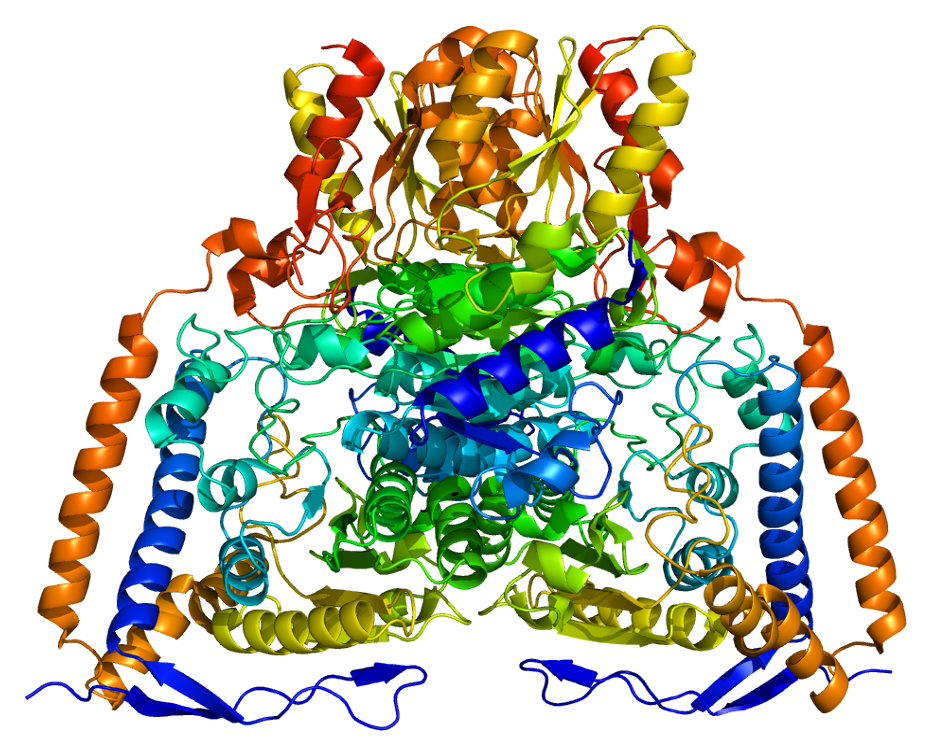
Deficiência de piruvato desidrogenase E1-alfa
📋 Origem dos dados
Esta página agrega dados de fontes públicas e oficiais. Dados sobre cobertura no SUS (PCDT, CEAF) são verificados ativamente por agente proativo (ver badge no infobox). Demais dados têm atribuição de fonte + data da última sincronização — clique para abrir o original.
- Doença rara (ontologia)
- fonte: Orphanet
- Identificador unificado
- fonte: MONDO
- Genética mendeliana
- fonte: OMIM
- Codificação WHO/SUS
- fonte: WHO ICD-10 / DATASUS
- CID-11 (futuro)
- fonte: WHO ICD-11
- NIH/GARD
- fonte: GARD (NIH)
- Indexação biomédica
- fonte: MeSH (NLM)
- Dado público estruturado
- fonte: Wikidata