
Anomalia congênita dos grandes vasos, como aorta e artérias pulmonares, associada a sintomas como infecções respiratórias recorrentes, hipoplasia pulmonar e shunt da esquerda para a direita. Pode apresentar-se com sequestro pulmonar e alterações na coluna vertebral.
Introdução
O que você precisa saber de cara
Visão geral
A anomalia congênita dos grandes vasos é um grupo de condições presentes desde o nascimento que afetam a estrutura e a função das principais artérias que saem do coração: a aorta, o arco aórtico e as artérias pulmonares. Essas alterações podem interferir no fluxo sanguíneo normal, levando a uma série de manifestações clínicas que variam de leves a graves.[1][3]
Sinais e sintomas
Os sinais e sintomas associados a esta condição são variados e podem incluir: dificuldade para respirar (dispneia), infecções respiratórias recorrentes, chiado no peito, palpitações, vertigem, desmaios, dor de cabeça (cefaleia), perda de peso não intencional, suores noturnos, dores musculares (mialgia) e perda de apetite (anorexia). Em alguns casos, pode ocorrer perda temporária da visão em um olho (amaurose fugaz).[1][3]
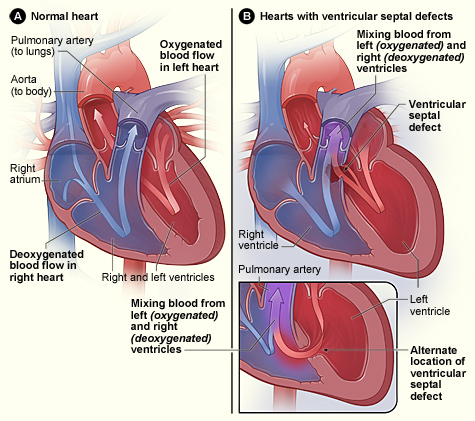
Alterações estruturais específicas podem ser identificadas em exames de imagem, como: estreitamento de artérias (estenose arterial), ausência de abertura da válvula aórtica (atresia da valva aórtica), má-formação da válvula aórtica, persistência do canal arterial (vaso que não se fecha após o nascimento), comunicação entre os ventrículos (defeito do septo ventricular), ventrículo direito com duas saídas (dupla via de saída do ventrículo direito), retorno anômalo das veias pulmonares, subdesenvolvimento do lado esquerdo do coração (coração esquerdo hipoplásico), subdesenvolvimento do pulmão (hipoplasia pulmonar), sequestro pulmonar (tecido pulmonar sem função normal) e anormalidades na coluna vertebral.[1][3]
Alterações funcionais como fração de ejeção do ventrículo esquerdo reduzida (capacidade reduzida de bombear sangue) e shunt da esquerda para a direita (passagem anormal de sangue entre as câmaras cardíacas) também podem estar presentes.[1][3]
Causas genéticas
A base genética desta condição é complexa e ainda não totalmente compreendida. Estudos identificaram associações com variações em três genes: MLX (Max-like protein X), IL12B (Interleucina-12 subunidade beta) e HLA-B (antígeno de histocompatibilidade classe I, cadeia alfa B). É importante notar que a presença de variações nesses genes não é necessariamente a causa direta da doença, mas pode aumentar o risco de seu desenvolvimento.[1][4]
Diagnóstico
O diagnóstico é baseado na avaliação clínica, exames de imagem (como ecocardiograma, ressonância magnética ou angiografia) e, em alguns casos, por meio de testes genéticos. Atualmente, existem 336 testes genéticos disponíveis para auxiliar na investigação, e 62 variantes genéticas associadas foram catalogadas no ClinVar, um banco de dados público.[1][4]
Tratamento e manejo
O tratamento e o manejo da anomalia congênita dos grandes vasos dependem do tipo e da gravidade da alteração específica. As opções podem incluir desde o monitoramento clínico regular até intervenções cirúrgicas para corrigir a anatomia dos vasos. Não há medicamentos aprovados especificamente para esta condição. O acompanhamento com uma equipe multidisciplinar (cardiologista, cirurgião cardiovascular, geneticista) é fundamental.[1]
Prognóstico e qualidade de vida
O prognóstico varia amplamente de acordo com a gravidade da anomalia e a presença de outras condições associadas. Muitas pessoas com formas leves podem ter uma vida normal com acompanhamento médico regular. Casos mais complexos podem exigir cirurgias e acompanhamento ao longo da vida. O suporte psicológico e a reabilitação cardíaca podem ser benéficos para melhorar a qualidade de vida.[1]
Conteúdo informativo gerado e mantido automaticamente a partir de fontes oficiais (Orphanet, HPO, OMIM, SUS). Não substitui avaliação médica.
Anomalia congênita dos grandes vasos, como aorta e artérias pulmonares, associada a sintomas como infecções respiratórias recorrentes, hipoplasia pulmonar e shunt da esquerda para a direita. Pode apresentar-se com sequestro pulmonar e alterações na coluna vertebral.
Tem tratamento?
Encontrou um erro ou informação desatualizada? Sugira uma correção →
Entender a doença
Do básico ao detalhe, leia no seu ritmo
Preparando trilha educativa...
Sinais e sintomas
O que aparece no corpo e com que frequência cada sintoma acontece
Visão geral
A anomalia congênita dos grandes vasos é um grupo de condições presentes desde o nascimento que afetam a estrutura e a função das principais artérias que saem do coração: a aorta, o arco aórtico e as artérias pulmonares. Essas alterações podem interferir no fluxo sanguíneo normal, levando a uma série de manifestações clínicas que variam de leves a graves.[1][3]
Sinais e sintomas
Os sinais e sintomas associados a esta condição são variados e podem incluir: dificuldade para respirar (dispneia), infecções respiratórias recorrentes, chiado no peito, palpitações, vertigem, desmaios, dor de cabeça (cefaleia), perda de peso não intencional, suores noturnos, dores musculares (mialgia) e perda de apetite (anorexia). Em alguns casos, pode ocorrer perda temporária da visão em um olho (amaurose fugaz).[1][3]
Alterações estruturais específicas podem ser identificadas em exames de imagem, como: estreitamento de artérias (estenose arterial), ausência de abertura da válvula aórtica (atresia da valva aórtica), má-formação da válvula aórtica, persistência do canal arterial (vaso que não se fecha após o nascimento), comunicação entre os ventrículos (defeito do septo ventricular), ventrículo direito com duas saídas (dupla via de saída do ventrículo direito), retorno anômalo das veias pulmonares, subdesenvolvimento do lado esquerdo do coração (coração esquerdo hipoplásico), subdesenvolvimento do pulmão (hipoplasia pulmonar), sequestro pulmonar (tecido pulmonar sem função normal) e anormalidades na coluna vertebral.[1][3]
Alterações funcionais como fração de ejeção do ventrículo esquerdo reduzida (capacidade reduzida de bombear sangue) e shunt da esquerda para a direita (passagem anormal de sangue entre as câmaras cardíacas) também podem estar presentes.[1][3]
Causas genéticas
A base genética desta condição é complexa e ainda não totalmente compreendida. Estudos identificaram associações com variações em três genes: MLX (Max-like protein X), IL12B (Interleucina-12 subunidade beta) e HLA-B (antígeno de histocompatibilidade classe I, cadeia alfa B). É importante notar que a presença de variações nesses genes não é necessariamente a causa direta da doença, mas pode aumentar o risco de seu desenvolvimento.[1][4]
Diagnóstico
O diagnóstico é baseado na avaliação clínica, exames de imagem (como ecocardiograma, ressonância magnética ou angiografia) e, em alguns casos, por meio de testes genéticos. Atualmente, existem 336 testes genéticos disponíveis para auxiliar na investigação, e 62 variantes genéticas associadas foram catalogadas no ClinVar, um banco de dados público.[1][4]
Tratamento e manejo
O tratamento e o manejo da anomalia congênita dos grandes vasos dependem do tipo e da gravidade da alteração específica. As opções podem incluir desde o monitoramento clínico regular até intervenções cirúrgicas para corrigir a anatomia dos vasos. Não há medicamentos aprovados especificamente para esta condição. O acompanhamento com uma equipe multidisciplinar (cardiologista, cirurgião cardiovascular, geneticista) é fundamental.[1]
Prognóstico e qualidade de vida
O prognóstico varia amplamente de acordo com a gravidade da anomalia e a presença de outras condições associadas. Muitas pessoas com formas leves podem ter uma vida normal com acompanhamento médico regular. Casos mais complexos podem exigir cirurgias e acompanhamento ao longo da vida. O suporte psicológico e a reabilitação cardíaca podem ser benéficos para melhorar a qualidade de vida.[1]
Conteúdo informativo gerado e mantido automaticamente a partir de fontes oficiais (Orphanet, HPO, OMIM, SUS). Não substitui avaliação médica.
Partes do corpo afetadas
+ 62 sintomas em outras categorias
Características mais comuns
Os sintomas variam de pessoa para pessoa. Abaixo estão as 145 características clínicas mais associadas, ordenadas por frequência.
Linha do tempo da pesquisa
Encontrou um erro ou informação desatualizada? Sugira uma correção →
Genética e causas
O que está alterado no DNA e como passa nas famílias
Genes associados
3 genes identificados com associação a esta condição.
Transcription regulator. Forms a sequence-specific DNA-binding protein complex with MAD1, MAD4, MNT, WBSCR14 and MLXIP which recognizes the core sequence 5'-CACGTG-3'. The TCFL4-MAD1, TCFL4-MAD4, TCFL4-WBSCR14 complexes are transcriptional repressors. Plays a role in transcriptional activation of glycolytic target genes. Involved in glucose-responsive gene regulation
CytoplasmNucleus
Cytokine that can act as a growth factor for activated T and NK cells, enhance the lytic activity of NK/lymphokine-activated killer cells, and stimulate the production of IFN-gamma by resting PBMC Associates with IL23A to form the IL-23 interleukin, a heterodimeric cytokine which functions in innate and adaptive immunity. IL-23 may constitute with IL-17 an acute response to infection in peripheral tissues. IL-23 binds to a heterodimeric receptor complex composed of IL12RB1 and IL23R, activates t
Secreted
Immunodeficiency 29
A form of Mendelian susceptibility to mycobacterial disease, a rare condition caused by impairment of interferon-gamma mediated immunity. It is characterized by predisposition to illness caused by moderately virulent mycobacterial species, such as Bacillus Calmette-Guerin (BCG) vaccine, environmental non-tuberculous mycobacteria, and by the more virulent Mycobacterium tuberculosis. Other microorganisms rarely cause severe clinical disease in individuals with susceptibility to mycobacterial infections, with the exception of Salmonella which infects less than 50% of these individuals. Clinical outcome severity depends on the degree of impairment of interferon-gamma mediated immunity. Some patients die of overwhelming mycobacterial disease with lepromatous-like lesions in early childhood, whereas others develop, later in life, disseminated but curable infections with tuberculoid granulomas. IMD29 is characterized by undetectable IL12B secretion from leukocytes. Affected individuals generally present with BCG disease after vaccination in childhood, and at least half also have Salmonella infection. Disease phenotype is relatively mild, and patients have a good prognosis.
Antigen-presenting major histocompatibility complex class I (MHCI) molecule. In complex with B2M/beta 2 microglobulin displays primarily viral and tumor-derived peptides on antigen-presenting cells for recognition by alpha-beta T cell receptor (TCR) on HLA-B-restricted CD8-positive T cells, guiding antigen-specific T cell immune response to eliminate infected or transformed cells (PubMed:23209413, PubMed:25808313, PubMed:29531227, PubMed:9620674). May also present self-peptides derived from the
Cell membraneEndoplasmic reticulum membrane
Stevens-Johnson syndrome
A rare blistering mucocutaneous disease that share clinical and histopathologic features with toxic epidermal necrolysis. Both disorders are characterized by high fever, malaise, and a rapidly developing blistering exanthema of macules and target-like lesions accompanied by mucosal involvement. Stevens-Johnson syndrome is a milder disease characterized by destruction and detachment of the skin epithelium and mucous membranes involving less than 10% of the body surface area. Ocular symptoms include ulcerative conjunctivitis, keratitis, iritis, uveitis and sometimes blindness. It can be caused by a severe adverse reaction to particular types of medication, although Mycoplasma infections may induce some cases.
Medicamentos e terapias
Mecanismo: Interleukin-6 receptor alpha subunit inhibitor
Mecanismo: Inosine-5'-monophosphate dehydrogenase (IMPDH) inhibitor
Mecanismo: Amidophosphoribosyltransferase inhibitor
Mecanismo: Janus Kinase (JAK) inhibitor
Mecanismo: Tyrosine-protein kinase JAK2 inhibitor
Mecanismo: Interleukin-23 inhibitor
Mecanismo: Glucocorticoid receptor agonist
Mecanismo: TNF-alpha inhibitor
Mecanismo: T-lymphocyte activation antigen CD86 inhibitor
Mecanismo: Glucocorticoid receptor agonist
Variantes genéticas (ClinVar)
62 variantes patogênicas registradas no ClinVar.
Vias biológicas (Reactome)
14 vias biológicas associadas aos genes desta condição.
Diagnóstico
Os sinais que médicos procuram e os exames que confirmam
Tratamento e manejo
Remédios, cuidados de apoio e o que precisa acompanhar
Onde tratar no SUS
Hospitais de referência no Brasil e o protocolo oficial do SUS (PCDT)
🇧🇷 Atendimento SUS — Anomalia dos grandes vasos (aorta, arco aórtico, artérias pulmonares), congênita
Centros de Referência SUS
24 centros habilitados pelo SUS para Anomalia dos grandes vasos (aorta, arco aórtico, artérias pulmonares), congênita
Centros para Anomalia dos grandes vasos (aorta, arco aórtico, artérias pulmonares), congênita
Detalhes dos centros
Hospital Universitário Prof. Edgard Santos (HUPES)
R. Dr. Augusto Viana, s/n - Canela, Salvador - BA, 40110-060 · CNES 0003808
Serviço de Referência
Hospital Infantil Albert Sabin
R. Tertuliano Sales, 544 - Vila União, Fortaleza - CE, 60410-794 · CNES 2407876
Serviço de Referência
Hospital de Apoio de Brasília (HAB)
AENW 3 Lote A Setor Noroeste - Plano Piloto, Brasília - DF, 70684-831 · CNES 0010456
Serviço de Referência
Hospital Estadual Infantil e Maternidade Alzir Bernardino Alves (HIABA)
Av. Min. Salgado Filho, 918 - Soteco, Vila Velha - ES, 29106-010 · CNES 6631207
Serviço de Referência
Hospital das Clínicas da UFG
Rua 235 QD. 68 Lote Área, Nº 285, s/nº - Setor Leste Universitário, Goiânia - GO, 74605-050 · CNES 2338424
Serviço de Referência
Hospital Universitário da UFJF
R. Catulo Breviglieri, Bairro - s/n - Santa Catarina, Juiz de Fora - MG, 36036-110 · CNES 2297442
Atenção Especializada
Hospital das Clínicas da UFMG
Av. Prof. Alfredo Balena, 110 - Santa Efigênia, Belo Horizonte - MG, 30130-100 · CNES 2280167
Serviço de Referência
Hospital Universitário Julio Müller (HUJM)
R. Luis Philippe Pereira Leite, s/n - Alvorada, Cuiabá - MT, 78048-902 · CNES 2726092
Atenção Especializada
Hospital Universitário João de Barros Barreto
R. dos Mundurucus, 4487 - Guamá, Belém - PA, 66073-000 · CNES 2337878
Serviço de Referência
Hospital Universitário Lauro Wanderley (HULW)
R. Tabeliao Estanislau Eloy, 585 - Castelo Branco, João Pessoa - PB, 58050-585 · CNES 0002470
Atenção Especializada
Instituto de Medicina Integral Prof. Fernando Figueira (IMIP)
R. dos Coelhos, 300 - Boa Vista, Recife - PE, 50070-902 · CNES 0000647
Serviço de Referência
Hospital Pequeno Príncipe
R. Des. Motta, 1070 - Água Verde, Curitiba - PR, 80250-060 · CNES 3143805
Serviço de Referência
Hospital Universitário Regional de Maringá (HUM)
Av. Mandacaru, 1590 - Parque das Laranjeiras, Maringá - PR, 87083-240 · CNES 2216108
Atenção Especializada
Hospital de Clínicas da UFPR
R. Gen. Carneiro, 181 - Alto da Glória, Curitiba - PR, 80060-900 · CNES 2364980
Serviço de Referência
Hospital Universitário Pedro Ernesto (HUPE-UERJ)
Blvd. 28 de Setembro, 77 - Vila Isabel, Rio de Janeiro - RJ, 20551-030 · CNES 2280221
Serviço de Referência
Instituto Nacional de Saúde da Mulher, da Criança e do Adolescente Fernandes Figueira (IFF/Fiocruz)
Av. Rui Barbosa, 716 - Flamengo, Rio de Janeiro - RJ, 22250-020 · CNES 2269988
Serviço de Referência
Hospital São Lucas da PUCRS
Av. Ipiranga, 6690 - Jardim Botânico, Porto Alegre - RS, 90610-000 · CNES 2232928
Serviço de Referência
Hospital de Clínicas de Porto Alegre (HCPA)
Rua Ramiro Barcelos, 2350 Bloco A - Av. Protásio Alves, 211 - Bloco B e C - Santa Cecília, Porto Alegre - RS, 90035-903 · CNES 2237601
Serviço de Referência
Hospital Universitário da UFSC (HU-UFSC)
R. Profa. Maria Flora Pausewang - Trindade, Florianópolis - SC, 88036-800 · CNES 2560356
Serviço de Referência
Hospital das Clínicas da FMUSP
R. Dr. Ovídio Pires de Campos, 225 - Cerqueira César, São Paulo - SP, 05403-010 · CNES 2077485
Serviço de Referência
Hospital de Base de São José do Rio Preto
Av. Brg. Faria Lima, 5544 - Vila Sao Jose, São José do Rio Preto - SP, 15090-000 · CNES 2079798
Atenção Especializada
Hospital de Clínicas da UNICAMP
R. Vital Brasil, 251 - Cidade Universitária, Campinas - SP, 13083-888 · CNES 2748223
Serviço de Referência
Hospital de Clínicas de Ribeirão Preto (HCRP-USP)
R. Ten. Catão Roxo, 3900 - Vila Monte Alegre, Ribeirão Preto - SP, 14015-010 · CNES 2082187
Serviço de Referência
UNIFESP / Hospital São Paulo
R. Napoleão de Barros, 715 - Vila Clementino, São Paulo - SP, 04024-002 · CNES 2688689
Serviço de Referência
Dados de DATASUS/CNES, SBGM, ABNeuro e Ministério da Saúde. Sempre confirme a disponibilidade diretamente com o estabelecimento.
Pesquisa ativa
Ensaios clínicos abertos e novidades científicas recentes
Ensaios em destaque
🟢 Recrutando agora
3 pesquisas recrutando participantes. Converse com seu médico sobre a possibilidade de participar.
Outros ensaios clínicos
0 ensaios clínicos encontrados.
Publicações mais relevantes
Anaesthetic management of a paediatric patient with situs inversus totalis and congenitally corrected transposition of the great arteries undergoing adenotonsillectomy.
Situs inversus totalis (SIT) with congenitally corrected transposition of the great arteries (ccTGA) represents a rare and complex congenital combination that significantly complicates anaesthetic management. We report the anaesthetic management of an early childhood (2-5 years), 13 kg child diagnosed with SIT and ccTGA undergoing elective adenotonsillectomy. Individualised perioperative strategies were implemented, including modified ECG monitoring, arrhythmia preparedness and explicit mg/kg drug dosing. Intraoperative management was uneventful, and the patient had a stable recovery. This case highlights anaesthetic considerations and monitoring adaptations in non-cardiac paediatric surgery involving mirror-image congenital cardiac anatomy.
Arrhythmias in congenitally corrected transposition of the great arteries: an international study.
There is a paucity of data on arrhythmia burden in patients with congenitally corrected transposition of the great arteries (ccTGAs). The present study sought to quantify the incidence of atrial arrhythmia (AA), ventricular arrhythmia (VA), and complete atrioventricular block (CAVB) in patients with ccTGA and identify associated factors. An international, multi-centre, retrospective cohort study was conducted in 29 tertiary hospitals (six countries) between 1990 and 2018. Primary analyses consisted of determining the incidence of a combined outcome consisting of AA, VA, or CAVB, along with its individual components. Factors associated with the different types of arrhythmias were assessed by uni-variable and multi-variable Cox regression analyses. A total of 1131 patients with ccTGA were followed for 9.0 (interquartile range 4.0-17.2) years. Cumulative rates of the primary endpoint at 10, 15, and 20 years were 44.5%, 51.0%, and 58.8%, respectively. AA, VA, and CAVB occurred in 2.1, 1.4, and 2.0 cases per 100 person-years, respectively. In multi-variable analyses, surgery/intervention conferred a greater than three-fold higher risk of AA [hazard ratio (HR) 3.01, 95% confidence interval (CI) 1.90-4.78, P < .001]. Furthermore, surgery/intervention was significantly associated with a greater risk of VA (HR 1.73, 95% CI 0.98-3.05, P = .003) and CAVB (HR 3.65, 95% CI 2.20-6.05, P < .001). The left bundle branch block was associated with a higher risk of VA (HR 4.03, 95% CI 1.59-10.23, P = .003) and the right bundle branch block with a higher risk of CAVB (HR 3.71, 95% CI 1.81-7.63, P < .001). The arrhythmia burden in patients with ccTGA is substantial, with a high incidence of AA, VA, and CAVB.
Persistent Double Dorsal Aorta and Complex Congenital Heart Disease - A Case Report.
Double dorsal aorta is a rare congenital embryological vascular anomaly resulting from incomplete regression and fusion of the dorsal aortae during embryogenesis. This anomaly could be associated with various other congenital heart defects (CHDs), including transposition of the great arteries, ventricular septal defect (VSD), persistent truncus arteriosus, tetralogy of Fallot (TOF), and Coarctation of the aorta (COA). This is a 9 year old girl with complex congenital heart disease and a double dorsal aorta who underwent a single ventricle palliation and this anomaly was detected during pre Fontan evaluation. She presented at age of 2 weeks with cyanosis, initial diagnosis was situs inversus, Dextrocarida, DORV with malposed great arteries, subpulmonary and valvular pulmonary stenosis, Patent ductal arteriosus and left superior vena cava. Patient was discussed with cardiothoracic team and Underwent left bidirectional Glenn at 10 months of age (2017) During pre-Fontan catheterization (June 2021) → incidental discovery of double descending (double dorsal) aorta, subsequently confirmed by CTA Fontan Completion: Deferred due to multiple severe comorbidities. Double dorsal aorta is an extremely rare embryologic vascular anomaly due to failure of fusion of the paired dorsal aortae. Although was asymptomatic, its identification is important in complex congenital heart disease because it may affect surgical planning and catheter based interventions. In this patient, the anomaly was detected incidentally during pre Fontan evaluation emphasizing the value of detailed preoperative imaging.
Outcomes of Heart Transplantation in Single-Ventricle Physiology: A Retrospective Single-Center Experience with Emphasis on Surgical Complexity.
Background: Patients with single-ventricle physiology represent a high-risk group for heart transplantation. Due to complex anatomical and physiological challenges, including multiple prior sternotomies, pulmonary artery abnormalities, and systemic consequences of altered circulation, they represent both a surgical and a clinical challenge. We aimed to analyze perioperative challenges, as well as early and long-term complications, in this specific group of patients. Methods: We performed a retrospective data analysis of a high-volume heart transplant center, focusing on patients with single-ventricle physiology who were scheduled for heart transplantation due to end-stage heart failure. We retrospectively analyzed the period from the beginning of the transplant program in November 1985 to the end of November 2024. Results: Among 1553 transplanted patients (adults and children), 29 were transplanted due to congenital heart disease (congenital valvular disease not included). In this group, nine patients were transplanted due to end-stage heart failure in the course of single-ventricle physiology. Age at transplantation ranged from 7 to 31 years (median, 17 years), and body weight ranged from 15 to 69 kg (median, 47.9 kg). All nine patients referred for heart transplantation presented with single-ventricle physiology. Their underlying congenital heart defects were heterogeneous and included hypoplastic left heart syndrome (HLHS), double-outlet left ventricle (DOLV), transposition of the great arteries (TGA) with associated ventricular septal defects (VSDs), atrial septal defects (ASDs), valvular abnormalities such as tricuspid and or pulmonary valve atresia or stenosis, systemic or atrioventricular valve regurgitation, and vascular abnormalities, including right-sided aortic arch, aortic coarctation, and pulmonary artery hypoplasia, stenosis, or occlusion, as well as associated pulmonary vascular abnormalities such as left pulmonary artery stenosis and MAPCAs. All patients had previously undergone staged palliative procedures, including Norwood, Hemi-Fontan, Fontan, bidirectional Glenn, modified Blalock-Taussig shunts, Bjork-Fontan, or pulmonary artery banding, often with repeated interventions such as balloon angioplasty, stent placement, or MAPCA closure. Extracardiac comorbidities were common and included coagulopathies, protein-losing enteropathy, hepatic dysfunction, and chronic venous insufficiency. Preoperative functional status was markedly impaired in all patients (NYHA III-IV, INTERMACS 3-4), with severely reduced exercise capacity and thrombotic events in several individuals. Perioperative transplant surgical strategies included femoral cannulation in four cases and standard aortic and caval cannulation in five cases. Pulmonary artery reconstruction was required in all patients. Extended donor pulmonary arteries were applied in eight cases, while a bifurcated Dacron prosthesis was utilized in one patient. Perioperative mortality was 33%, with three deaths attributed to bleeding and hemodynamic instability, while overall mortality was 44% including one late death unrelated to transplantation. Protein-losing enteropathy, although persistent in the immediate postoperative period, resolved in all surviving patients, underscoring the transformative impact of transplantation. Conclusions: These findings emphasize the importance of individualized surgical planning, extended donor pulmonary artery harvesting, and careful preoperative coordination. Heart transplantation remains a viable and life-extending option for selected single-ventricle patients, despite the significant technical and clinical challenges involved.
Prenatal Diagnosis of Isolated Congenitally Corrected Transposition of the Great Arteries.
Congenitally corrected transposition of the great arteries (ccTGA) is an uncommon congenital heart defect characterized by atrioventricular and ventriculo-arterial discordance resulting from abnormal leftward looping of the primitive cardiac tube. Although this double discordance produces a physiologically corrected circulation, the morphologic right ventricle functions as the systemic ventricle, and the tricuspid valve serves as the systemic atrioventricular valve, predisposing affected individuals to late complications. Prenatal diagnosis of ccTGA is often challenging, particularly in isolated cases without associated cardiac anomalies, as the four-chamber view may appear deceptively normal on routine obstetric ultrasound. In current prenatal cohorts reported in the literature, isolated ccTGA without additional structural cardiac anomalies is uncommon. In several series of prenatally diagnosed ccTGA, only about 13-15% of cases were isolated when postnatal findings were also considered. We report a case of isolated ccTGA diagnosed at 24 weeks and 4 days of gestation through detailed fetal echocardiographic evaluation and confirmed postnatally. Compared with the routine anomaly scan, which assesses only basic cardiac views (situs, four-chamber, and outflow tracts), a dedicated fetal echocardiography was performed. A sequential segmental approach was used, including confirmation of situs, detailed four-chamber morphology, atrioventricular and ventriculo-arterial connections, outflow tract and three-vessel views, aortic and ductal arches, and cranio-caudal sweeps from abdomen to mediastinum were used to track chamber continuity, great artery relationships, and color Doppler evaluation of flow across the valves and great vessels. Systematic assessment demonstrated ventricular inversion, with the systemic ventricle showing coarse trabeculations and a moderator band, along with apical displacement of the systemic atrioventricular valve consistent with tricuspid morphology. Atrioventricular discordance was clearly identified, and the great arteries were observed to run in a parallel orientation with abnormal ventriculo-arterial connections, key echocardiographic features that enabled accurate prenatal diagnosis. Importantly, no additional intracardiac anomalies were detected. The neonate remained clinically stable after birth, with a normal sinus rhythm and no evidence of immediate hemodynamic compromise. This case highlights the importance of a structured fetal cardiac evaluation extending beyond the standard four-chamber view. Careful attention to ventricular morphology, atrioventricular valve offsetting, and the spatial relationship of the great arteries is essential for identifying isolated ccTGA. Early prenatal diagnosis facilitates appropriate parental counseling, optimized perinatal planning, and structured long-term follow-up. Children with congenitally corrected transposition of the great arteries require lifelong surveillance because of the risk of progressive systemic right ventricular dysfunction, tricuspid valve regurgitation, arrhythmias, and conduction abnormalities, and early recognition allows timely intervention and improved functional outcomes into adolescence and adulthood.
Publicações recentes
One-stage repair of Taussig-Bing anomaly in a neonate with aortic arch hypoplasia and single coronary artery.
Lacunar stroke with incidental congenital absence of the internal carotid artery: importance of recognising a rare anatomical variant.
Surgery for coronary anomaly: Intramural single trunk between the great arteries.
The Role of Stress Echocardiography in Patients With Anomalous Aortic Origin of Coronary Arteries: Two Tertiary Cardiac Centers' Experience.
Complex Fetal Anomalies: Kluth Type Xc2 Variant Tracheoesophageal Fistula, Srikanth Group III Bronchopulmonary Foregut Malformation, Mirror-Image Dextrocardia with L-Looped Ventricles, Anomalous Coronary Origin from the Pulmonary Artery, and Cardiac-Type Total Anomalous Pulmonary Venous Connection.
📚 EuropePMCmostrando 199
Persistent Double Dorsal Aorta and Complex Congenital Heart Disease - A Case Report.
Journal of the Saudi Heart AssociationOutcomes of Heart Transplantation in Single-Ventricle Physiology: A Retrospective Single-Center Experience with Emphasis on Surgical Complexity.
Journal of clinical medicinePrenatal Diagnosis of Isolated Congenitally Corrected Transposition of the Great Arteries.
CureusCase Report: Parachute tricuspid valve in association with cyanotic congenital heart disease and juxtaposed atrial appendages in a 1-year-old boy-a rare anatomical association.
Frontiers in cardiovascular medicineBroadening horizons: new links between cilia and heart development and disease.
Frontiers in cardiovascular medicineDevelopment of 3D-Printed Congenital Heart Disease Models Using Feasible Low-Cost Workflow - A Potential Tool to Improve Pediatric Cardiology Education.
Arquivos brasileiros de cardiologiaOne-stage repair of Taussig-Bing anomaly in a neonate with aortic arch hypoplasia and single coronary artery.
Multimedia manual of cardiothoracic surgery : MMCTSSoft tissue abnormalities in the congenital limb malformation radial dysplasia (RD): Their clinical impact and treatment significance.
Journal of anatomyAnaesthetic management of a paediatric patient with situs inversus totalis and congenitally corrected transposition of the great arteries undergoing adenotonsillectomy.
BMJ case reportsCombined Lead Extraction and Leadless VDD Pacemaker Implantation in d-TGA Patient After Senning Procedure.
JACC. Case reportsA Rare Case of D-transposition of the Great Arteries (TGA) With Ventricular Septal Defect (VSD), Dysplastic Pulmonary Valve (Absent Pulmonary Valve Physiology), and Aortic Valve Stenosis in a Term Neonate.
CureusThe hemodynamic impact of congenital heart diseases during fetal-to-neonatal transition: an in-silico investigation.
Pediatric researchAntiarrhythmic Medications in Patients with Adult Congenital Heart Disease.
Cardiac electrophysiology clinicsSurgical Outcomes of Anatomic Repair in Congenitally Corrected Transposition of the Great Arteries: A 28-Year, Multicentre Dutch Experience.
European journal of cardio-thoracic surgery : official journal of the European Association for Cardio-thoracic SurgerySystemic atrioventricular valve replacement due to a supravalvular stenosing ring and ebsteinoid tricuspid valve in a patient with congenitally corrected transposition of the great arteries: a case report.
Archivos peruanos de cardiologia y cirugia cardiovascularIvemark syndrome in an adult with complete atrioventricular septal defect and a single ventricle with L-transposition of the great arteries: a case report.
Journal of medical case reportsThe distinct contribution of sternotomy to the systemic inflammatory response during children's heart surgery.
Frontiers in immunologyAssociation of Laboratory Parameters with Acute Kidney Injury in Pediatric Patients Undergoing Surgery for Transposition of the Great Arteries.
La Clinica terapeuticaLong-Term Outcome After the En Bloc Rotation of the Outflow Tracts Including Patients With Congenitally Corrected Transposition of the Great Arteries.
European journal of cardio-thoracic surgery : official journal of the European Association for Cardio-thoracic SurgeryImportance of clinical practice guidelines for specialized delivery room resuscitation of newborns with prenatally diagnosed critical congenital heart disease.
Journal of perinatology : official journal of the California Perinatal AssociationPreoperative Extracorporeal Membrane Oxygenation in Children With Dextro-Transposition of the Great Arteries: Extracorporeal Life Support Organization Registry Study, 2000-2022.
Pediatric critical care medicine : a journal of the Society of Critical Care Medicine and the World Federation of Pediatric Intensive and Critical Care SocietiesAssessment of Double Outlet Left Ventricle in Pediatrics Using Transthoracic Echocardiography and Computed Tomographic Angiography.
Pediatric discoveryLacunar stroke with incidental congenital absence of the internal carotid artery: importance of recognising a rare anatomical variant.
BMJ case reportsAnesthetic Management of a 32-Year-Old Woman Undergoing Laparoscopic Gynecological Surgery With Prior Fontan Repair for a Complex Congenital Heart Defect.
The American journal of case reportsStandardized mortality ratio in adults with congenital heart disease.
European heart journal openArrhythmia mechanisms and results of transcatheter ablation therapy in patients diagnosed with CHD: the most difficult and dark side of paediatric electrophysiology.
Cardiology in the youngSOX17 variants are associated with severe pulmonary arterial hypertension with and without congenital heart disease.
International journal of cardiologyVirtual Reality to Enhance Understanding of Congenital Heart Disease.
Journal of cardiovascular development and diseaseSurgery for coronary anomaly: Intramural single trunk between the great arteries.
Asian cardiovascular & thoracic annalsMonochorionic diamniotic twins with concordant dextro-transposition of the great arteries: strengthening the case for genetic underpinnings.
Cardiology in the youngOff-label use of implantable devices and stents in congenital heart disease patient's interventional procedures. a single center experience.
BMC cardiovascular disordersTranscatheter pulmonary valve replacement with the venusP-valve system in a patient with double outlet right ventricle and transposition of the great arteries a first-in-human case report.
Frontiers in cardiovascular medicineThe Role of Stress Echocardiography in Patients With Anomalous Aortic Origin of Coronary Arteries: Two Tertiary Cardiac Centers' Experience.
Echocardiography (Mount Kisco, N.Y.)Cardiac magnetic resonance imaging in atrioventricular discordance and congenitally corrected transposition (CCTGA).
European journal of radiology[Left Coronary Artery Stenosis Long-term After Original Jatene Procedure].
Kyobu geka. The Japanese journal of thoracic surgeryComplex Fetal Anomalies: Kluth Type Xc2 Variant Tracheoesophageal Fistula, Srikanth Group III Bronchopulmonary Foregut Malformation, Mirror-Image Dextrocardia with L-Looped Ventricles, Anomalous Coronary Origin from the Pulmonary Artery, and Cardiac-Type Total Anomalous Pulmonary Venous Connection.
Pediatric and developmental pathology : the official journal of the Society for Pediatric Pathology and the Paediatric Pathology SocietyTricuspid valve surgery in transposition of the great arteries with a systemic right ventricle.
International journal of cardiologyIncidental diagnosis of a complex cyanotic congenital heart defect in a 32-year-old with orbital abscess.
Cardiology in the youngPercutaneous Management of Right Ventricular Outflow Tract Obstruction in an Adult Patient After Atrial Switch: A Case for Targeted Infundibular Ablation.
Catheterization and cardiovascular interventions : official journal of the Society for Cardiac Angiography & InterventionsComparison of autologous aortic tissue and pericardial patch for neo-pulmonary artery reconstruction during arterial switch operation: a single-surgeon experience.
BMC cardiovascular disordersCongenitally corrected transposition of the great arteries: outcomes after single ventricle palliation.
Pediatric researchOutcomes of cardiac pacing in adults with congenitally corrected transposition of great arteries.
International journal of cardiologyHigh risk and low incidence diseases: Cyanotic critical congenital heart disease.
The American journal of emergency medicineArrhythmias in Congenital Heart Disease: Atrial Switch Operations.
Cardiac electrophysiology clinicsNeoaortic outcomes after the arterial switch operation: A systematic review and meta-analysis.
Archives of cardiovascular diseasesAortic atresia, interrupted hypoplastic right aortic arch, single ventricle and bilateral arterial duct - a unique anatomy with surgical palliation.
Journal of cardiothoracic surgeryAtrial Antitachycardia Pacing in Congenital Heart Disease: One Algorithm Does Not Fit All.
Pacing and clinical electrophysiology : PACE[Preliminary exploration of the mode and timing of delivery for complex fetal congenital heart disease].
Zhonghua fu chan ke za zhiComplex Reimplantation of Aneurysmal Left Main Coronary Artery During Reoperative Aortic Root Replacement.
CureusIdentifying Pathogenic Variants in Vietnamese Children with Functional Single Ventricle Based on Whole-Exome Sequencing.
Diagnostics (Basel, Switzerland)An Effective Hybrid Treatment for Persistent Sciatic Artery Aneurysm.
EJVES vascular forumThe "Heart-and-Brain Interaction" in Newborns with Complex Congenital Heart Disease.
European journal of cardio-thoracic surgery : official journal of the European Association for Cardio-thoracic SurgeryLife-threatening hemorrhage during removal of a Nuss bar embedded in the sternum: a case report.
Journal of cardiothoracic surgeryCoronary-to-pulmonary artery fistula in a patient with atypical chest pain: case presentation and literature review.
Surgical and radiologic anatomy : SRAFetal D-Transposition of the Great Arteries: Is There a Simple Option to Identify Fetuses Who Require Neonatal Balloon Septostomy?
Echocardiography (Mount Kisco, N.Y.)Ventricular Assist Devices in Adults With Transposition of the Great Arteries and Systemic Right Ventricle: Systematic Literature Review.
World journal for pediatric & congenital heart surgeryProfound systemic hypoperfusion in a patient with ventricular inversion temporised with transcatheter ductal closure.
Cardiology in the youngCCDC39 Mutation-Related Primary Ciliary Dyskinesia with Congenitally Corrected Transposition of the Great Arteries: A Case Report.
The American journal of case reportsClinical Predictors of Recurrent Cavotricuspid Isthmus Flutter After Catheter Ablation in Patients With Dextro-Transposition of the Great Arteries.
Journal of cardiovascular electrophysiologyLong-Term Surgical Outcomes in Double Outlet Right Ventricle Based on Detailed Anatomical Sub-Typology.
European journal of cardio-thoracic surgery : official journal of the European Association for Cardio-thoracic SurgeryClarifying the Cardiovascular Morphology and Associated Abnormalities in Patients with Double Inlet Left Ventricle Using Multidetector CT Angiography.
Pediatric cardiologyEffect of Fetal Brain Oxygenation and Volume on Brain Maturation and Neurodevelopmental Outcomes in Congenital Heart Disease.
RadiologyOptimising pre-operative assessment in double-outlet right ventricle: the complementary role of echocardiography and CT angiography.
Cardiology in the youngThe unconventional surgical management of an infant with rare Scimitar syndrome variant.
Cardiology in the youngRisk of Future Hemorrhage From Unruptured Brain Arteriovenous Malformations: The Multicenter Arteriovenous Malformation Research Study (MARS).
JAMA neurologyNavigating the clinical complexity of acute heart failure in an untreated adult with dextrotransposition of the great arteries (D-TGA) and multiple cardiac anomalies: a case report and review of literature.
Journal of medical case reportsDevelopment of Complexity Assessment and Monitoring to Ensure Optimal Outcomes Acuity Curves.
Dimensions of critical care nursing : DCCNMiddle Cerebral Artery Peak Systolic Velocity in Fetuses With Transposition of the Great Arteries.
Prenatal diagnosisPorto-Pulmonary Hypertension in Children: Insights From a National Registry.
Pulmonary circulationAn Expanding Perspective: Extreme Aortic Dilation in a Patient With Single Ventricle Palliation.
World journal for pediatric & congenital heart surgeryLongitudinal Magnetic Resonance Imaging Study of Hemodynamic Changes in the Third Trimester in Fetuses With Major Congenital Heart Defects and Healthy Fetuses.
Prenatal diagnosisMyocardial Protection Efficacy of Custodiol, Del Nido, and Cold Intermittent Blood Cardioplegia in Arterial Switch Operation.
Interdisciplinary cardiovascular and thoracic surgeryNeonatal transposition of the great arteries associated with abnormal right pulmonary artery.
Cardiology in the youngQuality of Life in Adults With Transposition of the Great Arteries With a Systemic Right or Left Ventricle.
The Canadian journal of cardiologyAmplitude-Integrated/Continuous Electroencephalography for Early Detection of Low Cardiac Output After Chest Closure in an Infant.
JACC. Case reportsThe arterial switch operation into the third and fourth decades of life.
The Journal of thoracic and cardiovascular surgeryComparison for Long-Term Results of the Modified Réparation à l´étage Ventriculaire and Rastelli Repair.
World journal for pediatric & congenital heart surgeryTiming of the Arterial Switch Operation in Premature Neonates < 2 kg With d-Loop Transposition of the Great Arteries and Intact Ventricular Septum-A Case Series.
World journal for pediatric & congenital heart surgery[Dissociation of posttraumatic arteriovenous fistula on the leg].
KhirurgiiaOutcomes of the Fontan operation in patients with Ebstein anomaly: An Australia and New Zealand Fontan registry study.
JTCVS openConotruncal Anomalies of the Fetus.
Ultraschall in der Medizin (Stuttgart, Germany : 1980)Aortocoronary flap technique in arterial switch for single coronary: Two case reports.
Science progressPlasma non-targeted metabolomics unravels the metabolic features of normal trans-right heart.
Metabolomics : Official journal of the Metabolomic SocietyCirc_0005372 targets the miR-153-3p/ITGB3 axis to stimulate the PI3K/AKT signaling pathway to facilitate the occurrence and development of congenital heart disease and pulmonary arterial hypertension in children.
Cardiovascular pathology : the official journal of the Society for Cardiovascular PathologyPrevalence and Predictors of Neurocognitive Dysfunction in Adults With Congenital Heart Disease: Results From MINDS-ACHD.
Journal of the American College of CardiologyAdvanced three-dimensional surgical planning of complex ventricular anatomy in transposition of the great arteries.
Cardiology in the youngFeasibility of laryngeal mask airway ventilation in selected pediatric pulmonary artery sling surgeries: a retrospective review.
Journal of cardiothoracic surgery[Main Trunk Interposition for Adult Anomalous Origin of the Left Coronary Artery from the Pulmonary Artery Using a Great Saphenous Vein:Report of a Case].
Kyobu geka. The Japanese journal of thoracic surgeryComplete transposition of the great arteries with a patent ductus arteriosus, atrial septal defect, and juxta-arterial ventricular septal defect in a cat.
Journal of veterinary cardiology : the official journal of the European Society of Veterinary CardiologyFirst-Trimester Detection of Conotruncal Anomalies Using Transabdominal SlowflowHD: A Case Series and Proof-of-Concept Study.
Journal of ultrasound in medicine : official journal of the American Institute of Ultrasound in MedicineTransposition of the great arteries: anatomy, physiology and surgical outcomes today.
Current opinion in pediatricsHealth-related quality of life outcomes for congenitally corrected transposition of the great arteries patients across the therapeutic spectrum.
Cardiology in the youngCardiac Resynchronization Therapy in Single-Ventricle Physiology: A Case Report of cc-TGA Managed With Fontan Strategy.
Pacing and clinical electrophysiology : PACEShortness of breath on a mustard patient: multidisciplinary approach improves outcomes.
Journal of cardiothoracic surgeryAnalysis of Echocardiography and Risk Factors Related to Prognosis in Adult Patients with Isolated Congenitally Corrected Transposition of the Great Arteries.
Journal of clinical medicineIatrogenic anastomosis of the internal mammary artery with the great cardiac vein: The first documented case report in Palestine with a literature review.
MedicineHealth-related quality of life in patients with a systemic right ventricle: the QUALISYSTEMIC study.
European journal of cardiovascular nursingGenetic aspects of congenital heart disease in heterotaxy syndrome.
Revista portuguesa de cardiologia : orgao oficial da Sociedade Portuguesa de Cardiologia = Portuguese journal of cardiology : an official journal of the Portuguese Society of CardiologyPrenatal detection rate of congenital anomalies over a period of 30 years: A population-based registry study.
European journal of obstetrics, gynecology, and reproductive biologymRNA Expression to Assess Hypoxia and Angiogenesis in Decidual Tissue of Term Fetuses With a Congenital Heart Disease.
Prenatal diagnosisNeonatal Outcomes in Transposition of the Great Arteries by Mode and Timing of Delivery.
American journal of perinatologyThe Predictive Role of Prenatal Echocardiography in the Diagnosis of Postnatal Pulmonary Stenosis.
Pediatric cardiologyEpigenomic signatures of accelerated epigenetic aging are associated with congenital heart disease in newborns.
BMC medical genomicsPrenatal ultrasound diagnosis and prognosis of ductal-dependent congenital heart disease: A single-center study in China.
International journal of gynaecology and obstetrics: the official organ of the International Federation of Gynaecology and ObstetricsArrhythmias in congenitally corrected transposition of the great arteries: an international study.
European heart journal3D Electroanatomical Mapping for Complex Atrial Arrhythmias in Adult Congenital Heart Disease-A Single Center Experience.
Pacing and clinical electrophysiology : PACEFetal Cerebrovascular Response to Maternal Hyperoxia Testing and Association With Brain Growth and Postnatal Brain Injury in Congenital Heart Disease.
Journal of the American Heart AssociationLong-Term Outcome Following Prenatal Diagnosis of Transposition of the Great Arteries.
Pediatric cardiologyComplex stenting of an obstructed outflow graft of a heartmate 3 in an adult after a mustard procedure.
Cardiology in the youngDouble-Outlet Right Ventricle in an Adult With a Univentricular Heart and Total Situs Inversus.
JACC. Case reportsSurgical management of hiatal hernia in a 3-year-old child with asplenia syndrome, congenital heart disease, thoracic scoliosis, and intestinal malrotation: A case report.
International journal of surgery case reportsConus Branch Fistula to Main Pulmonary Artery: A Rare Coronary Anomaly that May Cause Chest Pain in a Pediatric Patient.
European journal of case reports in internal medicineContemporary outcomes of childhood aortic coarctation interventions: a national registry analysis of mortality, reinterventions and hospital resource use.
Heart (British Cardiac Society)Assessing the Impact of Social Factors on Survival Among Infants Born with Transposition of the Great Arteries, Tetralogy of Fallot, and Diaphragmatic Hernia in Texas, 2011-2019.
Maternal and child health journalNeo-aortic valve regurgitation and root dilation after arterial switch operation in patients with native left ventricular outflow tract obstruction.
The Journal of thoracic and cardiovascular surgeryCongenitally Corrected Transposition of Great Arteries With Double Aortic Arch and Membranous Septal Aneurysm-A Rare Association.
Echocardiography (Mount Kisco, N.Y.)Outcome of the Arterial Switch Operation After One Month of Age in Infants With Transposition of the Great Arteries and Intact Ventricular Septum.
World journal for pediatric & congenital heart surgeryCongenital Conundrum: Unraveling the Puzzle of Double Outlet Right Ventricle for the Neonatologist.
NeoReviewsEvaluation of Intraoperative Bivalirudin Anticoagulation in Neonates and Infants Undergoing Arterial Switch Operation on Integrated ECMO-CPB Circuit: A Prospective Study.
Journal of cardiothoracic and vascular anesthesiaLeft bundle branch pacing in a 4-year-old patient with complete heart block after correction of transposition of the great arteries via a dual chamber pacing system: a case report.
Frontiers in cardiovascular medicineAssessing the Utility of Routine Surveillance Echocardiograms After Arterial Switch Operation in Adults With Transposition of the Great Arteries.
Journal of the American Society of Echocardiography : official publication of the American Society of EchocardiographyMassive Aneurysmal Coronary Artery Fistulae Demonstrating the Continued Utility of Surgical Intervention.
JACC. Case reportsAssociation of pulmonary artery bifurcation angle shift with contralateral stenosis after post-arterial switch in the pediatric transposition of great artery patients.
PloS oneDuplication of the umbilical vein along with an extrahepatic, intrathoracic right umbilical vein in the setting of Taussig-Bing anomaly with atrioventricular septal defect.
Indian journal of thoracic and cardiovascular surgeryArtificial Intelligence-Enabled ECG to Detect Congenitally Corrected Transposition of the Great Arteries.
Pediatric cardiologyPeripheral arterial bypass in pediatric patients: Literature review and a case of complex trauma in a 5-year-old boy.
Journal of vascular surgery cases and innovative techniquesReversed septal motion in congenital corrected transposition of the great arteries: A potential mechanism for tricuspid regurgitation.
The Journal of thoracic and cardiovascular surgeryIndirect surgical revascularization for management of vascular steal phenomenon in high-grade untreatable brain arteriovenous malformations.
Child's nervous system : ChNS : official journal of the International Society for Pediatric NeurosurgerySuboptimal Interrater Reliability Limits Predictive Value of Fetal Echocardiography for Neonatal Balloon Atrial Septostomy in Fetuses With Dextro-Transposition of the Great Arteries.
Journal of the American Society of Echocardiography : official publication of the American Society of EchocardiographyAcute thrombosis of an atrial flow regulator in a failing Fontan circulation: recanalization and management.
BMC cardiovascular disordersSuccessful living donor kidney transplantation in a 14-year-old boy with Fontan circulation.
Pediatric nephrology (Berlin, Germany)Shifting strategies to address systemic outflow tract obstruction in single ventricle anatomy with transposed great arteries.
The Journal of thoracic and cardiovascular surgeryPrevalence of Pulmonary Artery Interventions Following the Arterial Switch Operation.
World journal for pediatric & congenital heart surgeryTransposition of the Great Arteries With Intact Ventricular Septum and Left Ventricular Outflow Tract Obstruction: An Analysis of The Society of Thoracic Surgeons Congenital Heart Surgery Database (STS-CHSD).
World journal for pediatric & congenital heart surgeryDesign and rationale of "Antecedents and correlates of well-being in young adults with congenital heart disease in the Boston Circulatory Arrest Study (BCAS-adult)".
American heart journalTiming of Arterial Switch Operation in Dextro-Transposition of Great Arteries with Intact Septum: Factors Associated with Delay, Practice Variation, and Associated Outcomes.
Pediatric cardiologyDouble-Outlet Left Ventricle With Leftward Anterior Aorta in Infants.
JACC. Case reportsDouble "dynamic" balloon atrial septostomy. New modification of Dr. Rashkind's technique for cases with thickened interatrial septum.
Archivos de cardiologia de MexicoSingle and Double Root Translocation for Transposition and Malposition of the Great Arteries.
Seminars in thoracic and cardiovascular surgery. Pediatric cardiac surgery annualClarifying the cardiovascular morphology and associated abnormalities in patients with tricuspid Atresia using multidetector computed tomography angiography.
The international journal of cardiovascular imagingAspirin Use Following the Arterial Switch Operation in the United States: Variability, Trends, and Perioperative Outcomes.
World journal for pediatric & congenital heart surgeryAsymptomatic Isolated Congenitally Corrected Transposition of the Great Arteries in a 25-Year-Old Male: A Case Report.
Journal of investigative medicine high impact case reportsAlterations in portal vein confluence during gastric cancer surgery: two case reports.
Korean journal of clinical oncologyThe Prevalence of Associated Congenital Cardiac Anomalies (Shunt-Dependent Lesions) in Children with Transposition of Great Artery.
Nigerian journal of clinical practiceThree different surgical approaches for complex transposition of the great arteries with ventricular septal defect and pulmonary stenosis.
Multimedia manual of cardiothoracic surgery : MMCTSTotal anomalous pulmonary venous connection - prenatal echocardiography and neonatal follow-up.
Journal of ultrasonographyPrediction of Coronary Artery Abnormalities Using Computed Tomography Angiography and Transthoracic Echocardiography Before Arterial Switch Operation İn Neonates With Dextro-Transposition of the Great Arteries.
Journal of clinical ultrasound : JCUTwo decades after the arterial switch operation: stable right ventricular function but reduced exercise capacity.
Journal of cardiovascular magnetic resonance : official journal of the Society for Cardiovascular Magnetic ResonanceHeart failure in patients with a systemic right ventricle: A multicentre study with long-term follow-up.
European journal of heart failureOutcome of Pregnancy in Women With Congenitally Corrected Transposition of the Great Arteries: A Systematic Review.
The American journal of cardiologyWhen to Opt for Univentricular versus Biventricular Repair in Complex Congenitally Corrected Transposition of the Great Arteries.
Seminars in thoracic and cardiovascular surgeryPractical approach to using cardiac magnetic resonance imaging for pre-surgical planning in complex paediatric congenital heart disease.
Pediatric radiologyBenefits and risks of implantable cardioverter-defibrillators in children and young adults with congenital heart disease, primary electrical disease or paediatric cardiomyopathy†.
European journal of cardio-thoracic surgery : official journal of the European Association for Cardio-thoracic SurgeryCongenital Heart Defects and Apgar Score at Birth, a Nationwide Study.
Journal of the American Heart AssociationSurgical Management of a Right Coronary Artery Fistula After Failed Transcatheter Closure: A Case Report.
CureusHighly accelerated 4D flow MRI with respiratory compensation and cardiac view sharing: a cross-sectional study of flow in the great vessels of pediatric congenital heart disease.
Pediatric radiologyCase Report: Atrial baffles of pulmonary and systemic veins for the anatomic and physiologic repair of left atrial isomerism heterotaxy-pre- and post-operative three-dimensional reconstructions of two mirror-image pediatric hearts.
Frontiers in cardiovascular medicineNovel Therapies for Patients With Systemic Right Ventricle.
The Canadian journal of cardiologyAnatomical repair for late presentation of congenitally corrected transposition of the great arteries with ventricular septal defect and left ventricular outflow tract obstruction in an 18-year-old.
Multimedia manual of cardiothoracic surgery : MMCTSTransversal cardiac diameter is increased in fetuses with dextro-transposition of the great arteries older than 28th weeks of gestation.
Journal of perinatal medicineA Coronary Challenge: Management of Dextro-Transposition With Levo-Malposed Great Vessels.
World journal for pediatric & congenital heart surgeryDevelopmental language trajectories in children with critical CHD.
Cardiology in the youngIntracavitary blood flow dynamics in the systemic right ventricle after atrial switch operation: a shift from transverse to longitudinal systolic pattern.
The international journal of cardiovascular imagingPathophysiology and management of adults with complex congenital heart disease after biventricular repair.
Journal of cardiologyHemodynamic interplay of ventricular, atrial and aortic function in patients after arterial switch operation: insights from cardiac MRI.
Cardiovascular diagnosis and therapyMicrovascular aberrations found in human polycystic kidneys are an early feature in a Pkd1 mutant mouse model.
Disease models & mechanismsThe arterial switch operation for transposition of the great arteries with left ventricular outflow tract obstruction and ventricular septal defect: clinical outcomes and specimen study.
Interdisciplinary cardiovascular and thoracic surgeryOutcomes of Fontan operation in patients with conotruncal anomalies from Australia and New Zealand Fontan Registry: a review of 1835 patients†.
European journal of cardio-thoracic surgery : official journal of the European Association for Cardio-thoracic SurgeryA cohort evaluation of surgical pathways reported to a national audit of children undergoing treatment for congenital heart disease in England and Wales.
The Journal of thoracic and cardiovascular surgeryPrimary repair versus pulmonary artery banding in complete atrioventricular canal defects in the modern surgical era.
The Journal of thoracic and cardiovascular surgeryVirtual Post Mortem in Fetuses and Newborns for the Verification of Congenital Heart Malformations.
Pediatric cardiologyDevelopmental and Psychological Concerns in Children With Complex Congenital Heart Disease: The Need for a Screening Program.
Journal of paediatrics and child healthVentricular Assist Device Implantation in a Patient Congenitally Corrected Transposition of the Great Arteries With I, D, D.
ASAIO journal (American Society for Artificial Internal Organs : 1992)Using the Six-Minute Walk Test to Evaluate Functional Capacity of Children Undergoing a Surgical Repair of Congenital Heart Disease: Two Case Reports.
CureusPostoperative atrioventricular block after surgery for congenital heart disease: incidence, recovery and risks.
European journal of cardio-thoracic surgery : official journal of the European Association for Cardio-thoracic SurgeryIntraoperative fluorescence angiography after arterial switch operation.
Asian cardiovascular & thoracic annalsThe Association Between Residual Lesion Score and Long-term Outcomes of Congenital Cardiac Operations.
The Annals of thoracic surgeryVentricular-arterial coupling is associated with clinical outcomes in patients with systemic right ventricle.
American heart journalPrenatal VEGF Nanodelivery Reverses Congenital Diaphragmatic Hernia-associated Pulmonary Abnormalities.
American journal of respiratory and critical care medicineCoronary sinus unroofing associated with congenitally corrected transposition of the great arteries: a case report.
European heart journal. Case reportsA risk score to predict kidney survival in patients with autosomal recessive polycystic kidney disease at the age of two months.
Kidney internationalRight Ventricular Electrophysiology and Arrhythmias in Adults With Congenital Heart Disease: Scientific Basis for Management.
The Canadian journal of cardiologyLong-Term Coronary Artery Complications Following the Arterial Switch Operation for Transposition of the Great Arteries-A Scoping Review.
World journal for pediatric & congenital heart surgeryCerebral Microhemorrhages in Children With Congenital Heart Disease: Prevalence, Risk Factors, and Association With Neurodevelopmental Outcomes.
Journal of the American Heart AssociationSurgical Repair of Anatomically Corrected Malposition of the Great Arteries Associated With Ventricular Septal Defect.
JACC. Case reportsIncidence and Prognosis of Surgical Heart Block in Patients with L-transposition of the Great Arteries.
Pediatric cardiologyShort- and Long-Term Outcomes of Patients Who Underwent the Arterial Switch Operation at Siriraj Hospital-Thailand's Largest National Tertiary Referral Center.
World journal for pediatric & congenital heart surgeryImmediate and Intermediate-Term Outcomes of Infants With Transposition of Great Arteries Who Underwent Balloon Atrial Septostomy in Sudan.
Global heartMixed reality for preoperative planning and intraoperative assistance of surgical correction of complex congenital heart defects.
The Journal of thoracic and cardiovascular surgeryLeft Coronary Artery-Right Ventricle Fistula Case Report: Optimal Treatment Decision.
Medicina (Kaunas, Lithuania)Torn spiral patch repair of ventricular septation for single ventricle associated with D-malposition of the great arteries after 40 years.
Cardiology in the youngPerioperative extracorporeal membrane oxygenation in neonates with transposition of the great arteries: 15 years of experience.
European journal of cardio-thoracic surgery : official journal of the European Association for Cardio-thoracic SurgeryCommissural malalignment on echocardiography as a predictor of coronary artery abnormalities in newborns with transposition of great arteries.
Revista portuguesa de cardiologia : orgao oficial da Sociedade Portuguesa de Cardiologia = Portuguese journal of cardiology : an official journal of the Portuguese Society of CardiologyA Rare Case of Dichorionic Twins Concordant for Arterial Tortuosity Syndrome: Case Report and Review of the Literature.
Fetal diagnosis and therapyAnesthesia management for cesarean delivery in patients with an arterial switch operation: a single center case series (2015-2023).
International journal of obstetric anesthesiaArrhythmia burden in congenitally corrected transposition of the great arteries: Does treatment pathway matter?
Heart rhythmThe internal jugular approach for baffle puncture and ablation of atrial arrhythmias in patients with atrial switch procedures: a retrospective analysis.
Journal of interventional cardiac electrophysiology : an international journal of arrhythmias and pacingA Juxta-Arterial and Perimembranous Confluent Ventricular Septal Defect in Transposition of the Great Arteries.
World journal for pediatric & congenital heart surgeryElective Aortic Surgery for Prevention of Aortic Dissection in Turner Syndrome: The Potential Impact of Updated European Society of Cardiology and International Turner Syndrome Consensus Group Guidelines on Referrals to the Heart Team.
Clinical endocrinologyAssociações
Organizações que acompanham esta doença — pra ter apoio e orientação
Ainda não temos associações cadastradas para Anomalia dos grandes vasos (aorta, arco aórtico, artérias pulmonares), congênita.
É de uma associação que acompanha esta doença? Fale com a gente →
Comunidades
Grupos ativos de quem convive com esta doença aqui no Raras
Ainda não existe comunidade no Raras para Anomalia dos grandes vasos (aorta, arco aórtico, artérias pulmonares), congênita
Pacientes, familiares e cuidadores se organizam em comunidades pra compartilhar experiências, fazer perguntas e se apoiar. Você pode ser o primeiro.
Tire suas dúvidas
Perguntas, dicas e experiências compartilhadas aqui na página
Participe da discussão
Faça login para postar dúvidas, compartilhar experiências e interagir com especialistas.
Fazer loginDoenças relacionadas
Doenças com sintomas parecidos — ajudam quem ainda está buscando diagnóstico
Referências e fontes
Bases de dados externas citadas neste artigo
Publicações científicas
Artigos indexados no PubMed ligados a esta doença no grafo RarasNet — título, periódico e PMID direto da fonte, sem intermediação de IA.
- Anaesthetic management of a paediatric patient with situs inversus totalis and congenitally corrected transposition of the great arteries undergoing adenotonsillectomy.
- Arrhythmias in congenitally corrected transposition of the great arteries: an international study.
- Persistent Double Dorsal Aorta and Complex Congenital Heart Disease - A Case Report.
- Outcomes of Heart Transplantation in Single-Ventricle Physiology: A Retrospective Single-Center Experience with Emphasis on Surgical Complexity.
- Prenatal Diagnosis of Isolated Congenitally Corrected Transposition of the Great Arteries.
- One-stage repair of Taussig-Bing anomaly in a neonate with aortic arch hypoplasia and single coronary artery.
- Lacunar stroke with incidental congenital absence of the internal carotid artery: importance of recognising a rare anatomical variant.
- Surgery for coronary anomaly: Intramural single trunk between the great arteries.
- The Role of Stress Echocardiography in Patients With Anomalous Aortic Origin of Coronary Arteries: Two Tertiary Cardiac Centers' Experience.
- Complex Fetal Anomalies: Kluth Type Xc2 Variant Tracheoesophageal Fistula, Srikanth Group III Bronchopulmonary Foregut Malformation, Mirror-Image Dextrocardia with L-Looped Ventricles, Anomalous Coronary Origin from the Pulmonary Artery, and Cardiac-Type Total Anomalous Pulmonary Venous Connection.
Bases de dados e fontes oficiais
Identificadores e referências canônicas usadas para montar este verbete.
- ORPHA:98724(Orphanet)
- MONDO:0020292(MONDO)
- GARD:19556(GARD (NIH))
- Variantes catalogadas(ClinVar)
- Busca completa no PubMed(PubMed)
- Q55789284(Wikidata)
Dados compilados pelo RarasNet a partir de fontes abertas (Orphanet, OMIM, MONDO, PubMed/EuropePMC, ClinicalTrials.gov, DATASUS, PCDT/MS). Este conteúdo é informativo e não substitui avaliação médica.
Conteúdo mantido por Agente Raras · Médicos e pesquisadores podem colaborar
Anomalia dos grandes vasos (aorta, arco aórtico, artérias pulmonares), congênita
📋 Origem dos dados
Esta página agrega dados de fontes públicas e oficiais. Dados sobre cobertura no SUS (PCDT, CEAF) são verificados ativamente por agente proativo (ver badge no infobox). Demais dados têm atribuição de fonte + data da última sincronização — clique para abrir o original.
- Doença rara (ontologia)
- fonte: Orphanet
- Identificador unificado
- fonte: MONDO
- NIH/GARD
- fonte: GARD (NIH)
- Dado público estruturado
- fonte: Wikidata
- Medicamentos (literatura)
- fonte: Orphanet