Hipopituitário caracterizado por produção diminuída ou ausente do hormônio adrenocorticotrófico pela glândula pituitária.
Introdução
O que você precisa saber de cara
A deficiência isolada de ACTH congênita é uma doença rara presente desde o nascimento na qual a hipófise não produz adequadamente o hormônio adrenocorticotrófico. A falta desse hormônio leva à diminuição do cortisol e pode provocar sinais como hipoglicemia neonatal (baixo nível de açúcar no sangue), convulsões, fraqueza e icterícia prolongada (pele amarelada). A condição é de causa genética, herdada de forma autossômica recessiva e relacionada a mutações no gene TBX19. No Brasil, a doença não conta com um PCDT oficial publicado pelo Ministério da Saúde, sendo o suporte clínico estruturado nos serviços especializados de referência.
Hipopituitário caracterizado por produção diminuída ou ausente do hormônio adrenocorticotrófico pela glândula pituitária.
Encontrou um erro ou informação desatualizada? Sugira uma correção →
Entender a doença
Do básico ao detalhe, leia no seu ritmo
Preparando trilha educativa...
Sinais e sintomas
O que aparece no corpo e com que frequência cada sintoma acontece
Partes do corpo afetadas
+ 10 sintomas em outras categorias
Características mais comuns
Os sintomas variam de pessoa para pessoa. Abaixo estão as 18 características clínicas mais associadas, ordenadas por frequência.
Linha do tempo da pesquisa
Encontrou um erro ou informação desatualizada? Sugira uma correção →
Genética e causas
O que está alterado no DNA e como passa nas famílias
Genes associados
1 gene identificado com associação a esta condição.
Curadoria gene-doença
fontes oficiaisACTH deficiency, isolated
An autosomal recessive disorder that is characterized by adrenal insufficiency symptoms, such as weight loss, lack of appetite (anorexia), weakness, nausea, vomiting and low blood pressure (hypotension). The pituitary hormone ACTH is decreased or absent, and other cortisol and other steroid hormone levels in the blood are abnormally low.
Variantes genéticas (ClinVar)
52 variantes patogênicas registradas no ClinVar.
Diagnóstico
Os sinais que médicos procuram e os exames que confirmam
Tratamento e manejo
Remédios, cuidados de apoio e o que precisa acompanhar
Onde tratar no SUS
Hospitais de referência no Brasil e o protocolo oficial do SUS (PCDT)
🇧🇷 Atendimento SUS — Deficiência isolada de ACTH congênita
Centros de Referência SUS
24 centros habilitados pelo SUS para Deficiência isolada de ACTH congênita
Centros para Deficiência isolada de ACTH congênita
Detalhes dos centros
Hospital Universitário Prof. Edgard Santos (HUPES)
R. Dr. Augusto Viana, s/n - Canela, Salvador - BA, 40110-060 · CNES 0003808
Serviço de Referência
Hospital Infantil Albert Sabin
R. Tertuliano Sales, 544 - Vila União, Fortaleza - CE, 60410-794 · CNES 2407876
Serviço de Referência
Hospital de Apoio de Brasília (HAB)
AENW 3 Lote A Setor Noroeste - Plano Piloto, Brasília - DF, 70684-831 · CNES 0010456
Serviço de Referência
Hospital Estadual Infantil e Maternidade Alzir Bernardino Alves (HIABA)
Av. Min. Salgado Filho, 918 - Soteco, Vila Velha - ES, 29106-010 · CNES 6631207
Serviço de Referência
Hospital das Clínicas da UFG
Rua 235 QD. 68 Lote Área, Nº 285, s/nº - Setor Leste Universitário, Goiânia - GO, 74605-050 · CNES 2338424
Serviço de Referência
Hospital Universitário da UFJF
R. Catulo Breviglieri, Bairro - s/n - Santa Catarina, Juiz de Fora - MG, 36036-110 · CNES 2297442
Atenção Especializada
Hospital das Clínicas da UFMG
Av. Prof. Alfredo Balena, 110 - Santa Efigênia, Belo Horizonte - MG, 30130-100 · CNES 2280167
Serviço de Referência
Hospital Universitário Julio Müller (HUJM)
R. Luis Philippe Pereira Leite, s/n - Alvorada, Cuiabá - MT, 78048-902 · CNES 2726092
Atenção Especializada
Hospital Universitário João de Barros Barreto
R. dos Mundurucus, 4487 - Guamá, Belém - PA, 66073-000 · CNES 2337878
Serviço de Referência
Hospital Universitário Lauro Wanderley (HULW)
R. Tabeliao Estanislau Eloy, 585 - Castelo Branco, João Pessoa - PB, 58050-585 · CNES 0002470
Atenção Especializada
Instituto de Medicina Integral Prof. Fernando Figueira (IMIP)
R. dos Coelhos, 300 - Boa Vista, Recife - PE, 50070-902 · CNES 0000647
Serviço de Referência
Hospital Pequeno Príncipe
R. Des. Motta, 1070 - Água Verde, Curitiba - PR, 80250-060 · CNES 3143805
Serviço de Referência
Hospital Universitário Regional de Maringá (HUM)
Av. Mandacaru, 1590 - Parque das Laranjeiras, Maringá - PR, 87083-240 · CNES 2216108
Atenção Especializada
Hospital de Clínicas da UFPR
R. Gen. Carneiro, 181 - Alto da Glória, Curitiba - PR, 80060-900 · CNES 2364980
Serviço de Referência
Hospital Universitário Pedro Ernesto (HUPE-UERJ)
Blvd. 28 de Setembro, 77 - Vila Isabel, Rio de Janeiro - RJ, 20551-030 · CNES 2280221
Serviço de Referência
Instituto Nacional de Saúde da Mulher, da Criança e do Adolescente Fernandes Figueira (IFF/Fiocruz)
Av. Rui Barbosa, 716 - Flamengo, Rio de Janeiro - RJ, 22250-020 · CNES 2269988
Serviço de Referência
Hospital São Lucas da PUCRS
Av. Ipiranga, 6690 - Jardim Botânico, Porto Alegre - RS, 90610-000 · CNES 2232928
Serviço de Referência
Hospital de Clínicas de Porto Alegre (HCPA)
Rua Ramiro Barcelos, 2350 Bloco A - Av. Protásio Alves, 211 - Bloco B e C - Santa Cecília, Porto Alegre - RS, 90035-903 · CNES 2237601
Serviço de Referência
Hospital Universitário da UFSC (HU-UFSC)
R. Profa. Maria Flora Pausewang - Trindade, Florianópolis - SC, 88036-800 · CNES 2560356
Serviço de Referência
Hospital das Clínicas da FMUSP
R. Dr. Ovídio Pires de Campos, 225 - Cerqueira César, São Paulo - SP, 05403-010 · CNES 2077485
Serviço de Referência
Hospital de Base de São José do Rio Preto
Av. Brg. Faria Lima, 5544 - Vila Sao Jose, São José do Rio Preto - SP, 15090-000 · CNES 2079798
Atenção Especializada
Hospital de Clínicas da UNICAMP
R. Vital Brasil, 251 - Cidade Universitária, Campinas - SP, 13083-888 · CNES 2748223
Serviço de Referência
Hospital de Clínicas de Ribeirão Preto (HCRP-USP)
R. Ten. Catão Roxo, 3900 - Vila Monte Alegre, Ribeirão Preto - SP, 14015-010 · CNES 2082187
Serviço de Referência
UNIFESP / Hospital São Paulo
R. Napoleão de Barros, 715 - Vila Clementino, São Paulo - SP, 04024-002 · CNES 2688689
Serviço de Referência
Dados de DATASUS/CNES, SBGM, ABNeuro e Ministério da Saúde. Sempre confirme a disponibilidade diretamente com o estabelecimento.
Pesquisa ativa
Ensaios clínicos abertos e novidades científicas recentes
Ensaios em destaque
Nenhum país com ensaio aberto no momento.
Pesquisa e ensaios clínicos
1 ensaios clínicos encontrados.
Publicações mais relevantes
[Two cases of congenital isolated adrenocorticotropic hormone deficiency due to pathogenic variants in TBX19].
Congenital isolated ACTH deficiency (СIAD) is an orphan autosomal recessive disease caused by ТВХ19 (1q24.2) gene pathogenic variants. The article presents two cases with a classic manifestation of the СIAD in neonatal period which were confirmed genetically, one of cases revealed the first described TBX19 gene variant. Despite the appearance of significant symptoms in the newborn period in both patients diagnoses were established at the 8th and 22nd months of life. Clinical manifestations of hypoglycemia were present in both patients: from the 1st day of life (episode of apnoea) in patient № 2 and from 7 months (seizures) in patient № 1. Cholestatic jaundice, hepatomegaly, signs of hepatocyte cytolysis, impaired protein-synthetic liver function were the main manifestations of the disease in 1st patient. This may indicate non-infectious cholestatic hepatitis. Improvement and gradual normalization of clinical and laboratory symptoms during hydrocortisone therapy confirmed the association of liver damage with hypocortisolemia. 2nd patient had no signs of cholestasis. Low cortisol levels were observed with reduced or low-normal ACTH, which confirmed central hypocorticism. Genetic study in both patients revealed TBX19 gene pathogenic variants in a homozygous state: c.82C>T(p.Q28X) in patient №1, not previously described variant c.469-1G>A in patient №2. Врожденный изолированный дефицит адренокортикотропного гормона (ВИДА) — орфанное аутосомно-рецессивное заболевание, обусловленное патогенными вариантами в гене ТВХ19 (1q24.2). В статье представлено описание двух клинических случаев с классической манифестацией ВИДА в неонатальном периоде, подтвержденного генетически, причем в одном из них выявлен впервые описанный вариант в гене TBX19. Диагноз установлен на 8-м и 22-м месяцах жизни, несмотря на появление клинически значимых симптомов в периоде новорожденности у обеих пациенток. Клинические проявления гипогликемии присутствовали у обеих пациенток: у пациентки №2 — с первых суток жизни (эпизод апноэ), у пациентки №1 — с 7 месяцев (судороги). У пациентки №1 основными проявлениями заболевания были холестатическая желтуха, гепатомегалия, признаки цитолиза гепатоцитов, нарушение белковосинтетической функции печени, что может свидетельствовать о развитии неинфекционного холестатического гепатита. Связь поражения печени с гипокортизолемией подтверждают улучшение и постепенная нормализация клинико-лабораторных изменений на фоне терапии гидрокортизоном. У пациентки №2 признаки холестаза отсутствовали. Лабораторно отмечались низкие уровни кортизола при сниженном или низконормальном — адренокортикотропного гормона (АКТГ), что подтверждает центральный гипокортицизм. При молекулярно-генетическом исследовании у обеих пациенток обнаружены патогенные варианты в гене ТВХ19 в гомозиготном состоянии: у пациентки №1 c.82C>T(p.Q28X), у пациентки №2 — c.469-1G>A, ранее не описанный.
Dihydropyrimidinase enzyme deficiency and congenital isolated adrenocorticotrophin deficiency: dual genetic diagnosis in a Sri Lankan boy.
We report on a male patient who was investigated for frequent apneic episodes, feeding problems, hypotonia, and left-sided middle cerebral artery infarction in the magnetic resonance imaging at 2 weeks of age. Primary diagnosis of dihydropyrimidinase (DPYS) deficiency was suspected following the analysis of urine for organic acid; DPYS deficiency was strongly suggested by the presence of dihydrouracil, thymine, and uracil. Subsequent genetic evaluation by whole exome sequencing revealed 2 separate mutations, homozygous pathogenic variant c.1010T>C p.Leu337Pro of the DPYS gene, resulting in DPYS deficiency, and homozygous pathogenic variant c.535C>T p.Arg179* of TBX19 gene, which is associated with autosomal recessive congenital isolated adrenocorticotrophic hormone deficiency. Currently, the patient is 2 years old, and he has gross motor retardation and seizure disorder. We suggest that the clinical phenotype of the proband can be a result of mixed expression of both mutations.
[Clinical and genetic characteristics of congenital isolated adrenocorticotropic hormone deficiency].
Objective: To investigate the clinical and genetic characteristics of congenital isolated adrenocorticotropic hormone (ACTH) deficiency. Methods: The clinical and laboratory characteristics of 5 cases with congenital isolated ACTH deficiency diagnosed in the Department of Endocrinology of the Children's Hospital, Capital Institute of Pediatrics from January 2019 to March 2021 were retrospectively analyzed. The general conditions, clinical manifestations, laboratory examinations, genetic charcteistics, treatment and follow-up (up to October 2021) were analyzed. Results: Of the 5 cases, 1 was female and 4 were males, aged from 13 months to 6 years at the time of consultation. The symptoms of hypoglycemia and convulsion were presented in infancy, and 4 cases had infantile cholestasis. Glucose level of 5 cases ranged from 0.79-2.20 mmol/L, ACTH ranged from <1.00-4.17 ng/L, and cortisol ranged from 0.2-3.8 μg/L. Whole exon sequencing revealed that 3 cases carried homozygous TBX19 variations, and 2 cases had compound heterozygous TBX19 variations, including 3 variants that had been reported before and 3 novel variants were found. After the diagnosis was confirmed, all the cases were treated with hydrocortisone. Hypoglycemia was all corrected during the follow-up, and 4 cases no longer had convulsions. Conclusion: Congenital isolated ACTH deficiency should be considered in neonates and infants with cholestasis and hypoglycemia, and the diagnosis can be confirmed by genetic testing. 目的: 探讨先天性孤立性促肾上腺皮质激素缺乏症的临床和遗传学特征。 方法: 回顾性分析2019年1月至2021年3月首都儿科研究所附属儿童医院内分泌科诊治的5例先天性孤立性促肾上腺皮质激素缺乏症患儿的临床资料,对其一般情况、临床表现、实验室检查、基因检测结果、治疗及随访(截至2021年10月)等进行分析。 结果: 5例患儿中女1例、男4例,就诊时年龄范围13月龄至6岁,均在婴儿期出现低血糖、抽搐,4例婴儿期有胆汁淤积。5例患儿血糖范围在0.79~2.20 mmol/L,促肾上腺皮质激素范围<1.00~4.17 ng/L,皮质醇范围0.2~3.8 μg/L。全外显子测序发现3例患儿携带TBX19纯合变异,2例患儿为复合杂合变异,包含3种已报道变异和3种新变异。明确诊断后予以氢化可的松治疗,随访中患儿低血糖症状全部改善,4例患儿未再出现抽搐发作。 结论: 新生儿期和婴儿期以低血糖、抽搐为表现伴有胆汁淤积的患儿,应注意考虑先天性孤立性促肾上腺皮质激素缺乏症,通过基因检测可明确诊断。.
A serious and unusual presentation of congenital isolated ACTH deficiency due to TBX19 mutation, beyond the neonatal period.
Congenital isolated adrenocorticotrophic hormone (ACTH) deficiency due to T-box transcription factor-19 (TBX19 mutation) (MIM 201400; ORPHA 199296) usually presents in the neonatal period with severe hypoglycemia, seizures, and sometimes prolonged cholestatic jaundice. We report a case with an unusual presentation that delayed the diagnosis. A 9-month-old female patient with no relevant personal history was admitted to the emergency department due to a hypoglycemic seizure in the context of acute gastroenteritis. There was rapid recovery after glucose administration. At age 4, she presented with tonic-clonic seizures, fever, and gastrointestinal symptoms and came to need support in an intensive care unit. Low serum cortisol was documented and hydrocortisone was initiated. After normalization of inflammatory parameters, the patient was discharged with hydrocortisone. The genetic investigation was requested and compound heterozygous mutations in TBX19 were detected. This is a rare case of presentation of TBX19 mutation outside the neonatal period and in the setting of acute disease, which presented a diagnostic challenge. Congenital isolated adrenocorticotrophic hormone deficiency due to TBX19 mutation usually presents with neonatal hypoglycemia and prolonged cholestatic jaundice. An uneventful neonatal period, however, does not exclude the diagnosis as the disease may be asymptomatic at this stage. In the context of idiopathic hypoglycemia, even in the context of acute disease, hypocortisolism must always be excluded. Genetic evaluation should be performed in cases of congenital central hypocortisolism to allow proper counselling.
Missplicing due to a synonymous, T96= exonic substitution in the T-box transcription factor TBX19 resulting in isolated ACTH deficiency.
Congenital isolated ACTH deficiency (IAD) is a rare condition characterised by low plasma ACTH and serum cortisol with normal production of other pituitary hormones. TBX19 (also known as TPIT) is a T-box pituitary restricted transcription factor important for POMC gene transcription and terminal differentiation of POMC-expressing cells. TBX19 gene mutations have been shown to cause neonatal-onset congenital IAD. We report a neonate of Romanian origin, who presented at 15 h of life with respiratory arrest and hypoglycaemia which recurred over the following 2 weeks. Biochemical investigations revealed IAD, with undetectable serum cortisol (cortisol < 1 μg/dL; normal range (NR): 7.8-26.2) and plasma ACTH levels within the normal range (22.1 pg/mL; NR: 4.7-48.8). He responded to hydrocortisone treatment. Patient DNA was analysed by a HaloPlex next-generation sequencing array targeting genes for adrenal insufficiency. A novel homozygous synonymous mutation p.Thr96= (Chr1:168260482; c.288G>A; rs376493164; allele frequency 1 × 10⁻⁵, no homozygous) was found in exon 2 of the TBX19 gene. The effect of this was assessed by an in vitro splicing assay, which revealed aberrant splicing of exon 2 giving rise to a mutant mRNA transcript whereas the WT vector spliced exon 2 normally. This was identified as the likely cause of IAD in the patient. The predicted protein product would be non-functional in keeping with the complete loss of cortisol production and early presentation in the patient. Synonymous variants (a nucleotide change that does not alter protein sequence) usually thought to be benign may still have detrimental effects on RNA and protein function causing disease. Hence, they should not be ignored, especially if very rare in public databases. In vitro splicing assays can be employed to characterise the consequence of intronic and exonic nucleotide gene changes that may alter splicing. Establishing a diagnosis due to a TBX19 mutation is important as it defines a condition of isolated ACTH deficiency not associated with additional pituitary deficiencies.
Publicações recentes
[Two cases of congenital isolated adrenocorticotropic hormone deficiency due to pathogenic variants in TBX19].
Dihydropyrimidinase enzyme deficiency and congenital isolated adrenocorticotrophin deficiency: dual genetic diagnosis in a Sri Lankan boy.
A serious and unusual presentation of congenital isolated ACTH deficiency due to TBX19 mutation, beyond the neonatal period.
[Clinical and genetic characteristics of congenital isolated adrenocorticotropic hormone deficiency].
Missplicing due to a synonymous, T96= exonic substitution in the T-box transcription factor TBX19 resulting in isolated ACTH deficiency.
📚 EuropePMC3 artigos no totalmostrando 6
[Two cases of congenital isolated adrenocorticotropic hormone deficiency due to pathogenic variants in TBX19].
Problemy endokrinologiiDihydropyrimidinase enzyme deficiency and congenital isolated adrenocorticotrophin deficiency: dual genetic diagnosis in a Sri Lankan boy.
Laboratory medicineA serious and unusual presentation of congenital isolated ACTH deficiency due to TBX19 mutation, beyond the neonatal period.
Endocrinology, diabetes & metabolism case reports[Clinical and genetic characteristics of congenital isolated adrenocorticotropic hormone deficiency].
Zhonghua er ke za zhi = Chinese journal of pediatricsMissplicing due to a synonymous, T96= exonic substitution in the T-box transcription factor TBX19 resulting in isolated ACTH deficiency.
Endocrinology, diabetes & metabolism case reportsCongenital Isolated ACTH Deficiency Caused by TBX19 Gene Mutation: A Family Report.
Frontiers in pediatricsAssociações
Organizações que acompanham esta doença — pra ter apoio e orientação
Ainda não temos associações cadastradas para Deficiência isolada de ACTH congênita.
É de uma associação que acompanha esta doença? Fale com a gente →
Doença com base genética
Um médico geneticista pode ajudar no diagnóstico de Deficiência isolada de ACTH congênita e no aconselhamento genético da família.
Doenças relacionadas
Doenças com sintomas parecidos — ajudam quem ainda está buscando diagnóstico
Perguntas frequentes
O que as famílias mais perguntam sobre esta doença — cada resposta com a fonte de onde saiu
É um tipo de hipopituitarismo congênito caracterizado pela síntese deficiente ou ausente de hormônio adrenocorticotrófico pela glândula pituitária. Isso resulta em níveis diminuídos de cortisol circulante no organismo.
Referências
Fontes citadas no texto, publicações do grafo e bases de dados usadas neste verbete
5 publicações do grafo RarasNet (PubMed) · 7 bases de dados. Títulos, periódicos e PMIDs vêm direto da fonte, sem intermediação de IA.
Dados compilados pelo RarasNet a partir de fontes abertas (Orphanet, OMIM, MONDO, PubMed/EuropePMC, ClinicalTrials.gov, DATASUS, PCDT/MS). Este conteúdo é informativo e não substitui avaliação médica.
Citar este verbete
Raras. (s.d.). Deficiência isolada de ACTH congênita. Em Raras — Enciclopédia de Doenças Raras do Brasil. https://raras.org/doenca/deficiencia-isolada-de-acth-congenita
Formato APA. Conteúdo sob CC BY 4.0 — reuso livre com atribuição.
Conteúdo mantido por Agente Raras · Médicos e pesquisadores podem colaborar
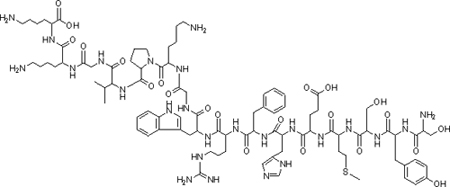
Deficiência isolada de ACTH congênita
📋 Origem dos dados
Esta página agrega dados de fontes públicas e oficiais. Dados sobre cobertura no SUS (PCDT, CEAF) são verificados ativamente por agente proativo (ver badge no infobox). Demais dados têm atribuição de fonte + data da última sincronização — clique para abrir o original.
- Doença rara (ontologia)
- fonte: Orphanet
- Identificador unificado
- fonte: MONDO
- Genética mendeliana
- fonte: OMIM
- Codificação WHO/SUS
- fonte: WHO ICD-10 / DATASUS
- CID-11 (futuro)
- fonte: WHO ICD-11
- NIH/GARD
- fonte: GARD (NIH)
- Indexação biomédica
- fonte: MeSH (NLM)
- Dado público estruturado
- fonte: Wikidata

