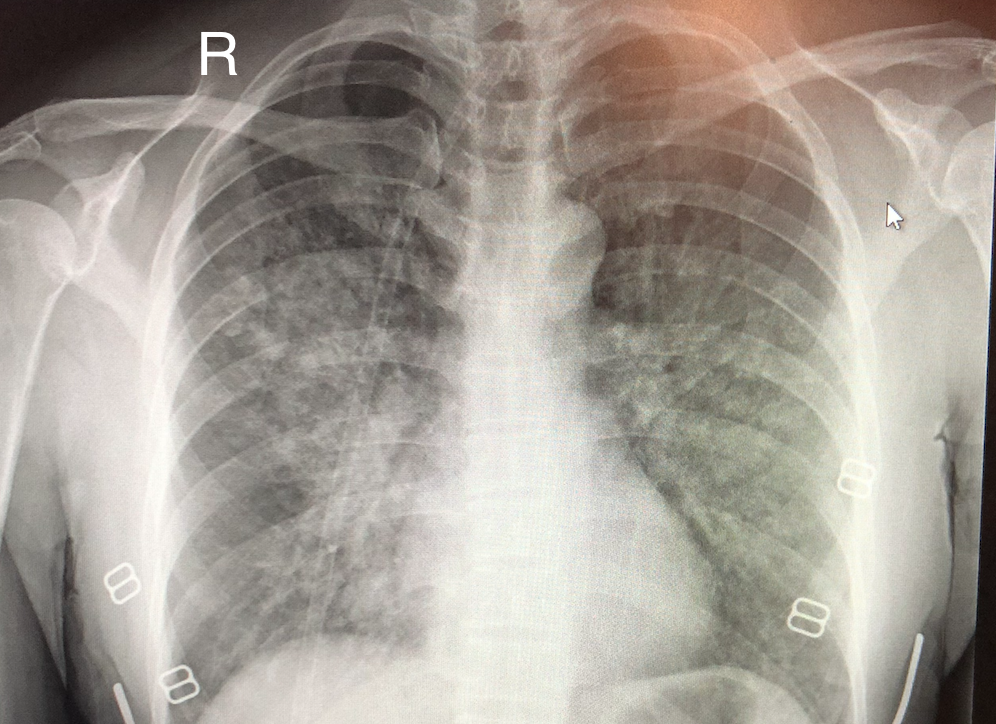
Uma doença pulmonar rara que se caracteriza pelo acúmulo de líquido nos pulmões (não causado por problemas no coração) e que acontece em pessoas saudáveis poucos dias depois de subir para altitudes acima de 2500-3000 metros. Os primeiros sintomas incluem falta de ar ao se esforçar, tosse seca, aperto no peito e uma perda de desempenho em atividades físicas. Em casos mais avançados, surge falta de ar mesmo em repouso e, possivelmente, dificuldade para respirar deitado, além de barulhos de borbulhar no peito e catarro rosa com espuma. Sinais que o médico pode observar são: lábios e pontas dos dedos azulados (cianose), respiração acelerada (taquipneia), coração acelerado (taquicardia), barulhos nos pulmões como chiados ou estalidos, e febre (geralmente não acima de 38,5°C). Sinais de inchaço no cérebro devido à altitude, que pode acontecer ao mesmo tempo, também podem ser observados. O raio-X do tórax costuma mostrar manchas esbranquiçadas, principalmente na parte média do pulmão direito.
Introdução
O que você precisa saber de cara
O edema pulmonar de grande altitude, ou HAPE, é um acúmulo incomum de líquido nos pulmões que pode ocorrer em pessoas sadias dias após subirem acima de 2500 metros. A pessoa afetada geralmente nota tosse seca, cansaço acentuado, aperto no peito e dificuldade crescente para respirar, que pode evoluir para falta de ar mesmo em repouso. Sinais visíveis graves incluem lábios azulados ou arroxeados, respiração curta e acelerada e secreção rosada na tosse. A condição não possui um Protocolo Clínico e Diretrizes Terapêuticas (PCDT) próprio no SUS, e o socorro a situações de urgência respiratória é garantido pelas unidades de saúde pública.
Uma doença pulmonar rara que se caracteriza pelo acúmulo de líquido nos pulmões (não causado por problemas no coração) e que acontece em pessoas saudáveis poucos dias depois de subir para altitudes acima de 2500-3000 metros. Os primeiros sintomas incluem falta de ar ao se esforçar, tosse seca, aperto no peito e uma perda de desempenho em atividades físicas. Em casos mais avançados, surge falta de ar mesmo em repouso e, possivelmente, dificuldade para respirar deitado, além de barulhos de borbulhar no peito e catarro rosa com espuma. Sinais que o médico pode observar são: lábios e pontas dos dedos azulados (cianose), respiração acelerada (taquipneia), coração acelerado (taquicardia), barulhos nos pulmões como chiados ou estalidos, e febre (geralmente não acima de 38,5°C). Sinais de inchaço no cérebro devido à altitude, que pode acontecer ao mesmo tempo, também podem ser observados. O raio-X do tórax costuma mostrar manchas esbranquiçadas, principalmente na parte média do pulmão direito.
Tem tratamento?
Escala de raridade
<1/50kMuito rara
1/20kRara
1/10kPouco freq.
1/5kIncomum
1/2k
Encontrou um erro ou informação desatualizada? Sugira uma correção →
Entender a doença
Do básico ao detalhe, leia no seu ritmo
Preparando trilha educativa...
Sinais e sintomas
O que aparece no corpo e com que frequência cada sintoma acontece
Partes do corpo afetadas
+ 13 sintomas em outras categorias
Características mais comuns
Os sintomas variam de pessoa para pessoa. Abaixo estão as 21 características clínicas mais associadas, ordenadas por frequência.
Linha do tempo da pesquisa
Encontrou um erro ou informação desatualizada? Sugira uma correção →
Genética e causas
O que está alterado no DNA e como passa nas famílias
Nenhum gene associado encontrado
Os dados genéticos desta condição ainda estão sendo catalogados.
Onde tratar no SUS
Hospitais de referência no Brasil e o protocolo oficial do SUS (PCDT)
🇧🇷 Atendimento SUS — Edema pulmonar de grande altitude
Selecione um estado ou use sua localização para ver resultados.
Dados de DATASUS/CNES, SBGM, ABNeuro e Ministério da Saúde. Sempre confirme a disponibilidade diretamente com o estabelecimento.
Pesquisa ativa
Ensaios clínicos abertos e novidades científicas recentes
Ensaios em destaque
Com ensaio aberto em 3 países. O ponto verde marca onde há vaga agora.
🟢 Recrutando agora
2 pesquisas recrutando participantes. Converse com seu médico sobre a possibilidade de participar.
Outros ensaios clínicos
35 ensaios clínicos encontrados, 5 ativos.
Publicações mais relevantes
Scalable Production of Multi-Source Hybrid Biomimetic Exosomes Co-Loaded with Therapeutic Plasmids for Treatment of High-Altitude Pulmonary Edema.
Exosomes show therapeutic promise but face limitations in simultaneous targeting and potency. While hybrid exosome strategies combining multiple cell components can address this, current methods rely on native exosome extraction and drug loading, suffering from low yield and encapsulation efficiency. We developed a biological origin-based hybrid biomimetic exosome (BOB-HBE) platform that synthetically assembles exosomes using parent cell-derived components through a water/oil/water emulsion method, overcoming production bottlenecks. For high-altitude pulmonary edema (HAPE) treatment, we engineered hybrid exosomes combining: (1) vascular endothelial cell membranes for lung targeting, (2) mesenchymal stem cell factors for regeneration, and (3) eNOS-encoding plasmid DNA to restore nitric oxide signaling. The BOB-HBE platform achieved >150-fold higher production yield than natural exosome isolation while enhancing pulmonary endothelial specificity. In HAPE models, these hybrid exosomes demonstrated triple therapeutic effects: restoring NO bioavailability, inhibiting pathogenic HIF-1α/TGF/Smad1/5 signaling, and preventing endothelial-mesenchymal transition and vascular remodeling. Consequently, they significantly attenuated HAPE progression by addressing both molecular pathways and tissue-level pathology. This study establishes a scalable platform for constructing multifunctional exosome mimetics that maintain native exosome advantages while solving key production challenges. The cell-origin-informed design strategy offers a versatile approach for targeted therapy in pulmonary and vascular disorders, with potential clinical translation advantages.
Intervention effect of small extracellular vesicles derived from dental pulp stem cells on a high-altitude pulmonary edema model in male rats.
High-altitude pulmonary edema (HAPE) is a life-threatening disorder caused by hypobaric hypoxia and characterized by pulmonary injury, oxidative stress, and inflammation. We investigated the effects of small extracellular vesicles derived from dental pulp stem cells (DPSCs-sEVs) in a rat model of HAPE as well as hypoxia-injured pulmonary microvascular endothelial cells (PMVECs). Rats were exposed to hypobaric hypoxia for 96 h. Lung injury was assessed by histology and immunofluorescence (VEGF, TNF-α, Occludin). Pulmonary permeability was evaluated by total protein in bronchoalveolar lavage fluid and lung homogenates and by Na+/K+-ATPase activity. Oxidative stress, inflammatory mediators, and vasoactive factors (NO, PGI₂) were measured. DPSCs-sEVs attenuated hypoxia-induced lung injury, increased VEGF and Occludin, reduced TNF-α, decreased protein leakage, and enhanced Na+/K+-ATPase activity. DPSCs-sEVs alleviated oxidative stress and upregulated Nrf2, HO-1, and GPX1. In vivo, dexamethasone served as a reference treatment; DPSCs-sEVs produced greater improvements in most endpoints, with comparable effects in selected measures. In PMVECs, DPSCs-sEVs dose-dependently mitigated hypoxia-induced dysfunction. These findings suggest DPSCs-sEVs protect against hypoxia-induced pulmonary injury by preserving barrier integrity and improving redox and inflammatory homeostasis.
Perfluorocarbon ameliorates high-altitude pulmonary edema and blood-gas barrier dysfunction in a canine model and a lung-on-chip model by suppressing the HIF-1α/HO-1 pathway.
High-altitude pulmonary edema (HAPE) is an increasing problem with high morbidity and mortality due to its rapid onset and progression. Perfluorocarbon (PFC) is reported to have promising effects on acute lung injury (ALI) by offering oxygenation and anti-inflammatory effects. However, PFC's effect on HAPE is still unknown. In our study, we investigated the effect of PFC, first in a HAPE canine model and then in a lung-on-chip model. We exposed beagle dogs to a simulated altitude of 6000 m for 48 h to establish the HAPE model and treated them with vaporized PFC. Next, we created a lung-on-chip model that allowed lung injury to be recapitulated in vitro at the organ level. Then, the latter model was exposed to hypoxia (3% oxygen; 24 h) and co-cultured with 10% PFC. As expected, hypoxia caused an increase in lung water content, lung injury scores, and inflammatory cytokine release, as well as a decrease in blood-gas barrier-related proteins. Treatment with PFC could inhibit the inflammatory response and alleviate blood-gas barrier disruption in our canine and lung-on-chip models. In addition, we found that PFC blocked activation of the hypoxia-inducible factor-1α (HIF-1α)/heme oxygenase-1 (HO-1) signaling pathway. PFC offers great potential in treating hypoxia-induced lung injury, mainly by suppressing dysfunction of the blood-gas barrier via the HIF-1α/HO-1 pathway.
High-Altitude Pulmonary Edema Management in a Special Operator.
This case report delves into the challenges in diagnosis and management of a 30-year-old Army Special Forces officer who experienced respiratory distress during high-altitude training in Nepal, where he gained 3,000m in elevation over 3 days. Notably, the patient was prophylactically treated with acetazolamide but did not receive nifedipine or tadalafil. At an elevation of 13,550 feet (4,130m), the patient developed classic high-altitude pulmonary edema (HAPE) symptoms as well as concomitant respiratory symptomatology of breathlessness and worsening productive cough. The complexity of this case lay in managing HAPE in a remote, resource-limited environment with a small rescue window. We analyze the treatment alternatives used and ones not used, such as the portable hyperbaric chamber, and emphasize the necessity for standard-ized HAPE prophylaxis in appropriate personnel to prevent disruption to mission and loss of operational capabilities.
Symptomatic sinus bradycardia during the recovery phase of high-altitude pulmonary edema: a case report.
This case report describes a 28-year-old healthy male who developed high-altitude pulmonary edema (HAPE) after a rapid ascent. While his condition improved with standard therapy (including corticosteroids, diuretics, and supplemental oxygen), he developed symptomatic sinus bradycardia (heart rate nadir: 37 bpm) 2 days after discontinuation of these medications. The bradycardia resolved with intravenous potassium supplementation and fluid resuscitation, and his heart rate recovered to 59 bpm. This case highlights that a rebound in vagal tone and steroid withdrawal may contribute to severe bradycardia during the HAPE recovery phase, warranting heightened clinical vigilance.
Publicações recentes
Hypobaric hypoxia can lead to an increase in lung dendritic cells and promote T-cell immunosuppression, thereby preventing the excessive progression of high-altitude pulmonary edema.
Construction and validation of high altitude pulmonary edema prediction models based on deep learning and quantitative analysis of X-ray images.
Scalable Production of Multi-Source Hybrid Biomimetic Exosomes Co-Loaded with Therapeutic Plasmids for Treatment of High-Altitude Pulmonary Edema.
Intervention effect of small extracellular vesicles derived from dental pulp stem cells on a high-altitude pulmonary edema model in male rats.
Perfluorocarbon ameliorates high-altitude pulmonary edema and blood-gas barrier dysfunction in a canine model and a lung-on-chip model by suppressing the HIF-1α/HO-1 pathway.
📚 EuropePMC525 artigos no totalmostrando 199
Scalable Production of Multi-Source Hybrid Biomimetic Exosomes Co-Loaded with Therapeutic Plasmids for Treatment of High-Altitude Pulmonary Edema.
Advanced healthcare materialsIntervention effect of small extracellular vesicles derived from dental pulp stem cells on a high-altitude pulmonary edema model in male rats.
Physiological reportsPerfluorocarbon ameliorates high-altitude pulmonary edema and blood-gas barrier dysfunction in a canine model and a lung-on-chip model by suppressing the HIF-1α/HO-1 pathway.
European journal of pharmacologyHigh-Altitude Pulmonary Edema Management in a Special Operator.
Journal of special operations medicine : a peer reviewed journal for SOF medical professionalsSymptomatic sinus bradycardia during the recovery phase of high-altitude pulmonary edema: a case report.
Frontiers in medicineRe-ascent triggered high-altitude pulmonary and cerebral edema in a Tibetan with pre-existing high-altitude polycythemia: a Case Report.
Frontiers in physiologyAcute high-altitude illness: risk factors, susceptibility prediction, and personalized prevention and treatment.
Frontiers in medicineHigh-Altitude Hypoxia Injury: Systemic Mechanisms and Intervention Strategies on Immune and Inflammatory Responses.
Antioxidants (Basel, Switzerland)Altitude hypoxia and hypoxemia: pathogenesis and management.
Signal transduction and targeted therapy[Acute high-altitude illnesses - Definition, Prophylaxis, Therapy].
Therapeutische Umschau. Revue therapeutiqueCalycosin ameliorates high-altitude pulmonary edema by regulating macrophage polarization through the PPAR-γ/NF-κB pathway: a comprehensive analysis of network pharmacology, molecular docking, and experimental validation.
Journal of ethnopharmacology[Molecular Mechanisms of Intervention With Lishukang Capsule in a Rat Model of High-Altitude Pulmonary Edema].
Sichuan da xue xue bao. Yi xue ban = Journal of Sichuan University. Medical science edition7-Hydroxyethyl Chrysin Alleviates High Altitude Pulmonary Edema via Activation of the PI3K/AKT Signaling Pathway.
Drug design, development and therapyIntegrative blood profiling uncovers inflammatory network signatures in high-altitude pulmonary edema.
Bioscience reportsIsolated high-altitude cerebral edema in the Himalayas: a case report.
Annals of medicine and surgery (2012)B-line Prevalence Is Higher with Increases in Altitude but Does Not Correlate with AMS Symptomatology.
Wilderness & environmental medicineClinical characteristic and prognosis of adult inpatients with high altitude pulmonary edema: a multi-central, retrospective study in plateau of China from 2012 to 2022.
BMC pulmonary medicine[High-altitude illness in emergency room : what should we do?].
Revue medicale suisseSickle Cell Trait Is a Risk Factor for Another Form of Altitude Illness.
High altitude medicine & biologyMagnetic Resonance Neuroimaging Findings in High-altitude Cerebral Edema (HACE) and Probable Correlation with its Temporal Evolution and Pathogenesis.
Nigerian medical journal : journal of the Nigeria Medical AssociationAssessment of a Grad-CAM interpretable deep learning model for HAPE diagnosis: performance and pitfalls in severity stratification from chest radiographs.
BMC medical informatics and decision makingEnhancing Quercetin's Potential: A Nanoliposome Delivery System for High Altitude Pulmonary Edema.
Drug design, development and therapyUnderstanding the mechanistic and therapeutic perspectives on cytokines and chemokines in acute high-altitude illness syndromes.
Journal of pharmaceutical analysisHigh Altitude Pulmonary Edema Response to Continuous Airway Positive Pressure: A Randomized Controlled Trial: The HAPER CAPER Trial.
Academic emergency medicine : official journal of the Society for Academic Emergency MedicineA Retrospective Analysis of Altitude Illness at the Himalayan Rescue Association Aid Post Manang (2018-2023).
High altitude medicine & biologySpaceflight Respiratory System from a Nursing Perspective.
Critical care nursing clinics of North AmericaPharmacological targeting of ferroptosis in hypoxia-induced pulmonary edema: therapeutic potential of ginsenoside Rg3 through activation of the PI3K/AKT pathway.
Frontiers in pharmacologyElevated cytokine levels in patients with High-altitude pulmonary edema.
CytokineAZU1 as a DNA Methylation-Driven Gene: Promoting Oxidative Stress in High-Altitude Pulmonary Edema.
Antioxidants (Basel, Switzerland)High-altitude physiology: Understanding molecular, pharmacological and clinical insights.
Pathology, research and practiceNeutrophil-lymphocyte ratio as an early predictive biomarker for severity in patients with high altitude pulmonary edema.
Medical journal, Armed Forces IndiaHypobaric hypoxia promotes the production of IL-10 of lung NKT cells in HAPE rats to fight inflammation.
Experimental lung researchDoes Prior Respiratory Infection Increase the Risk of High-Altitude Pulmonary and Cerebral Edema? A Case Report.
High altitude medicine & biologyGut opportunistic pathogens contribute to high-altitude pulmonary edema by elevating lysophosphatidylcholines and inducing inflammation.
Microbiology spectrumA machine learning-based severity stratification tool for high altitude pulmonary edema.
BMC medical informatics and decision makingReversible leukoencephalopathy with seizures: a case of severe high-altitude cerebral edema.
Acta epileptologicaLow-pressure exposure influences the development of HAPE.
Open life sciencesGlobal research trends and emerging hotspots in acute high altitude illness: a bibliometric analysis and review (1937-2024).
Reviews on environmental healthHigh-altitude Pulmonary Edema on Mt. Fuji Requires Exclusion of all Differential Diagnoses.
Internal medicine (Tokyo, Japan)Medical Evacuations of Climbers on Mount Aconcagua, 2022-2024.
Wilderness & environmental medicineGenetic Associations with the Susceptibility to High-Altitude Pulmonary Edema in the Japanese Population.
High altitude medicine & biologyCPHNet: a novel pipeline for anti-HAPE drug screening via deep learning-based Cell Painting scoring.
Respiratory researchPublisher Correction: Identification of potential biomarkers and pathways involved in high-altitude pulmonary edema using GC-MS and LC-MS metabolomic methods.
Scientific reportsWhat Is New in Altitude- and Cold-Related Illnesses of Travel: Appraisal and Summary of the Updated Guidelines from the Wilderness Medical Society.
International journal of environmental research and public health[Early Warning Effect of Maladaptation to Simulated Hypoxic Conditions at Low Altitudes for the Onset of Acute Mountain Sickness].
Sichuan da xue xue bao. Yi xue ban = Journal of Sichuan University. Medical science edition[Research Progress in the Role of Hypoxia-Inducible Factor 1 in Altitude Sickness and the Mechanisms Involved].
Sichuan da xue xue bao. Yi xue ban = Journal of Sichuan University. Medical science editionRisk factors associated with high altitude sickness among travelers: A case control study in Himalaya district of Nepal.
PLOS global public healthSmall extracellular vesicles derived from miRNA-486 overexpressed dental pulp stem cells mitigate high altitude pulmonary edema through PTEN/PI3K/AKT/eNOS pathway.
HeliyonProof of concept study - alternative pharmacoprophylaxis for high-altitude pulmonary edema: A hospital-based randomized controlled trial.
Medical journal, Armed Forces IndiaBiomimetic exosome harnessing exosomal lipidomics and functional proteins for PEDF-pDNA delivery in high altitude pulmonary edema intervention.
Journal of controlled release : official journal of the Controlled Release SocietyTissue remodeling during high-altitude pulmonary edema in rats: Biochemical and histomorphological analysis.
Tissue & cellAldose Reductase: A Promising Therapeutic Target for High-Altitude Pulmonary Edema.
International journal of molecular sciencesHigh Altitude Pulmonary Edema Associated with Climbing Mount Fuji.
Internal medicine (Tokyo, Japan)Identification of potential biomarkers and pathways involved in high-altitude pulmonary edema using GC-MS and LC-MS metabolomic methods.
Scientific reportsPhysiological, biochemical, and genome-wide expression patterns during graded normobaric hypoxia in healthy individuals.
Physiological genomicsA stable rat model of high altitude pulmonary edema established by hypobaric hypoxia combined diurnal temperature fluctuation and exercise.
Biochemical and biophysical research communicationsCharacteristics of Climbers with High Altitude Pulmonary Edema on Mount Aconcagua.
Wilderness & environmental medicine1,25-(OH)2D3 improves SD rats high-altitude pulmonary edema by inhibiting ferroptosis and ferritinophagy in alveolar epithelial cells.
The Journal of steroid biochemistry and molecular biologyHypoxic Pulmonary Vasoconstriction: An Important Component of the Homeostatic Oxygen Sensing System.
Physiological researchEvaluation of the cell death markers for aberrated cell free DNA release in high altitude pulmonary edema.
Clinical science (London, England : 1979)Elevated Perspectives: Unraveling Cardiovascular Dynamics in High-Altitude Realms.
Current cardiology reviewsA forensic overview of deaths in mountainous terrain.
Forensic science, medicine, and pathologyImpact of MIR137HG rs7554283 on susceptibility to high-altitude pulmonary edema in the Chinese population.
Personalized medicineLung function and blood gas of rats after different protocols of hypobaric exposure.
Medical gas researchDecoding the Immune Response and Its Biomarker B2M for High Altitude Pulmonary Edema in Rat: Implications for Diagnosis and Prognosis.
Journal of inflammation researchUnilateral Left-Sided High-Altitude Pulmonary Edema Following Rapid Ascent to a City in the Himalayas.
CureusPre-treatment with notoginsenoside R1 from Panax notoginseng protects against high-altitude-induced pulmonary edema by inhibiting pyroptosis through the NLRP3/caspase-1/GSDMD pathway.
Biomedicine & pharmacotherapy = Biomedecine & pharmacotherapieClinical characteristics and a diagnostic model for high-altitude pulmonary edema in habitual low altitude dwellers.
PeerJPhysiopathology of High-Altitude Pulmonary Edema.
High altitude medicine & biologyWhole transcriptome landscape in HAPE under the stress of environment at high altitudes: new insights into the mechanisms of hypobaric hypoxia tolerance.
Frontiers in immunologyArthroplasty at Very High Altitude with Restricted Resources: Our Experience and Review of Literature.
Indian journal of orthopaedicsPatent Foramen Ovale and Acute Mountain Sickness.
Cardiology clinicsEleutheroside B Pretreatment Attenuates Hypobaric Hypoxia-Induced High-Altitude Pulmonary Edema by Regulating Autophagic Flux via the AMPK/mTOR Pathway.
Phytotherapy research : PTRIdentification and Validation of STC1 Act as a Biomarker for High-Altitude Diseases and Its Pan-Cancer Analysis.
International journal of molecular sciencesCorrigendum to: B2M is a Biomarker Associated With Immune Infiltration In High Altitude Pulmonary Edema.
Combinatorial chemistry & high throughput screeningHigh-altitude Cerebral Edema and High-altitude Pulmonary Edema Diagnosed in the Desert: A Case Report.
Clinical practice and cases in emergency medicineThe pathophysiology of patent foramen ovale and its related complications.
American heart journalTNF-α and RPLP0 drive the apoptosis of endothelial cells and increase susceptibility to high-altitude pulmonary edema.
Apoptosis : an international journal on programmed cell deathShort-term changes in chest CT images among individuals at low altitude after entering high-altitude environments.
Frontiers in public healthCardiovascular effects of breath-hold diving at altitude.
Undersea & hyperbaric medicine : journal of the Undersea and Hyperbaric Medical Society, IncPreliminary study of identified novel susceptibility loci for HAPE risk in a Chinese male Han population.
Personalized medicineErythrocyte Nitric Oxide at High Altitude in Mountaineers Susceptible to High-Altitude Pulmonary Edema.
JACC. AdvancesCorrigendum to "Role of neutrophil myeloperoxidase in the development and progression of high-altitude pulmonary edema" [Biochem. Biophys. Res. Commun. 703 (2024) 149681].
Biochemical and biophysical research communicationsPotential therapeutic effects of traditional Chinese medicine in acute mountain sickness: pathogenesis, mechanisms and future directions.
Frontiers in pharmacologyPediatric high-altitude pulmonary edema and acute mountain sickness: Clinical features and risk determinants.
Pediatric pulmonologySuperoxide dismutase 1-modified dental pulp stem cells alleviate high-altitude pulmonary edema by inhibiting oxidative stress through the Nrf2/HO-1 pathway.
Gene therapyA rare case of pulmonary embolism in a Mt. Kilimanjaro recreational hiker: A case report with review of literature.
SAGE open medical case reportsAcute Coronary Syndrome at Altitude: Diagnostic Dilemma on Aconcagua Using Point-of-Care Ultrasound.
Wilderness & environmental medicineEvaluation and Management of the Individual with Recurrent High Altitude Pulmonary Edema.
High altitude medicine & biologyHigh-Altitude Pulmonary Edema in Two Pediatric Patients with Pre-Existing Lung Disease.
Pediatric reportsAdapting nitric oxide: A review of its foundation, uses in austere medical conditions, and emerging applications.
Nitric oxide : biology and chemistryEffect of furosemide in the treatment of high-altitude pulmonary edema.
BMC pulmonary medicineRole of neutrophil myeloperoxidase in the development and progression of high-altitude pulmonary edema.
Biochemical and biophysical research communicationsContinuous Positive Airway Pressure in the Treatment of Pediatric High Altitude Pulmonary Edema: A Case Study.
Wilderness & environmental medicineHypobaric hypoxia modulated structural characteristics of circulating cell-free DNA in high-altitude pulmonary edema.
American journal of physiology. Lung cellular and molecular physiologyClinical and Pathophysiological Features of High-altitude Pulmonary Edema in the Japanese Population: A Review of Studies on High-altitude Pulmonary Edema in Japan.
Internal medicine (Tokyo, Japan)Asymmetric and symmetric dimethylarginine in high altitude pulmonary hypertension (HAPH) and high altitude pulmonary edema (HAPE).
Frontiers in physiologyHigh-Altitude Pulmonary Edema Combined with Spontaneous Pneumomediastinum: A Case Report.
Current medical imagingProbe-based confocal laser endomicroscopy for evaluating high-altitude pulmonary edema in canines.
HeliyonPressure-sensitive multivesicular liposomes as a smart drug-delivery system for high-altitude pulmonary edema.
Journal of controlled release : official journal of the Controlled Release SocietyPredictive model for estimating the risk of high-altitude pulmonary edema: a single-centre retrospective outcome-reporting study.
BMJ openKaempferol and ginsenoside Rg1 ameliorate acute hypobaric hypoxia induced lung injury based on network pharmacology analysis.
Toxicology and applied pharmacologyHigh-Altitude Pulmonary Edema in Women: A Scoping Review-UIAA Medical Commission Recommendations.
High altitude medicine & biologyRecent Progress in the Understanding and Management of Acute Mountain Sickness: A Narrative Review.
Current reviews in clinical and experimental pharmacologyWilderness Medical Society Clinical Practice Guidelines for the Prevention, Diagnosis, and Treatment of Acute Altitude Illness: 2024 Update.
Wilderness & environmental medicineProtective effects of Eleutheroside E against high-altitude pulmonary edema by inhibiting NLRP3 inflammasome-mediated pyroptosis.
Biomedicine & pharmacotherapy = Biomedecine & pharmacotherapieAssessment of Endothelial Barrier Functions in Extra Embryonic Vasculature of Chick Embryo as an Alternative Model.
Methods in molecular biology (Clifton, N.J.)Notoginsenoside R1 protects against hypobaric hypoxia-induced high-altitude pulmonary edema by inhibiting apoptosis via ERK1/2-P90rsk-BAD ignaling pathway.
European journal of pharmacologyPhysiological Effects of Sildenafil Versus Placebo at High Altitude: A Systematic Review.
High altitude medicine & biologyDry Powder Formulations for Inhalation Require a Smaller Aerodynamic Diameter for Usage at High Altitude.
Journal of pharmaceutical sciencesA Case Report of a High-Altitude Acute Pulmonary Embolism (HA-PE): A Catastrophic Masquerader of High-Altitude Pulmonary Edema (HAPE).
CureusPromising Natural Medicines for the Treatment of High-Altitude Illness.
High altitude medicine & biologyCeramide-1-phosphate alleviates high-altitude pulmonary edema by stabilizing circadian ARNTL-mediated mitochondrial dynamics.
Journal of advanced researchHigh-altitude pulmonary edema: the intercellular network hypothesis.
American journal of physiology. Lung cellular and molecular physiologyThe Association of Methylation Level in the CYP39A1 Gene with High Altitude Pulmonary Edema in the Chinese Population.
Pharmacogenomics and personalized medicineB2M is a Biomarker Associated With Immune Infiltration In High Altitude Pulmonary Edema.
Combinatorial chemistry & high throughput screeningThree rare presentations of high-altitude pulmonary edema at a high-altitude clinic in the Everest region (4371 m): A case series.
Clinical case reportsLow-dose of caffeine alleviates high altitude pulmonary edema via regulating mitochondrial quality control process in AT1 cells.
Frontiers in pharmacologySerum vascular endothelial growth factor is a potential biomarker for acute mountain sickness.
Frontiers in physiologyA study of survival strategies for improving acclimatization of lowlanders at high-altitude.
HeliyonWhole-exome sequencing in searching for novel variants associated with the development of high altitude pulmonary edema.
GeneApplication of Point-of-care Ultrasound for Screening Climbers at High Altitude for Pulmonary B-lines.
The western journal of emergency medicinePreliminary screening of biomarkers in HAPE based on quasi-targeted metabolomics.
Frontiers in physiologyPerformance and reliability of two frequently used point-of-care blood gas analyzers at 423 and 4,559 m.
Clinical biochemistryClinical characteristics of venous thromboembolism onset from severe high altitude pulmonary edema in plateau regions.
Thrombosis journalThe Telomere-Telomerase System Is Detrimental to Health at High-Altitude.
International journal of environmental research and public healthHyperbaric oxygen preconditioning for prevention of acute high-altitude diseases: Fact or fiction?
Frontiers in physiologyEndotracheal Intubation at 3,600 Meters Above Sea Level for High-Altitude Pulmonary Edema Followed by Helicopter Evacuation in Nepal.
Air medical journal[Incidence and risk factors of acute mountain sickness in grid construction personnel working at plateau].
Zhonghua yi xue za zhiSuggestive evidence of CYP4F2 gene polymorphisms with HAPE susceptibility in the Chinese Han population.
PloS oneHigh altitude pulmonary edema at 2640 m altitude associated with an acute Rhinovirus infection. First case in the literature.
Respiratory medicine case reportsHigh altitude pulmonary edema in children: A systematic review.
Pediatric pulmonologyRespiratory tract infection: an unfamiliar risk factor in high-altitude pulmonary edema.
Briefings in functional genomicsSevere Respiratory Failure Developing in the Course of High-Altitude Pulmonary Edema in an Alpinist with COVID-19 Pneumonia: A Case Report.
High altitude medicine & biologyInitial Treatment of High-Altitude Pulmonary Edema: Comparison of Oxygen and Auto-PEEP.
International journal of environmental research and public healthMorphological and functional findings in COVID-19 lung disease as compared to Pneumonia, ARDS, and High-Altitude Pulmonary Edema.
Respiratory physiology & neurobiologyMean corpuscular haemoglobin concentration (MCHC): a new biomarker for high-altitude pulmonary edema in the Ecuadorian Andes.
Scientific reportsGenetics of High-Altitude Pulmonary Edema.
Heart failure clinicsIntegrative Analysis of Proteomics and Metabolism Reveals the Potential Roles of Arachidonic Acid Metabolism in Hypoxia Response in Mouse Spleen.
Molecules (Basel, Switzerland)Absent Pulmonary Artery Presenting as High-Altitude Pulmonary Edema.
Clinical practice and cases in emergency medicineEleutheroside B ameliorated high altitude pulmonary edema by attenuating ferroptosis and necroptosis through Nrf2-antioxidant response signaling.
Biomedicine & pharmacotherapy = Biomedecine & pharmacotherapieVariables Influencing the Pressure and Volume of the Pulmonary Circulation as Risk Factors for Developing High Altitude Pulmonary Edema (HAPE).
International journal of environmental research and public healthInflammation in Pulmonary Hypertension and Edema Induced by Hypobaric Hypoxia Exposure.
International journal of molecular sciencesAn update on environment-induced pulmonary edema - "When the lungs leak under water and in thin air".
Frontiers in physiologyStrengthening Altitude Knowledge: A Delphi Study to Define Minimum Knowledge of Altitude Illness for Laypersons Traveling to High Altitude.
High altitude medicine & biologyThe role of post-translational modifications in driving abnormal cardiovascular complications at high altitude.
Frontiers in cardiovascular medicineDifferential methylation in EGLN1 associates with blood oxygen saturation and plasma protein levels in high-altitude pulmonary edema.
Clinical epigeneticsImpact of moderate altitude on lung diseases and risk of high altitude illnesses.
Revista de investigacion clinica; organo del Hospital de Enfermedades de la NutricionCan acute high-altitude sickness be predicted in advance?
Reviews on environmental healthContribution of Adenosine in the Physiological Changes and Injuries Secondary to Exposure to Extreme Oxygen Pressure in Healthy Subjects.
BiomedicinesHigh-altitude illness: Menace in Himalayas of Nepal.
Annals of medicine and surgery (2012)Pathophysiology and Therapy of High-Altitude Sickness: Practical Approach in Emergency and Critical Care.
Journal of clinical medicineA Puzzling Diagnosis of Cerebral Vein Thrombosis in a COVID-19-Vaccinated Patient.
CureusSystemic Blood Predictors of Elevated Pulmonary Artery Pressure Assessed by Non-invasive Echocardiography After Acute Exposure to High Altitude: A Prospective Cohort Study.
Frontiers in cardiovascular medicineThe combined use of acetazolamide and Rhodiola in the prevention and treatment of altitude sickness.
Annals of translational medicineUnique mutations in mitochondrial DNA and associated pathways involved in high altitude pulmonary edema susceptibility in Indian lowlanders.
Journal of biomolecular structure & dynamicsCYP2S1 gene methylation among High-altitude pulmonary edema.
GeneSevere acute reentry high altitude pulmonary edema in pediatric patients: report of three cases and literature review.
The Turkish journal of pediatricsPulmonary Embolism at Extreme High Altitude: A Study of Seven Cases.
High altitude medicine & biologyPreliminary Evidence-Based Method of Medical Kit Design for Wilderness Expeditions Modeled by a High-Altitude Expedition to Mount Kilimanjaro.
The Journal of emergency medicineEffects of acetazolamide on pulmonary artery pressure and prevention of high-altitude pulmonary edema after rapid active ascent to 4,559 m.
Journal of applied physiology (Bethesda, Md. : 1985)High Altitude Pulmonary Edema, High Altitude Cerebral Edema, and Acute Mountain Sickness: an enhanced opinion from the High Andes - La Paz, Bolivia 3,500 m.
Reviews on environmental healthA novel nonlinear analysis of blood flow dynamics applied to the human lung.
Journal of applied physiology (Bethesda, Md. : 1985)An Unusual Presentation of Pulmonary Edema During an Ice Dive at Altitude.
Military medicineHigh-Altitude Pulmonary Edema in Colorado Children: A Cross-Sectional Survey and Retrospective Review.
High altitude medicine & biologyMIR17HG polymorphisms contribute to high-altitude pulmonary edema susceptibility in the Chinese population.
Scientific reportsHigh Altitude Pulmonary Edema in a Chronic Kidney Disease Patient-Is Peritoneal Dialysis A Risk Factor?
High altitude medicine & biologyAssociation of variants m.T16172C and m.T16519C in whole mtDNA sequences with high altitude pulmonary edema in Han Chinese lowlanders.
BMC pulmonary medicineOxidative Stress and Diseases Associated with High-Altitude Exposure.
Antioxidants (Basel, Switzerland)Association Between the Polymorphism of Steroid Hormone Metabolism Genes and High-Altitude Pulmonary Edema in the Chinese Han Population.
International journal of general medicineRescue Emergencies Due to High-Altitude Illnesses Are Rare in Switzerland.
International journal of environmental research and public healthHigh Altitude Pulmonary Edema in a Healthy Pediatric Patient Traveling from Denver to Breckenridge.
Open access emergency medicine : OAEMRespiratory physiology at high altitude and considerations for pediatric patients.
Paediatric anaesthesiaMitochondrial ribosomal stress in lung diseases.
American journal of physiology. Lung cellular and molecular physiologyA review of the skeletal effects of exposure to high altitude and potential mechanisms for hypobaric hypoxia-induced bone loss.
BoneAcetazolamide prevents hypoxia-induced reactive oxygen species generation and calcium release in pulmonary arterial smooth muscle.
Pulmonary circulationValidity of Peripheral Oxygen Saturation Measurements with the Garmin Fēnix® 5X Plus Wearable Device at 4559 m.
Sensors (Basel, Switzerland)Novel HIF-1-target gene isthmin1 contributes to hypoxia-induced hyperpermeability of pulmonary microvascular endothelial cells monolayers.
American journal of physiology. Cell physiologyRadiographical Spectrum of High-altitude Pulmonary Edema: A Pictorial Essay.
Indian journal of critical care medicine : peer-reviewed, official publication of Indian Society of Critical Care MedicineThe Oxygen Transport Triad in High-Altitude Pulmonary Edema: A Perspective from the High Andes.
International journal of environmental research and public healthCOULD COVID-19 BE A HEMOGLOBINOPATHY?
Acta clinica CroaticaPolysaccharide from Potentilla anserina L ameliorate pulmonary edema induced by hypobaric hypoxia in rats.
Biomedicine & pharmacotherapy = Biomedecine & pharmacotherapieEvaluation of High Altitude Interstitial Pulmonary Edema in Healthy Participants Using Rapid 4-View Lung Ultrasound Protocol During Staged Ascent to Everest Base Camp.
Wilderness & environmental medicine[Reentry High-Altitude Pulmonary Edema in Pediatric Patients].
Andes pediatrica : revista Chilena de pediatriaGain-of-function Tibetan PHD2D4E;C127S variant suppresses monocyte function: A lesson in inflammatory response to inspired hypoxia.
EBioMedicineThe role of pulmonary mast cells activation and degranulation in the process of increased pulmonary artery pressure.
General physiology and biophysicsCharacteristics of High Altitude Pulmonary Edema in Naqu at the Altitude of 4500 m.
The American journal of the medical sciencesHigh-altitude pulmonary edema is aggravated by risk loci and associated transcription factors in HIF-prolyl hydroxylases.
Human molecular geneticsMitochondrial DNA mutations contribute to high altitude pulmonary edema via increased oxidative stress and metabolic reprogramming during hypobaric hypoxia.
Biochimica et biophysica acta. BioenergeticsHigh-Altitude Pulmonary Edema in Ohio at an Elevation of 339 Meters.
Open access emergency medicine : OAEMExtravascular lung water and cardiac function assessed by echocardiography in healthy lowlanders during repeated very high-altitude exposure.
International journal of cardiologyPoint-of-Care Ultrasound Diagnosis of Acute High Altitude Illness: A Case Report.
Wilderness & environmental medicineHigh-altitude pulmonary edema.
Evolution, medicine, and public healthThe Fundamentals of Respiratory Physiology to Manage the COVID-19 Pandemic: An Overview.
Frontiers in physiologyQuercetin: a savior of alveolar barrier integrity under hypoxic microenvironment.
Tissue barriersSevere Hypoxic Exercise Does Not Impair Lung Diffusion in Elite Swimmers.
High altitude medicine & biologyPulmonary Hypertension in Acute and Chronic High Altitude Maladaptation Disorders.
International journal of environmental research and public healthAcute Mountain Sickness, High Altitude Pulmonary Edema, and High Altitude Cerebral Edema: A view from the High Andes.
Respiratory physiology & neurobiologyNovel formulation development from Ophiocordyceps sinensis (Berk.) for management of high-altitude maladies.
3 BiotechAssociações
Organizações que acompanham esta doença — pra ter apoio e orientação
Ainda não temos associações cadastradas para Edema pulmonar de grande altitude.
É de uma associação que acompanha esta doença? Fale com a gente →
Doenças relacionadas
Doenças com sintomas parecidos — ajudam quem ainda está buscando diagnóstico
Perguntas frequentes
O que as famílias mais perguntam sobre esta doença — cada resposta com a fonte de onde saiu
A condição é desencadeada pelo impacto da baixa pressão de oxigênio nos pulmões poucos dias após subir a altitudes superiores a 2500 a 3000 metros. O quadro não é gerado por insuficiência cardíaca e não possui mutações genéticas causais catalogadas.
Referências
Fontes citadas no texto, publicações do grafo e bases de dados usadas neste verbete
7 publicações do grafo RarasNet (PubMed) · 5 bases de dados. Títulos, periódicos e PMIDs vêm direto da fonte, sem intermediação de IA.
Dados compilados pelo RarasNet a partir de fontes abertas (Orphanet, OMIM, MONDO, PubMed/EuropePMC, ClinicalTrials.gov, DATASUS, PCDT/MS). Este conteúdo é informativo e não substitui avaliação médica.
Citar este verbete
Raras. (s.d.). Edema pulmonar de grande altitude. Em Raras — Enciclopédia de Doenças Raras do Brasil. https://raras.org/doenca/edema-pulmonar-de-grande-altitude
Formato APA. Conteúdo sob CC BY 4.0 — reuso livre com atribuição.
Conteúdo mantido por Agente Raras · Médicos e pesquisadores podem colaborar
Edema pulmonar de grande altitude
📋 Origem dos dados
Esta página agrega dados de fontes públicas e oficiais. Dados sobre cobertura no SUS (PCDT, CEAF) são verificados ativamente por agente proativo (ver badge no infobox). Demais dados têm atribuição de fonte + data da última sincronização — clique para abrir o original.
- Doença rara (ontologia)
- fonte: Orphanet
- Identificador unificado
- fonte: MONDO
- Codificação WHO/SUS
- fonte: WHO ICD-10 / DATASUS
- CID-11 (futuro)
- fonte: WHO ICD-11
- NIH/GARD
- fonte: GARD (NIH)
- Indexação biomédica
- fonte: MeSH (NLM)
- Dado público estruturado
- fonte: Wikidata
- Medicamentos aprovados FDA
- fonte: FDA OpenFDA
- Reposicionamento
- fonte: Drug Repurposing Hub
- Ensaios clínicos
- fonte: ClinicalTrials.gov

