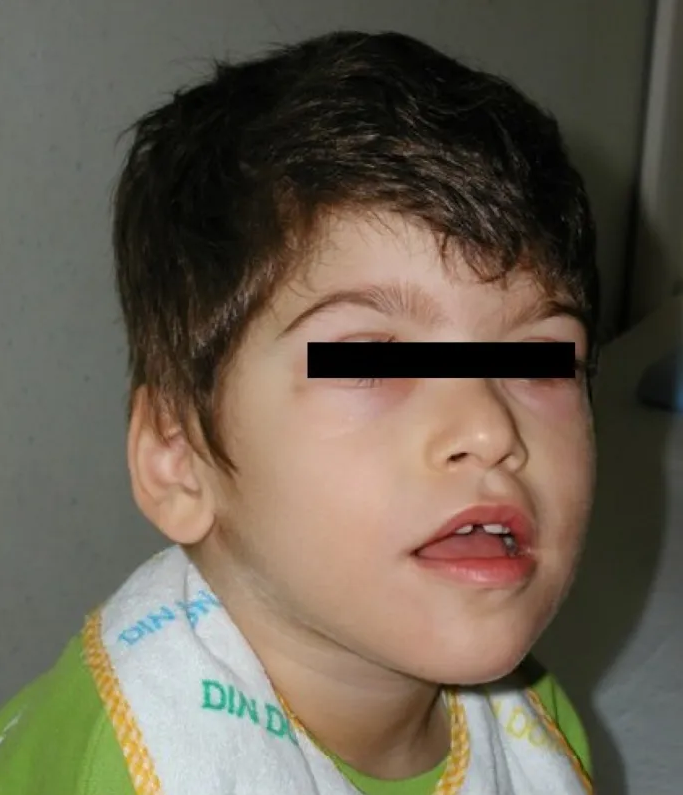
A síndrome de Pitt-Hopkins (PHS) é caracterizada pela associação de déficit intelectual, dismorfismo facial característico e problemas de respiração anormal e irregular.
Introdução
O que você precisa saber de cara
A Síndrome Pitt-Hopkins é uma condição genética rara que se manifesta nos primeiros meses de vida, causando deficiência intelectual importante e atraso no desenvolvimento dos movimentos. As famílias costumam notar que a criança não desenvolve a fala e apresenta episódios de respiração muito acelerada, além de características no rosto como boca aberta e nariz alargado. A síndrome é causada por alterações no gene TCF4, que comanda etapas importantes da formação do cérebro. Não existe um remédio que cure a síndrome, mas o SUS oferece atendimento especializado em reabilitação para apoiar o desenvolvimento motor e o bem-estar do paciente.
A síndrome de Pitt-Hopkins (PHS) é caracterizada pela associação de déficit intelectual, dismorfismo facial característico e problemas de respiração anormal e irregular.
Escala de raridade
<1/50kMuito rara
1/20kRara
1/10kPouco freq.
1/5kIncomum
1/2k
Encontrou um erro ou informação desatualizada? Sugira uma correção →
Entender a doença
Do básico ao detalhe, leia no seu ritmo
Preparando trilha educativa...
Sinais e sintomas
O que aparece no corpo e com que frequência cada sintoma acontece
Partes do corpo afetadas
+ 40 sintomas em outras categorias
Características mais comuns
Os sintomas variam de pessoa para pessoa. Abaixo estão as 99 características clínicas mais associadas, ordenadas por frequência.
Linha do tempo da pesquisa
Encontrou um erro ou informação desatualizada? Sugira uma correção →
Genética e causas
O que está alterado no DNA e como passa nas famílias
Genes associados
1 gene identificado com associação a esta condição. Padrão de herança: Autosomal dominant.
Curadoria gene-doença
fontes oficiaisPitt-Hopkins syndrome
A syndrome characterized by intellectual disability, wide mouth and distinctive facial features, and intermittent hyperventilation followed by apnea. Features include intellectual disability with severe speech impairment, normal growth parameters at birth, postnatal microcephaly, breathing anomalies, severe motor developmental delay, motor incoordination, ocular anomalies, constipation, seizures, typical behavior and subtle brain abnormalities.
Variantes genéticas (ClinVar)
487 variantes patogênicas registradas no ClinVar.
Classificação de variantes (ClinVar)
Distribuição de 927 variantes classificadas pelo ClinVar.
Vias biológicas (Reactome)
2 vias biológicas associadas aos genes desta condição.
Diagnóstico
Os sinais que médicos procuram e os exames que confirmam
Tratamento e manejo
Remédios, cuidados de apoio e o que precisa acompanhar
Onde tratar no SUS
Hospitais de referência no Brasil e o protocolo oficial do SUS (PCDT)
🇧🇷 Atendimento SUS — Síndrome Pitt-Hopkins
Selecione um estado ou use sua localização para ver resultados.
Dados de DATASUS/CNES, SBGM, ABNeuro e Ministério da Saúde. Sempre confirme a disponibilidade diretamente com o estabelecimento.
Pesquisa ativa
Ensaios clínicos abertos e novidades científicas recentes
Ensaios em destaque
Com ensaio aberto em 3 países. O ponto verde marca onde há vaga agora.
🟢 Recrutando agora
2 pesquisas recrutando participantes. Converse com seu médico sobre a possibilidade de participar.
Outros ensaios clínicos
6 ensaios clínicos encontrados, 2 ativos.
Publicações mais relevantes
The E-Protein Daughterless Regulates Olfactory Learning of Adult Drosophila melanogaster.
Daughterless (Da), the Drosophila melanogaster homolog of mammalian E-protein transcription factor 4 (TCF4), is well studied in fruit fly embryonic development but its functions in adult nervous system are poorly understood. Mutations in human TCF4 gene lead to intellectual disabilities such as Pitt-Hopkins syndrome and TCF4 has also been linked to schizophrenia. Here, to explore the roles of Da in the Drosophila mature brain, we map Da DNA binding sites and study the transcriptomics of the brains where Da function is inhibited by pan-neuronal Extramacrohaete (Emc) overexpression, in both male and female Drosophila Our transcriptome analyses reveal that in the adult brain Da regulates the expression of genes involved in behavior, memory, synaptic signaling, protein translation, and metabolic processes. Moreover, combining the RNA sequencing data with Da ChIP sequencing results indicates that genes associated with neuronal projection guidance, metabolism, and translation are direct targets of Da. In addition, we validate the involvement of Da in memory formation. Overall, our results provide valuable information about the functions of Da in the adult brain and aid in better understanding the mechanisms of TCF4-related disorders.
Gastric volvulus and wandering spleen in Pitt-Hopkins syndrome: first paediatric case report.
Acute gastric volvulus is a rare condition in children, and delayed diagnosis may lead to gastric ischemia, perforation, or even death. It is sometimes associated with a wandering spleen, a condition in which the spleen migrates from its normal anatomical position due to the absence of fixation ligaments. We report the first known case of a patient with Pitt-Hopkins syndrome (PTHS) presenting with simultaneous acute gastric volvulus and a wandering spleen. A 6-year-old male with PTHS was urgently referred for acute abdominal pain and a 24 h history of non-bilious and non-bloody emesis. The x-ray showed a massive gastric dilatation, and an upper gastrointestinal series (UGI) revealed a gastric outlet obstruction. An emergency laparoscopy revealed a gastric mesoaxial volvulus with a hypotonic wall with no sign of ischemia or perforation associated with a wandering spleen. Gastropexy was performed by anchoring the gastric greater curvature to the anterior abdominal wall, covering the spleen in a good position in the left upper abdomen, completely covered by the gastric fundus. The patient made an uneventful recovery and was completely asymptomatic. To our knowledge, this is the first reported case of simultaneous gastric volvulus and wandering spleen in a patient with PTHS. Laparoscopic gastropexy is a straightforward and effective procedure that combines the advantages of previously described surgical techniques.
Monogenic defects in Russian children with autism spectrum disorders.
Autism spectrum disorders (ASD) represent a substantial social problem affecting at least 1 in 100 children worldwide. These conditions are very often accompanied by intellectual disability (ID) and speech delay; thus, they can be considered within a clinical continuum of neurodevelopmental disorders. Given the high heterogeneity of ASD, the subjective nature of diagnostic criteria, and the presence of phenocopies, identifying genetic determinants of these disorders remains a challenge. To investigate the spectrum and frequency of rare genetic variants in genes with proven association with ASD in Russian children. 110 patients from 106 families were recruited into the study (mean age at diagnosis 6 years; boy-to-girl ratio 3:1. Most of the patients (84%) demonstrated a combination of ASD with developmental delay (DD) or ID. Patients with syndromic features were subjected to the chromosomal microarray analysis. The remained children underwent clinical exome sequencing aimed at identifying presumably monogenic causes of ASD. The study focused on rare (minor allele frequency ≤ 0.001) variants affecting high-confidence ASD-associated genes. Pathogenic copy number variations were detected in three (7%) of the patients examined. Clinical exome sequencing revealed pathogenic/likely pathogenic variants in 12 of 105 cases (11%), indicating the presence of monogenic syndromes with established clinical significance (Pitt-Hopkins syndrome, ZTTK syndrome, syndromic X-linked ID of Billuart type, Snijders-Blok-Campeau, Helsmoortel-van der Aa, Coffin-Siris, Clark-Baraitser, Keefstra syndromes, etc.). In addition, 27 patients (26%) had 37 rare variants of unknown clinical significance in DSCAM, SHANK2, AUTS2, ADNP, ANKRD11, APBA2, ARID1B, ASTN2, ATRX, SCN1A, CHD2, DEAF1, EHMT1, GRIN2B, NBEA, NR4A2, TRIO, TRIP12, POGZ, EP300, FOXP1, PCDH19, GRIN2A, NCKAP1, and CHD8 genes. No specific variant was detected more than once in unrelated patients. Among the genes with rare variants found in 2 or more patients were TRIP12 (n = 4), AUTS2 (n = 3), ARID1B (n = 3), PCDH19 (n = 3), EP300 (n = 3), TRIO (n = 2), ASTN2 (n = 2), EHMT1 (n = 2), and CHD2 (n = 2). Of note, 5 male ASD/DD patients from 3 unrelated families had PCDH19 missense variants, confirming that at least some hemizygous males with non-mosaic PCDH19 variants may present with neurobehavioral abnormalities. These variants did not cause epilepsy restricted to females in patients' mothers or sisters. These data confirm a tremendous diversity of genetic causes of ASD. Clinical exome sequencing may serve as a reasonable alternative to whole-exome sequencing.
The gut microbiome shapes social behaviour across animal species.
The gut microbiome has profound influences on brain activity and complex behaviours. Research across diverse animal species, in both natural environments and laboratory settings, has identified biological mechanisms that underlie gut-brain interactions. An emerging central theme is that the gut microbiome is shaped by, and actively contributes to, sociability throughout the lifespan. In this Review, we highlight recent literature revealing the effects of the microbiome on early neurodevelopment, immune modulation, stress responses and microorganism-mediated metabolism that affect social behaviour. Studies investigating the cellular and molecular pathways that underlie microbial influences on social behaviour have implicated brain regions and circuits that mediate critical aspects of animal behaviours, including bonding, mating, defence, aggression and social learning. Gut microbiome-brain research using animal models of social deficits and ecological studies in the wild, as well as investigations of human conditions comorbid with impaired social behaviour, could offer new and natural avenues for improved quality of life in individuals and social groups.
Pitt-Hopkins syndrome: A case report of mild impairments and musical talents.
Pitt-Hopkins syndrome (PTHS) is a rare genetic disorder caused by mutations in the TCF4 gene. The majority of individuals with PTHS have severe intellectual disability, language impairments, and gross motor impairments (e.g., ambulation and limb coordination difficulties). To demonstrate that PTHS may have a wider functional spectrum than previously understood. A child that previously participated in a PTHS research study was identified as having a milder clinical presentation than other children in the study. A follow-up interview was conducted with the child's mother to follow the child's developmental course since the initial study. The child's clinical presentation consisted of mild academic delays, speech consisting of full sentences, and full ambulatory function. Additionally, the child's musical abilities (e.g., perfect pitch, the ability to transpose music, plays several instruments) has allowed him to enroll in a performing arts charter school. Such PTHS case presentations further emphasize that individuals with mild medical and neurocognitive impairments could benefit from comprehensive genetics-informed care.
Publicações recentes
Juvenile reinstatement of TCF4 in Pitt-Hopkins syndrome model mice reveals a critical window for genetic intervention.
📖 RevisãoThe E-Protein Daughterless Regulates Olfactory Learning of Adult Drosophila melanogaster.
Gastric volvulus and wandering spleen in Pitt-Hopkins syndrome: first paediatric case report.
Monogenic defects in Russian children with autism spectrum disorders.
Transcription factor 4 regulates the interhemispheric midline remodeling through neuron-astroglia communications during corpus callosum formation.
📚 EuropePMC121 artigos no totalmostrando 153
Juvenile reinstatement of TCF4 in Pitt-Hopkins syndrome model mice reveals a critical window for genetic intervention.
bioRxiv : the preprint server for biologyThe E-Protein Daughterless Regulates Olfactory Learning of Adult Drosophila melanogaster.
eNeuroGastric volvulus and wandering spleen in Pitt-Hopkins syndrome: first paediatric case report.
Frontiers in pediatricsMonogenic defects in Russian children with autism spectrum disorders.
World journal of clinical pediatricsTranscription factor 4 regulates the interhemispheric midline remodeling through neuron-astroglia communications during corpus callosum formation.
Translational psychiatryThe gut microbiome shapes social behaviour across animal species.
Nature reviews. MicrobiologyHigh prevalence of eosinophilic esophagitis and hypogammaglobulinemia in patients with Pitt-Hopkins syndrome.
Annals of allergy, asthma & immunology : official publication of the American College of Allergy, Asthma, & ImmunologyPitt-Hopkins syndrome: A case report of mild impairments and musical talents.
Translational science of rare diseasesRepurposing nicardipine leads to improved development in a young patient with Pitt-Hopkins syndrome.
Frontiers in pharmacologyCharacterization of astrocyte density in the Pitt-Hopkins Syndrome mouse model of ASD.
bioRxiv : the preprint server for biologyTcf4 Deficiency causes recurrent seizures in mice.
Progress in neurobiologyAn attempt to explain what intrinsically disordered TCF4 does in its spare time when PTHS-related mutations prevent it from doing its job.
Cell communication and signaling : CCSA novel human organoid model system reveals requirement of TCF4 for oligodendroglial differentiation.
Life science allianceThe molecular properties of the bHLH TCF4 protein as an intrinsically disordered hub transcription factor.
Cell communication and signaling : CCSFunctionalisation of de-novo synonymous variant in TCF4 associated with Pitt-Hopkins syndrome: a case report and review of literature.
Clinical dysmorphologyGene network analysis identifies dysregulated pathways in an autism spectrum disorder caused by mutations in Transcription Factor 4.
Scientific reportsTranscription factor TCF4: structure, function, and associated diseases.
Vavilovskii zhurnal genetiki i selektsiiMicroRNA-495 Modulates Neuronal Layer Fate Determination by Targeting Tcf4.
International journal of biological sciencesNRXN1-related disorders, attempt to better define clinical assessment.
Open medicine (Warsaw, Poland)Broadening the PHIP-Associated Neurodevelopmental Phenotype.
Children (Basel, Switzerland)[Clinical and genetic characteristics of children with Pitt-Hopkins syndrome caused by TCF4 gene variants].
Zhonghua yi xue za zhiTranscription factor 4 expression in the developing non-human primate brain: a comparative analysis with the mouse brain.
Frontiers in neuroanatomyA novel variant in the 3' UTR of the TCF4 gene likely causes Pitt-Hopkins syndrome: a case report.
Orphanet journal of rare diseasesAstrocyte allocation during brain development is controlled by Tcf4-mediated fate restriction.
The EMBO journalSkeletal muscle vulnerability in a child with Pitt-Hopkins syndrome.
Skeletal muscleMeCP2 gene therapy ameliorates disease phenotype in mouse model for Pitt Hopkins syndrome.
Neurotherapeutics : the journal of the American Society for Experimental NeuroTherapeuticsExpanding the phenotype in Pitt-Hopkins syndrome; description of new oral finding and dental management considerations.
BMC oral healthFrom Genotype to Phenotype of Polish Patients with Pitt-Hopkins Syndrome concerning the Quality of Life and Family Functioning.
Journal of clinical medicineA case of Pitt-Hopkins syndrome: psychopharmacological approach for anxiety, insomnia, and agitation.
Neurocase[Genetic analysis of a fetus with Pitt-Hopkins syndrome due to a 18q21.2q21.31 microdeletion].
Zhonghua yi xue yi chuan xue za zhi = Zhonghua yixue yichuanxue zazhi = Chinese journal of medical geneticsTcf4 dysfunction alters dorsal and ventral cortical neurogenesis in Pitt-Hopkins syndrome mouse model showing sexual dimorphism.
Biochimica et biophysica acta. Molecular basis of diseaseDNA methylation episignature and comparative epigenomic profiling for Pitt-Hopkins syndrome caused by TCF4 variants.
HGG advancesComplex visceral hyperalgesia in an adolescent with Pitt-Hopkins syndrome.
BMJ case reportsClinical and genetic characterization of 47 Chinese pediatric patients with Pitt-Hopkins syndrome: a retrospective study.
Orphanet journal of rare diseasesComplex Craniosynostosis in Pitt-Hopkins Syndrome: Case Report in Twins.
Pediatric neurosurgeryA patient with Pitt-Hopkins syndrome with concomitant common variable immunodeficiency.
American journal of medical genetics. Part A[Analysis of genetic variant in a child with Pitt-Hopkins syndrome].
Zhonghua yi xue yi chuan xue za zhi = Zhonghua yixue yichuanxue zazhi = Chinese journal of medical geneticsPsychiatric risk gene Transcription Factor 4 (TCF4) regulates the density and connectivity of distinct inhibitory interneuron subtypes.
Molecular psychiatryA Missense Pathogenic Variant in a Conserved Region of CNTNAP2 Is Associated with Obesity, Seizures, and Language Impairment in a Pakistani Family.
Molecular syndromologyUnusual Inconsolable Crying: An Insight, Case Report, and Review of the Literature on the Pitt-Hopkins Gastrointestinal Phenotype.
CureusTCF4 Mutations Disrupt Synaptic Function Through Dysregulation of RIMBP2 in Patient-Derived Cortical Neurons.
Biological psychiatryPathogenic variants in SOX11 mimicking Pitt-Hopkins syndrome phenotype.
Clinical genetics18q21.1q21.32 Deletion in a Patient With Juvenile Cerebral Infarction.
Cureus[Pitt-Hopkins syndrome caused by TCF4 gene novel mutation in a child].
Zhonghua er ke za zhi = Chinese journal of pediatrics[Genetic analysis of a child with Pitt-Hopkins syndrome due to a novel variant of TCF4 gene derived from low percentage maternal mosaicism].
Zhonghua yi xue yi chuan xue za zhi = Zhonghua yixue yichuanxue zazhi = Chinese journal of medical geneticsPromyelinating drugs promote functional recovery in an autism spectrum disorder mouse model of Pitt-Hopkins syndrome.
Brain : a journal of neurologyMethods for Detecting Abnormal Ventilation in Children - the Case Study of 13-Years old Pitt-Hopkins Girl.
Child neurology openSurgical treatment of Pitt-Hopkins syndrome associated with strabismus and early-onset myopia: Two case reports.
World journal of clinical casesA typical variant in TCF4 exon 18 is not associated with Pitt-Hopkins syndrome but with a familial case of mild and nonspecific neurodevelopmental disorder.
American journal of medical genetics. Part AFatal gastrointestinal complications in Pitt-Hopkins syndrome.
American journal of medical genetics. Part AExpression of alternative transcription factor 4 mRNAs and protein isoforms in the developing and adult rodent and human tissues.
Frontiers in molecular neuroscienceEvaluation of Nav1.8 as a therapeutic target for Pitt Hopkins Syndrome.
Molecular psychiatry[Genetic analysis of a child with Pitt-Hopkins syndrome due to a 18q21.2q21.32 deletion].
Zhonghua yi xue yi chuan xue za zhi = Zhonghua yixue yichuanxue zazhi = Chinese journal of medical geneticsMolecular Organization and Patterning of the Medulla Oblongata in Health and Disease.
International journal of molecular sciencesThe recurrent TCF4 missense variant p.(Arg389Cys) causes a neurodevelopmental disorder overlapping with but not typical for Pitt-Hopkins syndrome.
Clinical geneticsPitt-Hopkins syndrome accompanying hypoxic ischemic encephalopathy in a newborn.
International journal of developmental neuroscience : the official journal of the International Society for Developmental NeuroscienceRescue of behavioral and electrophysiological phenotypes in a Pitt-Hopkins syndrome mouse model by genetic restoration of Tcf4 expression.
eLifeTranscription Factor 4 loss-of-function is associated with deficits in progenitor proliferation and cortical neuron content.
Nature communicationsA Case Report of Topiramate for Severe Breath Holding Spells in a Teenage Boy with Pitt-Hopkins Syndrome.
Child neurology openSimultaneous monitoring of oxygen and carbon dioxide for Pitt-Hopkins syndrome.
Pediatrics international : official journal of the Japan Pediatric SocietyDisruption and deletion of the proximal part of TCF4 are associated with mild intellectual disability: About three new patients.
European journal of medical geneticsThe Fecal Microbiome and Metabolome of Pitt Hopkins Syndrome, a Severe Autism Spectrum Disorder.
mSystemsRecommendations by the ClinGen Rett/Angelman-like expert panel for gene-specific variant interpretation methods.
Human mutationFunctional consequences of TCF4 missense substitutions associated with Pitt-Hopkins syndrome, mild intellectual disability, and schizophrenia.
The Journal of biological chemistryDisordered breathing in a Pitt-Hopkins syndrome model involves Phox2b-expressing parafacial neurons and aberrant Nav1.8 expression.
Nature communicationsTwo types of early epileptic encephalopathy in a Pitt-Hopkins syndrome patient with a novel TCF4 mutation.
Brain & developmentEpilepsy, electroclinical features, and long-term outcomes in Pitt-Hopkins syndrome due to pathogenic variants in the TCF4 gene.
European journal of neurologyGenetic Diagnosis in Children with Epilepsy and Developmental Disorders by Targeted Gene Panel Analysis in a Developing Country.
Journal of epilepsy researchThe adaptive functioning profile of Pitt-Hopkins syndrome.
European journal of medical geneticsEffective Electroconvulsive Therapy for Catatonia in a Patient With Pitt-Hopkins Syndrome and Autism Spectrum Disorder.
The journal of ECTMolecular and Cellular Function of Transcription Factor 4 in Pitt-Hopkins Syndrome.
Developmental neurosciencePitt-Hopkins syndrome: phenotypic and genotypic description of four unrelated patients and structural analysis of corresponding missense mutations.
NeurogeneticsPharmacological Treatment of Severe Breathing Abnormalities in a Case of HNRNPU Epileptic Encephalopathy.
Molecular syndromologyTranscription factor 4 controls positioning of cortical projection neurons through regulation of cell adhesion.
Molecular psychiatrySevere epilepsy in CNTNAP2-related Pitt-Hopkins-like syndrome successfully treated with stiripentol.
SeizureSurvival control of oligodendrocyte progenitor cells requires the transcription factor 4 during olfactory bulb development.
Cell death & diseaseTranscription factor 4 and its association with psychiatric disorders.
Translational psychiatryEnriched environment ameliorates adult hippocampal neurogenesis deficits in Tcf4 haploinsufficient mice.
BMC neuroscienceCDKL5 mutations may mimic Pitt-Hopkins syndrome phenotype.
European journal of medical genetics[Genetic analysis of a case with Pitt-Hopkins syndrome due to variant of TCF4 gene].
Zhonghua yi xue yi chuan xue za zhi = Zhonghua yixue yichuanxue zazhi = Chinese journal of medical geneticsFrequent epileptic apnoea in a patient with Pitt-Hopkins syndrome.
Epileptic disorders : international epilepsy journal with videotapeVarious haploinsufficiency mechanisms in Pitt-Hopkins syndrome.
European journal of medical geneticsIntronic Variant in CNTNAP2 Gene in a Boy With Remarkable Conduct Disorder, Minor Facial Features, Mild Intellectual Disability, and Seizures.
Frontiers in pediatricsGeneration of 10 patient-specific induced pluripotent stem cells (iPSCs) to model Pitt-Hopkins Syndrome.
Stem cell researchShort and thick corpus callosum - the thin border between a minor anatomical variant to very poor outcome.
The journal of maternal-fetal & neonatal medicine : the official journal of the European Association of Perinatal Medicine, the Federation of Asia and Oceania Perinatal Societies, the International Society of Perinatal ObstetriciansLangerhans cell histiocytosis in a young patient with Pitt-Hopkins syndrome.
American journal of medical genetics. Part AComposite Sleep Problems Observed Across Smith-Magenis Syndrome, MBD5-Associated Neurodevelopmental Disorder, Pitt-Hopkins Syndrome, and ASD.
Journal of autism and developmental disordersRegion and Cell Type Distribution of TCF4 in the Postnatal Mouse Brain.
Frontiers in neuroanatomyDaughterless, the Drosophila orthologue of TCF4, is required for associative learning and maintenance of the synaptic proteome.
Disease models & mechanismsContribution of gene mutations to Silver-Russell syndrome phenotype: multigene sequencing analysis in 92 etiology-unknown patients.
Clinical epigeneticsRepurposing the Dihydropyridine Calcium Channel Inhibitor Nicardipine as a Nav1.8 Inhibitor In Vivo for Pitt Hopkins Syndrome.
Pharmaceutical researchPitt-Hopkins Syndrome: Clinical and Molecular Findings of a 5-Year-Old Patient.
GenesTcf4 is required for correct brain development during embryogenesis.
Molecular and cellular neurosciences[Genetic analysis of a rare case of Pitt-Hopkins syndrome due to partial deletion of TCF4 gene].
Zhonghua yi xue yi chuan xue za zhi = Zhonghua yixue yichuanxue zazhi = Chinese journal of medical geneticsA myelin-related transcriptomic profile is shared by Pitt-Hopkins syndrome models and human autism spectrum disorder.
Nature neuroscienceThe basic helix-loop-helix transcription factor TCF4 impacts brain architecture as well as neuronal morphology and differentiation.
The European journal of neuroscienceTranscription Factor 4 Safeguards Hippocampal Dentate Gyrus Development by Regulating Neural Progenitor Migration.
Cerebral cortex (New York, N.Y. : 1991)Perampanel-induced hair curling in a patient with epilepsy associated with Pitt Hopkins syndrome.
Epileptic disorders : international epilepsy journal with videotapeBehavioural and psychological characteristics in Pitt-Hopkins syndrome: a comparison with Angelman and Cornelia de Lange syndromes.
Journal of neurodevelopmental disordersThe first case of a non-infertile female patient with Pitt-Hopkins syndrome.
American journal of medical genetics. Part ARepurposing Approved Drugs as Inhibitors of Kv7.1 and Nav1.8 to Treat Pitt Hopkins Syndrome.
Pharmaceutical researchStructural basis for preferential binding of human TCF4 to DNA containing 5-carboxylcytosine.
Nucleic acids researchSHH medulloblastoma in a young adult with a TCF4 germline pathogenic variation.
Acta neuropathologicaTCF4 (E2-2) harbors tumor suppressive functions in SHH medulloblastoma.
Acta neuropathologicaA patient with a novel CNTNAP2 homozygous variant: further delineation of the CASPR2 deficiency syndrome and review of the literature.
Clinical dysmorphologyDisruption of TCF4 regulatory networks leads to abnormal cortical development and mental disabilities.
Molecular psychiatryDiagnosis and management in Pitt-Hopkins syndrome: First international consensus statement.
Clinical geneticsDeep phenotyping of 14 new patients with IQSEC2 variants, including monozygotic twins of discordant phenotype.
Clinical geneticsTwo unrelated individuals carrying rare mosaic deletions in TCF4 gene.
American journal of medical genetics. Part AOverlap of the Pitt-Hopkins and Lennox-Gastaut syndromes.
Acta neurologica BelgicaPitt-Hopkins Syndrome: A Unique Case Study.
Journal of the International Neuropsychological Society : JINSHopkins Syndrome in a 14 Year Old Boy; a Case Report.
Emergency (Tehran, Iran)Tcf4 regulates dendritic spine density and morphology in the adult brain.
PloS oneDisease-causing variants in TCF4 are a frequent cause of intellectual disability: lessons from large-scale sequencing approaches in diagnosis.
European journal of human genetics : EJHGCatathrenia in Pitt-Hopkins syndrome associated with 18q interstitial deletion.
Pediatrics international : official journal of the Japan Pediatric SocietyA case of Pitt-hopkins Syndrome with de novo mutation in TCF4: Clinical features and treatment for epilepsy.
International journal of developmental neuroscience : the official journal of the International Society for Developmental NeuroscienceLow-Dose Aripiprazole and Risperidone for Treating Problem Behavior in Children With Pitt-Hopkins Syndrome.
Journal of clinical psychopharmacologyAnalysis of the expression pattern of the schizophrenia-risk and intellectual disability gene TCF4 in the developing and adult brain suggests a role in development and plasticity of cortical and hippocampal neurons.
Molecular autismPitt-Hopkins Syndrome: A Review of Current Literature, Clinical Approach, and 23-Patient Case Series.
Journal of child neurologyThe Psychiatric Risk Gene Transcription Factor 4 (TCF4) Regulates Neurodevelopmental Pathways Associated With Schizophrenia, Autism, and Intellectual Disability.
Schizophrenia bulletinCommon Pathophysiology in Multiple Mouse Models of Pitt-Hopkins Syndrome.
The Journal of neuroscience : the official journal of the Society for NeuroscienceNeurexins and neuropsychiatric disorders.
Neuroscience researchClinician's guide to genes associated with Rett-like phenotypes-Investigation of a Danish cohort and review of the literature.
Clinical geneticsThe Intellectual Disability and Schizophrenia Associated Transcription Factor TCF4 Is Regulated by Neuronal Activity and Protein Kinase A.
The Journal of neuroscience : the official journal of the Society for NeuroscienceWNT/β-Catenin Pathway and Epigenetic Mechanisms Regulate the Pitt-Hopkins Syndrome and Schizophrenia Risk Gene TCF4.
Molecular neuropsychiatryImpairment of different protein domains causes variable clinical presentation within Pitt-Hopkins syndrome and suggests intragenic molecular syndromology of TCF4.
European journal of medical geneticsDual molecular diagnosis contributes to atypical Prader-Willi phenotype in monozygotic twins.
American journal of medical genetics. Part AIntragenic CNTNAP2 Deletions: A Bridge Too Far?
Molecular syndromologyA new case of Pitt-Hopkins-like syndrome 2?
NeurologiaOsteopathic Manipulative Treatment Limits Chronic Constipation in a Child with Pitt-Hopkins Syndrome.
Case reports in pediatricsMolecular Mechanisms of Transcription Factor 4 in Pitt Hopkins Syndrome.
Current genetic medicine reportsAn adapted walking intervention for a child with Pitt Hopkins syndrome<sup/>.
Disability and rehabilitation. Assistive technologyNeurodevelopmental models of transcription factor 4 deficiency converge on a common ion channel as a potential therapeutic target for Pitt Hopkins syndrome.
Rare diseases (Austin, Tex.)A case of Pitt-Hopkins syndrome presented with Angelman-like syndromic phenotypes.
BioMedicineTcf4 Controls Neuronal Migration of the Cerebral Cortex through Regulation of Bmp7.
Frontiers in molecular neuroscienceKnockdown of the schizophrenia susceptibility gene TCF4 alters gene expression and proliferation of progenitor cells from the developing human neocortex.
Journal of psychiatry & neuroscience : JPNPitt-Hopkins Syndrome and Differential Diagnosis: A Molecular and Clinical Challenge.
Journal of pediatric geneticsTcf4 Regulates Synaptic Plasticity, DNA Methylation, and Memory Function.
Cell reportsUnstable repeat expansion in major psychiatric disorders: two decades on, is dynamic DNA back on the menu?
Psychiatric geneticsComplex translocation disrupting TCF4 and altering TCF4 isoform expression segregates as mild autosomal dominant intellectual disability.
Orphanet journal of rare diseasesPartial deletion of TCF4 in three generation family with non-syndromic intellectual disability, without features of Pitt-Hopkins syndrome.
European journal of medical geneticsPhenotype and natural history in 101 individuals with Pitt-Hopkins syndrome through an internet questionnaire system.
Orphanet journal of rare diseasesNucleolar Enrichment of Brain Proteins with Critical Roles in Human Neurodevelopment.
Molecular & cellular proteomics : MCPPsychiatric Risk Gene Transcription Factor 4 Regulates Intrinsic Excitability of Prefrontal Neurons via Repression of SCN10a and KCNQ1.
NeuronDrugging the methylome: DNA methylation and memory.
Critical reviews in biochemistry and molecular biologyIntroducing Pitt-Hopkins syndrome-associated mutations of TCF4 to Drosophila daughterless.
Biology openE Proteins and ID Proteins: Helix-Loop-Helix Partners in Development and Disease.
Developmental cellConsequences of chromsome18q deletions.
American journal of medical genetics. Part C, Seminars in medical geneticsThe second brain in autism spectrum disorder: could connexin 43 expressed in enteric glial cells play a role?
Frontiers in cellular neuroscienceCylindrical spirals associated with severe congenital muscle weakness and epileptic encephalopathy.
Muscle & nerveSuccessful use of acetazolamide for central apnea in a child with Pitt-Hopkins syndrome.
American journal of medical genetics. Part AConnecting the CNTNAP2 Networks with Neurodevelopmental Disorders.
Molecular syndromologyPitt-Hopkins Mouse Model has Altered Particular Gastrointestinal Transits In Vivo.
Autism research : official journal of the International Society for Autism ResearchAssociações
Organizações que acompanham esta doença — pra ter apoio e orientação
Ainda não temos associações cadastradas para Síndrome Pitt-Hopkins.
É de uma associação que acompanha esta doença? Fale com a gente →
Doença com base genética
Um médico geneticista pode ajudar no diagnóstico de Síndrome Pitt-Hopkins e no aconselhamento genético da família.
Doenças relacionadas
Doenças com sintomas parecidos — ajudam quem ainda está buscando diagnóstico
Perguntas frequentes
O que as famílias mais perguntam sobre esta doença — cada resposta com a fonte de onde saiu
A condição é causada por variantes patogênicas no gene TCF4, localizado no cromossomo humano. Esse gene é responsável por produzir o fator de transcrição 4, indispensável para o desenvolvimento correto de estruturas cerebrais como o hipocampo.
Referências
Fontes citadas no texto, publicações do grafo e bases de dados usadas neste verbete
7 publicações do grafo RarasNet (PubMed) · 7 bases de dados. Títulos, periódicos e PMIDs vêm direto da fonte, sem intermediação de IA.
Dados compilados pelo RarasNet a partir de fontes abertas (Orphanet, OMIM, MONDO, PubMed/EuropePMC, ClinicalTrials.gov, DATASUS, PCDT/MS). Este conteúdo é informativo e não substitui avaliação médica.
Citar este verbete
Raras. (s.d.). Síndrome Pitt-Hopkins. Em Raras — Enciclopédia de Doenças Raras do Brasil. https://raras.org/doenca/sindrome-pitt-hopkins
Formato APA. Conteúdo sob CC BY 4.0 — reuso livre com atribuição.
Conteúdo mantido por Agente Raras · Médicos e pesquisadores podem colaborar
Síndrome Pitt-Hopkins
📋 Origem dos dados
Esta página agrega dados de fontes públicas e oficiais. Dados sobre cobertura no SUS (PCDT, CEAF) são verificados ativamente por agente proativo (ver badge no infobox). Demais dados têm atribuição de fonte + data da última sincronização — clique para abrir o original.
- Doença rara (ontologia)
- fonte: Orphanet
- Identificador unificado
- fonte: MONDO
- Genética mendeliana
- fonte: OMIM
- Codificação WHO/SUS
- fonte: WHO ICD-10 / DATASUS
- CID-11 (futuro)
- fonte: WHO ICD-11
- NIH/GARD
- fonte: GARD (NIH)
- Indexação biomédica
- fonte: MeSH (NLM)
- Dado público estruturado
- fonte: Wikidata
- Ensaios clínicos
- fonte: ClinicalTrials.gov

