A síndrome de Waardenburg tipo 1 (WS1) é um subtipo da síndrome de Waardenburg (WS), distúrbio caracterizado por surdez congênita, pequenos defeitos nas estruturas decorrentes da crista neural, resultando em anomalias de pigmentação dos olhos, cabelos e pele, em combinação com distopia canthorum.
Introdução
O que você precisa saber de cara
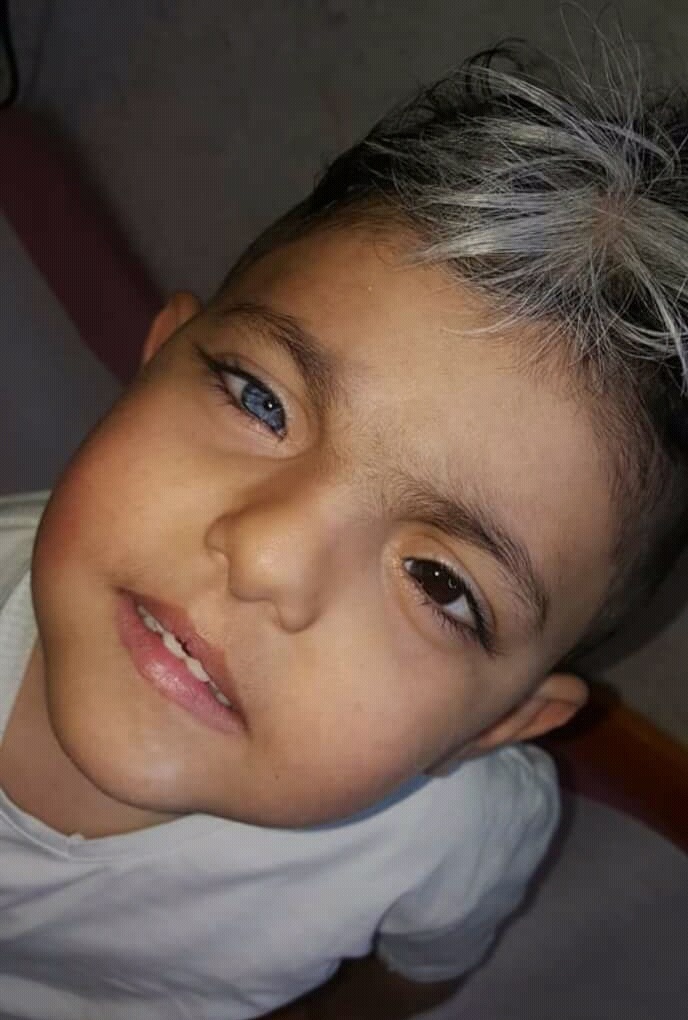
A Síndrome Waardenburg tipo 1 é uma condição genética rara que afeta a pigmentação de partes do corpo e a audição. Ela costuma ser notada desde o nascimento pela presença de olhos de cores diferentes, mecha de cabelo branca e olhos ligeiramente mais afastados. Cerca de um terço das pessoas com a síndrome pode apresentar perda auditiva de grau variado desde os primeiros meses de vida. Não há remédios específicos ou um PCDT próprio no SUS, mas o sistema público garante acesso a exames e atendimento em reabilitação para o acompanhamento contínuo.
A síndrome de Waardenburg tipo 1 (WS1) é um subtipo da síndrome de Waardenburg (WS), distúrbio caracterizado por surdez congênita, pequenos defeitos nas estruturas decorrentes da crista neural, resultando em anomalias de pigmentação dos olhos, cabelos e pele, em combinação com distopia canthorum.
Escala de raridade
<1/50kMuito rara
1/20kRara
1/10kPouco freq.
1/5kIncomum
1/2k
Encontrou um erro ou informação desatualizada? Sugira uma correção →
Entender a doença
Do básico ao detalhe, leia no seu ritmo
Preparando trilha educativa...
Sinais e sintomas
O que aparece no corpo e com que frequência cada sintoma acontece
Partes do corpo afetadas
+ 13 sintomas em outras categorias
Características mais comuns
Os sintomas variam de pessoa para pessoa. Abaixo estão as 45 características clínicas mais associadas, ordenadas por frequência.
Linha do tempo da pesquisa
Encontrou um erro ou informação desatualizada? Sugira uma correção →
Genética e causas
O que está alterado no DNA e como passa nas famílias
Genes associados
1 gene identificado com associação a esta condição. Padrão de herança: Autosomal dominant.
Curadoria gene-doença
fontes oficiaisWaardenburg syndrome 1
WS1 is an autosomal dominant disorder characterized by non-progressive sensorineural deafness, pigmentary disturbances such as frontal white blaze of hair, heterochromia of irides, white eyelashes, leukoderma, and wide bridge of nose owing to lateral displacement of the inner canthus of each eye (dystopia canthorum). WS1 shows variable clinical expression and some affected individuals do not manifest hearing impairment or iris pigmentation disturbances. Dystopia canthorum is the most consistent sign and is found in 98% of the patients.
Variantes genéticas (ClinVar)
289 variantes patogênicas registradas no ClinVar.
Classificação de variantes (ClinVar)
Distribuição de 148 variantes classificadas pelo ClinVar.
Vias biológicas (Reactome)
3 vias biológicas associadas aos genes desta condição.
Diagnóstico
Os sinais que médicos procuram e os exames que confirmam
Tratamento e manejo
Remédios, cuidados de apoio e o que precisa acompanhar
Onde tratar no SUS
Hospitais de referência no Brasil e o protocolo oficial do SUS (PCDT)
🇧🇷 Atendimento SUS — Síndrome Waardenburg tipo 1
Selecione um estado ou use sua localização para ver resultados.
Dados de DATASUS/CNES, SBGM, ABNeuro e Ministério da Saúde. Sempre confirme a disponibilidade diretamente com o estabelecimento.
Pesquisa ativa
Ensaios clínicos abertos e novidades científicas recentes
Pesquisa e ensaios clínicos
Nenhum ensaio clínico registrado para esta condição.
Publicações mais relevantes
Delayed diagnosis of Waardenburg syndrome type 1 in a Syrian adult: Challenges and lessons from resource-limited settings, a case report and literature review.
Waardenburg syndrome (WS) is a rare genetic disorder characterized by congenital sensorineural hearing loss and pigmentary abnormalities, accounting for 2-5% of congenital deafness. While molecular testing is the diagnostic gold standard, clinical recognition remains crucial in low-resource or conflict-affected environments where specialized services are unavailable. We report a Syrian male in his early 20s who presented to the otorhinolaryngology clinic seeking exemption from military service, citing long-standing right-sided hearing loss. The patient and his family had never pursued medical evaluation for his pigmentary features or hearing problem. Examination revealed a white forelock, heterochromia iridis, synophrys, broad nasal root, and dystopia canthorum (W Index 2.2). Pure-tone audiometry demonstrated severe unilateral sensorineural hearing loss. Systematic neurological, ophthalmological, and musculoskeletal assessments were normal. Due to the lack of access to genetic testing, a clinical diagnosis of WS type I was made, and the patient was referred for genetic counseling. This case highlights diagnostic challenges in conflict-affected, resource-limited settings. Despite striking phenotypic features, the patient remained undiagnosed until adulthood. Missed opportunities included the absence of childhood hearing screening, delayed recognition of pigmentary signs, and a lack of educational or psychosocial support. Literature indicates that phenotypic diagnosis is reliable when multiple major criteria are present, yet diagnostic delays significantly affect quality of life. This report underscores the importance of timely recognition of WS in low-resource contexts. Strengthening primary care awareness, implementing basic audiological and pigmentary screening, and integrating psychosocial support may help mitigate diagnostic delays and improve long-term outcomes for patients with rare genetic disorders.
[Waardenburg syndrome type 1 in a black woman].
A novel frameshift variant of PAX3 in a Chinese Yugur family with Waardenburg syndrome type 1.
Waardenburg syndrome type 1 (WS1) is a rare autosomal dominant disorder characterized by congenital sensorineural hearing loss and facial dysmorphisms. PAX3 mutations are a known genetic cause. This study investigated a novel PAX3 mutation in a Chinese Yugur family and assessed long-term auditory outcomes after cochlear implantation. Whole-exome and Sanger sequencing were used to identify causative variants, followed by bioinformatic analyses to predict pathogenicity. Auditory and speech rehabilitation were evaluated over a 7-year follow-up. A novel heterozygous frameshift mutation in PAX3 (c.788dup, p.Gln264ThrfsTer5) was identified and confirmed to be de novo. Structural modeling indicated disruption of a conserved domain, supporting its pathogenic role. The proband achieved excellent auditory and speech recovery and successfully integrated into mainstream education. This study expands the mutation spectrum of PAX3 and provides evidence supporting the pathogenicity of the c.788dup variant. It also confirms the long-term benefit of cochlear implantation and rehabilitation in WS1-related hearing loss.
Concurrent novel mutations in PAX3 and CFAP410 in a patient with Waardenburg syndrome type 1 associated with Retinitis Pigmentosa.
Waardenburg syndrome (WS) is an auditory-pigmentary syndrome characterized by hair pigmentary abnormalities, pigmentary abnormalities of the iris, and congenital hearing loss. Type 1 associated with dystopia canthorum is caused by mutations in PAX3 gene which codes for DNA-binding transcription factor involved in neural crest border induction at the neural plate. A 41-year-old male patient of consanguineous Egyptian parents presenting with progressive nyctalopia and field constriction underwent complete ophthalmological examination. Additionally, color fundus photography, fundus autofluorescence (FAF), spectral domain optical coherence tomography (SD-OCT) of the macula, full field electroretinogram (ERG), visual field perimetry and B-scans were obtained. Whole-exome sequencing (WES) was performed from a peripheral blood sample followed by bioinformatics analysis. A novel mutation in PAX3 gene c.688C>A was identified by WES consistent with a diagnosis of Waardenburg syndrome (WS) type 1. Further bioinformatic analysis of WES raw data identified another novel mutation in CFAP410 c.293C>T confirming the associated RP diagnosis. To the best of our knowledge, this is the first report of RP in a WS patient. We are reporting novel mutations in PAX3 and CFAP410 genes and expanding number of cases of non-syndromic retinal degeneration in CFAP410- associated retinopathy.
Case of sapphire eyes with hearing loss: Waardenburg syndrome type 1 in a young girl.
Publicações recentes
Delayed diagnosis of Waardenburg syndrome type 1 in a Syrian adult: Challenges and lessons from resource-limited settings, a case report and literature review.
[Waardenburg syndrome type 1 in a black woman].
A novel frameshift variant of PAX3 in a Chinese Yugur family with Waardenburg syndrome type 1.
🥈 ObservacionalConcurrent novel mutations in PAX3 and CFAP410 in a patient with Waardenburg syndrome type 1 associated with Retinitis Pigmentosa.
Syndromic Association of Depigmentation With Congenital Hearing Loss: A Review of Three Children With Auditory Pigmentary Disorders.
📚 EuropePMC36 artigos no totalmostrando 35
Delayed diagnosis of Waardenburg syndrome type 1 in a Syrian adult: Challenges and lessons from resource-limited settings, a case report and literature review.
Science progress[Waardenburg syndrome type 1 in a black woman].
Journal francais d'ophtalmologieA novel frameshift variant of PAX3 in a Chinese Yugur family with Waardenburg syndrome type 1.
Frontiers in geneticsConcurrent novel mutations in PAX3 and CFAP410 in a patient with Waardenburg syndrome type 1 associated with Retinitis Pigmentosa.
Ophthalmic geneticsSyndromic Association of Depigmentation With Congenital Hearing Loss: A Review of Three Children With Auditory Pigmentary Disorders.
Ear, nose, & throat journalCase of sapphire eyes with hearing loss: Waardenburg syndrome type 1 in a young girl.
Archives of disease in childhoodConcurrent Cardiac and Renal Anomalies in Waardenburg Syndrome Type 1: A Report of a Rare Case.
CureusWaardenburg syndrome type 1: a case report of a family with a intragenic PAX3 deletion with no hearing loss or heterochromia of iris.
Clinical dysmorphologyPAX3 mutation suppress otic progenitors proliferation and induce apoptosis by inhibiting WNT1/β-catenin signaling pathway in WS1 patient iPSC-derived inner ear organoids.
Biochemical and biophysical research communicationsAssociation of autism spectrum disorder with Waardenburg syndrome in a toddler.
BMJ case reportsTwo induced pluripotent stem cell (iPSC) lines derived from patients affected by Waardenburg syndrome type 1 retain potential to activate neural crest markers.
Stem cell research[Analysis of molecular genetics and clinical characteristics of 3 children with Waardenburg syndrome].
Lin chuang er bi yan hou tou jing wai ke za zhi = Journal of clinical otorhinolaryngology head and neck surgeryWaardenburg syndrome type 1 with unilateral glaucoma.
The Indian journal of medical researchA Novel Variant in Paired Box 3 Gene-related with Waardenburg Syndrome Type-1 in an Afghan Family.
Journal of the College of Physicians and Surgeons--Pakistan : JCPSPWaardenburg Syndrome Type 1.
Indian journal of ophthalmologyBiallelic variants in PAX3 cause Klein syndrome.
Clinical geneticsA novel PAX3 mutation in a Chinese Han family with Waardenburg syndrome type 1.
International journal of pediatric otorhinolaryngologyCase Report: A Novel PAX3 Mutation Associated With Waardenburg Syndrome Type 1.
Frontiers in geneticsPhenotypic diversity and genetic complexity of PAX3-related Waardenburg syndrome.
American journal of medical genetics. Part AIdentification and functional analysis of a novel missense mutation of PAX3 associated with Waardenburg syndrome type I.
European archives of oto-rhino-laryngology : official journal of the European Federation of Oto-Rhino-Laryngological Societies (EUFOS) : affiliated with the German Society for Oto-Rhino-Laryngology - Head and Neck SurgeryAsymmetric choroidal hypopigmentation in a Son and mother with Waardenburg syndrome type I.
Ophthalmic geneticsA Novel PAX3 Mutation in a Chinese Family with Waardenburg Syndrome Type 1.
Genetic testing and molecular biomarkers[Waardenburg syndrome type 1].
Journal francais d'ophtalmologieA novel PAX3 mutation in a Korean patient with Waardenburg syndrome type 1 and unilateral branch retinal vein and artery occlusion: a case report.
BMC ophthalmologyA case report of reversible generalized seizures in a patient with Waardenburg syndrome associated with a novel nonsense mutation in the penultimate exon of SOX10.
BMC pediatricsA novel mutation of the EYA4 gene associated with post-lingual hearing loss in a proband is co-segregating with a novel PAX3 mutation in two congenitally deaf family members.
International journal of pediatric otorhinolaryngologyNovel PAX3 mutations causing Waardenburg syndrome type 1 in Tunisian patients.
International journal of pediatric otorhinolaryngologyIdentification and functional analysis of a novel mutation in the PAX3 gene associated with Waardenburg syndrome type I.
GeneNeural tube defects in Waardenburg syndrome: A case report and review of the literature.
American journal of medical genetics. Part AHomozygous EDNRB mutation in a patient with Waardenburg syndrome type 1.
Auris, nasus, larynxMultiple hyperpigmented patches in Waardenburg syndrome type 1: An unusual presentation.
Indian journal of dermatology, venereology and leprologyA novel PAX3 mutation in a Japanese boy with Waardenburg syndrome type 1.
Human genome variationWAARDENBURG SYNDROME TYPE 1 AND A RARE FINDING OF ANAL ATRESIA.
Genetic counseling (Geneva, Switzerland)A novel mutation in the PAX3 gene causes Waardenburg syndrome type I in an Iranian family.
International journal of pediatric otorhinolaryngologyCase report: waardenburg syndrome.
Military medicineAssociações
Organizações que acompanham esta doença — pra ter apoio e orientação
Ainda não temos associações cadastradas para Síndrome Waardenburg tipo 1.
É de uma associação que acompanha esta doença? Fale com a gente →
Doença com base genética
Um médico geneticista pode ajudar no diagnóstico de Síndrome Waardenburg tipo 1 e no aconselhamento genético da família.
Doenças relacionadas
Doenças com sintomas parecidos — ajudam quem ainda está buscando diagnóstico
Perguntas frequentes
O que as famílias mais perguntam sobre esta doença — cada resposta com a fonte de onde saiu
A síndrome é causada por mutações no gene PAX3, que desempenha papel essencial no desenvolvimento de células da crista neural. A transmissão segue um padrão autossômico dominante, podendo ser transmitida diretamente aos descendentes.
Referências
Fontes citadas no texto, publicações do grafo e bases de dados usadas neste verbete
6 publicações do grafo RarasNet (PubMed) · 7 bases de dados. Títulos, periódicos e PMIDs vêm direto da fonte, sem intermediação de IA.
Dados compilados pelo RarasNet a partir de fontes abertas (Orphanet, OMIM, MONDO, PubMed/EuropePMC, ClinicalTrials.gov, DATASUS, PCDT/MS). Este conteúdo é informativo e não substitui avaliação médica.
Citar este verbete
Raras. (s.d.). Síndrome Waardenburg tipo 1. Em Raras — Enciclopédia de Doenças Raras do Brasil. https://raras.org/doenca/sindrome-waardenburg-tipo-1
Formato APA. Conteúdo sob CC BY 4.0 — reuso livre com atribuição.
Conteúdo mantido por Agente Raras · Médicos e pesquisadores podem colaborar
Síndrome Waardenburg tipo 1
📋 Origem dos dados
Esta página agrega dados de fontes públicas e oficiais. Dados sobre cobertura no SUS (PCDT, CEAF) são verificados ativamente por agente proativo (ver badge no infobox). Demais dados têm atribuição de fonte + data da última sincronização — clique para abrir o original.
- Doença rara (ontologia)
- fonte: Orphanet
- Identificador unificado
- fonte: MONDO
- Genética mendeliana
- fonte: OMIM
- Codificação WHO/SUS
- fonte: WHO ICD-10 / DATASUS
- CID-11 (futuro)
- fonte: WHO ICD-11
- NIH/GARD
- fonte: GARD (NIH)
- Dado público estruturado
- fonte: Wikidata

