
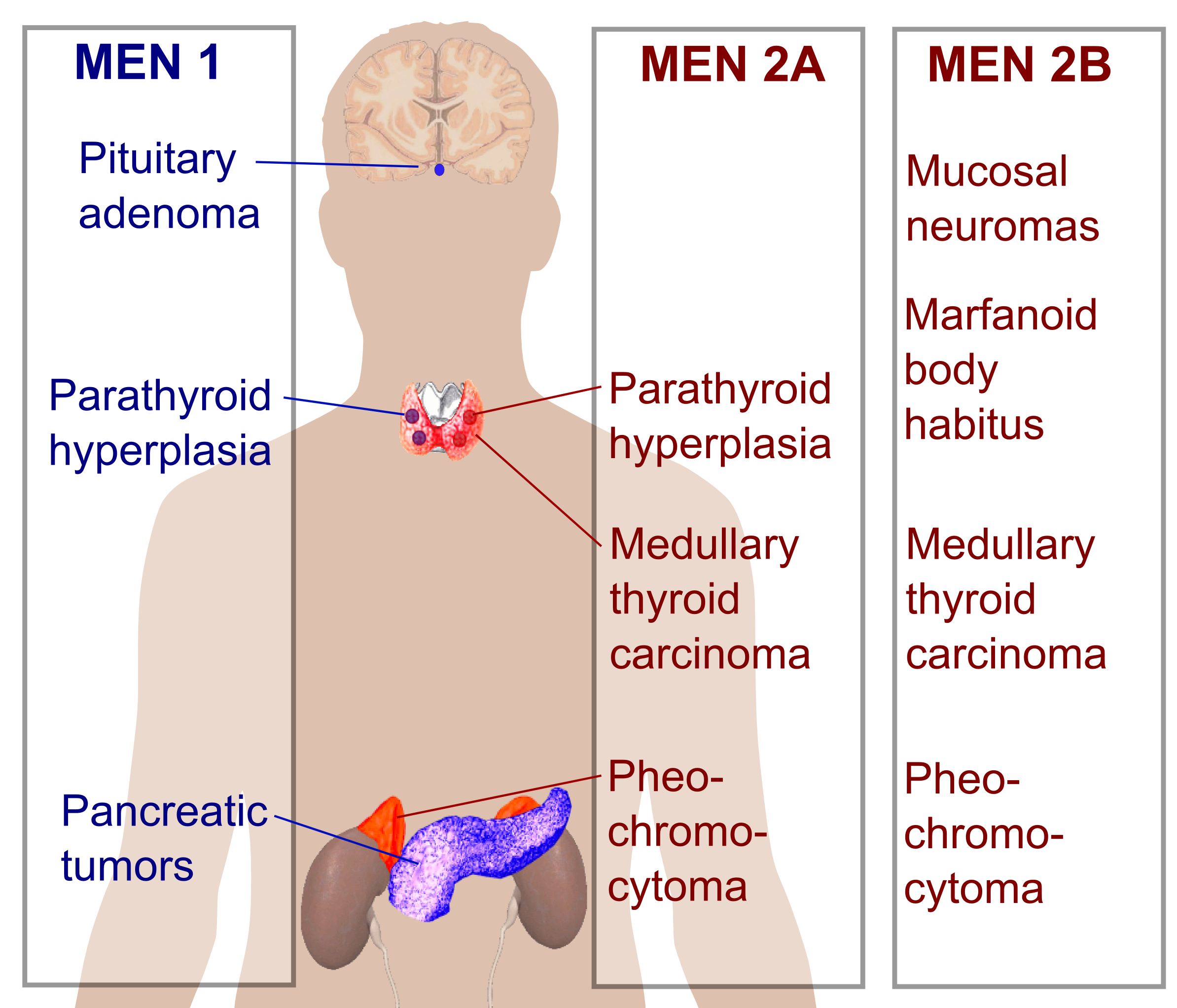
Síndrome de predisposição tumoral autossômica dominante causada por variantes patogênicas no gene MEN1, caracterizada por um risco aumentado de tumores das glândulas paratireoides, glândula pituitária e tumores neuroendócrinos do intestino anterior (mais comumente células das ilhotas pancreáticas).
Introdução
O que você precisa saber de cara
Síndrome de predisposição tumoral autossômica dominante causada por variantes patogênicas no gene MEN1, caracterizada por um risco aumentado de tumores das glândulas paratireoides, glândula pituitária e tumores neuroendócrinos do intestino anterior (mais comumente células das ilhotas pancreáticas).
Escala de raridade
<1/50kMuito rara
1/20kRara
1/10kPouco freq.
1/5kIncomum
1/2k
Encontrou um erro ou informação desatualizada? Sugira uma correção →
Entender a doença
Do básico ao detalhe, leia no seu ritmo
Preparando trilha educativa...
Sinais e sintomas
O que aparece no corpo e com que frequência cada sintoma acontece
Partes do corpo afetadas
+ 45 sintomas em outras categorias
Características mais comuns
Os sintomas variam de pessoa para pessoa. Abaixo estão as 86 características clínicas mais associadas, ordenadas por frequência.
Linha do tempo da pesquisa
Encontrou um erro ou informação desatualizada? Sugira uma correção →
Genética e causas
O que está alterado no DNA e como passa nas famílias
Genes associados
3 genes identificados com associação a esta condição. Padrão de herança: Autosomal dominant, Not applicable.
Curadoria gene-doença
fontes oficiaisEssential component of a MLL/SET1 histone methyltransferase (HMT) complex, a complex that specifically methylates 'Lys-4' of histone H3 (H3K4). Functions as a transcriptional regulator. Binds to the TERT promoter and represses telomerase expression. Plays a role in TGFB1-mediated inhibition of cell-proliferation, possibly regulating SMAD3 transcriptional activity. Represses JUND-mediated transcriptional activation on AP1 sites, as well as that mediated by NFKB subunit RELA. Positively regulates
Nucleus
Familial multiple endocrine neoplasia type I
Autosomal dominant disorder characterized by tumors of the parathyroid glands, gastro-intestinal endocrine tissue, the anterior pituitary and other tissues. Cutaneous lesions and nervous-tissue tumors can exist. Prognosis in MEN1 patients is related to hormonal hypersecretion by tumors, such as hypergastrinemia causing severe peptic ulcer disease (Zollinger-Ellison syndrome, ZES), primary hyperparathyroidism, and acute forms of hyperinsulinemia.
Important regulator of cell cycle progression. Inhibits the kinase activity of CDK2 bound to cyclin A, but has little inhibitory activity on CDK2 bound to SPDYA (PubMed:28666995). Involved in G1 arrest. Potent inhibitor of cyclin E- and cyclin A-CDK2 complexes. Forms a complex with cyclin type D-CDK4 complexes and is involved in the assembly, stability, and modulation of CCND1-CDK4 complex activation. Acts either as an inhibitor or an activator of cyclin type D-CDK4 complexes depending on its ph
NucleusCytoplasmEndosome
Multiple endocrine neoplasia 4
Multiple endocrine neoplasia (MEN) syndromes are inherited cancer syndromes of the thyroid. MEN4 is a MEN-like syndrome with a phenotypic overlap of both MEN1 and MEN2.
Interacts strongly with CDK4 and CDK6. Potent inhibitor. Potential effector of TGF-beta induced cell cycle arrest
Cytoplasm
Medicamentos aprovados (FDA)
1 medicamento encontrado nos registros da FDA americana.
Variantes genéticas (ClinVar)
1.198 variantes patogênicas registradas no ClinVar.
Classificação de variantes (ClinVar)
Distribuição de 2.436 variantes classificadas pelo ClinVar.
Vias biológicas (Reactome)
25 vias biológicas associadas aos genes desta condição.
Diagnóstico
Os sinais que médicos procuram e os exames que confirmam
Tratamento e manejo
Remédios, cuidados de apoio e o que precisa acompanhar
Onde tratar no SUS
Hospitais de referência no Brasil e o protocolo oficial do SUS (PCDT)
🇧🇷 Atendimento SUS — Neoplasias endócrinas múltiplas tipo 1
Selecione um estado ou use sua localização para ver resultados.
Dados de DATASUS/CNES, SBGM, ABNeuro e Ministério da Saúde. Sempre confirme a disponibilidade diretamente com o estabelecimento.
Pesquisa ativa
Ensaios clínicos abertos e novidades científicas recentes
Ensaios em destaque
🟢 Recrutando agora
6 pesquisas recrutando participantes. Converse com seu médico sobre a possibilidade de participar.
Outros ensaios clínicos
192 ensaios clínicos encontrados, 8 ativos.
Publicações mais relevantes
Mostrando amostra de 200 publicações de um total de 918
18F-Choline PET/CT Localization in a 20-Year Experience of Re-Operative Parathyroidectomy.
Reoperative parathyroidectomy is necessary in up to 10% of patients with persistent or recurrent primary hyperparathyroidism. Accurate preoperative localization is critical for surgical success and minimizing complications. Conventional imaging methods often yield inconclusive or false-negative results in this challenging patient population. To evaluate the diagnostic accuracy and clinical utility of 18F-fluorocholine positron emission tomography/computed tomography imaging compared to traditional imaging modalities of neck ultrasonography and 99mTechnetium-sestamibi parathyroid scintigraphy in patients undergoing reoperative parathyroidectomy. Retrospective cohort study of patients undergoing reoperative parathyroidectomy over a 20-year period (2005-2025). Localization imaging modalities, operative approaches, intraoperative parathyroid hormone monitoring, and surgical outcomes were analyzed. Single tertiary referral center specializing in endocrine surgery with a high-volume parathyroidectomy practice. 114 consecutive adult patients (aged ≥ 18 years) were included who underwent 124 reoperative parathyroidectomy operations for biochemically confirmed persistent or recurrent primary hyperparathyroidism. Patients were included if there was lithium-associated hyperparathyroidism or multiple endocrine neoplasia type 1 syndrome. Primary outcome included localization detection rates of imaging modalities performed. Secondary outcomes included type of surgical approach utilized, cause of failure from the primary operation, intraoperative parathyroid hormone monitoring response, biochemical cure rate, and surgical complications. 18F-fluorocholine positron emission tomography/computed tomography demonstrated a detection rate of 95.2%, outperforming 11C-methionine positron emission tomography/computed tomography (63.6%), fludeoxyglucose-positron emission tomography/computed tomography (50.0%), and neck ultrasonography (21.6%). In 90.5% of cases with negative or inconclusive conventional imaging, 18F-fluorocholine positron emission tomography/computed tomography accurately localized pathological parathyroid gland(s). A focused surgical approach (sternotomy or unilateral cervicotomy) was feasible in 87.1% of patients. Appropriate intraoperative parathyroid hormone monitoring decline was associated with a 95.8% biochemical cure rate. Complication rates were low, with vocal cord palsy in 0.8% and long-term hypoparathyroidism requiring calcium supplementation in 2.4%. 18F-fluorocholine positron emission tomography/computed tomography offers superior localization accuracy and a favorable radiation profile compared to conventional imaging options, supporting its use as a first-line modality in reoperative parathyroidectomy. Its application enables focused surgical interventions with high cure rates and low morbidity.
Surgical Management of Zollinger-Ellison Syndrome in Multiple Endocrine Neoplasia Type 1 an AFCE and GTE Cohort Study. (Association Francophone de Chirurgie Endocrinienne and Groupe d'étude des Tumeurs Endocrines).
To describe surgical indications, procedures and outcomes in patients operated for Zollinger-Ellison syndrome (ZES) in multiple endocrine neoplasia type 1 (MEN1) using a large nationwide cohort. Management of ZES in MEN1 remains controversial. All patients with ZES diagnosed through the MEN1 AFCE/GTE network from 1985 to 2015. Among 233 ZES patients, 66 (28%) were operated for ZES-related gastrinomas. Thirty-three (51%) procedures aimed to remove gastrinomas and associated pancreatic neuroendocrine tumors (pNET(s)) with appropriate resection. Thirty-two procedures (49%) aimed to remove gastrinomas alone (ZES group). Survival was decreased in patients metastatic at ZES diagnosis (p < 0.001). Fifteen-year survival among non-metastatic patients was not significantly better in operated patients (82% vs. 70%, p = 0.2). Perioperative mortality was nil. Metastatic lymph nodes were found in 30/42 lymphadenectomies (71%). The choice between pancreaticoduodenectomy versus duodenal focused surgery in the ZES group was associated with pre-operative detection of adenopathies (p > 0.001), leading to more frequent lymphadenectomies (p < 0.01). Previous pancreatic surgeries (30%) may have influenced the choice of ZES procedures. Gastrin levels were more frequently normalized when the duodenum and the head of pancreas were removed versus more localized duodenal surgeries (p < 0.01). The high rate of invaded nodes in lymphadenectomies in MEN1 patients operated for ZES, the absence of operative mortality, and the decreased survival in metastatic patients are indirect arguments for surgery. Pancreaticoduodenectomy may be indicated in young and fit individuals to better control hypergastrinemia and to prevent metastatic progression in the ZES group. Gastrinoma removal is justified when associated with large pNETs.
[Multiple endocrine neoplasia syndrome type 1: analysis of data from 102 patients from 43 families in the population of the Russian Federation].
Multiple endocrine neoplasia syndrome type 1 (MEN-1) is a rare, autosomal dominant disorder resulting from inactivating mutations in the MEN1 gene. It demonstrates high penetrance, with the "classic triad" of manifestations comprising primary hyperparathyroidism (PHPT), gastrointestinal neuroendocrine neoplasms (NEN), and pituitary adenomas. Diagnosis relies on clinical, familial, and genetic criteria. However, significant phenotypic variability and the lack of a clear genotype-phenotype correlation complicate early diagnosis. To investigate the clinical-epidemiological, laboratory-instrumental, and genetic characteristics of familial MEN-1 in the Russian population. We conducted a single-center, single-stage study (2015-2025) at the Endocrinology Research Centre enrolling 102 genetically confirmed MEN-1 patients from 43 families. Participants were stratified by age at PHPT onset (≤18 years, 19-40 years, and >40 years) and MEN1 mutation type/location. We compared groups using calcium-phosphorus metabolism parameters, disease progression patterns, PHPT surgical outcomes, and genotype-phenotype correlations. Cohort baseline characteristics (sex, manifestations) were comparable (p>0,05), but we observed significant differences in NEN onset age (p<0,001) and a trend toward higher pituitary adenoma prevalence (p=0,003). Exon 10 mutation were associated with a 7,7-fold increased pituitary adenoma risk (OR=7,7; p=0,006), though mutation type did not predict broader phenotype. Groups did not differ in multiglandular involvement, surgical outcomes, or histopathology (p>0,05). MEN-1 exhibits marked clinical heterogeneity in the Russian population, with exon 10 mutations significantly increasing pituitary adenoma risk. Early-onset PHPT predicts earlier NEN and pituitary adenoma development. These findings support proactive genetic screening and risk-stratified monitoring for MEN-1 families. ОБОСНОВАНИЕ. Синдром множественных эндокринных неоплазий 1 типа (МЭН-1) — редкое аутосомно-доминантное заболевание, обусловленное инактивирующими мутациями в гене MEN1. МЭН-1 характеризуется высокой пенетрантностью; к «классической триаде» проявлений синдрома относятся первичный гиперпаратиреоз (ПГПТ), нейроэндокринные неоплазии (НЭН) желудочно-кишечного тракта (ЖКТ) и аденомы гипофиза. Диагноз устанавливается на основании клинических, семейных и генетических критериев, однако фенотипическая вариабельность и отсутствие четкой генотип-фенотипической корреляции затрудняют раннюю диагностику заболевания. ЦЕЛЬ. Охарактеризовать клинико-эпидемиологические, лабораторно-инструментальные и генетические особенности семейных форм МЭН-1 в Российский Федерации. МАТЕРИАЛЫ И МЕТОДЫ. На базе ФГБУ «НМИЦ эндокринологии им. академика И.И. Дедова» Минздрава России проведено одноцентровое одномоментное исследование (102 пациента с генетически верифицированным МЭН-1 из 43 семей) за период 2015–2025 гг. Пациенты были разделены 3 группы в зависимости от возраста манифестации ПГПТ — в большинстве случаев «первого» компонента заболевания: ≤18 лет, 19–40 лет и >40 лет. Кроме того, все пациенты были сгруппированы в зависимости от типа и локализации мутации в гене MEN1. Проведен сравнительный анализ независимых групп и подгрупп по основным показателям кальций-фосфорного обмена, характеристикам проявлений, течению и исходам хирургического лечения ПГПТ, проанализирована генотип-фенотипическая корреляция МЭН-1. РЕЗУЛЬТАТЫ. Группы пациентов с МЭН-1 были сопоставимы по основным характеристикам (пол, первый компонент, другие проявления синдрома; p>0,05), однако выявлены значимые различия в возрасте манифестации НЭН (p<0,001) и тенденция для аденом гипофиза (p=0,003). При анализе генетических данных мы обнаружили ассоциацию между мутацией в 10-м экзоне гена MEN1 и риском развития аденом гипофиза (ОР=7,7; p=0,006), в то время как тип мутации никак не определял фенотип МЭН-1. Группы не различались по множественному характеру поражения околощитовидных желез (ОЩЖ), хирургическим исходам ПГПТ, а также гистологическим характеристикам образований ОЩЖ (p>0,05). ЗАКЛЮЧЕНИЕ. Анализ семейных форм МЭН-1 в российской популяции подтвердил высокую клиническую гетерогенность синдрома, включая ассоциацию мутаций в 10-м экзоне гена MEN1 с повышенным риском аденом гипофиза. У пациентов с манифестацией ПГПТ в более молодом возрасте отмечалось более раннее развитие НЭН ЖКТ и аденом гипофиза. Результаты исследования подтверждают необходимость раннего генетического скрининга и индивидуального мониторинга пациентов с МЭН-1, а также их родственников.
Challenges and unmet needs of [18F]fluorocholine PET in hyperparathyroidism: A framework for refining current practice and advancing parathyroid imaging.
The advent of [18F]fluorocholine (FCH) positron emission tomography (PET)/computed tomography (CT) or magnetic resonance (MR) imaging has enhanced the diagnostic performance of preoperative imaging in patients with primary and renal hyperparathyroidism (HPT) during the past decade [1, 2]. Numerous studies and meta-analyses have confirmed the excellent performance of FCH PET, including in complex cases (i.e., inconclusive or negative results on parathyroid scintigraphy, recurrence, renal hyperparathyroidism (HPT), multiple endocrine neoplasia type 1 (MEN1)-related pHPT), with diagnostic accuracy consistently exceeding 95% in larger studies [3-11]. As a result, when available, FCH PET is a widely accepted first-line modality for primary and renal HPT [10]. Moreover, FCH PET offers several advantages over parathyroid scintigraphy, such as a lower radiation dose burden (especially if PET/MR is used) [12, 13], shorter acquisition times, and sustained cost-effectiveness [14-17]. Despite these advantages, there are several unmet needs that remain to be addressed. This editorial explores the remaining challenges associated with the use of FCH PET and underscores the need for close interdisciplinary collaboration among nuclear medicine physicians, endocrinologists, and surgeons to further optimize diagnostic and therapeutic strategies and address existing clinical gaps.
In-depth Genetic and Molecular Characterization of Unilateral Coexisting Adrenal Cortical Adenoma and Carcinoma in the Context of MEN1 Syndrome.
Adrenal lesions often occur in patients with multiple endocrine neoplasia type 1 (MEN1), mostly adrenal cortical adenomas (ACAs), although the frequency of adrenal cortical carcinomas (ACCs) is higher than in the general population. The coexistence of benign and malignant masses has seldom been documented, leaving open the question of ACC progression from benign forms. We report a comprehensive genetic characterization of three adrenal cortical tumor samples obtained from a familial MEN1 patient, operated for the rapid progression of an initially stable nonfunctional adrenal incidentaloma. Histologically, the tumor consisted of a small ACA contiguous to a large ACC, which subsequently relapsed. Exome sequencing of ACC, ACA and recurrence evidenced a MEN1 loss of heterozygosity (LOH) in ACC but not in ACA, where, however, a second hit driven by alternative mechanisms could not be excluded. The majority of the ACA variants were found to co-occurred in ACC (n = 36/42) and were benign, except for two of unknown significance in KANK1 and REN genes, described as associated with renal cancer. Among variants shared between ACC and its recurrence (n = 69), 11 were Tier III, while 2 affecting TP53 and NF1 genes were pathogenic. Bioinformatic clonal evolution analysis identified one clone - characterized by TP53 and NF1 mutations - absent in ACA but present in ACC and recurrence, as well as 2 clones shared between ACA and ACC but lost in the recurrence. In conclusion, comparative Whole Exome Sequencing (WES) analysis of three adrenal tumors in a MEN1 patient suggests a possible relationship between malignant and benign lesions occurring in MEN1 patients, without, however, demonstrating any causal adenoma-to-carcinoma progression driven by MEN1 LOH. Overall, these data further suggest an increased risk of MEN1 patients to develop adrenocortical malignancy.
Publicações recentes
Associations of selected atypical non-neuroendocrine cancers with multiple endocrine neoplasia type 1.
Extracellular signalling regulates gastrin transcription through site-specific phosphorylation and nuclear redistribution of Menin.
Gastric neuroendocrine tumors: a comprehensive analysis of clinicopathological characteristics and survival outcomes from a reference center.
A case of multiple type I endocrine neoplasia with gastrin-producing and glucagon-producing tumors successfully resected 18 years after insulinoma surgery.
A de novo MEN1 gene mutation in a 4-year-old boy with hypoglycemia: A case report and functional study.
📚 EuropePMC1.112 artigos no totalmostrando 195
18F-Choline PET/CT Localization in a 20-Year Experience of Re-Operative Parathyroidectomy.
World journal of surgerySurgical Management of Zollinger-Ellison Syndrome in Multiple Endocrine Neoplasia Type 1 an AFCE and GTE Cohort Study. (Association Francophone de Chirurgie Endocrinienne and Groupe d'étude des Tumeurs Endocrines).
World journal of surgery[Multiple endocrine neoplasia syndrome type 1: analysis of data from 102 patients from 43 families in the population of the Russian Federation].
Problemy endokrinologiiChallenges and unmet needs of [18F]fluorocholine PET in hyperparathyroidism: A framework for refining current practice and advancing parathyroid imaging.
European journal of nuclear medicine and molecular imagingIn-depth Genetic and Molecular Characterization of Unilateral Coexisting Adrenal Cortical Adenoma and Carcinoma in the Context of MEN1 Syndrome.
Endocrine pathologyMultiple endocrine neoplasia with an atypical clinical course and a MEN1 gene variant of uncertain pathogenicity: A case report.
MedicineCorrigendum to: "Health-related quality of life of Multiple Endocrine Neoplasia type 1 patients: A mixed methods systematic review" [Eur J Cancer, Vol. 227, 9 September 2025, 115671].
European journal of cancer (Oxford, England : 1990)Redefining Pituitary Neuroendocrine Tumors in MEN1: Prevalence, Clinical Behavior, and Implications for Long-Term Surveillance.
Current oncology (Toronto, Ont.)Multiple endocrine neoplasia type 1 with MEN1 c.652C>T (p.Arg218Trp): variant reclassified to likely pathogenic.
JCEM case reportsTwo novel multiple endocrine neoplasia type 1 variants caused thymic neuroendocrine tumor: a case report.
Hereditary cancer in clinical practiceVentricular fibrillation triggered by recurrent hypoglycemia in a patient with insulinoma associated with MEN1: case report and review of literature.
Endocrine journalRank-based learning: a novel high-throughput algorithm resilient to missing data and effective for datasets with small sample size.
Briefings in bioinformaticsCase Report: Investigation and characterization of a multiple endocrine neoplasia type 1 case and its pedigree.
Frontiers in endocrinologyDistinct epigenetic aging in sporadic and hereditary neuroendocrine neoplasms.
Clinical epigeneticsLipid synthesis seems to drive proliferation in Men1 mouse adrenals and human adrenocortical cell lines.
Endocrine-related cancerSurgical and Oncologic Outcomes After Pancreatectomy for Pancreatic Neuroendocrine Tumor in Multiple Endocrine Neoplasia Type 1 and von Hippel-Lindau Syndrome: A Large, Multi-Institutional, Cohort Study.
Journal of the American College of SurgeonsInsulin Resistance Among Patients With Multiple Endocrine Neoplasia Type 1: A Systemic Review and Meta-Analysis.
AACE endocrinology and diabetesMetformin suppresses MEN1-associated pancreatic and pituitary neuroendocrine tumors: evidence from mouse models and clinical data.
Endocrine-related cancerBlood-Based Immunoglobulin-Bound Neoantigen Signatures Associated with Multiple Endocrine Neoplasia Type 1-Related Duodenopancreatic Neuroendocrine Tumor Progression.
Journal of the American College of SurgeonsCardiac Tamponade As the Initial Presentation of a Thymic Neuroendocrine Tumour: A Case Report.
CJC openMultiple Endocrine Neoplasia Type 1 Presenting as Recurrent Overt Gastrointestinal Bleeding and Ulceration: A Diagnostic Challenge.
CureusRadiological Surveillance for Pituitary Adenomas in Multiple Endocrine Neoplasia Type 1: A Longitudinal Cohort Study.
The Journal of clinical endocrinology and metabolismConcept of neuroendocrine neoplasms of all organs with a focus on grading, subtyping.
Virchows Archiv : an international journal of pathologyUltrasound and Scintigraphy for Preoperative Localization in Primary Hyperparathyroidism: A Single-Center Experience.
CureusMultiple endocrine neoplasia type 1 syndrome due to novel Alu insertion.
Cancer geneticsNew directions in MEN1 management: navigating the new clinical practice guidelines.
European journal of endocrinology[The 514th case: urinary stone excretion, elevated blood glucose, pancreatic mass,and co-secretion of multiple hormones].
Zhonghua nei ke za zhiDelay in Diagnosis of Thyroid-Stimulating Hormone-Secreting Pituitary Adenomas: Clinical and Endocrinological Profiles from a Retrospective Cohort Study.
Hormone and metabolic research = Hormon- und Stoffwechselforschung = Hormones et metabolismeCase Report: Novel likely pathogenic MEN1 mosaic mutation in the family with MEN-1 syndrome.
Frontiers in endocrinologyThe clinical challenge of MEN1 phenocopies: insights from a multicentric national retrospective study.
Journal of endocrinological investigationRole of MEN1 mutations on postoperative outcomes of patients with multiple endocrine neoplasia type 1-related primary hyperparathyroidism: a single center experience.
Journal of endocrinological investigationPopulation-Based Evidence of Familial Clustering in Pulmonary Carcinoid Tumors: Insights From the Utah Population Database.
CureusA Case of Pediatric Pancreatic Insulinoma Diagnosed 4 Years after the Onset.
Surgical case reportsUnusual Dual Brain Tumor Morphologies in an MEN1 Patient: A Case Report of Diagnostic Challenges and Methylation Insights.
International journal of molecular sciencesBilateral and recurrent adrenocortical carcinoma in MEN1: a case report and review of the literature.
Endocrine oncology (Bristol, England)A 14-yr-old boy with a pathogenic MEN1 variant was diagnosed with asymptomatic insulinoma during routine follow-up.
Clinical pediatric endocrinology : case reports and clinical investigations : official journal of the Japanese Society for Pediatric EndocrinologyMEN1-Related Neuroendocrine Tumors Show c-MET Overexpression.
Journal of the Endocrine SocietyOutcomes of 68Ga-NODAGA-Exendin-4 PET/CT Guided Surgical Management of Insulinomas in MEN1: A Preliminary Study.
Nuklearmedizin. Nuclear medicineTargeting menin in lysine methyltransferase 2A/nucleophosmin-mutated leukemia: A novel strategy from epigenetic dysregulation to clinical therapy (Review).
Oncology letters68Ga-DOTA-TATE PET/CT improves accuracy and guides management in multiple endocrine neoplasia type 1 (MEN-1) patients with suspected duodeno-pancreatic neuroendocrine tumours.
Endocrine oncology (Bristol, England)Risk Factors for Pituitary Adenoma Development in Multiple Endocrine Neoplasia Type 1: A Nationwide Study of 240 Cases.
The Journal of clinical endocrinology and metabolismExtent of Surgical Resection and Predictors of Outcomes in MEN1-related Hyperparathyroidism: A Systematic Review and Meta-analysis.
The Journal of clinical endocrinology and metabolismApproach to the Patient With Primary Hyperparathyroidism in Multiple Endocrine Neoplasia Type 1.
The Journal of clinical endocrinology and metabolismGastrointestinal surveillance in patients with multiple endocrine neoplasia type 1 and Zollinger-Ellison syndrome.
Scandinavian journal of gastroenterologyHealth-related quality of life of Multiple Endocrine Neoplasia Type 1 patients: A mixed methods systematic review.
European journal of cancer (Oxford, England : 1990)Familial MEN1 Syndrome with Atypical Renal Features and a Coexisting CLDN16 Variant: A Case Series.
Journal of clinical medicineIntegrated 18F-FCH PET/4D-CT in a Case of Supernumerary Parathyroid Glandular Hyperplasia With Incidentally Detected Thymic NET.
Clinical nuclear medicineMultiple endocrine neoplasia type 1 with neuroglycopenic symptoms with a novel heterozygous MEN1 gene mutation.
World journal of surgical oncologyA Long-Term Follow-Up of 2 Cases of Subclinical Acromegaly.
AACE endocrinology and diabetesNovel germline likely pathogenic frameshift variant of the MEN1 gene contributes to multiple endocrine neoplasia type 1: a case report with review of literature.
Endocrine journalThe role of thymectomy during parathyroidectomy in multiple endocrine neoplasia type 1-associated hyperparathyroidism: a systematic review and meta-analysis.
World journal of surgical oncologyASO Author Reflections: Patient Selection and Technique for Robotic Spleen-Preserving Distal Pancreatectomy.
Annals of surgical oncologyCyclic Cushing syndrome associated with cadherin-23 and multiple endocrine neoplasia type 1 gene mutations accompanied by bilateral primary papillary thyroid carcinoma.
Polish archives of internal medicineA Case of Advanced Renal Cell Carcinoma With Concomitant Development of Multiple Endocrine Neoplasia Type 1 That Affected Treatment Progress With Immunotherapy.
IJU case reportsEpidemiology and clinical outcomes of clinically suspected multiple endocrine neoplasia type 1 in South Korea: a nationwide cohort study.
Frontiers in endocrinology68 Ga-DOTATATE PET/CT-Guided Surgical Resection for Complete Remission of Multifocal Insulinomas in a Father and Son With MEN1 Syndrome.
Clinical nuclear medicineCirculating Gene Expression Assay as a Diagnostic and Prognostic Biomarker for Pancreatic Neuroendocrine Tumors in MEN1.
The Journal of clinical endocrinology and metabolismPituitary incidentaloma: a Pituitary Society international consensus guideline statement.
Nature reviews. EndocrinologyRobotic Spleen-Preserving Distal Pancreatectomy for Pancreatic Neuroendocrine Tumors in Multiple Endocrine Neoplasia Type 1.
Annals of surgical oncologyMultiple endocrine neoplasia type 1 (MEN1): recommendations and guidelines for best practice.
The lancet. Diabetes & endocrinologyTreatments for MEN1-associated endocrine tumours: three systematic reviews and a meta-analysis.
The lancet. Diabetes & endocrinology68 Ga-Exendin-4 PET/CT Enables Identification of Multiple and Ectopic Insulinoma in a Patient With Multiple Endocrine Neoplasia 1.
Clinical nuclear medicineSerums miR-24-3p and miR-1301-3p as Potential Biomarkers in MEN1 Syndrome.
International journal of molecular sciencesImportance of understanding a diagnostic-treatment algorithm for primary hyperparathyroidism-induced acute pancreatitis during pregnancy.
World journal of gastroenterologyPancreatic Neuroendocrine Tumor Leading to a Diagnosis of Multiple Endocrine Neoplasia Type 1.
DEN openDouble mutation for multiple endocrine neoplasia associated with congenital adrenal hyperplasia.
Endocrinology, diabetes & metabolism case reportsSuccessful treatment of metachronous insulinoma in a patient with multiple endocrine neoplasia type 1 syndrome.
Polish archives of internal medicineChromogranin a and pancreatic polypeptide are not suitable for the screening of pancreatic neuroendocrine tumors in MEN1 - a long-term follow-up study.
EndocrineA Pituitary Macroadenoma Cosecreting Prolactin and Growth Hormone in a Patient With Multiple Endocrine Neoplasia Type 4.
JCEM case reportsA neural substrate of comorbid depressive symptoms in alcohol use.
Molecular psychiatryCase Report: A novel likely pathogenetic variant of the MEN1 gene in multiple endocrine neoplasia type 1.
Frontiers in endocrinologyRecurrence of malignant insulinoma in the context of multiple endocrine neoplasia type 1: a case report.
Journal of surgical case reportsClinical phenotypes and genetic screening in hereditary primary hyperparathyroidism: A single-center case series.
Annales d'endocrinologieAn Updated Perspective of the Clinical Features and Parathyroidectomy Impact in Primary Hyperparathyroidism Amid Multiple Endocrine Neoplasia Type 1 (MEN1): Focus on Bone Health.
Journal of clinical medicineMultimodal Imaging Approach to MEN-1 Syndrome-Associated Tumors.
Diagnostics (Basel, Switzerland)Benefit of splenectomy in distal pancreatectomy for neuroendocrine tumours: multicentre retrospective study.
BJS openOncocytic subtype of well differentiated neuroendocrine tumor: clinicopathologic and molecular associations of a cohort diagnosed on fine needle aspiration (FNA).
Journal of the American Society of CytopathologyMolecular Characterization and Clinical Outcomes of Pancreatic Neuroendocrine Neoplasms Harboring PAK4-NAMPT Alterations.
JCO oncology advancesCharacterization, Prognosis, and Treatment of Patients With Locally Advanced or Metastatic Thymic Neuroendocrine Tumor: A Retrospective Study of the French GTE, ENDOCAN RENATEN, and RYTHMIC Networks.
Journal of thoracic oncology : official publication of the International Association for the Study of Lung CancerPredictors of Mortality in Patients With Multiple Endocrine Neoplasia Type 1.
Clinical endocrinologyHeterozygous Men1(+/T) Knockout Mice Do Not Develop Bronchopulmonary Neuroendocrine Hyperplasia or Neoplasia but Bronchial Adenocarcinoma.
Advances in respiratory medicineHighlights from the AACE Consensus Statement on Multiple Endocrine Neoplasia Type 1: A Patient's Perspective.
Endocrine practice : official journal of the American College of Endocrinology and the American Association of Clinical EndocrinologistsImportance of early detection in multiple endocrine neoplasia type 1: Clinical insights and future directions.
World journal of gastrointestinal oncologyAmerican Association of Clinical Endocrinology Consensus Statement on Management of Multiple Endocrine Neoplasia Type 1.
Endocrine practice : official journal of the American College of Endocrinology and the American Association of Clinical EndocrinologistsForearm Auto-Transplantation of Adenomatous Parathyroid Tissue to Prevent Post-Surgical Hypoparathyroidism: A Case Report.
West African journal of medicineA Novel Mutation in a Family With Multiple Endocrine Neoplasia Type 1 and Aggressive Pancreatic Neuroendocrine Tumors.
AACE clinical case reportsPrognostic value of clinical parameters and exosomal lncRNA NEAT1_1 in MEN1-related non-functioning pancreatic neuroendocrine tumors.
Journal of neuroendocrinologyPrimary hyperparathyroidism during pregnancy: ultrasound as an accurate preoperative localization imaging modality.
Orphanet journal of rare diseases[Microwave ablation for primary hyperparathyroidism related to multiple endocrine neoplasia type 1 in 3 cases of a family].
Zhonghua nei ke za zhiPancreatic neuroendocrine neoplasms (pNENs): Genetic and environmental biomarkers for risk of occurrence and prognosis.
Seminars in cancer biologyBone Mineral Density Changes in Multiple Endocrine Neoplasia Type 1: A Systematic Review and Meta-Analysis of Prevalence and Parathyroidectomy Outcomes.
The archives of bone and joint surgeryMultiple Endocrine Neoplasia Type 1 (MEN1) Syndrome Clinical Presentation and the Role of Newer Functional Imaging in the Diagnosis and Management: A Case Report.
CureusMultiple endocrine neoplasia type 1 in childhood and description of a novel variant.
Revista paulista de pediatria : orgao oficial da Sociedade de Pediatria de Sao PauloA Five-Year Journey to Diagnosis: Resolving Persistent Hypoglycemia Through Successful Insulinoma Resection-A Case Report.
Clinical case reportsA Novel Multiple Endocrine Neoplasia Type 1 Gene Variant Found in Scalp Pulmonary Neuroendocrine Tumor Metastasis.
JCEM case reportsSerendipitous Discovery and Characterization of Two Different Pathologies on 68 Ga-DOTATATE and 68 Ga-Exendin PET/CT in a Patient With Hyperinsulinemic Hypoglycemia Leading to Diagnosis of MEN-1.
Clinical nuclear medicineA Review for the Clinician: Classifications, Genetics, and Treatment for Neuroendocrine Neoplasms of the Thymus (Thymic Carcinoids).
NeuroendocrinologyThe Influence of the Clinical, Therapeutic and Socio-Personal Profile on the Quality of Life of Patients With Multiple Endocrine Neoplasia Type 1.
World journal of surgeryManagement of primary hyperparathyroidism in MEN1: From initial subtotal surgery to complex treatment of the remaining gland.
Annales d'endocrinologieMirrored Metastatic Neuroendocrine Tumor in a Mother-Daughter Duo With Mutations in the MEN1 Gene.
Clinical nuclear medicineA novel likely pathogenic germline variant in CDKN1B in a patient with MEN4 and medullary thyroid cancer.
Familial cancerHsp70 incompletely disaggregates misfolded K488X-menin to promote tumourigenesis in a family with multiple endocrine neoplasia type 1.
Cellular signallingRare Combination of Multiple Endocrine Neoplasia 1 with Medullary Thyroid Carcinoma and Clinical Value of 68 Ga-DOTATATE PET/CT in Diagnosing Different Lesions and Exploring Theranostic Strategy.
World journal of nuclear medicineMultiple endocrine neoplasia type 1: Early diagnosis is very important.
World journal of gastroenterologyThe natural course of cystic pancreatic neuroendocrine tumours in MEN1.
Endocrine oncology (Bristol, England)[A Case of Type Ⅲ Gastric Neuroendocrine Tumor and Gastric Cancer Coexisting in the Same Lesion].
Gan to kagaku ryoho. Cancer & chemotherapyGenotype-phenotype correlation in multiple endocrine neoplasia type 1.
JCI insightMultiple Endocrine Neoplasia Type 1 With Adrenal Cortical Adrenocortical Carcinoma: A 25-Year Follow-Up and Family Report.
JCEM case reportsElevated levels of circulating microbial-associated uremic toxins are associated with metastatic duodenopancreatic neuroendocrine tumors in patients with Multiple Endocrine Neoplasia Type 1.
Cancer lettersAssociation of primary hyperparathyroidism with pituitary adenoma and management issues.
Best practice & research. Clinical endocrinology & metabolismA Novel and Rare Pathogenic Gene Variant in 2 Patients With Multiple Endocrine Neoplasia Type 1 (MEN-1) Syndrome.
JCEM case reportsMixed neuroendocrine non-neuroendocrine neoplasm combining neuroendocrine tumor with hepatocellular carcinoma in the context of multiple endocrine neoplasia type 1.
Clinics and research in hepatology and gastroenterologyProgress report on multiple endocrine neoplasia type 1.
Familial cancerAdolescent primary hyperparathyroidism.
Best practice & research. Clinical endocrinology & metabolismChapter 6: Syndromic primary hyperparathyroidism.
Annales d'endocrinologieUp-to-Date Imaging for Parathyroid Tumor Localization in MEN1 Patients with Primary Hyperparathyroidism: When and Which Ones (A Narrative Pictorial Review).
Diagnostics (Basel, Switzerland)Genotype-Phenotype Correlations in the Hyperparathyroidism-Jaw Tumor Syndrome.
The Journal of clinical endocrinology and metabolism[Review of Multiple Endocrine Neoplasia Type 1 Based on a Clinical Case].
Revista medica de ChilePotential benefits of intraoperative parathyroid autofluorescence imaging in a patient with multiple endocrine neoplasia type 1 and hyperparathyroidism - A case report.
International journal of surgery case reportsIntraoperative indocyanine green with ultrasound-guided localization as prodigious adjuncts explicating negative margin in functional insulinoma: A case report.
International journal of surgery case reportsCase report: A 51-year-old diabetic patient with primary bilateral macronodular adrenal hyperplasia and primary hyperparathyroidism.
Frontiers in endocrinologyGenotype-negative multiple endocrine neoplasia type 1 with prolactinoma, hyperparathyroidism, and subclinical Cushing's syndrome accompanied by hyperglycemia: a case report.
Frontiers in endocrinologyGenotype-based prognosis prediction for MEN1-Related pancreatic neuroendocrine tumors in Korean patients a single-center retrospective study.
Pancreatology : official journal of the International Association of Pancreatology (IAP) ... [et al.]Sarcomas arising in MEN1 patients: demonstrating LOH of the MEN1 locus and loss of menin expression.
Familial cancerExtra-adrenal adrenocortical cancer associated with multiple endocrine neoplasia type 1.
Endocrinology, diabetes & metabolism case reportsTargeting Menin in Acute Myeloid Leukemia: Therapeutic Advances and Future Directions.
CancersScreening and surveillance practices for Multiple Endocrine Neoplasia type 1-related Neuroendocrine Tumours in European Neuroendocrine Tumor Society Centers of Excellence (ENETS CoE)-An ENETS MEN1 task force questionnaire study.
Journal of neuroendocrinologyParadoxical cerebral embolism caused by patent foramen ovale in a patient with multiple endocrine neoplasia type 1 and severe primary hyperparathyroidism.
BMJ case reportsImproving early diagnosis of multiple endocrine neoplasia type 1 by assessing the gastrointestinal symptoms, hypercalcemia, and elevated serum gastrin.
World journal of gastroenterologyBone mineral density over ten years after primary parathyroidectomy in multiple endocrine neoplasia type 1.
JBMR plusAdrenocortical tumors and hereditary syndromes.
Expert review of endocrinology & metabolismPrognosis after curative resection of non-metastatic pancreatic neuroendocrine tumors: a retrospective tertiary center study.
Annals of gastroenterologyGenetic Landscape and Clinical Manifestations of Multiple Endocrine Neoplasia Type 1 in a Korean Cohort: A Multicenter Retrospective Analysis.
Endocrinology and metabolism (Seoul, Korea)Molecular Pathophysiology of Parathyroid Tumorigenesis-The Lesson from a Rare Disease: The "MEN1 Model".
International journal of molecular sciencesAnalysis of Bone Phenotype Differences in MEN1-Related and Sporadic Primary Hyperparathyroidism Using 3D-DXA.
Journal of clinical medicineNeuroendocrine Tumors and Survival Rates in Multiple Endocrine Neoplasia Type 1 Patients: Impact of Gender Difference.
NeuroendocrinologyLong term outcomes of pituitary adenomas in Multiple Endocrine Neoplasia type 1: a nationwide study.
Frontiers in endocrinologyDiagnosis and management of pituitary adenomas in children and adolescents.
European journal of endocrinologyCase report: Novel germline c.587delA pathogenic variant in familial multiple endocrine neoplasia type 1.
Frontiers in endocrinologyFirst reported case of multiple endocrine neoplasia type 1 in an Australian Aboriginal.
Endocrinology, diabetes & metabolism case reportsChoroidal melanoma in a patient with multiple endocrine neoplasia type 1.
Canadian journal of ophthalmology. Journal canadien d'ophtalmologiePituitary Neuroendocrine Tumors in Multiple Endocrine Neoplasia.
Endocrinology and metabolism (Seoul, Korea)68Ga-DOTATATE PET/CT: How is it reliable in imaging of cases having clinical suspicion of insulinomas?
European journal of radiologyCase report: Comprehensive follow-up of a Colombian family carrying a novel MEN1 variant linked to a rare ACTH-producing pancreatic neuroendocrine carcinoma.
Frontiers in endocrinologyEarly detection of multiple endocrine neoplasia type 1: A case report.
World journal of gastroenterologyDiagnostic Modalities, Management Considerations, and Outcomes of Insulinoma: A Case Series from a Tertiary Care Centre.
Indian journal of endocrinology and metabolismSweet Saboteur: Insulinoma Presenting As Recurrent Hypoglycemic Seizures.
CureusMultiple Endocrine Neoplasia Type 1, Type 2A, and Type 2B.
Primary careManagement of Pancreatic Neuroendocrine Tumors: Surgical Strategies and Controversies.
Endocrine practice : official journal of the American College of Endocrinology and the American Association of Clinical EndocrinologistsMenin signaling and therapeutic targeting in breast cancer.
Current problems in cancerMultiple endocrine neoplasia type 1 with MEN1 variant of unknown significance, in a patient after the diagnosed of pancreatic neuroendocrine neoplasia.
International cancer conference journalTurning Points in Cross-Disciplinary Perspective of Primary Hyperparathyroidism and Pancreas Involvements: Hypercalcemia-Induced Pancreatitis, MEN1 Gene-Related Tumors, and Insulin Resistance.
International journal of molecular sciencesPhenotype and genotype of patients with multiple endocrine neoplasia type 1 studied in Argentina.
MedicinaF18-Choline PET/CT or MIBI SPECT/CT in the Surgical Management of Primary Hyperparathyroidism: A Diagnostic Randomized Clinical Trial.
JAMA otolaryngology-- head & neck surgeryHereditary Syndromes Associated with Pancreatic and Lung Neuroendocrine Tumors.
CancersRole of Nutrition in the Management of Patients with Multiple Endocrine Neoplasia Type 1.
NutrientsMultiple Endocrine Neoplasia Type 1 Regulates TGFβ-Mediated Suppression of Tumor Formation and Metastasis in Melanoma.
CellsSuccessful management of a multiple endocrine neoplasia type 1-associated thymic neuroendocrine neoplasms with acute chest pain as initial symptom: A rare case report.
Clinical case reportsWell-differentiated G1 and G2 pancreatic neuroendocrine tumors: a meta-analysis of published expanded DNA sequencing data.
Frontiers in endocrinologyMultiple Endocrine Neoplasia Type 1.
Deutsches Arzteblatt internationalThe importance of MLPA technique in the diagnosis of multiple endocrine neoplasia type 1.
Endocrinologia, diabetes y nutricionMiddle-segment preserving pancreatectomy: a literature review and case report.
Langenbeck's archives of surgeryPortuguese Pancreatic Club Perspectives on Pancreatic Neuroendocrine Neoplasms: Diagnosis and Staging, Associated Genetic Syndromes and Particularities of Their Clinical Approach.
GE Portuguese journal of gastroenterologyThe utility of gallium-68 positron emission tomography/computed tomography in MEN1-related parathyroid disease.
European journal of endocrinologyThe Medical and Surgical Management of Recurrent Multicenter Insulinomatosis Without Known Genetic Predisposition.
ACG case reports journalPancreatic GHRHomas in Patients with or without Multiple Endocrine Neoplasia Type 1 (MEN 1) : An Analysis of 36 Reported Cases.
The journal of medical investigation : JMIA Cohort Study of CNS Tumors in Multiple Endocrine Neoplasia Type 1.
Clinical cancer research : an official journal of the American Association for Cancer ResearchGastric neuroendocrine neoplasms.
Nature reviews. Disease primersUtility of Intraoperative Intrinsic Near-Infrared Imaging for Primary Hyperparathyroidism in Multiple Endocrine Neoplasia Type 1.
CureusMenin Deficiency Induces Autism-Like Behaviors by Regulating Foxg1 Transcription and Participates in Foxg1-Related Encephalopathy.
Advanced science (Weinheim, Baden-Wurttemberg, Germany)The lesion detection rate of Ga-68 DOTATATE PET/MR in multiple endocrine neoplasia type 1.
Journal of medical imaging and radiation oncologyGenetic disorders and insulinoma/glucagonoma.
Endocrine-related cancerPrimary Hyperparathyroidism in Young and Adolescents: Alike or Unlike Adult Hyperparathyroidism? - A Series from South India.
Indian journal of endocrinology and metabolismPDP type brain tumor in association with multiple endocrine neoplasia type 1.
HeliyonHeterogeneity of Multiple Pancreatic Neuroendocrine Tumors Identified by 68Ga-DOTANOC and 68Ga-Exendin-4 PET/CT in a Patient with Endogenous Hyperinsulinemic Hypoglycemia and Multiple Endocrine Neoplasia 1.
NeuroendocrinologyMultifocal Insulinoma as the Unique Presenting Feature of Multiple Endocrine Neoplasia Type 1 in an Adolescent.
Hormone research in paediatrics[Comparative analysis of bone complications/manifestations in sporadic and MEN1-related primary hyperparathyroidism].
Problemy endokrinologii[Tumor predisposition in endocrinology - from MEN to FIPA].
Deutsche medizinische Wochenschrift (1946)PHPT with Pancreatitis: Atypical Presentation of PHPT.
Indian journal of endocrinology and metabolismBiliary Neuroendocrine Tumor.
Clinical gastroenterology and hepatology : the official clinical practice journal of the American Gastroenterological AssociationMultiple bronchial carcinoids associated with Cowden syndrome.
EndocrineMicrowave ablation for recurrent primary hyperparathyroidism in four patients with multiple endocrine neoplasia type 1: a case series report.
International journal of hyperthermia : the official journal of European Society for Hyperthermic Oncology, North American Hyperthermia Group[Plasma miRNA expression in patients with genetically confirmed multiple endocrine neoplasia type 1 syndrome and its phenocopies].
Problemy endokrinologiiGenotype-histotype-phenotype correlations in hyperinsulinemic hypoglycemia.
Histology and histopathologyA novel likely pathogenetic variant p.(Cys235Arg) of the MEN1 gene in multiple endocrine neoplasia type 1 with multifocal glucagonomas.
Journal of endocrinological investigationBeyond MEN1, When to Think About MEN4? Retrospective Study on 5600 Patients in the French Population and Literature Review.
The Journal of clinical endocrinology and metabolismWhole-Exome Screening and Analysis of Signaling Pathways in Multiple Endocrine Neoplasia Type 1 Patients with Different Outcomes: Insights into Cellular Mechanisms and Possible Functional Implications.
International journal of molecular sciencesSyndromic MEN1 parathyroid adenomas consist of both subclonal nodules and clonally independent tumors.
Virchows Archiv : an international journal of pathologyFamilial multiple endocrine neoplasia type 1 with intrathoracic low-grade fibromyxoid sarcoma.
Surgical case reportsMultiple endocrine neoplasia type 1 syndrome in a woman with hypoglycemia as the initial symptom.
Asian journal of surgery[Individualized approach for MEN1-associated duodenopancreatic neuroendocrine neoplasms].
Chirurgie (Heidelberg, Germany)[Multiple neuroendocrine tumors of the pancreas].
Pathologie (Heidelberg, Germany)Pancreatic Neuroendocrine Tumor in a Patient With Multiple Endocrine Neoplasia Type 4.
Mayo Clinic proceedingsThe risk of concurrent malignancies in patients with multiple endocrine neoplasia type 1: insights into clinical characteristics of those with multiple endocrine neoplasia type 1.
Journal of endocrinological investigationAn aggressive cabergoline-resistant, temozolomide-responsive macroprolactinoma due to a germline SDHB pathogenic variant in the absence of paraganglioma or pheochromocytoma.
Frontiers in endocrinologyAssociações
Organizações que acompanham esta doença — pra ter apoio e orientação
Ainda não temos associações cadastradas para Neoplasias endócrinas múltiplas tipo 1.
É de uma associação que acompanha esta doença? Fale com a gente →
Comunidades
Grupos ativos de quem convive com esta doença aqui no Raras
Ainda não existe comunidade no Raras para Neoplasias endócrinas múltiplas tipo 1
Pacientes, familiares e cuidadores se organizam em comunidades pra compartilhar experiências, fazer perguntas e se apoiar. Você pode ser o primeiro.
Tire suas dúvidas
Perguntas, dicas e experiências compartilhadas aqui na página
Participe da discussão
Faça login para postar dúvidas, compartilhar experiências e interagir com especialistas.
Fazer loginDoenças relacionadas
Doenças com sintomas parecidos — ajudam quem ainda está buscando diagnóstico
Referências e fontes
Bases de dados externas citadas neste artigo
Publicações científicas
Artigos indexados no PubMed ligados a esta doença no grafo RarasNet — título, periódico e PMID direto da fonte, sem intermediação de IA.
- 18F-Choline PET/CT Localization in a 20-Year Experience of Re-Operative Parathyroidectomy.
- Surgical Management of Zollinger-Ellison Syndrome in Multiple Endocrine Neoplasia Type 1 an AFCE and GTE Cohort Study. (Association Francophone de Chirurgie Endocrinienne and Groupe d'étude des Tumeurs Endocrines).
- [Multiple endocrine neoplasia syndrome type 1: analysis of data from 102 patients from 43 families in the population of the Russian Federation].
- Challenges and unmet needs of [18F]fluorocholine PET in hyperparathyroidism: A framework for refining current practice and advancing parathyroid imaging.
- In-depth Genetic and Molecular Characterization of Unilateral Coexisting Adrenal Cortical Adenoma and Carcinoma in the Context of MEN1 Syndrome.
- Associations of selected atypical non-neuroendocrine cancers with multiple endocrine neoplasia type 1.
- Extracellular signalling regulates gastrin transcription through site-specific phosphorylation and nuclear redistribution of Menin.
- Gastric neuroendocrine tumors: a comprehensive analysis of clinicopathological characteristics and survival outcomes from a reference center.
- A case of multiple type I endocrine neoplasia with gastrin-producing and glucagon-producing tumors successfully resected 18 years after insulinoma surgery.
- A de novo MEN1 gene mutation in a 4-year-old boy with hypoglycemia: A case report and functional study.
Bases de dados e fontes oficiais
Identificadores e referências canônicas usadas para montar este verbete.
- ORPHA:652(Orphanet)
- OMIM OMIM:131100(OMIM)
- MONDO:0007540(MONDO)
- GARD:3829(GARD (NIH))
- Variantes catalogadas(ClinVar)
- Busca completa no PubMed(PubMed)
- Artigo Wikipedia(Wikipedia)
- Q3347154(Wikidata)
Dados compilados pelo RarasNet a partir de fontes abertas (Orphanet, OMIM, MONDO, PubMed/EuropePMC, ClinicalTrials.gov, DATASUS, PCDT/MS). Este conteúdo é informativo e não substitui avaliação médica.
Conteúdo mantido por Agente Raras · Médicos e pesquisadores podem colaborar
Neoplasias endócrinas múltiplas tipo 1
📋 Origem dos dados
Esta página agrega dados de fontes públicas e oficiais. Dados sobre cobertura no SUS (PCDT, CEAF) são verificados ativamente por agente proativo (ver badge no infobox). Demais dados têm atribuição de fonte + data da última sincronização — clique para abrir o original.
- Doença rara (ontologia)
- fonte: Orphanet
- Identificador unificado
- fonte: MONDO
- Genética mendeliana
- fonte: OMIM
- Codificação WHO/SUS
- fonte: WHO ICD-10 / DATASUS
- CID-11 (futuro)
- fonte: WHO ICD-11
- NIH/GARD
- fonte: GARD (NIH)
- Indexação biomédica
- fonte: MeSH (NLM)
- Dado público estruturado
- fonte: Wikidata
- Medicamentos aprovados FDA
- fonte: FDA OpenFDA
- Ensaios clínicos
- fonte: ClinicalTrials.gov