
O aneurisma do seio de Valsalva (SVA) é uma malformação cardíaca congênita rara de um ou mais seios aórticos, consistindo em uma dilatação que quando não rompida é geralmente assintomática, mas quando rompida apresenta dispneia progressiva aos esforços, fadiga, dor torácica e que pode levar à insuficiência cardíaca congestiva se não tratada.
Introdução
O que você precisa saber de cara
O aneurisma do seio de Valsalva (SVA) é uma malformação cardíaca congênita rara de um ou mais seios aórticos, consistindo em uma dilatação que quando não rompida é geralmente assintomática, mas quando rompida apresenta dispneia progressiva aos esforços, fadiga, dor torácica e que pode levar à insuficiência cardíaca congestiva se não tratada.
Escala de raridade
<1/50kMuito rara
1/20kRara
1/10kPouco freq.
1/5kIncomum
1/2k
Encontrou um erro ou informação desatualizada? Sugira uma correção →
Entender a doença
Do básico ao detalhe, leia no seu ritmo
Preparando trilha educativa...
Sinais e sintomas
O que aparece no corpo e com que frequência cada sintoma acontece
Partes do corpo afetadas
+ 5 sintomas em outras categorias
Características mais comuns
Os sintomas variam de pessoa para pessoa. Abaixo estão as 11 características clínicas mais associadas, ordenadas por frequência.
Linha do tempo da pesquisa
Encontrou um erro ou informação desatualizada? Sugira uma correção →
Genética e causas
O que está alterado no DNA e como passa nas famílias
Nenhum gene associado encontrado
Os dados genéticos desta condição ainda estão sendo catalogados.
Diagnóstico
Os sinais que médicos procuram e os exames que confirmam
Tratamento e manejo
Remédios, cuidados de apoio e o que precisa acompanhar
Onde tratar no SUS
Hospitais de referência no Brasil e o protocolo oficial do SUS (PCDT)
🇧🇷 Atendimento SUS — Aneurisma dos seios de Valsalva
Selecione um estado ou use sua localização para ver resultados.
Dados de DATASUS/CNES, SBGM, ABNeuro e Ministério da Saúde. Sempre confirme a disponibilidade diretamente com o estabelecimento.
Pesquisa ativa
Ensaios clínicos abertos e novidades científicas recentes
Ensaios em destaque
Pesquisa e ensaios clínicos
0 ensaios clínicos encontrados.
Publicações mais relevantes
An unusual cause of right ventricular failure.
Dissecting aneurysm of sinus of Valsalva into interventricular septum and rupturing into left ventricle through multiple sinuses: a rare case report.
Ruptured sinus of Valsalva (RSOV) is a rare disorder, which usually involves the right coronary sinus (RCS) or the non-coronary sinus (NCS) and ruptures usually into the right-sided chambers. Involvement of the left coronary sinus (LCS) and multiple sinuses, rupture into the left ventricle (LV), and dissecting aneurysm of the interventricular septum (IVS) have all been scarcely reported. A 24-year-old male presented with complaints of exertional fatigue, palpitations, and chest pain with signs of aortic run-off like wide pulse pressure, collapsing pulse along with cardiomegaly, and a diastolic murmur. Echocardiography revealed sinus of Valsalva aneurysms (SOVAs) involving both the RCS and LCS with RCS aneurysm dissecting the IVS and rupturing into the LV and another multilobulated aneurysm from LCS rupturing into the LV. Findings were confirmed on computed tomography (CT) aortogram, and the patient underwent successful surgical repair. Sinus of Valsalva aneurysm is a rare disorder which usually ruptures into the right-sided chambers. The involvement of multiple sinuses and rupture into the IVS is extremely rare (<2%). Aneurysm dissecting the IVS can lead to complete heart block (CHB) and sudden death. Involvement of the LCS is reported in <5% cases of RSOV, and rupture of such an aneurysm into the pericardial space may lead to cardiac tamponade and can also lead to sudden death. Clinical examination, electrocardiogram, chest X-ray, 2D echocardiography, and CT all help in the diagnosis. Treatment involves surgical repair of the defect.
Aneurysms of Aortic Sinus of Valsalva Dissecting through the Interventricular Septum With Rupture into the Left Ventricle: Case Series and Literature Review.
Aneurysm of Aortic sinus of Valsalva (ASOV) dissecting into the interventricular septum (IVS) and rupturing into the left ventricle (LV) is a rare clinical diagnosis. Systemic inflammatory diseases like tuberculosis can aggravate this condition. We describe three cases of ASOV dissecting into the IVS and rupturing into the LV. All three patients underwent surgical intervention; two had a successful outcome. A literature review was conducted and19 previously reported cases were studied. The extent and direction of septal dissection determined the associated cardiac valvular and rhythm problems. Patch closure of the mouth of the aneurysm is the surgical method of choice. In the presence of multiple sinus tracts or if there is recurrence after surgical closure, aortic sinus or root replacement techniques have better outcomes.
[A case of cerebral embolism treated with early surgical intervention for aneurysm of sinus of Valsalva as embolic source].
The patient was a 78-year-old man. He was transferred to the emergency room presenting with aphasia and right hemiplegia. Head CT and CT angiography demonstrated a narrow territory of early ischemic signs and occlusion of the horizontal segment of the left middle cerebral artery (MCA), respectively. Endovascular thrombectomy was performed and complete recanalization of MCA was achieved. After admission, transthoracic echocardiography revealed a cystic mass near the left coronary apex of the aortic valve, which was diagnosed as an aneurysm of the sinus of Valsalva (ASV) by contrast-enhanced chest computed tomography. Transesophageal echocardiography showed a severe smoke-like echo within ASV, despite being in sinus rhythm. Intravenous anticoagulant therapy was started, and patch closure was performed by cardiovascular surgeons on the 13th day despite of early period after stroke onset. During the operation, no thrombus was seen around the inlet of ASV. On the two days after the operation, paroxysmal atrial fibrillation was detected and anticoagulant therapy was continued. In this patient, ASV was regarded as the embolic source of cerebral embolism, and anticoagulant therapy and surgical intervention were selected in the early period after stroke onset to prevent embolism recurrence, resulting in a favorable clinical course.
Multilobulated Sinus of Valsalva Aneurysm Dissecting into the Interventricular Septum (DAIS) and Rupturing into Left Ventricle: A Case Report.
Dissecting aneurysm of sinus of Valsalva (SOV) into the interventricular septum is a rare entity. Multilobulated form of dissection rupturing into the left ventricle (LV) has never been reported in the literature. A 52-year-old male presented with dyspnoea and palpitation with wide pulse pressure and peripheral signs of distal run-off and a continuous murmur along the left parasternal area. Echocardiography revealed dilated right coronary cusp (RCC), which burrowed into the interventricular septum (IVS), forming multi-loculated cystic lesion which ruptured into LV with associated restrictive ventricular septal defect (VSD) and severe aortic regurgitation. Computed tomography (CT) angiography confirmed a 4.8 cm × 5.3 cm × 5.4 cm multiseptated aneurysm. The surgery involved excision of the aortic valve (AV) with the sinus, ligation of its penetrating portion at the crest of IVS, closure of VSD, and AV replacement. Postoperative echocardiography showed the complete collapse of the IVS component of the SOV aneurysm and the normally functioning mechanical AV. Dissecting aneurysm into the IVS is a rare variant of SOV aneurysm, usually arising from RCC. It is mostly congenital in origin and has wide variety of presentations like congestive heart failure, palpitations, recurrent syncope, chest pain, sudden cardiac arrest, infective endocarditis, cerebral infarction, or asymptomatic. Aortic regurgitation is present in 30-50% of cases. Conduction disturbances from first-degree block to complete heart block are common. Echocardiogram, CT angio, and magnetic resonance imaging are useful for diagnosis. Surgical repair is the only option for treatment.
Publicações recentes
An unusual cause of right ventricular failure.
Dissecting aneurysm of sinus of Valsalva into interventricular septum and rupturing into left ventricle through multiple sinuses: a rare case report.
Aneurysms of Aortic Sinus of Valsalva Dissecting through the Interventricular Septum With Rupture into the Left Ventricle: Case Series and Literature Review.
A giant aneurysm of sinus of Valsalva presenting with frequent syncopal attacks.
[A case of cerebral embolism treated with early surgical intervention for aneurysm of sinus of Valsalva as embolic source].
📚 EuropePMC90 artigos no totalmostrando 26
An unusual cause of right ventricular failure.
European heart journal. Case reportsDissecting aneurysm of sinus of Valsalva into interventricular septum and rupturing into left ventricle through multiple sinuses: a rare case report.
European heart journal. Case reportsAneurysms of Aortic Sinus of Valsalva Dissecting through the Interventricular Septum With Rupture into the Left Ventricle: Case Series and Literature Review.
World journal for pediatric & congenital heart surgeryA giant aneurysm of sinus of Valsalva presenting with frequent syncopal attacks.
Asian cardiovascular & thoracic annals[A case of cerebral embolism treated with early surgical intervention for aneurysm of sinus of Valsalva as embolic source].
Rinsho shinkeigaku = Clinical neurologyMultilobulated Sinus of Valsalva Aneurysm Dissecting into the Interventricular Septum (DAIS) and Rupturing into Left Ventricle: A Case Report.
European heart journal. Case reportsSinus of Valsalva Rupture or VSD Shunt: Mystery Solved by Cardiac CT.
The Indian journal of radiology & imagingManagement of ruptured sinus of valsalva for device closure in a patient with haemophilia.
Annals of cardiac anaesthesia[Giant Aneurysm of Sinus of Valsalva;Report of a Case].
Kyobu geka. The Japanese journal of thoracic surgery[Aortic Valve-preserving Root Remodeling in a Patient with Bicuspid Aortic Valve and Severe Annulo-aortic Ectasia].
Kyobu geka. The Japanese journal of thoracic surgery[Application of Combined Special Staining in the Observation of Vascular Pathology].
Zhongguo yi xue ke xue yuan xue bao. Acta Academiae Medicinae SinicaeCongenital unruptured aneurysm of sinus of Valsalva, quadricuspid aortic valve, and ascending aortic aneurysm associated with genetic leukoencephalopathy in an infant: A new syndrome?
Echocardiography (Mount Kisco, N.Y.)[Ruptured Aneurysm of the Sinus of Valsalva Accompanied with a Bicuspid Aortic Valve in an Elderly Man;Report of a Case].
Kyobu geka. The Japanese journal of thoracic surgeryDiagnostic paradox: Ruptured aneurysm of sinus of Valsalva simulating tricuspid valve endocarditis.
Echocardiography (Mount Kisco, N.Y.)[Comment on "Recurrent aneurysm of sinus of Valsalva, the world´s first case report"].
Revista medica del Instituto Mexicano del Seguro SocialRuptured Aneurysm of Sinus of Valsalva: A Case Report.
Mymensingh medical journal : MMJA Constellation of Cardiac Anomalies: Beyond Shone's Complex.
Heart views : the official journal of the Gulf Heart AssociationUnusual clinical course after surgical repair of unruptured aneurysm of sinus of Valsalva.
Journal of medical ultrasonics (2001)Giant Unruptured Sinus of Valsalva Aneurysm: An Unusual Cause of Right Heart Failure.
Journal of clinical imaging science[Recurrent aneurysm of sinus of Valsalva, the world's first case report].
Revista medica del Instituto Mexicano del Seguro SocialUnruptured Aneurysm of Sinus of Valsalva Coexisting with the Large Ventricular Septal Defect and Severe Aortic Regurgitation in a Young Man.
Case reports in medicineSupracristal ventricular septal defect in adults: Is it time for a paradigm shift?
International journal of cardiology[Aneurysm of sinus of Valsalva as a complication of infective endocarditis in a patient after implantation of biological aortic valve].
Kardiologia polskaComplete heart block with diastolic heart failure and pulmonary edema secondary to enlarging previously diagnosed thrombosed aneurysm of sinus of valsalva in a patient with history of autosomal dominant polycystic kidney disease.
Case reports in cardiologyCesarean section under epidural anesthesia in a documented case of ruptured aneurysm of the sinus of valsalva.
Journal of anaesthesiology, clinical pharmacologyThe dilemma of evaluating a continuous murmur in a patient of aneurysm of sinus of Valsalva and coronary cameral fistula presenting with supraventricular tachycardia.
BMJ case reportsAssociações
Organizações que acompanham esta doença — pra ter apoio e orientação
Ainda não temos associações cadastradas para Aneurisma dos seios de Valsalva.
É de uma associação que acompanha esta doença? Fale com a gente →
Comunidades
Grupos ativos de quem convive com esta doença aqui no Raras
Ainda não existe comunidade no Raras para Aneurisma dos seios de Valsalva
Pacientes, familiares e cuidadores se organizam em comunidades pra compartilhar experiências, fazer perguntas e se apoiar. Você pode ser o primeiro.
Tire suas dúvidas
Perguntas, dicas e experiências compartilhadas aqui na página
Participe da discussão
Faça login para postar dúvidas, compartilhar experiências e interagir com especialistas.
Fazer loginDoenças relacionadas
Doenças com sintomas parecidos — ajudam quem ainda está buscando diagnóstico
Referências e fontes
Bases de dados externas citadas neste artigo
Publicações científicas
Artigos indexados no PubMed ligados a esta doença no grafo RarasNet — título, periódico e PMID direto da fonte, sem intermediação de IA.
- An unusual cause of right ventricular failure.
- Dissecting aneurysm of sinus of Valsalva into interventricular septum and rupturing into left ventricle through multiple sinuses: a rare case report.
- Aneurysms of Aortic Sinus of Valsalva Dissecting through the Interventricular Septum With Rupture into the Left Ventricle: Case Series and Literature Review.
- [A case of cerebral embolism treated with early surgical intervention for aneurysm of sinus of Valsalva as embolic source].
- Multilobulated Sinus of Valsalva Aneurysm Dissecting into the Interventricular Septum (DAIS) and Rupturing into Left Ventricle: A Case Report.
- A giant aneurysm of sinus of Valsalva presenting with frequent syncopal attacks.
Bases de dados e fontes oficiais
Identificadores e referências canônicas usadas para montar este verbete.
- ORPHA:1054(Orphanet)
- MONDO:0015197(MONDO)
- GARD:670(GARD (NIH))
- Busca completa no PubMed(PubMed)
- Q4761767(Wikidata)
Dados compilados pelo RarasNet a partir de fontes abertas (Orphanet, OMIM, MONDO, PubMed/EuropePMC, ClinicalTrials.gov, DATASUS, PCDT/MS). Este conteúdo é informativo e não substitui avaliação médica.
Conteúdo mantido por Agente Raras · Médicos e pesquisadores podem colaborar
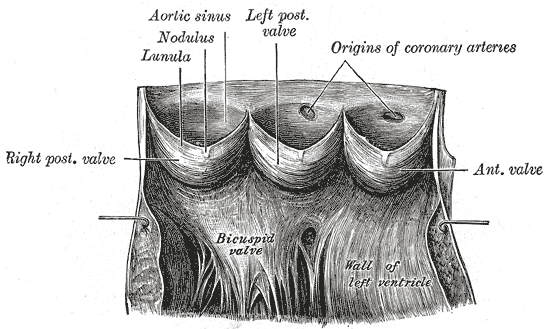
Aneurisma dos seios de Valsalva
📋 Origem dos dados
Esta página agrega dados de fontes públicas e oficiais. Dados sobre cobertura no SUS (PCDT, CEAF) são verificados ativamente por agente proativo (ver badge no infobox). Demais dados têm atribuição de fonte + data da última sincronização — clique para abrir o original.
- Doença rara (ontologia)
- fonte: Orphanet
- Identificador unificado
- fonte: MONDO
- Codificação WHO/SUS
- fonte: WHO ICD-10 / DATASUS
- CID-11 (futuro)
- fonte: WHO ICD-11
- NIH/GARD
- fonte: GARD (NIH)
- Dado público estruturado
- fonte: Wikidata