
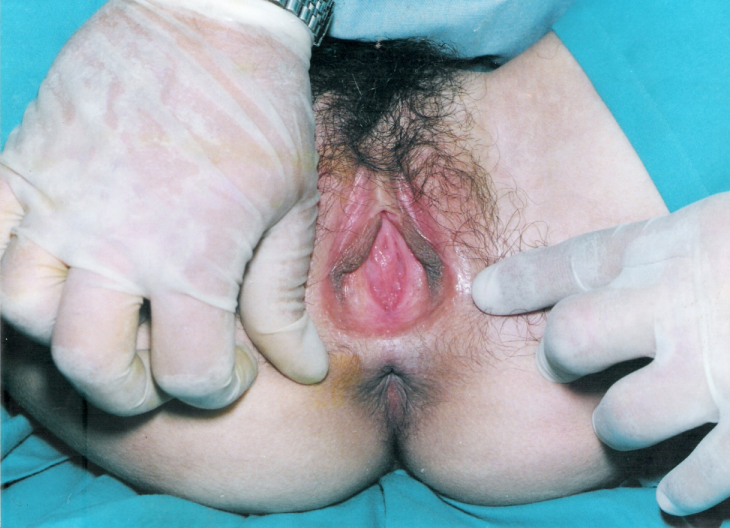
A síndrome de Mayer-Rokitansky-Küster-Hauser (MRKH) tipo 2, uma forma de síndrome MRKH, é caracterizada por aplasia congênita do útero e 2/3 superiores da vagina que está associada a pelo menos uma outra malformação, como defeitos renais, vertebrais ou, menos comumente, auditivos e cardíacos. A sigla MURCS (aplasia do ducto MClleriano, displasia renal, anomalias do somito cervical) também é usada.
Introdução
O que você precisa saber de cara
A síndrome de Mayer-Rokitansky-Küster-Hauser (MRKH) tipo 2, uma forma de síndrome MRKH, é caracterizada por aplasia congênita do útero e 2/3 superiores da vagina que está associada a pelo menos uma outra malformação, como defeitos renais, vertebrais ou, menos comumente, auditivos e cardíacos. A sigla MURCS (aplasia do ducto MClleriano, displasia renal, anomalias do somito cervical) também é usada.
Escala de raridade
<1/50kMuito rara
1/20kRara
1/10kPouco freq.
1/5kIncomum
1/2k
Encontrou um erro ou informação desatualizada? Sugira uma correção →
Entender a doença
Do básico ao detalhe, leia no seu ritmo
Preparando trilha educativa...
Sinais e sintomas
O que aparece no corpo e com que frequência cada sintoma acontece
Partes do corpo afetadas
+ 7 sintomas em outras categorias
Características mais comuns
Os sintomas variam de pessoa para pessoa. Abaixo estão as 23 características clínicas mais associadas, ordenadas por frequência.
Linha do tempo da pesquisa
Encontrou um erro ou informação desatualizada? Sugira uma correção →
Genética e causas
O que está alterado no DNA e como passa nas famílias
Genes associados
2 genes identificados com associação a esta condição. Padrão de herança: Autosomal dominant, Not applicable.
Transcription factor that binds to the inverted palindrome 5'-GTTAATNATTAAC-3' (PubMed:17924661, PubMed:7900999). Binds to the FPC element in the cAMP regulatory unit of the PLAU gene (By similarity). Transcriptional activity is increased by coactivator PCBD1 (PubMed:24204001)
Nucleus
Renal cysts and diabetes syndrome
An autosomal dominant disorder comprising non-diabetic renal disease resulting from abnormal renal development, and diabetes, which in some cases occurs earlier than age 25 years and is thus consistent with a diagnosis of maturity-onset diabetes of the young (MODY5). The renal disease is highly variable and includes renal cysts, glomerular tufts, aberrant nephrogenesis, primitive tubules, irregular collecting systems, oligomeganephronia, enlarged renal pelves, abnormal calyces, small kidney, single kidney, horseshoe kidney, and hyperuricemic nephropathy. Affected individuals may also have abnormalities of the genital tract.
Ligand for members of the frizzled family of seven transmembrane receptors (Probable). Plays an important role in the embryonic development of the urogenital tract and the lung (PubMed:15317892, PubMed:16959810, PubMed:18179883, PubMed:18182450). Required for normal mesenchyme to epithelium transition during embryonic kidney development. Required for the formation of early epithelial renal vesicles during kidney development (By similarity). Required for normal formation of the Mullerian duct in
Secreted, extracellular space, extracellular matrix
46,XX sex reversal with dysgenesis of kidneys, adrenals, and lungs
A disease characterized by the association of female-to-male sex reversal with dysgenesis of kidneys, adrenals, and lungs.
Variantes genéticas (ClinVar)
551 variantes patogênicas registradas no ClinVar.
Classificação de variantes (ClinVar)
Distribuição de 33 variantes classificadas pelo ClinVar.
Vias biológicas (Reactome)
11 vias biológicas associadas aos genes desta condição.
Diagnóstico
Os sinais que médicos procuram e os exames que confirmam
Tratamento e manejo
Remédios, cuidados de apoio e o que precisa acompanhar
Onde tratar no SUS
Hospitais de referência no Brasil e o protocolo oficial do SUS (PCDT)
🇧🇷 Atendimento SUS — Síndrome Mayer-Rokitansky-Küster-Hauser tipo 2
Selecione um estado ou use sua localização para ver resultados.
Dados de DATASUS/CNES, SBGM, ABNeuro e Ministério da Saúde. Sempre confirme a disponibilidade diretamente com o estabelecimento.
Pesquisa ativa
Ensaios clínicos abertos e novidades científicas recentes
Pesquisa e ensaios clínicos
Nenhum ensaio clínico registrado para esta condição.
Publicações mais relevantes
Mostrando amostra de 53 publicações de um total de 528
Novel Vaginoplasty Technique for Management of Vaginal Agenesis and Uterine Cervix Atresia: A Case Report.
Various methods for vaginoplasty exist, but the choice depends on anatomy and body size. Conventional vaginoplasty, when performed with bowel segments rather than prosthetic materials, allows modification of canal length but lacks precise control of diameter, rendering it less suitable for pediatric patients and for those with small pelvic cavities. Moreover, the positional traction sometimes necessary under these conditions may compromise mesenteric perfusion and heighten the risk of ischemic complications. This report introduces a novel technique using the Yang-Monti tube principle with end-to-end anastomosis. A 12-year-old girl with type II Mayer-Rokitansky-Küster-Haüser syndrome (MRKH), left hydronephrosis, and hematometra was admitted with abdominal pain. Emergency drainage resolved her symptoms, and imaging revealed a unicornuate uterus, cervical atresia, and vaginal agenesis. A 7 cm sigmoid colon segment was used to create a vaginal canal, connecting the cervix and vaginal vestibular mucosa using the Yang-Monti method. The postoperative course was uneventful; the stent drain was removed after two weeks, and she was discharged on the 23rd day after learning self-care with a Nelaton catheter. Four years post-surgery, she remains healthy, with no complications such as infection or dysmenorrhea. This approach is a useful option for vaginal agenesis with cervical atresia in adolescents with a small pelvis.
Mayer-Rokitansky-Kuster-Hauser Syndrome: From Radiological Diagnosis to Further Challenges-Review and Update.
Mayer-Rokitansky-Küster-Hauser (MRKH) syndrome encompasses a range of Müllerian duct anomalies characterized by congenital absence of the uterus and the upper two-thirds of the vagina in young women who otherwise exhibit normal endocrine function and a 46,XX karyotype. MRKH syndrome can occur in an isolated form (type I) or in association with other congenital anomalies (type II or MURCS association), which may include renal, vertebral, auditory, and cardiac defects. It represents one of the most frequent causes of primary amenorrhea, affecting approximately 1 in every 4000-5000 women. MRKH syndrome often remains undiagnosed until a patient presents with primary amenorrhea, despite normal development of secondary sexual characteristics. Both genetic and non-genetic factors have been proposed as contributing to abnormal embryonic development, although the exact etiopathogenesis remains unclear. Imaging plays a key role in the evaluation of genital tract anomalies, allowing non-invasive and comprehensive assessment. Alongside physical examination and pelvic ultrasound, pelvic MRI is essential for identifying the presence of rudimentary uterine tissue. MRKH syndrome can have profound and lasting psychological impacts, making it essential for patients and their families to receive counseling both before and throughout treatment. A range of therapeutic options-both surgical and non-surgical-have been proposed for managing MRKH syndrome. Vaginal dilation remains the first-line treatment, as it offers high success rates with minimal risk of complications. Vaginoplasty is considered a second-line option for patients who do not respond to dilation therapy. Additionally, uterine transplantation and gestational surrogacy provide opportunities for women with MRKH syndrome to achieve biological motherhood. This review provides an updated overview of Mayer-Rokitansky-Küster-Hauser (MRKH) syndrome, encompassing its etiological, clinical, diagnostic, psychological, therapeutic, and reproductive aspects. We also present a case involving a 19-year-old woman with MRKH syndrome who presented with primary amenorrhea, highlighting the crucial role and advantages of MRI in diagnosis, differential assessment, and treatment planning.
Combined Vaginal and Laparoscopic Approach for the Creation of Neovagina in a Patient Affected by Mayer-Rokitansky-Küster-Hauser Syndrome: An Innovative Surgical Treatment.
To describe the step-by-step simultaneous vaginal and laparoscopic approach for the creation and reconstruction of a neovagina using a skin graft in a woman affected by Mayer-Rokitansky-Küster-Hauser syndrome [1]. To date, no data are available in the literature comparing our technique with other validated approaches such as McIndoe and Davydov, as our process is a newly developed one. Tertiary-referral center. An eighteen-year-old woman affected by type 1 Mayer-Rokitansky-Küster-Hauser syndrome previously treated with vaginal dilators without success attracted our attention because of her desire to treat her vaginal agenesis. The patient report primary amenorrhea and appeared with normal secondary sexual characteristics. Blind vaginal pouch was confirmed via imaging [2]. After having an accurate counseling with the patient, using drawings on the thigh, informing her about the postoperative course, and showing aesthetic outcomes, an innovative surgery, resulting from a combination of vaginal and laparoscopic approaches, was proposed. The surgical procedure consisted of 2 phases. The vaginal step involved the creation of the lower part of the neovagina using the Fortunoff technique, whereas the laparoscopic step enabled the creation of the upper part under direct visual control. The neovagina was reconstructed using a skin graft harvested from the patient's thigh. The combination of techniques enabled the development of a functional vaginal canal with excellent anatomical and clinical outcomes. At three-month follow-up, the neovagina appeared fully epithelialized, with a total length of 8 cm and satisfactory anatomical and functional results [3-5]. In conclusion, this is the first reported case of a technique combining a vaginal approach for creating the lower canal of the neovagina with a laparoscopic approach for the upper part. We are committed to increasing our case series so that our surgical approach may be considered a viable option to offer surgeons in the future. VIDEO ABSTRACT.
A Rare Case of Müllerian Agenesis With a Giant Tumor Arising From Uterine Remnants.
Müllerian agenesis, also known as vaginal agenesis, Müllerian aplasia, or Mayer-Rokitansky-Küster-Hauser (MRKH) syndrome, is a rare developmental disorder affecting one in 5000 female births, resulting from an error in Müllerian duct fusion during fetal development. We present a clinical case of a 46-year-old female patient, virgo intacta, with Müllerian agenesis and a leiomyoma arising from remnant uterine buds. The patient presented with primary amenorrhoea, continuous lower abdominal pain, and abdominal distension. We describe the diagnostic process and treatment strategy. MRKH syndrome is the leading cause of vaginal agenesis, often accompanied by uterine and cervical aplasia. It is categorized into Type 1, which involves symmetric underdevelopment of the Müllerian ducts, and Type 2, characterized by asymmetric malformations of the genital tract and other congenital anomalies. Leiomyomas arising from remnant uterine tissue in MRKH patients are extremely rare. Accurate diagnosis and a carefully planned treatment strategy are essential for managing patients with MRKH syndrome complicated by rare tumors. In this case, total tumor extirpation with bilateral adnexectomy was the preferred treatment, based on the patient's clinical presentation and diagnosis.
Mayer-Rokitansky-Küster-Hauser syndrome with inguinal hernia, left renal fusion, and malrotation: a rare case.
Mayer-Rokitansky-Küster-Hauser syndrome (MRKH) is a congenital abnormality of sexual development characterized by agenesis of the uterus and vagina. It may be confined to the genital tract (MRKH type I) or be accompanied by abnormalities of the urinary or skeletal systems (MRKH type II). We report a case of an 8-year-old girl who was admitted to the hospital because of a "reducible mass in the left groin." Upon examination, a mass of about 3 × 2 × 2 cm3 in size was found in the left inguinal region on increasing abdominal pressure, and a left inguinal oblique hernia was diagnosed. The vulva developed normally, and the vaginal vestibule had only a urethral opening but no vaginal opening; abdominal ultrasound revealed that the right kidney was absent, and the left kidney seemed to be fused by two renal cavities; ultrasound of the uterine appendages showed no uterus, and the left and right ovaries were normal; thus, the patient was diagnosed with MRKH type II syndrome. Laparoscopic examination verified the above findings, and it was also found that no obvious fallopian tubes were found around both ovaries. High ligation of the left inguinal hernia was performed to treat the inguinal oblique hernia. When a patient with MRKH syndrome presents with an unexplained inguinal mass, an ovarian or uterine inguinal hernia should be suspected. Early detection of this anomaly will aid in reproductive outcome management and appropriate surgical management. A rare case of a young girl born without a uterus and vagina, with a hernia and kidney abnormalities This report describes a rare medical case in an 8-year-old girl who was born without a uterus and vagina, a condition known as Mayer-Rokitansky-Küster-Hauser (MRKH) syndrome. She came to the hospital because of a soft, moveable lump in her left groin. Doctors found it was caused by a hernia, where tissue pushes through a weak spot in the belly muscles. Further examinations showed that while her outer genital area looked normal, she did not have a vaginal opening. Imaging tests also showed she had no uterus, her right kidney was missing, and her left kidney appeared unusual—likely formed by two kidney parts fused together. Her ovaries were normal, but doctors could not find her fallopian tubes. She was diagnosed with MRKH type II, which not only affects the reproductive system but also includes kidney and sometimes skeletal problems. Surgery was done to fix her hernia, and her condition will need long-term follow-up, especially as she grows older. This case shows how important it is to carefully check for reproductive and kidney issues in young girls with unusual groin masses or genital differences. Early diagnosis can help with treatment planning and support for future fertility and emotional well-being.
Publicações recentes
A Cognitive Behavioural Therapy for Mayer-Rokitansky-Küster-Hauser Syndrome Adapted for Other Disorders of Sex Development: A Qualitative Study.
Mayer-Rokitansky-Küster-Hauser Syndrome Associated With Diabetes Mellitus and Renal Anomalies in an Adolescent Girl: A Rare Case Report.
Regarding "Combined Vaginal and Laparoscopic Approach for the Creation of Neovagina in a Patient Affected by Mayer-Rokitansky-Küster-Hauser Syndrome: An Innovative Surgical Treatment".
Functional and anatomical results following combined vaginal and laparoscopic approach for the creation of neovagina in a patient affected by Mayer-Rokitansky-Küster-Hauser syndrome.
Anesthetic challenges of the first successful living-donor uterus transplantation in Latin America: a case report.
📚 EuropePMC574 artigos no totalmostrando 53
Novel Vaginoplasty Technique for Management of Vaginal Agenesis and Uterine Cervix Atresia: A Case Report.
CureusMayer-Rokitansky-Kuster-Hauser Syndrome: From Radiological Diagnosis to Further Challenges-Review and Update.
Diagnostics (Basel, Switzerland)A Rare Case of Müllerian Agenesis With a Giant Tumor Arising From Uterine Remnants.
Case reports in obstetrics and gynecologyMayer-Rokitansky-Küster-Hauser syndrome with inguinal hernia, left renal fusion, and malrotation: a rare case.
Therapeutic advances in urologySpinal Anomalies in MURCS Association: A Rare Case Report and Systematic Review of the Literature.
Congenital anomaliesCombined Vaginal and Laparoscopic Approach for the Creation of Neovagina in a Patient Affected by Mayer-Rokitansky-Küster-Hauser Syndrome: An Innovative Surgical Treatment.
Journal of minimally invasive gynecologyMURCS Syndrome: Atypical form of Mayer-Rokitansky-Kuster-Hauser Syndrome.
Journal of obstetrics and gynaecology of IndiaMcIndoe Vaginoplasty in MRKHS: Case Report and Literature Review.
Clinical case reportsBranch retinal artery occlusion in a young patient with Mayer-Rokitansky-Küster-Hauser type 2 syndrome.
Oman journal of ophthalmologyMayer-Rokitansky-Kuster-Hauser Syndrome Presented with Diabetes Mellitus and Primary Amenorrhea: A Case Report.
Mymensingh medical journal : MMJA Case of Chromosome 17q12 Deletion Syndrome with Type 2 Mayer-Rokitansky-Küster-Hauser Syndrome and Maturity-Onset Diabetes of the Young Type 5.
Children (Basel, Switzerland)Heterozygous ZNHIT3 variants within the 17q12 recurrent deletion region are associated with Mayer-Rokitansky-Kuster Hauser (MRKH) syndrome.
Molecular and cellular endocrinologyClinical features and management of women with Mayer-Rokitansky-Küster-Hauser syndrome in a Thai population.
Obstetrics & gynecology scienceA Cohort of 469 Mayer-Rokitansky-Küster-Hauser Syndrome Patients-Associated Malformations, Syndromes, and Heterogeneity of the Phenotype.
Journal of clinical medicineSuccessful Use of Acellular Small Intestinal Submucosa Graft in Vaginal Reconstruction.
Journal of pediatric surgeryRecurrent human 16p11.2 microdeletions in type I Mayer-Rokitansky-Küster-Hauser (MRKH) syndrome patients in Chinese Han population.
Molecular genetics & genomic medicineMüllerian Agenesis in a patient with Rubinstein-Taybi Syndrome: A Case Series and Review of the Overlapping Developmental Biologic Pathways.
Journal of pediatric and adolescent gynecologyParaparesis and congenital severe hyperkyphosis in Mayer-Rokitansky-Küster-Hauser (MRKH) syndrome: A rare deformity management during the Sars-Cov-2 pandemic.
Brain & spineRetrospective comparative cohort study of neovagina creation by modified Vecchietti-laparoendoscopic single-site surgery for Mayer-Rokitansky-Küster-Hauser syndrome.
Annals of translational medicineMayer-Rokitansky-Kuster-Hauser Syndrome: A rare case report from Nepal.
Annals of medicine and surgery (2012)Clinical features of Mayer-Rokitansky-Küster-Haüser syndrome diagnosed at under 16 years old: results from a questionnaire survey conducted on all institutions of pediatric surgery and pediatric urology in Japan.
Pediatric surgery internationalRenal abnormalities associated with Mayer-Rokitansky-Küster-Hauser syndrome.
Folia medicaVariants in genes related to development of the urinary system are associated with Mayer-Rokitansky-Küster-Hauser syndrome.
Human genomicsUtero-Ovarian Inguinal Hernia in a Young Female with Mayer-Rokitansky-Küster-Hauser Syndrome Type 2.
Saudi journal of medicine & medical sciencesMayer-Rokitansky-Küster-Hauser Syndrome: MR Manifestations Of Typical And Atypical Cases.
Journal of Ayub Medical College, Abbottabad : JAMCClinical and Radiological Findings in Mayer-Rokitansky-Küster-Hauser Syndrome Type 2: Case report.
Sultan Qaboos University medical journalPrimary Amenorrhea Due to Anatomical Abnormalities of the Reproductive Tract: Molecular Insight.
International journal of molecular sciencesOvarian inguinal hernia - a possibility in MURCS syndrome.
Journal of ovarian researchImplications of Ehlers-Danlos Syndrome in a Patient With Mayer-Rokitansky-Küster-Hauser Syndrome.
Journal of pediatric and adolescent gynecologyTissue Engineering Opportunities for Vaginal Replacement in a Pediatric Population.
Tissue engineering. Part B, ReviewsClinical characteristics of 1,055 Chinese patients with Mayer-Rokitansky-Küster-Hauser syndrome: a nationwide multicentric study.
Fertility and sterilityGREB1L as a candidate gene of Mayer-Rokitansky-Küster-Hauser Syndrome.
European journal of medical geneticsMayer-Rokitansky-Küster-Hauser syndrome as an interdisciplinary problem.
Advances in clinical and experimental medicine : official organ Wroclaw Medical UniversityNeovagina Creation: A Novel Improved Laparoscopic Vecchietti Procedure in Patients with Mayer-Rokitansky-Küster-Hauster Syndrome.
Journal of minimally invasive gynecologyDetection of de novo genetic variants in Mayer-Rokitansky-Küster-Hauser syndrome by whole genome sequencing.
European journal of obstetrics & gynecology and reproductive biology: XEvaluation of the abdominopelvic region using MRI in patients with primary amenorrhea.
Journal of pediatric endocrinology & metabolism : JPEMIdentification of Candidate Genes for Mayer-Rokitansky-Küster-Hauser Syndrome Using Genomic Approaches.
Sexual development : genetics, molecular biology, evolution, endocrinology, embryology, and pathology of sex determination and differentiationSpectrum of Type I and Type II Syndromes and Associated Malformations in Chinese Patients with Mayer-Rokitansky-Küster-Hauser Syndrome: A Retrospective Analysis of 274 Cases.
Journal of pediatric and adolescent gynecologyMultiorgan system structural malformations associated with Mayer-Rokitansky-Küster-Hauser Syndrome (MRKHS) type 2: avoiding pitfalls in diagnosis, counseling and treatment.
BMJ case reportsVaginal prevalence of human papillomavirus infections in women with uterovaginal aplasia before and after laparoscopically assisted creation of a neovagina: a prospective epidemiological observational study.
BJOG : an international journal of obstetrics and gynaecologyClinical and genetic aspects of Mayer-Rokitansky-Küster-Hauser syndrome.
Medizinische Genetik : Mitteilungsblatt des Berufsverbandes Medizinische Genetik e.VHyperandrogenemia and ovarian reserve in patients with Mayer-Rokitansky-Küster-Hauser syndrome type 1 and 2: potential influences on ovarian stimulation.
Archives of gynecology and obstetricsObstructive Müllerian Anomalies in Menstruating Adolescent Girls: A Report of 22 Cases.
Journal of pediatric and adolescent gynecologyModified human uterus transplantation using ovarian veins for venous drainage: the first report of surgically successful robotic-assisted uterus procurement and follow-up for 12 months.
Fertility and sterilityGenetic analysis of Mayer-Rokitansky-Kuster-Hauser syndrome in a large cohort of families.
Fertility and sterilityLiving-Donor Kidney Transplant in a Patient With Type B Mayer-Rokitansky-Küster-Hauser Syndrome, Reconstructed Vagina, and Abnormal Pelvic Vessels: A Case Report.
Experimental and clinical transplantation : official journal of the Middle East Society for Organ TransplantationCongenital malformations and other comorbidities in 125 women with Mayer-Rokitansky-Küster-Hauser syndrome.
European journal of obstetrics, gynecology, and reproductive biologyGenetics of Mayer-Rokitansky-Küster-Hauser (MRKH) syndrome.
Clinical geneticsAetiological bases of 46,XY disorders of sex development in the Hong Kong Chinese population.
Hong Kong medical journal = Xianggang yi xue za zhiTypical and Atypical Associated Findings in a Group of 346 Patients with Mayer-Rokitansky-Kuester-Hauser Syndrome.
Journal of pediatric and adolescent gynecologyAssociations of Polymorphisms in WNT9B and PBX1 with Mayer-Rokitansky-Küster-Hauser Syndrome in Chinese Han.
PloS oneConcurrent exome-targeted next-generation sequencing and single nucleotide polymorphism array to identify the causative genetic aberrations of isolated Mayer-Rokitansky-Küster-Hauser syndrome.
Human reproduction (Oxford, England)Importance of Laparoscopic Assessment of the Uterine Adnexa in a Mayer-Rokitansky-Kuster-Hauser Syndrome Type II Case.
Current health sciences journalAssociações
Organizações que acompanham esta doença — pra ter apoio e orientação
Ainda não temos associações cadastradas para Síndrome Mayer-Rokitansky-Küster-Hauser tipo 2.
É de uma associação que acompanha esta doença? Fale com a gente →
Comunidades
Grupos ativos de quem convive com esta doença aqui no Raras
Ainda não existe comunidade no Raras para Síndrome Mayer-Rokitansky-Küster-Hauser tipo 2
Pacientes, familiares e cuidadores se organizam em comunidades pra compartilhar experiências, fazer perguntas e se apoiar. Você pode ser o primeiro.
Tire suas dúvidas
Perguntas, dicas e experiências compartilhadas aqui na página
Participe da discussão
Faça login para postar dúvidas, compartilhar experiências e interagir com especialistas.
Fazer loginDoenças relacionadas
Doenças com sintomas parecidos — ajudam quem ainda está buscando diagnóstico
Referências e fontes
Bases de dados externas citadas neste artigo
Publicações científicas
Artigos indexados no PubMed ligados a esta doença no grafo RarasNet — título, periódico e PMID direto da fonte, sem intermediação de IA.
- Novel Vaginoplasty Technique for Management of Vaginal Agenesis and Uterine Cervix Atresia: A Case Report.
- Mayer-Rokitansky-Kuster-Hauser Syndrome: From Radiological Diagnosis to Further Challenges-Review and Update.
- Combined Vaginal and Laparoscopic Approach for the Creation of Neovagina in a Patient Affected by Mayer-Rokitansky-Küster-Hauser Syndrome: An Innovative Surgical Treatment.
- A Rare Case of Müllerian Agenesis With a Giant Tumor Arising From Uterine Remnants.
- Mayer-Rokitansky-Küster-Hauser syndrome with inguinal hernia, left renal fusion, and malrotation: a rare case.
- A Cognitive Behavioural Therapy for Mayer-Rokitansky-Küster-Hauser Syndrome Adapted for Other Disorders of Sex Development: A Qualitative Study.
- Mayer-Rokitansky-Küster-Hauser Syndrome Associated With Diabetes Mellitus and Renal Anomalies in an Adolescent Girl: A Rare Case Report.
- Regarding "Combined Vaginal and Laparoscopic Approach for the Creation of Neovagina in a Patient Affected by Mayer-Rokitansky-Küster-Hauser Syndrome: An Innovative Surgical Treatment".
- Functional and anatomical results following combined vaginal and laparoscopic approach for the creation of neovagina in a patient affected by Mayer-Rokitansky-Küster-Hauser syndrome.
- Anesthetic challenges of the first successful living-donor uterus transplantation in Latin America: a case report.
Bases de dados e fontes oficiais
Identificadores e referências canônicas usadas para montar este verbete.
- ORPHA:2578(Orphanet)
- OMIM OMIM:601076(OMIM)
- MONDO:0010989(MONDO)
- GARD:5513(GARD (NIH))
- Variantes catalogadas(ClinVar)
- Busca completa no PubMed(PubMed)
- Q9161215(Wikidata)
Dados compilados pelo RarasNet a partir de fontes abertas (Orphanet, OMIM, MONDO, PubMed/EuropePMC, ClinicalTrials.gov, DATASUS, PCDT/MS). Este conteúdo é informativo e não substitui avaliação médica.
Conteúdo mantido por Agente Raras · Médicos e pesquisadores podem colaborar
Síndrome Mayer-Rokitansky-Küster-Hauser tipo 2
📋 Origem dos dados
Esta página agrega dados de fontes públicas e oficiais. Dados sobre cobertura no SUS (PCDT, CEAF) são verificados ativamente por agente proativo (ver badge no infobox). Demais dados têm atribuição de fonte + data da última sincronização — clique para abrir o original.
- Doença rara (ontologia)
- fonte: Orphanet
- Identificador unificado
- fonte: MONDO
- Genética mendeliana
- fonte: OMIM
- Codificação WHO/SUS
- fonte: WHO ICD-10 / DATASUS
- CID-11 (futuro)
- fonte: WHO ICD-11
- NIH/GARD
- fonte: GARD (NIH)
- Dado público estruturado
- fonte: Wikidata