
Doença pulmonar intersticial muito rara, grave, de início insidioso, com manifestações respiratórias inespecíficas subagudas ou crónicas (dispneia, tosse, sibilos) frequentemente associadas a manifestações sistémicas (fadiga, mal-estar, perda de peso).
Introdução
O que você precisa saber de cara
Doença pulmonar intersticial muito rara, grave, de início insidioso, com manifestações respiratórias inespecíficas subagudas ou crónicas (dispneia, tosse, sibilos) frequentemente associadas a manifestações sistémicas (fadiga, mal-estar, perda de peso).
Escala de raridade
<1/50kMuito rara
1/20kRara
1/10kPouco freq.
1/5kIncomum
1/2k
Encontrou um erro ou informação desatualizada? Sugira uma correção →
Entender a doença
Do básico ao detalhe, leia no seu ritmo
Preparando trilha educativa...
Sinais e sintomas
O que aparece no corpo e com que frequência cada sintoma acontece
Partes do corpo afetadas
+ 14 sintomas em outras categorias
Características mais comuns
Os sintomas variam de pessoa para pessoa. Abaixo estão as 27 características clínicas mais associadas, ordenadas por frequência.
Linha do tempo da pesquisa
Encontrou um erro ou informação desatualizada? Sugira uma correção →
Genética e causas
O que está alterado no DNA e como passa nas famílias
Nenhum gene associado encontrado
Os dados genéticos desta condição ainda estão sendo catalogados.
Diagnóstico
Os sinais que médicos procuram e os exames que confirmam
Tratamento e manejo
Remédios, cuidados de apoio e o que precisa acompanhar
Onde tratar no SUS
Hospitais de referência no Brasil e o protocolo oficial do SUS (PCDT)
🇧🇷 Atendimento SUS — Pneumopatia eosinofílica crônica idiopática
Selecione um estado ou use sua localização para ver resultados.
Dados de DATASUS/CNES, SBGM, ABNeuro e Ministério da Saúde. Sempre confirme a disponibilidade diretamente com o estabelecimento.
Pesquisa ativa
Ensaios clínicos abertos e novidades científicas recentes
Ensaios em destaque
Pesquisa e ensaios clínicos
1 ensaios clínicos encontrados.
Publicações mais relevantes
Carrington's Disease: A Case Report.
Idiopathic chronic eosinophilic pneumonia (ICEP), also known as Carrington's disease, is a rare eosinophilic lung disorder characterized by pulmonary infiltrates with no identifiable cause. We report the case of a 59-year-old man with no significant medical history who presented with an eight-month history of progressive exertional dyspnea and a non-productive cough. Chest imaging showed bilateral peripheral ground-glass opacities. Laboratory evaluation revealed peripheral blood eosinophilia (2,000/mm³), and bronchoalveolar lavage demonstrated eosinophilic alveolitis (30%). The patient was treated with oral corticosteroids, resulting in complete symptom resolution and marked radiological improvement.
Six-Month Benralizumab Maintenance for Relapsing Chronic Eosinophilic Pneumonia Guided by Eosinophil Kinetics.
Idiopathic chronic eosinophilic pneumonia (ICEP) often relapses upon corticosteroid tapering. Biologics targeting interleukin-5 (IL-5) are effective, but optimal dosing intervals remain unclear. We report a case of relapsing ICEP in a patient in her 50s. Mepolizumab, an IL-5 ligand blocker, failed to maintain remission, with clinical relapse occurring 4 months after initiation. Switching to benralizumab, an interleukin-5 receptor blocker, induced rapid and deep eosinophil depletion. For optimising dosing, treatment was temporarily withheld, revealing a prolonged remission duration of 8 months before eosinophil recovery and clinical relapse. Based on these kinetics, a 6-monthly benralizumab maintenance strategy was established. The patient has remained relapse-free with zero eosinophils for over 2 years under this biannual regimen. This case suggests that benralizumab offers superior durability compared to mepolizumab in CEP due to deep depletion, enabling an extended, cost-effective dosing interval guided by individual eosinophil recovery kinetics.
Idiopathic chronic eosinophilic pneumonia presenting as diffuse alveolar haemorrhage.
Eosinophilic pneumonia is rare and characterized by excessive accumulation of eosinophils in the alveolar macrophages and interstitium. The presentation can be acute or chronic. The patient can also present with respiratory failure requiring intensive support. These patients may have bronchial asthma at presentation or may be diagnosed with the same later. Diffuse alveolar haemorrhage, a rare complication of idiopathic chronic eosinophilic pneumonia, is life-threatening requiring urgent and aggressive investigation and management. We report a young male who had pneumonia and haemoptysis and was diagnosed to have idiopathic chronic eosinophilic pneumonia and diffuse alveolar haemorrhage.
Rapid Desensitization to Reslizumab in an 80-Year-Old Woman With Chronic Eosinophilic Pneumonia, Severe Persistent Asthma, and Chronic Urticaria.
Our patient is an 80-year-old woman with chronic eosinophilic pneumonia (CEP), chronic urticaria (CU), severe persistent asthma (SPA), long-term oral corticosteroid therapy, and a resected papillary thyroid carcinoma. The patient had normal, stable immunoglobulin E (IgE) levels across all treatments ranging from 16 to 37 IU/mL. In treating her CEP and severe asthma, she trialed monoclonal antibody therapy with mepolizumab, benralizumab, dupilumab, and omalizumab, which were each begun and then discontinued successively due to severe side effects or allergic reaction. However, reslizumab offered 10 months of notable relief from urticaria and dyspnea without oral corticosteroids but was discontinued after the patient developed infusion-associated urticaria. Given her relief with reslizumab, we planned to desensitize her to this medication via a stepwise, slowed infusion up to a target therapeutic dose. Complete vital signs and physical exam looking for symptoms of an allergic response, including angioedema, urticaria, dyspnea, and nausea, were performed every 15 minutes. Our patient was successfully desensitized to reslizumab at a target dose of 195 mg over three hours. Vitals were checked every 15 minutes, which were within normal limits throughout. Further, she was monitored for any symptoms of allergic reaction, including angioedema, nausea, urticaria, and dyspnea, and denied any complaints throughout the procedure. Our patient reported notable relief of dyspnea and fatigue at two weeks and four weeks post-procedure. As opposed to a decrease in dose or discontinuation of treatment, patients may undergo rapid desensitization through a stepwise, slowed infusion rate to better tolerate a previously allergenic medication.
The clinical question of mepolizumab in the long-term treatment of idiopathic chronic eosinophilic pneumonia; how long should we use mepolizumab?
The efficacy of mepolizumab as an alternative to glucocorticoids for treating idiopathic chronic eosinophilic pneumonia (ICEP) has been reported. However, various questions remain unanswered, such as the most appropriate dose and dosage interval of mepolizumab for ICEP, how long efficacy is maintained, how long administration should be continued, and whether and when discontinuation can be considered. We present herein three cases of refractory ICEP treated with mepolizumab at a dose of 100 mg every 4 or 8 weeks. No recurrences were observed after 77 months of treatment in Case 1 and after 45 months in Case 2. Case 3 was treated with mepolizumab for 33 months, but ICEP relapsed 42 months after discontinuation of mepolizumab. In conclusion, mepolizumab for refractory ICEP should be continued for as long as possible, considering disease status, glucocorticoid-related adverse events, and the financial situation of the patient.
Publicações recentes
Carrington's Disease: A Case Report.
Six-Month Benralizumab Maintenance for Relapsing Chronic Eosinophilic Pneumonia Guided by Eosinophil Kinetics.
Idiopathic chronic eosinophilic pneumonia presenting as diffuse alveolar haemorrhage.
Rapid Desensitization to Reslizumab in an 80-Year-Old Woman With Chronic Eosinophilic Pneumonia, Severe Persistent Asthma, and Chronic Urticaria.
The clinical question of mepolizumab in the long-term treatment of idiopathic chronic eosinophilic pneumonia; how long should we use mepolizumab?
📚 EuropePMC31 artigos no totalmostrando 29
Carrington's Disease: A Case Report.
CureusSix-Month Benralizumab Maintenance for Relapsing Chronic Eosinophilic Pneumonia Guided by Eosinophil Kinetics.
Respirology case reportsIdiopathic chronic eosinophilic pneumonia presenting as diffuse alveolar haemorrhage.
The National medical journal of IndiaRapid Desensitization to Reslizumab in an 80-Year-Old Woman With Chronic Eosinophilic Pneumonia, Severe Persistent Asthma, and Chronic Urticaria.
CureusThe clinical question of mepolizumab in the long-term treatment of idiopathic chronic eosinophilic pneumonia; how long should we use mepolizumab?
Respiratory medicine case reportsSuccessful Treatment of Relapsing Chronic Eosinophilic Pneumonia With Mepolizumab: A Case Report.
CureusThe long-term outcomes of mepolizumab treatment at 100 mg dose on idiopathic chronic eosinophilic pneumonia: A real-life experience.
Allergy and asthma proceedingsMonoclonal antibodies in idiopathic chronic eosinophilic pneumonia: a scoping review.
BMC pulmonary medicineMisdiagnosis asthma in adult, three rare causes.
La Tunisie medicaleEosinophilia with Lung Involvement in an Elderly Patient with a History of Chronic Obstructive Pulmonary Disease.
Journal of community hospital internal medicine perspectivesCase Report: Mepolizumab in the treatment of idiopathic chronic eosinophilic pneumonia.
F1000ResearchEosinophilic Lung Diseases.
Immunology and allergy clinics of North AmericaTargeting IL-5/5R for the treatment of idiopathic chronic eosinophilic pneumonia.
The journal of allergy and clinical immunology. In practiceThe role of flexible bronchoscopy in the diagnostic pathway of children with unexplained peripheral eosinophilia.
Pediatrics international : official journal of the Japan Pediatric SocietyIdiopathic Chronic Eosinophilic Pneumonia Evolving to Pulmonary Fibrosis: A Retrospective Analysis.
Sarcoidosis, vasculitis, and diffuse lung diseases : official journal of WASOGIdiopathic chronic eosinophilic pneumonia: a differential diagnosis of lower respiratory tract infection.
BMJ case reportsAnti-IL-5 Agents for the Treatment of Idiopathic Chronic Eosinophilic Pneumonia: A Case Series.
Journal of asthma and allergyEvaluating the relationship between high-resolution computed tomography findings and their extent in eosinophilic lung diseases with peripheral blood eosinophil level.
Polish journal of radiologyRecurrent pneumonia with persistent peripheral eosinophilia: Idiopathic chronic eosinophilic pneumonia.
Clinical case reportsIdiopathic Chronic Eosinophilic Pneumonia.
CureusAn unusual case of eosinophilic lung disease with multiple cyst formation.
Respiratory medicine case reportsMepolizumab: an alternative therapy for idiopathic chronic eosinophilic pneumonia with glucocorticoid intolerance.
Drugs in contextReal-Life Study of Mepolizumab in Idiopathic Chronic Eosinophilic Pneumonia.
LungEosinophilic lung disease with plastic bronchitis and bronchiectasis in an adolescent male.
Clinical case reportsElevated Levels of Intelectin-1, a Pathogen-binding Lectin, in the BAL Fluid of Patients with Chronic Eosinophilic Pneumonia and Hypersensitivity Pneumonitis.
Internal medicine (Tokyo, Japan)Chronic eosinophilic pneumonia: Adjunctive therapy with inhaled steroids.
Respiratory medicine case reportsEosinophilic pneumonias in children: A review of the epidemiology, diagnosis, and treatment.
Pediatric pulmonologyPlatelet activation markers overexpressed specifically in patients with aspirin-exacerbated respiratory disease.
The Journal of allergy and clinical immunology[Pseudotumoral form of chronic eosinophilic pneumopathy of fatal outcome].
The Pan African medical journalAssociações
Organizações que acompanham esta doença — pra ter apoio e orientação
Ainda não temos associações cadastradas para Pneumopatia eosinofílica crônica idiopática.
É de uma associação que acompanha esta doença? Fale com a gente →
Comunidades
Grupos ativos de quem convive com esta doença aqui no Raras
Ainda não existe comunidade no Raras para Pneumopatia eosinofílica crônica idiopática
Pacientes, familiares e cuidadores se organizam em comunidades pra compartilhar experiências, fazer perguntas e se apoiar. Você pode ser o primeiro.
Tire suas dúvidas
Perguntas, dicas e experiências compartilhadas aqui na página
Participe da discussão
Faça login para postar dúvidas, compartilhar experiências e interagir com especialistas.
Fazer loginDoenças relacionadas
Doenças com sintomas parecidos — ajudam quem ainda está buscando diagnóstico
Referências e fontes
Bases de dados externas citadas neste artigo
Publicações científicas
Artigos indexados no PubMed ligados a esta doença no grafo RarasNet — título, periódico e PMID direto da fonte, sem intermediação de IA.
- Carrington's Disease: A Case Report.
- Six-Month Benralizumab Maintenance for Relapsing Chronic Eosinophilic Pneumonia Guided by Eosinophil Kinetics.
- Idiopathic chronic eosinophilic pneumonia presenting as diffuse alveolar haemorrhage.
- Rapid Desensitization to Reslizumab in an 80-Year-Old Woman With Chronic Eosinophilic Pneumonia, Severe Persistent Asthma, and Chronic Urticaria.
- The clinical question of mepolizumab in the long-term treatment of idiopathic chronic eosinophilic pneumonia; how long should we use mepolizumab?
Bases de dados e fontes oficiais
Identificadores e referências canônicas usadas para montar este verbete.
- ORPHA:2902(Orphanet)
- MONDO:0017363(MONDO)
- GARD:1130(GARD (NIH))
- Busca completa no PubMed(PubMed)
- Q56013979(Wikidata)
Dados compilados pelo RarasNet a partir de fontes abertas (Orphanet, OMIM, MONDO, PubMed/EuropePMC, ClinicalTrials.gov, DATASUS, PCDT/MS). Este conteúdo é informativo e não substitui avaliação médica.
Conteúdo mantido por Agente Raras · Médicos e pesquisadores podem colaborar
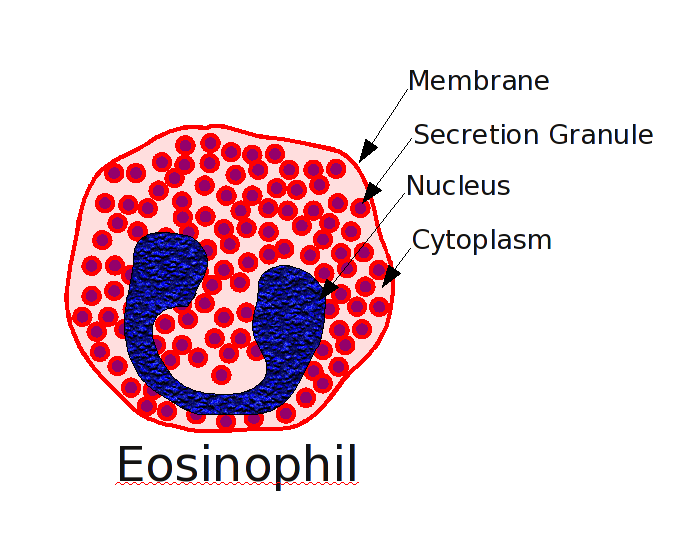
Pneumopatia eosinofílica crônica idiopática
📋 Origem dos dados
Esta página agrega dados de fontes públicas e oficiais. Dados sobre cobertura no SUS (PCDT, CEAF) são verificados ativamente por agente proativo (ver badge no infobox). Demais dados têm atribuição de fonte + data da última sincronização — clique para abrir o original.
- Doença rara (ontologia)
- fonte: Orphanet
- Identificador unificado
- fonte: MONDO
- Codificação WHO/SUS
- fonte: WHO ICD-10 / DATASUS
- CID-11 (futuro)
- fonte: WHO ICD-11
- NIH/GARD
- fonte: GARD (NIH)
- Indexação biomédica
- fonte: MeSH (NLM)
- Dado público estruturado
- fonte: Wikidata
- Reposicionamento
- fonte: Drug Repurposing Hub