
A Vitreorretinocoroidopatia Autossômica Dominante (ADVIRC) é uma doença genética do vítreo (o gel transparente dentro do olho) e da retina (a camada que capta a luz). Ela é caracterizada por problemas no desenvolvimento dos olhos, como córnea pequena, a parte da frente do olho ser mais rasa, glaucoma e catarata. Há também uma pigmentação anormal na coroide e na retina (manchas de cor), que costuma aparecer em uma faixa que contorna todo o olho (360 graus), localizada entre as veias vorticosas e a ora serrata (duas estruturas na parte de trás do olho).
Introdução
O que você precisa saber de cara
A Vitreorretinocoroidopatia Autossômica Dominante (ADVIRC) é uma doença genética do vítreo (o gel transparente dentro do olho) e da retina (a camada que capta a luz). Ela é caracterizada por problemas no desenvolvimento dos olhos, como córnea pequena, a parte da frente do olho ser mais rasa, glaucoma e catarata. Há também uma pigmentação anormal na coroide e na retina (manchas de cor), que costuma aparecer em uma faixa que contorna todo o olho (360 graus), localizada entre as veias vorticosas e a ora serrata (duas estruturas na parte de trás do olho).
Escala de raridade
<1/50kMuito rara
1/20kRara
1/10kPouco freq.
1/5kIncomum
1/2k
Encontrou um erro ou informação desatualizada? Sugira uma correção →
Entender a doença
Do básico ao detalhe, leia no seu ritmo
Preparando trilha educativa...
Sinais e sintomas
O que aparece no corpo e com que frequência cada sintoma acontece
Partes do corpo afetadas
+ 8 sintomas em outras categorias
Características mais comuns
Os sintomas variam de pessoa para pessoa. Abaixo estão as 20 características clínicas mais associadas, ordenadas por frequência.
Linha do tempo da pesquisa
Encontrou um erro ou informação desatualizada? Sugira uma correção →
Genética e causas
O que está alterado no DNA e como passa nas famílias
Genes associados
1 gene identificado com associação a esta condição. Padrão de herança: Autosomal dominant.
Curadoria gene-doença
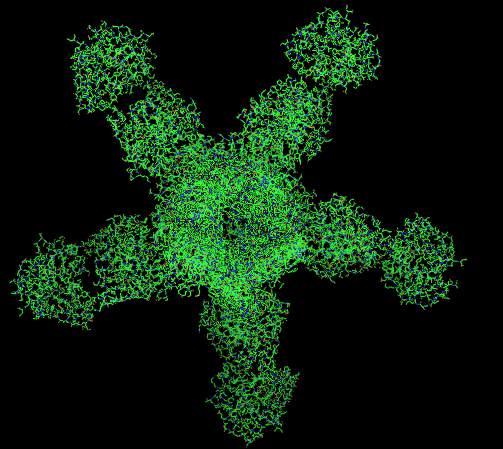
fontes oficiaisLigand-gated anion channel that allows the movement of anions across cell membranes when activated by calcium (Ca2+) (PubMed:11904445, PubMed:12907679, PubMed:18179881, PubMed:18400985, PubMed:19853238, PubMed:21330666, PubMed:26200502, PubMed:26720466, PubMed:35789156). Allows the movement of chloride and hydrogencarbonate (PubMed:11904445, PubMed:12907679, PubMed:18179881, PubMed:18400985, PubMed:19853238, PubMed:21330666, PubMed:26200502, PubMed:26720466, PubMed:35789156). Found in a partiall
Cell membraneBasolateral cell membrane
Macular dystrophy, vitelliform, 2
An autosomal dominant form of macular degeneration that usually begins in childhood or adolescence. VMD2 is characterized by typical 'egg-yolk' macular lesions due to abnormal accumulation of lipofuscin within and beneath the retinal pigment epithelium cells. Progression of the disease leads to destruction of the retinal pigment epithelium and vision loss.
Variantes genéticas (ClinVar)
455 variantes patogênicas registradas no ClinVar.
Classificação de variantes (ClinVar)
Distribuição de 56 variantes classificadas pelo ClinVar.
Vias biológicas (Reactome)
1 via biológica associada aos genes desta condição.
Diagnóstico
Os sinais que médicos procuram e os exames que confirmam
Tratamento e manejo
Remédios, cuidados de apoio e o que precisa acompanhar
Onde tratar no SUS
Hospitais de referência no Brasil e o protocolo oficial do SUS (PCDT)
🇧🇷 Atendimento SUS — Vítreo-retino-coroidopatia autossômica dominante
Selecione um estado ou use sua localização para ver resultados.
Dados de DATASUS/CNES, SBGM, ABNeuro e Ministério da Saúde. Sempre confirme a disponibilidade diretamente com o estabelecimento.
Pesquisa ativa
Ensaios clínicos abertos e novidades científicas recentes
Pesquisa e ensaios clínicos
Nenhum ensaio clínico registrado para esta condição.
Publicações mais relevantes
Clinical and genetic characterization of BEST1-associated retinal dystrophies in the Norwegian population.
BEST1 variants are the third leading cause of inherited retinal dystrophies in Norway. The purpose of this study was to describe the BEST1-associated retinal dystrophy (BEST1-RD) population genetically and clinically, and to determine the prevalence of BEST1-RD in Southern and Eastern Norway. This registry-based study used the Oslo University Hospital Inherited Retinal Disease registry for genetic data and extracted clinical data from medical records. Sixty patients were included. The prevalence of BEST1-RD in Southern and Eastern Norway was between 1:64 600 and 1:43 700. Forty-one patients were diagnosed with Best's vitelliform macular dystrophy (BVMD), 15 with autosomal recessive bestrophinopathy (ARB) and 4 with autosomal dominant vitreoretinochoroidopathy (ADVIRC). The two most common genotypes were c.403G>A and c.89A>G. These variants were associated with BVMD and a later age of onset compared with other BVMD-associated genotypes. The prevalence of BEST1-RD in Southern and Eastern Norway was between 1:64 600 and 1:43 700. BVMD patients carrying c.403G>A or c.89A>G had a later age of onset than BVMD patients carrying other variants.
Variable expressivity of the autosomal dominant vitreoretinochoroidopathy (ADVIRC) phenotype associated with a novel variant in BEST1.
This case report explores the relationship between genetics and phenotypic variability in autosomal dominant vitreoretinochoroidopathy (ADVIRC). The study focuses on a case presenting a novel mutation in the BEST1 gene and its phenotype in the case's relatives, shedding light on the structural and functional intricacies underlying this rare ophthalmologic disorder. A 33-year-old female presented for consultation with a history of bilateral retinal damage accompanied by a complaint of decreased visual acuity, progressive visual field deficit, and night blindness over the past year. Ophthalmic examination revealed a distinctive phenotype, including fibrillar vitreous, pigmented cells, and atrophic hyperpigmented retina in the periphery which was suggestive of a diagnosis of ADVIRC. Genetic testing revealed a heterozygous c.1101-1 G>T variant in BEST1, a novel splice site mutation. Functional analysis confirmed its impact on pre-mRNA splicing, resulting in an in-frame deletion (p(Ser367_Asn579del)). Family investigation revealed varying degrees of ophthalmologic impairment in the patient's mother and half-sister, both carrying the same mutation. This case report provides the first clinical description of the c.1101-1 G>T mutation in the BEST1 gene associated with ADVIRC. The presence of intrafamilial variability, as evidenced by the differing clinical features observed in the index case and her half-sister, suggests the potential involvement of mechanisms influencing phenotype expression.Abbreviation: ADVIRC : autosomal dominant vitreoretinochoroidopathy; RNA : ribonucleic acid; RPE : retinal pigment epithelium.
Autosomal Dominant Vitreoretinochoroidopathy With a Novel BEST1 Mutation and a Review of Reported Mutations.
Here we describe a patient with atypical presentation of autosomal dominant vitreoretinochoroidopathy (ADVIRC) with a novel missense mutation in BEST1 gene and briefly review reported ADVIRC-associated genetic mutations. The patient is a 71-year-old African American female who presented with progressively worsening blurry vision bilaterally over the course of 40 years, with significant deterioration in both peripheral and central vision in the past five years. Her anterior segment exam was unremarkable. Fundoscopic examination showed confluent, demarcated areas of pigmentary chorioretinal atrophy in the mid-periphery of the retina with sparing of the macula in both eyes. Optical coherence tomography (OCT) of the lesions revealed flattening of the fovea with an elevation of the inner retinal structures and outer plexiform layer, and peripheral retinal thinning and loss of retinal structures with choroid hyperreflectivity, consistent with peripheral chorioretinal atrophy. Genetic testing identified a heterozygous c.830C>T, p.(T277M) mutation located on exon 7 of the BEST1 gene. This patient represents an atypical presentation of ADVIRC with more posterior involvement, and this case is associated with a novel missense mutation in the BEST1 gene.
Variable expressivity of BEST1-associated autosomal dominant vitreoretinochoroidopathy (ADVIRC) in a three-generation pedigree.
Autosomal dominant vitreoretinochoroidopathy (ADVIRC) is associated with pathogenic variants in BEST1, which typically causes visual impairment in the late stage of disease. We present a pedigree with variable expressivity and the youngest case in the literature with visual impairment in early childhood. This is a retrospective, observational, case series describing multigenerational members of one family affected with ADVIRC. Patients underwent examination, ultra-widefield fundus photography and angiography, optical coherence tomography, full-field electroretinography (ffERG) and full-field perimetry. Three affected members of the pedigree, one from each successive generation, were found to harbour a mutation, c.715G>A:p.Val239Met, in BEST1. The proband characterised in this report is, to our knowledge, the youngest documented case of ADVIRC in early childhood. Yet, this patient has the most severe retinal dysfunction compared with the father and paternal grandmother, whom exhibit classic characteristics of ADVIRC. Longitudinal data from the paternal grandmother showed that there was a rapid decline in ffERG responses (photopic decline worse than scotopic) from the fourth to fifth decade of life, which correlated with severe concentric constriction of visual fields. This multigenerational case series provides new insights into the ADVIRC disease spectrum and rate of progression. While ADVIRC typically causes a slowly progressive disease, we show that variable phenotypic expressivity is possible among affected members of the same family with the same mutation in BEST1. Thus, ADVIRC must also be considered in the differential diagnosis of paediatric patients with severe retinal dystrophy in early childhood. Bestrophinopathies, the spectrum of ophthalmic disorders caused by pathogenic variants in BEST1, are typically characterized by retinal degeneration. The four recognized phenotypes are the three autosomal dominant disorders: Best vitelliform macular dystrophy (BVMD), BEST1 adult-onset vitelliform macular dystrophy (AVMD), and autosomal dominant vitreoretinochoroidopathy (ADVIRC); and autosomal recessive bestrophinopathy (ARB). Onset is usually in the first decade (except AVMD in which onset is age 30 to 50 years). Slow visual deterioration is the usual course. Choroidal neovascularization can occur in rare cases. ADVIRC is also associated with panophthalmic involvement including nanophthalmos, microcornea, hyperopia, and narrow anterior chamber angle with angle closure glaucoma. The diagnosis of autosomal dominant bestrophinopathy is established in a proband with suggestive findings and a heterozygous BEST1 pathogenic (or likely pathogenic) variant identified by molecular genetic testing. The diagnosis of autosomal recessive bestrophinopathy is established in a proband with suggestive findings and biallelic BEST1 pathogenic variants. Treatment of manifestations: For individuals with significant visual impairment, referral to a low vision clinic; attention to special education needs for children with visual impairment; and occupational counseling. Regarding advanced BVMD fundus lesions, no clinical trials have compared conservative treatment vs laser photocoagulation for choroidal neovascularization (CNV) and hemorrhage. Also, there are no ongoing clinical trials regarding the effectiveness of treatment with anti-VEGF (vascular endothelial growth factor) agents. Surveillance: Annual ophthalmologic examination (including best corrected visual acuity, visual fields, and spectral domain optical coherence tomography) to monitor progression of fundus lesions and to evaluate for coincidental development of CNV; in childhood, perform annual ophthalmologic examinations to help prevent the development of amblyopia. Agents/circumstances to avoid: Cessation of smoking to help prevent neovascularization of the retina. Evaluation of relatives at risk: It is appropriate to clarify the genetic status of apparently asymptomatic older and younger at-risk relatives of an affected individual in order to identify as early as possible those who would benefit from prompt ophthalmologic evaluation and routine follow up. BVMD, AVMD, and ADVIRC are inherited in an autosomal dominant (AD) manner. By definition, autosomal recessive bestrophinopathy (ARB) is inherited in an autosomal recessive (AR) manner. AD bestrophinopathy. Each child of an affected individual has a 50% chance of inheriting the BEST1 pathogenic variant. AR bestrophinopathy. If both parents are known to be heterozygous for a BEST1 pathogenic variant, each sib of an affected individual has at conception a 25% chance of being affected, a 50% chance of being an asymptomatic carrier, and a 25% chance of being unaffected and not a carrier. Once the BEST1 pathogenic variant(s) have been identified in an affected family member, prenatal testing for a pregnancy at increased risk and preimplantation genetic testing for a bestrophinopathy are possible.
Mutation-Dependent Pathomechanisms Determine the Phenotype in the Bestrophinopathies.
Best vitelliform macular dystrophy (BD), autosomal dominant vitreoretinochoroidopathy (ADVIRC), and the autosomal recessive bestrophinopathy (ARB), together known as the bestrophinopathies, are caused by mutations in the bestrophin-1 (BEST1) gene affecting anion transport through the plasma membrane of the retinal pigment epithelium (RPE). To date, while no treatment exists a better understanding of BEST1-related pathogenesis may help to define therapeutic targets. Here, we systematically characterize functional consequences of mutant BEST1 in thirteen RPE patient cell lines differentiated from human induced pluripotent stem cells (hiPSCs). Both BD and ARB hiPSC-RPEs display a strong reduction of BEST1-mediated anion transport function compared to control, while ADVIRC mutations trigger an increased anion permeability suggesting a stabilized open state condition of channel gating. Furthermore, BD and ARB hiPSC-RPEs differ by the degree of mutant protein turnover and by the site of subcellular protein quality control with adverse effects on lysosomal pH only in the BD-related cell lines. The latter finding is consistent with an altered processing of catalytic enzymes in the lysosomes. The present study provides a deeper insight into distinct molecular mechanisms of the three bestrophinopathies facilitating functional categorization of the more than 300 known BEST1 mutations that result into the distinct retinal phenotypes.
Publicações recentes
Gain of function in BEST1: photoreceptor changes and myopia in autosomal dominant vitreoretinochoroidopathy.
Clinical and genetic characterization of BEST1-associated retinal dystrophies in the Norwegian population.
Variable expressivity of the autosomal dominant vitreoretinochoroidopathy (ADVIRC) phenotype associated with a novel variant in BEST1.
Autosomal Dominant Vitreoretinochoroidopathy With a Novel BEST1 Mutation and a Review of Reported Mutations.
Variable expressivity of BEST1-associated autosomal dominant vitreoretinochoroidopathy (ADVIRC) in a three-generation pedigree.
📚 EuropePMC24 artigos no totalmostrando 14
Clinical and genetic characterization of BEST1-associated retinal dystrophies in the Norwegian population.
Acta ophthalmologicaVariable expressivity of the autosomal dominant vitreoretinochoroidopathy (ADVIRC) phenotype associated with a novel variant in BEST1.
Ophthalmic geneticsAutosomal Dominant Vitreoretinochoroidopathy With a Novel BEST1 Mutation and a Review of Reported Mutations.
CureusVariable expressivity of BEST1-associated autosomal dominant vitreoretinochoroidopathy (ADVIRC) in a three-generation pedigree.
BMJ open ophthalmologyMutation-Dependent Pathomechanisms Determine the Phenotype in the Bestrophinopathies.
International journal of molecular sciencesA novel missense mutation in BEST1 associated with an autosomal-dominant vitreoretinochoroidopathy (ADVIRC) phenotype.
Ophthalmic geneticsOcular Histopathology and Immunohistochemical Analysis in the Oldest Known Individual with Autosomal Dominant Vitreoretinochoroidopathy.
Ophthalmology. RetinaAUTOSOMAL DOMINANT VITREORETINOCHOROIDOPATHY: When Molecular Genetic Testing Helps Clinical Diagnosis.
Retina (Philadelphia, Pa.)Long-term changes in autosomal dominant vitreoretinochoroidopathy (ADVIRC).
Graefe's archive for clinical and experimental ophthalmology = Albrecht von Graefes Archiv fur klinische und experimentelle OphthalmologieBestrophin 1 and retinal disease.
Progress in retinal and eye researchMislocalisation of BEST1 in iPSC-derived retinal pigment epithelial cells from a family with autosomal dominant vitreoretinochoroidopathy (ADVIRC).
Scientific reportsRetinitis pigmentosa associated with a mutation in BEST1.
American journal of ophthalmology case reportsLong-Term Macular Changes in the First Proband of Autosomal Dominant Vitreoretinochoroidopathy (ADVIRC) Due to a Newly Identified Mutation in BEST1.
Ophthalmic geneticsFundus Autofluorescence and SD-OCT Document Rapid Progression in Autosomal Dominant Vitreoretinochoroidopathy (ADVIRC) Associated with a c.256G > A Mutation in BEST1.
Ophthalmic geneticsAssociações
Organizações que acompanham esta doença — pra ter apoio e orientação
Ainda não temos associações cadastradas para Vítreo-retino-coroidopatia autossômica dominante.
É de uma associação que acompanha esta doença? Fale com a gente →
Comunidades
Grupos ativos de quem convive com esta doença aqui no Raras
Ainda não existe comunidade no Raras para Vítreo-retino-coroidopatia autossômica dominante
Pacientes, familiares e cuidadores se organizam em comunidades pra compartilhar experiências, fazer perguntas e se apoiar. Você pode ser o primeiro.
Tire suas dúvidas
Perguntas, dicas e experiências compartilhadas aqui na página
Participe da discussão
Faça login para postar dúvidas, compartilhar experiências e interagir com especialistas.
Fazer loginDoenças relacionadas
Doenças com sintomas parecidos — ajudam quem ainda está buscando diagnóstico
Referências e fontes
Bases de dados externas citadas neste artigo
Publicações científicas
Artigos indexados no PubMed ligados a esta doença no grafo RarasNet — título, periódico e PMID direto da fonte, sem intermediação de IA.
- Clinical and genetic characterization of BEST1-associated retinal dystrophies in the Norwegian population.
- Variable expressivity of the autosomal dominant vitreoretinochoroidopathy (ADVIRC) phenotype associated with a novel variant in BEST1.
- Autosomal Dominant Vitreoretinochoroidopathy With a Novel BEST1 Mutation and a Review of Reported Mutations.
- Variable expressivity of BEST1-associated autosomal dominant vitreoretinochoroidopathy (ADVIRC) in a three-generation pedigree.
- Mutation-Dependent Pathomechanisms Determine the Phenotype in the Bestrophinopathies.
- Gain of function in BEST1: photoreceptor changes and myopia in autosomal dominant vitreoretinochoroidopathy.
Bases de dados e fontes oficiais
Identificadores e referências canônicas usadas para montar este verbete.
- ORPHA:3086(Orphanet)
- OMIM OMIM:193220(OMIM)
- MONDO:0008662(MONDO)
- GARD:5507(GARD (NIH))
- Variantes catalogadas(ClinVar)
- Busca completa no PubMed(PubMed)
- Q55345683(Wikidata)
Dados compilados pelo RarasNet a partir de fontes abertas (Orphanet, OMIM, MONDO, PubMed/EuropePMC, ClinicalTrials.gov, DATASUS, PCDT/MS). Este conteúdo é informativo e não substitui avaliação médica.
Conteúdo mantido por Agente Raras · Médicos e pesquisadores podem colaborar
Vítreo-retino-coroidopatia autossômica dominante
📋 Origem dos dados
Esta página agrega dados de fontes públicas e oficiais. Dados sobre cobertura no SUS (PCDT, CEAF) são verificados ativamente por agente proativo (ver badge no infobox). Demais dados têm atribuição de fonte + data da última sincronização — clique para abrir o original.
- Doença rara (ontologia)
- fonte: Orphanet
- Identificador unificado
- fonte: MONDO
- Genética mendeliana
- fonte: OMIM
- Codificação WHO/SUS
- fonte: WHO ICD-10 / DATASUS
- CID-11 (futuro)
- fonte: WHO ICD-11
- NIH/GARD
- fonte: GARD (NIH)
- Indexação biomédica
- fonte: MeSH (NLM)
- Dado público estruturado
- fonte: Wikidata