
Qualquer paraplegia espástica hereditária em que a causa da doença seja uma mutação no gene WSHC5.
Introdução
O que você precisa saber de cara
Qualquer paraplegia espástica hereditária em que a causa da doença seja uma mutação no gene WSHC5.
Escala de raridade
<1/50kMuito rara
1/20kRara
1/10kPouco freq.
1/5kIncomum
1/2k
Encontrou um erro ou informação desatualizada? Sugira uma correção →
Entender a doença
Do básico ao detalhe, leia no seu ritmo
Preparando trilha educativa...
Sinais e sintomas
O que aparece no corpo e com que frequência cada sintoma acontece
Partes do corpo afetadas
+ 14 sintomas em outras categorias
Características mais comuns
Os sintomas variam de pessoa para pessoa. Abaixo estão as 34 características clínicas mais associadas, ordenadas por frequência.
Linha do tempo da pesquisa
Encontrou um erro ou informação desatualizada? Sugira uma correção →
Genética e causas
O que está alterado no DNA e como passa nas famílias
Genes associados
1 gene identificado com associação a esta condição. Padrão de herança: Autosomal dominant.
Curadoria gene-doença
fontes oficiaisActs as a component of the WASH core complex that functions as a nucleation-promoting factor (NPF) at the surface of endosomes, where it recruits and activates the Arp2/3 complex to induce actin polymerization, playing a key role in the fission of tubules that serve as transport intermediates during endosome sorting (PubMed:19922875, PubMed:20498093). May be involved in axonal outgrowth. Involved in cellular localization of ADRB2 (PubMed:23085491). Involved in cellular trafficking of BLOC-1 comp
Cytoplasm, cytosolEndoplasmic reticulumEarly endosome
Spastic paraplegia 8, autosomal dominant
A form of spastic paraplegia, a neurodegenerative disorder characterized by a slow, gradual, progressive weakness and spasticity of the lower limbs. Rate of progression and the severity of symptoms are quite variable. Initial symptoms may include difficulty with balance, weakness and stiffness in the legs, muscle spasms, and dragging the toes when walking. In some forms of the disorder, bladder symptoms (such as incontinence) may appear, or the weakness and stiffness may spread to other parts of the body.
Medicamentos aprovados (FDA)
1 medicamento encontrado nos registros da FDA americana.
Variantes genéticas (ClinVar)
164 variantes patogênicas registradas no ClinVar.
Classificação de variantes (ClinVar)
Distribuição de 620 variantes classificadas pelo ClinVar.
Diagnóstico
Os sinais que médicos procuram e os exames que confirmam
Tratamento e manejo
Remédios, cuidados de apoio e o que precisa acompanhar
Onde tratar no SUS
Hospitais de referência no Brasil e o protocolo oficial do SUS (PCDT)
🇧🇷 Atendimento SUS — Paraplegia espástica autossômica dominante tipo 8
Selecione um estado ou use sua localização para ver resultados.
Dados de DATASUS/CNES, SBGM, ABNeuro e Ministério da Saúde. Sempre confirme a disponibilidade diretamente com o estabelecimento.
Pesquisa ativa
Ensaios clínicos abertos e novidades científicas recentes
Pesquisa e ensaios clínicos
Nenhum ensaio clínico registrado para esta condição.
Publicações mais relevantes
Spastic Paraplegia Type 8: A First Report from India.
N471D WASH complex subunit strumpellin knock-in mice display mild motor and cardiac abnormalities and BPTF and KLHL11 dysregulation in brain tissue.
We investigated N471D WASH complex subunit strumpellin (Washc5) knock-in and Washc5 knock-out mice as models for hereditary spastic paraplegia type 8 (SPG8). We generated heterozygous and homozygous N471D Washc5 knock-in mice and subjected them to a comprehensive clinical, morphological and laboratory parameter screen, and gait analyses. Brain tissue was used for proteomic analysis. Furthermore, we generated heterozygous Washc5 knock-out mice. WASH complex subunit strumpellin expression was determined by qPCR and immunoblotting. Homozygous N471D Washc5 knock-in mice showed mild dilated cardiomyopathy, decreased acoustic startle reactivity, thinner eye lenses, increased alkaline phosphatase and potassium levels and increased white blood cell counts. Gait analyses revealed multiple aberrations indicative of locomotor instability. Similarly, the clinical chemistry, haematology and gait parameters of heterozygous mice also deviated from the values expected for healthy animals, albeit to a lesser extent. Proteomic analysis of brain tissue depicted consistent upregulation of BPTF and downregulation of KLHL11 in heterozygous and homozygous knock-in mice. WASHC5-related protein interaction partners and complexes showed no change in abundancies. Heterozygous Washc5 knock-out mice showing normal WASHC5 levels could not be bred to homozygosity. While biallelic ablation of Washc5 was prenatally lethal, expression of N471D mutated WASHC5 led to several mild clinical and laboratory parameter abnormalities, but not to a typical SPG8 phenotype. The consistent upregulation of BPTF and downregulation of KLHL11 suggest mechanistic links between the expression of N471D mutated WASHC5 and the roles of both proteins in neurodegeneration and protein quality control, respectively.
Paroxysmal, exercise-induced, diurnally fluctuating dystonia: Expanding the phenotype of SPG8.
Hereditary spastic paraplegia SPG8 mutations impair CAV1-dependent, integrin-mediated cell adhesion.
Mutations in WASHC5 (also known as KIAA0196) cause autosomal dominant hereditary spastic paraplegia (HSP) type SPG8. WASHC5, commonly called strumpellin, is a core component of the Wiskott-Aldrich syndrome protein and SCAR homolog (WASH) complex that activates actin nucleation at endosomes. Although various other cellular roles for strumpellin have also been described, none account for how SPG8-associated mutations lead to HSP. Here, we identified protein interactors of the WASH complex by immunoprecipitation and mass spectrometry and assessed the functions of strumpellin in cultured cells using both overexpression and RNA interference along with cell-spreading assays to investigate cell adhesion. We uncovered a decrease in CAV1 protein abundance as well as endosomal fission defects resulting from pathogenic SPG8 mutations. CAV1, a key component of caveolae, interacted with strumpellin in cells, and strumpellin inhibited the lysosomal degradation of CAV1. SPG8-associated missense mutations in strumpellin did not rescue endosomal tubulation defects, reduction in CAV1 protein abundance, or integrin-mediated cell adhesion in strumpellin-deficient cells. Mechanistically, we demonstrated that the WASH complex maintained CAV1 and integrin protein amounts by inhibiting their lysosomal degradation through its endosomal actin nucleation activity. In addition, the interaction of strumpellin with CAV1 stimulated integrin recycling, thereby promoting cell adhesion. These findings provide a molecular link between WASHC5 mutations and impairment of CAV1- and integrin-mediated cell adhesion, providing insights into the cellular pathogenesis of SPG8.
SPG8 mutations in Italian families: clinical data and literature review.
Spastic paraplegia type 8 (SPG8) is an autosomal-dominant form of hereditary spastic paraplegia (AD-HSP) caused by a mutation in the KIAA0196 gene. SPG8 accounts for 1% of less of all AD-HSP and the genotype-phenotype correlation remains poorly understood. We report the first clinical and genetic description of SPG8 disease in Italian patients. We identified four new mutations in KIAA0196 gene. These variants were identified using a multigene targeted resequencing HSP panel. We took this opportunity to review the pertinent literature. Age at disease onset was in the third or fourth decade of life. Stiffness of the lower limb with spastic gait, walking impairment, and decreased vibration sense were common early symptoms. Subjects of two families had bladder control abnormalities. Unlike previous reported cases, Italian SPG8 subjects have pure form of spastic paraparesis without cranial nerve involvement, and onset is in adult life. By a clinical point of view, it is hard to differentiate SPG8 from the SPG4, in which bladder and vibration sense dysfunctions are frequent signs. The differential diagnosis with other forms of AD-HSPs seems relatively easier if one considers the early-onset manifestations in SPG3A and the peripheral nervous system and cerebellar involvement seen in SPG31.
Publicações recentes
A mouse model of autosomal dominant spastic ataxia and myopathy caused by a mutation in Tuba4a.
Novel missense ALDH18A1 variant in a family with autosomal dominant spastic paraplegia.
Mild cognitive dysfunction in hereditary spastic paraplegia 4 disease related to fluorodesoxyglucose cerebral positron emission tomography.
Establishment of an induced pluripotent stem cell (iPSC) line (INNDSUi011-A) from a patient with autosomal dominant spastic paraplegia 9A due to ALDH18A1 mutation.
Autosomal Dominant Spastic Paraplegia With Dysregulation of Bowel Function Associated With Heterozygous AP4S1 Gene Mutation: Case Report.
📚 EuropePMC34 artigos no totalmostrando 10
Spastic Paraplegia Type 8: A First Report from India.
Annals of Indian Academy of NeurologyN471D WASH complex subunit strumpellin knock-in mice display mild motor and cardiac abnormalities and BPTF and KLHL11 dysregulation in brain tissue.
Neuropathology and applied neurobiologyParoxysmal, exercise-induced, diurnally fluctuating dystonia: Expanding the phenotype of SPG8.
Parkinsonism & related disordersHereditary spastic paraplegia SPG8 mutations impair CAV1-dependent, integrin-mediated cell adhesion.
Science signalingSPG8 mutations in Italian families: clinical data and literature review.
Neurological sciences : official journal of the Italian Neurological Society and of the Italian Society of Clinical NeurophysiologyA novel KIAA0196 mutation in a Chinese patient with spastic paraplegia 8: A case report.
MedicineFirst patient with hereditary spastic paraplegia type 8 in Poland.
Clinical case reportsHereditary spastic paraplegia type 8: Neuropathological findings.
Brain pathology (Zurich, Switzerland)Exome sequencing reveals a novel missense mutation in the KIAA0196 gene in a Japanese patient with SPG8.
Clinical neurology and neurosurgeryThe spectrum of KIAA0196 variants, and characterization of a murine knockout: implications for the mutational mechanism in hereditary spastic paraplegia type SPG8.
Orphanet journal of rare diseasesAssociações
Organizações que acompanham esta doença — pra ter apoio e orientação
Ainda não temos associações cadastradas para Paraplegia espástica autossômica dominante tipo 8.
É de uma associação que acompanha esta doença? Fale com a gente →
Comunidades
Grupos ativos de quem convive com esta doença aqui no Raras
Ainda não existe comunidade no Raras para Paraplegia espástica autossômica dominante tipo 8
Pacientes, familiares e cuidadores se organizam em comunidades pra compartilhar experiências, fazer perguntas e se apoiar. Você pode ser o primeiro.
Tire suas dúvidas
Perguntas, dicas e experiências compartilhadas aqui na página
Participe da discussão
Faça login para postar dúvidas, compartilhar experiências e interagir com especialistas.
Fazer loginDoenças relacionadas
Doenças com sintomas parecidos — ajudam quem ainda está buscando diagnóstico
Referências e fontes
Bases de dados externas citadas neste artigo
Publicações científicas
Artigos indexados no PubMed ligados a esta doença no grafo RarasNet — título, periódico e PMID direto da fonte, sem intermediação de IA.
- Spastic Paraplegia Type 8: A First Report from India.
- N471D WASH complex subunit strumpellin knock-in mice display mild motor and cardiac abnormalities and BPTF and KLHL11 dysregulation in brain tissue.
- Paroxysmal, exercise-induced, diurnally fluctuating dystonia: Expanding the phenotype of SPG8.
- Hereditary spastic paraplegia SPG8 mutations impair CAV1-dependent, integrin-mediated cell adhesion.
- SPG8 mutations in Italian families: clinical data and literature review.Neurological sciences : official journal of the Italian Neurological Society and of the Italian Society of Clinical Neurophysiology· 2020· PMID 31814071mais citado
- A mouse model of autosomal dominant spastic ataxia and myopathy caused by a mutation in Tuba4a.
- Novel missense ALDH18A1 variant in a family with autosomal dominant spastic paraplegia.
- Mild cognitive dysfunction in hereditary spastic paraplegia 4 disease related to fluorodesoxyglucose cerebral positron emission tomography.
- Establishment of an induced pluripotent stem cell (iPSC) line (INNDSUi011-A) from a patient with autosomal dominant spastic paraplegia 9A due to ALDH18A1 mutation.
- Autosomal Dominant Spastic Paraplegia With Dysregulation of Bowel Function Associated With Heterozygous AP4S1 Gene Mutation: Case Report.
Bases de dados e fontes oficiais
Identificadores e referências canônicas usadas para montar este verbete.
- ORPHA:100989(Orphanet)
- OMIM OMIM:603563(OMIM)
- MONDO:0011339(MONDO)
- GARD:9591(GARD (NIH))
- Variantes catalogadas(ClinVar)
- Busca completa no PubMed(PubMed)
- Q32143419(Wikidata)
Dados compilados pelo RarasNet a partir de fontes abertas (Orphanet, OMIM, MONDO, PubMed/EuropePMC, ClinicalTrials.gov, DATASUS, PCDT/MS). Este conteúdo é informativo e não substitui avaliação médica.
Conteúdo mantido por Agente Raras · Médicos e pesquisadores podem colaborar
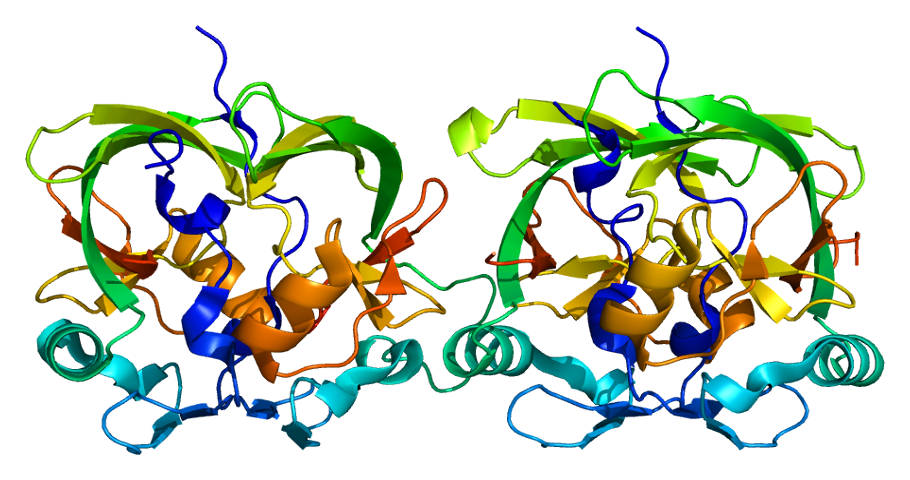
Paraplegia espástica autossômica dominante tipo 8
📋 Origem dos dados
Esta página agrega dados de fontes públicas e oficiais. Dados sobre cobertura no SUS (PCDT, CEAF) são verificados ativamente por agente proativo (ver badge no infobox). Demais dados têm atribuição de fonte + data da última sincronização — clique para abrir o original.
- Doença rara (ontologia)
- fonte: Orphanet
- Identificador unificado
- fonte: MONDO
- Genética mendeliana
- fonte: OMIM
- Codificação WHO/SUS
- fonte: WHO ICD-10 / DATASUS
- CID-11 (futuro)
- fonte: WHO ICD-11
- NIH/GARD
- fonte: GARD (NIH)
- Indexação biomédica
- fonte: MeSH (NLM)
- Dado público estruturado
- fonte: Wikidata
- Medicamentos aprovados FDA
- fonte: FDA OpenFDA