
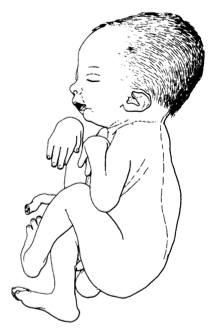
A síndrome da contratura congênita letal tipo 3 é uma síndrome rara de artrogripose caracterizada por características clínicas idênticas à síndrome da contratura congênita letal tipo 2 (ou seja, múltiplas contatoras congênitas (tipicamente cotovelos estendidos e joelhos flexionados), micrognatia, degeneração das células do corno anterior, atrofia muscular esquelética (principalmente nos membros inferiores), na ausência de hidropisia, pterígio ou fraturas ósseas), mas sem aumento da bexiga.
Introdução
O que você precisa saber de cara
A síndrome da contratura congênita letal tipo 3 é uma síndrome rara de artrogripose caracterizada por características clínicas idênticas à síndrome da contratura congênita letal tipo 2 (ou seja, múltiplas contatoras congênitas (tipicamente cotovelos estendidos e joelhos flexionados), micrognatia, degeneração das células do corno anterior, atrofia muscular esquelética (principalmente nos membros inferiores), na ausência de hidropisia, pterígio ou fraturas ósseas), mas sem aumento da bexiga.
Escala de raridade
<1/50kMuito rara
1/20kRara
1/10kPouco freq.
1/5kIncomum
1/2k
Encontrou um erro ou informação desatualizada? Sugira uma correção →
Entender a doença
Do básico ao detalhe, leia no seu ritmo
Preparando trilha educativa...
Sinais e sintomas
O que aparece no corpo e com que frequência cada sintoma acontece
Partes do corpo afetadas
+ 3 sintomas em outras categorias
Características mais comuns
Os sintomas variam de pessoa para pessoa. Abaixo estão as 6 características clínicas mais associadas, ordenadas por frequência.
Linha do tempo da pesquisa
Encontrou um erro ou informação desatualizada? Sugira uma correção →
Genética e causas
O que está alterado no DNA e como passa nas famílias
Genes associados
2 genes identificados com associação a esta condição. Padrão de herança: Autosomal recessive.
Curadoria gene-doença
fontes oficiaisThick filament-associated protein located in the crossbridge region of vertebrate striated muscle a bands. Slow skeletal protein that binds to both myosin and actin (PubMed:31025394, PubMed:31264822). In vitro, binds to native thin filaments and modifies the activity of actin-activated myosin ATPase. May modulate muscle contraction or may play a more structural role
Arthrogryposis, distal, 1B
A form of distal arthrogryposis, a disease characterized by congenital joint contractures that mainly involve two or more distal parts of the limbs, in the absence of a primary neurological or muscle disease. Distal arthrogryposis type 1 is characterized largely by camptodactyly and clubfoot. Hypoplasia and/or absence of some interphalangeal creases is common. The shoulders and hips are less frequently affected.
Catalyzes the phosphorylation of phosphatidylinositol 4-phosphate (PtdIns(4)P/PI4P) to form phosphatidylinositol 4,5-bisphosphate (PtdIns(4,5)P2/PIP2), a lipid second messenger that regulates several cellular processes such as signal transduction, vesicle trafficking, actin cytoskeleton dynamics, cell adhesion, and cell motility (PubMed:12422219, PubMed:22942276). PtdIns(4,5)P2 can directly act as a second messenger or can be utilized as a precursor to generate other second messengers: inositol
Cell membraneEndomembrane systemCytoplasmCell junction, focal adhesionCell junction, adherens junctionCell projection, ruffle membraneCell projection, phagocytic cupCell projection, uropodiumNucleus
Lethal congenital contracture syndrome 3
A form of lethal congenital contracture syndrome, an autosomal recessive disorder characterized by degeneration of anterior horn neurons, extreme skeletal muscle atrophy, and congenital non-progressive joint contractures (arthrogryposis). The contractures can involve the upper or lower limbs and/or the vertebral column, leading to various degrees of flexion or extension limitations evident at birth. LCCS3 patients present at birth with severe multiple joint contractures and severe muscle wasting and atrophy, mainly in the legs. Death occurs minutes to hours after birth due to respiratory insufficiency. The phenotype can be distinguished from that of LCCS1 by the absence of hydrops, fractures and multiple pterygia, and from LCCS2 by the absence of neurogenic bladder defect.
Variantes genéticas (ClinVar)
97 variantes patogênicas registradas no ClinVar.
Classificação de variantes (ClinVar)
Distribuição de 219 variantes classificadas pelo ClinVar.
Vias biológicas (Reactome)
6 vias biológicas associadas aos genes desta condição.
Diagnóstico
Os sinais que médicos procuram e os exames que confirmam
Tratamento e manejo
Remédios, cuidados de apoio e o que precisa acompanhar
Onde tratar no SUS
Hospitais de referência no Brasil e o protocolo oficial do SUS (PCDT)
🇧🇷 Atendimento SUS — Síndrome de contratura congênita letal tipo 3
Centros de Referência SUS
24 centros habilitados pelo SUS para Síndrome de contratura congênita letal tipo 3
Centros para Síndrome de contratura congênita letal tipo 3
Detalhes dos centros
Hospital Universitário Prof. Edgard Santos (HUPES)
R. Dr. Augusto Viana, s/n - Canela, Salvador - BA, 40110-060 · CNES 0003808
Serviço de Referência
Hospital Infantil Albert Sabin
R. Tertuliano Sales, 544 - Vila União, Fortaleza - CE, 60410-794 · CNES 2407876
Serviço de Referência
Hospital de Apoio de Brasília (HAB)
AENW 3 Lote A Setor Noroeste - Plano Piloto, Brasília - DF, 70684-831 · CNES 0010456
Serviço de Referência
Hospital Estadual Infantil e Maternidade Alzir Bernardino Alves (HIABA)
Av. Min. Salgado Filho, 918 - Soteco, Vila Velha - ES, 29106-010 · CNES 6631207
Serviço de Referência
Hospital das Clínicas da UFG
Rua 235 QD. 68 Lote Área, Nº 285, s/nº - Setor Leste Universitário, Goiânia - GO, 74605-050 · CNES 2338424
Serviço de Referência
Hospital Universitário da UFJF
R. Catulo Breviglieri, Bairro - s/n - Santa Catarina, Juiz de Fora - MG, 36036-110 · CNES 2297442
Atenção Especializada
Hospital das Clínicas da UFMG
Av. Prof. Alfredo Balena, 110 - Santa Efigênia, Belo Horizonte - MG, 30130-100 · CNES 2280167
Serviço de Referência
Hospital Universitário Julio Müller (HUJM)
R. Luis Philippe Pereira Leite, s/n - Alvorada, Cuiabá - MT, 78048-902 · CNES 2726092
Atenção Especializada
Hospital Universitário João de Barros Barreto
R. dos Mundurucus, 4487 - Guamá, Belém - PA, 66073-000 · CNES 2337878
Serviço de Referência
Hospital Universitário Lauro Wanderley (HULW)
R. Tabeliao Estanislau Eloy, 585 - Castelo Branco, João Pessoa - PB, 58050-585 · CNES 0002470
Atenção Especializada
Instituto de Medicina Integral Prof. Fernando Figueira (IMIP)
R. dos Coelhos, 300 - Boa Vista, Recife - PE, 50070-902 · CNES 0000647
Serviço de Referência
Hospital Pequeno Príncipe
R. Des. Motta, 1070 - Água Verde, Curitiba - PR, 80250-060 · CNES 3143805
Serviço de Referência
Hospital Universitário Regional de Maringá (HUM)
Av. Mandacaru, 1590 - Parque das Laranjeiras, Maringá - PR, 87083-240 · CNES 2216108
Atenção Especializada
Hospital de Clínicas da UFPR
R. Gen. Carneiro, 181 - Alto da Glória, Curitiba - PR, 80060-900 · CNES 2364980
Serviço de Referência
Hospital Universitário Pedro Ernesto (HUPE-UERJ)
Blvd. 28 de Setembro, 77 - Vila Isabel, Rio de Janeiro - RJ, 20551-030 · CNES 2280221
Serviço de Referência
Instituto Nacional de Saúde da Mulher, da Criança e do Adolescente Fernandes Figueira (IFF/Fiocruz)
Av. Rui Barbosa, 716 - Flamengo, Rio de Janeiro - RJ, 22250-020 · CNES 2269988
Serviço de Referência
Hospital São Lucas da PUCRS
Av. Ipiranga, 6690 - Jardim Botânico, Porto Alegre - RS, 90610-000 · CNES 2232928
Serviço de Referência
Hospital de Clínicas de Porto Alegre (HCPA)
Rua Ramiro Barcelos, 2350 Bloco A - Av. Protásio Alves, 211 - Bloco B e C - Santa Cecília, Porto Alegre - RS, 90035-903 · CNES 2237601
Serviço de Referência
Hospital Universitário da UFSC (HU-UFSC)
R. Profa. Maria Flora Pausewang - Trindade, Florianópolis - SC, 88036-800 · CNES 2560356
Serviço de Referência
Hospital das Clínicas da FMUSP
R. Dr. Ovídio Pires de Campos, 225 - Cerqueira César, São Paulo - SP, 05403-010 · CNES 2077485
Serviço de Referência
Hospital de Base de São José do Rio Preto
Av. Brg. Faria Lima, 5544 - Vila Sao Jose, São José do Rio Preto - SP, 15090-000 · CNES 2079798
Atenção Especializada
Hospital de Clínicas da UNICAMP
R. Vital Brasil, 251 - Cidade Universitária, Campinas - SP, 13083-888 · CNES 2748223
Serviço de Referência
Hospital de Clínicas de Ribeirão Preto (HCRP-USP)
R. Ten. Catão Roxo, 3900 - Vila Monte Alegre, Ribeirão Preto - SP, 14015-010 · CNES 2082187
Serviço de Referência
UNIFESP / Hospital São Paulo
R. Napoleão de Barros, 715 - Vila Clementino, São Paulo - SP, 04024-002 · CNES 2688689
Serviço de Referência
Dados de DATASUS/CNES, SBGM, ABNeuro e Ministério da Saúde. Sempre confirme a disponibilidade diretamente com o estabelecimento.
Pesquisa ativa
Ensaios clínicos abertos e novidades científicas recentes
🟢 Recrutando agora
1 pesquisa recrutando participantes. Converse com seu médico sobre a possibilidade de participar.
Outros ensaios clínicos
Publicações mais relevantes
Mostrando amostra de 2 publicações de um total de 30
Novel PIP5K1C variant identified in a Chinese pedigree with lethal congenital contractural syndrome 3.
Biallelic pathogenic variants in PIP5K1C (MIM #606,102) lead to lethal congenital contractural syndrome 3 (LCCS3, MIM #611,369), a rare autosomal recessive genetic disorder characterized by small gestational age, severe multiple joint contractures and muscle atrophy, early death due to respiratory failure. Currently, 5 individuals with LCCS3 were reported and 5 pathogenic variants in PIP5K1C were identified. Here, we reported the two fetuses in a Chinese pedigree who displayed multiple joint contractures and other congenital anomalies. Trio-based whole-exome sequencing (WES) was performed for the parents and the recent fetus to detect the genetic cause for fetus phenotype. A novel variant, NM_012398.3: c.949_952dup, p.S318Ifs*28 and a previously reported variant, c.688_689del, p.G230Qfs*114 (ClinVar database) in PIP5K1C, were detected in the individuals, and these variants were inherited from the mother and father, respectively. We described the features of multiple joint contractures in our fetuses, including bilateral talipes equinovarus, stiffness in the limbs, extended knees, persistently closed hands and overlapping fingers, which have not been delineated detailedly in previously reported LCCS3 individuals. Furthermore, novel phenotype, bilateral dilated lateral ventricles, was revealed in one fetus. These findings expanded the genetic variant spectrum of PIP5K1C and enriched the clinical features of LCCS3, which will help with the prenatal diagnosis and genetic counseling for this family.
Structural insights into lethal contractural syndrome type 3 (LCCS3) caused by a missense mutation of PIP5Kγ.
Signaling molecule phosphatidylinositol 4,5-bisphosphate is produced primarily by phosphatidylinositol 4-phosphate 5-kinase (PIP5K). PIP5K is essential for the development of the human neuronal system, which has been exemplified by a recessive genetic disorder, lethal congenital contractural syndrome type 3, caused by a single aspartate-to-asparagine mutation in the kinase domain of PIP5Kγ. So far, the exact role of this aspartate residue has yet to be elucidated. In this work, we conducted structural, functional and computational studies on a zebrafish PIP5Kα variant with a mutation at the same site. Compared with the structure of the wild-type (WT) protein in the ATP-bound state, the ATP-associating glycine-rich loop of the mutant protein was severely disordered and the temperature factor of ATP was significantly higher. Both observations suggest a greater degree of disorder of the bound ATP, whereas neither the structure of the catalytic site nor the Km toward ATP was substantially affected by the mutation. Microsecond molecular dynamics simulation revealed that negative charge elimination caused by the mutation destabilized the involved hydrogen bonds and affected key electrostatic interactions in the close proximity of ATP. Taken together, our data indicated that the disease-related aspartate residue is a key node in the interaction network crucial for effective ATP binding. This work provides a paradigm of how a subtle but critical structural perturbation caused by a single mutation at the ATP-binding site abolishes the kinase activity, emphasizing that stabilizing substrate in a productive conformational state is crucial for catalysis.
Publicações recentes
A case of CNTNAP1 gene-related abnormality and literature review.
Expanding the Prenatal Phenotype of Lethal Congenital Contracture Syndrome 11: Novel Homozygous GLDN Variant in a Family With Recurrent Affected Fetuses.
Human CNTNAP1 Variants Associated With Severe Neurological Deficits: Additional Cases and Literature Review.
ADGRG6-related disorder: a novel mutation resulting in distal arthrogryposis and a patchy neuropathy.
In vivo modeling of lethal congenital contracture syndrome 1 suggests pathomechanisms in cellular stress responses.
📚 EuropePMC16 artigos no totalmostrando 2
Novel PIP5K1C variant identified in a Chinese pedigree with lethal congenital contractural syndrome 3.
BMC pediatricsStructural insights into lethal contractural syndrome type 3 (LCCS3) caused by a missense mutation of PIP5Kγ.
The Biochemical journalAssociações
Organizações que acompanham esta doença — pra ter apoio e orientação
Ainda não temos associações cadastradas para Síndrome de contratura congênita letal tipo 3.
É de uma associação que acompanha esta doença? Fale com a gente →
Comunidades
Grupos ativos de quem convive com esta doença aqui no Raras
Ainda não existe comunidade no Raras para Síndrome de contratura congênita letal tipo 3
Pacientes, familiares e cuidadores se organizam em comunidades pra compartilhar experiências, fazer perguntas e se apoiar. Você pode ser o primeiro.
Tire suas dúvidas
Perguntas, dicas e experiências compartilhadas aqui na página
Participe da discussão
Faça login para postar dúvidas, compartilhar experiências e interagir com especialistas.
Fazer loginDoenças relacionadas
Doenças com sintomas parecidos — ajudam quem ainda está buscando diagnóstico
Referências e fontes
Bases de dados externas citadas neste artigo
Publicações científicas
Artigos indexados no PubMed ligados a esta doença no grafo RarasNet — título, periódico e PMID direto da fonte, sem intermediação de IA.
- Novel PIP5K1C variant identified in a Chinese pedigree with lethal congenital contractural syndrome 3.
- Structural insights into lethal contractural syndrome type 3 (LCCS3) caused by a missense mutation of PIP5Kγ.
- A case of CNTNAP1 gene-related abnormality and literature review.
- Expanding the Prenatal Phenotype of Lethal Congenital Contracture Syndrome 11: Novel Homozygous GLDN Variant in a Family With Recurrent Affected Fetuses.
- Human CNTNAP1 Variants Associated With Severe Neurological Deficits: Additional Cases and Literature Review.
- ADGRG6-related disorder: a novel mutation resulting in distal arthrogryposis and a patchy neuropathy.
- In vivo modeling of lethal congenital contracture syndrome 1 suggests pathomechanisms in cellular stress responses.
Bases de dados e fontes oficiais
Identificadores e referências canônicas usadas para montar este verbete.
- ORPHA:137783(Orphanet)
- OMIM OMIM:611369(OMIM)
- MONDO:0012656(MONDO)
- GARD:12644(GARD (NIH))
- Variantes catalogadas(ClinVar)
- Busca completa no PubMed(PubMed)
- Q27674750(Wikidata)
Dados compilados pelo RarasNet a partir de fontes abertas (Orphanet, OMIM, MONDO, PubMed/EuropePMC, ClinicalTrials.gov, DATASUS, PCDT/MS). Este conteúdo é informativo e não substitui avaliação médica.
Conteúdo mantido por Agente Raras · Médicos e pesquisadores podem colaborar
Síndrome de contratura congênita letal tipo 3
📋 Origem dos dados
Esta página agrega dados de fontes públicas e oficiais. Dados sobre cobertura no SUS (PCDT, CEAF) são verificados ativamente por agente proativo (ver badge no infobox). Demais dados têm atribuição de fonte + data da última sincronização — clique para abrir o original.
- Doença rara (ontologia)
- fonte: Orphanet
- Identificador unificado
- fonte: MONDO
- Genética mendeliana
- fonte: OMIM
- Codificação WHO/SUS
- fonte: WHO ICD-10 / DATASUS
- CID-11 (futuro)
- fonte: WHO ICD-11
- NIH/GARD
- fonte: GARD (NIH)
- Indexação biomédica
- fonte: MeSH (NLM)
- Dado público estruturado
- fonte: Wikidata