
A displasia epifisária múltipla, tipo Lowry, é uma condição óssea primária rara, caracterizada por epífises (as extremidades dos ossos longos) pequenas e achatadas (especialmente as da cabeça do fêmur), encurtamento dos membros (principalmente nas partes mais próximas ao tronco), fenda no céu da boca, queixo pequeno, leve limitação dos movimentos das articulações e traços faciais incomuns (incluindo olhos com cantos levemente inclinados para cima, olhos mais espaçados do que o normal e ponta do nariz larga). Outras características que também foram observadas incluem curvatura lateral da coluna (escoliose), joelhos para dentro, depressão leve no peito, vértebras achatadas, deslocamento das cabeças dos ossos do antebraço (rádio), dedos curtos, fíbulas (os ossos finos da parte de baixo da perna) subdesenvolvidas e pé torto congênito.
Introdução
O que você precisa saber de cara
A displasia epifisária múltipla, tipo Lowry, é uma condição óssea primária rara, caracterizada por epífises (as extremidades dos ossos longos) pequenas e achatadas (especialmente as da cabeça do fêmur), encurtamento dos membros (principalmente nas partes mais próximas ao tronco), fenda no céu da boca, queixo pequeno, leve limitação dos movimentos das articulações e traços faciais incomuns (incluindo olhos com cantos levemente inclinados para cima, olhos mais espaçados do que o normal e ponta do nariz larga). Outras características que também foram observadas incluem curvatura lateral da coluna (escoliose), joelhos para dentro, depressão leve no peito, vértebras achatadas, deslocamento das cabeças dos ossos do antebraço (rádio), dedos curtos, fíbulas (os ossos finos da parte de baixo da perna) subdesenvolvidas e pé torto congênito.
Escala de raridade
<1/50kMuito rara
1/20kRara
1/10kPouco freq.
1/5kIncomum
1/2k
Encontrou um erro ou informação desatualizada? Sugira uma correção →
Entender a doença
Do básico ao detalhe, leia no seu ritmo
Preparando trilha educativa...
Sinais e sintomas
O que aparece no corpo e com que frequência cada sintoma acontece
Partes do corpo afetadas
+ 7 sintomas em outras categorias
Características mais comuns
Os sintomas variam de pessoa para pessoa. Abaixo estão as 20 características clínicas mais associadas, ordenadas por frequência.
Linha do tempo da pesquisa
Encontrou um erro ou informação desatualizada? Sugira uma correção →
Genética e causas
O que está alterado no DNA e como passa nas famílias
Nenhum gene associado encontrado
Os dados genéticos desta condição ainda estão sendo catalogados.
Diagnóstico
Os sinais que médicos procuram e os exames que confirmam
Tratamento e manejo
Remédios, cuidados de apoio e o que precisa acompanhar
Onde tratar no SUS
Hospitais de referência no Brasil e o protocolo oficial do SUS (PCDT)
🇧🇷 Atendimento SUS — Displasia epifisária múltipla, tipo Lowry
Selecione um estado ou use sua localização para ver resultados.
Dados de DATASUS/CNES, SBGM, ABNeuro e Ministério da Saúde. Sempre confirme a disponibilidade diretamente com o estabelecimento.
Pesquisa ativa
Ensaios clínicos abertos e novidades científicas recentes
Pesquisa e ensaios clínicos
Nenhum ensaio clínico registrado para esta condição.
Publicações mais relevantes
Delineating the phenotype of RNU4ATAC-related spliceosomopathy.
Biallelic pathogenic variants in RNU4ATAC cause microcephalic osteodysplastic primordial dwarfism type I (MOPD1), Roifman syndrome (RS) and Lowry-Wood syndrome (LWS). These conditions demonstrate significant phenotypic heterogeneity yet have overlapping features. Although historically described as discrete conditions they appear to represent a phenotypic spectrum with clinical features not always aligning with diagnostic categories. Clinical variability and ambiguity in diagnostic criteria exist among each disorder. Here we report an individual with a novel genotype and phenotype spanning all three disorders, expanding the phenotypic spectrum of RNU4ATAC-related spliceosomeopathies.
Clinical interpretation of variants identified in RNU4ATAC, a non-coding spliceosomal gene.
Biallelic variants in RNU4ATAC, a non-coding gene transcribed into the minor spliceosome component U4atac snRNA, are responsible for three rare recessive developmental diseases, namely Taybi-Linder/MOPD1, Roifman and Lowry-Wood syndromes. Next-generation sequencing of clinically heterogeneous cohorts (children with either a suspected genetic disorder or a congenital microcephaly) recently identified mutations in this gene, illustrating how profoundly these technologies are modifying genetic testing and assessment. As RNU4ATAC has a single non-coding exon, the bioinformatic prediction algorithms assessing the effect of sequence variants on splicing or protein function are irrelevant, which makes variant interpretation challenging to molecular diagnostic laboratories. In order to facilitate and improve clinical diagnostic assessment and genetic counseling, we present i) an update of the previously reported RNU4ATAC mutations and an analysis of the genetic variations affecting this gene using the Genome Aggregation Database (gnomAD) resource; ii) the pathogenicity prediction performances of scores computed based on an RNA structure prediction tool and of those produced by the Combined Annotation Dependent Depletion tool for the 285 RNU4ATAC variants identified in patients or in large-scale sequencing projects; iii) a method, based on a cellular assay, that allows to measure the effect of RNU4ATAC variants on splicing efficiency of a minor (U12-type) reporter intron. Lastly, the concordance of bioinformatic predictions and cellular assay results was investigated.
Loss of U11 small nuclear RNA in the developing mouse limb results in micromelia.
Disruption of the minor spliceosome due to mutations in RNU4ATAC is linked to primordial dwarfism in microcephalic osteodysplastic primordial dwarfism type 1, Roifman syndrome, and Lowry-Wood syndrome. Similarly, primordial dwarfism in domesticated animals is linked to positive selection in minor spliceosome components. Despite being vital for limb development and size regulation, its role remains unexplored. Here, we disrupt minor spliceosome function in the developing mouse limb by ablating one of its essential components, U11 small nuclear RNA, which resulted in micromelia. Notably, earlier loss of U11 corresponded to increased severity. We find that limb size is reduced owing to elevated minor intron retention in minor intron-containing genes that regulate cell cycle. As a result, limb progenitor cells experience delayed prometaphase-to-metaphase transition and prolonged S-phase. Moreover, we observed death of rapidly dividing, distally located progenitors. Despite cell cycle defects and cell death, the spatial expression of key limb patterning genes was maintained. Overall, we show that the minor spliceosome is required for limb development via size control potentially shared in disease and domestication.
New insights into minor splicing-a transcriptomic analysis of cells derived from TALS patients.
Minor intron splicing plays a central role in human embryonic development and survival. Indeed, biallelic mutations in RNU4ATAC, transcribed into the minor spliceosomal U4atac snRNA, are responsible for three rare autosomal recessive multimalformation disorders named Taybi-Linder (TALS/MOPD1), Roifman (RFMN), and Lowry-Wood (LWS) syndromes, which associate numerous overlapping signs of varying severity. Although RNA-seq experiments have been conducted on a few RFMN patient cells, none have been performed in TALS, and more generally no in-depth transcriptomic analysis of the ∼700 human genes containing a minor (U12-type) intron had been published as yet. We thus sequenced RNA from cells derived from five skin, three amniotic fluid, and one blood biosamples obtained from seven unrelated TALS cases and from age- and sex-matched controls. This allowed us to describe for the first time the mRNA expression and splicing profile of genes containing U12-type introns, in the context of a functional minor spliceosome. Concerning RNU4ATAC-mutated patients, we show that as expected, they display distinct U12-type intron splicing profiles compared to controls, but that rather unexpectedly mRNA expression levels are mostly unchanged. Furthermore, although U12-type intron missplicing concerns most of the expressed U12 genes, the level of U12-type intron retention is surprisingly low in fibroblasts and amniocytes, and much more pronounced in blood cells. Interestingly, we found several occurrences of introns that can be spliced using either U2, U12, or a combination of both types of splice site consensus sequences, with a shift towards splicing using preferentially U2 sites in TALS patients' cells compared to controls.
The expanding phenotype of RNU4ATAC pathogenic variants to Lowry Wood syndrome.
RNU4ATAC pathogenic variants to date have been associated with microcephalic osteodysplastic primordial dwarfism, type 1 and Roifman syndrome. Both conditions are clinically distinct skeletal dysplasias with microcephalic osteodysplastic primordial dwarfism, type 1 having a more severe phenotype than Roifman syndrome. Some of the overlapping features of the two conditions include developmental delay, microcephaly, and immune deficiency. The features also overlap with Lowry Wood syndrome, another rare but well-defined skeletal dysplasia for which the genetic etiology has not been identified. Characteristic features include multiple epiphyseal dysplasia and microcephaly. Here, we describe three patients with Lowry Wood syndrome with biallelic RNU4ATAC pathogenic variants. This report expands the phenotypic spectrum for biallelic RNU4ATAC disorder causing variants and is the first to establish the genetic cause for Lowry Wood syndrome.
Publicações recentes
Genotype-phenotype correlations in PSACH/EDM1 patients with COMP gene variants: a comprehensive review of 830 cases.
Human pluripotent stem cell model of multiple epiphyseal dysplasia with MATN3 mutation identifies altered matrix organisation and upregulation of the cholesterol biosynthesis pathway.
Elevated MMP9 Expression-A Potential In Vitro Biomarker for COMPopathies.
Exome Sequencing Identifies a Novel Splicing Variant in COL9A3 Resulting in Multiple Epiphyseal Dysplasia: A Case Report.
From Protein Misfolding to Extracellular Matrix Disorganisation: Understanding Disease Pathology in Rare Skeletal Dysplasias.
📚 EuropePMCmostrando 5
Delineating the phenotype of RNU4ATAC-related spliceosomopathy.
American journal of medical genetics. Part ALoss of U11 small nuclear RNA in the developing mouse limb results in micromelia.
Development (Cambridge, England)Clinical interpretation of variants identified in RNU4ATAC, a non-coding spliceosomal gene.
PloS oneNew insights into minor splicing-a transcriptomic analysis of cells derived from TALS patients.
RNA (New York, N.Y.)The expanding phenotype of RNU4ATAC pathogenic variants to Lowry Wood syndrome.
American journal of medical genetics. Part AAssociações
Organizações que acompanham esta doença — pra ter apoio e orientação
Ainda não temos associações cadastradas para Displasia epifisária múltipla, tipo Lowry.
É de uma associação que acompanha esta doença? Fale com a gente →
Comunidades
Grupos ativos de quem convive com esta doença aqui no Raras
Ainda não existe comunidade no Raras para Displasia epifisária múltipla, tipo Lowry
Pacientes, familiares e cuidadores se organizam em comunidades pra compartilhar experiências, fazer perguntas e se apoiar. Você pode ser o primeiro.
Tire suas dúvidas
Perguntas, dicas e experiências compartilhadas aqui na página
Participe da discussão
Faça login para postar dúvidas, compartilhar experiências e interagir com especialistas.
Fazer loginDoenças relacionadas
Doenças com sintomas parecidos — ajudam quem ainda está buscando diagnóstico
Referências e fontes
Bases de dados externas citadas neste artigo
Publicações científicas
Artigos indexados no PubMed ligados a esta doença no grafo RarasNet — título, periódico e PMID direto da fonte, sem intermediação de IA.
- Delineating the phenotype of RNU4ATAC-related spliceosomopathy.
- Clinical interpretation of variants identified in RNU4ATAC, a non-coding spliceosomal gene.
- Loss of U11 small nuclear RNA in the developing mouse limb results in micromelia.
- New insights into minor splicing-a transcriptomic analysis of cells derived from TALS patients.
- The expanding phenotype of RNU4ATAC pathogenic variants to Lowry Wood syndrome.
- Genotype-phenotype correlations in PSACH/EDM1 patients with COMP gene variants: a comprehensive review of 830 cases.
- Human pluripotent stem cell model of multiple epiphyseal dysplasia with MATN3 mutation identifies altered matrix organisation and upregulation of the cholesterol biosynthesis pathway.
- Elevated MMP9 Expression-A Potential In Vitro Biomarker for COMPopathies.
- Exome Sequencing Identifies a Novel Splicing Variant in COL9A3 Resulting in Multiple Epiphyseal Dysplasia: A Case Report.
- From Protein Misfolding to Extracellular Matrix Disorganisation: Understanding Disease Pathology in Rare Skeletal Dysplasias.
Bases de dados e fontes oficiais
Identificadores e referências canônicas usadas para montar este verbete.
- ORPHA:166016(Orphanet)
- OMIM OMIM:601560(OMIM)
- MONDO:0011109(MONDO)
- GARD:17013(GARD (NIH))
- Busca completa no PubMed(PubMed)
- Q55783206(Wikidata)
Dados compilados pelo RarasNet a partir de fontes abertas (Orphanet, OMIM, MONDO, PubMed/EuropePMC, ClinicalTrials.gov, DATASUS, PCDT/MS). Este conteúdo é informativo e não substitui avaliação médica.
Conteúdo mantido por Agente Raras · Médicos e pesquisadores podem colaborar
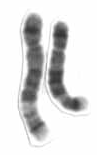
Displasia epifisária múltipla, tipo Lowry
📋 Origem dos dados
Esta página agrega dados de fontes públicas e oficiais. Dados sobre cobertura no SUS (PCDT, CEAF) são verificados ativamente por agente proativo (ver badge no infobox). Demais dados têm atribuição de fonte + data da última sincronização — clique para abrir o original.
- Doença rara (ontologia)
- fonte: Orphanet
- Identificador unificado
- fonte: MONDO
- Genética mendeliana
- fonte: OMIM
- Codificação WHO/SUS
- fonte: WHO ICD-10 / DATASUS
- CID-11 (futuro)
- fonte: WHO ICD-11
- NIH/GARD
- fonte: GARD (NIH)
- Indexação biomédica
- fonte: MeSH (NLM)
- Dado público estruturado
- fonte: Wikidata