
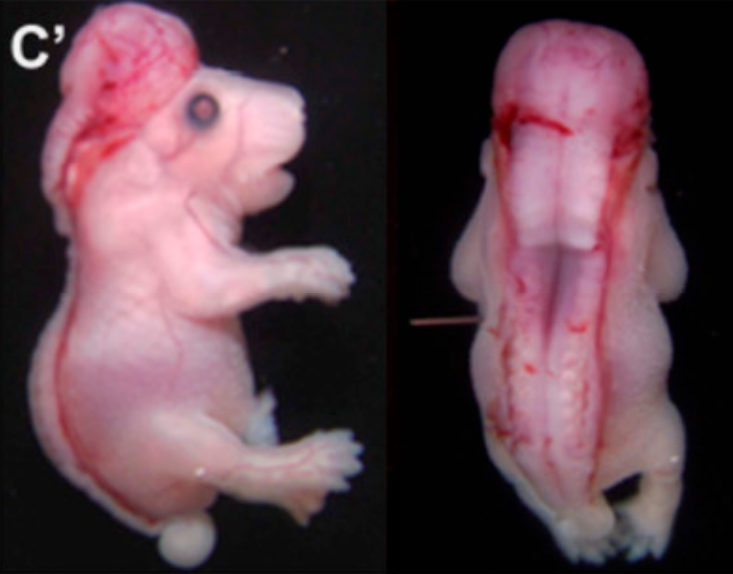
Craniorquisquise é a forma mais grave de defeito do tubo neural em que o cérebro e a medula espinhal permanecem abertos em graus variados. É uma malformação congênita muito rara do sistema nervoso central.
Introdução
O que você precisa saber de cara
Craniorquisquise é a forma mais grave de defeito do tubo neural em que o cérebro e a medula espinhal permanecem abertos em graus variados. É uma malformação congênita muito rara do sistema nervoso central.
Encontrou um erro ou informação desatualizada? Sugira uma correção →
Entender a doença
Do básico ao detalhe, leia no seu ritmo
Preparando trilha educativa...
Sinais e sintomas
O que aparece no corpo e com que frequência cada sintoma acontece
Características mais comuns
Os sintomas variam de pessoa para pessoa. Abaixo estão as 9 características clínicas mais associadas, ordenadas por frequência.
Linha do tempo da pesquisa
Encontrou um erro ou informação desatualizada? Sugira uma correção →
Genética e causas
O que está alterado no DNA e como passa nas famílias
Genes associados
1 gene identificado com associação a esta condição.
Involved in regulation of intracellular signaling pathways during development. Specifically thought to play a role in canonical and/or non-canonical Wnt signaling pathways through interaction with DSH (Dishevelled) family proteins. The activation/inhibition of Wnt signaling may depend on the phosphorylation status. Proposed to regulate the degradation of CTNNB1/beta-catenin, thereby modulating the transcriptional activation of target genes of the Wnt signaling pathway. Its function in stabilizin
CytoplasmNucleusSynapse
Neural tube defects
Congenital malformations of the central nervous system and adjacent structures related to defective neural tube closure during the first trimester of pregnancy. Failure of neural tube closure can occur at any level of the embryonic axis. Common NTD forms include anencephaly, myelomeningocele and spina bifida, which result from the failure of fusion in the cranial and spinal region of the neural tube. NTDs have a multifactorial etiology encompassing both genetic and environmental components.
Variantes genéticas (ClinVar)
25 variantes patogênicas registradas no ClinVar.
Diagnóstico
Os sinais que médicos procuram e os exames que confirmam
Tratamento e manejo
Remédios, cuidados de apoio e o que precisa acompanhar
Onde tratar no SUS
Hospitais de referência no Brasil e o protocolo oficial do SUS (PCDT)
🇧🇷 Atendimento SUS — Cranioraquisquisis
Selecione um estado ou use sua localização para ver resultados.
Dados de DATASUS/CNES, SBGM, ABNeuro e Ministério da Saúde. Sempre confirme a disponibilidade diretamente com o estabelecimento.
Pesquisa ativa
Ensaios clínicos abertos e novidades científicas recentes
Pesquisa e ensaios clínicos
Nenhum ensaio clínico registrado para esta condição.
Publicações mais relevantes
Craniorachischisis Totalis: A Detailed Case Report.
Neural tube defects (NTDs) are severe congenital anomalies resulting from improper neural tube closure. Craniorachischisis totalis, the most extreme form, involves failure of neural tube formation along the entire cranio-spinal axis. This rare condition is fatal, with limited reported cases globally. We report a case of a 35-year-old G3P1L1A1 woman admitted at 20 weeks and 4 days gestation for medical termination of pregnancy following second-trimester ultrasound findings of anencephaly and spinal dysraphism. The patient began folic acid supplementation only after pregnancy confirmation. The fetus exhibited acrania, bifid vertebrae, exposed neural tissue, frog-eye deformity, and limb contractures. Butterfly vertebrae was observed in infantogram. Retrospective ultrasound review revealed an absent cranial vault, disorganized brain matter, and a large open spinal defect extending to the upper lumbar region. Genetic and infectious panels were largely unremarkable, except for reactive rubella IgG. Craniorachischisis totalis arises from failure of neural tube closure, potentially linked to genetic mutations, folate deficiency, and multiple maternal risk factors. Here, we also revisit the various theories of neural tube closure. Early prenatal diagnosis and counseling are critical for managing craniorachischisis. Periconceptional folic acid supplementation remains the most effective preventive measure.
Concomitant omphalocele, craniorachischisis and ectopic cordis associated with trisomy 18 diagnosed in first trimester.
We present a rare case of trisomy 18 of maternal origin in a pregnancy with omphalocele, craniorachischisis, and ectopia cordis. A 38-year-old woman, G3P1A1, was diagnosed with fetal anencephaly, an extrathoracic heart (ectopic cordis), deformity of spine and a stomach-and-intestine-containing omphalocele by prenatal ultrasound at 12 weeks of gestation. The patient's husband was 39 years old and healthy. The patient had no significant past medical history. She was a nonsmoker, with a pre-pregnancy BMI of 23.7 and was not diabetic. There was no family history of malformations, diseases, or teratogenic medication. The patient had not received assisted reproductive technology during this pregnancy. The pregnancy was terminated in the 13th gestational week. Additional anomalies detected after termination of the pregnancy included small and triangular face, abnormal posturing of hands, clubfoot and craniorachischisis. Crown-heel length was 5.5 cm consistent with a 12-13-week gestational age. Postnatal cytogenetic analysis of chorionic villi obtained by placental sampling revealed a karyotype of 47, XX + 18. Polymorphic DNA marker analysis by quantitative fluorescent polymerase chain reaction (QF-PCR) assays showed a maternal origin of the extra chromosome 18. The concomitant omphalocele, ectopia cordis and craniorachischisis may be related to trisomy 18. Genetic analysis of the postmortem tissue and the analysis of the parental origin of the extra chromosome 18 using QF-PCR, provide valuable information for genetic counseling.
Neural Tube Defects in Fetus Exposed to Valproate.
SLMAP3 is essential for neurulation through mechanisms involving cytoskeletal elements, ABP, and PCP.
SLMAP3 is a tail-anchored membrane protein that targets subcellular organelles and is believed to regulate Hippo signaling. The global loss of SLMAP3 causes late embryonic lethality in mice, with some embryos exhibiting neural tube defects such as craniorachischisis. We show here that SLMAP3 -/- embryos display reduced length and increased width of neural plates, signifying arrested convergent extension. The expression of planar cell polarity (PCP) components Dvl2/3 and the activity of the downstream targets ROCK2, cofilin, and JNK1/2 were dysregulated in SLMAP3 -/- E12.5 brains. Furthermore, the cytoskeletal proteins (γ-tubulin, actin, and nestin) and apical components (PKCζ and ZO-1) were mislocalized in neural tubes of SLMAP3 -/- embryos, with a subsequent decrease in colocalization of PCP proteins (Fzd6 and pDvl2). However, no changes in PCP or cytoskeleton proteins were found in cultured neuroepithelial cells depleted of SLMAP3, suggesting an essential requirement for SLMAP3 for these processes in vivo for neurulation. The loss of SLMAP3 had no impact on Hippo signaling in SLMAP3 -/- embryos, brains, and neural tubes. Proteomic analysis revealed SLMAP3 in an interactome with cytoskeletal components, including nestin, tropomyosin 4, intermediate filaments, plectin, the PCP protein SCRIB, and STRIPAK members in embryonic brains. These results reveal a crucial role of SLMAP3 in neural tube development by regulating the cytoskeleton organization and PCP pathway.
Craniorachischisis in a 33-week-old Female Fetus: A Case Report.
We report the case of a 33-week-old female fetus born with craniorachischisis to a gravida 5, para 4 (3104) mother with no previous history of conceiving a child with a neural tube defect. Craniorachischisis is characterized by anencephaly and an open defect extending from the brain to the spine and is the most severe and fatal type of neural tube defect. Although the cause of neural tube defects is hypothesized to be multifactorial and is usually sporadic, the risk is increased in neonates born to mothers with a family history or a previous pregnancy with neural tube defect, both of which are not present in the index case. This case is unique in that only during the fifth pregnancy did the couple conceive a child with a neural tube defect, emphasizing that folic acid supplementation, the sole preventive measure proven to decrease the risk of neural tube defects, remains to be important in the periconceptual period for all women of childbearing age.
Publicações recentes
Neural Tube Defects in Fetus Exposed to Valproate.
Craniorachischisis Totalis: A Detailed Case Report.
Concomitant omphalocele, craniorachischisis and ectopic cordis associated with trisomy 18 diagnosed in first trimester.
SLMAP3 is essential for neurulation through mechanisms involving cytoskeletal elements, ABP, and PCP.
Common on "craniorachischisis in a stillbirth associated with maternal smoking".
📚 EuropePMC50 artigos no totalmostrando 44
Neural Tube Defects in Fetus Exposed to Valproate.
Maternal-fetal medicine (Wolters Kluwer Health, Inc.)Craniorachischisis Totalis: A Detailed Case Report.
Iranian journal of child neurologyConcomitant omphalocele, craniorachischisis and ectopic cordis associated with trisomy 18 diagnosed in first trimester.
Taiwanese journal of obstetrics & gynecologySLMAP3 is essential for neurulation through mechanisms involving cytoskeletal elements, ABP, and PCP.
Life science allianceCommon on "craniorachischisis in a stillbirth associated with maternal smoking".
Taiwanese journal of obstetrics & gynecologyCraniorachischisis in a 33-week-old Female Fetus: A Case Report.
Acta medica PhilippinaRecurrent neural tube defect and craniorachischisis detected in the first trimester and associated with maternal smoking.
Taiwanese journal of obstetrics & gynecologyCraniorachischisis in a stillbirth associated with maternal smoking.
Taiwanese journal of obstetrics & gynecologyLethal Neural Tube Defects: Reports of Anencephaly and Craniorachischisis Cases and Literature Review.
Case reports in obstetrics and gynecologyStrengthening capacity of health workers to diagnose birth defects in Ugandan hospitals from 2015 to 2021.
BMC medical educationNeural tube defects as a cause of death among stillbirths, infants, and children younger than 5 years in sub-Saharan Africa and southeast Asia: an analysis of the CHAMPS network.
The Lancet. Global healthCraniorachischisis totalis.
The Pan African medical journalBrain malformations in diprosopia observed in clinical cases, museum specimens and artistic representations.
Orphanet journal of rare diseasesLoss-of-Function of p21-Activated Kinase 2 Links BMP Signaling to Neural Tube Patterning Defects.
Advanced science (Weinheim, Baden-Wurttemberg, Germany)Pax3 Hypomorphs Reveal Hidden Pax7 Functional Genetic Compensation in Utero.
Journal of developmental biologyPrenatal diagnosis of acrania/exencephaly/anencephaly sequence (AEAS): additional structural and genetic anomalies.
Archives of gynecology and obstetricsPrenatal diagnosis of craniorachischisis totalis.
BMJ case reportsRare and severe neural tube defect: Craniorachischisis totalis.
Clinical case reports[Craniorachischisis: a case report].
Revista medica del Instituto Mexicano del Seguro SocialPericonceptional folic acid use prevents both rare and common neural tube defects in China.
Birth defects researchVangl2-environment interaction causes severe neural tube defects, without abnormal neuroepithelial convergent extension.
Disease models & mechanismsFatal fetal abnormality Irish live-born survival-an observational study.
Journal of community geneticsGene Environment Interactions in the Etiology of Neural Tube Defects.
Frontiers in geneticsComparison of inherited neural tube defects in companion animals and livestock.
Birth defects researchMaternal Use of Specific Antidepressant Medications During Early Pregnancy and the Risk of Selected Birth Defects.
JAMA psychiatryFetal Open and Closed Spina Bifida on a Routine Scan at 11 Weeks to 13 Weeks 6 Days.
Journal of ultrasound in medicine : official journal of the American Institute of Ultrasound in MedicineAssociation between rare variants in specific functional pathways and human neural tube defects multiple subphenotypes.
Neural developmentThe Spectrum of Congenital Central Nervous System Anomalies Among Stillborn: An Autopsy Based Study.
Annals of neurosciencesCraniorachischisis with Exencephaly.
Fetal and pediatric pathologyA review of genetic factors underlying craniorachischisis and omphalocele: Inspired by a unique trisomy 18 case.
American journal of medical genetics. Part AVariants identified in PTK7 associated with neural tube defects.
Molecular genetics & genomic medicinePrenatal Sonographic Image of Sirenomelia with Anencephaly and Craniorachischisis Totalis.
Case reports in obstetrics and gynecologyMultidisciplinary approach of assessing malformed fetuses exemplified in a rare case of pentalogy of Cantrell associated with craniorachischisis, pulmonary extrophy and right-sided aortic arch with aberrant brachiocephalic artery.
Romanian journal of morphology and embryology = Revue roumaine de morphologie et embryologieInsights into the Etiology of Mammalian Neural Tube Closure Defects from Developmental, Genetic and Evolutionary Studies.
Journal of developmental biologyPrenatal diagnosis of sirenomelia with anencephaly and craniorachischisis totalis: A case report study.
MedicineA targeted sequencing panel identifies rare damaging variants in multiple genes in the cranial neural tube defect, anencephaly.
Clinical geneticsIdentification and characterization of a novel chemically induced allele at the planar cell polarity gene Vangl2.
Mammalian genome : official journal of the International Mammalian Genome SocietyA detailed musculoskeletal study of a fetus with anencephaly and spina bifida (craniorachischisis), and comparison with other cases of human congenital malformations.
Journal of anatomyNewborn with meroanencephaly: Surviving all odds.
Journal of pediatric neurosciences[Congenital anomalies of poor prognosis. Genetics Consensus Committee].
Revista chilena de pediatriaDiprosopus: Systematic review and report of two cases.
Birth defects research. Part A, Clinical and molecular teratologyCraniorachischisis Totalis with Congenital Diaphragmatic Hernia-A Rare Presentation of Fryns Syndrome.
Fetal and pediatric pathologyA Study on The Incidence of Neural Tube Defects in A Tertiary Care Hospital Over A Period of Five Years.
Journal of clinical and diagnostic research : JCDRRole of the planar cell polarity gene Protein tyrosine kinase 7 in neural tube defects in humans.
Birth defects research. Part A, Clinical and molecular teratologyAssociações
Organizações que acompanham esta doença — pra ter apoio e orientação
Ainda não temos associações cadastradas para Cranioraquisquisis.
É de uma associação que acompanha esta doença? Fale com a gente →
Comunidades
Grupos ativos de quem convive com esta doença aqui no Raras
Ainda não existe comunidade no Raras para Cranioraquisquisis
Pacientes, familiares e cuidadores se organizam em comunidades pra compartilhar experiências, fazer perguntas e se apoiar. Você pode ser o primeiro.
Tire suas dúvidas
Perguntas, dicas e experiências compartilhadas aqui na página
Participe da discussão
Faça login para postar dúvidas, compartilhar experiências e interagir com especialistas.
Fazer loginDoenças relacionadas
Doenças com sintomas parecidos — ajudam quem ainda está buscando diagnóstico
Referências e fontes
Bases de dados externas citadas neste artigo
Publicações científicas
Artigos indexados no PubMed ligados a esta doença no grafo RarasNet — título, periódico e PMID direto da fonte, sem intermediação de IA.
- Craniorachischisis Totalis: A Detailed Case Report.
- Concomitant omphalocele, craniorachischisis and ectopic cordis associated with trisomy 18 diagnosed in first trimester.
- Neural Tube Defects in Fetus Exposed to Valproate.
- SLMAP3 is essential for neurulation through mechanisms involving cytoskeletal elements, ABP, and PCP.
- Craniorachischisis in a 33-week-old Female Fetus: A Case Report.
- Common on "craniorachischisis in a stillbirth associated with maternal smoking".
Bases de dados e fontes oficiais
Identificadores e referências canônicas usadas para montar este verbete.
- ORPHA:63260(Orphanet)
- MONDO:0018969(MONDO)
- GARD:10504(GARD (NIH))
- Variantes catalogadas(ClinVar)
- Busca completa no PubMed(PubMed)
- Q55788430(Wikidata)
Dados compilados pelo RarasNet a partir de fontes abertas (Orphanet, OMIM, MONDO, PubMed/EuropePMC, ClinicalTrials.gov, DATASUS, PCDT/MS). Este conteúdo é informativo e não substitui avaliação médica.
Conteúdo mantido por Agente Raras · Médicos e pesquisadores podem colaborar
Cranioraquisquisis
📋 Origem dos dados
Esta página agrega dados de fontes públicas e oficiais. Dados sobre cobertura no SUS (PCDT, CEAF) são verificados ativamente por agente proativo (ver badge no infobox). Demais dados têm atribuição de fonte + data da última sincronização — clique para abrir o original.
- Doença rara (ontologia)
- fonte: Orphanet
- Identificador unificado
- fonte: MONDO
- Codificação WHO/SUS
- fonte: WHO ICD-10 / DATASUS
- CID-11 (futuro)
- fonte: WHO ICD-11
- NIH/GARD
- fonte: GARD (NIH)
- Dado público estruturado
- fonte: Wikidata