
Distúrbio autossômico recessivo raro do metabolismo das purinas, caracterizado pela deficiência isolada de xantina desidrogenase, causando hiperxantinemia com ácido úrico baixo ou ausente e xantinúria, levando a urolitíase, hematúria, cólica renal e infecções do trato urinário, enquanto alguns pacientes são assintomáticos e outros sofrem de insuficiência renal. Manifestações menos comuns incluem artropatia, miopatia e úlcera duodenal.
Introdução
O que você precisa saber de cara
Distúrbio autossômico recessivo raro do metabolismo das purinas, caracterizado pela deficiência isolada de xantina desidrogenase, causando hiperxantinemia com ácido úrico baixo ou ausente e xantinúria, levando a urolitíase, hematúria, cólica renal e infecções do trato urinário, enquanto alguns pacientes são assintomáticos e outros sofrem de insuficiência renal. Manifestações menos comuns incluem artropatia, miopatia e úlcera duodenal.
Encontrou um erro ou informação desatualizada? Sugira uma correção →
Entender a doença
Do básico ao detalhe, leia no seu ritmo
Preparando trilha educativa...
Sinais e sintomas
O que aparece no corpo e com que frequência cada sintoma acontece
Partes do corpo afetadas
+ 3 sintomas em outras categorias
Características mais comuns
Os sintomas variam de pessoa para pessoa. Abaixo estão as 11 características clínicas mais associadas, ordenadas por frequência.
Linha do tempo da pesquisa
Encontrou um erro ou informação desatualizada? Sugira uma correção →
Genética e causas
O que está alterado no DNA e como passa nas famílias
Genes associados
1 gene identificado com associação a esta condição.
Curadoria gene-doença
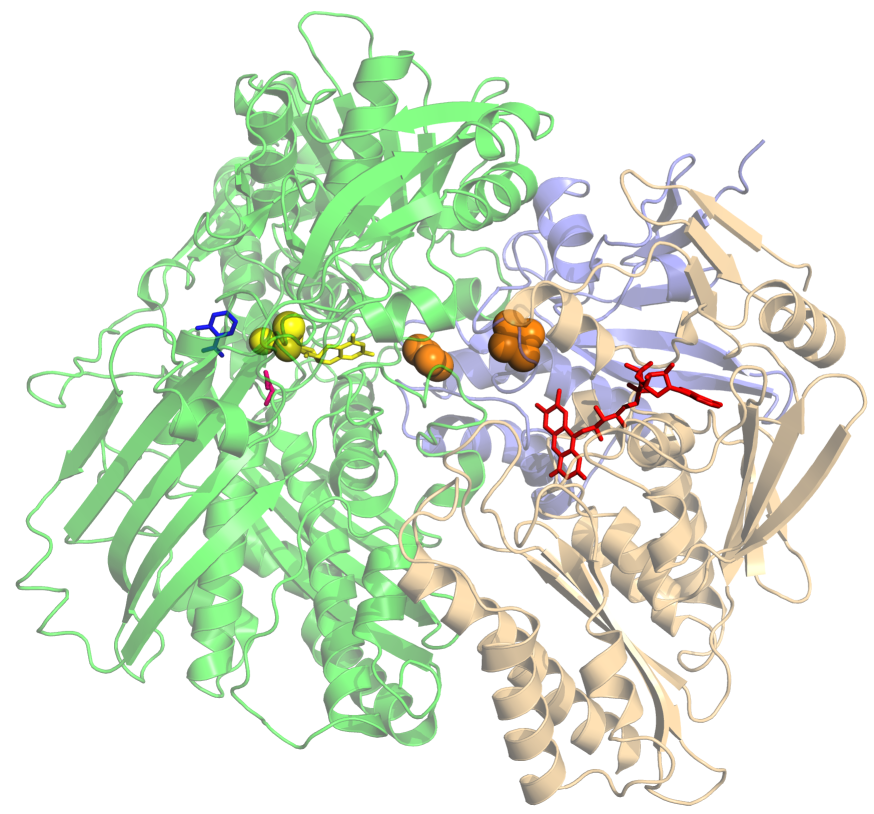
fontes oficiaisKey enzyme in purine degradation. Catalyzes the oxidation of hypoxanthine to xanthine. Catalyzes the oxidation of xanthine to uric acid. Contributes to the generation of reactive oxygen species. Has also low oxidase activity towards aldehydes (in vitro)
CytoplasmPeroxisomeSecreted
Xanthinuria 1
A disorder characterized by excretion of very large amounts of xanthine in the urine and a tendency to form xanthine stones. Uric acid is strikingly diminished in serum and urine. XAN1 is due to isolated xanthine dehydrogenase deficiency. Patients can metabolize allopurinol.
Variantes genéticas (ClinVar)
95 variantes patogênicas registradas no ClinVar.
Classificação de variantes (ClinVar)
Distribuição de 1.205 variantes classificadas pelo ClinVar.
Vias biológicas (Reactome)
3 vias biológicas associadas aos genes desta condição.
Diagnóstico
Os sinais que médicos procuram e os exames que confirmam
Tratamento e manejo
Remédios, cuidados de apoio e o que precisa acompanhar
Onde tratar no SUS
Hospitais de referência no Brasil e o protocolo oficial do SUS (PCDT)
🇧🇷 Atendimento SUS — Xantinúria tipo I
Selecione um estado ou use sua localização para ver resultados.
Dados de DATASUS/CNES, SBGM, ABNeuro e Ministério da Saúde. Sempre confirme a disponibilidade diretamente com o estabelecimento.
Pesquisa ativa
Ensaios clínicos abertos e novidades científicas recentes
🟢 Recrutando agora
1 pesquisa recrutando participantes. Converse com seu médico sobre a possibilidade de participar.
Outros ensaios clínicos
Publicações mais relevantes
Hypouricaemia in a patient with hereditary xanthinuria type I.
Potential Opportunities for Pharmacogenetic-Based Therapeutic Exploitation of Xanthine Dehydrogenase in Cardiovascular Disease.
The majority of naturally occurring mutations of the human gene XDH, are associated with reduced or completely absent xanthine oxidoreductase (XOR) activity, leading to a disease known as classical xanthinuria, which is due to the accumulation and excretion of xanthine in urine. Three types of classical xanthinuria have been identified: type I, characterised by XOR deficiency, type II, caused by XOR and aldehyde oxidase (AO) deficiency, and type III due to XOR, AO, and sulphite oxidase (SO) deficiency. Type I and II are considered rare autosomal recessive disorders, a condition where two copies of the mutated gene must be present to develop the disease or trait. In most cases, xanthinuria type I and II result to be asymptomatic, and only occasionally lead to renal failure due to urolithiasis caused by xanthine deposition. However, in the last 10-15 years, new observations have been made about the link between naturally occurring mutations and pathological phenotypes particularly pertinent to cardiovascular diseases (CVD). These links have been attributed to a genetically driven increase of XOR expression and activity that is responsible for what is thought to be damaging uric acid (UA) and reactive oxygen species (ROS) accumulation, nitric oxide (·NO) depletion and endothelial dysfunction. In this review, we discuss the importance of genetics for interindividual variability of XOR expression and activity while focusing mainly on those variants thought to be relevant for CVD. In addition, we discuss the potential exploitation of the genetically driven increase of XOR activity to deliver more beneficial bioavailable ·NO. Finally, we examine the effect that non-synonymous mutations have on the tertiary structure of the protein and consequently on its capacity to interact with glycosaminoglycans (GAGs) localised on the outer surface of endothelial cells.
[Analysis of a family with hypouricemia due to type Ⅰ xanthinuria].
This article reports a patient presenting with"extremely low uric acid levels in blood and urine"clinically along with reviewing relevant literature to consider a diagnosis of xanthinuria. Peripheral blood samples of the patient and her family were further collected for xanthine dehydrogenase(XDH) gene sequencing, showing that the patient had compound heterozygous mutations in exon 19:c.1995_2006del12(p.His666_Gly669del) and exon 10:c.871G>T(p.Glu291*), however no mutations were found in the gene encoding MOCOS on chromosome 18, confirming the diagnosis of hereditary xanthinuria type Ⅰ.The patient's father, son and daughter carried heterozygous mutations in exon 19:c.1995_2006del12(p.His666_Gly669del), and the mother carried heterozygous mutations in exon 10:c.871G>T(p.Glu291*).Mutations in the XDH gene cause a lack of xanthine oxidoreductase function, which hinders the production of uric acid, leading to very low or undetectable levels in blood and urine. Patients present clinically with hematuria, renal colic, urolithiasis, and even acute renal failure. Through the diagnosis and treatment of this patient and literature review, the article aims to deepen the understanding of purine metabolism and uric acid production process, and improve the clinicians' diagnosis and treatment ability of hypouricemia. 本文报道1例以“血清和尿液尿酸水平极低”为临床表现的患者,复习相关文献考虑诊断为黄嘌呤尿症。进一步采集患者及其家系的外周血样进行黄嘌呤脱氢酶(XDH)基因测序,发现在其外显子19:c.1995_2006del12(p.His666_Gly669del)和外显子10:c.871G>T(p.Glu291*)存在复合杂合突变,而18号染色体上编码钼辅因子硫化酶基因未发现突变,确诊为遗传性Ⅰ型黄嘌呤尿症。患者父亲、儿子和女儿携带外显子19:c.1995_2006del12(p.His666_Gly669del)杂合突变,母亲携带外显子10:c.871G>T(p.Glu291*)杂合突变。XDH基因突变导致黄嘌呤氧化还原酶功能缺乏,从而阻碍了尿酸生成,使血液和尿液尿酸水平非常低或检测不到。临床可表现为血尿、肾绞痛、尿石症,甚至急性肾功能衰竭。通过本例患者的诊治和文献复习,旨在加深对嘌呤代谢及尿酸产生过程的认识,提高临床医师对低尿酸血症的诊治能力。.
[Uric Acid Metabolism, Uric Acid Transporters and Dysuricemia].
Serum urate levels are determined by the balance between uric acid production and uric acid excretion capacity from the kidneys and intestinal tract. Dysuricemia, including hyperuricemia and hypouricemia, develops when the balance shifts towards an increase or a decrease in the uric acid pool. Hyperuricemia is mostly a multifactorial genetic disorder involving several disease susceptibility genes and environmental factors. Hypouricemia, on the other hand, is caused by genetic abnormalities. The main genes involved in dysuricemia are xanthine oxidoreductase, an enzyme that produces uric acid, and the urate transporters urate transporter 1/solute carrier family 22 member 12 (URAT1/SLC22A12), glucose transporter 9/solute carrier family 2 member 9 (GLUT9/SLC2A9) and ATP binding cassette subfamily G member 2 (ABCG2). Deficiency of xanthine oxidoreductase results in xanthinuria, a rare disease with marked hypouricemia. Xanthinuria can be due to a single deficiency of xanthine oxidoreductase or in combination with aldehyde oxidase deficiency as well. The latter is caused by a deficiency in molybdenum cofactor sulfurase, which is responsible for adding sulphur atoms to the molybdenum cofactor required for xanthine oxidoreductase and aldehyde oxidase to exert their action. URAT1/SLC22A12 and GLUT9/SLC2A9 are involved in urate reabsorption and their deficiency leads to renal hypouricemia, a condition that is common in Japanese due to URAT1/SLC22A12 deficiency. On the other hand, ABCG2 is involved in the secretion of urate, and many Japanese have single nucleotide polymorphisms that result in its reduced function, leading to hyperuricemia. In particular, severe dysfunction of ABCG2 leads to hyperuricemia with reduced extrarenal excretion.
Kidney Failure Secondary to Hereditary Xanthinuria due to a Homozygous Deletion of the XDH Gene in the Absence of Overt Kidney Stone Disease.
Hereditary xanthinuria (HXAN) is a rare metabolic disorder that results from mutations in either the xanthine dehydrogenase (XDH) or the molybdenum cofactor sulfurase genes (MOCOS), respectively defining HXAN type I and type II. Hypouricemia, hypouricosuria, and abnormally high plasma and urine levels of xanthine, causing susceptibility to xanthine nephrolithiasis and deposition of xanthine crystals in tissues, are the metabolic hallmarks of HXAN. Several pathogenic variants in the XDH gene have so far been identified in patients with HXAN type I, but the clinical phenotype associated with the whole deletion of the human XDH gene is unknown. Herein, we report the case of a woman diagnosed with HXAN, whose molecular genetic testing revealed a homozygous microdeletion involving the XDH gene. Distinctive features of her medical history were the diagnosis of arterial hypertension and microalbuminuria at 22 years of age; a single pregnancy at the age of 25, complicated by proteinuria and transient kidney function deterioration in the third trimester; unexplained severe hypouricemia incidentally discovered during pregnancy; inability to breastfeed her newborn daughter due to primary agalactia; chronic kidney disease (CKD) stage 3 diagnosed at age 35; and progression to end-stage kidney disease over the next 12 years. Protocol noninvasive laboratory and imaging investigation was not informative as to the cause of CKD. This is the first description of the clinical phenotype associated with a natural knockout of the human XDH gene. Despite the lack of kidney histopathology data, the striking similarities with the phenotypes exhibited by comparable murine models validate the latter as useful sources of mechanistic insights for the pathogenesis of the human disease, supporting the hypothesis that the absence of xanthine dehydrogenase activity might represent a susceptibility factor for chronic tubulointerstitial nephritis, even in patients without kidney stones.
Publicações recentes
Potential Opportunities for Pharmacogenetic-Based Therapeutic Exploitation of Xanthine Dehydrogenase in Cardiovascular Disease.
Hypouricaemia in a patient with hereditary xanthinuria type I.
Association of Mutations Identified in Xanthinuria with the Function and Inhibition Mechanism of Xanthine Oxidoreductase.
Identification of a new mutation in the human xanthine dehydrogenase responsible for xanthinuria type I.
An ancestral variant causing type I xanthinuria in Turkmen and Arab families is predicted to prevail in the Afro-Asian stone-forming belt.
📚 EuropePMC160 artigos no totalmostrando 17
Potential Opportunities for Pharmacogenetic-Based Therapeutic Exploitation of Xanthine Dehydrogenase in Cardiovascular Disease.
Antioxidants (Basel, Switzerland)[Analysis of a family with hypouricemia due to type Ⅰ xanthinuria].
Zhonghua yi xue za zhi[Uric Acid Metabolism, Uric Acid Transporters and Dysuricemia].
Yakugaku zasshi : Journal of the Pharmaceutical Society of JapanHypouricaemia in a patient with hereditary xanthinuria type I.
Lancet (London, England)Kidney Failure Secondary to Hereditary Xanthinuria due to a Homozygous Deletion of the XDH Gene in the Absence of Overt Kidney Stone Disease.
NephronXanthinuria Type 1 with a Novel Mutation in Xanthine Dehydrogenase and a Normal Endothelial Function.
Internal medicine (Tokyo, Japan)Association of Mutations Identified in Xanthinuria with the Function and Inhibition Mechanism of Xanthine Oxidoreductase.
BiomedicinesIdentification of a new mutation in the human xanthine dehydrogenase responsible for xanthinuria type I.
Advances in laboratory medicineAn ancestral variant causing type I xanthinuria in Turkmen and Arab families is predicted to prevail in the Afro-Asian stone-forming belt.
JIMD reportsXanthine urolithiasis: Inhibitors of xanthine crystallization.
PloS oneHereditary xanthinuria is not so rare disorder of purine metabolism.
Nucleosides, nucleotides & nucleic acidsA case of xanthinuria type I with a novel mutation in xanthine dehydrogenase.
CEN case reports[Xanthinuria type 1 in a woman with arthralgias: a combined clinical and molecular genetic investigation].
Deutsche medizinische Wochenschrift (1946)[Type 1 xanthinuria: Report on three cases].
Archives de pediatrie : organe officiel de la Societe francaise de pediatrie[Disturbance of uric acid metabolism].
Nihon Jinzo Gakkai shiXanthinuria type I with a novel mutation of xanthine dehydrogenase.
The American journal of the medical sciencesAn unusual cause of pink diapers in an infant: Questions and Answers.
Pediatric nephrology (Berlin, Germany)Associações
Organizações que acompanham esta doença — pra ter apoio e orientação
Ainda não temos associações cadastradas para Xantinúria tipo I.
É de uma associação que acompanha esta doença? Fale com a gente →
Comunidades
Grupos ativos de quem convive com esta doença aqui no Raras
Ainda não existe comunidade no Raras para Xantinúria tipo I
Pacientes, familiares e cuidadores se organizam em comunidades pra compartilhar experiências, fazer perguntas e se apoiar. Você pode ser o primeiro.
Tire suas dúvidas
Perguntas, dicas e experiências compartilhadas aqui na página
Participe da discussão
Faça login para postar dúvidas, compartilhar experiências e interagir com especialistas.
Fazer loginDoenças relacionadas
Doenças com sintomas parecidos — ajudam quem ainda está buscando diagnóstico
Referências e fontes
Bases de dados externas citadas neste artigo
Publicações científicas
Artigos indexados no PubMed ligados a esta doença no grafo RarasNet — título, periódico e PMID direto da fonte, sem intermediação de IA.
- Hypouricaemia in a patient with hereditary xanthinuria type I.
- Potential Opportunities for Pharmacogenetic-Based Therapeutic Exploitation of Xanthine Dehydrogenase in Cardiovascular Disease.
- [Analysis of a family with hypouricemia due to type Ⅰ xanthinuria].
- [Uric Acid Metabolism, Uric Acid Transporters and Dysuricemia].
- Kidney Failure Secondary to Hereditary Xanthinuria due to a Homozygous Deletion of the XDH Gene in the Absence of Overt Kidney Stone Disease.
- Association of Mutations Identified in Xanthinuria with the Function and Inhibition Mechanism of Xanthine Oxidoreductase.
- Identification of a new mutation in the human xanthine dehydrogenase responsible for xanthinuria type I.
- An ancestral variant causing type I xanthinuria in Turkmen and Arab families is predicted to prevail in the Afro-Asian stone-forming belt.
Bases de dados e fontes oficiais
Identificadores e referências canônicas usadas para montar este verbete.
- ORPHA:93601(Orphanet)
- OMIM OMIM:278300(OMIM)
- MONDO:0010209(MONDO)
- GARD:5621(GARD (NIH))
- Variantes catalogadas(ClinVar)
- Busca completa no PubMed(PubMed)
Dados compilados pelo RarasNet a partir de fontes abertas (Orphanet, OMIM, MONDO, PubMed/EuropePMC, ClinicalTrials.gov, DATASUS, PCDT/MS). Este conteúdo é informativo e não substitui avaliação médica.
Conteúdo mantido por Agente Raras · Médicos e pesquisadores podem colaborar
Xantinúria tipo I
📋 Origem dos dados
Esta página agrega dados de fontes públicas e oficiais. Dados sobre cobertura no SUS (PCDT, CEAF) são verificados ativamente por agente proativo (ver badge no infobox). Demais dados têm atribuição de fonte + data da última sincronização — clique para abrir o original.
- Doença rara (ontologia)
- fonte: Orphanet
- Identificador unificado
- fonte: MONDO
- Genética mendeliana
- fonte: OMIM
- Codificação WHO/SUS
- fonte: WHO ICD-10 / DATASUS
- CID-11 (futuro)
- fonte: WHO ICD-11
- NIH/GARD
- fonte: GARD (NIH)
- Indexação biomédica
- fonte: MeSH (NLM)
- Ensaios clínicos
- fonte: ClinicalTrials.gov