
A síndrome de resistência ao hormônio liberador de tirotropina (TRH) é um tipo de hipotiroidismo congênito central (ver este termo), caracterizado por níveis baixos de hormônio da tiroide causados pela liberação insuficiente de hormônio estimulador da tiroide (TSH) devido à resistência da pituitária ao TRH. Pode ou não ser assistido à nascente.
Introdução
O que você precisa saber de cara
A síndrome de resistência ao hormônio liberador de tirotropina (TRH) é um tipo de hipotiroidismo congênito central (ver este termo), caracterizado por níveis baixos de hormônio da tiroide causados pela liberação insuficiente de hormônio estimulador da tiroide (TSH) devido à resistência da pituitária ao TRH. Pode ou não ser assistido à nascente.
Escala de raridade
<1/50kMuito rara
1/20kRara
1/10kPouco freq.
1/5kIncomum
1/2k
Encontrou um erro ou informação desatualizada? Sugira uma correção →
Entender a doença
Do básico ao detalhe, leia no seu ritmo
Preparando trilha educativa...
Sinais e sintomas
O que aparece no corpo e com que frequência cada sintoma acontece
Partes do corpo afetadas
+ 14 sintomas em outras categorias
Características mais comuns
Os sintomas variam de pessoa para pessoa. Abaixo estão as 25 características clínicas mais associadas, ordenadas por frequência.
Linha do tempo da pesquisa
Encontrou um erro ou informação desatualizada? Sugira uma correção →
Genética e causas
O que está alterado no DNA e como passa nas famílias
Genes associados
1 gene identificado com associação a esta condição. Padrão de herança: Autosomal recessive.
Curadoria gene-doença
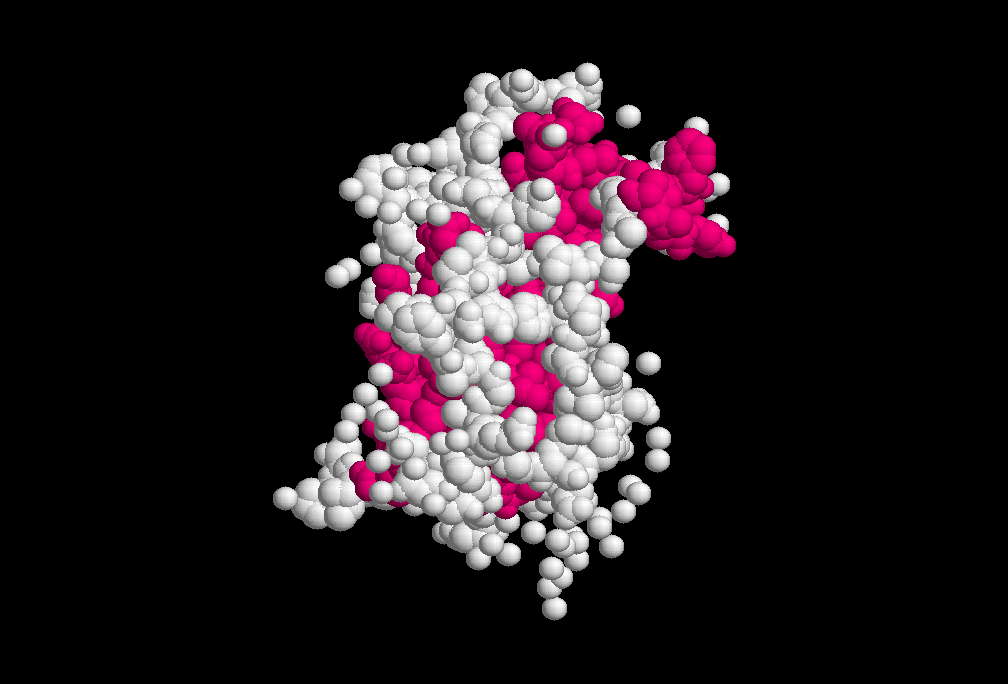
fontes oficiaisReceptor for thyrotropin-releasing hormone (TRH). Upon ligand binding, this G-protein-coupled receptor triggers activation of the phosphatidylinositol (IP3)-calcium-protein kinase C (PKC) pathway
Cell membrane
Hypothyroidism, congenital, non-goitrous, 7
A form of central hypothyroidism, a disorder characterized by sub-optimal thyroid hormone secretion, due to insufficient stimulation by thyrotropin of an otherwise normal thyroid gland. It may be caused by congenital or acquired disorders of the pituitary gland or hypothalamus. CHNG7 is a congenital, autosomal recessive form characterized by normal-to-low T4 and normal-to-high thyrotropin levels, and reduced or absent pituitary responsiveness to thyrotropin-releasing hormone. Patients may exhibit short stature, growth retardation, and delayed bone age, as well as lethargy or fatigue.
Medicamentos aprovados (FDA)
1 medicamento encontrado nos registros da FDA americana.
Variantes genéticas (ClinVar)
46 variantes patogênicas registradas no ClinVar.
Vias biológicas (Reactome)
2 vias biológicas associadas aos genes desta condição.
Diagnóstico
Os sinais que médicos procuram e os exames que confirmam
Tratamento e manejo
Remédios, cuidados de apoio e o que precisa acompanhar
Onde tratar no SUS
Hospitais de referência no Brasil e o protocolo oficial do SUS (PCDT)
🇧🇷 Atendimento SUS — Resistência generalizada à hormona liberadora de tireotropina
Selecione um estado ou use sua localização para ver resultados.
Dados de DATASUS/CNES, SBGM, ABNeuro e Ministério da Saúde. Sempre confirme a disponibilidade diretamente com o estabelecimento.
Pesquisa ativa
Ensaios clínicos abertos e novidades científicas recentes
Pesquisa e ensaios clínicos
Nenhum ensaio clínico registrado para esta condição.
Publicações mais relevantes
Targeting the brain-gut-prostate axis in chronic prostatitis: mechanisms and therapeutics.
Chronic prostatitis/chronic pelvic pain syndrome (CP/CPPS), a refractory urinary system disorder, is closely associated with dysregulation of the brain-gut-prostate axis. Emerging evidence highlights the pivotal role of gut microbiota dysbiosis and its bidirectional interactions with the neuroimmune system in CP/CPPS pathogenesis. This systematic review integrates perspectives from microbiomics, neuroimmunology, and metabolomics to propose a theoretical framework of the brain-gut-prostate axis and multi-dimensional therapeutic strategies targeting this axis. By transcending conventional localized anti-inflammatory approaches, these strategies aim to address clinical resistance and phenotypic heterogeneity. Mechanistic insights into microbiota-derived metabolites (e.g., short-chain fatty acids, SCFAs), neuroendocrine signaling (e.g., thyrotropin-releasing hormone, TRH), and immune crosstalk (e.g., Th17/Treg imbalance) are explored, alongside innovative therapies such as microbiome modulation, neural interventions, and immune regulation. This holistic paradigm not only provides new mechanistic insights but also offers promising avenues for personalized management and translational research in CP/CPPS, potentially overcoming current therapeutic bottlenecks.
Association between thyroid hormone resistance and obesity: a cross-sectional study and mouse stimulation test.
Thyroid hormone influences key metabolic pathways, and reduced sensitivity to thyroid hormone is considered a new risk factor for adverse metabolic outcomes. However, the association between thyroid hormone resistance and obesity in euthyroid individuals is still unknown. We enrolled 8021 euthyroid individuals, calculated thyroid hormone resistance indices, and analyzed the association between thyroid hormone resistance and obesity by regression analysis. Furthermore, we conducted the thyrotropin-releasing hormone stimulation test in both control and obese mice (n = 5) to demonstrate the association. The euthyroid adults with overweight and obesity had increased thyroid hormone resistance indices (all p < 0.05). BMI and prevalence of overweight and obesity increased (odds ratio of thyroid feedback quantile-based index [ORTFQI] = 1.164, p = 0.036; OR of free triiodothyronine/free thyroxine [ORFT3/FT4] = 1.508, p < 0.001) following the elevation of thyroid hormone resistance indices. Mediation analysis indicated a complete mediation effect (beta coefficient of indirect effect [βInd]= 6.838, p < 0.001) of metabolic disorders in the relationship. Furthermore, in the mice with obesity, the thyrotropin response to thyrotropin-releasing hormone stimulation (68.33-90.89 pg/mL) was comparatively blunted (p = 0.029). Euthyroid individuals with obesity exhibit both central and peripheral thyroid hormone resistance, a phenomenon that is more pronounced in individuals with metabolic abnormalities. Thyroid hormone resistance is associated with an increased prevalence of overweight and obesity mediated by metabolic disorders.
Clinically Symptomatic Resistance to Thyroid Hormone β Syndrome Because of THRB Gene Mosaicism.
Resistance to thyroid hormone β syndrome (RTHβ) is caused by pathogenic variants in the THRB gene, but such variants are found in only 85% of cases. We report the case of a patient with RTHβ phenotype but for whom we found a pathogenic variant of the THRB gene in a mosaic state. The patient is a 52-year-old woman with clinical and biological signs of RTHβ. Symptoms included asthenia, cardiac palpitations, and diarrhea. Repeated thyroid function tests showed an elevated serum TSH, elevated serum free T4, and variably normal or slightly elevated serum fT3. Pituitary magnetic resonance imaging was normal, and the thyrotropin-releasing hormone test result was compatible with the diagnosis of RTHβ syndrome. Initial Sanger sequencing on blood samples could not highlight the presence of a mosaic variant because of insufficient sensitivity. When next-generation sequencing became accessible, blood samples were retested and we found a known pathogenic variant: c.949G > A; p.(ala317Thr), with an allelic frequency of 12%. Other samples from tissues of different embryological origin were also tested and found an allelic frequency of 5.7%, 17.9%, 9.9%, 6.4%, and 0% on urine tests, oral swab, nasal mucosa swab, skin biopsy, and conjunctival swab, respectively. Cloning confirmed the allelic frequency observed. We highlight that a pathogenic variant in a mosaic state in the THRB gene may be the cause of an authentic RTHβ syndrome. High-throughput sequencing of multiple tissues eases the detection of pathogenic variant in a mosaic state and allows the correct diagnosis of patients with true RTHβ, thus avoiding patient mismanagement.
Obesity-Associated GNAS Mutations and the Melanocortin Pathway.
GNAS encodes the Gαs (stimulatory G-protein alpha subunit) protein, which mediates G protein-coupled receptor (GPCR) signaling. GNAS mutations cause developmental delay, short stature, and skeletal abnormalities in a syndrome called Albright's hereditary osteodystrophy. Because of imprinting, mutations on the maternal allele also cause obesity and hormone resistance (pseudohypoparathyroidism). We performed exome sequencing and targeted resequencing in 2548 children who presented with severe obesity, and we unexpectedly identified 22 GNAS mutation carriers. We investigated whether the effect of GNAS mutations on melanocortin 4 receptor (MC4R) signaling explains the obesity and whether the variable clinical spectrum in patients might be explained by the results of molecular assays. Almost all GNAS mutations impaired MC4R signaling. A total of 6 of 11 patients who were 12 to 18 years of age had reduced growth. In these patients, mutations disrupted growth hormone-releasing hormone receptor signaling, but growth was unaffected in carriers of mutations that did not affect this signaling pathway (mean standard-deviation score for height, -0.90 vs. 0.75, respectively; P = 0.02). Only 1 of 10 patients who reached final height before or during the study had short stature. GNAS mutations that impaired thyrotropin receptor signaling were associated with developmental delay and with higher thyrotropin levels (mean [±SD], 8.4±4.7 mIU per liter) than those in 340 severely obese children who did not have GNAS mutations (3.9±2.6 mIU per liter; P = 0.004). Because pathogenic mutations may manifest with obesity alone, screening of children with severe obesity for GNAS deficiency may allow early diagnosis, improving clinical outcomes, and melanocortin agonists may aid in weight loss. GNAS mutations that are identified by means of unbiased genetic testing differentially affect GPCR signaling pathways that contribute to clinical heterogeneity. Monogenic diseases are clinically more variable than their classic descriptions suggest. (Funded by Wellcome and others.).
Graves' disease coexisted with resistance to thyroid hormone: a case report.
Resistance to thyroid hormone is a rare autosomal dominant disorder characterized by reduced responsiveness to thyroid hormone and can cause syndrome of inappropriate secretion of thyroid stimulating hormone. Although Graves' disease is a common autoimmune thyroid disorder, the coexistence of these two diseases is extremely rare and makes the diagnosis and treatment complicated, leading to the delayed diagnosis of resistance to thyroid hormone. We describe the case of a Japanese man with resistance to thyroid hormone coexisting with Graves' disease, in which the correct diagnosis of resistance to thyroid hormone was delayed by masking of the signs of syndrome of inappropriate secretion of thyroid stimulating hormone, with final diagnosis 30 years after the initial treatment for Graves' disease. A 30-year-old Japanese man presented with diffuse goiter and thyrotoxicosis. Anti-thyroid stimulating hormone receptor antibody was positive. He was diagnosed with Graves' disease. Anti-thyroid medication was chosen as the initial treatment for Graves' disease. However, this treatment failed to normalize the free triiodothyronine, free thyroxine, and thyroid stimulating hormone levels. His thyroid hormone levels indicated syndrome of inappropriate secretion of thyroid stimulating hormone. After cessation of methimazole treatment by remission of Graves' disease, his state of syndrome of inappropriate secretion of thyroid stimulating hormone persisted. Magnetic resonance imaging revealed no pituitary tumor lesions. The results of thyroid stimulating hormone-releasing hormone stimulation test showed a normal response of thyroid stimulating hormone. He was suspected to have resistance to thyroid hormone. Direct sequencing analysis of the thyroid hormone receptor β gene identified a heterozygous missense mutation, R282S. Coexistence of resistance to thyroid hormone with Graves' disease was confirmed. He has no signs of thyrotoxic symptoms, and is capable in activities of daily living at the present time. We described a rare case of resistance to thyroid hormone simultaneously existing with Graves' disease. This case demonstrated that these diseases can coexist, and indicated some of the difficulties in diagnosis of resistance to thyroid hormone with coexisting Graves' disease. The diagnosis of resistance to thyroid hormone did not become apparent until after anti-hyperthyroidism treatment. Although rare, careful follow-up after the initial treatment of Graves' disease is necessary. The coexistence of these two diseases should be considered in patients showing occasional syndrome of inappropriate secretion of thyroid stimulating hormone.
Publicações recentes
Differential response of the thyroid axis to high-fat diet-induced inflammation and energy balance deregulation in juvenile and adult rats.
[Preservation of the stimulatory effect of thyroid stimulating hormone receptor allosteric agonist on thyroid hormone level in aging rats with obesity].
Association between thyroid hormone resistance and obesity: a cross-sectional study and mouse stimulation test.
A Case of macro-TSH masquerading as subclinical hypothyroidism.
Pharmacokinetic Drug Interactions of an Orally Available TRH Analog (Rovatirelin) With a CYP3A4/5 and P-Glycoprotein Inhibitor (Itraconazole).
📚 EuropePMCmostrando 13
Targeting the brain-gut-prostate axis in chronic prostatitis: mechanisms and therapeutics.
Frontiers in endocrinologyAssociation between thyroid hormone resistance and obesity: a cross-sectional study and mouse stimulation test.
Obesity (Silver Spring, Md.)Clinically Symptomatic Resistance to Thyroid Hormone β Syndrome Because of THRB Gene Mosaicism.
The Journal of clinical endocrinology and metabolismObesity-Associated GNAS Mutations and the Melanocortin Pathway.
The New England journal of medicineGraves' disease coexisted with resistance to thyroid hormone: a case report.
Journal of medical case reportsA rare mutation of thyroid hormone receptor beta gene in thyroid hormone resistance syndrome.
Endocrinology, diabetes & metabolism case reportsResistance to thyroid hormone due to a novel THRB p.Val349Ala mutation in a Taiwanese boy.
Journal of the Formosan Medical Association = Taiwan yi zhiChallenging diagnosis of resistance to thyroid hormone in a patient with pituitary adenoma.
BMJ case reportsFetal Exposure to High Maternal Thyroid Hormone Levels Causes Central Resistance to Thyroid Hormone in Adult Humans and Mice.
The Journal of clinical endocrinology and metabolismNovel Mutation (T273R) in Thyroid Hormone Receptor β Gene Provides Further Insight into Cryptic Negative Regulation by Thyroid Hormone.
Folia biologicaThe syndrome of central hypothyroidism and macroorchidism: IGSF1 controls TRHR and FSHB expression by differential modulation of pituitary TGFβ and Activin pathways.
Scientific reportsA thyrotropin-secreting macroadenoma with positive growth hormone and prolactin immunostaining: A case report and literature review.
Nigerian journal of clinical practiceA case of thyroid hormone resistance: a rare mutation.
Arquivos brasileiros de endocrinologia e metabologiaAssociações
Organizações que acompanham esta doença — pra ter apoio e orientação
Ainda não temos associações cadastradas para Resistência generalizada à hormona liberadora de tireotropina.
É de uma associação que acompanha esta doença? Fale com a gente →
Comunidades
Grupos ativos de quem convive com esta doença aqui no Raras
Ainda não existe comunidade no Raras para Resistência generalizada à hormona liberadora de tireotropina
Pacientes, familiares e cuidadores se organizam em comunidades pra compartilhar experiências, fazer perguntas e se apoiar. Você pode ser o primeiro.
Tire suas dúvidas
Perguntas, dicas e experiências compartilhadas aqui na página
Participe da discussão
Faça login para postar dúvidas, compartilhar experiências e interagir com especialistas.
Fazer loginDoenças relacionadas
Doenças com sintomas parecidos — ajudam quem ainda está buscando diagnóstico
Referências e fontes
Bases de dados externas citadas neste artigo
Publicações científicas
Artigos indexados no PubMed ligados a esta doença no grafo RarasNet — título, periódico e PMID direto da fonte, sem intermediação de IA.
- Targeting the brain-gut-prostate axis in chronic prostatitis: mechanisms and therapeutics.
- Association between thyroid hormone resistance and obesity: a cross-sectional study and mouse stimulation test.
- Clinically Symptomatic Resistance to Thyroid Hormone β Syndrome Because of THRB Gene Mosaicism.
- Obesity-Associated GNAS Mutations and the Melanocortin Pathway.
- Graves' disease coexisted with resistance to thyroid hormone: a case report.
- Differential response of the thyroid axis to high-fat diet-induced inflammation and energy balance deregulation in juvenile and adult rats.
- [Preservation of the stimulatory effect of thyroid stimulating hormone receptor allosteric agonist on thyroid hormone level in aging rats with obesity].
- A Case of macro-TSH masquerading as subclinical hypothyroidism.
- Pharmacokinetic Drug Interactions of an Orally Available TRH Analog (Rovatirelin) With a CYP3A4/5 and P-Glycoprotein Inhibitor (Itraconazole).
Bases de dados e fontes oficiais
Identificadores e referências canônicas usadas para montar este verbete.
- ORPHA:99832(Orphanet)
- OMIM OMIM:618573(OMIM)
- MONDO:0032819(MONDO)
- GARD:16914(GARD (NIH))
- Variantes catalogadas(ClinVar)
- Busca completa no PubMed(PubMed)
- Q55789422(Wikidata)
Dados compilados pelo RarasNet a partir de fontes abertas (Orphanet, OMIM, MONDO, PubMed/EuropePMC, ClinicalTrials.gov, DATASUS, PCDT/MS). Este conteúdo é informativo e não substitui avaliação médica.
Conteúdo mantido por Agente Raras · Médicos e pesquisadores podem colaborar
Resistência generalizada à hormona liberadora de tireotropina
📋 Origem dos dados
Esta página agrega dados de fontes públicas e oficiais. Dados sobre cobertura no SUS (PCDT, CEAF) são verificados ativamente por agente proativo (ver badge no infobox). Demais dados têm atribuição de fonte + data da última sincronização — clique para abrir o original.
- Doença rara (ontologia)
- fonte: Orphanet
- Identificador unificado
- fonte: MONDO
- Genética mendeliana
- fonte: OMIM
- Codificação WHO/SUS
- fonte: WHO ICD-10 / DATASUS
- CID-11 (futuro)
- fonte: WHO ICD-11
- NIH/GARD
- fonte: GARD (NIH)
- Dado público estruturado
- fonte: Wikidata
- Medicamentos aprovados FDA
- fonte: FDA OpenFDA