A histidinemia é um distúrbio metabólico raro caracterizado por níveis elevados de histidina no sangue, na urina e no líquido cefalorraquidiano, geralmente sem repercussões clínicas.
Introdução
O que você precisa saber de cara
A histidinemia é uma condição genética rara em que o corpo apresenta níveis elevados do aminoácido histidina no sangue e na urina. Na grande maioria das pessoas, esse acúmulo não provoca sintomas nem afeta o desenvolvimento ou a inteligência. Não há medicamentos específicos necessários ou dispensados pelo SUS para essa condição, e ela não possui um protocolo clínico próprio no Ministério da Saúde. Quando identificada, o suporte pode ser realizado por meio de acompanhamento clínico e procedimentos de reabilitação da rede pública de saúde.
A histidinemia é um distúrbio metabólico raro caracterizado por níveis elevados de histidina no sangue, na urina e no líquido cefalorraquidiano, geralmente sem repercussões clínicas.
Escala de raridade
<1/50kMuito rara
1/20kRara
1/10kPouco freq.
1/5kIncomum
1/2k
Encontrou um erro ou informação desatualizada? Sugira uma correção →
Entender a doença
Do básico ao detalhe, leia no seu ritmo
Preparando trilha educativa...
Sinais e sintomas
O que aparece no corpo e com que frequência cada sintoma acontece
Partes do corpo afetadas
+ 7 sintomas em outras categorias
Características mais comuns
Os sintomas variam de pessoa para pessoa. Abaixo estão as 26 características clínicas mais associadas, ordenadas por frequência.
Linha do tempo da pesquisa
Encontrou um erro ou informação desatualizada? Sugira uma correção →
Genética e causas
O que está alterado no DNA e como passa nas famílias
Genes associados
1 gene identificado com associação a esta condição. Padrão de herança: Autosomal recessive.
Histidinemia
Autosomal recessive disease characterized by increased histidine and histamine as well as decreased urocanic acid in body fluids.
Variantes genéticas (ClinVar)
7 variantes patogênicas registradas no ClinVar.
Diagnóstico
Os sinais que médicos procuram e os exames que confirmam
Tratamento e manejo
Remédios, cuidados de apoio e o que precisa acompanhar
Onde tratar no SUS
Hospitais de referência no Brasil e o protocolo oficial do SUS (PCDT)
🇧🇷 Atendimento SUS — Histidinemia
Selecione um estado ou use sua localização para ver resultados.
Dados de DATASUS/CNES, SBGM, ABNeuro e Ministério da Saúde. Sempre confirme a disponibilidade diretamente com o estabelecimento.
Pesquisa ativa
Ensaios clínicos abertos e novidades científicas recentes
Pesquisa e ensaios clínicos
Nenhum ensaio clínico registrado para esta condição.
Publicações mais relevantes
Histidine ammonia lyase expression characteristics in primary liver cancer: hepatocellular carcinoma and cholangiocarcinoma.
Histidine (His) ammonia Lyase (HAL) is a key rate-limiting enzyme that catalyzes the first reaction in the metabolism of histidine. Deficiencies in HAL lead to histidinemia, characterized by elevated levels of His in the blood and other body fluids. The level of HAL in these fluids is known to impact the sensitivity of cancer cells to certain chemotherapeutics by regulating His. However, the molecular role and impacts of HAL in the progression of hepatocellular carcinoma (HCC) and cholangiocarcinoma (CCA) are unknown at present. Thus, we investigated the expression of HAL in HCC and CCA tumors. The Cancer Genome Atlas (TCGA) database, quantitative real-time PCR (qRT-PCR), and immunoblot analysis were utilized to examine the expression of HAL in HCC and CCA patients. TCGA analysis revealed a significant downregulation of HAL mRNA expression in HCC and CCA tumor tissues compared with normal tissues (p < 0.0001). Our qRT-PCR and immunoblot analysis demonstrated a significant decrease in both HAL mRNA (HCC, n = 9, p < 0.05; CCA, n = 7, p < 0.05) and protein levels (HCC, 91.7%, 22/24; CCA, 92.9%, 13/14) in both HCC and CCA tumor tissues compared with adjacent non-tumor liver/ bile duct tissues across the majority of patient samples analyzed. The protein expression pattern aligns with the mRNA findings, indicating that HAL downregulation occurs at both transcriptional and protein levels. Our data evinced the relevance and significance of HAL in the tumorigenesis of HCC and CCA. These findings suggest that HAL and its metabolic derivatives can be developed as a potential prognostic and diagnostic biomarker as well as therapeutics for HCC and CCA.
Pleiotropic Nanostructures Built from l-Histidine Show Biologically Relevant Multicatalytic Activities.
The essential amino acid histidine plays a central role in the manifestation of several metabolic processes, including protein synthesis, enzyme-catalysis, and key biomolecular interactions. However, excess accumulation of histidine causes histidinemia, which shows brain-related medical complications, and the molecular mechanism of such histidine-linked complications is largely unknown. Here, we show that histidine undergoes a self-assembly process, leading to the formation of amyloid-like cytotoxic and catalytically active nanofibers. The kinetics of histidine self-assembly was favored in the presence of Mg(II) and Co(II) ions. Molecular dynamics data showed that preferential noncovalent interactions dominated by H-bonds between histidine molecules facilitate the formation of histidine nanofibers. The histidine nanofibers induced amyloid cross-seeding reactions in several proteins and peptides including pathogenic Aβ1-42 and brain extract components. Further, the histidine nanofibers exhibited oxidase activity and enhanced the oxidation of neurotransmitters. Cell-based studies confirmed the cellular internalization of histidine nanofibers in SH-SY5Y cells and subsequent cytotoxic effects through necrosis and apoptosis-mediated cell death. Since several complications including behavioral abnormality, developmental delay, and neurological disabilities are directly linked to abnormal accumulation of histidine, our findings provide a foundational understanding of the mechanism of histidine-related complications. Further, the ability of histidine nanofibers to catalyze amyloid seeding and oxidation reactions is equally important for both biological and materials science research.
Dual-emissive europium doped UiO-66-based ratiometric light-up biosensor for highly sensitive detection of histidinemia biomarker.
Lanthanide metal-organic frameworks (Ln-MOFs) are a kind of emerging crystalline porous materials with high fluorescence and easy-to-tunable properties, making them ideal for sensing applications. However, current Ln-MOFs based fluorescent probes are primarily single-emissive or fluorescence-quenched, which greatly limited the detection performances such as sensitivity, accuracy and repeatability, thereby hindering their applications in efficient target monitoring and related disease diagnosis. To address these issues, the reasonable design of Ln-MOFs equipped with dual fluorescence emissions and light-up mode is urgently needed for a high-performance biosensor. A dual-emissive europium doped UiO-66 (Eu@UiO-66-NH2-PMA)-based ratiometric fluorescent biosensing platform was constructed for highly sensitive and selective detection of the histidinemia biomarker-histidine (His). Eu@UiO-66-NH2-PMA (pyromellitic acid abbreviated as PMA) was synthesized utilizing a post-synthetic modification method via coordination interactions between the free -COOH of UiO-66-NH2-PMA and Eu3+, which exhibited characteristic peaks of broad ligand emission and sharp Eu3+ emissions simultaneously. Considering that Cu2+ had the excellent fluorescence quenching ability toward Eu3+ and superior affinity with His, it was deliberately introduced into the Eu@UiO-66-NH2-PMA, acting as active sites for target His responsiveness. The Eu@UiO-66-NH2-PMA/Cu2+/His ternary competition system demonstrated a low detection limit of 74 nM, excellent selectivity and good anti-interference capability that allowed for sensitive analysis of His levels in milk and human serum samples. Attributing to the superior luminescent properties, good stability and self-calibration capability of Eu@UiO-66-NH2-PMA, the developed ratiometric light-up sensing platform enabled sensitive, selective and credible analysis of His in complex practical samples, which might provide an available tool for food nutrition guideline and diagnostic applications of His related diseases.
The self-assembly of L-histidine might be the cause of histidinemia.
L-Histidine is an essential amino acid with unique biochemical and physiological properties. Histidinemia is a disease condition caused by the elevated level of L-histidine in our blood. Mutations in the histidase, an enzyme for the breakdown of histidine, is the cause of the rise in histidine concentration. To our knowledge, no research has been done on why a high concentration of histidine causes histidinemia. In this study, we provide a potential explanation why the elevated levels of histidine in the human body causes histidinemia. In this study we have found that L-histidine self-assembled in water to form nano sheet structures at physiological pH and temperature, using 1D 1H NMR spectroscopy, diffusion ordered spectroscopy (DOSY) and scanning electron microscope (SEM) techniques. The kinetics of self-assembly has been studied using real time NMR spectroscopy. We observed that both the aromatic ring and aliphatic part are equally contributing to the self-assembly of L-histidine. The symptoms of histidinemia, neurological deficits and speech delays, are similar to that of the neurodegenerative diseases caused by the self-assembly of peptides and proteins. We speculate that the self-assembly of L-histidine might be the cause of histidinemia.
Spiropyran-modified upconversion nanocomposite as a fluorescent sensor for diagnosis of histidinemia.
Histidinemia is a congenital metabolic disorder where the histidine (His) metabolism is blocked, resulting in increased concentrations of His in blood and urine. The disease causes an abnormal development of the patient's nervous system, which leads to many serious illnesses. Therefore, it is very important to diagnose early. In this study, we developed a novel fluorescent nanosensor NaGdF4:Yb3+, Er3+@SiO2-spiropyran (UCNP@SiO2-SP). The nanosensor displayed a "turn-off" fluorescence response towards His. When His was mixed with UCNP@SiO2-SP, His could specifically bind to SP, which could cause the isomerization of SP. The structure of SP was changed from spiroform into merocyanine form. The luminescence of the sensor was overlapped with the absorption of the merocyanine form. As a result, His will lead to fluorescence quenching of the sensor based on inner filter effects (IFE), which can be used to detect His. Importantly, as the first report of a UCNP@SiO2-SP nanosensor for detecting His, this method exhibits good selectivity and anti-interference capability. The detection limit is 4.4 μM. In addition, the amount of His in urine was also measured, suggesting the applicability of this sensor for histidinemia diagnosis.
Publicações recentes
Histidine ammonia lyase expression characteristics in primary liver cancer: hepatocellular carcinoma and cholangiocarcinoma.
Pleiotropic Nanostructures Built from l-Histidine Show Biologically Relevant Multicatalytic Activities.
Dual-emissive europium doped UiO-66-based ratiometric light-up biosensor for highly sensitive detection of histidinemia biomarker.
The self-assembly of L-histidine might be the cause of histidinemia.
Spiropyran-modified upconversion nanocomposite as a fluorescent sensor for diagnosis of histidinemia.
📚 EuropePMC102 artigos no totalmostrando 7
Histidine ammonia lyase expression characteristics in primary liver cancer: hepatocellular carcinoma and cholangiocarcinoma.
Discover oncologyPleiotropic Nanostructures Built from l-Histidine Show Biologically Relevant Multicatalytic Activities.
ACS applied materials & interfacesDual-emissive europium doped UiO-66-based ratiometric light-up biosensor for highly sensitive detection of histidinemia biomarker.
Analytica chimica actaThe self-assembly of L-histidine might be the cause of histidinemia.
Scientific reportsSpiropyran-modified upconversion nanocomposite as a fluorescent sensor for diagnosis of histidinemia.
RSC advancesIn-Syringe Electrokinetic Ampholytes Focusing Coupled with Electrospray Ionization Mass Spectrometry.
Analytical chemistryNano optical probe samarium tetracycline complex for early diagnosis of histidinemia in new born children.
Biosensors & bioelectronicsAssociações
Organizações que acompanham esta doença — pra ter apoio e orientação
Ainda não temos associações cadastradas para Histidinemia.
É de uma associação que acompanha esta doença? Fale com a gente →
Doença com base genética
Um médico geneticista pode ajudar no diagnóstico de Histidinemia e no aconselhamento genético da família.
Doenças relacionadas
Doenças com sintomas parecidos — ajudam quem ainda está buscando diagnóstico
Perguntas frequentes
O que as famílias mais perguntam sobre esta doença — cada resposta com a fonte de onde saiu
A condição é causada por alterações no gene HAL, responsável por produzir a enzima histidina amonia-liase. Sua herança é transmitida de forma autossômica recessiva pelos pais.
Referências
Fontes citadas no texto, publicações do grafo e bases de dados usadas neste verbete
5 publicações do grafo RarasNet (PubMed) · 7 bases de dados. Títulos, periódicos e PMIDs vêm direto da fonte, sem intermediação de IA.
Dados compilados pelo RarasNet a partir de fontes abertas (Orphanet, OMIM, MONDO, PubMed/EuropePMC, ClinicalTrials.gov, DATASUS, PCDT/MS). Este conteúdo é informativo e não substitui avaliação médica.
Citar este verbete
Raras. (s.d.). Histidinemia. Em Raras — Enciclopédia de Doenças Raras do Brasil. https://raras.org/doenca/histidinemia
Formato APA. Conteúdo sob CC BY 4.0 — reuso livre com atribuição.
Conteúdo mantido por Agente Raras · Médicos e pesquisadores podem colaborar
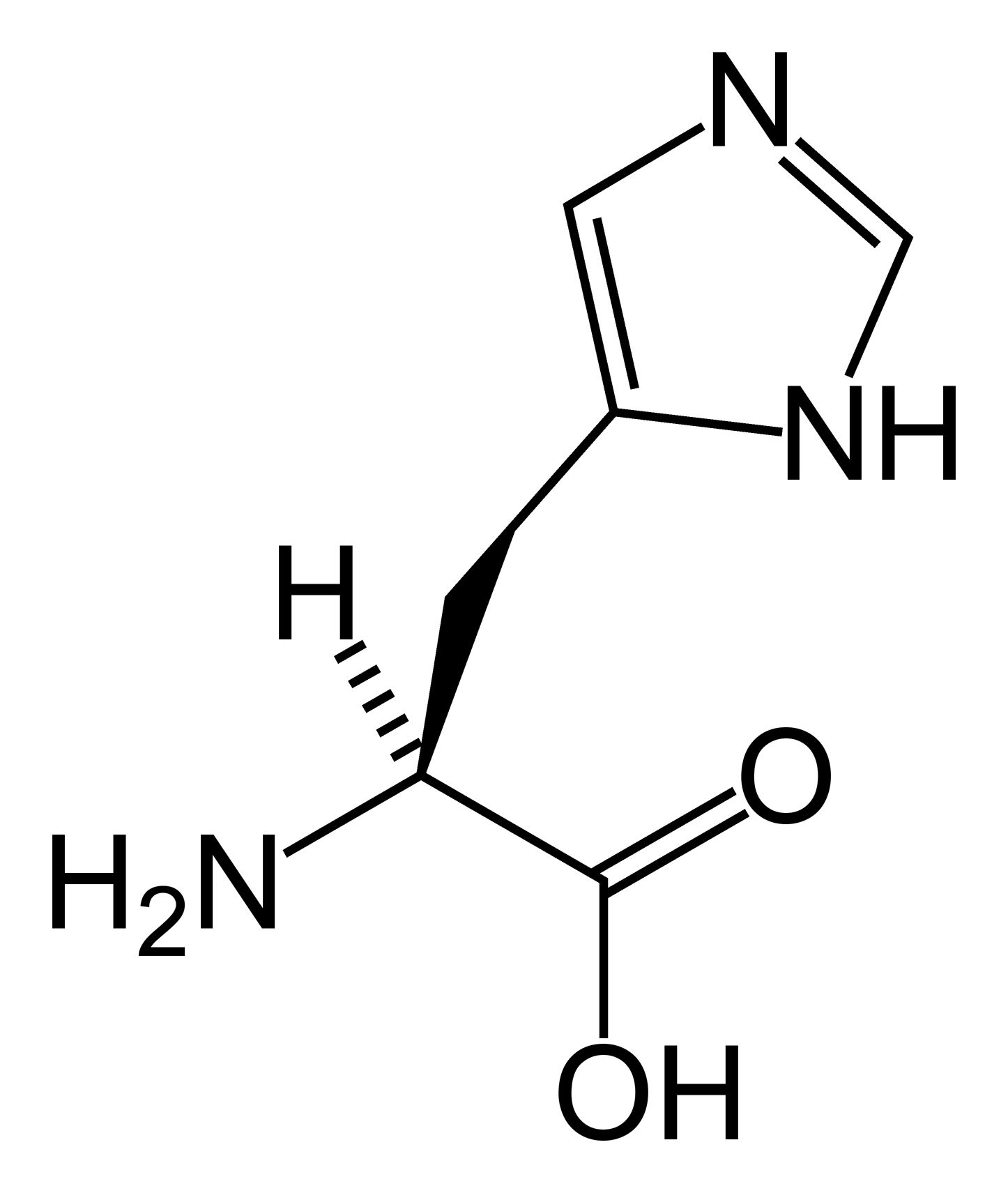
Histidinemia
📋 Origem dos dados
Esta página agrega dados de fontes públicas e oficiais. Dados sobre cobertura no SUS (PCDT, CEAF) são verificados ativamente por agente proativo (ver badge no infobox). Demais dados têm atribuição de fonte + data da última sincronização — clique para abrir o original.
- Doença rara (ontologia)
- fonte: Orphanet
- Identificador unificado
- fonte: MONDO
- Genética mendeliana
- fonte: OMIM
- Codificação WHO/SUS
- fonte: WHO ICD-10 / DATASUS
- CID-11 (futuro)
- fonte: WHO ICD-11
- NIH/GARD
- fonte: GARD (NIH)
- Indexação biomédica
- fonte: MeSH (NLM)
- Dado público estruturado
- fonte: Wikidata

