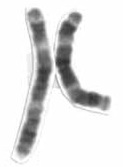
A síndrome de microdeleção 3q29 é uma síndrome genética recorrente que ocorre devido à falta de um pequeno pedaço na região subtelomérica (próxima à ponta) de um cromossomo. Ela pode apresentar sintomas que variam bastante, como deficiência intelectual e características físicas incomuns.
Introdução
O que você precisa saber de cara
A síndrome de microdeleção 3q29 é uma condição genética rara causada pela falta de um pedaço muito pequeno de um cromossomo. Ela costuma provocar atraso global do desenvolvimento, fraqueza no tônus muscular e alterações no comportamento, além de particularidades nos traços do rosto. Não existe um medicamento curativo específico ou protocolo clínico exclusivo (PCDT) no SUS, mas o sistema público prevê procedimentos de reabilitação e exames genéticos para acompanhar a criança.
A síndrome de microdeleção 3q29 é uma síndrome genética recorrente que ocorre devido à falta de um pequeno pedaço na região subtelomérica (próxima à ponta) de um cromossomo. Ela pode apresentar sintomas que variam bastante, como deficiência intelectual e características físicas incomuns.
Escala de raridade
<1/50kMuito rara
1/20kRara
1/10kPouco freq.
1/5kIncomum
1/2k
Encontrou um erro ou informação desatualizada? Sugira uma correção →
Entender a doença
Do básico ao detalhe, leia no seu ritmo
Preparando trilha educativa...
Sinais e sintomas
O que aparece no corpo e com que frequência cada sintoma acontece
Partes do corpo afetadas
+ 15 sintomas em outras categorias
Características mais comuns
Os sintomas variam de pessoa para pessoa. Abaixo estão as 53 características clínicas mais associadas, ordenadas por frequência.
Linha do tempo da pesquisa
Encontrou um erro ou informação desatualizada? Sugira uma correção →
Genética e causas
O que está alterado no DNA e como passa nas famílias
Condição cromossômica — cromossomo 3q
Envolve alteração no cromossomo 3q (braço longo (q)). O fenótipo resulta da alteração na dose de múltiplos genes simultaneamente — não há gene causal único. Diagnóstico por cariótipo, CMA ou FISH.
Diagnóstico
Os sinais que médicos procuram e os exames que confirmam
Tratamento e manejo
Remédios, cuidados de apoio e o que precisa acompanhar
Onde tratar no SUS
Hospitais de referência no Brasil e o protocolo oficial do SUS (PCDT)
🇧🇷 Atendimento SUS — Síndrome de microdeleção 3q29
Selecione um estado ou use sua localização para ver resultados.
Dados de DATASUS/CNES, SBGM, ABNeuro e Ministério da Saúde. Sempre confirme a disponibilidade diretamente com o estabelecimento.
Pesquisa ativa
Ensaios clínicos abertos e novidades científicas recentes
Ensaios em destaque
Com ensaio aberto em 1 país. O ponto verde marca onde há vaga agora.
🟢 Recrutando agora
1 pesquisa recrutando participantes. Converse com seu médico sobre a possibilidade de participar.
Outros ensaios clínicos
Publicações mais relevantes
Mostrando amostra de 2 publicações de um total de 12
Coexistence of 3q29 microdeletion syndrome and Takayasu arteritis: A case report.
Takayasu arteritis (TAK) is a rare type of large and medial vessel systemic vasculitis. A variety of factors are thought to play a role in the occurrence and development of TAK such as human leukocyte antigen-B52, autoimmunity, inflammation and environmental factors. 3q29 microdeletion syndrome is also a very rare inherited disease, which includes intellectual disability, growth retardation and neuropsychiatric disorders. Here, we present a case with concomitant TAK and 3q29 microdeletion syndrome. A 22-year-old woman presented to the emergency department with sudden bilateral vision loss and severe headache. During physical examination, the patient was noted to have a difference in blood pressure between extremities. Computed tomography angiography revealed vascular wall inflammation in the abdominal aorta. Based on clinical and radiographical findings, a diagnosis of TAK was made. Concurrently, the patient was found to have short stature and intellectual disability. A possible genetic etiology was sought out. Chromosome analysis showed a 1.5 Mb heterozygous deletion on chromosome 3 and a diagnosis of 3q29 microdeletion was made. Additional imaging also revealed a split cord in medulla spinalis along with hemivertebrae and fusion anomalies, neither of which were reported in TAK or 3q29 microdeletion cases in the literature.
3q29 microdeletion syndrome associated with developmental delay and pulmonary stenosis: a case report.
3q29 microdeletion syndrome (OMIM 609425), first described in 2005, is a rare copy number variation (CNV), accompanied by various neurodevelopmental and psychiatric problems. Phenotypic features of the syndrome have not been fully characterized due to the new definition and rarity. Facial dysmorphology, musculoskeletal anomalies, cardiovascular abnormalities, gastrointestinal abnormalities, and dental abnormalities can be seen. A 28-month-old male patient was brought to the child and adolescent psychiatry clinic with a complaint of speech delay. He had mild dysmorphic symptoms. He was also sensitive to voice and often covered his ears. Balloon valvuloplasty was performed on the postnatal 28th day due to severe pulmonary stenosis. While karyotype was found to be normal, in array-Comparative genomic hybridization (aCGH), copy loss was detected in the long arm of chromosome 3 (arr[hg19] 3q29[196,209,689-197,601,344]x1), which contains approximately 1.4 Mb harboring 30 genes. Genetic counseling was given to the family of the patient who was diagnosed with 3q29 microdeletion syndrome. In conclusion, we present 3q29 microdeletion syndrome with global developmental delay (GDD), dysmorphic face, hyperacusis, scoliosis, and severe pulmonary stenosis. Performing genetic analysis in patients with developmental delay and congenital heart disease (CHD) for which the cause cannot be explained will prevent these rare diseases from being missed, and the characteristics of the diseases will be better characterized with the reported cases. 3q29 recurrent deletion is characterized by neurodevelopmental and/or psychiatric manifestations including mild-to-moderate intellectual disability (ID), autism spectrum disorder (ASD), anxiety disorders, attention-deficit/hyperactivity disorder (ADHD), executive function deficits, graphomotor weakness, and psychosis/schizophrenia. Age at onset for psychosis or prodrome can be younger than the typical age at onset in the general population. Neurodevelopmental and psychiatric conditions are responsible for the majority of the disability associated with the 3q29 deletion. Other common findings are failure to thrive and feeding problems in infancy that persist into childhood, gastrointestinal disorders (including constipation and gastroesophageal reflux disease [GERD]), ocular issues, dental anomalies, and congenital heart defects (especially patent ductus arteriosus). Structural anomalies of the posterior fossa may be seen on neuroimaging. To date more than 200 affected individuals have been identified. The diagnosis of the 3q29 recurrent deletion is established by identification of a heterozygous 1.6-Mb deletion at the approximate position of chr3:195998129-197623129 in the reference genome (NCBI Build 38). Treatment of manifestations: Early speech and language therapy to address speech delays; physical/occupational therapy as needed to address motor issues; individualized education program for school-age children; care by a child psychiatrist/psychologist as needed for neuropsychiatric disorders with transfer of care to an adult psychiatrist when appropriate; cognitive behavioral therapy to address social disability and/or anxiety; adaptive behavior as needed; applied behavioral analysis for ASD; medication as needed for anxiety, ADHD, or psychosis; standard treatment of seizures; feeding therapy and consideration of gastrostomy tube as needed; routine management of musculoskeletal issues, GERD, strabismus, dental issues, congenital heart defects, recurrent ear infections, and epistaxis; consider behavioral treatment for enuresis; implement healthy sleep hygiene; family support. Surveillance: At each visit: monitor developmental progress, educational needs, growth, nutrition, and feeding; assess for seizures, gastrointestinal issues, otitis, enuresis, and/or sleep issues. Annual assessment for neuropsychiatric manifestations and scoliosis; annual ophthalmology examination; dental examination every six months. Evaluation of relatives at risk: If one of the proband's parents has the 3q29 recurrent deletion, it is appropriate to test at-risk sibs of the proband in order to identify those who would benefit from close assessment/monitoring of developmental milestones (in children) and monitoring for neuropsychiatric manifestations (in children and adults). 3q29 recurrent deletion is an autosomal dominant disorder typically caused by a de novo deletion. If the proband represents a simplex case (i.e., a single affected family member) and neither parent has the 3q29 recurrent deletion or a balanced chromosome rearrangement, the recurrence risk to sibs is low (presumed to be <1%) but greater than that of the general population because of the possibility of parental mosaicism for the deletion. Each child of an individual with the 3q29 recurrent deletion has a 50% chance of inheriting the deletion. Once the 3q29 recurrent deletion has been identified in an affected family member, prenatal testing for a pregnancy at increased risk for the 3q29 recurrent deletion and preimplantation genetic testing are possible.
Publicações recentes
EEG findings in a pediatric patient with 3q29 microdeletion syndrome.
Coexistence of 3q29 microdeletion syndrome and Takayasu arteritis: A case report.
3q29 microdeletion syndrome associated with developmental delay and pulmonary stenosis: a case report.
Usefulness of copy number variant detection following monogenic disease exclusion in prenatal diagnosis.
📚 EuropePMC15 artigos no totalmostrando 2
Coexistence of 3q29 microdeletion syndrome and Takayasu arteritis: A case report.
International journal of rheumatic diseases3q29 microdeletion syndrome associated with developmental delay and pulmonary stenosis: a case report.
The Turkish journal of pediatricsAssociações
Organizações que acompanham esta doença — pra ter apoio e orientação
Ainda não temos associações cadastradas para Síndrome de microdeleção 3q29.
É de uma associação que acompanha esta doença? Fale com a gente →
Doença com base genética
Um médico geneticista pode ajudar no diagnóstico de Síndrome de microdeleção 3q29 e no aconselhamento genético da família.
Doenças relacionadas
Doenças com sintomas parecidos — ajudam quem ainda está buscando diagnóstico
Perguntas frequentes
O que as famílias mais perguntam sobre esta doença — cada resposta com a fonte de onde saiu
A condição é causada pela falta de uma pequena região subtelomérica de um cromossomo. Ela apresenta um padrão genético autossômico dominante.
Referências
Fontes citadas no texto, publicações do grafo e bases de dados usadas neste verbete
5 publicações do grafo RarasNet (PubMed) · 6 bases de dados. Títulos, periódicos e PMIDs vêm direto da fonte, sem intermediação de IA.
Dados compilados pelo RarasNet a partir de fontes abertas (Orphanet, OMIM, MONDO, PubMed/EuropePMC, ClinicalTrials.gov, DATASUS, PCDT/MS). Este conteúdo é informativo e não substitui avaliação médica.
Citar este verbete
Raras. (s.d.). Síndrome de microdeleção 3q29. Em Raras — Enciclopédia de Doenças Raras do Brasil. https://raras.org/doenca/sindrome-de-microdelecao-3q29
Formato APA. Conteúdo sob CC BY 4.0 — reuso livre com atribuição.
Conteúdo mantido por Agente Raras · Médicos e pesquisadores podem colaborar
Síndrome de microdeleção 3q29
📋 Origem dos dados
Esta página agrega dados de fontes públicas e oficiais. Dados sobre cobertura no SUS (PCDT, CEAF) são verificados ativamente por agente proativo (ver badge no infobox). Demais dados têm atribuição de fonte + data da última sincronização — clique para abrir o original.
- Doença rara (ontologia)
- fonte: Orphanet
- Identificador unificado
- fonte: MONDO
- Genética mendeliana
- fonte: OMIM
- Codificação WHO/SUS
- fonte: WHO ICD-10 / DATASUS
- CID-11 (futuro)
- fonte: WHO ICD-11
- NIH/GARD
- fonte: GARD (NIH)
- Indexação biomédica
- fonte: MeSH (NLM)
- Dado público estruturado
- fonte: Wikidata
- Ensaios clínicos
- fonte: ClinicalTrials.gov

