
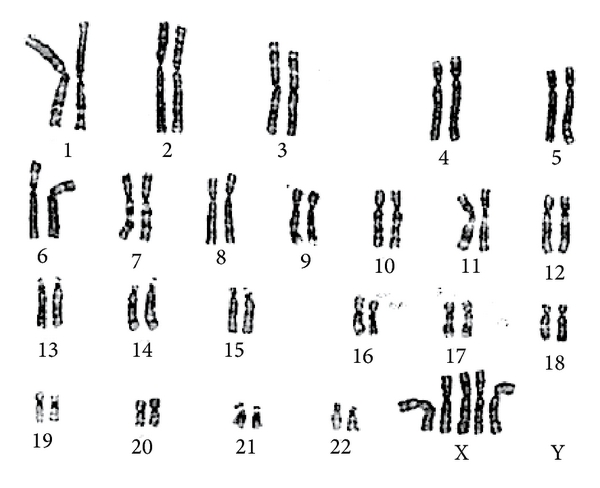
A síndrome de displasia esquelética-deficiência intelectual combina anomalias esqueléticas (baixa estatura, estrias da sutura metópica, fusão de vértebras cervicais, hemivértebras torácicas, escoliose, hipoplasia sacral e falanges médias curtas) e déficit intelectual leve. Foi descrito em quatro primos do sexo masculino em três irmãos. A intolerância à glicose esteve presente em três casos e ânus imperfurado em um caso. As mulheres portadoras apresentaram manifestações menores (fusão de vértebras cervicais e intolerância à glicose). A transmissão parece estar ligada ao X.
Introdução
O que você precisa saber de cara
A síndrome de displasia esquelética-deficiência intelectual combina anomalias esqueléticas (baixa estatura, estrias da sutura metópica, fusão de vértebras cervicais, hemivértebras torácicas, escoliose, hipoplasia sacral e falanges médias curtas) e déficit intelectual leve. Foi descrito em quatro primos do sexo masculino em três irmãos. A intolerância à glicose esteve presente em três casos e ânus imperfurado em um caso. As mulheres portadoras apresentaram manifestações menores (fusão de vértebras cervicais e intolerância à glicose). A transmissão parece estar ligada ao X.
Escala de raridade
<1/50kMuito rara
1/20kRara
1/10kPouco freq.
1/5kIncomum
1/2k
Encontrou um erro ou informação desatualizada? Sugira uma correção →
Entender a doença
Do básico ao detalhe, leia no seu ritmo
Preparando trilha educativa...
Sinais e sintomas
O que aparece no corpo e com que frequência cada sintoma acontece
Partes do corpo afetadas
+ 5 sintomas em outras categorias
Características mais comuns
Os sintomas variam de pessoa para pessoa. Abaixo estão as 16 características clínicas mais associadas, ordenadas por frequência.
Linha do tempo da pesquisa
Encontrou um erro ou informação desatualizada? Sugira uma correção →
Genética e causas
O que está alterado no DNA e como passa nas famílias
Nenhum gene associado encontrado
Os dados genéticos desta condição ainda estão sendo catalogados.
Diagnóstico
Os sinais que médicos procuram e os exames que confirmam
Tratamento e manejo
Remédios, cuidados de apoio e o que precisa acompanhar
Onde tratar no SUS
Hospitais de referência no Brasil e o protocolo oficial do SUS (PCDT)
🇧🇷 Atendimento SUS — Síndrome de displasia esquelética-transtorno do desenvolvimento intelectual ligada ao X
Centros de Referência SUS
13 centros habilitados pelo SUS para Síndrome de displasia esquelética-transtorno do desenvolvimento intelectual ligada ao X
Centros para Síndrome de displasia esquelética-transtorno do desenvolvimento intelectual ligada ao X
Detalhes dos centros
Hospital Infantil Albert Sabin
R. Tertuliano Sales, 544 - Vila União, Fortaleza - CE, 60410-794 · CNES 2407876
Serviço de Referência
Hospital de Apoio de Brasília (HAB)
AENW 3 Lote A Setor Noroeste - Plano Piloto, Brasília - DF, 70684-831 · CNES 0010456
Serviço de Referência
Hospital Estadual Infantil e Maternidade Alzir Bernardino Alves (HIABA)
Av. Min. Salgado Filho, 918 - Soteco, Vila Velha - ES, 29106-010 · CNES 6631207
Serviço de Referência
Hospital das Clínicas da UFMG
Av. Prof. Alfredo Balena, 110 - Santa Efigênia, Belo Horizonte - MG, 30130-100 · CNES 2280167
Serviço de Referência
Hospital Universitário João de Barros Barreto
R. dos Mundurucus, 4487 - Guamá, Belém - PA, 66073-000 · CNES 2337878
Serviço de Referência
Instituto de Medicina Integral Prof. Fernando Figueira (IMIP)
R. dos Coelhos, 300 - Boa Vista, Recife - PE, 50070-902 · CNES 0000647
Serviço de Referência
Hospital Pequeno Príncipe
R. Des. Motta, 1070 - Água Verde, Curitiba - PR, 80250-060 · CNES 3143805
Serviço de Referência
Hospital de Clínicas da UFPR
R. Gen. Carneiro, 181 - Alto da Glória, Curitiba - PR, 80060-900 · CNES 2364980
Serviço de Referência
Instituto Nacional de Saúde da Mulher, da Criança e do Adolescente Fernandes Figueira (IFF/Fiocruz)
Av. Rui Barbosa, 716 - Flamengo, Rio de Janeiro - RJ, 22250-020 · CNES 2269988
Serviço de Referência
Hospital de Clínicas de Porto Alegre (HCPA)
Rua Ramiro Barcelos, 2350 Bloco A - Av. Protásio Alves, 211 - Bloco B e C - Santa Cecília, Porto Alegre - RS, 90035-903 · CNES 2237601
Serviço de Referência
Hospital das Clínicas da FMUSP
R. Dr. Ovídio Pires de Campos, 225 - Cerqueira César, São Paulo - SP, 05403-010 · CNES 2077485
Serviço de Referência
Hospital de Clínicas da UNICAMP
R. Vital Brasil, 251 - Cidade Universitária, Campinas - SP, 13083-888 · CNES 2748223
Serviço de Referência
Hospital de Clínicas de Ribeirão Preto (HCRP-USP)
R. Ten. Catão Roxo, 3900 - Vila Monte Alegre, Ribeirão Preto - SP, 14015-010 · CNES 2082187
Serviço de Referência
Dados de DATASUS/CNES, SBGM, ABNeuro e Ministério da Saúde. Sempre confirme a disponibilidade diretamente com o estabelecimento.
Pesquisa ativa
Ensaios clínicos abertos e novidades científicas recentes
Ensaios em destaque
🟢 Recrutando agora
3 pesquisas recrutando participantes. Converse com seu médico sobre a possibilidade de participar.
Outros ensaios clínicos
0 ensaios clínicos encontrados.
Publicações mais relevantes
A novel KDM6A c.2429dup mutation causing kabuki syndrome type 2 identified in a fetus with increased nuchal translucency.
Kabuki syndrome (KS) is a rare, multiple congenital anomaly syndrome, characterized by dysmorphic facial features, skeletal anomalies, dermatoglyphic abnormalities, developmental delay, mild-to-moderate intellectual disability, and postnatal growth restriction. KS type 1 (KS1, OMIM 147920) is caused by autosomal dominant pathogenic mutations in KMT2D, and KS type 2 (KS2, OMIM 300867) is caused by X-linked dominant pathogenic mutations in KDM6A. To identify the genetic etiologies in a fetus with increased nuchal translucency (NT) observed by ultrasound at 11+6 weeks of gestation. Chromosomal microarray analysis (CMA) and trio-exome sequencing (trio-ES) were performed on amniotic fluid sample to investigate the potential genetic causes. Sanger sequencing was utilized for validation of the candidate variant. A 28-year-old Chinese pregnant woman was referred for prenatal evaluation due to fetal increased NT (NT = 6.7 mm). CMA yielded a normal result, with no pathogenic or likely pathogenic copy number variants, or mosaicism detected. However, trio-ES identified a novel de novo frameshift mutation (NM_021140.4: c.2429dup (p.Thr811Aspfs*2)) in the KDM6A gene. This variant was classified as pathogenic (PVS1 + PS2_Supporting + PM2_Supporting) based on the American College of Medical Genetics and Genomics guidelines. The fetus was diagnosed with X-linked dominant KS2. The identification of this novel frameshift variant, together with the first report of increased NT as a prenatal feature, enriched both the mutation spectrum and prenatal phenotypic spectrum of KS2. These findings underscore the diagnostic utility of ES for fetuses with increased NT, especially when CMA yields normal results.
Prenatal diagnosis of distal Xq28 duplication syndrome: case reports and literature review.
Xq28 duplications are a significant cause of X-linked intellectual disability (XLID). While the postnatal features of distal Xq28 duplication syndrome are well characterized, the prenatal phenotypes remain poorly defined due to limited data, posing challenges for genetic counseling. We identified three fetuses carrying 454-558 kb distal Xq28 microduplications through chromosomal microarray analysis (CMA) from 13,084 prenatal cases at our center. The primary indications for diagnosis were abnormal ultrasound findings. Case 1 (male) and case 3 (female) exhibited nasal bone hypoplasia. Case 2 (male) showed increased nuchal translucency (NT) and a persistent right umbilical vein. After genetic counseling, two couples chose to terminate their pregnancies, while one couple continued the pregnancy and delivered a healthy child. Distal Xq28 duplications would present diverse prenatal phenotypes, ranging from normal to abnormal. Skeletal anomalies are the most common prenatal features in symptomatic fetuses with this duplication. Prenatal diagnosis and genetic counseling are essential for providing clinical guidance to the affected families. The correlation between prenatal ultrasound findings and the distal Xq28 duplications requires further investigation in larger cohorts.
Novel variants in STAG2 and PKD1 associate with multiple congenital malformations and autosomal dominant polycystic kidney disease in a Chinese family: A case report and literature review.
Cohesinopathies are rare multisystem disorders caused by defects in the cohesin complex, which is critical for chromosome segregation, DNA repair, replication, heterochromatin formation and gene transcription regulation. Stromal antigen 2 (STAG2), a key cohesin component, is linked to neurodevelopmental disorders such as X-linked holoprosencephaly 13 and Mullegama-Klein-Martinez syndrome (MKMS). Polycystic kidney disease (PKD), particularly autosomal dominant PKD (ADPKD), is characterized by renal cysts and is commonly associated with variants in the PKD1 gene. In the present study, a Chinese family was enrolled, which included an infant diagnosed with MKMS and familial PKD. Trio whole-exome sequencing (trio-WES) was performed to identify a heterozygous in-frame deletion variant in STAG2 [NM_001042750.2:c.1775_1777del, p.(Pro592del)] and a heterozygous frameshift variant in PKD1 [NM_001009944.3:c.8985delC, p.(Ser2996fs*78)] in the proband. The STAG2 variant [c.1775_1777del, p.(Pro592del)] was confirmed by Sanger sequencing to be absent in other family members and was therefore de novo. By contrast, the PKD1 variant [c.8985delC, p.(Ser2996fs*78)] was identified in the mother, aunt and grandmother of the proband. The proband exhibited clinical features consistent with STAG2-related disorders, including seizures, global developmental delay, short stature, microcephaly, hypotonia, dysmorphic features, incomplete cleft palate, micrognathia, spina bifida occulta and duplication of the middle phalanx of the third finger on the left hand. Comparative analysis of the present patient and previously reported cases with STAG2 variants suggested that intellectual disability, brain abnormalities, dysmorphic features and skeletal anomalies are the core clinical features of STAG2-related disorders. Furthermore, familial PKD was observed in the proband, mother, aunt and grandmother, confirming an autosomal dominant inheritance pattern associated with the PKD1 variant. In summary, the present report identified a novel de novo STAG2 variant associated with multisystem congenital malformations and a novel familial PKD1 variant causing ADPKD, expanding the genetic and phenotypic spectrum of these disorders. The present findings highlight the utility of WES in diagnosing complex genetic conditions. Barth syndrome is a multisystem disorder characterized in affected males by cardiomyopathy, neutropenia, skeletal myopathy, and prepubertal growth delay; however, not all features may be present in an affected male. Cardiomyopathy, which is almost always present before age five years, is typically dilated cardiomyopathy with or without endocardial fibroelastosis or left ventricular noncompaction; hypertrophic cardiomyopathy can also occur. Heart failure is a significant cause of morbidity and mortality; risk of arrhythmia and sudden death is increased. Neutropenia is most often associated with bacterial infections and aphthous ulcers, pneumonia, and sepsis. Skeletal myopathy predominantly affects the proximal muscles, and results in delays in development of early motor skills. Prepubertal growth delay is followed by a postpubertal growth spurt with remarkable "catch-up" growth. Heterozygous females who have a normal karyotype are asymptomatic and have normal biochemical studies. The diagnosis of Barth syndrome is established in a male proband with suggestive findings and either an increased monolysocardiolipin-to-cardiolipin ratio (if available) or a hemizygous pathogenic variant in TAFAZZIN (formerly TAZ) identified by molecular genetic testing. The diagnosis of Barth syndrome is usually established in a female proband with suggestive clinical findings and a heterozygous TAFAZZIN pathogenic variant identified by molecular genetic testing. Targeted therapy: Elamipretide is indicated for the improvement of muscle strength in individuals with Barth syndrome. Treatment of manifestations: Standard treatment of cardiac issues include: (1) for cardiac arrhythmia, consideration of antiarrhythmic medications or implantable cardiac defibrillator (ICD); (2) for heart failure, careful fluid and volume management and avoidance of overdiuresis and dehydration, standard heart failure medications, and cardiac transplantation when heart failure is severe and intractable. Interventions for other findings include granulocyte colony-stimulating factor for neutropenia; physical therapy for skeletal muscle weakness; standard treatment for talipes equinovarus and/or scoliosis; feeding therapy and consideration of gastrostomy tube placement for persistent feeding issues; uncooked cornstarch prior to bedtime for hypoglycemia; standard management of developmental delay / intellectual disability. Prevention of secondary complications: Aspirin therapy to prevent clot formation in those with severe cardiac dysfunction and/or marked left ventricular noncompaction; antibiotic prophylaxis to prevent recurrent infections; limit fasting or provide intravenous glucose infusion prior to planned medical procedures; regularly monitor blood potassium concentrations during administration of IV fluids that contain potassium and during episodes of diarrhea; consult with nutritionist and/or gastroenterologist to determine optimal caloric delivery. Surveillance: Monitoring existing manifestations, the individual's response to supportive care, and the emergence of new manifestations requires at least annual electrocardiography with Holter monitor and echocardiography; as-needed electrophysiologic studies to assess for potentially serious cardiac arrhythmia; at least semiannual complete blood count with differential as well as with all febrile episodes; at each visit, measurement of height and weight, clinical assessment of strength, and clinical assessment for scoliosis; every three to five years during childhood, formal assessments of developmental progress and educational needs. Agents/circumstances to avoid: Prolonged fasting, use of rectal thermometers in those with neutropenia, and use of succinylcholine. Although growth hormone is typically not indicated as most affected males will attain normal stature by adulthood, recommendations about use of human growth hormone may vary based on endocrinology testing and recommendations. The muscular involvement in Barth syndrome may increase the risk for malignant hyperthermia compared to the general population. Evaluations of relatives at risk: Molecular genetic testing (if the TAFAZZIN pathogenic variant in the family is known) or monolysocardiolipin-to-cardiolipin ratio testing (if the TAFAZZIN pathogenic variant in the family is not known) of male sibs of a proband and male relatives in the maternal lineage is appropriate to identify as early as possible those who would benefit from initiation of treatment and preventive measures. Barth syndrome is inherited in an X-linked manner. If the mother of the proband has a TAFAZZIN pathogenic variant, the chance of transmitting it in each pregnancy is 50%. Males who inherit the pathogenic variant will be affected. Females who inherit the pathogenic variant will be heterozygotes. Heterozygous females typically do not manifest the disease. Affected males transmit the TAFAZZIN pathogenic variant to all of their daughters and none of their sons. If the TAFAZZIN pathogenic variant has been identified in an affected family member, identification of female heterozygotes and prenatal/preimplantation genetic testing for Barth syndrome are possible.
A 2-year-old girl with merged phenotypes: galactosemia and Coffin-Lowry syndrome.
Galactosemia is a congenital disorder of carbohydrate metabolism, in which the body is unable to metabolize galactose properly. Coffin-Lowry syndrome (CLS) is characterized by intellectual disability, developmental delay, dysmorphic features, growth retardation, vision and hearing loss, and skeletal changes, which is an X-linked disorder, with males being more severely affected, whereas the clinical findings in females show variability. This case is presented due to the rare concomitance of galactosemia and CLS. A 2-year-old female patient, previously diagnosed with galactosemia, who had good dietary adherence was noticed to have developmental delay, dysmorphic features, nephrolithiasis and recurrent pericardial effusions during follow-up. Further research was carried out to diagnose an underlying second disease. Metabolic tests were inconclusive. Clinical exome sequencing (CES) analysis, revealed a heterozygous c.472C>T p. (Arg158Cys) pathogenic variant in RPS6KA3 (OMIM #300075) and CLS (OMIM #303600) was diagnosed. This case report is a unique summary of a patient with galactosemia who further was diagnosed with CLS that emphasizes the possibility of co-occurrence of rare diseases and highlights the importance of conducting further investigations in patients with unexplained findings in the context of existing metabolic diseases.
A novel missense variant at the site of interaction between RLIM and E2 ubiquitin-conjugating enzymes causes Tønne-Kalscheuer syndrome.
Hemizygous variants in the RLIM gene, which is located on chromosome Xq13, cause Tønne-Kalscheuer syndrome (TOKAS). This X-linked recessive disorder is characterized by intellectual disability (ID), global developmental delay, behavioral impairment, gait disturbances, minor facial anomalies, congenital diaphragmatic hernia, skeletal and urogenital abnormalities, including hypogenitalism, micropenis, and cryptorchidism. In this study, we report on a novel, likely pathogenic RLIM variant in a proband, the clinical phenotype of which is consistent with a diagnosis of TOKAS. Whole-exome sequencing (WES) was performed on a genomic DNA (gDNA) sample of the proband to identify the disease-causing variant. Validation and segregation analysis were performed by Sanger sequencing of the proband’s and his mother’s gDNA samples. Computational analysis and protein structure modelling were applied to assess the possible influence of the variant on protein function. A novel missense variant NM_016120.4:c.1721T > A, NP_057204.2:p.(Ile574Asn) in the RLIM gene was identified by the analysis of WES data. Segregation analysis revealed the asymptomatic mother to be a carrier of the familial missense variant, and a highly skewed X chromosome inactivation pattern was observed in this study. The altered residue was determined to be at the interaction interface between E3 ubiquitin ligase RLIM and E2 ubiquitin-conjugating enzymes. The findings provided in this study suggest that the affected residue Ile574 could alter the interactions of the RING domain with the E2 ubiquitin-conjugating enzymes and therefore could influence the ubiquitin-mediated protein regulation pathways. The online version contains supplementary material available at 10.1186/s12887-025-06194-3. Kabuki syndrome (KS) is characterized by typical facial features (long palpebral fissures with eversion of the lateral third of the lower eyelid; arched and broad eyebrows; short columella with depressed nasal tip; large, prominent, or cupped ears), minor skeletal anomalies, persistence of fetal fingertip pads, mild-to-moderate intellectual disability, and postnatal growth deficiency. Other findings may include: congenital heart defects, genitourinary anomalies, cleft lip and/or palate, gastrointestinal anomalies including anal atresia, ptosis and strabismus, and widely spaced teeth and hypodontia. Functional differences can include: increased susceptibility to infections and autoimmune disorders, seizures, endocrinologic abnormalities (including isolated premature thelarche in females), feeding problems, and hearing loss. The diagnosis of KS is established in a proband of any age with a history of infantile hypotonia, developmental delay, and/or intellectual disability AND one or both of the following: Typical dysmorphic features (long palpebral fissures with eversion of the lateral third of the lower eyelid, and ≥2 of the following: arched and broad eyebrows with the lateral third displaying notching or sparseness; short columella with depressed nasal tip; large, prominent, or cupped ears; persistent fingertip pads). A heterozygous pathogenic variant in KMT2D or a heterozygous or hemizygous pathogenic variant in KDM6A. Treatment of manifestations: Thickened feedings and positioning after meals to treat gastroesophageal reflux; gastrostomy tube placement if feeding difficulties are severe. If cognitive difficulties are evident, psychoeducational testing and special education services to address the individual child's needs. Evaluation by a developmental pediatrician or psychiatrist if behavior suggests autism spectrum disorders. Standard anti-seizure treatment. Standard treatment for hyperinsulinism. Prevention of secondary complications: Prophylactic antibiotic treatment prior to and during any procedure (e.g., dental work) may be indicated for those with specific heart defects. Surveillance: Monitor height, weight, and head circumference at each well-child visit and, at a minimum, yearly. Developmental milestones should be followed with each well-child visit. Monitor vision and hearing on a yearly basis. KMT2D-related KS is inherited in an autosomal dominant manner; KDM6A-related KS is inherited in an X-linked manner. Autosomal dominant inheritance: The proportion of KS caused by a de novo KMT2D pathogenic variant is unknown but is likely high based on clinical experience. In the rare case that a parent of the proband is affected, the risk to the sibs is 50%. X-linked inheritance: If the mother of the proband has a KDM6A pathogenic variant, the chance of transmitting it in each pregnancy is 50%. Males who inherit the pathogenic variant will be affected; females who inherit the pathogenic variant will be heterozygous and may have features of KS. Once the causative pathogenic variant has been identified in an affected family member, prenatal and preimplantation genetic testing for KS are possible.
Publicações recentes
Ver todas no PubMed📚 EuropePMCmostrando 71
A novel KDM6A c.2429dup mutation causing kabuki syndrome type 2 identified in a fetus with increased nuchal translucency.
The journal of maternal-fetal & neonatal medicine : the official journal of the European Association of Perinatal Medicine, the Federation of Asia and Oceania Perinatal Societies, the International Society of Perinatal ObstetriciansPrenatal diagnosis of distal Xq28 duplication syndrome: case reports and literature review.
Molecular cytogeneticsCoffin-Lowry syndrome: a systematic review of RPS6KA3 confirmed cases and implications for diagnosis and counseling.
Frontiers in geneticsNovel variants in STAG2 and PKD1 associate with multiple congenital malformations and autosomal dominant polycystic kidney disease in a Chinese family: A case report and literature review.
Experimental and therapeutic medicineCardiovascular Collapse During Scoliosis Surgery in a Patient With Coffin-Lowry Syndrome and Mesocardia.
CureusA rare variant of USP9X associated with female-restricted X-linked syndromic intellectual disability.
Molecular biology reportsA 2-year-old girl with merged phenotypes: galactosemia and Coffin-Lowry syndrome.
Journal of pediatric endocrinology & metabolism : JPEMA novel missense variant at the site of interaction between RLIM and E2 ubiquitin-conjugating enzymes causes Tønne-Kalscheuer syndrome.
BMC pediatricsNew Clinical Phenotype in a Child Presenting With an FHL1 Mutation.
Journal of child neurologyDevelopment and characterization of a Drosophila model of Snyder-Robinson syndrome.
Methods in enzymologyOncogenic rickets diagnosed at age 8 and the risk of persistent rickets: a rare case of pediatric-onset tumor-induced osteomalacia.
Osteoporosis international : a journal established as result of cooperation between the European Foundation for Osteoporosis and the National Osteoporosis Foundation of the USA[Clinical feature and genetic analysis of a case of X-linked alpha-thalassemia mental retardation syndrome neonate caused by ATRX gene variant and literature review].
Zhonghua yi xue yi chuan xue za zhi = Zhonghua yixue yichuanxue zazhi = Chinese journal of medical geneticsIdentification of a novel non-coding deletion in Allan-Herndon-Dudley syndrome by long-read HiFi genome sequencing.
BMC medical genomicsAarskog-Scott syndrome: a clinical study based on a large series of 111 male patients with a pathogenic variant in FGD1 and management recommendations.
Journal of medical geneticsATRX silences Cartpt expression in osteoblastic cells during skeletal development.
The Journal of clinical investigationExploring the Clinical Spectrum of HUWE1 -Related Neurodevelopmental Disorder: Five New Patients and Literature Review.
American journal of medical genetics. Part AInactivation of spermine synthase in mice causes osteopenia due to reduced osteoblast activity.
Journal of bone and mineral research : the official journal of the American Society for Bone and Mineral ResearchSimilarity of Phenotype in Three Male Patients With the c.320A>G Variant in ALG13: Possible Genotype-Phenotype Correlation.
Molecular genetics & genomic medicineRadiographic and Tomographic Study of the Cranial Bones in Children with the Idiopathic Type of West Syndrome.
Pediatric reportsA Long-Term Follow-Up of a Patient with a Novel PORCN Variant and Additional Clinical Features.
Molecular syndromologyDental findings and intravenous sedation in a patient with Potocki-Lupski syndrome: A case report.
Special care in dentistry : official publication of the American Association of Hospital Dentists, the Academy of Dentistry for the Handicapped, and the American Society for Geriatric DentistryFacial and ocular manifestations of male patients affected by the HUWE1-related intellectual developmental disorder.
International journal of molecular epidemiology and geneticsAn unexpected presentation of very severe hypertriglyceridemia in a boy with Coffin-Lowry syndrome: a case report.
BMC pediatricsRebalancing polyamine levels to treat Snyder-Robinson syndrome.
EMBO molecular medicineDanon Disease: Entire LAMP2 Gene Deletion with Unusual Clinical Presentation-Case Report and Review of the Literature.
GenesDropped Head Syndrome Secondary to Danon Disease: A Case Report.
CureusImpaired polyamine metabolism causes behavioral and neuroanatomical defects in a novel mouse model of Snyder-Robinson Syndrome.
bioRxiv : the preprint server for biologyPhenotypic Spectrum and Molecular Findings in 17 ATR-X Syndrome Italian Patients: Some New Insights.
GenesValidation of Mct8/Oatp1c1 dKO mice as a model organism for the Allan-Herndon-Dudley Syndrome.
Molecular metabolismCase Report: Chinese female patients with a heterozygous pathogenic RPS6KA3 gene variant c.898C>T and distal 22q11.2 microdeletion.
Frontiers in geneticsFGD1 Variant Associated With Aarskog-Scott Syndrome.
Frontiers in pediatricsShort Bones, Renal Stones, and Diagnostic Moans: Hypercalcemia in a Girl Found to Have Coffin-Lowry Syndrome.
Journal of investigative medicine high impact case reportsBrief Report: Evidence of Autism Spectrum Disorder Caused by a Mutation in ATRX Gene: A Case Report.
Journal of autism and developmental disordersNovel truncating variants in FGD1 detected in two Danish families with Aarskog-Scott syndrome and myopathic features.
American journal of medical genetics. Part AA novel MBTPS2 variant associated with BRESHECK syndrome impairs sterol-regulated transcription and the endoplasmic reticulum stress response.
American journal of medical genetics. Part AATR-X syndrome: genetics, clinical spectrum, and management.
Human geneticsIdentification of a New Mutation in RSK2, the Gene for Coffin-Lowry Syndrome (CLS), in Two Related Patients with Mild and Atypical Phenotypes.
Brain sciencesRett syndrome: think outside the (skull) box.
Faculty reviewsSimpson-Golabi-Behmel syndrome: One family, same mutation, different outcome.
American journal of medical genetics. Part AMED12-Related (Neuro)Developmental Disorders: A Question of Causality.
GenesPhenotypic spectrum of the RBM10-mediated intellectual disability and congenital malformation syndrome beyond classic TARP syndrome features.
Clinical geneticsDe novo variants in MED12 cause X-linked syndromic neurodevelopmental disorders in 18 females.
Genetics in medicine : official journal of the American College of Medical GeneticsGenome-first approach for the characterization of a complex phenotype with combined NBAS and CUL4B deficiency.
BoneFmr1-Deficiency Impacts Body Composition, Skeleton, and Bone Microstructure in a Mouse Model of Fragile X Syndrome.
Frontiers in endocrinologyA Novel ATRX Mutation Presenting with Intellectual Disability and Severe Kyphoscoliosis.
Fetal and pediatric pathologyThe expanding phenotypes of cohesinopathies: one ring to rule them all!
Cell cycle (Georgetown, Tex.)An unusual cause for Coffin-Lowry syndrome: Three brothers with a novel microduplication in RPS6KA3.
American journal of medical genetics. Part ACoffin-Lowry syndrome in Chinese.
American journal of medical genetics. Part ASynchronous occurrence of multiple distinct jaw lesions in Simpson-Golabi-Behmel Syndrome: A case report.
Journal of stomatology, oral and maxillofacial surgery[Study of de novo point mutations in known genes among patients with unexplained intellectual disability or developmental delay].
Zhonghua yi xue za zhiA Mouse Model of Creatine Transporter Deficiency Reveals Impaired Motor Function and Muscle Energy Metabolism.
Frontiers in physiologyThe expanding phenotype of RNU4ATAC pathogenic variants to Lowry Wood syndrome.
American journal of medical genetics. Part ATransient Ischemic Attack and Ischemic Stroke in Danon Disease with Formation of Left Ventricular Apical Thrombus despite Normal Systolic Function.
Case reports in pediatricsDanon disease for the cardiologist: case report and review of the literature.
Journal of community hospital internal medicine perspectivesEarly-onset primary antibody deficiency resembling common variable immunodeficiency challenges the diagnosis of Wiedeman-Steiner and Roifman syndromes.
Scientific reportsForamen magnum compression in Coffin-Lowry syndrome: A case report.
American journal of medical genetics. Part AFirst Korean Patients with Craniofrontonasal Syndrome Confirmed by EFNB1 Analysis.
Annals of clinical and laboratory scienceClinical and Genetic Characteristics of Romanian Patients with Mucopolysaccharidosis Type II.
JIMD reportsEarly onset of cardiomyopathy and intellectual disability in a girl with Danon disease associated with a de novo novel mutation of the LAMP2 gene.
Neuropathology : official journal of the Japanese Society of NeuropathologyExpanding the Phenotype Associated with NAA10-Related N-Terminal Acetylation Deficiency.
Human mutationRefining the phenotypical and mutational spectrum of Taybi-Linder syndrome.
Clinical geneticsMitochondrial cytopathies.
Cell calciumDistinctive findings in a boy with Simpson-Golabi-Behmel syndrome.
American journal of medical genetics. Part AMyostatin in relation to physical activity and dysglycaemia and its effect on energy metabolism in human skeletal muscle cells.
Acta physiologica (Oxford, England)625 kb microduplication at Xp22.12 including RPS6KA3 in a child with mild intellectual disability.
Journal of human geneticsThe Thyroid Hormone Analog DITPA Ameliorates Metabolic Parameters of Male Mice With Mct8 Deficiency.
EndocrinologyMeCP2 Affects Skeletal Muscle Growth and Morphology through Non Cell-Autonomous Mechanisms.
PloS oneSay-Meyer syndrome: additional manifestations in a new patient and phenotypic assessment.
Child's nervous system : ChNS : official journal of the International Society for Pediatric NeurosurgeryA novel missense mutation in the NSDHL gene identified in a Lithuanian family by targeted next-generation sequencing causes CK syndrome.
American journal of medical genetics. Part AFrontometaphyseal dysplasia and keloid formation without FLNA mutations.
American journal of medical genetics. Part AImpaired osteoblast and osteoclast function characterize the osteoporosis of Snyder - Robinson syndrome.
Orphanet journal of rare diseasesAssociações
Organizações que acompanham esta doença — pra ter apoio e orientação
Ainda não temos associações cadastradas para Síndrome de displasia esquelética-transtorno do desenvolvimento intelectual ligada ao X.
É de uma associação que acompanha esta doença? Fale com a gente →
Comunidades
Grupos ativos de quem convive com esta doença aqui no Raras
Ainda não existe comunidade no Raras para Síndrome de displasia esquelética-transtorno do desenvolvimento intelectual ligada ao X
Pacientes, familiares e cuidadores se organizam em comunidades pra compartilhar experiências, fazer perguntas e se apoiar. Você pode ser o primeiro.
Tire suas dúvidas
Perguntas, dicas e experiências compartilhadas aqui na página
Participe da discussão
Faça login para postar dúvidas, compartilhar experiências e interagir com especialistas.
Fazer loginDoenças relacionadas
Doenças com sintomas parecidos — ajudam quem ainda está buscando diagnóstico
Referências e fontes
Bases de dados externas citadas neste artigo
Publicações científicas
Artigos indexados no PubMed ligados a esta doença no grafo RarasNet — título, periódico e PMID direto da fonte, sem intermediação de IA.
- A novel KDM6A c.2429dup mutation causing kabuki syndrome type 2 identified in a fetus with increased nuchal translucency.The journal of maternal-fetal & neonatal medicine : the official journal of the European Association of Perinatal Medicine, the Federation of Asia and Oceania Perinatal Societies, the International Society of Perinatal Obstetricians· 2026· PMID 41833451mais citado
- Prenatal diagnosis of distal Xq28 duplication syndrome: case reports and literature review.
- Novel variants in STAG2 and PKD1 associate with multiple congenital malformations and autosomal dominant polycystic kidney disease in a Chinese family: A case report and literature review.
- A 2-year-old girl with merged phenotypes: galactosemia and Coffin-Lowry syndrome.
- A novel missense variant at the site of interaction between RLIM and E2 ubiquitin-conjugating enzymes causes Tønne-Kalscheuer syndrome.
- Natural history of Type 1 spinal muscular atrophy: a retrospective, global, multicenter study.
Bases de dados e fontes oficiais
Identificadores e referências canônicas usadas para montar este verbete.
- ORPHA:1436(Orphanet)
- OMIM OMIM:309620(OMIM)
- MONDO:0010668(MONDO)
- GARD:3520(GARD (NIH))
- Busca completa no PubMed(PubMed)
- Q55782587(Wikidata)
Dados compilados pelo RarasNet a partir de fontes abertas (Orphanet, OMIM, MONDO, PubMed/EuropePMC, ClinicalTrials.gov, DATASUS, PCDT/MS). Este conteúdo é informativo e não substitui avaliação médica.
Conteúdo mantido por Agente Raras · Médicos e pesquisadores podem colaborar
Síndrome de displasia esquelética-transtorno do desenvolvimento intelectual ligada ao X
📋 Origem dos dados
Esta página agrega dados de fontes públicas e oficiais. Dados sobre cobertura no SUS (PCDT, CEAF) são verificados ativamente por agente proativo (ver badge no infobox). Demais dados têm atribuição de fonte + data da última sincronização — clique para abrir o original.
- Doença rara (ontologia)
- fonte: Orphanet
- Identificador unificado
- fonte: MONDO
- Genética mendeliana
- fonte: OMIM
- Codificação WHO/SUS
- fonte: WHO ICD-10 / DATASUS
- CID-11 (futuro)
- fonte: WHO ICD-11
- NIH/GARD
- fonte: GARD (NIH)
- Indexação biomédica
- fonte: MeSH (NLM)
- Dado público estruturado
- fonte: Wikidata