
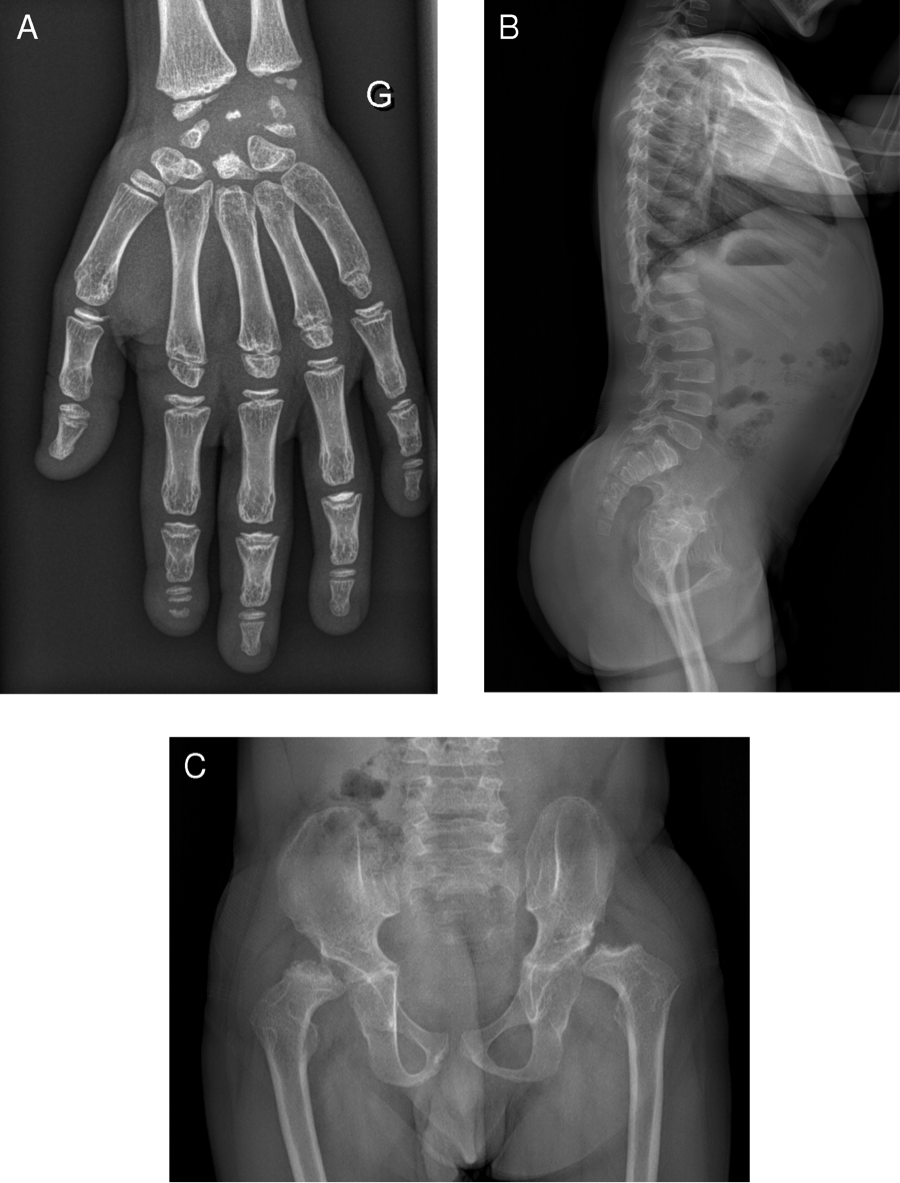
A síndrome de Wolcott-Rallison (SWR) é uma doença genética muito rara, caracterizada por diabetes mellitus neonatal permanente (PNDM) com displasia epifisária múltipla e outras manifestações clínicas, incluindo episódios recorrentes de insuficiência hepática aguda.
Introdução
O que você precisa saber de cara
A síndrome de Wolcott-Rallison (SWR) é uma doença genética muito rara, caracterizada por diabetes mellitus neonatal permanente (PNDM) com displasia epifisária múltipla e outras manifestações clínicas, incluindo episódios recorrentes de insuficiência hepática aguda.
Escala de raridade
<1/50kMuito rara
1/20kRara
1/10kPouco freq.
1/5kIncomum
1/2k
Encontrou um erro ou informação desatualizada? Sugira uma correção →
Entender a doença
Do básico ao detalhe, leia no seu ritmo
Preparando trilha educativa...
Sinais e sintomas
O que aparece no corpo e com que frequência cada sintoma acontece
Partes do corpo afetadas
+ 22 sintomas em outras categorias
Características mais comuns
Os sintomas variam de pessoa para pessoa. Abaixo estão as 72 características clínicas mais associadas, ordenadas por frequência.
Linha do tempo da pesquisa
Encontrou um erro ou informação desatualizada? Sugira uma correção →
Genética e causas
O que está alterado no DNA e como passa nas famílias
Genes associados
1 gene identificado com associação a esta condição. Padrão de herança: Autosomal recessive.
Curadoria gene-doença
fontes oficiaisMetabolic-stress sensing protein kinase that phosphorylates the alpha subunit of eukaryotic translation initiation factor 2 (EIF2S1/eIF-2-alpha) in response to various stress, such as unfolded protein response (UPR) (PubMed:10026192, PubMed:10677345, PubMed:11907036, PubMed:12086964, PubMed:25925385, PubMed:31023583). Key effector of the integrated stress response (ISR) to unfolded proteins: EIF2AK3/PERK specifically recognizes and binds misfolded proteins, leading to its activation and EIF2S1/e
Endoplasmic reticulum membrane
Wolcott-Rallison syndrome
A rare autosomal recessive disorder, characterized by permanent neonatal or early infancy insulin-dependent diabetes and, at a later age, epiphyseal dysplasia, osteoporosis, growth retardation and other multisystem manifestations, such as hepatic and renal dysfunctions, intellectual disability and cardiovascular abnormalities.
Variantes genéticas (ClinVar)
123 variantes patogênicas registradas no ClinVar.
Vias biológicas (Reactome)
5 vias biológicas associadas aos genes desta condição.
Diagnóstico
Os sinais que médicos procuram e os exames que confirmam
Tratamento e manejo
Remédios, cuidados de apoio e o que precisa acompanhar
Onde tratar no SUS
Hospitais de referência no Brasil e o protocolo oficial do SUS (PCDT)
🇧🇷 Atendimento SUS — Síndrome Wolcott-Rallison
Selecione um estado ou use sua localização para ver resultados.
Dados de DATASUS/CNES, SBGM, ABNeuro e Ministério da Saúde. Sempre confirme a disponibilidade diretamente com o estabelecimento.
Pesquisa ativa
Ensaios clínicos abertos e novidades científicas recentes
Ensaios em destaque
🟢 Recrutando agora
1 pesquisa recrutando participantes. Converse com seu médico sobre a possibilidade de participar.
Outros ensaios clínicos
Publicações mais relevantes
Monogenic Neonatal Diabetes: Clinical Presentations, Genetic Findings, and Response to Therapy in a Retrospective Case Series.
Introduction Monogenic neonatal diabetes mellitus (NDM) is a rare form of diabetes, presenting within the first six months of life and caused by pathogenic variants affecting pancreatic β-cell development or function. Because its initial presentation may overlap with type 1 diabetes, molecular diagnosis is crucial, as it directly influences prognosis and treatment - particularly the potential responsiveness to sulfonylureas in ATP-sensitive potassium (KATP)-channel-related NDM. This study reports a retrospective descriptive case series and aims to characterize the clinical and genetic features of infants with NDM, to improve therapeutic management and long-term outcomes. Materials and methods We conducted a retrospective descriptive case series of infants diagnosed with diabetes before six months of age, hospitalized in the Pediatric Endocrinology Unit of the Abderrahim Harouchi Mother-Child Hospital, Casablanca, Morocco, between January 2018 and December 2025. Clinical presentation, biochemical data, insulin requirements, genetic results, and outcomes were extracted from medical records. Genetic testing was performed through next-generation sequencing (NGS), or targeted Sanger sequencing when financially feasible. Results Ten infants were included (nine males and one female), with a mean age at diagnosis of 71 days. Diabetic ketoacidosis (DKA) was the presenting feature in all cases. Consanguinity was reported in 55% of families. Pathogenic or likely pathogenic variants were identified in six infants (60%), involving ABCC8, INS, EIF2AK3, CASP10, and chromosome 6q23-24 duplication, including two syndromic forms. Two infants with ABCC8 mutations achieved insulin independence with sulfonylurea therapy. Syndromic etiologies - Wolcott-Rallison syndrome, Donohue syndrome, and autoimmune lymphoproliferative syndrome type IIA (ALPS-type IIA) - were associated with severe multisystemic involvement. Three children had no identifiable pathogenic variant, despite clinical features consistent with NDM. Long-term outcomes varied widely, ranging from normal neurodevelopment to early mortality in Donohue syndrome. Conclusion This retrospective descriptive case series highlights the marked genetic heterogeneity and clinical variability of neonatal diabetes in a resource-limited setting. Genetic testing enabled precision therapy in infants harboring KATP-channel mutations and clarified prognosis in syndromic forms. Expanding access to molecular diagnostics remains essential to improve equity in care, optimize metabolic outcomes, and support individualized management strategies.
The PERK inhibitor GSK2606414 evokes developmental defects in zebrafish consistent with Wolcott-Rallison syndrome phenotypes.
Protein kinase RNA-like endoplasmic reticulum kinase (PERK) is an endoplasmic reticulum stress kinase whose loss of function disturbs human development, leading to skeletal dysplasia and permanent neonatal diabetes, as in the Wolcott-Rallison Syndrome (WRS). The lack of effective, less invasive therapies for developmental diseases highlights the need for animal models that replicate complex pathological phenotypes, while allowing scalable drug screening. Zebrafish high fecundity and rapid development enable efficient in vivo drug testing. We assessed zebrafish’s potential for studying PERK and its pharmacological modulation in developmental diseases like WRS. To assess the similarity between human and zebrafish PERK we used bioinformatic analyses. To inhibit PERK we used GSK2606414. To evaluate effects on skeletal, neuromuscular, and cardiac development we combined behavioural and functional assays. To assess diabetic-like phenotypes we used fluorescent pancreatic markers and a glucose probe. Zebrafish PERK conserves 11 of 12 critical GSK2606414‑binding residues (predicted 3D structures highly similar). Functionally, GSK2606414 (10 µM) decreased levels of PERK pathway markers and induced WRS-relevant phenotypes: reduced body length, increased trunk–tail curvature, decreased cranial cartilage staining; neuromuscular impairment (altered reflexes, reduced muscle birefringence) and cardiac dysfunction (pericardial oedema, reduced stroke volume and cardiac output). However, parameters not associated with WRS like otolith area and eye/body ratio remained unaffected. Moreover, GSK2606414 decreased 𝛽-cell mass and lowered 2-NBDG-glucose uptake in neuromasts, consistent with diabetic-like phenotypes. These findings evidence zebrafish’s potential for studying PERK function and its pharmacological modulation in developmental disorders like WRS, aiding research on pathophysiology and experimental treatments. The online version contains supplementary material available at 10.1007/s43440-026-00837-7.
Characterization of monogenic diabetes among Sudanese children: a multi-center experience from a population with high consanguinity.
Monogenic diabetes (MD) is a group of diabetes subtypes caused by defects in single genes. We report phenotypes and genotypes of MD among Sudanese children. Referred patients (from birth to 18 years of age) with diabetes and a clinical diagnosis of MD to Gaafar Ibnauf Pediatric Tertiary Hospital or the Sudan Childhood Diabetes Center between January 2006 and April 2023 were included. Patients were divided into two groups based on onset of diabetes before six months of age (Group 1, or neonatal diabetes mellitus) or after (Group 2, or non-neonatal diabetes mellitus). Genetic testing was performed for 87 patients at the Exeter Genomics laboratory and for one patient at the University of Cambridge, Metabolic Research Laboratories, UK. Out of 88 patients, 50 were from Group 1 and 38 from Group 2. We reported consanguinity in 63.6 % of the cohort and identified disease-causing variants for 18 genes in 43.2 % (Group 1) and 37.5 % (Group 2) of patients from the total cohort. The commonest causes in Group 1 and Group 2 were pathogenic variants in the EIF2AK3 and WFS1 genes, respectively. Pathogenic variants in recently reported novel genes ZNF808, NARS2, and FICD were detected in 8.5 %, 4.2%, and 1.4 % of patients, respectively. Patients with a disrupted WFS1 gene were found to have deafness (92.8 %) and optic atrophy (64 %). While skeletal deformities and liver disease were both seen in 28.6 % of patients with pathogenic variants in the ElF2AK3 gene. Hepatomegaly and hypophosphatemic rickets were uniformly seen in patients with pathogenic variants in the SLC2A2 gene. Generalized subcutaneous tissue loss and acanthosis nigricans were main features in AGPAT2 and INSR variants, respectively. Characterization of MD in Sudan showed a predominance of syndromic forms. Genetic studies conducted on consanguineous populations may raise higher probabilities in identifying rare genes.
Wolcott-Rallison syndrome due to a novel homozygous missense variation (p.Gly602Val) in the exon 11 of EIF2AK3 gene.
To report an unusual case of Wolcott-Rallison syndrome (WRS) due to a novel homozygous missense mutation c.1805G>T (p.Gly602Val) in the Exon 11 of eukaryotic translation initiation factor 2 alpha kinase 3 (EIF2AK3) gene. A 2-month-old infant, born to a consanguineous marriage presented to PICU with the manifestation of severe diabetic ketoacidosis (severe hyperglycemia, pH 6.984 + ketones in urine). Genomic sequencing analyses detected a novel homozygous missense variation in the Exon 11 of the EIF2AK3 gene that resulted in the amino acid substitution of valine for glycine at codon 602 (p.Gly602Val). A diagnosis of Wolcott-Rallison syndrome was confirmed. He was treated with fluid therapy and regular insulin infusion. The purpose of this case report is to highlight the novel mutation in the Exon 11 of the EIF2AK3 gene and to raise awareness for screening of pathogenic genetic variants in the EIF2AK3 gene in all patients with neonatal diabetes mellitus. In the evaluation of infants with diabetic ketoacidosis, genomic DNA sequencing analyses should be performed in all cases of neonatal diabetes mellitus for early diagnosis of Wolcott-Rallison syndrome.
A Novel EIF2AK3 Variant Causing Wolcott-Rallison Syndrome With Early Neonatal Diabetic Ketoacidosis as Initial Presentation: A Case Report.
Wolcott-Rallison syndrome (WRS) is a rare genetic autosomal recessive inherited disorder with three main clinical features: neonatal diabetes mellitus (NDM), bone dysplasia, and acute liver dysfunction. The aim of the study is to report a rare case of WRS with genetic analysis. We report a 1-year-old male patient with consanguineous parents who was referred due to weakness and vomiting at 3 months old and was admitted due to diabetic ketoacidosis with severe acidosis and hyperglycemia without any other skeletal, hepatic, or renal presentations and a novel homozygous c.2825A>C (p.Asn942Thr) variant in exon 14 of the EIF2AK3 gene on chromosome 2. Genetic testing is recommended for distinguishing WRS from other causes of neonatal insulin-dependent diabetes, and early diagnosis in order to develop timely and appropriate treatment, especially rapid detection of the acute liver failure as the most life-threatening complication.
Publicações recentes
Wolcott-Rallison Syndrome: A Case Report with Novel Homozygous EIF2AK3 Gene Mutation.
📖 RevisãoMonogenic Neonatal Diabetes: Clinical Presentations, Genetic Findings, and Response to Therapy in a Retrospective Case Series.
The PERK inhibitor GSK2606414 evokes developmental defects in zebrafish consistent with Wolcott-Rallison syndrome phenotypes.
A Novel EIF2AK3 Variant Causing Wolcott-Rallison Syndrome With Early Neonatal Diabetic Ketoacidosis as Initial Presentation: A Case Report.
Characterization of monogenic diabetes among Sudanese children: a multi-center experience from a population with high consanguinity.
📚 EuropePMC80 artigos no totalmostrando 67
Monogenic Neonatal Diabetes: Clinical Presentations, Genetic Findings, and Response to Therapy in a Retrospective Case Series.
CureusThe PERK inhibitor GSK2606414 evokes developmental defects in zebrafish consistent with Wolcott-Rallison syndrome phenotypes.
Pharmacological reports : PRA Novel EIF2AK3 Variant Causing Wolcott-Rallison Syndrome With Early Neonatal Diabetic Ketoacidosis as Initial Presentation: A Case Report.
Clinical case reportsCharacterization of monogenic diabetes among Sudanese children: a multi-center experience from a population with high consanguinity.
Journal of pediatric endocrinology & metabolism : JPEMUsing SARS-CoV-2-Positive Donors Under 1 Year of Age: A Case Series of Successful Combined Liver-Pancreas and Isolated Liver Pediatric Transplantation.
Pediatric transplantationWolcott-Rallison syndrome due to a novel homozygous missense variation (p.Gly602Val) in the exon 11 of EIF2AK3 gene.
Journal of pediatric endocrinology & metabolism : JPEMWolcott-Rallison syndrome - crosstalk between PERK- EIF2A and type II interferon signaling.
European journal of medical geneticsWolcott-Rallison syndrome: late-onset diabetes, multiple epiphyseal dysplasia, and acute liver failure - a case report.
Journal of pediatric endocrinology & metabolism : JPEMCervical spinal decompression and fusion in the setting of Wolcott-Rallison Syndrome: a rare pediatric indication and its surgical considerations.
Child's nervous system : ChNS : official journal of the International Society for Pediatric NeurosurgeryRecurrent Liver Failure Due to Wolcott Rallison Syndrome.
Indian journal of pediatricsPERK inhibition with GSK2606414 in zebrafish evokes developmental defects consistent with Wolcott-Rallison syndrome phenotypes.
bioRxiv : the preprint server for biologyEthnic variation and structure-function analysis of tauopathy-associated PERK alleles.
medRxiv : the preprint server for health sciencesIncidence, Phenotypes, and Genotypes of Neonatal Diabetes: A 16-Year Experience. The Rare Genetic Etiologies of Neonatal Diabetes Are Common in Sudan.
Pediatric diabetesNatural history of Wolcott-Rallison syndrome: A systematic review and follow-up study.
Liver international : official journal of the International Association for the Study of the LiverKidney biopsy findings in children with diabetes mellitus.
Pediatric nephrology (Berlin, Germany)Wolcott-Rallison Syndrome, a Rare Cause of Permanent Diabetes Mellitus in Infants-Case Report.
Pediatric reportsWolcott-Rallison syndrome: a case series of three patients.
Pediatric endocrinology, diabetes, and metabolismGenetic Heterogeneity and Challenges in the Management of Permanent Neonatal Diabetes Mellitus: A Single-Centre Study from South India.
Indian journal of endocrinology and metabolismClinical and molecular characteristics of infantile-onset diabetes mellitus in Egypt.
Annals of pediatric endocrinology & metabolismLissencephaly-pachygyria spectrum in a North Indian boy with Wolcott-Rallison syndrome due to homozygous deletion of exon 1 in the EIF2AK3 gene.
Pediatric endocrinology, diabetes, and metabolismThe first presentation of Wolcott-Rallison syndrome in a four-month-old infant with diabetic ketoacidosis (DKA) precipitating by COVID-19: A case report.
Clinical case reportsGenetic and clinical heterogeneity of permanent neonatal diabetes mellitus: a single tertiary centre experience.
Acta diabetologicaIdentification of Two Novel Compound Heterozygous EIF2AK3 Mutations Underlying Wolcott-Rallison Syndrome in a Chinese Family.
Frontiers in pediatricsLong-term follow-up of a child with Wolcott-Rallison syndrome.
BMJ case reportsCo-opting regulation bypass repair as a gene-correction strategy for monogenic diseases.
Molecular therapy : the journal of the American Society of Gene TherapyEtiologic distribution and clinical characteristics of pediatric diabetes in 276 children and adolescents with diabetes at a single academic center.
BMC pediatricsClinical Characteristics, Molecular Features, and Long-Term Follow-Up of 15 Patients with Neonatal Diabetes: A Single-Centre Experience.
Hormone research in paediatricsWolcott-Rallison Syndrome Affecting Three Consecutive Conceptions of a Consanguineous Couple.
Indian pediatricsNeonatal Diabetes Mellitus: Novel Mutations.
Indian journal of pediatricsPERK participates in cardiac valve development via fatty acid oxidation and endocardial-mesenchymal transformation.
Scientific reportsDiabetes management in Wolcott-Rallison syndrome: analysis from the German/Austrian DPV database.
Orphanet journal of rare diseasesA novel splice site indel alteration in the EIF2AK3 gene is responsible for the first cases of Wolcott-Rallison syndrome in Hungary.
BMC medical geneticsWolcott-Rallison Syndrome- Endocrinopathy with Recurrent Acute Liver Failure.
Indian pediatricsThe Endoplasmic Reticulum and Calcium Homeostasis in Pancreatic Beta Cells.
EndocrinologyThe clinical and genetic characteristics of permanent neonatal diabetes (PNDM) in the state of Qatar.
Molecular genetics & genomic medicineFirst European Case of Simultaneous Liver and Pancreas Transplantation as Treatment of Wolcott-Rallison Syndrome in a Small Child.
TransplantationPractical management in Wolcott-Rallison syndrome with associated hypothyroidism, neutropenia, and recurrent liver failure: A case report.
Clinical case reportsWolcott-Rallison syndrome in Iran: a common cause of neonatal diabetes.
Journal of pediatric endocrinology & metabolism : JPEMWolcott-Rallison Syndrome With Different Clinical Presentations and Genetic Patterns in Two Infants: Erratum.
The health care managerEIF2AK3 novel mutation in a child with early-onset diabetes mellitus, a case report.
BMC pediatricsWolcott-Rallison syndrome due to the same mutation in EIF2AK3 (c.205G>T) in two unrelated families: A case report.
Experimental and therapeutic medicine[A case report of EIF2AK3-related Wolcott-Rallison syndrome and literature review].
Zhongguo dang dai er ke za zhi = Chinese journal of contemporary pediatricsAn Infant With Neonatal Diabetes and Double Outlet Right Ventricle - Wolcott- Rallison syndrome.
Medical archives (Sarajevo, Bosnia and Herzegovina)Wolcott-Rallison Syndrome With Different Clinical Presentations and Genetic Patterns in 2 Infants.
The health care managerTauopathy-associated PERK alleles are functional hypomorphs that increase neuronal vulnerability to ER stress.
Human molecular geneticsPERK leads a hub dictating pancreatic β cell homoeostasis.
Biology of the cellWorld's smallest combined en bloc liver-pancreas transplantation.
Pediatric transplantationMulticystic dysplastic kidney: a new association of Wolcott-Rallison syndrome.
Endocrinology, diabetes & metabolism case reportsA Genotype-First Approach for Clinical and Genetic Evaluation of Wolcott-Rallison Syndrome in a Large Cohort of Iranian Children With Neonatal Diabetes.
Canadian journal of diabetesKetoacidosis in Neonatal Diabetes Mellitus, Part of Wolcott-Rallison Syndrome.
The American journal of case reportsNovel splice site mutation in EIF2AK3 gene causes Wolcott-Rallison syndrome in a consanguineous family from Saudi Arabia.
Congenital anomaliesRecent advances in liver transplantation for metabolic disease.
Journal of inherited metabolic diseaseWolcott-Rallison Syndrome with Novel EIF2AK3 Gene Mutation.
Journal of clinical research in pediatric endocrinologyInfantile onset diabetes mellitus in developing countries - India.
World journal of diabetesOs odontoideum in wolcott-rallison syndrome: a case series of 4 patients.
Orphanet journal of rare diseasesEn bloc multiorgan transplant (liver, pancreas, and kidney) for acute liver and renal failure in a patient with Wolcott-Rallison syndrome.
Liver transplantation : official publication of the American Association for the Study of Liver Diseases and the International Liver Transplantation SocietyTHE 3rd W522X MUTATION IN EIF2AK3 GENE FROM TURKEY: A NEW PATIENT WITH WOLCOTT-RALLISON SYNDROME.
Genetic counseling (Geneva, Switzerland)[Permanent neonatal diabetes mellitus in a young Ukrainian child].
Pediatric endocrinology, diabetes, and metabolismType I interferons mediate pancreatic toxicities of PERK inhibition.
Proceedings of the National Academy of Sciences of the United States of AmericaGenetic characteristics, clinical spectrum, and incidence of neonatal diabetes in the Emirate of AbuDhabi, United Arab Emirates.
American journal of medical genetics. Part ARelative hypoaldosteronism in a patient with Wolcott-Rallison syndrome.
Diabetic medicine : a journal of the British Diabetic AssociationThe effect of early, comprehensive genomic testing on clinical care in neonatal diabetes: an international cohort study.
Lancet (London, England)Early Neurodegeneration in the Brain of a Child Without Functional PKR-like Endoplasmic Reticulum Kinase.
Journal of neuropathology and experimental neurologyA Missense Mutation in PPP1R15B Causes a Syndrome Including Diabetes, Short Stature, and Microcephaly.
DiabetesNovel mutation in wolcott-rallison syndrome with variable expression in two omani siblings.
Oman medical journalClinical characteristics and molecular genetic analysis of 22 patients with neonatal diabetes from the South-Eastern region of Turkey: predominance of non-KATP channel mutations.
European journal of endocrinologyLiver disease and other comorbidities in Wolcott-Rallison syndrome: different phenotype and variable associations in a large cohort.
Hormone research in paediatricsAssociações
Organizações que acompanham esta doença — pra ter apoio e orientação
Ainda não temos associações cadastradas para Síndrome Wolcott-Rallison.
É de uma associação que acompanha esta doença? Fale com a gente →
Comunidades
Grupos ativos de quem convive com esta doença aqui no Raras
Ainda não existe comunidade no Raras para Síndrome Wolcott-Rallison
Pacientes, familiares e cuidadores se organizam em comunidades pra compartilhar experiências, fazer perguntas e se apoiar. Você pode ser o primeiro.
Tire suas dúvidas
Perguntas, dicas e experiências compartilhadas aqui na página
Participe da discussão
Faça login para postar dúvidas, compartilhar experiências e interagir com especialistas.
Fazer loginDoenças relacionadas
Doenças com sintomas parecidos — ajudam quem ainda está buscando diagnóstico
Referências e fontes
Bases de dados externas citadas neste artigo
Publicações científicas
Artigos indexados no PubMed ligados a esta doença no grafo RarasNet — título, periódico e PMID direto da fonte, sem intermediação de IA.
- Monogenic Neonatal Diabetes: Clinical Presentations, Genetic Findings, and Response to Therapy in a Retrospective Case Series.
- The PERK inhibitor GSK2606414 evokes developmental defects in zebrafish consistent with Wolcott-Rallison syndrome phenotypes.
- Characterization of monogenic diabetes among Sudanese children: a multi-center experience from a population with high consanguinity.
- Wolcott-Rallison syndrome due to a novel homozygous missense variation (p.Gly602Val) in the exon 11 of EIF2AK3 gene.
- A Novel EIF2AK3 Variant Causing Wolcott-Rallison Syndrome With Early Neonatal Diabetic Ketoacidosis as Initial Presentation: A Case Report.
- Wolcott-Rallison Syndrome: A Case Report with Novel Homozygous EIF2AK3 Gene Mutation.
Bases de dados e fontes oficiais
Identificadores e referências canônicas usadas para montar este verbete.
- ORPHA:1667(Orphanet)
- OMIM OMIM:226980(OMIM)
- MONDO:0009192(MONDO)
- GARD:5589(GARD (NIH))
- Variantes catalogadas(ClinVar)
- Busca completa no PubMed(PubMed)
- Q8029730(Wikidata)
Dados compilados pelo RarasNet a partir de fontes abertas (Orphanet, OMIM, MONDO, PubMed/EuropePMC, ClinicalTrials.gov, DATASUS, PCDT/MS). Este conteúdo é informativo e não substitui avaliação médica.
Conteúdo mantido por Agente Raras · Médicos e pesquisadores podem colaborar
Síndrome Wolcott-Rallison
📋 Origem dos dados
Esta página agrega dados de fontes públicas e oficiais. Dados sobre cobertura no SUS (PCDT, CEAF) são verificados ativamente por agente proativo (ver badge no infobox). Demais dados têm atribuição de fonte + data da última sincronização — clique para abrir o original.
- Doença rara (ontologia)
- fonte: Orphanet
- Identificador unificado
- fonte: MONDO
- Genética mendeliana
- fonte: OMIM
- Codificação WHO/SUS
- fonte: WHO ICD-10 / DATASUS
- CID-11 (futuro)
- fonte: WHO ICD-11
- NIH/GARD
- fonte: GARD (NIH)
- Indexação biomédica
- fonte: MeSH (NLM)
- Dado público estruturado
- fonte: Wikidata
- Ensaios clínicos
- fonte: ClinicalTrials.gov