
Introdução
O que você precisa saber de cara
Visão geral
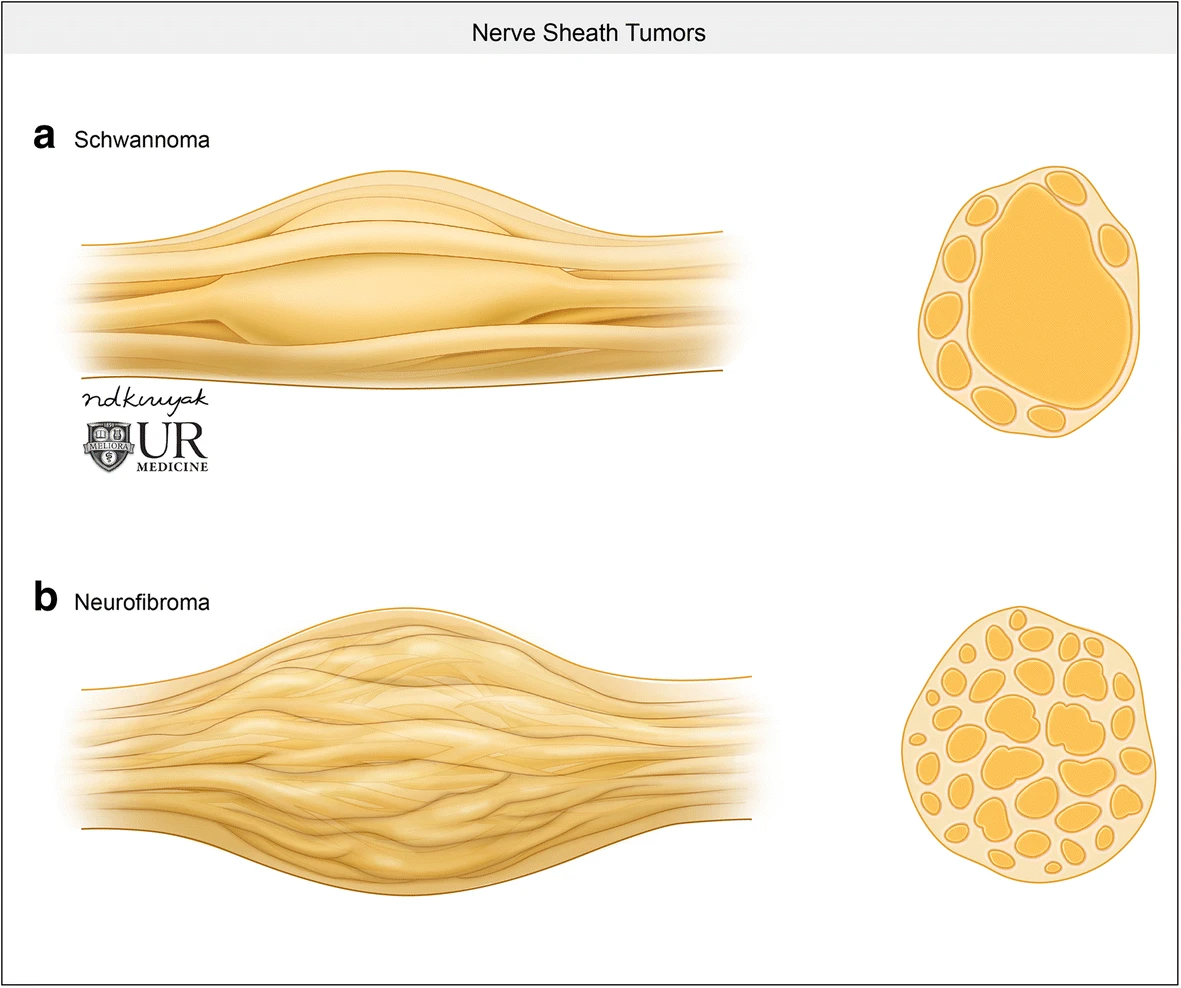
O tumor benigno da bainha dos nervos periféricos é uma neoplasia que se origina das células que envolvem os nervos fora do cérebro e da medula espinhal. Embora seja classificado como benigno (não canceroso), pode causar sintomas devido à compressão ou irritação dos nervos adjacentes. A condição está associada a alterações em genes específicos e pode se manifestar com uma variedade de sinais e sintomas, incluindo fraqueza muscular, alterações de sensibilidade e, em alguns casos, escoliose.[1][3]
Sinais e sintomas
Os sintomas podem variar amplamente entre os pacientes. Os mais comuns incluem episódios agudos de sintomas neuropáticos (como dor ou queimação), fraqueza muscular, fasciculações (contrações musculares involuntárias), hipoestesia (diminuição da sensibilidade) e parestesia (formigamento ou dormência). Também podem ocorrer escoliose (curvatura anormal da coluna), deficiência auditiva, zumbido, catarata, convulsões e voz fraca. Alguns pacientes apresentam tumores adicionais, como schwannoma vestibular bilateral (tumor do nervo do equilíbrio), meningioma (tumor das meninges), tumor da medula espinhal, neoplasia da hipófise anterior, lipoma, hemangioma lombossacral, leiomioma uterino e neurofibromas espinhais. Na pele, podem ser observados nódulos de Lisch (manchas na íris), poucas manchas café com leite, nódulos subcutâneos periarticulares, nevo melanocítico e neurofibromatose atípica.[1][3]
Causas genéticas
A condição está associada a alterações (mutações) em pelo menos quatro genes: COQ6, NF2, LZTR1 e SMARCB1. O gene NF2 produz a proteína merlin, que atua como supressor tumoral; mutações nesse gene são frequentemente encontradas em tumores da bainha dos nervos periféricos. Os genes LZTR1 e SMARCB1 também estão envolvidos em vias de controle do crescimento celular. O gene COQ6 está relacionado à produção de coenzima Q10, essencial para a função mitocondrial. A herança genética pode variar conforme o gene envolvido, mas os dados disponíveis não especificam o padrão de herança para este conjunto de tumores.[1][4]
Diagnóstico
O diagnóstico é baseado na avaliação clínica dos sintomas e na identificação de tumores por exames de imagem, como ressonância magnética. A confirmação genética pode ser feita por meio de testes genéticos que analisam os genes associados (COQ6, NF2, LZTR1 e SMARCB1). Atualmente, existem 336 testes genéticos disponíveis para essa condição, e mais de 2.254 variantes foram registradas no ClinVar, um banco de dados público de variantes genéticas.[1][4]
Tratamento e manejo
O tratamento é individualizado e depende da localização, tamanho e sintomas associados ao tumor. As opções podem incluir monitoramento regular (vigilância ativa) para tumores assintomáticos, cirurgia para remoção do tumor quando causa compressão nervosa significativa ou sintomas incapacitantes, e acompanhamento multidisciplinar com neurologista, geneticista e outros especialistas. Não há medicamentos específicos aprovados para o tratamento deste tumor. No Brasil, a condição não possui cobertura específica pelo Sistema Único de Saúde (SUS) para procedimentos ou medicamentos.[1]
Prognóstico e qualidade de vida
Por ser um tumor benigno, o prognóstico geralmente é favorável, com baixo risco de transformação maligna. No entanto, a qualidade de vida pode ser impactada por sintomas crônicos como dor neuropática, fraqueza muscular, deficiência auditiva e escoliose. O acompanhamento regular com uma equipe multidisciplinar é importante para manejar os sintomas e prevenir complicações.[1][3]
Conteúdo informativo gerado e mantido automaticamente a partir de fontes oficiais (Orphanet, HPO, OMIM, SUS). Não substitui avaliação médica.
Tumores benignos da bainha dos nervos periféricos podem causar sintomas neuropáticos agudos, fraqueza muscular, deficiência auditiva e outros achados. Associados a genes como NF2 e LZTR1, podem ocorrer em conjunto com escoliose e lipomas.
Encontrou um erro ou informação desatualizada? Sugira uma correção →
Entender a doença
Do básico ao detalhe, leia no seu ritmo
Preparando trilha educativa...
Sinais e sintomas
O que aparece no corpo e com que frequência cada sintoma acontece
Visão geral
O tumor benigno da bainha dos nervos periféricos é uma neoplasia que se origina das células que envolvem os nervos fora do cérebro e da medula espinhal. Embora seja classificado como benigno (não canceroso), pode causar sintomas devido à compressão ou irritação dos nervos adjacentes. A condição está associada a alterações em genes específicos e pode se manifestar com uma variedade de sinais e sintomas, incluindo fraqueza muscular, alterações de sensibilidade e, em alguns casos, escoliose.[1][3]
Sinais e sintomas
Os sintomas podem variar amplamente entre os pacientes. Os mais comuns incluem episódios agudos de sintomas neuropáticos (como dor ou queimação), fraqueza muscular, fasciculações (contrações musculares involuntárias), hipoestesia (diminuição da sensibilidade) e parestesia (formigamento ou dormência). Também podem ocorrer escoliose (curvatura anormal da coluna), deficiência auditiva, zumbido, catarata, convulsões e voz fraca. Alguns pacientes apresentam tumores adicionais, como schwannoma vestibular bilateral (tumor do nervo do equilíbrio), meningioma (tumor das meninges), tumor da medula espinhal, neoplasia da hipófise anterior, lipoma, hemangioma lombossacral, leiomioma uterino e neurofibromas espinhais. Na pele, podem ser observados nódulos de Lisch (manchas na íris), poucas manchas café com leite, nódulos subcutâneos periarticulares, nevo melanocítico e neurofibromatose atípica.[1][3]
Causas genéticas
A condição está associada a alterações (mutações) em pelo menos quatro genes: COQ6, NF2, LZTR1 e SMARCB1. O gene NF2 produz a proteína merlin, que atua como supressor tumoral; mutações nesse gene são frequentemente encontradas em tumores da bainha dos nervos periféricos. Os genes LZTR1 e SMARCB1 também estão envolvidos em vias de controle do crescimento celular. O gene COQ6 está relacionado à produção de coenzima Q10, essencial para a função mitocondrial. A herança genética pode variar conforme o gene envolvido, mas os dados disponíveis não especificam o padrão de herança para este conjunto de tumores.[1][4]
Diagnóstico
O diagnóstico é baseado na avaliação clínica dos sintomas e na identificação de tumores por exames de imagem, como ressonância magnética. A confirmação genética pode ser feita por meio de testes genéticos que analisam os genes associados (COQ6, NF2, LZTR1 e SMARCB1). Atualmente, existem 336 testes genéticos disponíveis para essa condição, e mais de 2.254 variantes foram registradas no ClinVar, um banco de dados público de variantes genéticas.[1][4]
Tratamento e manejo
O tratamento é individualizado e depende da localização, tamanho e sintomas associados ao tumor. As opções podem incluir monitoramento regular (vigilância ativa) para tumores assintomáticos, cirurgia para remoção do tumor quando causa compressão nervosa significativa ou sintomas incapacitantes, e acompanhamento multidisciplinar com neurologista, geneticista e outros especialistas. Não há medicamentos específicos aprovados para o tratamento deste tumor. No Brasil, a condição não possui cobertura específica pelo Sistema Único de Saúde (SUS) para procedimentos ou medicamentos.[1]
Prognóstico e qualidade de vida
Por ser um tumor benigno, o prognóstico geralmente é favorável, com baixo risco de transformação maligna. No entanto, a qualidade de vida pode ser impactada por sintomas crônicos como dor neuropática, fraqueza muscular, deficiência auditiva e escoliose. O acompanhamento regular com uma equipe multidisciplinar é importante para manejar os sintomas e prevenir complicações.[1][3]
Conteúdo informativo gerado e mantido automaticamente a partir de fontes oficiais (Orphanet, HPO, OMIM, SUS). Não substitui avaliação médica.
Partes do corpo afetadas
+ 33 sintomas em outras categorias
Características mais comuns
Os sintomas variam de pessoa para pessoa. Abaixo estão as 71 características clínicas mais associadas, ordenadas por frequência.
Linha do tempo da pesquisa
Encontrou um erro ou informação desatualizada? Sugira uma correção →
Genética e causas
O que está alterado no DNA e como passa nas famílias
Genes associados
4 genes identificados com associação a esta condição.
FAD-dependent monooxygenase required for two non-consecutive steps during ubiquinone biosynthesis (PubMed:26260787, PubMed:38425362). Required for the C5-ring hydroxylation during ubiquinone biosynthesis by catalyzing the hydroxylation of 4-hydroxy-3-(all-trans-decaprenyl)benzoic acid to 3,4-dihydroxy-5-(all-trans-decaprenyl)benzoic acid (PubMed:26260787, PubMed:38425362). Also acts downstream of COQ4, for the C1-hydroxylation during ubiquinone biosynthesis by catalyzing the hydroxylation of 2-m
Mitochondrion inner membraneGolgi apparatusCell projection
Coenzyme Q10 deficiency, primary, 6
An autosomal recessive disorder characterized by onset in infancy of severe progressive nephrotic syndrome resulting in end-stage renal failure and sensorineural deafness. Renal biopsy usually shows focal segmental glomerulosclerosis.
Probable regulator of the Hippo/SWH (Sav/Wts/Hpo) signaling pathway, a signaling pathway that plays a pivotal role in tumor suppression by restricting proliferation and promoting apoptosis. Along with WWC1 can synergistically induce the phosphorylation of LATS1 and LATS2 and can probably function in the regulation of the Hippo/SWH (Sav/Wts/Hpo) signaling pathway. May act as a membrane stabilizing protein. May inhibit PI3 kinase by binding to AGAP2 and impairing its stimulating activity. Suppress
Cell projection, filopodium membraneCell projection, ruffle membraneNucleusCytoplasm, perinuclear regionCytoplasmic granuleCytoplasm, cytoskeleton
Schwannomatosis, vestibular
An autosomal dominant neoplasia syndrome characterized by the development of multiple benign nerve sheath tumors called schwannomas, particularly affecting the vestibular nerve. Affected individuals usually present with bilateral vestibular schwannomas but can have schwannomas on other cranial, spinal, and peripheral/cutaneous nerves. Meningiomas are common, whereas 20 to 35% of affected individuals develop intramedullary spinal cord tumors called ependymomas. The condition is also characterized by several ophthalmic features such as lenticular opacities, retinal hamartoma, epiretinal membranes.
Substrate-specific adapter of a BCR (BTB-CUL3-RBX1) E3 ubiquitin-protein ligase complex that mediates ubiquitination of Ras (K-Ras/KRAS, N-Ras/NRAS and H-Ras/HRAS) (PubMed:30442762, PubMed:30442766, PubMed:30481304). Is a negative regulator of RAS-MAPK signaling that acts by controlling Ras levels and decreasing Ras association with membranes (PubMed:30442762, PubMed:30442766, PubMed:30481304)
Endomembrane systemRecycling endosomeGolgi apparatus
Glioma
Gliomas are benign or malignant central nervous system neoplasms derived from glial cells. They comprise astrocytomas and glioblastoma multiforme that are derived from astrocytes, oligodendrogliomas derived from oligodendrocytes and ependymomas derived from ependymocytes.
Core component of the BAF (hSWI/SNF) complex. This ATP-dependent chromatin-remodeling complex plays important roles in cell proliferation and differentiation, in cellular antiviral activities and inhibition of tumor formation. The BAF complex is able to create a stable, altered form of chromatin that constrains fewer negative supercoils than normal. This change in supercoiling would be due to the conversion of up to one-half of the nucleosomes on polynucleosomal arrays into asymmetric structures
Nucleus
Rhabdoid tumor predisposition syndrome 1
A familial cancer syndrome predisposing to renal or extrarenal malignant rhabdoid tumors and to a variety of tumors of the central nervous system, including choroid plexus carcinoma, medulloblastoma, and central primitive neuroectodermal tumors. Rhabdoid tumors are the most aggressive and lethal malignancies occurring in early childhood.
Variantes genéticas (ClinVar)
2.254 variantes patogênicas registradas no ClinVar.
Vias biológicas (Reactome)
11 vias biológicas associadas aos genes desta condição.
Diagnóstico
Os sinais que médicos procuram e os exames que confirmam
Tratamento e manejo
Remédios, cuidados de apoio e o que precisa acompanhar
Onde tratar no SUS
Hospitais de referência no Brasil e o protocolo oficial do SUS (PCDT)
🇧🇷 Atendimento SUS — Tumor benigno da bainha dos nervos periféricos
Selecione um estado ou use sua localização para ver resultados.
Dados de DATASUS/CNES, SBGM, ABNeuro e Ministério da Saúde. Sempre confirme a disponibilidade diretamente com o estabelecimento.
Pesquisa ativa
Ensaios clínicos abertos e novidades científicas recentes
Pesquisa e ensaios clínicos
Nenhum ensaio clínico registrado para esta condição.
Publicações mais relevantes
Benign Peripheral Nerve Sheath Tumors: Recurrence Rates and Pain Outcomes Following Excision.
Benign peripheral nerve sheath tumors (bPNSTs) present a surgical challenge due to their intimate relationship with functional neurons. This study aims to examine the anatomic distribution of bPNSTs and analyze recurrence rates and factors predictive of recurrence following surgical excision. A retrospective analysis of patients who underwent resection of bPNST was conducted. The anatomic distribution was assessed, along with recurrence rates and pain outcomes. Exploratory bivariate analyses were conducted to assess factors associated with recurrence. A total of 228 patients were included (follow-up: 1.02 years (IQR: 0.55-2.12)). BPNSTs were most commonly located in the upper extremity (45.2%) and lower extremity (44.3%), with fewer cases in the head and neck (6.6%), trunk (3.5%), and pelvis (0.4%). Schwannomas comprised 76.3% of cases, while neurofibromas accounted for 22.4%. The overall recurrence rate following excision was 7.0%, with neurofibromas exhibiting a higher recurrence rate (15.7% vs 4.6% for schwannomas, p=0.049). Patients with neurofibromatosis type 1 (NF1) demonstrated significantly higher recurrence rates (19.4% vs 5.1%, p=0.004). Recurrence was more frequent in patients with postoperative motor deficits (26.3% vs 5.3%, p<0.001), patients with psychiatric comorbidities (13.5% vs 3.9%, p=0.008), and younger patients (median age 38.5 (IQR:28.2-44.8) vs 50.2 years (IQR:39.3-60.3), p=0.001). Overall improvement was reported in 77.1% patients. BPNSTs primarily affect the extremities, with schwannomas being the predominant histological subtype. Neurofibromas, NF1, postoperative motor deficits, psychiatric comorbidity, and younger age were associated with increased recurrence risk. Understanding these distribution patterns and recurrence factors is important for surgical planning and patient counseling.
Posterior Interosseous Nerve Schwannoma Presenting as a Painless Forearm Mass: A Case Report.
Schwannomas are benign peripheral nerve sheath tumors that typically exhibit slow growth and may present diagnostic challenges when arising from uncommon sites. We report the case of a 65-year-old female who presented with a six-year history of a gradually enlarging, painless swelling over the extensor aspect of the left forearm. The lesion initially appeared as a small nodule and progressively enlarged to approximately 4 × 3 cm, with intermittent tingling and occasional numbness but no significant functional impairment. Clinical examination revealed a firm, well-defined mass with a positive Tinel's sign. Ultrasonography and contrast-enhanced MRI demonstrated a well-circumscribed, encapsulated lesion along the course of the posterior interosseous nerve (PIN) in the intermuscular plane, suggestive of a benign peripheral nerve sheath tumor. The patient underwent planned microsurgical excision under general anesthesia. Intraoperatively, the tumor was found to arise eccentrically from the PIN and was meticulously dissected from the surrounding nerve fascicles, allowing complete excision while preserving nerve continuity. Histopathological examination confirmed the diagnosis of schwannoma, demonstrating characteristic Antoni A and Antoni B areas, Verocay bodies, and thick-walled hyalinized vessels. The postoperative course was uneventful, with preservation of motor and sensory function and no evidence of recurrence on follow-up. This report underscores the importance of thorough clinical evaluation and appropriate imaging in the diagnosis of peripheral nerve tumors of the forearm and highlights the role of meticulous microsurgical technique in achieving complete tumor excision with excellent functional outcomes.
A rare case report of solitary neurofibroma arising in the male breast.
Primary tumors of the chest wall are fairly uncommon and typically involve the mammary glands. Additional breast lesions usually involve the soft tissues, with neurofibromas comprising a significantly low amount of cases that skew toward female patients. A neurofibroma of the male breast is an exceedingly rare occurrence; however, most cases are associated with Neurofibromatosis Type 1 (NF1). This report aims to present the case of a solitary neurofibroma in the breast of a male patient in the absence of a diagnosis of Neurofibromatosis, a situation with only three prior cases documented in the literature. In addition, we review the literature and management approach for this rare occurrence. A 41-year-old male with a PMHx of medication-controlled HTN and migraines noticed a small firm mass in his left breast years ago that recently started causing discomfort with deep palpation despite no reported significant changes in size or development of additional symptoms. Preliminary diagnostic studies (diagnostic mammogram, targeted ultrasound, ultrasound-guided biopsy) illustrated a circumscribed, spiculated oval mass 3 cm from the nipple-areolar complex at the 9-o'clock position, with a biopsy report indicative of a neurofibroma. The patient underwent elective surgical excision of the lesion, and the surgical pathology report additionally confirmed the diagnosis of a neurofibroma. Neurofibromas are benign peripheral nerve sheath tumors that originate from the endoneurium, the connective tissue of nerve sheaths. Solitary neurofibroma of the male breast in the absence of a diagnosis of neurofibromatosis is a substantially rare occurrence, with only three prior confirmed cases documented. Current literature suggests surgical excision as the mainstay of management, regardless of their low risk of malignant transformation. To our knowledge, this is only the fourth case of its kind and the only one to provide gross imagery and two separate confirmatory pathology reports. Implications of the findings include continued preferred management via surgical excision, remaining awareness of rare tumors, and additional evidence for the possible prevalence of rare male breast tumors that may have been previously not considered.
A rare case of plexiform neurofibroma.
Plexiform neurofibroma is a rare benign peripheral nerve sheath tumor that occurs almost exclusively in patients with neurofibromatosis type I (NF1). This report presents a 10-year-old patient with multiple enlarging masses on the left and posterior neck for 4 years, accompanied by pain and restricted neck movement. Radiographic evaluation revealed a soft tissue mass without bony abnormalities, while Magnetic Resonance Imaging (MRI) demonstrated multiple confluent, ill-defined, infiltrative lesions involving bilateral cervical regions and extending into the anterior mediastinum. The lesions showed hypointense signals on T1-weighted and hyperintense target sign appearances on T2-weighted images, with encasement of neurovascular structures and spinal cord compression. Histopathological findings confirmed the diagnosis of plexiform neurofibroma without evidence of malignancy. This case emphasizes the diagnostic value of MRI in delineating lesion extent and neurogenic origin, as well as the importance of histopathology in confirming the benign nature of the tumor and excluding malignant transformation.
Symptomatic Schwannomatosis of the Brachial Plexus: A Case Report and Literature Review.
Brachial plexus schwannomatosis, a rare disease that is characterized by multiple schwannomas within the brachial plexus, remains difficult to treat due to the risk of postoperative neurological deficits. We report a case presenting with a left supraclavicular mass, radiating pain, and difficulty with neck extension. The magnetic resonance imaging results revealed 2 well-circumscribed masses, and schwannomatosis was highly suspected, excluding NF2 features. The patient underwent tumor enucleation via using the supraclavicular approach with microsurgical dissection, preserving both sensory and motor function. At 2 years of follow-up, the patient remained asymptomatic without recurrence. In comparison to solitary schwannoma, 2 distinct schwannomas may involve greater complexity and a heightened risk of motor deficits. Furthermore, this study presents a detailed clinical examination and conducts a literature review to assess previous cases, focusing on treatment approaches and prognostic outcomes. We believe that our findings can provide valuable insights for further research and a better understanding of schwannomatosis in the brachial plexus.
Publicações recentes
Benign Peripheral Nerve Sheath Tumors: Recurrence Rates and Pain Outcomes Following Excision.
Posterior Interosseous Nerve Schwannoma Presenting as a Painless Forearm Mass: A Case Report.
A rare case report of solitary neurofibroma arising in the male breast.
A rare case of plexiform neurofibroma.
Symptomatic Schwannomatosis of the Brachial Plexus: A Case Report and Literature Review.
📚 EuropePMC20 artigos no totalmostrando 93
Benign Peripheral Nerve Sheath Tumors: Recurrence Rates and Pain Outcomes Following Excision.
Plastic and reconstructive surgeryPosterior Interosseous Nerve Schwannoma Presenting as a Painless Forearm Mass: A Case Report.
CureusA rare case report of solitary neurofibroma arising in the male breast.
International journal of surgery case reportsA rare case of plexiform neurofibroma.
Radiology case reportsSymptomatic Schwannomatosis of the Brachial Plexus: A Case Report and Literature Review.
Annals of plastic surgeryPlexiform Schwannoma of the Middle Finger: A Rare Benign Mesenchymal Tumor Presenting as a Chronic Digital Swelling.
CureusMultinodular/Plexiform Schwannoma of the Ankle: A Case Report and Literature Review.
Cancer diagnosis & prognosisMultidisciplinary Management of Plexiform Neurofibromas in Pediatric Patients With Neurofibromatosis 1: Insights From Advisory Board-Guided Clinical Experience in Japan.
The Journal of dermatologySchwannoma Presenting as Infectious Fluid Collection.
Journal of primary care & community healthA Solitary Diffuse Neurofibroma in a Young Adult Female: An Unusual Presentation in the Scapular Region.
CureusAdrenal Schwannoma: A Rare but Important Consideration in Adrenal Tumors.
CureusUnveiling the Rare: A Case Report of Rectal Schwannoma in a Neurofibromatosis Type 1 Patient.
CureusGastrointestinal Tract Perineuriomas and Benign Fibroblastic Polyps: Case Report and Comprehensive Systematic Review.
Case reports in gastrointestinal medicineMicrocystic/Reticular Schwannoma of the Skin: A Report of a Rare Case and Brief Literature Review.
CureusNonsyndromic Extraosseous Palate Neurofibroma of a 30-Year-Old Woman: A Case Report.
Case reports in dentistryPrimary pleural schwannoma: a rare case report.
Journal of medicine and lifeAxillary Peripheral Nerve Schwannoma: A Rare Occurrence in the Torso.
CureusExtraneural Soft Tissue Perineurioma: A Report of a Rare Case of Peripheral Nerve Sheath Tumor.
CureusIntraosseous benign peripheral nerve sheath tumor of the jaws: report of 4 new cases and a comprehensive literature review.
Oral surgery, oral medicine, oral pathology and oral radiologySchwannoma of the Lower Limb: A Case Report.
CureusSuccessful Treatment of Peripheral Nerve Sheath Tumor-related Pain with Perineural Steroid Injection: a case report.
Interventional pain medicinePlexiform Neurofibroma: A Case Report.
CureusNerve Sheath Myxoma in Pregnancy: A Case Report.
Diseases (Basel, Switzerland)Common Benign Nerve Sheath Tumor at an Uncommon Location - Gastric Schwannoma.
CureusIntravascular schwannoma as an extremely unusual cause of vein obstruction: a case report.
Journal of pathology and translational medicineClinical course and predictors of outcome following surgical treatment of benign peripheral nerve sheath tumors, a single center retrospective study.
The International journal of neuroscienceExcision of Solitary Non-syndromic Oral Plexiform Neurofibroma Utilizing a Diode Laser: A Case Report.
CureusIntramuscular Hybrid Nerve Sheath Tumor of the Thigh: Case Report and Literature Review.
In vivo (Athens, Greece)Investigations on ultrasonography in the diagnosis of nodular localized cutaneous neurofibroma.
Journal of clinical ultrasound : JCUA rare case of synovial sarcoma mimicking benign peripheral nerve-sheath tumor.
Asian journal of surgeryA Case of Superficial Papular Neuroma: A Rare Neural Neoplasm.
The American Journal of dermatopathologyGnathic Schwannomas: A Report of Two Cases and Systematic Review of the Literature.
Head and neck pathologyUnusual Clinical Presentation of a Benign Peripheral Nerve Sheath Tumor of the Radial Nerve.
EplastyPlexiform neurofibroma (Hamartoma) of the median nerve: A two-case report.
Hand surgery & rehabilitationBenign peripheral nerve sheath tumors: an interdisciplinary diagnostic and therapeutic challenge.
Neurosurgical reviewDiagnosis of vestibular schwannoma following an 11-year interval of head and neck manifestations: case report.
Quintessence international (Berlin, Germany : 1985)Pleural Schwannoma Presenting As Musculoskeletal Type Pain: A Case Report.
CureusMediastinal Teratoma Mimicking Neurofibroma in CT-Guided Biopsy in a Patient With Neurofibromatosis Type 1.
CureusDISEASE PROCESSES IDENTIFIED IN CAPTIVE ARABIAN SAND CATS (FELIS MARGARITA HARRISONI).
Journal of zoo and wildlife medicine : official publication of the American Association of Zoo VeterinariansAtypical neurofibromas reveal distinct epigenetic features with proximity to benign peripheral nerve sheath tumor entities.
Neuro-oncologyMicroreticular perineurioma: A new morphological subtype of a rare entity.
Journal of cutaneous pathologyPercutaneous Full Endoscopic Management of Spinal Foraminal Schwannomas: Case Series.
Operative neurosurgery (Hagerstown, Md.)A Rare Case of a Large Sinonasal Neurofibroma.
CureusPlexal intraneural perineurioma: an analysis of the clinicoradiologic presentation of this rare variant.
Acta neurochirurgicaIntraoral neurofibroma: A case report with emphasis on immunohistochemical markers.
Journal of cancer research and therapeuticsDiagnostic Significance of Ki67 Staining Pattern in Benign Peripheral Nerve Sheath Tumors: An Additional Diagnostic Tool.
International journal of surgical pathologyA Rare Case of Malignant Peripheral Nerve Sheath Tumor of Larynx.
Indian journal of otolaryngology and head and neck surgery : official publication of the Association of Otolaryngologists of IndiaAn unusual cause of posterior interosseous nerve palsy and contribution of ultrasonography to electromyography in a patient with neurofibroma.
Turkish journal of physical medicine and rehabilitationHybrid peripheral nerve sheath tumor of parapharyngeal space having features of neurofibroma and schwannoma in an 8-year-old child - A rare entity.
Journal of oral and maxillofacial pathology : JOMFPMorphological Relation of Peripheral Nerve Sheath Tumors and Nerve Fascicles: Prospective Study and Classification.
Journal of clinical medicineNivolumab induced pulmonary sarcoid-like granulomas with a concurrent pleural schwannoma: A pathologic-radiologic correlation of a rare condition mimicking metastatic melanoma.
Annals of diagnostic pathologyDifficulty Breathing or Just a Case of the Nerves? Incidental Finding of Primary Pleural Schwannoma in a COVID-19 Survivor.
CureusPrevalence of oral neurofibroma in Central Indian population: A retrospective study of 20 years.
Journal of oral and maxillofacial pathology : JOMFPExtraneural Sclerosing Perineurioma of the Tongue.
Ear, nose, & throat journalArtificial Intelligence for Classification of Soft-Tissue Masses at US.
Radiology. Artificial intelligenceAnalysis of the effect of intraoperative neuromonitoring during resection of benign nerve sheath tumors on gross-total resection and neurological complications.
Journal of neurosurgeryHuman cutaneous neurofibroma matrisome revealed by single-cell RNA sequencing.
Acta neuropathologica communicationsA Bayesian approach for diagnostic accuracy of malignant peripheral nerve sheath tumors: a systematic review and meta-analysis.
Neuro-oncologyMultimodal Imaging Characteristics and Diagnostic Approach to Ancient Schwannoma in a Pediatric Patient.
CureusCase report of seminal vesical schwannoma treated with conservative strategy.
MedicineA Case of Dendritic Cell Neurofibroma With Pseudorosettes.
The American Journal of dermatopathologyUnexpected high frequency of neurofibroma in the celiac ganglion of German cattle.
Veterinary researchBenign peripheral nerve sheath tumor of digit versus major-nerve: Comparison of MRI findings.
PloS oneA case report of solitary neurofibroma of the Vas deferens.
Urology case reportsPediatric peripheral nerve tumors: clinical and surgical aspects.
Child's nervous system : ChNS : official journal of the International Society for Pediatric NeurosurgerySmall breast Schwannoma in an old female; a case report.
Breast diseaseEpithelioid schwannoma: imaging findings on radiographs, MRI, and ultrasound.
Skeletal radiologyGo for the Gold: A "Plane" and Simple Technique for Resecting Benign Peripheral Nerve Sheath Tumors.
Operative neurosurgery (Hagerstown, Md.)Perineurioma of the Tongue: A Case Report and Review of the Literature.
Journal of oral and maxillofacial surgery : official journal of the American Association of Oral and Maxillofacial SurgeonsPerineurioma of the colon: an uncommon tumor with an unusual location. Report of a case and review of the literature.
PathologicaEvaluation of diagnostic accuracy and a practical algorithmic approach for the diagnosis of renal masses by FNA.
Cancer cytopathologyAnalysis of Peripheral Nerve Schwannoma Pseudocapsule.
World neurosurgeryCutaneous microcystic/reticular schwannoma: case report and literature review of an exceedingly rare entity with an unusual presentation.
Romanian journal of morphology and embryology = Revue roumaine de morphologie et embryologieBenign Cutaneous Peripheral Nerve Sheath Tumor with Hybrid Features: Report of Two Cases with Schwannoma/Perineurioma and Schwannoma/Neurofibroma Components.
Dermatopathology (Basel, Switzerland)"Pure" Suprasellar Schwannoma Presented with Communicating Hydrocephalus: A Case Report.
NMC case report journalSoft Tissue Perineurioma in a Child With Neurofibromatosis Type 1: A Case Report and Review of the Literature.
Pediatric and developmental pathology : the official journal of the Society for Pediatric Pathology and the Paediatric Pathology SocietySynovial sarcoma mimicking benign peripheral nerve sheath tumor.
Skeletal radiologyManagement of peripheral nerve sheath tumors: 17 years of experience at Toronto Western Hospital.
Journal of neurosurgerySolitary neurofibroma of eyelid masquerading as chalazion.
International medical case reports journalMicrocystic/Reticular Schwannoma of the Frontal Lobe: An Unusual Occurrence.
Case reports in pathologyBenign Peripheral Nerve Sheath Tumor in a Distance Runner.
The Journal of orthopaedic and sports physical therapyIntraoral Pseudo-Onion Bulb Intraneural Proliferations in a Patient with Hemimandibular Hyperplasia: A Case Report and Review of the Literature.
Head and neck pathologyBenign Peripheral Nerve Sheath Tumor in a Wild Toco Toucan ( Ramphastos toco ).
Journal of avian medicine and surgeryMalignant peripheral nerve sheath tumor in the paraspinal region mimicking a benign peripheral nerve sheath tumor: a case report.
European spine journal : official publication of the European Spine Society, the European Spinal Deformity Society, and the European Section of the Cervical Spine Research SocietyMalignant Peripheral Nerve Sheath Tumor.
Surgical oncology clinics of North AmericaPeriprostatic Perineurioma, Description of a Case With Unusual Localization.
Urology case reportsRadiological findings of malignant peripheral nerve sheath tumor: reports of six cases and review of literature.
World journal of surgical oncologyFine-needle aspiration of soft tissue perineurioma: A comparative analysis of cytomorphology and immunohistochemistry with benign and malignant mimics.
Cancer cytopathologyPerineurioma of scalp in an infant: A case report with short review of literature.
Asian journal of neurosurgeryEpithelioid angiosarcoma arising in schwannoma of the kidney: report of the first case and review of the literature.
World journal of surgical oncologyMalignant Peripheral Nerve Sheath Tumor: MRI and CT Findings.
Case reports in radiologySolitary Neurofibroma Of The Spermatic Cord: A Case Report.
Journal of radiology case reportsAn unusual oral manifestation of type 1 neurofibromatosis: A case report and review of literature.
Journal of natural science, biology, and medicineAssociações
Organizações que acompanham esta doença — pra ter apoio e orientação
Ainda não temos associações cadastradas para Tumor benigno da bainha dos nervos periféricos.
É de uma associação que acompanha esta doença? Fale com a gente →
Comunidades
Grupos ativos de quem convive com esta doença aqui no Raras
Ainda não existe comunidade no Raras para Tumor benigno da bainha dos nervos periféricos
Pacientes, familiares e cuidadores se organizam em comunidades pra compartilhar experiências, fazer perguntas e se apoiar. Você pode ser o primeiro.
Tire suas dúvidas
Perguntas, dicas e experiências compartilhadas aqui na página
Participe da discussão
Faça login para postar dúvidas, compartilhar experiências e interagir com especialistas.
Fazer loginDoenças relacionadas
Doenças com sintomas parecidos — ajudam quem ainda está buscando diagnóstico
Referências e fontes
Bases de dados externas citadas neste artigo
Publicações científicas
Artigos indexados no PubMed ligados a esta doença no grafo RarasNet — título, periódico e PMID direto da fonte, sem intermediação de IA.
- Benign Peripheral Nerve Sheath Tumors: Recurrence Rates and Pain Outcomes Following Excision.
- Posterior Interosseous Nerve Schwannoma Presenting as a Painless Forearm Mass: A Case Report.
- A rare case report of solitary neurofibroma arising in the male breast.
- A rare case of plexiform neurofibroma.
- Symptomatic Schwannomatosis of the Brachial Plexus: A Case Report and Literature Review.
Bases de dados e fontes oficiais
Identificadores e referências canônicas usadas para montar este verbete.
- ORPHA:252131(Orphanet)
- MONDO:0016752(MONDO)
- Variantes catalogadas(ClinVar)
- Busca completa no PubMed(PubMed)
- Q55786405(Wikidata)
Dados compilados pelo RarasNet a partir de fontes abertas (Orphanet, OMIM, MONDO, PubMed/EuropePMC, ClinicalTrials.gov, DATASUS, PCDT/MS). Este conteúdo é informativo e não substitui avaliação médica.
Conteúdo mantido por Agente Raras · Médicos e pesquisadores podem colaborar
Tumor benigno da bainha dos nervos periféricos
📋 Origem dos dados
Esta página agrega dados de fontes públicas e oficiais. Dados sobre cobertura no SUS (PCDT, CEAF) são verificados ativamente por agente proativo (ver badge no infobox). Demais dados têm atribuição de fonte + data da última sincronização — clique para abrir o original.
- Doença rara (ontologia)
- fonte: Orphanet
- Identificador unificado
- fonte: MONDO
- Dado público estruturado
- fonte: Wikidata