
Síndrome de depleção do DNA mitocondrial, ou doença de Alpers, é qualquer um de um grupo de distúrbios autossômicos recessivos que causam uma queda significativa no DNA mitocondrial nos tecidos afetados. Os sintomas podem ser qualquer combinação de miopáticos, hepatopáticos ou encefalomiopáticos. Essas síndromes afetam o tecido no músculo, no fígado ou tanto no músculo quanto no cérebro, respectivamente. A condição é tipicamente fatal na infância e na primeira infância, embora alguns tenham sobrevivido até a adolescência com a variante miopática e alguns tenham sobrevivido até a idade adulta com a variante encefalomiopática SUCLA2. Atualmente, não há tratamento curativo para nenhuma forma de MDDS, embora alguns tratamentos preliminares tenham mostrado uma redução nos sintomas.
Introdução
O que você precisa saber de cara
Visão geral
A Síndrome de depleção do DNA mitocondrial, forma hepatocerebral, é uma doença genética rara que afeta principalmente o fígado e o cérebro. Ela faz parte de um grupo de condições chamadas síndromes de depleção do DNA mitocondrial, nas quais a quantidade de DNA dentro das mitocôndrias (as 'usinas de energia' das células) é drasticamente reduzida, comprometendo a produção de energia celular. Os sintomas geralmente começam muito cedo na vida, ainda no período neonatal (primeiros dias de vida) ou durante a infância.[1][3]
Sinais e sintomas
Os sinais e sintomas da forma hepatocerebral são variados e podem incluir: dificuldades para se alimentar desde bebê, refluxo gastroesofágico, temperatura corporal baixa (hipotermia), movimentos oculares anormais, alterações na visão (incluindo cegueira), reflexos exagerados (hiperreflexia) ou reduzidos, espasticidade (rigidez muscular progressiva), paraparesia (fraqueza nas pernas), coreoatetose (movimentos involuntários), crises epilépticas (de início focal ou tônico-clônicas bilaterais), coma, alterações do sistema nervoso autônomo, hipertensão portal (pressão alta na veia que leva sangue ao fígado), trombocitopenia (baixa contagem de plaquetas), aminoacidúria generalizada (excesso de aminoácidos na urina) e acidúria 3-metilglutacônica (substância ácida na urina). A degeneração cerebral é uma característica central da doença.[1][3]
Causas genéticas
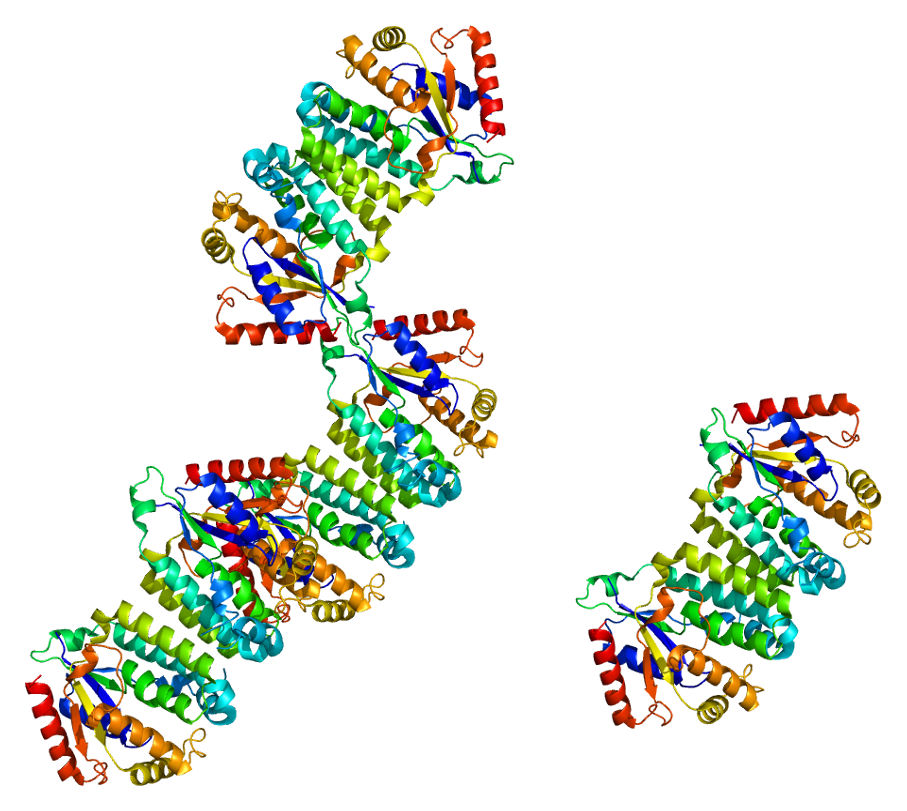
A síndrome é causada por mutações em genes essenciais para a manutenção e replicação do DNA mitocondrial. Os genes já associados a esta condição são: TWNK (que codifica a helicase Twinkle do mtDNA), MPV17 (proteína da membrana interna mitocondrial Mpv17), POLG (subunidade gama-1 da DNA polimerase) e DGUOK (desoxiguanosina quinase mitocondrial). Mutações nesses genes levam à depleção (redução) do DNA mitocondrial, especialmente em tecidos com alta demanda energética, como fígado e cérebro.[1][4]
Diagnóstico
O diagnóstico é baseado na avaliação clínica dos sintomas, exames laboratoriais (como a detecção de aminoacidúria e acidúria 3-metilglutacônica) e, principalmente, por meio de testes genéticos. Atualmente, existem 59 testes genéticos disponíveis para esta condição, e mais de 1.200 variantes genéticas foram registradas no banco de dados ClinVar. A confirmação molecular é fundamental para diferenciar esta síndrome de outras doenças mitocondriais.[1][4][5]
Tratamento e manejo
Até o momento, não há um tratamento curativo ou medicamento específico aprovado para a Síndrome de depleção do DNA mitocondrial, forma hepatocerebral. O manejo é multidisciplinar e focado no alívio dos sintomas e suporte às funções hepática e neurológica. Não há cobertura pelo Sistema Único de Saúde (SUS) para esta condição no Brasil. O acompanhamento deve ser feito por uma equipe especializada em doenças raras e mitocondriais.[1][5]
Tratamentos citados na literatura
A literatura científica (fonte: PubTator3) menciona algumas substâncias que foram estudadas em associação com esta doença, mas é importante destacar que NÃO se trata de recomendações de tratamento. As substâncias listadas são: 8-Hidroxi-2'-desoxiguanosina (1 publicação), Aminoácidos de cadeia ramificada (1 publicação), Ácido cítrico (1 publicação), DG-8-AF (1 publicação), Desoxirribonucleotídeos (1 publicação), Ácido tricloroacético (1 publicação), Ureia (1 publicação), Desoxiguanosina trifosfato (1 publicação), 2'-desoxiguanosina-5'-fosfato (1 publicação) e Desoxiguanosina (1 publicação). Esses dados são resultados de pesquisas experimentais e não devem ser interpretados como terapias estabelecidas.[5]
Prognóstico e qualidade de vida
O prognóstico para a forma hepatocerebral da síndrome de depleção do DNA mitocondrial é geralmente reservado, devido à gravidade do comprometimento hepático e neurológico, com início precoce dos sintomas. A qualidade de vida pode ser significativamente afetada, exigindo cuidados intensivos e suporte contínuo. Cada caso é único, e o acompanhamento médico regular é essencial para adaptar as estratégias de suporte às necessidades individuais do paciente.[1][3]
Conteúdo informativo gerado e mantido automaticamente a partir de fontes oficiais (Orphanet, HPO, OMIM, SUS). Não substitui avaliação médica.
Síndrome de depleção do DNA mitocondrial, ou doença de Alpers, é qualquer um de um grupo de distúrbios autossômicos recessivos que causam uma queda significativa no DNA mitocondrial nos tecidos afetados. Os sintomas podem ser qualquer combinação de miopáticos, hepatopáticos ou encefalomiopáticos. Essas síndromes afetam o tecido no músculo, no fígado ou tanto no músculo quanto no cérebro, respectivamente. A condição é tipicamente fatal na infância e na primeira infância, embora alguns tenham sobrevivido até a adolescência com a variante miopática e alguns tenham sobrevivido até a idade adulta com a variante encefalomiopática SUCLA2. Atualmente, não há tratamento curativo para nenhuma forma de MDDS, embora alguns tratamentos preliminares tenham mostrado uma redução nos sintomas.
Encontrou um erro ou informação desatualizada? Sugira uma correção →
Entender a doença
Do básico ao detalhe, leia no seu ritmo
Preparando trilha educativa...
Sinais e sintomas
O que aparece no corpo e com que frequência cada sintoma acontece
Visão geral
A Síndrome de depleção do DNA mitocondrial, forma hepatocerebral, é uma doença genética rara que afeta principalmente o fígado e o cérebro. Ela faz parte de um grupo de condições chamadas síndromes de depleção do DNA mitocondrial, nas quais a quantidade de DNA dentro das mitocôndrias (as 'usinas de energia' das células) é drasticamente reduzida, comprometendo a produção de energia celular. Os sintomas geralmente começam muito cedo na vida, ainda no período neonatal (primeiros dias de vida) ou durante a infância.[1][3]
Sinais e sintomas
Os sinais e sintomas da forma hepatocerebral são variados e podem incluir: dificuldades para se alimentar desde bebê, refluxo gastroesofágico, temperatura corporal baixa (hipotermia), movimentos oculares anormais, alterações na visão (incluindo cegueira), reflexos exagerados (hiperreflexia) ou reduzidos, espasticidade (rigidez muscular progressiva), paraparesia (fraqueza nas pernas), coreoatetose (movimentos involuntários), crises epilépticas (de início focal ou tônico-clônicas bilaterais), coma, alterações do sistema nervoso autônomo, hipertensão portal (pressão alta na veia que leva sangue ao fígado), trombocitopenia (baixa contagem de plaquetas), aminoacidúria generalizada (excesso de aminoácidos na urina) e acidúria 3-metilglutacônica (substância ácida na urina). A degeneração cerebral é uma característica central da doença.[1][3]
Causas genéticas
A síndrome é causada por mutações em genes essenciais para a manutenção e replicação do DNA mitocondrial. Os genes já associados a esta condição são: TWNK (que codifica a helicase Twinkle do mtDNA), MPV17 (proteína da membrana interna mitocondrial Mpv17), POLG (subunidade gama-1 da DNA polimerase) e DGUOK (desoxiguanosina quinase mitocondrial). Mutações nesses genes levam à depleção (redução) do DNA mitocondrial, especialmente em tecidos com alta demanda energética, como fígado e cérebro.[1][4]
Diagnóstico
O diagnóstico é baseado na avaliação clínica dos sintomas, exames laboratoriais (como a detecção de aminoacidúria e acidúria 3-metilglutacônica) e, principalmente, por meio de testes genéticos. Atualmente, existem 59 testes genéticos disponíveis para esta condição, e mais de 1.200 variantes genéticas foram registradas no banco de dados ClinVar. A confirmação molecular é fundamental para diferenciar esta síndrome de outras doenças mitocondriais.[1][4][5]
Tratamento e manejo
Até o momento, não há um tratamento curativo ou medicamento específico aprovado para a Síndrome de depleção do DNA mitocondrial, forma hepatocerebral. O manejo é multidisciplinar e focado no alívio dos sintomas e suporte às funções hepática e neurológica. Não há cobertura pelo Sistema Único de Saúde (SUS) para esta condição no Brasil. O acompanhamento deve ser feito por uma equipe especializada em doenças raras e mitocondriais.[1][5]
Tratamentos citados na literatura
A literatura científica (fonte: PubTator3) menciona algumas substâncias que foram estudadas em associação com esta doença, mas é importante destacar que NÃO se trata de recomendações de tratamento. As substâncias listadas são: 8-Hidroxi-2'-desoxiguanosina (1 publicação), Aminoácidos de cadeia ramificada (1 publicação), Ácido cítrico (1 publicação), DG-8-AF (1 publicação), Desoxirribonucleotídeos (1 publicação), Ácido tricloroacético (1 publicação), Ureia (1 publicação), Desoxiguanosina trifosfato (1 publicação), 2'-desoxiguanosina-5'-fosfato (1 publicação) e Desoxiguanosina (1 publicação). Esses dados são resultados de pesquisas experimentais e não devem ser interpretados como terapias estabelecidas.[5]
Prognóstico e qualidade de vida
O prognóstico para a forma hepatocerebral da síndrome de depleção do DNA mitocondrial é geralmente reservado, devido à gravidade do comprometimento hepático e neurológico, com início precoce dos sintomas. A qualidade de vida pode ser significativamente afetada, exigindo cuidados intensivos e suporte contínuo. Cada caso é único, e o acompanhamento médico regular é essencial para adaptar as estratégias de suporte às necessidades individuais do paciente.[1][3]
Conteúdo informativo gerado e mantido automaticamente a partir de fontes oficiais (Orphanet, HPO, OMIM, SUS). Não substitui avaliação médica.
Partes do corpo afetadas
+ 100 sintomas em outras categorias
Características mais comuns
Os sintomas variam de pessoa para pessoa. Abaixo estão as 253 características clínicas mais associadas, ordenadas por frequência.
Linha do tempo da pesquisa
Encontrou um erro ou informação desatualizada? Sugira uma correção →
Genética e causas
O que está alterado no DNA e como passa nas famílias
Genes associados
4 genes identificados com associação a esta condição.
Mitochondrial helicase involved in mtDNA replication and repair (PubMed:12975372, PubMed:15167897, PubMed:17324440, PubMed:18039713, PubMed:18971204, PubMed:25824949, PubMed:26887820, PubMed:27226550). Might have a role in mtDNA repair (PubMed:27226550). Has DNA strand separation activity needed to form a processive replication fork for leading strand synthesis which is catalyzed by the formation of a replisome complex with POLG and mtSDB (PubMed:12975372, PubMed:15167897, PubMed:18039713, PubMe
Mitochondrion matrix, mitochondrion nucleoidMitochondrion inner membrane
Progressive external ophthalmoplegia with mitochondrial DNA deletions, autosomal dominant, 3
A disorder characterized by progressive weakness of ocular muscles and levator muscle of the upper eyelid. In a minority of cases, it is associated with skeletal myopathy, which predominantly involves axial or proximal muscles and which causes abnormal fatigability and even permanent muscle weakness. Ragged-red fibers and atrophy are found on muscle biopsy. A large proportion of chronic ophthalmoplegias are associated with other symptoms, leading to a multisystemic pattern of this disease. Additional symptoms are variable, and may include cataracts, hearing loss, sensory axonal neuropathy, ataxia, depression, hypogonadism, and parkinsonism.
Non-selective channel that modulates the membrane potential under normal conditions and oxidative stress, and is involved in mitochondrial homeostasis (PubMed:25861990). Involved in mitochondrial deoxynucleoside triphosphates (dNTP) pool homeostasis and mitochondrial DNA (mtDNA) maintenance (PubMed:26760297). May be involved in the regulation of reactive oxygen species metabolism and the control of oxidative phosphorylation (By similarity)
Mitochondrion inner membrane
Mitochondrial DNA depletion syndrome 6
A disease due to mitochondrial dysfunction. It is characterized by infantile onset of progressive liver failure, often leading to death in the first year of life, peripheral neuropathy, corneal scarring, acral ulceration and osteomyelitis leading to autoamputation, cerebral leukoencephalopathy, failure to thrive, and recurrent metabolic acidosis with intercurrent infections.
Catalytic subunit of DNA polymerase gamma solely responsible for replication of mitochondrial DNA (mtDNA). Replicates both heavy and light strands of the circular mtDNA genome using a single-stranded DNA template, RNA primers and the four deoxyribonucleoside triphosphates as substrates (PubMed:11477093, PubMed:11897778, PubMed:15917273, PubMed:19837034, PubMed:9558343). Has 5' -> 3' polymerase activity. Functionally interacts with TWNK and SSBP1 at the replication fork to form a highly processiv
MitochondrionMitochondrion matrix, mitochondrion nucleoid
Progressive external ophthalmoplegia with mitochondrial DNA deletions, autosomal dominant, 1
A disorder characterized by progressive weakness of ocular muscles and levator muscle of the upper eyelid. In a minority of cases, it is associated with skeletal myopathy, which predominantly involves axial or proximal muscles and which causes abnormal fatigability and even permanent muscle weakness. Ragged-red fibers and atrophy are found on muscle biopsy. A large proportion of chronic ophthalmoplegias are associated with other symptoms, leading to a multisystemic pattern of this disease. Additional symptoms are variable, and may include cataracts, hearing loss, sensory axonal neuropathy, ataxia, depression, hypogonadism, and parkinsonism.
Phosphorylates deoxyguanosine and deoxyadenosine in the mitochondrial matrix, with the highest efficiency for deoxyguanosine (PubMed:11687801, PubMed:17073823, PubMed:23043144, PubMed:8692979, PubMed:8706825). In non-replicating cells, where cytosolic dNTP synthesis is down-regulated, mtDNA synthesis depends solely on DGUOK and TK2. Phosphorylates certain nucleoside analogs (By similarity). Widely used as target of antiviral and chemotherapeutic agents
Mitochondrion
Mitochondrial DNA depletion syndrome 3
A disorder due to mitochondrial dysfunction characterized by onset in infancy of progressive liver failure, hypoglycemia, increased lactate in body fluids, and neurologic abnormalities including hypotonia, encephalopathy, peripheral neuropathy. Affected tissues show both decreased activity of the mtDNA-encoded respiratory chain complexes and mtDNA depletion.
Medicamentos aprovados (FDA)
1 medicamento encontrado nos registros da FDA americana.
Variantes genéticas (ClinVar)
1.224 variantes patogênicas registradas no ClinVar.
Classificação de variantes (ClinVar)
Distribuição de 18 variantes classificadas pelo ClinVar.
Vias biológicas (Reactome)
5 vias biológicas associadas aos genes desta condição.
Diagnóstico
Os sinais que médicos procuram e os exames que confirmam
Tratamento e manejo
Remédios, cuidados de apoio e o que precisa acompanhar
Onde tratar no SUS
Hospitais de referência no Brasil e o protocolo oficial do SUS (PCDT)
🇧🇷 Atendimento SUS — Síndrome de depleção do DNA mitocondrial, forma hepatocerebral
Selecione um estado ou use sua localização para ver resultados.
Dados de DATASUS/CNES, SBGM, ABNeuro e Ministério da Saúde. Sempre confirme a disponibilidade diretamente com o estabelecimento.
Pesquisa ativa
Ensaios clínicos abertos e novidades científicas recentes
Pesquisa e ensaios clínicos
Nenhum ensaio clínico registrado para esta condição.
Publicações mais relevantes
MPV17-related Hepatocerebral Mitochondrial DNA Depletion Syndrome.
Mitochondrial DNA (mtDNA) depletion syndrome comprises diseases resulting from a deficiency of proteins involved in mtDNA synthesis. MPV17 is a mitochondrial membrane protein whose mutation causes mitochondrial deoxynucleotide insufficiency. MPV17-related hepatocerebral mtDNA depletion syndrome is a rare autosomal recessive disease. This case report describes the clinical manifestations of MPV17-related hepatocerebral mtDNA depletion syndrome analyzed by performing whole-exome sequencing (WES). A 17-month-old girl presented with developmental delay, jaundice, and failure to thrive. The laboratory findings revealed cholestatic hepatitis, increased lactate-to-pyruvate ratio, and prolongation of the prothrombin time. She developed a hypoglycemic seizure. Brain magnetic resonance imaging revealed extensive demyelination of the white matter. WES detected the p.Leu151fs and p.Pro98Leu variants in MPV17. Her parents and sibling were found to be MPV17 heterozygous carriers. She was administered supportive treatment, such as replacement of fat-soluble vitamins and cornstarch to prevent further hypoglycemic events. The patient is currently being considered for liver transplantation. Overall, WES can help diagnose hepatocerebral mtDNA depletion syndrome in patients with hepatopathy, developmental delay, lactic acidosis, and hypomyelination based on brain magnetic resonance imaging.
A novel homozygous variant in MICOS13/QIL1 causes hepato-encephalopathy with mitochondrial DNA depletion syndrome.
Mitochondrial DNA depletion syndrome (MTDPS) is part of a group of mitochondrial diseases characterized by a reduction in mitochondrial DNA copy number. Most MTDPS is caused by mutations in genes that disrupt deoxyribonucleotide metabolism. We performed the whole-exome sequencing of a hepato-encephalopathy patient with MTDPS and functional analyses to determine the clinical significance of the identified variant. Here, whole-exome sequencing of a patient presenting with hepato-encephalopathy and MTDPS identified a novel homozygous frameshift variant, c.13_29del (p.Trp6Profs*71) in MICOS13. MICOS13 (also known as QIL1, MIC13, or C19orf70) is a component of the MICOS complex, which plays crucial roles in the maintenance of cristae junctions at the mitochondrial inner membrane. We found loss of MICOS13 protein and fewer cristae structures in the mitochondria of fibroblasts derived from the patient. Stable expression of a wild-type MICOS13 cDNA in the patients fibroblasts using a lentivirus system rescued mitochondrial respiratory chain complex deficiencies. Our findings suggest that the novel c.13_29del (p.Trp6Profs*71) MICOS13 variant causes hepato-encephalopathy with MTDPS. We propose that MICOS13 is classified as the cause of MTDPS.
Liver pathology in hepato-cerebral mitochondrial depletion syndromes due to POLG1, DGUOK, 146or MPV17 variants.
Publicações recentes
Deoxyguanosine Kinase Deficiency.
MPV17-related Hepatocerebral Mitochondrial DNA Depletion Syndrome.
📚 EuropePMCmostrando 3
MPV17-related Hepatocerebral Mitochondrial DNA Depletion Syndrome.
The Korean journal of gastroenterology = Taehan Sohwagi Hakhoe chiA novel homozygous variant in MICOS13/QIL1 causes hepato-encephalopathy with mitochondrial DNA depletion syndrome.
Molecular genetics & genomic medicineLiver pathology in hepato-cerebral mitochondrial depletion syndromes due to POLG1, DGUOK, 146or MPV17 variants.
Polish journal of pathology : official journal of the Polish Society of PathologistsAssociações
Organizações que acompanham esta doença — pra ter apoio e orientação
Ainda não temos associações cadastradas para Síndrome de depleção do DNA mitocondrial, forma hepatocerebral.
É de uma associação que acompanha esta doença? Fale com a gente →
Comunidades
Grupos ativos de quem convive com esta doença aqui no Raras
Ainda não existe comunidade no Raras para Síndrome de depleção do DNA mitocondrial, forma hepatocerebral
Pacientes, familiares e cuidadores se organizam em comunidades pra compartilhar experiências, fazer perguntas e se apoiar. Você pode ser o primeiro.
Tire suas dúvidas
Perguntas, dicas e experiências compartilhadas aqui na página
Participe da discussão
Faça login para postar dúvidas, compartilhar experiências e interagir com especialistas.
Fazer loginDoenças relacionadas
Doenças com sintomas parecidos — ajudam quem ainda está buscando diagnóstico
Referências e fontes
Bases de dados externas citadas neste artigo
Publicações científicas
Artigos indexados no PubMed ligados a esta doença no grafo RarasNet — título, periódico e PMID direto da fonte, sem intermediação de IA.
- MPV17-related Hepatocerebral Mitochondrial DNA Depletion Syndrome.
- A novel homozygous variant in MICOS13/QIL1 causes hepato-encephalopathy with mitochondrial DNA depletion syndrome.
- Liver pathology in hepato-cerebral mitochondrial depletion syndromes due to POLG1, DGUOK, 146or MPV17 variants.Polish journal of pathology : official journal of the Polish Society of Pathologists· 2019· PMID 31556567mais citado
- Deoxyguanosine Kinase Deficiency.
Bases de dados e fontes oficiais
Identificadores e referências canônicas usadas para montar este verbete.
- ORPHA:254871(Orphanet)
- MONDO:0100512(MONDO)
- GARD:20769(GARD (NIH))
- Variantes catalogadas(ClinVar)
- Busca completa no PubMed(PubMed)
- Q55786491(Wikidata)
Dados compilados pelo RarasNet a partir de fontes abertas (Orphanet, OMIM, MONDO, PubMed/EuropePMC, ClinicalTrials.gov, DATASUS, PCDT/MS). Este conteúdo é informativo e não substitui avaliação médica.
Conteúdo mantido por Agente Raras · Médicos e pesquisadores podem colaborar
Síndrome de depleção do DNA mitocondrial, forma hepatocerebral
📋 Origem dos dados
Esta página agrega dados de fontes públicas e oficiais. Dados sobre cobertura no SUS (PCDT, CEAF) são verificados ativamente por agente proativo (ver badge no infobox). Demais dados têm atribuição de fonte + data da última sincronização — clique para abrir o original.
- Doença rara (ontologia)
- fonte: Orphanet
- Identificador unificado
- fonte: MONDO
- NIH/GARD
- fonte: GARD (NIH)
- Indexação biomédica
- fonte: MeSH (NLM)
- Dado público estruturado
- fonte: Wikidata
- Medicamentos aprovados FDA
- fonte: FDA OpenFDA