
É uma síndrome genética de envelhecimento precoce, rara, que é herdada dos dois pais. Ela se caracteriza por perda de gordura corporal, osteoporose e destruição óssea muito grave. As pessoas com essa síndrome não apresentam problemas cardíacos, diabetes ou triglicerídeos altos, mas sofrem de problemas ósseos sérios que comprometem sua qualidade de vida.
Introdução
O que você precisa saber de cara
É uma síndrome genética de envelhecimento precoce, rara, que é herdada dos dois pais. Ela se caracteriza por perda de gordura corporal, osteoporose e destruição óssea muito grave. As pessoas com essa síndrome não apresentam problemas cardíacos, diabetes ou triglicerídeos altos, mas sofrem de problemas ósseos sérios que comprometem sua qualidade de vida.
Escala de raridade
<1/50kMuito rara
1/20kRara
1/10kPouco freq.
1/5kIncomum
1/2k
Encontrou um erro ou informação desatualizada? Sugira uma correção →
Entender a doença
Do básico ao detalhe, leia no seu ritmo
Preparando trilha educativa...
Sinais e sintomas
O que aparece no corpo e com que frequência cada sintoma acontece
Partes do corpo afetadas
+ 12 sintomas em outras categorias
Características mais comuns
Os sintomas variam de pessoa para pessoa. Abaixo estão as 49 características clínicas mais associadas, ordenadas por frequência.
Linha do tempo da pesquisa
Encontrou um erro ou informação desatualizada? Sugira uma correção →
Genética e causas
O que está alterado no DNA e como passa nas famílias
Genes associados
1 gene identificado com associação a esta condição. Padrão de herança: Autosomal recessive.
Curadoria gene-doença
fontes oficiaisNon-specific DNA-binding protein that plays key roles in mitotic nuclear reassembly, chromatin organization, DNA damage response, gene expression and intrinsic immunity against foreign DNA (PubMed:10908652, PubMed:11792822, PubMed:12163470, PubMed:18005698, PubMed:25991860, PubMed:28841419, PubMed:31796734, PubMed:32792394). Contains two non-specific double-stranded DNA (dsDNA)-binding sites which promote DNA cross-bridging (PubMed:9465049). Plays a key role in nuclear membrane reformation at th
NucleusChromosomeNucleus envelopeCytoplasm
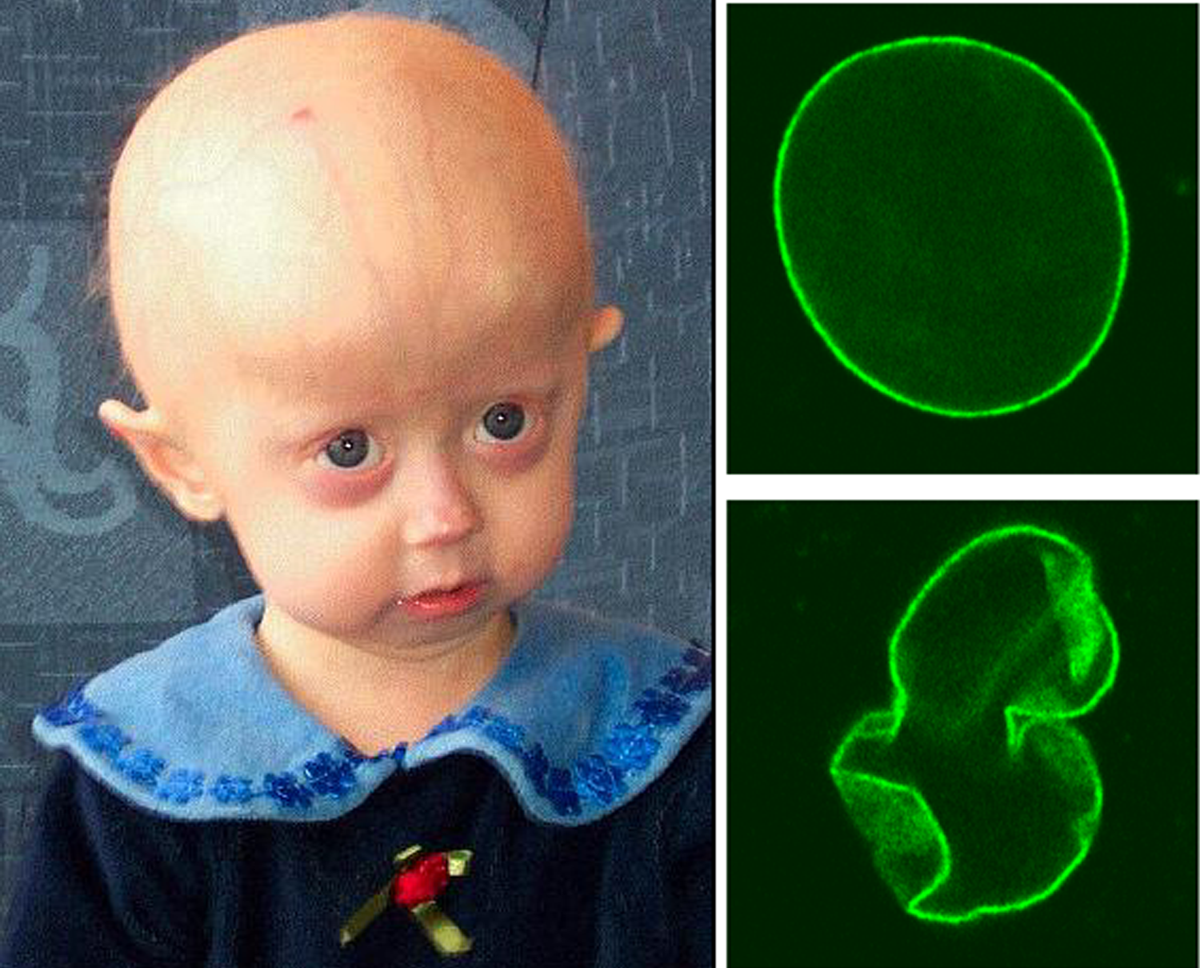
Nestor-Guillermo progeria syndrome
An atypical progeroid syndrome characterized by normal development in the first years of life, later followed by the emergence of generalized lipoatrophy, severe osteoporosis, and marked osteolysis. The atrophic facial subcutaneous fat pad and the marked osteolysis of the maxilla and mandible result in a typical pseudosenile facial appearance with micrognathia, prominent subcutaneous venous patterning, a convex nasal ridge, and proptosis. Cognitive development is completely normal. Patients do not have cardiovascular dysfunction, atherosclerosis, or metabolic anomalies.
Variantes genéticas (ClinVar)
13 variantes patogênicas registradas no ClinVar.
Classificação de variantes (ClinVar)
Distribuição de 27 variantes classificadas pelo ClinVar.
Vias biológicas (Reactome)
8 vias biológicas associadas aos genes desta condição.
Diagnóstico
Os sinais que médicos procuram e os exames que confirmam
Tratamento e manejo
Remédios, cuidados de apoio e o que precisa acompanhar
Onde tratar no SUS
Hospitais de referência no Brasil e o protocolo oficial do SUS (PCDT)
🇧🇷 Atendimento SUS — Síndrome progéria de Nestor-Guillermo
Selecione um estado ou use sua localização para ver resultados.
Dados de DATASUS/CNES, SBGM, ABNeuro e Ministério da Saúde. Sempre confirme a disponibilidade diretamente com o estabelecimento.
Pesquisa ativa
Ensaios clínicos abertos e novidades científicas recentes
Pesquisa e ensaios clínicos
Nenhum ensaio clínico registrado para esta condição.
Publicações mais relevantes
A multiparametric anti-aging CRISPR screen uncovers a role for BAF in protein synthesis regulation.
Progeria syndromes are very rare, incurable premature aging conditions recapitulating most aging features. Here, we report a whole genome, multiparametric CRISPR screen, identifying 43 genes that can rescue multiple cellular phenotypes associated with progeria. We implement the screen in fibroblasts from Néstor-Guillermo Progeria Syndrome male patients, carrying a homozygous A12T mutation in BAF. The hits are enriched for genes involved in protein synthesis, protein and RNA transport and osteoclast formation and are validated in a whole-organism Caenorhabditis elegans model. We further confirm that BAF A12T can disrupt protein synthesis rate and fidelity, which could contribute to premature aging in patients. This work highlights the power of multiparametric genome-wide suppressor screens to identify genes enhancing cellular resilience in premature aging and provide insights into the biology underlying progeria-associated cellular dysfunction.
Lipodystrophic Laminopathies: From Dunnigan Disease to Progeroid Syndromes.
Lipodystrophic laminopathies are a group of ultra-rare disorders characterised by the presence of pathogenic variants in the same gene (LMNA) and other related genes, along with an impaired adipose tissue pattern and other features that are specific of each of these disorders. The most fascinating traits include their complex genotype-phenotype associations and clinical heterogeneity, ranging from Dunnigan disease, in which the most relevant feature is precisely adipose tissue dysfunction and lipodystrophy, to the other laminopathies affecting adipose tissue, which are also characterised by the presence of signs of premature ageing (Hutchinson Gilford-progeria syndrome, LMNA-atypical progeroid syndrome, mandibuloacral dysplasia types A and B, Nestor-Guillermo progeria syndrome, LMNA-associated cardiocutaneous progeria). This raises several questions when it comes to understanding how variants in the same gene can lead to similar adipose tissue disturbances and, at the same time, to such heterogeneous phenotypes and variable degrees of metabolic abnormalities. The present review aims to gather the molecular basis of adipose tissue impairment in lipodystrophic laminopathies, their main clinical aspects and recent therapeutic strategies. In addition, it also summarises the key aspects for their differential diagnosis.
A human progeria-associated BAF-1 mutation modulates gene expression and accelerates aging in C. elegans.
Alterations in the nuclear envelope are linked to a variety of rare diseases termed laminopathies. A single amino acid substitution at position 12 (A12T) of the human nuclear envelope protein BAF (Barrier to Autointegration Factor) causes Néstor-Guillermo Progeria Syndrome (NGPS). This premature ageing condition leads to growth retardation and severe skeletal defects, but the underlying mechanisms are unknown. Here, we have generated a novel in vivo model for NGPS by modifying the baf-1 locus in C. elegans to mimic the human NGPS mutation. These baf-1(G12T) mutant worms displayed multiple phenotypes related to fertility, lifespan, and stress resistance. Importantly, nuclear morphology deteriorated faster during aging in baf-1(G12T) compared to wild-type animals, recapitulating an important hallmark of cells from progeria patients. Although localization of BAF-1(G12T) was similar to wild-type BAF-1, lamin accumulation at the nuclear envelope was reduced in mutant worms. Tissue-specific chromatin binding and transcriptome analyses showed reduced BAF-1 association in most genes deregulated by the baf-1(G12T) mutation, suggesting that altered BAF chromatin association induces NGPS phenotypes via altered gene expression.
A De Novo Sequence Variant in Barrier-to-Autointegration Factor Is Associated with Dominant Motor Neuronopathy.
Barrier-to-autointegration factor (BAF) is an essential component of the nuclear lamina. Encoded by BANF1, this DNA binding protein contributes to the regulation of gene expression, cell cycle progression, and nuclear integrity. A rare recessive BAF variant, Ala12Thr, causes the premature aging syndrome, Néstor-Guillermo progeria syndrome (NGPS). Here, we report the first dominant pathogenic BAF variant, Gly16Arg, identified in a patient presenting with progressive neuromuscular weakness. Although disease variants carry nearby amino acid substitutions, cellular and biochemical properties are distinct. In contrast to NGPS, Gly16Arg patient fibroblasts show modest changes in nuclear lamina structure and increases in repressive marks associated with heterochromatin. Structural studies reveal that the Gly16Arg substitution introduces a salt bridge between BAF monomers, reducing the conformation ensemble available to BAF. We show that this structural change increases the double-stranded DNA binding affinity of BAF Gly16Arg. Together, our findings suggest that BAF Gly16Arg has an increased chromatin occupancy that leads to epigenetic changes and impacts nuclear functions. These observations provide a new example of how a missense mutation can change a protein conformational equilibrium to cause a dominant disease and extend our understanding of mechanisms by which BAF function impacts human health.
Analysis of a rare progeria variant of Barrier-to-autointegration factor in Drosophila connects centromere function to tissue homeostasis.
Barrier-to-autointegration factor (BAF/BANF) is a nuclear lamina protein essential for nuclear integrity, chromatin structure, and genome stability. Whereas complete loss of BAF causes lethality in multiple organisms, the A12T missense mutation of the BANF1 gene in humans causes a premature aging syndrome, called Néstor-Guillermo Progeria Syndrome (NGPS). Here, we report the first in vivo animal investigation of progeroid BAF, using CRISPR editing to introduce the NGPS mutation into the endogenous Drosophila baf gene. Progeroid BAF adults are born at expected frequencies, demonstrating that this BAF variant retains some function. However, tissue homeostasis is affected, supported by studies of the ovary, a tissue that depends upon BAF for stem cell survival and continuous oocyte production. We find that progeroid BAF causes defects in germline stem cell mitosis that delay anaphase progression and compromise chromosome segregation. We link these defects to decreased recruitment of centromeric proteins of the kinetochore, indicating dysfunction of cenBAF, a localized pool of dephosphorylated BAF produced by Protein Phosphatase PP4. We show that DNA damage increases in progenitor germ cells, which causes germ cell death due to activation of the DNA damage transducer kinase Chk2. Mitotic defects appear widespread, as aberrant chromosome segregation and increased apoptosis occur in another tissue. Together, these data highlight the importance of BAF in establishing centromeric structures critical for mitosis. Further, these studies link defects in cenBAF function to activation of a checkpoint that depletes progenitor reserves critical for tissue homeostasis, aligning with phenotypes of NGPS patients.
Publicações recentes
A multiparametric anti-aging CRISPR screen uncovers a role for BAF in protein synthesis regulation.
A human progeria-associated BAF-1 mutation modulates gene expression and accelerates aging in C. elegans.
Lipodystrophic Laminopathies: From Dunnigan Disease to Progeroid Syndromes.
A De Novo Sequence Variant in Barrier-to-Autointegration Factor Is Associated with Dominant Motor Neuronopathy.
Analysis of a rare progeria variant of Barrier-to-autointegration factor in Drosophila connects centromere function to tissue homeostasis.
📚 EuropePMC4 artigos no totalmostrando 13
A multiparametric anti-aging CRISPR screen uncovers a role for BAF in protein synthesis regulation.
Nature communicationsA human progeria-associated BAF-1 mutation modulates gene expression and accelerates aging in C. elegans.
The EMBO journalLipodystrophic Laminopathies: From Dunnigan Disease to Progeroid Syndromes.
International journal of molecular sciencesA De Novo Sequence Variant in Barrier-to-Autointegration Factor Is Associated with Dominant Motor Neuronopathy.
CellsAnalysis of a rare progeria variant of Barrier-to-autointegration factor in Drosophila connects centromere function to tissue homeostasis.
Cellular and molecular life sciences : CMLSThe BAF A12T mutation disrupts lamin A/C interaction, impairing robust repair of nuclear envelope ruptures in Nestor-Guillermo progeria syndrome cells.
Nucleic acids researchThe Impact of Rare Human Variants on Barrier-To-Auto-Integration Factor 1 (Banf1) Structure and Function.
Frontiers in cell and developmental biologyMutations Involved in Premature-Ageing Syndromes.
The application of clinical geneticsBarrier-to-autointegration-factor (Banf1) modulates DNA double-strand break repair pathway choice via regulation of DNA-dependent kinase (DNA-PK) activity.
Nucleic acids researchAn additional case of Néstor-Guillermo progeria syndrome diagnosed in early childhood.
American journal of medical genetics. Part ABarrier-to-autointegration factor 1 (Banf1) regulates poly [ADP-ribose] polymerase 1 (PARP1) activity following oxidative DNA damage.
Nature communicationsBarrier-to-autointegration factor (BAF) involvement in prelamin A-related chromatin organization changes.
OncotargetNF-κB activation impairs somatic cell reprogramming in ageing.
Nature cell biologyAssociações
Organizações que acompanham esta doença — pra ter apoio e orientação
Ainda não temos associações cadastradas para Síndrome progéria de Nestor-Guillermo.
É de uma associação que acompanha esta doença? Fale com a gente →
Comunidades
Grupos ativos de quem convive com esta doença aqui no Raras
Ainda não existe comunidade no Raras para Síndrome progéria de Nestor-Guillermo
Pacientes, familiares e cuidadores se organizam em comunidades pra compartilhar experiências, fazer perguntas e se apoiar. Você pode ser o primeiro.
Tire suas dúvidas
Perguntas, dicas e experiências compartilhadas aqui na página
Participe da discussão
Faça login para postar dúvidas, compartilhar experiências e interagir com especialistas.
Fazer loginDoenças relacionadas
Doenças com sintomas parecidos — ajudam quem ainda está buscando diagnóstico
Referências e fontes
Bases de dados externas citadas neste artigo
Publicações científicas
Artigos indexados no PubMed ligados a esta doença no grafo RarasNet — título, periódico e PMID direto da fonte, sem intermediação de IA.
- A multiparametric anti-aging CRISPR screen uncovers a role for BAF in protein synthesis regulation.
- Lipodystrophic Laminopathies: From Dunnigan Disease to Progeroid Syndromes.
- A human progeria-associated BAF-1 mutation modulates gene expression and accelerates aging in C. elegans.
- A De Novo Sequence Variant in Barrier-to-Autointegration Factor Is Associated with Dominant Motor Neuronopathy.
- Analysis of a rare progeria variant of Barrier-to-autointegration factor in Drosophila connects centromere function to tissue homeostasis.
Bases de dados e fontes oficiais
Identificadores e referências canônicas usadas para montar este verbete.
- ORPHA:280576(Orphanet)
- OMIM OMIM:614008(OMIM)
- MONDO:0013523(MONDO)
- GARD:11008(GARD (NIH))
- Variantes catalogadas(ClinVar)
- Busca completa no PubMed(PubMed)
- Q55784059(Wikidata)
Dados compilados pelo RarasNet a partir de fontes abertas (Orphanet, OMIM, MONDO, PubMed/EuropePMC, ClinicalTrials.gov, DATASUS, PCDT/MS). Este conteúdo é informativo e não substitui avaliação médica.
Conteúdo mantido por Agente Raras · Médicos e pesquisadores podem colaborar
Síndrome progéria de Nestor-Guillermo
📋 Origem dos dados
Esta página agrega dados de fontes públicas e oficiais. Dados sobre cobertura no SUS (PCDT, CEAF) são verificados ativamente por agente proativo (ver badge no infobox). Demais dados têm atribuição de fonte + data da última sincronização — clique para abrir o original.
- Doença rara (ontologia)
- fonte: Orphanet
- Identificador unificado
- fonte: MONDO
- Genética mendeliana
- fonte: OMIM
- Codificação WHO/SUS
- fonte: WHO ICD-10 / DATASUS
- CID-11 (futuro)
- fonte: WHO ICD-11
- NIH/GARD
- fonte: GARD (NIH)
- Dado público estruturado
- fonte: Wikidata