
Síndrome caracterizada por contraturas articulares congênitas não progressivas. As contraturas podem envolver os membros superiores ou inferiores e/ou a coluna vertebral, levando a vários graus de limitações de flexão ou extensão evidentes ao nascimento.
Introdução
O que você precisa saber de cara
Síndrome caracterizada por contraturas articulares congênitas não progressivas. As contraturas podem envolver os membros superiores ou inferiores e/ou a coluna vertebral, levando a vários graus de limitações de flexão ou extensão evidentes ao nascimento.
Encontrou um erro ou informação desatualizada? Sugira uma correção →
Entender a doença
Do básico ao detalhe, leia no seu ritmo
Preparando trilha educativa...
Sinais e sintomas
O que aparece no corpo e com que frequência cada sintoma acontece
Partes do corpo afetadas
+ 43 sintomas em outras categorias
Características mais comuns
Os sintomas variam de pessoa para pessoa. Abaixo estão as 115 características clínicas mais associadas, ordenadas por frequência.
Linha do tempo da pesquisa
Encontrou um erro ou informação desatualizada? Sugira uma correção →
Genética e causas
O que está alterado no DNA e como passa nas famílias
Genes associados
11 genes identificados com associação a esta condição.
Catalyzes the hydrolysis of GTP and utilizes this energy to mediate vesicle scission at plasma membrane during endocytosis and filament remodeling at many actin structures during organization of the actin cytoskeleton (PubMed:15731758, PubMed:19605363, PubMed:19623537, PubMed:33713620, PubMed:34744632). Plays an important role in vesicular trafficking processes, namely clathrin-mediated endocytosis (CME), exocytic and clathrin-coated vesicle from the trans-Golgi network, and PDGF stimulated macr
Cytoplasm, cytoskeletonCytoplasmic vesicle, clathrin-coated vesicleCell projection, uropodiumEndosomeCytoplasm, cytoskeleton, microtubule organizing center, centrosomeCytoplasm, cytoskeleton, microtubule organizing center, centrosome, centrioleRecycling endosomeCell projection, phagocytic cupCytoplasmic vesicle, phagosome membraneCell projection, podosomeCytoplasmCell junctionPostsynaptic densitySynapse, synaptosomeMidbodyMembrane, clathrin-coated pit
Myopathy, centronuclear, 1
A congenital muscle disorder characterized by progressive muscular weakness and wasting involving mainly limb girdle, trunk, and neck muscles. It may also affect distal muscles. Weakness may be present during childhood or adolescence or may not become evident until the third decade of life. Ptosis is a frequent clinical feature. The most prominent histopathologic features include high frequency of centrally located nuclei in muscle fibers not secondary to regeneration, radial arrangement of sarcoplasmic strands around the central nuclei, and predominance and hypotrophy of type 1 fibers.
Tyrosine-protein kinase that plays an essential role as cell surface receptor for neuregulins. Binds to neuregulin-1 (NRG1) and is activated by it; ligand-binding increases phosphorylation on tyrosine residues and promotes its association with the p85 subunit of phosphatidylinositol 3-kinase (PubMed:20682778). May also be activated by CSPG5 (PubMed:15358134). Involved in the regulation of myeloid cell differentiation (PubMed:27416908)
Cell membraneSecreted
Lethal congenital contracture syndrome 2
A form of lethal congenital contracture syndrome, an autosomal recessive disorder characterized by degeneration of anterior horn neurons, extreme skeletal muscle atrophy, and congenital non-progressive joint contractures (arthrogryposis). The contractures can involve the upper or lower limbs and/or the vertebral column, leading to various degrees of flexion or extension limitations evident at birth. LCCS2 patients manifest craniofacial/ocular findings, lack of hydrops, multiple pterygia, and fractures, as well as a normal duration of pregnancy and a unique feature of a markedly distended urinary bladder (neurogenic bladder defect). The phenotype suggests a spinal cord neuropathic etiology.
Transcriptional repressor. Specifically binds DNA and probably acts by recruiting chromatin remodeling multiprotein complexes
CytoplasmNucleusNucleus, nucleoplasm
Lethal congenital contracture syndrome 6
A form of lethal congenital contracture syndrome, an autosomal recessive disorder characterized by degeneration of anterior horn neurons, extreme skeletal muscle atrophy and congenital non-progressive joint contractures. The contractures can involve the upper or lower limbs and/or the vertebral column, leading to various degrees of flexion or extension limitations evident at birth. LCCS6 features include severe polyhydramnios and absent stomach, in addition to multiple contracture deformities.
Catalyzes the formation of the signaling molecule cAMP downstream of G protein-coupled receptors (PubMed:17110384, PubMed:17916776). Functions in signaling cascades downstream of beta-adrenergic receptors in the heart and in vascular smooth muscle cells (PubMed:17916776). Functions in signaling cascades downstream of the vasopressin receptor in the kidney and has a role in renal water reabsorption. Functions in signaling cascades downstream of PTH1R and plays a role in regulating renal phosphate
Cell membraneCell projection, ciliumCell projection, stereocilium
Lethal congenital contracture syndrome 8
A form of lethal congenital contracture syndrome, an autosomal recessive disorder characterized by degeneration of anterior horn neurons, extreme skeletal muscle atrophy and congenital non-progressive joint contractures. The contractures can involve the upper or lower limbs and/or the vertebral column, leading to various degrees of flexion or extension limitations evident at birth. LCCS8 is an axoglial form of arthrogryposis multiplex congenita, characterized by congenital distal joint contractures, reduced fetal movements, and severe motor paralysis leading to death early in the neonatal period.
Pleiotropic regulator of mitotic progression, participating in the control of spindle dynamics and chromosome separation (PubMed:12101123, PubMed:12840024, PubMed:14660563, PubMed:19941817). Phosphorylates different histones, myelin basic protein, beta-casein, and BICD2 (PubMed:11864968). Phosphorylates histone H3 on serine and threonine residues and beta-casein on serine residues (PubMed:11864968). Important for G1/S transition and S phase progression (PubMed:12840024, PubMed:14660563, PubMed:1
CytoplasmNucleus
Lethal congenital contracture syndrome 10
A form of lethal congenital contracture syndrome, an autosomal recessive disorder characterized by degeneration of anterior horn neurons, extreme skeletal muscle atrophy and congenital non-progressive joint contractures. The contractures can involve the upper or lower limbs and/or the vertebral column, leading to various degrees of flexion or extension limitations evident at birth.
Required for the export of mRNAs containing poly(A) tails from the nucleus into the cytoplasm. May be involved in the terminal step of the mRNA transport through the nuclear pore complex (NPC)
NucleusCytoplasmNucleus, nuclear pore complex
Lethal congenital contracture syndrome 1
A form of lethal congenital contracture syndrome, an autosomal recessive disorder characterized by degeneration of anterior horn neurons, extreme skeletal muscle atrophy, and congenital non-progressive joint contractures (arthrogryposis). The contractures can involve the upper or lower limbs and/or the vertebral column, leading to various degrees of flexion or extension limitations evident at birth. LCCS1 patients manifest early fetal hydrops and akinesia, micrognathia, pulmonary hypoplasia, pterygia, and multiple joint contractures. It leads to prenatal death.
Thick filament-associated protein located in the crossbridge region of vertebrate striated muscle a bands. Slow skeletal protein that binds to both myosin and actin (PubMed:31025394, PubMed:31264822). In vitro, binds to native thin filaments and modifies the activity of actin-activated myosin ATPase. May modulate muscle contraction or may play a more structural role
Arthrogryposis, distal, 1B
A form of distal arthrogryposis, a disease characterized by congenital joint contractures that mainly involve two or more distal parts of the limbs, in the absence of a primary neurological or muscle disease. Distal arthrogryposis type 1 is characterized largely by camptodactyly and clubfoot. Hypoplasia and/or absence of some interphalangeal creases is common. The shoulders and hips are less frequently affected.
Ligand for NRCAM and NFASC/neurofascin that plays a role in the formation and maintenance of the nodes of Ranvier on myelinated axons. Mediates interaction between Schwann cell microvilli and axons via its interactions with NRCAM and NFASC. Nodes of Ranvier contain clustered sodium channels that are crucial for the saltatory propagation of action potentials along myelinated axons. During development, nodes of Ranvier are formed by the fusion of two heminodes. Required for normal clustering of so
Cell membraneCell projection, axonSecretedSecreted, extracellular space, extracellular matrix
Lethal congenital contracture syndrome 11
A form of lethal congenital contracture syndrome, an autosomal recessive disorder characterized by degeneration of anterior horn neurons, extreme skeletal muscle atrophy and congenital non-progressive joint contractures. The contractures can involve the upper or lower limbs and/or the vertebral column, leading to various degrees of flexion or extension limitations evident at birth.
Required, with CNTNAP2, for radial and longitudinal organization of myelinated axons. Plays a role in the formation of functional distinct domains critical for saltatory conduction of nerve impulses in myelinated nerve fibers. Demarcates the paranodal region of the axo-glial junction. In association with contactin involved in the signaling between axons and myelinating glial cells
MembraneCell junction, paranodal septate junction
Lethal congenital contracture syndrome 7
A form of lethal congenital contracture syndrome, an autosomal recessive disorder characterized by degeneration of anterior horn neurons, extreme skeletal muscle atrophy and congenital non-progressive joint contractures. The contractures can involve the upper or lower limbs and/or the vertebral column, leading to various degrees of flexion or extension limitations evident at birth. LCCS7 is a severe axoglial disease characterized by congenital distal joint contractures, polyhydramnios, reduced fetal movements, and motor paralysis leading to death early in the neonatal period.
Catalyzes the phosphorylation of phosphatidylinositol 4-phosphate (PtdIns(4)P/PI4P) to form phosphatidylinositol 4,5-bisphosphate (PtdIns(4,5)P2/PIP2), a lipid second messenger that regulates several cellular processes such as signal transduction, vesicle trafficking, actin cytoskeleton dynamics, cell adhesion, and cell motility (PubMed:12422219, PubMed:22942276). PtdIns(4,5)P2 can directly act as a second messenger or can be utilized as a precursor to generate other second messengers: inositol
Cell membraneEndomembrane systemCytoplasmCell junction, focal adhesionCell junction, adherens junctionCell projection, ruffle membraneCell projection, phagocytic cupCell projection, uropodiumNucleus
Lethal congenital contracture syndrome 3
A form of lethal congenital contracture syndrome, an autosomal recessive disorder characterized by degeneration of anterior horn neurons, extreme skeletal muscle atrophy, and congenital non-progressive joint contractures (arthrogryposis). The contractures can involve the upper or lower limbs and/or the vertebral column, leading to various degrees of flexion or extension limitations evident at birth. LCCS3 patients present at birth with severe multiple joint contractures and severe muscle wasting and atrophy, mainly in the legs. Death occurs minutes to hours after birth due to respiratory insufficiency. The phenotype can be distinguished from that of LCCS1 by the absence of hydrops, fractures and multiple pterygia, and from LCCS2 by the absence of neurogenic bladder defect.
Adhesion G-protein coupled receptor (aGPCR) for steroid hormones, such as progesterone and 17alpha-hydroxyprogesterone (17OHP) (PubMed:35394864, PubMed:39884271). Involved in many biological processes, such as myelination, sprouting angiogenesis, placenta, ear and cartilage development (By similarity). Ligand binding causes a conformation change that triggers signaling via guanine nucleotide-binding proteins (G proteins) and modulates the activity of downstream effectors, such as adenylate cycla
Cell membrane
Lethal congenital contracture syndrome 9
A form of lethal congenital contracture syndrome, an autosomal recessive disorder characterized by degeneration of anterior horn neurons, extreme skeletal muscle atrophy and congenital non-progressive joint contractures. The contractures can involve the upper or lower limbs and/or the vertebral column, leading to various degrees of flexion or extension limitations evident at birth.
Variantes genéticas (ClinVar)
247 variantes patogênicas registradas no ClinVar.
Classificação de variantes (ClinVar)
Distribuição de 219 variantes classificadas pelo ClinVar.
Vias biológicas (Reactome)
53 vias biológicas associadas aos genes desta condição.
Diagnóstico
Os sinais que médicos procuram e os exames que confirmam
Tratamento e manejo
Remédios, cuidados de apoio e o que precisa acompanhar
Onde tratar no SUS
Hospitais de referência no Brasil e o protocolo oficial do SUS (PCDT)
🇧🇷 Atendimento SUS — Síndrome de contratura congênita letal
Centros de Referência SUS
24 centros habilitados pelo SUS para Síndrome de contratura congênita letal
Centros para Síndrome de contratura congênita letal
Detalhes dos centros
Hospital Universitário Prof. Edgard Santos (HUPES)
R. Dr. Augusto Viana, s/n - Canela, Salvador - BA, 40110-060 · CNES 0003808
Serviço de Referência
Hospital Infantil Albert Sabin
R. Tertuliano Sales, 544 - Vila União, Fortaleza - CE, 60410-794 · CNES 2407876
Serviço de Referência
Hospital de Apoio de Brasília (HAB)
AENW 3 Lote A Setor Noroeste - Plano Piloto, Brasília - DF, 70684-831 · CNES 0010456
Serviço de Referência
Hospital Estadual Infantil e Maternidade Alzir Bernardino Alves (HIABA)
Av. Min. Salgado Filho, 918 - Soteco, Vila Velha - ES, 29106-010 · CNES 6631207
Serviço de Referência
Hospital das Clínicas da UFG
Rua 235 QD. 68 Lote Área, Nº 285, s/nº - Setor Leste Universitário, Goiânia - GO, 74605-050 · CNES 2338424
Serviço de Referência
Hospital Universitário da UFJF
R. Catulo Breviglieri, Bairro - s/n - Santa Catarina, Juiz de Fora - MG, 36036-110 · CNES 2297442
Atenção Especializada
Hospital das Clínicas da UFMG
Av. Prof. Alfredo Balena, 110 - Santa Efigênia, Belo Horizonte - MG, 30130-100 · CNES 2280167
Serviço de Referência
Hospital Universitário Julio Müller (HUJM)
R. Luis Philippe Pereira Leite, s/n - Alvorada, Cuiabá - MT, 78048-902 · CNES 2726092
Atenção Especializada
Hospital Universitário João de Barros Barreto
R. dos Mundurucus, 4487 - Guamá, Belém - PA, 66073-000 · CNES 2337878
Serviço de Referência
Hospital Universitário Lauro Wanderley (HULW)
R. Tabeliao Estanislau Eloy, 585 - Castelo Branco, João Pessoa - PB, 58050-585 · CNES 0002470
Atenção Especializada
Instituto de Medicina Integral Prof. Fernando Figueira (IMIP)
R. dos Coelhos, 300 - Boa Vista, Recife - PE, 50070-902 · CNES 0000647
Serviço de Referência
Hospital Pequeno Príncipe
R. Des. Motta, 1070 - Água Verde, Curitiba - PR, 80250-060 · CNES 3143805
Serviço de Referência
Hospital Universitário Regional de Maringá (HUM)
Av. Mandacaru, 1590 - Parque das Laranjeiras, Maringá - PR, 87083-240 · CNES 2216108
Atenção Especializada
Hospital de Clínicas da UFPR
R. Gen. Carneiro, 181 - Alto da Glória, Curitiba - PR, 80060-900 · CNES 2364980
Serviço de Referência
Hospital Universitário Pedro Ernesto (HUPE-UERJ)
Blvd. 28 de Setembro, 77 - Vila Isabel, Rio de Janeiro - RJ, 20551-030 · CNES 2280221
Serviço de Referência
Instituto Nacional de Saúde da Mulher, da Criança e do Adolescente Fernandes Figueira (IFF/Fiocruz)
Av. Rui Barbosa, 716 - Flamengo, Rio de Janeiro - RJ, 22250-020 · CNES 2269988
Serviço de Referência
Hospital São Lucas da PUCRS
Av. Ipiranga, 6690 - Jardim Botânico, Porto Alegre - RS, 90610-000 · CNES 2232928
Serviço de Referência
Hospital de Clínicas de Porto Alegre (HCPA)
Rua Ramiro Barcelos, 2350 Bloco A - Av. Protásio Alves, 211 - Bloco B e C - Santa Cecília, Porto Alegre - RS, 90035-903 · CNES 2237601
Serviço de Referência
Hospital Universitário da UFSC (HU-UFSC)
R. Profa. Maria Flora Pausewang - Trindade, Florianópolis - SC, 88036-800 · CNES 2560356
Serviço de Referência
Hospital das Clínicas da FMUSP
R. Dr. Ovídio Pires de Campos, 225 - Cerqueira César, São Paulo - SP, 05403-010 · CNES 2077485
Serviço de Referência
Hospital de Base de São José do Rio Preto
Av. Brg. Faria Lima, 5544 - Vila Sao Jose, São José do Rio Preto - SP, 15090-000 · CNES 2079798
Atenção Especializada
Hospital de Clínicas da UNICAMP
R. Vital Brasil, 251 - Cidade Universitária, Campinas - SP, 13083-888 · CNES 2748223
Serviço de Referência
Hospital de Clínicas de Ribeirão Preto (HCRP-USP)
R. Ten. Catão Roxo, 3900 - Vila Monte Alegre, Ribeirão Preto - SP, 14015-010 · CNES 2082187
Serviço de Referência
UNIFESP / Hospital São Paulo
R. Napoleão de Barros, 715 - Vila Clementino, São Paulo - SP, 04024-002 · CNES 2688689
Serviço de Referência
Dados de DATASUS/CNES, SBGM, ABNeuro e Ministério da Saúde. Sempre confirme a disponibilidade diretamente com o estabelecimento.
Pesquisa ativa
Ensaios clínicos abertos e novidades científicas recentes
Pesquisa e ensaios clínicos
Nenhum ensaio clínico registrado para esta condição.
Publicações mais relevantes
Deciphering DST-associated disorders: biallelic variants affecting DST-b cause a congenital myopathy.
The dystonin gene (DST) encodes three major isoforms, DST-a, DST-b and DST-e. Biallelic pathogenic variants in DST have previously been associated with two allelic monogenic disorders: hereditary sensory and autonomic neuropathy type VI (caused by a loss of DST-a) and epidermolysis bullosa simplex 3 (caused by a loss of DST-e). We investigated patients diagnosed with congenital myopathy using exome or genome sequencing. In 19 affected individuals from 14 unrelated families, we identified nine different variants in biallelic state located in exons 40-41, specific to DST-b. Affected individuals presented with severe neonatal myopathy characterized by arthrogryposis, hypotonia and dilated cardiomyopathy. Postnatal CPAP ventilation was required in nine patients, and seven died within the first three years of life. Survivors showed an improvement of symptoms, with the oldest three patients, now over 25 years old, exhibiting normal cognition and being ambulatory. RNA analyses demonstrated that transcripts encoding DST-b are predominantly expressed in skeletal muscle, heart tissue and cultured fibroblasts, but not in brain, matching the phenotypic spectrum. Patient-derived fibroblasts exhibited reduced DST mRNA expression. Proteomic analysis confirmed a reduction of DST protein levels due to an absence of the DST-b isoform. Muscle biopsies from four patients aged 1 month to 3 years revealed mild, non-specific myopathic changes. Ultrastructural analysis in three individuals showed mild and focal myofibrillar disruption and non-specific undulating nuclear membranes, with these changes observed in two cases each. Additionally, we identified two homozygous variants affecting both DST-a and DST-b isoforms in four patients from two unrelated families; all presented with severe arthrogryposis and died intrauterine or shortly after birth. Genotype-phenotype correlation in these patients and previously published cases with respective variants resulted in the definition of a DST-associated lethal congenital contracture syndrome. Our findings demonstrate that biallelic variants exclusively affecting DST-b cause an autosomal recessive congenital myopathy. Variants that also impact DST-a besides DST-b result in a more severe, lethal congenital contracture syndrome. The location of the variant within DST allows for phenotype prediction. We propose redefining DST as a disease-associated gene linked to four distinct allelic disease phenotypes.
Human CNTNAP1 Variants Associated With Severe Neurological Deficits: Additional Cases and Literature Review.
CNTNAP1 encodes the Contactin-Associated Protein 1 (CNTNAP1), also known as Caspr1, which is a transmembrane protein critical for nervous system function. CNTNAP1 is localized to the paranodal regions of all myelinated axons, flanking either side of the node of Ranvier. It plays a vital role in axonal domain organization and is essential for the propagation of action potentials along nerve fibers. This specialized arrangement of axonal domains, which contain distinct molecular complexes, enables saltatory conduction and significantly increases the speed and efficiency of neuronal communication. To date, there are 47 children with biallelic CNTNAP1 variants who have been reported exhibiting a wide spectrum of phenotypes including congenital hypomyelinating neuropathy, hypotonia, and joint contractures among other clinical features. In this review, we compiled all previously published cases and detailed the specific genetic variants of every known individual, including clinical manifestations. Additionally, we present seven new cases of individuals identified through direct collaborations with clinicians and families, bringing the total to 54 individuals who harbor biallelic variants in CNTNAP1. This review and the additional case studies demonstrate that while children with CNTNAP1 mutations can present with a broad spectrum of symptoms, there is a recurrence of key clinical features across these cases. These key features commonly include respiratory distress, generalized hypotonia, hypomyelination, intellectual disabilities, and reduced life expectancy. These newly described cases provide valuable insights into the phenotypic diversity of CNTNAP1 variants, deepening our understanding of the clinical impact in patients with this rare genetic disorder.
ADGRG6-related disorder: a novel mutation resulting in distal arthrogryposis and a patchy neuropathy.
Arthrogryposis multiplex congenita (AMC) is associated with >150 genes, including ADGRG6, which codes for an adhesion G protein-coupled receptor. Biallelic loss of function variants in ADGRG6 have been linked to lethal congenital contracture syndrome. Here we present an atypical, milder phenotype associated with a novel ADGRG6 variant. A 22-year-old female, born from non-consanguineous parents, presented with non-progressive, distal arthrogryposis of her limbs since birth. Clinical evaluation showed distal contractures of all four limbs, absent right biceps resulting in elbow flexion weakness and patchily absent reflexes. Sensory examination was normal. Neurophysiology found patchy absence of multiple action potentials. Genetic testing revealed a homozygous deletion-insertion variant in ADGRG6's last exon, predicted to extend the protein. We present a unique phenotype of distal arthrogryposis with a patchy neuropathy in a patient with a novel ADGRG6 mutation. We hypothesize that this variant results in a milder phenotype than previously reported loss-of-function mutations.
In vivo modeling of lethal congenital contracture syndrome 1 suggests pathomechanisms in cellular stress responses.
The mRNA export factor GLE1 protein plays critical yet enigmatic functions in RNA processing and has been linked with multiple developmental disorders, including lethal congenital contracture syndrome 1 (LCCS1). Using in vivo genetic engineering to study disturbed GLE1 functions under physiological conditions, we demonstrate that total inactivation of GLE1 results in disorganization of the blastocyst inner cell mass and early embryonic lethality due to defects in lineage specification. In contrast, the knock-in mice genocopying the LCCS1-associated GLE1FinMajor variant (Gle1PFQ/PFQ) survive the prenatal period but die suddenly at midadulthood. Gle1PFQ/PFQ mice present an irregular count and distribution of spinal motor neurons as well as impaired development of neural crest-derived tissues, as demonstrated by defects in the sympathetic innervation of heart ventricles, irregularities in the paravertebral sympathetic ganglia volume, and decreased adrenal chromaffin cell counts. Unlike previously reported for yeast and HeLa cells, analysis of the molecular consequences of the GLE1FinMajor variant identified normal poly(A) + RNA distribution in Gle1PFQ/PFQ cells; however, cells were impaired in RNA and protein synthesis and simultaneously showed severely disturbed formation of G3BP stress granule assembly factor 1 (G3BP1)-positive stress granules. Intriguingly, stressed Gle1PFQ/PFQ cells show microRNA profiles indicative of impaired transcription, protein metabolism, nervous system development, and axon guidance, further corroborating our functional findings. Our results show the necessity of functional GLE1 for life and indicate that LCCS1 etiology is a result of the pathogenic GLE1FinMajor variant impinging differentiation of neural crest derivatives and leading to complex multiorgan defects.
The evolving genetic landscape of neuromuscular fetal akinesias.
Fetal akinesia is a broad term used to describe absent (or reduced, fetal hypokinesia) fetal movements, and it can be detected as early as the first trimester. Depending on the developmental age of onset, anything that interferes or limits the normal in utero movement results in a range of deformations affecting multiple organs and organ systems. Arthrogryposis, also termed arthrogryposis multiplex congenita (AMC), is a definitive terminology for multiple congenital contractures, with two major subgroups; amyoplasia and distal arthrogryposis (DA). The spectrum includes fetal akinesia deformation sequence (FADS), lethal congenital contracture syndrome (LCCS), and multiple pterygium syndrome (MPS). Variants in more than >400 genes are known to cause AMC, and it is increasingly recognized that variants in genes encoding critical components (including ventral horn cell, peripheral nerve, neuromuscular junction, skeletal muscle) of the extended motor unit underlie ∼40% of presentations. With unbiased screening approaches, including sequencing of comprehensive disease gene panels, exomes and genomes, novel genes and phenotypic expansions associated with known human disease genes have been uncovered in the setting of fetal akinesia. Autosomal-recessive titinopathy is the most frequent genetic cause of AMC. Accurate genetic diagnosis is critical to genetic counseling and informing family planning. Around 50% remain undiagnosed following comprehensive prenatal, diagnostic or research screening. Comprehensive phenotyping and periodic reanalysis with appropriate genomic tools are valuable strategies when faced with initial inconclusive results. There are likely many novel causative genes still to identify, which will inform our understanding of the molecular pathways underlying early human development and in utero movement.
Publicações recentes
A case of CNTNAP1 gene-related abnormality and literature review.
Expanding the Prenatal Phenotype of Lethal Congenital Contracture Syndrome 11: Novel Homozygous GLDN Variant in a Family With Recurrent Affected Fetuses.
Human CNTNAP1 Variants Associated With Severe Neurological Deficits: Additional Cases and Literature Review.
ADGRG6-related disorder: a novel mutation resulting in distal arthrogryposis and a patchy neuropathy.
In vivo modeling of lethal congenital contracture syndrome 1 suggests pathomechanisms in cellular stress responses.
📚 EuropePMC16 artigos no totalmostrando 31
Human CNTNAP1 Variants Associated With Severe Neurological Deficits: Additional Cases and Literature Review.
Muscle & nerveADGRG6-related disorder: a novel mutation resulting in distal arthrogryposis and a patchy neuropathy.
Neuromuscular disorders : NMDIn vivo modeling of lethal congenital contracture syndrome 1 suggests pathomechanisms in cellular stress responses.
The FEBS journalDeciphering DST-associated disorders: biallelic variants affecting DST-b cause a congenital myopathy.
Brain : a journal of neurologyThe evolving genetic landscape of neuromuscular fetal akinesias.
Journal of neuromuscular diseasesIdentification of a Founder GLDN Variant Associated With "Lethal" Arthrogryposis in Nunavik Inuit: Implications for Obstetrical and Long-Term Survivors' Management.
American journal of medical genetics. Part AERBB3 deficiency causes a multisystemic syndrome in human patient and zebrafish.
Clinical geneticsFalling through the cracks: Failing to identify compromised Miranda abilities for defendants with limited cognitive capacities.
Behavioral sciences & the lawNovel variants of NEK9 associated with neonatal arthrogryposis: Two case reports and a literature review.
Frontiers in geneticsA novel biallelic variant c.2219T > A p.(Leu740*) in ADGRG6 as a cause of lethal congenital contracture syndrome 9.
Clinical geneticsLethal Congenital Contracture Syndrome 11: A Case Report and Literature Review.
Journal of clinical medicineProgressive Respiratory Insufficiency in a Teenager with Diaphragmatic Hypomotility Due to a Novel Combination of Gliomedin Gene Variants.
Children (Basel, Switzerland)Involvement of muscle satellite cell dysfunction in neuromuscular disorders: Expanding the portfolio of satellite cell-opathies.
European journal of translational myology[Analysis of CNTNAP1 gene variants in a Chinese pedigree affected with lethal congenital contracture syndrome type 7].
Zhonghua yi xue yi chuan xue za zhi = Zhonghua yixue yichuanxue zazhi = Chinese journal of medical geneticsModels of Distal Arthrogryposis and Lethal Congenital Contracture Syndrome.
GenesA CNTNAP1 Missense Variant Is Associated with Canine Laryngeal Paralysis and Polyneuropathy.
GenesBiallelic variants in GLE1 with survival beyond neonatal period.
Clinical geneticsThe latest FADS: Functional analysis of GLDN patient variants and classification of GLDN-associated AMC as a type of viable fetal akinesia deformation sequence.
American journal of medical genetics. Part ADistal Arthrogryposis and Lethal Congenital Contracture Syndrome - An Overview.
Frontiers in physiologyExtension of the phenotypic spectrum of GLE1-related disorders to a mild congenital form resembling congenital myopathy.
Molecular genetics & genomic medicineCNTNAP1 Mutations and Their Clinical Presentations: New Case Report and Systematic Review.
Case reports in medicineExpanding the clinical and molecular spectrum of lethal congenital contracture syndrome 8 associated with biallelic variants of ADCY6.
Clinical geneticsGPR126: A novel candidate gene implicated in autosomal recessive intellectual disability.
American journal of medical genetics. Part AAbsence of Axoglial Paranodal Junctions in a Child With CNTNAP1 Mutations, Hypomyelination, and Arthrogryposis.
Journal of child neurologyA homozygous TTN gene variant associated with lethal congenital contracture syndrome.
American journal of medical genetics. Part APhenotype variability and histopathological findings in patients with a novel DNM2 mutation.
Neuropathology : official journal of the Japanese Society of NeuropathologySurvival beyond the perinatal period expands the phenotypes caused by mutations in GLE1.
American journal of medical genetics. Part ASurvival among children with "Lethal" congenital contracture syndrome 11 caused by novel mutations in the gliomedin gene (GLDN).
Human mutationA homozygous I684T in GLE1 as a novel cause of arthrogryposis and motor neuron loss.
Clinical geneticsExpansion of the GLE1-associated arthrogryposis multiplex congenita clinical spectrum.
Clinical geneticsDeficiency in the mRNA export mediator Gle1 impairs Schwann cell development in the zebrafish embryo.
NeuroscienceAssociações
Organizações que acompanham esta doença — pra ter apoio e orientação
Ainda não temos associações cadastradas para Síndrome de contratura congênita letal.
É de uma associação que acompanha esta doença? Fale com a gente →
Comunidades
Grupos ativos de quem convive com esta doença aqui no Raras
Ainda não existe comunidade no Raras para Síndrome de contratura congênita letal
Pacientes, familiares e cuidadores se organizam em comunidades pra compartilhar experiências, fazer perguntas e se apoiar. Você pode ser o primeiro.
Tire suas dúvidas
Perguntas, dicas e experiências compartilhadas aqui na página
Participe da discussão
Faça login para postar dúvidas, compartilhar experiências e interagir com especialistas.
Fazer loginDoenças relacionadas
Doenças com sintomas parecidos — ajudam quem ainda está buscando diagnóstico
Referências e fontes
Bases de dados externas citadas neste artigo
Publicações científicas
Artigos indexados no PubMed ligados a esta doença no grafo RarasNet — título, periódico e PMID direto da fonte, sem intermediação de IA.
- Deciphering DST-associated disorders: biallelic variants affecting DST-b cause a congenital myopathy.
- Human CNTNAP1 Variants Associated With Severe Neurological Deficits: Additional Cases and Literature Review.
- ADGRG6-related disorder: a novel mutation resulting in distal arthrogryposis and a patchy neuropathy.
- In vivo modeling of lethal congenital contracture syndrome 1 suggests pathomechanisms in cellular stress responses.
- The evolving genetic landscape of neuromuscular fetal akinesias.
- A case of CNTNAP1 gene-related abnormality and literature review.
- Expanding the Prenatal Phenotype of Lethal Congenital Contracture Syndrome 11: Novel Homozygous GLDN Variant in a Family With Recurrent Affected Fetuses.
Bases de dados e fontes oficiais
Identificadores e referências canônicas usadas para montar este verbete.
- ORPHA:294965(Orphanet)
- MONDO:0017436(MONDO)
- GARD:12643(GARD (NIH))
- Variantes catalogadas(ClinVar)
- Busca completa no PubMed(PubMed)
- Q26492777(Wikidata)
Dados compilados pelo RarasNet a partir de fontes abertas (Orphanet, OMIM, MONDO, PubMed/EuropePMC, ClinicalTrials.gov, DATASUS, PCDT/MS). Este conteúdo é informativo e não substitui avaliação médica.
Conteúdo mantido por Agente Raras · Médicos e pesquisadores podem colaborar
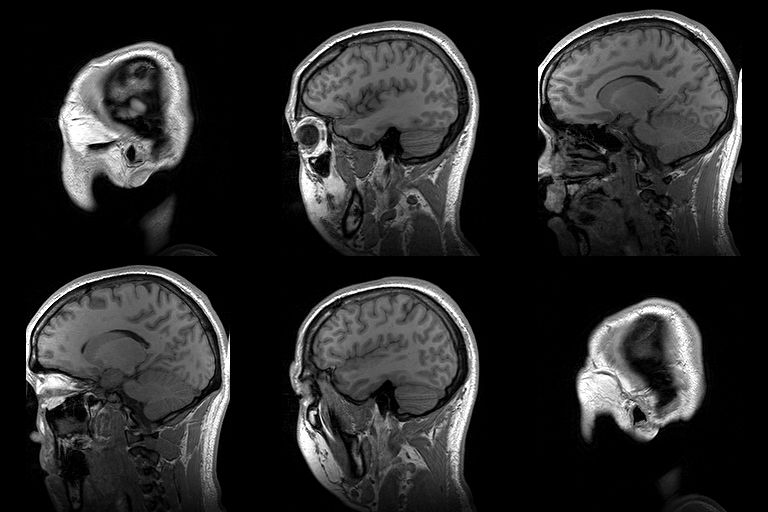
Síndrome de contratura congênita letal
📋 Origem dos dados
Esta página agrega dados de fontes públicas e oficiais. Dados sobre cobertura no SUS (PCDT, CEAF) são verificados ativamente por agente proativo (ver badge no infobox). Demais dados têm atribuição de fonte + data da última sincronização — clique para abrir o original.
- Doença rara (ontologia)
- fonte: Orphanet
- Identificador unificado
- fonte: MONDO
- NIH/GARD
- fonte: GARD (NIH)
- Dado público estruturado
- fonte: Wikidata