
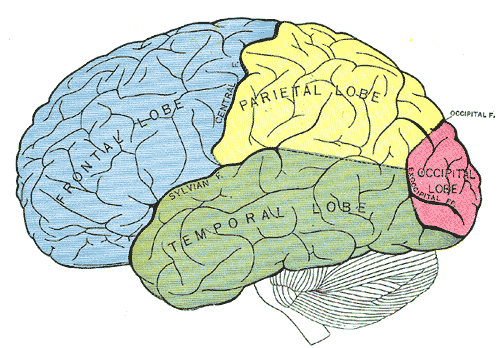
A síndrome de Balint é uma doença neurológica rara caracterizada pela tríade de ataxia óptica, apraxia ocular e simultanagnosia devido a lesões do lobo parietal posterior. Os pacientes relatam dificuldades oftalmológicas na ausência de anomalias oftalomológicas subjacentes e apresentam graves deficiências visuais e espaciais para localizar e alcançar objetos, iniciar movimentos oculares voluntários e perceber mais de um objeto por vez.
Introdução
O que você precisa saber de cara
A síndrome de Balint é uma doença neurológica rara caracterizada pela tríade de ataxia óptica, apraxia ocular e simultanagnosia devido a lesões do lobo parietal posterior. Os pacientes relatam dificuldades oftalmológicas na ausência de anomalias oftalomológicas subjacentes e apresentam graves deficiências visuais e espaciais para localizar e alcançar objetos, iniciar movimentos oculares voluntários e perceber mais de um objeto por vez.
Escala de raridade
<1/50kMuito rara
1/20kRara
1/10kPouco freq.
1/5kIncomum
1/2k
Encontrou um erro ou informação desatualizada? Sugira uma correção →
Entender a doença
Do básico ao detalhe, leia no seu ritmo
Preparando trilha educativa...
Sinais e sintomas
O que aparece no corpo e com que frequência cada sintoma acontece
Características mais comuns
Os sintomas variam de pessoa para pessoa. Abaixo estão as 1 características clínicas mais associadas, ordenadas por frequência.
Linha do tempo da pesquisa
Encontrou um erro ou informação desatualizada? Sugira uma correção →
Genética e causas
O que está alterado no DNA e como passa nas famílias
Nenhum gene associado encontrado
Os dados genéticos desta condição ainda estão sendo catalogados.
Diagnóstico
Os sinais que médicos procuram e os exames que confirmam
Tratamento e manejo
Remédios, cuidados de apoio e o que precisa acompanhar
Onde tratar no SUS
Hospitais de referência no Brasil e o protocolo oficial do SUS (PCDT)
🇧🇷 Atendimento SUS — Síndrome de Balint
Selecione um estado ou use sua localização para ver resultados.
Dados de DATASUS/CNES, SBGM, ABNeuro e Ministério da Saúde. Sempre confirme a disponibilidade diretamente com o estabelecimento.
Pesquisa ativa
Ensaios clínicos abertos e novidades científicas recentes
Pesquisa e ensaios clínicos
Nenhum ensaio clínico registrado para esta condição.
Publicações mais relevantes
Balint syndrome as the initial presentation of neuromyelitis optica spectrum disorder.
Between the Borders: Balint Syndrome as a Rare Manifestation of Posterior Circulation Stroke.
Balint syndrome is a rare disorder caused by bilateral parieto-occipital damage, most often occurring within the posterior watershed territory between the middle and posterior cerebral arteries. It is characterized by a triad of simultanagnosia, optic ataxia, and oculomotor apraxia, and is often misdiagnosed as delirium, dementia, or cortical blindness, particularly in elderly patients. We report a case of an 82-year-old woman who presented with confusion and visuospatial disorientation following a collapse. Her visual acuity was preserved, but she demonstrated simultanagnosia and oculomotor apraxia. Computed tomography of the brain revealed bilateral occipital watershed infarcts, consistent with Balint syndrome secondary to posterior border-zone infarction. She was managed with secondary stroke prevention and commenced on neurorehabilitation focusing on visuospatial and visuomotor retraining. This case highlights the importance of recognizing Balint syndrome as a rare manifestation of posterior circulation stroke. Awareness of its classic triad facilitates early diagnosis, appropriate neuroimaging correlation, and tailored rehabilitation to optimize patient outcomes.
Bálint Syndrome From Posterior Cerebral Artery Infarctions Case Report.
Bálint syndrome is a debilitating, rare neurological condition characterized by a triad of visuospatial distortions: simultanagnosia, optic ataxia, and oculomotor apraxia. We highlight the pathways involved with infarction of the posterior cerebral artery (PCA), which may be an important underlying factor leading to the development of clinical presentations found in Bálint syndrome. We present a case of a middle-aged patient who presents with Bálint syndrome following a PCA infarction. A 49-year-old male bus driver with a recent PCA infarction presented with all 3 components of Bálint syndrome. His clinical course was notable for simultanagnosia, optic ataxia, oculomotor apraxia, and a right greater than left lower visual field deficit. Neuroimaging revealed infarctions in the P1 and bilateral P2 segments of the posterior cerebral arteries, affecting the parieto-occipital regions known to underlie visuospatial processing. Laboratory workup helped exclude opportunistic and systemic causes, supporting a stroke-related etiology. Posterior cerebral artery infarctions may be responsible for the clinical presentation of Bálint syndrome; however, further investigation into vascular and neuronal networks underlying the clinical signs and symptoms of Bálint syndrome is needed.
Balint Syndrome in a Patient With Isolated Corpus Callosum Stroke: A Case Study With Narrative Review.
We report a case of an isolated bilateral corpus callosum stroke (body and splenium) who exhibited Balint syndrome (optic ataxia, simultanagnosia, optic apraxia), along with a partial Gerstmann syndrome (left/right disorientation, acalculia, finger agnosia), with extinction to double simultaneous stimulation and astereognosis without direct involvements of the parietal lobes. We review the vascular anatomy of the corpus callosum, mechanisms and risk factors for stroke in this area, and the components of Balint syndrome and localization, with descriptions of recent data on neural networks involved in higher-level cortical function. Attention to the visual-spatial symptoms of Balint syndrome is important to consider when evaluating and treating patients with ischemic disease of the corpus callosum.
Bálint syndrome in dementia with lewy bodies: A new phenotypic variant with progression implications?
Publicações recentes
Balint syndrome as the initial presentation of neuromyelitis optica spectrum disorder.
Between the Borders: Balint Syndrome as a Rare Manifestation of Posterior Circulation Stroke.
Bálint Syndrome From Posterior Cerebral Artery Infarctions Case Report.
Balint Syndrome in a Patient With Isolated Corpus Callosum Stroke: A Case Study With Narrative Review.
Bálint syndrome in dementia with lewy bodies: A new phenotypic variant with progression implications?
📚 EuropePMC50 artigos no totalmostrando 35
Balint syndrome as the initial presentation of neuromyelitis optica spectrum disorder.
Revue neurologiqueBetween the Borders: Balint Syndrome as a Rare Manifestation of Posterior Circulation Stroke.
CureusBálint Syndrome From Posterior Cerebral Artery Infarctions Case Report.
Clinical neuropharmacologyBalint Syndrome in a Patient With Isolated Corpus Callosum Stroke: A Case Study With Narrative Review.
CureusBálint syndrome in dementia with lewy bodies: A new phenotypic variant with progression implications?
Neurology perspectivesA novel case of Bálint syndrome with hallucinatory palinopsia following hypoglycemic coma: opening new doors to the origin of palinopsia.
Neurology perspectivesBálint syndrome in a patient with drug-resistant epilepsy having underlying X-linked lissencephaly with subcortical band heterotopia/"double cortex" syndrome.
Neurology perspectivesBálint syndrome as the presenting manifestation of adrenoleukodystrophy.
Neurology perspectivesSnakebite envenomation-induced posterior reversible encephalopathy syndrome presenting with Bálint syndrome.
NeurologiaClinical Screening for Posterior Cortical Atrophy.
Cognitive and behavioral neurology : official journal of the Society for Behavioral and Cognitive NeurologyA Case of Balint Syndrome Due to Left Basal Ganglia Hemorrhagic Stroke: Exploring the Pathogenesis Through Parietal Lobe Circuits.
The primary care companion for CNS disordersWho is really blind in the time of coronavirus: the patient or the doctor? A rare case of Balint's syndrome.
Neurological sciences : official journal of the Italian Neurological Society and of the Italian Society of Clinical NeurophysiologyEgocentric and allocentric spatial representations in a patient with Bálint-like syndrome: A single-case study.
Cortex; a journal devoted to the study of the nervous system and behaviorA rare case report of Lilliputian and Brobdingnagian hallucinations in a case of pemphigus vulgaris.
Indian journal of psychiatry18F-FDG PET/CT in the Diagnosis and Follow-up of Balint Syndrome.
Clinical nuclear medicineTeaching Video NeuroImages: Posterior Cortical Atrophy Presenting With Balint Syndrome.
NeurologyNumeric input operation on electronic devices among individuals with visuospatial working memory impairment.
Neuropsychological rehabilitationSimultanagnosia as a cause of visual disturbance following Posterior Reversible Encephalopathy Syndrome (PRES): A case report.
Indian journal of ophthalmology[Progressive supranuclear palsy-Richardson syndrome with visual attention disturbance (Holmes and Horrax) and ataxie optique (Garcin): a case report].
Rinsho shinkeigaku = Clinical neurologyHemianopia and Features of Bálint Syndrome following Occipital Lobe Hemorrhage: Identification and Patient Understanding Have Aided Functional Improvement Years after Onset.
Case reports in ophthalmological medicine[A Patient with Progressive Multifocal Leukoencephalopathy Who Developed Bálint Syndrome Improved by Combination Therapy Using Mefloquine and Mirtazapine].
Brain and nerve = Shinkei kenkyu no shinpoBalint syndrome in anti-NMDA receptor encephalitis.
Neurology(R) neuroimmunology & neuroinflammationCan hypnosis displace the threshold for visual consciousness?
Neuroscience of consciousnessBalint syndrome (chronic visual-spatial disorder) presenting without known cause.
Radiology case reportsBálint syndrome caused by bilateral medial occipital infarcts.
Neurological sciences : official journal of the Italian Neurological Society and of the Italian Society of Clinical NeurophysiologyBilateral parietal dysfunctions and disconnections in simultanagnosia and Bálint syndrome.
Handbook of clinical neurologyOptic ataxia: beyond the dorsal stream cliché.
Handbook of clinical neurologyOcular Dysfunctions Presenting in Tacrolimus-Induced Posterior Reversible Encephalopathy Syndrome: A Case Presentation.
PM & R : the journal of injury, function, and rehabilitationMemory for Spatial Locations in a Patient with Near Space Neglect and Optic Ataxia: Involvement of the Occipitotemporal Stream.
Frontiers in neurologySimultaneous object perception deficits are related to reduced visual processing speed in amnestic mild cognitive impairment.
Neurobiology of agingBilateral injury of the superior longitudinal fasciculus in a patient with Balint syndrome.
NeurologyImaging of Retrochiasmal and Higher Cortical Visual Disorders.
Neuroimaging clinics of North AmericaEffectiveness of Use of Button-Operated Electronic Devices Among Persons With Bálint Syndrome.
The American journal of occupational therapy : official publication of the American Occupational Therapy AssociationVisuospatial working memory is severely impaired in Bálint syndrome patients.
Cortex; a journal devoted to the study of the nervous system and behaviorPerceptual-motor dysfunction.
Continuum (Minneapolis, Minn.)Associações
Organizações que acompanham esta doença — pra ter apoio e orientação
Ainda não temos associações cadastradas para Síndrome de Balint.
É de uma associação que acompanha esta doença? Fale com a gente →
Comunidades
Grupos ativos de quem convive com esta doença aqui no Raras
Ainda não existe comunidade no Raras para Síndrome de Balint
Pacientes, familiares e cuidadores se organizam em comunidades pra compartilhar experiências, fazer perguntas e se apoiar. Você pode ser o primeiro.
Tire suas dúvidas
Perguntas, dicas e experiências compartilhadas aqui na página
Participe da discussão
Faça login para postar dúvidas, compartilhar experiências e interagir com especialistas.
Fazer loginDoenças relacionadas
Doenças com sintomas parecidos — ajudam quem ainda está buscando diagnóstico
Referências e fontes
Bases de dados externas citadas neste artigo
Publicações científicas
Artigos indexados no PubMed ligados a esta doença no grafo RarasNet — título, periódico e PMID direto da fonte, sem intermediação de IA.
- Balint syndrome as the initial presentation of neuromyelitis optica spectrum disorder.
- Between the Borders: Balint Syndrome as a Rare Manifestation of Posterior Circulation Stroke.
- Bálint Syndrome From Posterior Cerebral Artery Infarctions Case Report.
- Balint Syndrome in a Patient With Isolated Corpus Callosum Stroke: A Case Study With Narrative Review.
- Bálint syndrome in dementia with lewy bodies: A new phenotypic variant with progression implications?
Bases de dados e fontes oficiais
Identificadores e referências canônicas usadas para montar este verbete.
- ORPHA:363746(Orphanet)
- MONDO:0018211(MONDO)
- GARD:21558(GARD (NIH))
- Busca completa no PubMed(PubMed)
- Artigo Wikipedia(Wikipedia)
- Q174651(Wikidata)
Dados compilados pelo RarasNet a partir de fontes abertas (Orphanet, OMIM, MONDO, PubMed/EuropePMC, ClinicalTrials.gov, DATASUS, PCDT/MS). Este conteúdo é informativo e não substitui avaliação médica.
Conteúdo mantido por Agente Raras · Médicos e pesquisadores podem colaborar
Síndrome de Balint
📋 Origem dos dados
Esta página agrega dados de fontes públicas e oficiais. Dados sobre cobertura no SUS (PCDT, CEAF) são verificados ativamente por agente proativo (ver badge no infobox). Demais dados têm atribuição de fonte + data da última sincronização — clique para abrir o original.
- Doença rara (ontologia)
- fonte: Orphanet
- Identificador unificado
- fonte: MONDO
- Codificação WHO/SUS
- fonte: WHO ICD-10 / DATASUS
- CID-11 (futuro)
- fonte: WHO ICD-11
- NIH/GARD
- fonte: GARD (NIH)
- Dado público estruturado
- fonte: Wikidata