
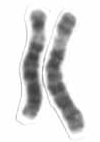
AFG3 ATPase family gene 3-like 2 é uma proteína que em humanos é codificada pelo gene AFG3L2.
Introdução
O que você precisa saber de cara
Visão geral
A Paraplegia espástica autossômica recessiva tipo 59 é uma doença neurológica rara, caracterizada por rigidez progressiva dos membros inferiores e comprometimento da coordenação motora. A prevalência estimada é inferior a 1 caso por 1.000.000 de pessoas, e os primeiros sinais geralmente aparecem na infância. A herança é autossômica recessiva, ou seja, é necessário herdar uma cópia do gene alterado de cada um dos pais para manifestar a doença.[1][3]
Sinais e sintomas
Os principais sintomas incluem hipertonia (aumento do tônus muscular) dos membros, nistagmo (movimentos oculares involuntários e rítmicos), pé torto equinovaro (deformidade do pé), marcha espástica (andar rígido e com dificuldade), espasticidade dos membros inferiores, hiperreflexia (reflexos exagerados) e clônus (contrações musculares rítmicas e involuntárias). Também podem ocorrer deficiência intelectual, alterações na morfologia do cerebelo e da substância branca cerebral, além de paraplegia espástica (fraqueza e rigidez progressiva das pernas).[1][3]
Causas genéticas
A doença é causada por mutações no gene USP8 (Ubiquitin carboxyl-terminal hydrolase 8), que codifica uma enzima envolvida na regulação da ubiquitinação de proteínas. A herança é autossômica recessiva, o que significa que ambos os pais precisam ser portadores de uma mutação no gene USP8 para que o filho desenvolva a condição.[1][4]
Diagnóstico
O diagnóstico é baseado na avaliação clínica dos sintomas neurológicos e confirmado por testes genéticos. O sequenciamento completo do exoma (WES) é o principal exame disponível, capaz de identificar mutações no gene USP8. Atualmente, há 336 testes genéticos registrados e 35 variantes patogênicas documentadas no ClinVar para essa condição.[1][4]
Tratamento e manejo
Não há medicamentos específicos aprovados para a Paraplegia espástica autossômica recessiva tipo 59. O manejo é sintomático e multidisciplinar, incluindo fisioterapia, terapia ocupacional e acompanhamento neurológico para controle da espasticidade e das complicações motoras. No Brasil, o Sistema Único de Saúde (SUS) oferece cobertura mínima, incluindo atendimento em reabilitação para doenças raras e o sequenciamento completo do exoma (WES) como procedimento diagnóstico.[1]
Prognóstico e qualidade de vida
O prognóstico varia conforme a gravidade dos sintomas e a precocidade do suporte multidisciplinar. A progressão da espasticidade pode levar a limitações na mobilidade, mas a reabilitação contínua e o acompanhamento especializado podem melhorar a qualidade de vida e a funcionalidade. Não há dados de sobrevida específicos para esta doença.[1]
Conteúdo informativo gerado e mantido automaticamente a partir de fontes oficiais (Orphanet, HPO, OMIM, SUS). Não substitui avaliação médica.
AFG3 ATPase family gene 3-like 2 é uma proteína que em humanos é codificada pelo gene AFG3L2.
Escala de raridade
<1/50kMuito rara
1/20kRara
1/10kPouco freq.
1/5kIncomum
1/2k
Encontrou um erro ou informação desatualizada? Sugira uma correção →
Entender a doença
Do básico ao detalhe, leia no seu ritmo
Preparando trilha educativa...
Sinais e sintomas
O que aparece no corpo e com que frequência cada sintoma acontece
Visão geral
A Paraplegia espástica autossômica recessiva tipo 59 é uma doença neurológica rara, caracterizada por rigidez progressiva dos membros inferiores e comprometimento da coordenação motora. A prevalência estimada é inferior a 1 caso por 1.000.000 de pessoas, e os primeiros sinais geralmente aparecem na infância. A herança é autossômica recessiva, ou seja, é necessário herdar uma cópia do gene alterado de cada um dos pais para manifestar a doença.[1][3]
Sinais e sintomas
Os principais sintomas incluem hipertonia (aumento do tônus muscular) dos membros, nistagmo (movimentos oculares involuntários e rítmicos), pé torto equinovaro (deformidade do pé), marcha espástica (andar rígido e com dificuldade), espasticidade dos membros inferiores, hiperreflexia (reflexos exagerados) e clônus (contrações musculares rítmicas e involuntárias). Também podem ocorrer deficiência intelectual, alterações na morfologia do cerebelo e da substância branca cerebral, além de paraplegia espástica (fraqueza e rigidez progressiva das pernas).[1][3]
Causas genéticas
A doença é causada por mutações no gene USP8 (Ubiquitin carboxyl-terminal hydrolase 8), que codifica uma enzima envolvida na regulação da ubiquitinação de proteínas. A herança é autossômica recessiva, o que significa que ambos os pais precisam ser portadores de uma mutação no gene USP8 para que o filho desenvolva a condição.[1][4]
Diagnóstico
O diagnóstico é baseado na avaliação clínica dos sintomas neurológicos e confirmado por testes genéticos. O sequenciamento completo do exoma (WES) é o principal exame disponível, capaz de identificar mutações no gene USP8. Atualmente, há 336 testes genéticos registrados e 35 variantes patogênicas documentadas no ClinVar para essa condição.[1][4]
Tratamento e manejo
Não há medicamentos específicos aprovados para a Paraplegia espástica autossômica recessiva tipo 59. O manejo é sintomático e multidisciplinar, incluindo fisioterapia, terapia ocupacional e acompanhamento neurológico para controle da espasticidade e das complicações motoras. No Brasil, o Sistema Único de Saúde (SUS) oferece cobertura mínima, incluindo atendimento em reabilitação para doenças raras e o sequenciamento completo do exoma (WES) como procedimento diagnóstico.[1]
Prognóstico e qualidade de vida
O prognóstico varia conforme a gravidade dos sintomas e a precocidade do suporte multidisciplinar. A progressão da espasticidade pode levar a limitações na mobilidade, mas a reabilitação contínua e o acompanhamento especializado podem melhorar a qualidade de vida e a funcionalidade. Não há dados de sobrevida específicos para esta doença.[1]
Conteúdo informativo gerado e mantido automaticamente a partir de fontes oficiais (Orphanet, HPO, OMIM, SUS). Não substitui avaliação médica.
Partes do corpo afetadas
+ 1 sintomas em outras categorias
Características mais comuns
Os sintomas variam de pessoa para pessoa. Abaixo estão as 11 características clínicas mais associadas, ordenadas por frequência.
Linha do tempo da pesquisa
Encontrou um erro ou informação desatualizada? Sugira uma correção →
Genética e causas
O que está alterado no DNA e como passa nas famílias
Genes associados
1 gene identificado com associação a esta condição. Padrão de herança: Autosomal recessive.
Hydrolase that can remove conjugated ubiquitin from proteins and therefore plays an important regulatory role at the level of protein turnover by preventing degradation. Converts both 'Lys-48' an 'Lys-63'-linked ubiquitin chains. Catalytic activity is enhanced in the M phase. Involved in cell proliferation. Required to enter into S phase in response to serum stimulation. May regulate T-cell anergy mediated by RNF128 via the formation of a complex containing RNF128 and OTUB1. Probably regulates t
CytoplasmNucleusEndosome membraneCell membrane
Pituitary adenoma 4, ACTH-secreting
A form of pituitary adenoma, a neoplasm of the pituitary gland and one of the most common neuroendocrine tumors. Pituitary adenomas are clinically classified as functional and non-functional tumors, and manifest with a variety of features, including local invasion of surrounding structures and excessive hormone secretion. Functional pituitary adenomas are further classified by the type of hormone they secrete. PITA4 results in excessive production of adrenocorticotropic hormone. This leads to hypersecretion of cortisol by the adrenal glands and ACTH-dependent Cushing syndrome. Clinical manifestations of Cushing syndrome include facial and truncal obesity, abdominal striae, muscular weakness, osteoporosis, arterial hypertension, diabetes.
Medicamentos aprovados (FDA)
1 medicamento encontrado nos registros da FDA americana.
Variantes genéticas (ClinVar)
35 variantes patogênicas registradas no ClinVar.
Classificação de variantes (ClinVar)
Distribuição de 1.247 variantes classificadas pelo ClinVar.
Vias biológicas (Reactome)
4 vias biológicas associadas aos genes desta condição.
Diagnóstico
Os sinais que médicos procuram e os exames que confirmam
Tratamento e manejo
Remédios, cuidados de apoio e o que precisa acompanhar
Onde tratar no SUS
Hospitais de referência no Brasil e o protocolo oficial do SUS (PCDT)
🇧🇷 Atendimento SUS — Paraplegia espástica autossômica recessiva tipo 59
Selecione um estado ou use sua localização para ver resultados.
Dados de DATASUS/CNES, SBGM, ABNeuro e Ministério da Saúde. Sempre confirme a disponibilidade diretamente com o estabelecimento.
Pesquisa ativa
Ensaios clínicos abertos e novidades científicas recentes
Pesquisa e ensaios clínicos
Nenhum ensaio clínico registrado para esta condição.
Publicações mais relevantes
Mostrando amostra de 12 publicações de um total de 44
MRI-ARSACS: An Imaging Index for Autosomal Recessive Spastic Ataxia of Charlevoix-Saguenay (ARSACS) Identification Based on the Multicenter PROSPAX Study.
Autosomal recessive spastic ataxia of Charlevoix-Saguenay (ARSACS) and hereditary spastic paraplegia type 7 (SPG7) represent the most common genotypes of spastic ataxia (SPAX). To date, their magnetic resonance imaging (MRI) features have only been described qualitatively, and a pure neuroradiological differential diagnosis between these two conditions is difficult to achieve. To test the performance of MRI measures to discriminate between ARSACS and SPG7 (as an index of common SPAX disease). In this prospective multicenter study, 3D-T1-weighted images of 59 ARSACS (35.4 ± 10.3 years, M/F = 33/26) and 78 SPG7 (54.8 ± 10.3 years, M/F = 51/27) patients of the PROSPAX Consortium were analyzed, together with 30 controls (45.9 ± 16.9 years, M/F = 15/15). Different linear and surface measures were evaluated. A receiver operating characteristic analysis was performed, calculating area under the curve (AUC) and corresponding diagnostic accuracy parameters. The pons area proved to be the only metric increased exclusively in ARSACS patients (P = 0.02). Other different measures were reduced in ARSACS and SPG7 compared with controls (all with P ≤ 0.005). A cut-off value equal to 1.67 of the pons-to-superior vermis area ratio proved to have the highest AUC (0.98, diagnostic accuracy 93%, sensitivity 97%) in discriminating between ARSACS and SPG7. Evaluation of the pons-to-superior vermis area ratio can discriminate ARSACS from other SPAX patients, as exemplified here by SPG7. Hence, we hereby propose this ratio as the Magnetic Resonance Index for the Assessment and Recognition of patients harboring SACS mutations (MRI-ARSACS), a novel diagnostic tool able to identify ARSACS patients and useful for discriminating ARSACS from other SPAX patients undergoing MRI. © 2024 International Parkinson and Movement Disorder Society.
Identification of an in-frame homozygous KIF1A variant causing a mild SPG30 phenotype in a Korean family.
SPG30 is a newly categorized type of HSP caused by variants in the kinesin family member 1A gene (KIF1A). Advances in next-generation sequencing have resulted in a limited number of studies describing the clinical, electrophysiological, and radiological features of HSP, with variable manifestations. Most known pathogenic KIF1A variants affect the motor domain, although some rare pathogenic variants have been identified that affect the non-motor domain. Here, we report a Korean family with a rare homozygous autosomal-recessive form of SPG30. A 59-year-old man and his father presented with an uncomplicated, mild SPG30 phenotype, characterized by a progressive, spastic gait. Familial co-segregation analysis revealed a pathogenic c.2751_2753delGGA KIF1A variant that affects the non-motor domain. Our case broadens the genetic and clinical variability of SPG30, warranting similar studies to consolidate the pathogenicity of SPG30.
Age-Dependent Increase in Schmidt-Lanterman Incisures and a Cadm4-Associated Membrane Skeletal Complex in Fatty Acid 2-hydroxylase Deficient Mice: a Mouse Model of Spastic Paraplegia SPG35.
PNS and CNS myelin contain large amounts of galactocerebroside and sulfatide with 2-hydroxylated fatty acids. The underlying hydroxylation reaction is catalyzed by fatty acid 2-hydroxylase (FA2H). Deficiency in this enzyme causes a complicated hereditary spastic paraplegia, SPG35, which is associated with leukodystrophy. Mass spectrometry-based proteomics of purified myelin isolated from sciatic nerves of Fa2h-deficient (Fa2h-/-) mice revealed an increase in the concentration of the three proteins Cadm4, Mpp6 (Pals2), and protein band 4.1G (Epb41l2) in 17-month-old, but not in young (4 to 6-month-old), Fa2h-/- mice. These proteins are known to form a complex, together with the protein Lin7, in Schmidt-Lanterman incisures (SLIs). Accordingly, the number of SLIs was significantly increased in 17-month-old but not 4-month-old Fa2h-/- mice compared to age-matched wild-type mice. On the other hand, the relative increase in the SLI frequency was less pronounced than expected from Cadm4, Lin7, Mpp6 (Pals2), and band 4.1G (Epb41l2) protein levels. This suggests that the latter not only reflect the higher SLI frequency but that the concentration of the Cadm4 containing complex itself is increased in the SLIs or compact myelin of Fa2h-/- mice and may potentially play a role in the pathogenesis of the disease. The proteome data are available via ProteomeXchange with identifier PXD030244.
A Novel SPAST Mutation Results in Spastin Accumulation and Defects in Microtubule Dynamics.
Haploinsufficiency is widely accepted as the pathogenic mechanism of spastic paraplegia type 4 (SPG4). However, there are some cases that cannot be explained by reduced function of the spastin protein encoded by SPAST. To identify the causative gene of autosomal dominant hereditary spastic paraplegia in three large Chinese families and explore the pathological mechanism of a spastin variant. Three large Chinese hereditary spastic paraplegia families with a total of 247 individuals (67 patients) were investigated, of whom 59 members were recruited to the study. Genetic testing was performed to identify the causative gene. Western blotting and immunofluorescence were used to analyze the effects of the mutant proteins in vitro. In the three hereditary spastic paraplegia families, of whom three index cases were misdiagnosed as other types of neurological diseases, a novel c.985dupA (p.Met329Asnfs*3) variant in SPAST was identified and was shown to cosegregate with the phenotype in the three families. The c.985dupA mutation produced two truncated mutants (mutant M1 and M87 isoforms) that accumulated to a higher level than their wild-type counterparts. Furthermore, the mutant M1 isoform heavily decorated the microtubules and rendered them resistant to depolymerization. In contrast, the mutant M87 isoform was diffusely localized in both the nucleus and the cytoplasm, could not decorate microtubules, and was not able to promote microtubule disassembly. SPAST mutations leading to premature stop codons do not always act through haploinsufficiency. The truncated spastin may damage the corticospinal tracts through an isoform-specific toxic effect.
Blended Phenotype of Silver-Russell Syndrome and SPG50 Caused by Maternal Isodisomy of Chromosome 7.
Uniparental isodisomy can lead to blended phenotypes of imprinting disorders and autosomal recessive diseases. To determine whether a complex neurodevelopmental disorder was caused by uniparental isodisomy, a detailed clinical and molecular characterization was performed. A combination of clinical, molecular, and imaging data and functional studies in patient-derived fibroblasts. We report a 4-year-old female with a blended, complex phenotype of Silver-Russell syndrome (SRS) and hereditary spastic paraplegia type 50 (SPG50) caused by total maternal isodisomy of chromosome 7 (UPiD(7)mat) and a loss-of-function variant in AP4M1 (NM_00472.3: c.59-1G>C, IVS1-1G>C). Functional studies in patient-derived fibroblasts confirmed the loss of adaptor protein complex 4 function. Distinctive facial features, intrauterine growth restriction, short stature, feeding difficulties, and severe gastroesophageal reflux were consistent with SRS. Features associated with SPG50 included early-onset epilepsy, episodes of stereotypical laughter, and thinning of the corpus callosum and ventriculomegaly on brain MRI. Symptoms shared by both syndromes such as developmental delay, short stature, and axial and appendicular hypotonia were also present. Notably, other common manifestations of SPG50 such as microcephaly or spasticity had not developed yet. This case highlights that atypical clinical features in patients with well-described imprinting disorders should lead to investigations for recessive conditions caused by variants in genes that localize to the region of homozygosity.
Publicações recentes
Six novel SACS mutations expand the autosomal recessive spastic ataxia of Charlevoix-Saguenay spectrum.
Clinical, Radiological, and Genetic Profile of Patients with FA2H-Associated Neurodegeneration: Eight Cases from India and a Review of the Literature.
Peripheral Neuropathy-Predominant Adult-Onset Autosomal Recessive Spastic Ataxia of Charlevoix-Saguenay: Novel Variant in the SACS gene.
The Cerebellar Cognitive-Affective Syndrome Scale Reveals Consistent, Early, and Progressive Neuropsychological Deficits in Autosomal-Recessive Spastic Ataxia of Charlevoix-Saguenay: A Large International Cross-Sectional Study.
Generation of eight human induced pluripotent stem cells lines from patients with Autosomal Recessive Spastic Ataxia of Charlevoix-Saguenay (ARSACS).
📚 EuropePMC28 artigos no totalmostrando 12
MRI-ARSACS: An Imaging Index for Autosomal Recessive Spastic Ataxia of Charlevoix-Saguenay (ARSACS) Identification Based on the Multicenter PROSPAX Study.
Movement disorders : official journal of the Movement Disorder SocietyIdentification of an in-frame homozygous KIF1A variant causing a mild SPG30 phenotype in a Korean family.
GeneAge-Dependent Increase in Schmidt-Lanterman Incisures and a Cadm4-Associated Membrane Skeletal Complex in Fatty Acid 2-hydroxylase Deficient Mice: a Mouse Model of Spastic Paraplegia SPG35.
Molecular neurobiologyA Novel SPAST Mutation Results in Spastin Accumulation and Defects in Microtubule Dynamics.
Movement disorders : official journal of the Movement Disorder SocietyBlended Phenotype of Silver-Russell Syndrome and SPG50 Caused by Maternal Isodisomy of Chromosome 7.
Neurology. GeneticsA Japanese SPG4 Patient with a Confirmed De Novo Mutation of the SPAST Gene.
Internal medicine (Tokyo, Japan)Functional effects of botulinum toxin type A in the hip adductors and subsequent stretching in patients with hereditary spastic paraplegia.
Journal of rehabilitation medicineAutosomal recessive hereditary spastic paraplegia type SPG35 due to a novel variant in the FA2H gene in a Czech patient.
Journal of clinical neuroscience : official journal of the Neurosurgical Society of AustralasiaGenome-wide Analyses Identify KIF5A as a Novel ALS Gene.
NeuronHereditary spastic paraplegia type 35 caused by a novel FA2H mutation.
The Turkish journal of pediatricsA 23 years follow-up study identifies GLUT1 deficiency syndrome initially diagnosed as complicated hereditary spastic paraplegia.
European journal of medical geneticsA novel frameshift mutation of DDHD1 in a Japanese patient with autosomal recessive spastic paraplegia.
European journal of medical geneticsAssociações
Organizações que acompanham esta doença — pra ter apoio e orientação
Ainda não temos associações cadastradas para Paraplegia espástica autossômica recessiva tipo 59.
É de uma associação que acompanha esta doença? Fale com a gente →
Comunidades
Grupos ativos de quem convive com esta doença aqui no Raras
Ainda não existe comunidade no Raras para Paraplegia espástica autossômica recessiva tipo 59
Pacientes, familiares e cuidadores se organizam em comunidades pra compartilhar experiências, fazer perguntas e se apoiar. Você pode ser o primeiro.
Tire suas dúvidas
Perguntas, dicas e experiências compartilhadas aqui na página
Participe da discussão
Faça login para postar dúvidas, compartilhar experiências e interagir com especialistas.
Fazer loginDoenças relacionadas
Doenças com sintomas parecidos — ajudam quem ainda está buscando diagnóstico
Referências e fontes
Bases de dados externas citadas neste artigo
Publicações científicas
Artigos indexados no PubMed ligados a esta doença no grafo RarasNet — título, periódico e PMID direto da fonte, sem intermediação de IA.
- MRI-ARSACS: An Imaging Index for Autosomal Recessive Spastic Ataxia of Charlevoix-Saguenay (ARSACS) Identification Based on the Multicenter PROSPAX Study.Movement disorders : official journal of the Movement Disorder Society· 2024· PMID 38847051mais citado
- Identification of an in-frame homozygous KIF1A variant causing a mild SPG30 phenotype in a Korean family.
- Age-Dependent Increase in Schmidt-Lanterman Incisures and a Cadm4-Associated Membrane Skeletal Complex in Fatty Acid 2-hydroxylase Deficient Mice: a Mouse Model of Spastic Paraplegia SPG35.
- A Novel SPAST Mutation Results in Spastin Accumulation and Defects in Microtubule Dynamics.Movement disorders : official journal of the Movement Disorder Society· 2022· PMID 34927746mais citado
- Blended Phenotype of Silver-Russell Syndrome and SPG50 Caused by Maternal Isodisomy of Chromosome 7.
- Six novel SACS mutations expand the autosomal recessive spastic ataxia of Charlevoix-Saguenay spectrum.
- Clinical, Radiological, and Genetic Profile of Patients with FA2H-Associated Neurodegeneration: Eight Cases from India and a Review of the Literature.
- Peripheral Neuropathy-Predominant Adult-Onset Autosomal Recessive Spastic Ataxia of Charlevoix-Saguenay: Novel Variant in the SACS gene.
- The Cerebellar Cognitive-Affective Syndrome Scale Reveals Consistent, Early, and Progressive Neuropsychological Deficits in Autosomal-Recessive Spastic Ataxia of Charlevoix-Saguenay: A Large International Cross-Sectional Study.
- Generation of eight human induced pluripotent stem cells lines from patients with Autosomal Recessive Spastic Ataxia of Charlevoix-Saguenay (ARSACS).
Bases de dados e fontes oficiais
Identificadores e referências canônicas usadas para montar este verbete.
- ORPHA:401795(Orphanet)
- MONDO:0018416(MONDO)
- GARD:21695(GARD (NIH))
- Variantes catalogadas(ClinVar)
- Busca completa no PubMed(PubMed)
- Q55346038(Wikidata)
Dados compilados pelo RarasNet a partir de fontes abertas (Orphanet, OMIM, MONDO, PubMed/EuropePMC, ClinicalTrials.gov, DATASUS, PCDT/MS). Este conteúdo é informativo e não substitui avaliação médica.
Conteúdo mantido por Agente Raras · Médicos e pesquisadores podem colaborar
Paraplegia espástica autossômica recessiva tipo 59
📋 Origem dos dados
Esta página agrega dados de fontes públicas e oficiais. Dados sobre cobertura no SUS (PCDT, CEAF) são verificados ativamente por agente proativo (ver badge no infobox). Demais dados têm atribuição de fonte + data da última sincronização — clique para abrir o original.
- Doença rara (ontologia)
- fonte: Orphanet
- Identificador unificado
- fonte: MONDO
- Codificação WHO/SUS
- fonte: WHO ICD-10 / DATASUS
- CID-11 (futuro)
- fonte: WHO ICD-11
- NIH/GARD
- fonte: GARD (NIH)
- Dado público estruturado
- fonte: Wikidata
- Medicamentos aprovados FDA
- fonte: FDA OpenFDA