
Síndrome genética dismórfica/de anomalias congénitas múltiplas, raras, caracterizadas por perturbação do desenvolvimento intelectual, obesidade, macrocefalia, anomalias comportamentais (como birras com agressividade e comportamento com características de perturbação do espectro do autismo) e atraso no desenvolvimento da linguagem. As características aparências dismórficas incluem frontal larga e quadrada, cristas supra-orbitais proeminentes, ponta nasal larga, pavilhões auriculares grandes, laboratórios inferiores proeminentes e anomalias dentárias menores, como incisivos laterais superiores pequenos e incisivos centrais espaçados.
Introdução
O que você precisa saber de cara
Visão geral
A Síndrome Clark-Baraitser é uma doença genética rara que afeta o desenvolvimento neurológico e físico. Estima-se que sua prevalência seja inferior a 1 caso a cada 1.000.000 de pessoas. Os primeiros sinais podem aparecer ainda no período neonatal, durante a infância ou na primeira etapa da vida escolar.[1][4]
Sinais e sintomas
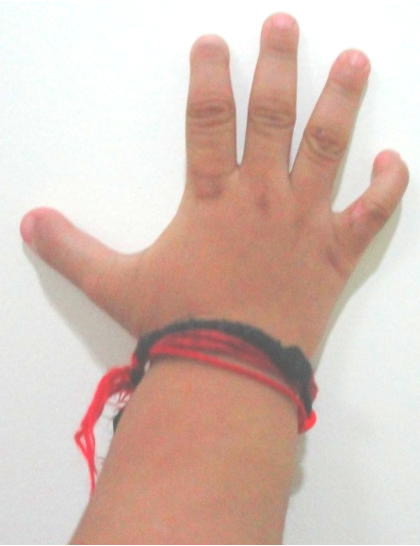
As pessoas com a síndrome podem apresentar uma combinação de características físicas e neurológicas. Entre os sinais físicos mais comuns estão: microcefalia (cabeça menor que o esperado), dolicocefalia (crânio alongado), testa inclinada, epicanto (prega de pele no canto interno dos olhos), fissura palpebral ascendente (olhos puxados para cima), estrabismo, ponte nasal deprimida, narinas antevertidas (nariz empinado), nariz curto, filtro curto ou longo (espaço entre o nariz e o lábio superior), arco do cupido exagerado (lábio superior em formato de coração), cantos da boca voltados para baixo, boca larga, orelhas de implantação baixa, clinodactilia (dedos curvados) e halux valgo (joanete no dedão do pé).[1][4]
No aspecto neurológico e comportamental, são frequentes: hipotonia (tônus muscular baixo), atraso motor, atraso no desenvolvimento da fala e da linguagem, deficiência intelectual, convulsões, ansiedade, hiperatividade e comportamento agressivo.[1][4]
Causas genéticas
A Síndrome Clark-Baraitser é causada por alterações (variantes patogênicas) no gene TRIP12. Esse gene fornece instruções para a produção da proteína E3 ubiquitin-protein ligase TRIP12, que participa de processos importantes para o desenvolvimento do sistema nervoso. A herança é ligada ao cromossomo X, mas os padrões exatos de herança ainda estão sendo estudados.[1][2][5]
Diagnóstico
O diagnóstico é baseado na avaliação clínica dos sinais e sintomas e confirmado por testes genéticos. Os exames disponíveis no Sistema Único de Saúde (SUS) incluem: cariótipo com bandas G, Q ou R; pesquisa de microdeleções e microduplicações por FISH; sequenciamento completo do exoma (WES); e dosagem de alfa-fetoproteína. Atualmente, há 307 variantes da doença registradas no ClinVar e 4 testes genéticos disponíveis comercialmente.[1][2][5][6]
Tratamento e manejo
Não existe cura específica para a Síndrome Clark-Baraitser. O tratamento é multidisciplinar e focado no controle dos sintomas e na melhora da qualidade de vida. O SUS oferece cobertura mínima para atendimento em reabilitação voltado a doenças raras, que pode incluir fisioterapia, terapia ocupacional, fonoaudiologia e acompanhamento psicológico. O manejo das convulsões e dos distúrbios comportamentais deve ser individualizado, com acompanhamento médico regular.[1][2][6]
Tratamentos citados na literatura
A literatura científica menciona associações com as seguintes substâncias, mas é importante destacar que são dados de pesquisa e não recomendações de tratamento: Melphalan (1 publicação), Polysaccharides (1 publicação) e Water (1 publicação). Essas informações foram extraídas de bases de dados da literatura biomédica (PubTator3).[6]
Prognóstico e qualidade de vida
O prognóstico varia conforme a gravidade dos sintomas e a presença de complicações como convulsões de difícil controle. Com acompanhamento multidisciplinar precoce e suporte familiar, muitas pessoas conseguem desenvolver habilidades adaptativas e melhorar sua qualidade de vida. Não há dados suficientes na literatura para estimar a expectativa de vida específica para esta síndrome.[1][4]
Conteúdo informativo gerado e mantido automaticamente a partir de fontes oficiais (Orphanet, HPO, OMIM, SUS). Não substitui avaliação médica.
Síndrome genética dismórfica/de anomalias congénitas múltiplas, raras, caracterizadas por perturbação do desenvolvimento intelectual, obesidade, macrocefalia, anomalias comportamentais (como birras com agressividade e comportamento com características de perturbação do espectro do autismo) e atraso no desenvolvimento da linguagem. As características aparências dismórficas incluem frontal larga e quadrada, cristas supra-orbitais proeminentes, ponta nasal larga, pavilhões auriculares grandes, laboratórios inferiores proeminentes e anomalias dentárias menores, como incisivos laterais superiores pequenos e incisivos centrais espaçados.
Escala de raridade
<1/50kMuito rara
1/20kRara
1/10kPouco freq.
1/5kIncomum
1/2k
Encontrou um erro ou informação desatualizada? Sugira uma correção →
Entender a doença
Do básico ao detalhe, leia no seu ritmo
Preparando trilha educativa...
Sinais e sintomas
O que aparece no corpo e com que frequência cada sintoma acontece
Visão geral
A Síndrome Clark-Baraitser é uma doença genética rara que afeta o desenvolvimento neurológico e físico. Estima-se que sua prevalência seja inferior a 1 caso a cada 1.000.000 de pessoas. Os primeiros sinais podem aparecer ainda no período neonatal, durante a infância ou na primeira etapa da vida escolar.[1][4]
Sinais e sintomas
As pessoas com a síndrome podem apresentar uma combinação de características físicas e neurológicas. Entre os sinais físicos mais comuns estão: microcefalia (cabeça menor que o esperado), dolicocefalia (crânio alongado), testa inclinada, epicanto (prega de pele no canto interno dos olhos), fissura palpebral ascendente (olhos puxados para cima), estrabismo, ponte nasal deprimida, narinas antevertidas (nariz empinado), nariz curto, filtro curto ou longo (espaço entre o nariz e o lábio superior), arco do cupido exagerado (lábio superior em formato de coração), cantos da boca voltados para baixo, boca larga, orelhas de implantação baixa, clinodactilia (dedos curvados) e halux valgo (joanete no dedão do pé).[1][4]
No aspecto neurológico e comportamental, são frequentes: hipotonia (tônus muscular baixo), atraso motor, atraso no desenvolvimento da fala e da linguagem, deficiência intelectual, convulsões, ansiedade, hiperatividade e comportamento agressivo.[1][4]
Causas genéticas
A Síndrome Clark-Baraitser é causada por alterações (variantes patogênicas) no gene TRIP12. Esse gene fornece instruções para a produção da proteína E3 ubiquitin-protein ligase TRIP12, que participa de processos importantes para o desenvolvimento do sistema nervoso. A herança é ligada ao cromossomo X, mas os padrões exatos de herança ainda estão sendo estudados.[1][2][5]
Diagnóstico
O diagnóstico é baseado na avaliação clínica dos sinais e sintomas e confirmado por testes genéticos. Os exames disponíveis no Sistema Único de Saúde (SUS) incluem: cariótipo com bandas G, Q ou R; pesquisa de microdeleções e microduplicações por FISH; sequenciamento completo do exoma (WES); e dosagem de alfa-fetoproteína. Atualmente, há 307 variantes da doença registradas no ClinVar e 4 testes genéticos disponíveis comercialmente.[1][2][5][6]
Tratamento e manejo
Não existe cura específica para a Síndrome Clark-Baraitser. O tratamento é multidisciplinar e focado no controle dos sintomas e na melhora da qualidade de vida. O SUS oferece cobertura mínima para atendimento em reabilitação voltado a doenças raras, que pode incluir fisioterapia, terapia ocupacional, fonoaudiologia e acompanhamento psicológico. O manejo das convulsões e dos distúrbios comportamentais deve ser individualizado, com acompanhamento médico regular.[1][2][6]
Tratamentos citados na literatura
A literatura científica menciona associações com as seguintes substâncias, mas é importante destacar que são dados de pesquisa e não recomendações de tratamento: Melphalan (1 publicação), Polysaccharides (1 publicação) e Water (1 publicação). Essas informações foram extraídas de bases de dados da literatura biomédica (PubTator3).[6]
Prognóstico e qualidade de vida
O prognóstico varia conforme a gravidade dos sintomas e a presença de complicações como convulsões de difícil controle. Com acompanhamento multidisciplinar precoce e suporte familiar, muitas pessoas conseguem desenvolver habilidades adaptativas e melhorar sua qualidade de vida. Não há dados suficientes na literatura para estimar a expectativa de vida específica para esta síndrome.[1][4]
Conteúdo informativo gerado e mantido automaticamente a partir de fontes oficiais (Orphanet, HPO, OMIM, SUS). Não substitui avaliação médica.
Partes do corpo afetadas
+ 12 sintomas em outras categorias
Características mais comuns
Os sintomas variam de pessoa para pessoa. Abaixo estão as 37 características clínicas mais associadas, ordenadas por frequência.
Linha do tempo da pesquisa
Encontrou um erro ou informação desatualizada? Sugira uma correção →
Genética e causas
O que está alterado no DNA e como passa nas famílias
Genes associados
1 gene identificado com associação a esta condição.
Curadoria gene-doença
fontes oficiaisE3 ubiquitin-protein ligase involved in ubiquitin fusion degradation (UFD) pathway and regulation of DNA repair (PubMed:19028681, PubMed:22884692, PubMed:40419785). Part of the ubiquitin fusion degradation (UFD) pathway, a process that mediates ubiquitination of protein at their N-terminus, regardless of the presence of lysine residues in target proteins (PubMed:19028681). Acts as a key regulator of DNA damage response by acting as a suppressor of RNF168, an E3 ubiquitin-protein ligase that prom
Nucleus, nucleoplasm
Clark-Baraitser syndrome
An autosomal dominant disease characterized by intellectual disability, delayed psychomotor development, behavioral abnormalities, variable dysmorphic facial features, tall stature, obesity, and macrocephaly.
Variantes genéticas (ClinVar)
307 variantes patogênicas registradas no ClinVar.
Classificação de variantes (ClinVar)
Distribuição de 132 variantes classificadas pelo ClinVar.
Vias biológicas (Reactome)
1 via biológica associada aos genes desta condição.
Diagnóstico
Os sinais que médicos procuram e os exames que confirmam
Tratamento e manejo
Remédios, cuidados de apoio e o que precisa acompanhar
Onde tratar no SUS
Hospitais de referência no Brasil e o protocolo oficial do SUS (PCDT)
🇧🇷 Atendimento SUS — Síndrome Clark-Baraitser
Selecione um estado ou use sua localização para ver resultados.
Dados de DATASUS/CNES, SBGM, ABNeuro e Ministério da Saúde. Sempre confirme a disponibilidade diretamente com o estabelecimento.
Pesquisa ativa
Ensaios clínicos abertos e novidades científicas recentes
Ensaios em destaque
🟢 Recrutando agora
1 pesquisa recrutando participantes. Converse com seu médico sobre a possibilidade de participar.
Outros ensaios clínicos
Publicações mais relevantes
The Role of a Novel TRIP12 Mutation in Intellectual Disability: A Molecular and Clinical Investigation in Multiplex Family.
Thyroid hormone receptor interactor 12 (TRIP12; MIM #617,752) is an autosomal dominant hereditary disorder involved in the ubiquitin fusion degradation pathway and the regulation of DNA damage-induced chromatin ubiquitination. Positioned on chromosome 2 at position 2q36.3, TRIP12 is a member of the E3 ubiquitin ligase family. This gene plays a vital role in proteasomal degradation by catalyzing substrate ubiquitination and regulating processes such as cell cycle progression, DNA damage repair, and chromatin remodeling. Mutations in TRIP12 can result in intellectual disability (ID), Clark-Baraitser syndrome, and various physical and behavioral abnormalities. The proband, a 32-year-old male, exhibited intellectual disability, delayed speech, and behavioral abnormalities without autistic spectrum disorders. The novel TRIP12 variant was detected through WES and validated by Sanger sequencing in affected family members. In silico tools predicted the deleterious effect of the variant, and protein modeling indicated significant structural changes. RT-qPCR demonstrated increased TRIP12 mRNA levels, suggesting a compensatory mechanism for decreased protein stability. This study examines the role of the TRIP12 gene in the ubiquitin pathway and associated pathologies such as intellectual disability and developmental delay.
Neurodevelopmental Phenotype Associated with TRIP12: Report of a Family Carrying the p.Asp1135Val Variant.
Pathogenic variants in the TRIP12 gene are associated with Clark-Baraitser syndrome, a condition characterized by neurodevelopmental disorders, including intellectual disability, autism spectrum disorder (ASD), and speech delay. Phenotypic expression is variable, and facial features are not consistently present. Familial inheritance is rare. Whole-exome sequencing (WES) was performed on a proband with speech disorder and ASD, as well as on her parents. Clinical assessment included developmental, cognitive, and physical evaluations. A heterozygous missense variant c.3404A>T (p. Asp1135Val) in the TRIP12 gene was identified in both the proband and her father. Both presented with speech disorder and ASD without facial features or severe intellectual disability. In line with recent genotype-phenotype studies, missense TRIP12 variants tend to be associated with milder neurodevelopmental presentations, typically characterized by mild to moderate intellectual impairment, variable autistic traits, limited or absent facial features, and a low incidence of epilepsy. This familial case further presents the phenotypic spectrum of TRIP12 missense variants and highlights that ASD and speech disorder may occur as isolated neurodevelopmental findings without syndromic features. The report reinforces the relevance of TRIP12 analysis in the differential diagnosis of ASD and language disorders, even in individuals lacking physical traits, supporting more accurate genetic counseling and broader awareness of inherited TRIP12-related conditions.
Novel TRIP12 variants in two Lebanese patients with neurodevelopmental delay.
The TRIP12 gene, encoding an E3 ligase involved in the ubiquitin-proteasome pathway, is implicated in Clark-Baraitser syndrome which causes neurodevelopmental delay and intellectual disability (ID). This study aims to present and characterize two distinct novel TRIP12 variants in two unrelated Lebanese children with neurodevelopmental delay. Exome sequencing (ES) was performed, followed by in silico assessment of variant impact on protein structure. Clinical and molecular findings were described. Literature review was carried out on previously published TRIP12 variants. Patients demonstrated hypotonia, speech and motor delay. ES uncovered a paternally inherited missense variant in the TRIP12 gene (c.5905T > A nucleotide substitution) in patient 1, and a de novo indel variant causing an in-frame change (c.4532_4538delinsC) in patient 2. Affected amino acids in both variants were highly conserved, and structural analyses of mutant variants suggested altered TRIP12 protein structure. No phenotypic distinction emerged in comparison to 70 published TRIP12 variants. This study introduces the first Lebanese TRIP12 variants in developmentally delayed patients. It expands the genotypic spectrum of TRIP12-related neurodevelopmental disorders and underscores their variable expressivity. The online version contains supplementary material available at 10.1186/s12920-025-02299-x.
Unraveling the Molecular and Clinical Consequences of an Intragenic TRIP12 Duplication Using Genomic and RNA Analyses.
Clark-Baraitser syndrome is a rare neurodevelopmental disorder associated with the E3 ubiquitin-protein ligase gene TRIP12. Using chromosomal microarray analysis (CMA), long-range PCR, breakpoint sequencing, and RNA analyses, we studied a 6-year-old female presenting with developmental delay, aggressive behavior, attention-deficit hyperactivity disorder, and mild dysmorphic features. CMA revealed a de novo ~87 kb copy-number variant (CNV) duplication at 2q36.3, involving Exons 3-14 of TRIP12. Long-range PCR and Sanger sequencing showed a head-to-tail tandem duplication with breakpoints in Introns 2 and 14. RNA analysis identified a novel splicing junction between the coding Exon 14 and the stop codon of the noncoding portion of Exon 3, resulting in a premature translation termination. This suggests the neo-transcript undergoes nonsense-mediated decay and/or produces a truncated protein lacking the critical E6AP-type E3 ubiquitin-protein ligase domain. This case further highlights the challenges with the clinical interpretation of CNV gains and the usefulness of RNA sequencing in the clarification of the impacts of intragenic duplications.
Dynamic regulation of the oxidative stress response by the E3 ligase TRIP12.
The oxidative stress response is centered on the transcription factor NRF2 and protects cells from reactive oxygen species (ROS). While ROS inhibit the E3 ligase CUL3 KEAP1 to stabilize NRF2 and elicit antioxidant gene expression, cells recovering from stress must rapidly reactivate CUL3 KEAP1 to prevent reductive stress and oxeiptosis-dependent cell death. How cells restore efficient NRF2-degradation upon ROS clearance remains poorly understood. Here, we identify TRIP12, an E3 ligase dysregulated in Clark-Baraitser Syndrome and Parkinson's Disease, as a component of the oxidative stress response. TRIP12 is a ubiquitin chain elongation factor that cooperates with CUL3 KEAP1 to ensure robust NRF2 degradation. In this manner, TRIP12 accelerates stress response silencing as ROS are being cleared, but limits NRF2 activation during stress. The need for dynamic control of NRF2-degradation therefore comes at the cost of diminished stress signaling, suggesting that TRIP12 inhibition could be used to treat degenerative pathologies characterized by ROS accumulation.
Publicações recentes
Neurodevelopmental Phenotype Associated with TRIP12: Report of a Family Carrying the p.Asp1135Val Variant.
Novel TRIP12 variants in two Lebanese patients with neurodevelopmental delay.
The Role of a Novel TRIP12 Mutation in Intellectual Disability: A Molecular and Clinical Investigation in Multiplex Family.
Unraveling the Molecular and Clinical Consequences of an Intragenic TRIP12 Duplication Using Genomic and RNA Analyses.
Dynamic regulation of the oxidative stress response by the E3 ligase TRIP12.
📚 EuropePMC4 artigos no totalmostrando 17
Neurodevelopmental Phenotype Associated with TRIP12: Report of a Family Carrying the p.Asp1135Val Variant.
GenesNovel TRIP12 variants in two Lebanese patients with neurodevelopmental delay.
BMC medical genomicsThe Role of a Novel TRIP12 Mutation in Intellectual Disability: A Molecular and Clinical Investigation in Multiplex Family.
Journal of molecular neuroscience : MNUnraveling the Molecular and Clinical Consequences of an Intragenic TRIP12 Duplication Using Genomic and RNA Analyses.
American journal of medical genetics. Part ADynamic regulation of the oxidative stress response by the E3 ligase TRIP12.
bioRxiv : the preprint server for biologyA novel ACTB variant in an atypical case of Baraitser-Winter syndrome with cerebellar hypoplasia and diaphragmatic hernia.
Clinical dysmorphologyThe neurodevelopmental and facial phenotype in individuals with a TRIP12 variant.
European journal of human genetics : EJHGEpisignature Mapping of TRIP12 Provides Functional Insight into Clark-Baraitser Syndrome.
International journal of molecular sciencesNovel Synonymous and Frameshift Variants in the TRIP12 Gene Identified in 2 Chinese Patients With Intellectual Disability.
Neurology. GeneticsDe Novo ACTG1 Variant Expands the Phenotype and Genotype of Partial Deafness and Baraitser-Winter Syndrome.
International journal of molecular sciencesThe First Korean Case of Baraitser-Winter Cerebro-Fronto-Facial Syndrome with a Novel Mutation in ACTB Diagnosed Via Targeted Gene Panel Sequencing and Literature Review.
Annals of clinical and laboratory scienceE3 Ubiquitin Ligase TRIP12: Regulation, Structure, and Physiopathological Functions.
International journal of molecular sciencesPrenatal presentation and diagnosis of Baraitser-Winter syndrome using exome sequencing.
American journal of medical genetics. Part AClark-Baraitser syndrome is associated with a nonsense alteration in the autosomal gene TRIP12.
American journal of medical genetics. Part APrenatal presentation in a patient with Baraitser-Winter cerebrofrontofacial syndrome and a novel ACTB variant.
Clinical dysmorphologyPhenotypic spectrum associated with SPECC1L pathogenic variants: new families and critical review of the nosology of Teebi, Opitz GBBB, and Baraitser-Winter syndromes.
European journal of medical geneticsBaraitser-Winter cerebrofrontofacial syndrome.
Clinical geneticsAssociações
Organizações que acompanham esta doença — pra ter apoio e orientação
Ainda não temos associações cadastradas para Síndrome Clark-Baraitser.
É de uma associação que acompanha esta doença? Fale com a gente →
Comunidades
Grupos ativos de quem convive com esta doença aqui no Raras
Ainda não existe comunidade no Raras para Síndrome Clark-Baraitser
Pacientes, familiares e cuidadores se organizam em comunidades pra compartilhar experiências, fazer perguntas e se apoiar. Você pode ser o primeiro.
Tire suas dúvidas
Perguntas, dicas e experiências compartilhadas aqui na página
Participe da discussão
Faça login para postar dúvidas, compartilhar experiências e interagir com especialistas.
Fazer loginDoenças relacionadas
Doenças com sintomas parecidos — ajudam quem ainda está buscando diagnóstico
Referências e fontes
Bases de dados externas citadas neste artigo
Publicações científicas
Artigos indexados no PubMed ligados a esta doença no grafo RarasNet — título, periódico e PMID direto da fonte, sem intermediação de IA.
- The Role of a Novel TRIP12 Mutation in Intellectual Disability: A Molecular and Clinical Investigation in Multiplex Family.
- Neurodevelopmental Phenotype Associated with TRIP12: Report of a Family Carrying the p.Asp1135Val Variant.
- Novel TRIP12 variants in two Lebanese patients with neurodevelopmental delay.
- Unraveling the Molecular and Clinical Consequences of an Intragenic TRIP12 Duplication Using Genomic and RNA Analyses.
- Dynamic regulation of the oxidative stress response by the E3 ligase TRIP12.
Bases de dados e fontes oficiais
Identificadores e referências canônicas usadas para montar este verbete.
- ORPHA:600731(Orphanet)
- OMIM OMIM:300602(OMIM)
- MONDO:0030914(MONDO)
- GARD:9994(GARD (NIH))
- Variantes catalogadas(ClinVar)
- Busca completa no PubMed(PubMed)
Dados compilados pelo RarasNet a partir de fontes abertas (Orphanet, OMIM, MONDO, PubMed/EuropePMC, ClinicalTrials.gov, DATASUS, PCDT/MS). Este conteúdo é informativo e não substitui avaliação médica.
Conteúdo mantido por Agente Raras · Médicos e pesquisadores podem colaborar
Síndrome Clark-Baraitser
📋 Origem dos dados
Esta página agrega dados de fontes públicas e oficiais. Dados sobre cobertura no SUS (PCDT, CEAF) são verificados ativamente por agente proativo (ver badge no infobox). Demais dados têm atribuição de fonte + data da última sincronização — clique para abrir o original.
- Doença rara (ontologia)
- fonte: Orphanet
- Identificador unificado
- fonte: MONDO
- Genética mendeliana
- fonte: OMIM
- Codificação WHO/SUS
- fonte: WHO ICD-10 / DATASUS
- NIH/GARD
- fonte: GARD (NIH)
- Indexação biomédica
- fonte: MeSH (NLM)
- Ensaios clínicos
- fonte: ClinicalTrials.gov