
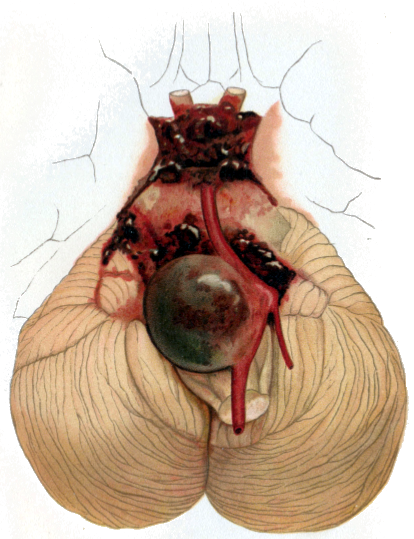
É uma doença neurológica rara, grave e com risco de vida, caracterizada pelo rompimento súbito de um aneurisma cerebral no espaço subaracnoide. Geralmente se manifesta com uma dor de cabeça súbita, muito forte e insuportável, acompanhada de enjoo, vômitos e desmaio. Outras características podem incluir sinais neurológicos específicos, paralisia dos nervos que controlam os movimentos dos olhos, convulsões e insuficiência cardíaca. Complicações precoces incluem um novo sangramento, acúmulo de líquido no cérebro (hidrocefalia) e convulsões.
Introdução
O que você precisa saber de cara
É uma doença neurológica rara, grave e com risco de vida, caracterizada pelo rompimento súbito de um aneurisma cerebral no espaço subaracnoide. Geralmente se manifesta com uma dor de cabeça súbita, muito forte e insuportável, acompanhada de enjoo, vômitos e desmaio. Outras características podem incluir sinais neurológicos específicos, paralisia dos nervos que controlam os movimentos dos olhos, convulsões e insuficiência cardíaca. Complicações precoces incluem um novo sangramento, acúmulo de líquido no cérebro (hidrocefalia) e convulsões.
Escala de raridade
<1/50kMuito rara
1/20kRara
1/10kPouco freq.
1/5kIncomum
1/2k
Encontrou um erro ou informação desatualizada? Sugira uma correção →
Entender a doença
Do básico ao detalhe, leia no seu ritmo
Preparando trilha educativa...
Sinais e sintomas
O que aparece no corpo e com que frequência cada sintoma acontece
Partes do corpo afetadas
+ 16 sintomas em outras categorias
Características mais comuns
Os sintomas variam de pessoa para pessoa. Abaixo estão as 34 características clínicas mais associadas, ordenadas por frequência.
Linha do tempo da pesquisa
Encontrou um erro ou informação desatualizada? Sugira uma correção →
Genética e causas
O que está alterado no DNA e como passa nas famílias
Nenhum gene associado encontrado
Os dados genéticos desta condição ainda estão sendo catalogados.
Diagnóstico
Os sinais que médicos procuram e os exames que confirmam
Tratamento e manejo
Remédios, cuidados de apoio e o que precisa acompanhar
Onde tratar no SUS
Hospitais de referência no Brasil e o protocolo oficial do SUS (PCDT)
🇧🇷 Atendimento SUS — Hemorragia subaracnoidea aneurismática
Selecione um estado ou use sua localização para ver resultados.
Dados de DATASUS/CNES, SBGM, ABNeuro e Ministério da Saúde. Sempre confirme a disponibilidade diretamente com o estabelecimento.
Pesquisa ativa
Ensaios clínicos abertos e novidades científicas recentes
Pesquisa e ensaios clínicos
Nenhum ensaio clínico registrado para esta condição.
Publicações mais relevantes
First-in-Human Prospective, Observational, and Comparative Clinical Study of Simultaneous Invasive and Non-Invasive Intracranial Pressure Pulse Wave Monitoring.
Monitoring intracranial pressure (ICP) dynamics is critical for the management of traumatic brain injury, stroke, other neurosurgical conditions, and cerebral blood flow autoregulation; however, invasive ICP monitoring carries risks such as infection, hemorrhage, and sensor zero drift. Increasing evidence suggests that ICP waveform morphology provides clinically relevant information beyond mean ICP value alone. In this first-in-human prospective comparative clinical study, we evaluated the feasibility and accuracy of a novel, fully passive, non-invasive ICP pulse waveform monitoring system (Archimedes 02) based on the detection of eyeball mechanical movement. Fifteen intensive care unit patients (6 males, 9 females; mean age 57.1 ± 18.8 years) with clinically indicated invasive ICP monitoring or external ventricular drainage were enrolled. Three-minute monitoring sessions were performed to simultaneously acquire non-invasive ICP pulse waveforms, invasive ICP waveforms, and invasive radial artery blood pressure (ABP) waveforms. Averaged waveforms were derived for each patient and compared graphically and using correlation analysis. Non-invasive ICP pulse waves recorded with Archimedes 02 showed a strong correlation with invasive ICP waveforms (R¯ = 0.965). In contrast, correlations between non-invasive ICP and ABP waveforms (R¯ = 0.699), as well as between invasive ICP and ABP waveforms (R¯ = 0.749), were lower. These findings indicate that the non-invasive signal primarily reflects ICP dynamics rather than arterial blood pressure. This novel non-invasive ICP monitoring approach has the potential to enhance neurocritical care, particularly in settings where invasive monitoring is impractical or unavailable. Further validation in larger and more diverse patient populations is warranted.
Longitudinal MR angiographic evaluation of circle of Willis morphologic remodeling and induced aneurysms in Hashimoto rat cerebral aneurysm model.
We aimed to longitudinally characterize morphological remodeling of the Circle of Willis (COW) and aneurysm development in the Hashimoto rat cerebral aneurysm model using serial high-resolution 7T MR imaging. Aneurysm induction was achieved through unilateral carotid and renal artery ligation combined with salt and β-aminopropionitrile loading to induce hemodynamic stress and vascular fragility. TOF-MRA, T2-weighted, and black-blood MR sequences were acquired at four time points over 12 weeks. Morphological changes were quantified by measuring arterial diameters and tortuosity indices. Postmortem scanning electron microscopy (SEM) following vascular corrosion casting was used as the diagnostic reference. Significant asymmetric vascular remodeling was observed predominantly in the posterior circulation, with fusiform aneurysms confirmed by SEM in the left PCA P1 segment in two cases, both associated with subarachnoid hemorrhage. Microaneurysms below MR detection threshold were found at ACA–OA and ICA–MCA bifurcations. The sensitivity and specificity of MR-based aneurysm detection were 40% and 60%, respectively. While spatial resolution limited visualization of smaller lesions, longitudinal MR imaging allowed dynamic tracking of vascular changes and provided insight into early aneurysmogenesis. This platform enables in vivo evaluation of aneurysm initiation, growth, and rupture risk, supporting its potential utility for preclinical assessment of therapeutic strategies. The online version contains supplementary material available at 10.1038/s41598-026-37369-2.
Basilar artery perforator rupture as the cause of perimesencephalic subarachnoid hemorrhage.
The cause of perimesencephalic subarachnoid hemorrhage (pmSAH) is unclear but has historically been attributed to a venous source. The authors hypothesized that high-resolution cone-beam CT (CBCT) during angiography could better identify pmSAH etiology. All patients with pmSAH treated at the authors' institution between January 2023 and December 2024 were retrospectively analyzed. Patients were excluded if CBCT was not performed as part of the digital subtraction angiography (DSA), if CBCT source data were not available for review, or if the images were deemed to be low quality. All images were reviewed by 2 neuroangiographers with extensive neurovascular imaging experience and discussed until consensus agreement. Data were recorded as counts and percentages. Among 152 patients who presented with spontaneous SAH in 2023-2024, 22 had a pmSAH defined according to the Rinkel criteria. These 22 patients had a catheter angiogram performed on 1 of 2 biplane machines. Thirteen of those patients had high-quality CBCT data available for review, 8 (61%) of whom were found to harbor a basilar perforator focal outpouching consistent with a site of rupture. All patients with pmSAH, including the 8 found to have a basilar perforator aneurysm, achieved an excellent neurological recovery with resolution of the basilar perforator finding on follow-up DSA with CBCT and without experiencing a re-rupture event or clinically significant vasospasm. In the setting of pmSAH, high-resolution CBCT acquired as part of catheter angiography frequently identifies a basilar perforator pseudoaneurysm. Conservative management was associated with excellent outcomes in this series. The authors propose that in the setting of pmSAH, a high suspicion of an arterial etiology should be considered until proven otherwise.
Neuropsychological profile and risk factors for poor cognitive outcomes in survivors of aneurysmal subarachnoid hemorrhage.
Authors of this study aimed to characterize the neuropsychological profile of survivors of aneurysmal subarachnoid hemorrhage (aSAH) and identify clinical variables associated with poor cognitive outcomes. This retrospective observational study included patients with an aSAH diagnosis from 2009 to 2024. Cognitive outcomes were assessed at least 6 months after aSAH using the 22-item Montreal Cognitive Assessment (MoCA-22), Digit Span Test Forward (DST-F), Digit Span Test Backward (DST-B), and Verbal Fluency Test (VFT). Poor cognitive outcomes were defined as an MoCA-22 score < 25th percentile for population norms. Multivariable logistic regression was used to identify factors associated with poor cognitive outcomes. A subset of patients also completed the Beck Depression Inventory II, Stroke-Specific Quality of Life Scale, and Iowa Scales of Personality Change. A total of 156 patients were included. Fifty-three patients (34%) had an MoCA-22 score < 25th percentile, even though 79% of them had a modified Rankin Scale score ≤ 2 at discharge. Moderate and severe deficits (z-score < 1 SD) were observed in 11% of patients (17/156) on the DST-F, 27% (42/156) on the DST-B, and 9% (14/156) on the VFT. A modified Fisher grade 4 on admission (36/53, 68% vs 45/103, 44%) and infarction during hospitalization (16/53, 30% vs 11/103, 11%) were significantly associated with poor cognitive outcomes (adjusted odds ratio [aOR] 2.43, IQR 1.17-5.16, p = 0.018; and aOR 2.71, IQR 1.10-6.79, p = 0.029, respectively). Infarction also negatively impacted work productivity (OR 0.69, p = 0.015) and social relationships (OR 0.72, p = 0.029). Additionally, 27% of patients (12/44) reported at least mild depressive symptoms and 64% (29/45) acquired a personality disturbance. Survivors of aSAH can experience neuropsychological deficits, particularly those affecting executive function and working memory, despite good functional recovery. In this study, a modified Fisher grade 4 and new radiological infarction during hospitalization were associated with poor cognitive outcomes.
Visualisation of lenticulostriate arteries using photon counting detector CT angiography: A retrospective cohort study.
The visualisation of lenticulostriate arteries (LSA) using CT-techniques has not been extensively studied. Currently, digital subtraction angiography (DSA) is the preferred imaging modality for LSA visualisation. The new photon-counting detector CT (PCD-CT) may offer a non-invasive alternative. This study evaluates PCD-CT for LSA visualisation compared to DSA and energy-integrating detector CT-angiography (EID-CTA). We assessed imaging data from subarachnoid haemorrhage (SAH) patients, as they are expected to have intact LSA and routinely undergo DSA. From 2021 to 2024, adult SAH-patients who underwent both DSA and either EID-CTA or PCD-CT were enrolled. PCD-CT was acquired in UHR mode. For LSA > 5 mm from the middle cerebral artery (MCA) origin, only the length of the largest branch was measured, whereas for LSA < 5 mm all individual branches were assessed. LSA presence, length and subjective image quality were assessed across PCD-CT, EID-CTA, and DSA by two radiologists. Cohen's kappa and the Intraclass Correlation Coefficient were used to evaluate inter-rater agreement. 159 patients were included. No differences were found between DSA and PCD-CT in LSA detection and length < 5 mm from the MCA origin. At > 5 mm from the MCA origin, the measured length of LSA was significantly longer on DSA. PCD-CT outperformed EID-CTA for LSA detection and length measurements. Observer 1 rated PCD-CT quality lower than DSA, while observer 2 found no difference. EID-CTA quality was rated significantly lower than both PCD-CT and DSA. Inter-rater agreement ranged from poor to moderate across modalities. PCD-CT holds promise as a method for non-invasive LSA visualisation and requires further evaluation in prospective studies and clinical settings.
Publicações recentes
Idiopathic subarachnoid hemorrhage: Pattern and long-term outcome.
Twelve controversial questions in aneurysmal subarachnoid hemorrhage.
[Long-term cognitive and functional status in survivors of an aneurysmal subarachnoid hemorrhage: Analysis of a retrospective cohort].
External lumbar cerebrospinal fluid drainage in patients with aneurysmal subarachnoid hemorrhage: A systematic review and meta-analysis of controlled trials.
📚 EuropePMC26 artigos no totalmostrando 198
First-in-Human Prospective, Observational, and Comparative Clinical Study of Simultaneous Invasive and Non-Invasive Intracranial Pressure Pulse Wave Monitoring.
Sensors (Basel, Switzerland)Longitudinal MR angiographic evaluation of circle of Willis morphologic remodeling and induced aneurysms in Hashimoto rat cerebral aneurysm model.
Scientific reportsBasilar artery perforator rupture as the cause of perimesencephalic subarachnoid hemorrhage.
Journal of neurosurgeryNeuropsychological profile and risk factors for poor cognitive outcomes in survivors of aneurysmal subarachnoid hemorrhage.
Journal of neurosurgeryObjective motor function assessment using diffusion tensor tractography in subacute acquired brain injury: A retrospective observational study.
MedicineVisualisation of lenticulostriate arteries using photon counting detector CT angiography: A retrospective cohort study.
European journal of radiologyTractography-Based Asymmetries in Acquired Brain Injury: Contributions to the Neuropsychological Profile and Rehabilitation in a Case-Series.
Brain sciencesPrevalence of cervical fibromuscular dysplasia among aneurysmal subarachnoid hemorrhage patients.
International journal of stroke : official journal of the International Stroke SocietyThe forensic and clinicopathological spectrum of the vertebral artery.
Forensic science internationalAssessing the global variation in patient characteristics, management and short-term outcomes of spontaneous intracranial haemorrhage worldwide: a protocol for a global observational prospective multicentre study (the PLOT-ICH study).
BMJ openLocalized hemodynamic assessment and rupture risk evaluation of intracranial aneurysms using the TESLA framework via computational fluid dynamics.
Medical physicsDelayed cerebral infarction in poor grade subarachnoid hemorrhage. Features, predictors, and clinical impact.
Neurosurgical reviewAssociation between albumin to Globulin ratio and pneumonia in patients with aneurysmal subarachnoid hemorrhage.
Scientific reportsAcquired neuropathology and its associations with key patterns of placental pathology.
Acta neuropathologica communicationsWorthwhile or Not? The Pain-Gain Ratio of Screening Routine cMRIs in a Maximum Care University Hospital for Incidental Intracranial Aneurysms Using Artificial Intelligence.
Journal of clinical medicineThoracic aorta aneurysm tracheal compression and anatomical variant of the right subclavian artery: A case report.
Radiology case reportsWhat is idiopathic in normal pressure hydrocephalus?
Journal of neurosurgical sciencesOut-of-Hospital Cardiac Arrest in Apparently Healthy, Young Adults.
JAMATranscirculation repair of a direct carotid-cavernous fistula in a patient who presented with hydrocephalus: illustrative case.
Journal of neurosurgery. Case lessonsAre There Left-Right Differences in Ruptured Middle Cerebral Artery Bifurcation Aneurysms? A Single-Center Retrospective Study and Review of the Literature.
Asian journal of neurosurgeryMulti-targeted olink proteomics analyses of cerebrospinal fluid from patients with aneurysmal subarachnoid hemorrhage.
Proteome scienceMethod for detection of cerebral blood flow in neurointensive care using longitudinal arterial spin labeling MRI.
PloS oneAcute to Chronic Variants in the Imaging Spectrum of Superficial Siderosis: Case Series and Literature Review.
CureusNon-invasive Auricular Vagus nerve stimulation for Subarachnoid Hemorrhage (NAVSaH): Protocol for a prospective, triple-blinded, randomized controlled trial.
PloS oneCase report: Varicella-zoster virus encephalitis a new type of "ICU-acquired infection"?
HeliyonGenetically proxied appendicular lean mass and stroke risk: A two-step mendelian randomization study.
Journal of stroke and cerebrovascular diseases : the official journal of National Stroke AssociationMicrosurgical Clipping of a Ruptured Basilar Apex Aneurysm: Contending with a Formidable Clinical Scenario.
World neurosurgeryIntegrating PointNet-Based Model and Machine Learning Algorithms for Classification of Rupture Status of IAs.
Bioengineering (Basel, Switzerland)Association of serum uric acid level with intracranial aneurysms: A Mendelian randomization study.
HeliyonModulation of the Immunological Milieu in Acute Aneurysmal Subarachnoid Hemorrhage: The Potential Role of Monocytes Through CXCL10 Secretion.
Translational stroke researchStandardized Criteria to Initiate External Ventricular Drain (EVD) Weaning in a Neurological Intensive Care Unit to Increase the Safety of EVD Discontinuation and Reduce the Need for a Shunt.
CureusEvaluation of an Artificial Intelligence Model for Identification of Intracranial Hemorrhage Subtypes on Computed Tomography of the Head.
Stroke (Hoboken, N.J.)Return to work after aneurysmal subarachnoid hemorrhage.
Frontiers in neurologyDouble Skull Sign After Cranioplasty: A Case Report.
CureusRates of operative intervention and in-hospital mortality following subarachnoid hemorrhage in patients with COVID-19.
Journal of neurosurgeryPMMNet: A Dual Branch Fusion Network of Point Cloud and Multi-View for Intracranial Aneurysm Classification and Segmentation.
IEEE journal of biomedical and health informaticsSafety Issues of Herb-Warfarin Interactions.
Current drug metabolismClinical Experience With a Dedicated Neurocritical Care Quality Improvement Program in an Academic Medical Center.
CureusICP wave morphology as a screening test to exclude intracranial hypertension in brain-injured patients: a non-invasive perspective.
Journal of clinical monitoring and computingSubarachnoid Hemorrhage Caused by Supratentorial Cerebral Cavernous Malformation: A Case Report.
CureusAneurysmal subarachnoid hemorrhage occurring during sleep: Clinical characteristics and risk factors.
Journal of stroke and cerebrovascular diseases : the official journal of National Stroke AssociationDiagnosis of intracranial aneurysms by computed tomography angiography using deep learning-based detection and segmentation.
Journal of neurointerventional surgeryCirculating inflammatory biomarkers and risk of intracranial aneurysm: a Mendelian randomization study.
European journal of medical researchBlood Blister-Like Aneurysms of the Internal Carotid Artery.
Advances and technical standards in neurosurgeryReal world validation of an AI-based CT hemorrhage detection tool.
Frontiers in neurologyImpact of Subarachnoid Hemorrhage on the Cardiac Autonomic Function During Rehabilitation in Children After Severe Traumatic Brain Injury.
Neurotrauma reportsIntracranial hemorrhage detection in 3D computed tomography images using a bi-directional long short-term memory network-based modified genetic algorithm.
Frontiers in neuroscienceDSA-Based 2D Perfusion Measurements in Delayed Cerebral Ischemia to Estimate the Clinical Outcome in Patients with Aneurysmal Subarachnoid Hemorrhage: A Technical Feasibility Study.
Journal of clinical medicineClinical prediction score for prolonged length of hospital stay in aneurysmal subarachnoid hemorrhage.
BMC neurologyThe Loss of Temporal Muscle Volume is Associated with Poor Outcome in Patients with Subarachnoid Hemorrhage: An Observational Cohort Study.
Neurocritical careMultimodal Neuromonitoring and Neurocritical Care in Swine to Enhance Translational Relevance in Brain Trauma Research.
BiomedicinesUltrasound, photoacoustic, and magnetic resonance imaging to study hyperacute pathophysiology of traumatic and vascular brain injury.
Journal of neuroimaging : official journal of the American Society of NeuroimagingSocial and health determinants related to adverse short-term outcomes after a first-ever stroke in adults younger than 65 years.
Journal of stroke and cerebrovascular diseases : the official journal of National Stroke AssociationFunnel Shaped Anterior Communicating Artery Fenestration Mistaken for an Aneurysm: A Cautionary Tale.
World neurosurgeryCromolyn prevents cerebral vasospasm and dementia by targeting WDR43.
Frontiers in aging neuroscienceSurvival of community-acquired Bacillus cereus sepsis with venous sinus thrombosis in an immunocompetent adult man - a case report and literature review.
BMC infectious diseasesDiagnostic Ultrasonography in Neurology.
Continuum (Minneapolis, Minn.)Analysis of cerebral glucose metabolism following experimental subarachnoid hemorrhage over 7 days.
Scientific reportsA predictive model using risk factor categories for hospital-acquired pneumonia in patients with aneurysmal subarachnoid hemorrhage.
Frontiers in neurologyUnlike severe periodontitis, caries does not associate with intracranial aneurysms or aneurysmal subarachnoid hemorrhage.
Acta neurochirurgicaSexuality >1 year after brain injury rehabilitation: A cross-sectional study in Sweden.
Brain injuryIdentification of The Unique Subtype of Macrophages in Aneurysm Lesions at the Growth Phase.
Journal of stroke and cerebrovascular diseases : the official journal of National Stroke AssociationThe location of intraparenchymal bleeding determines functional outcome after spontaneous subarachnoid hemorrhage.
European journal of neurologyClinical characteristics and prognostic factors in intracranial hemorrhage patients with hematological diseases.
Annals of hematologyThe First Case Report of Community-Acquired Infective Endocarditis Due to Sequence Type 1223 Staphylococcus argenteus Complicated with Convexity Subarachnoid Hemorrhage.
Infection and drug resistanceSpontaneous subarachnoid haemorrhage.
Lancet (London, England)Relationship between the mean of 24-h venous blood glucose and in-hospital mortality among patients with subarachnoid hemorrhage: A matched cohort study.
Frontiers in neurologyAltered functional connectivity within default mode network after rupture of anterior communicating artery aneurysm.
Frontiers in aging neuroscienceFeasibility of FDCT Early Brain Parenchymal Blood Volume Maps in Predicting Short-Term Prognosis in Patients With Aneurysmal Subarachnoid Hemorrhage.
Frontiers in neurologyAssociation between hyperglycemia at admission and mortality in aneurysmal subarachnoid hemorrhage.
Journal of clinical neuroscience : official journal of the Neurosurgical Society of AustralasiaTemporal Horn Enlargements Predict Secondary Hydrocephalus Diagnosis Earlier than Evans' Index.
Tomography (Ann Arbor, Mich.)A novel risk score for predicting hospital acquired pneumonia in aneurysmal subarachnoid hemorrhage patients.
International immunopharmacologyEvaluation of Sine Spin flat detector CT imaging compared with multidetector CT.
Journal of neurointerventional surgeryNavigating the ventricles: Novel insights into the pathogenesis of hydrocephalus.
EBioMedicineDirect arteriovenous fistula due to a blister-like aneurysm of the supraclinoid internal carotid artery hijacking its adjacent vein.
Interventional neuroradiology : journal of peritherapeutic neuroradiology, surgical procedures and related neurosciencesSafety and efficacy of a novel robotic transcranial doppler system in subarachnoid hemorrhage.
Scientific reportsApplying Quantitative Radiographic Image Markers to Predict Clinical Complications After Aneurysmal Subarachnoid Hemorrhage: A Pilot Study.
Annals of biomedical engineeringAssociation Between Serum Albumin and Hospital-Acquired Infections After Aneurysmal Subarachnoid Hemorrhage.
Neurocritical careAngiographic vasospasm and delayed cerebral ischemia after subarachnoid hemorrhage: Moving from theoretical to practical research pertinent to neurosurgical care.
Neuro-ChirurgieSpreading Diffusion-Restriction Events in the Gyrencephalic Brain After Subarachnoid Hemorrhage Revealed by Continuous Magnetic Resonance Imaging.
Neurocritical careCerebral Pressure Autoregulation in Brain Injury and Disorders-A Review on Monitoring, Management, and Future Directions.
World neurosurgeryLong-Term Cognitive Outcome following Aneurysmal Subarachnoid Haemorrhage.
Journal of stroke and cerebrovascular diseases : the official journal of National Stroke AssociationDiagnostic accuracy of shuttle CT angiography (CTA) and helical CTA in the diagnosis of vasospasm.
Clinical imagingSubarachnoid Hemorrhage in Bacterial Meningitis Patients.
Cerebrovascular diseases (Basel, Switzerland)Impact of the 'weekend effect' on hospital-acquired pneumonia after aneurysmal subarachnoid hemorrhage.
Postgraduate medicineModular Platform for the Development of Recombinant Hemoglobin Scavenger Biotherapeutics.
Molecular pharmaceuticsSynthetic MRI in subarachnoid haemorrhage.
Clinical radiologyRisk Factors for Cerebral Aneurysm Rupture in Mongolia.
Clinical neuroradiologyNeutrophil Counts as Promising Marker for Predicting In-Hospital Mortality in Aneurysmal Subarachnoid Hemorrhage.
StrokeSystemic immune response against the oral pathogens Porphyromonas gingivalis and Aggregatibacter actinomycetemcomitans is associated with the formation and rupture of intracranial aneurysms.
European journal of neurologyDiagnosis and Treatment of Unruptured Intracranial Aneurysms and Aneurysmal Subarachnoid Hemorrhage.
Mayo Clinic proceedingsDifferences in Societal Participation Across Diagnostic Groups: Secondary Analyses of 8 Studies Using the Utrecht Scale for Evaluation of Rehabilitation-Participation.
Archives of physical medicine and rehabilitationHypoperfusion assessed by pressure reactivity index is associated with delayed cerebral ischemia after subarachnoid hemorrhage: an observational study.
Chinese neurosurgical journalElectroencephalography, Hospital Complications, and Longitudinal Outcomes After Subarachnoid Hemorrhage.
Neurocritical careBehaviors of Concern after Acquired Brain Injury: The Role of Negative Emotion Recognition and Anger Misattribution.
Journal of the International Neuropsychological Society : JINSIntracranial Aneurysms Are Associated With Marfan Syndrome: Single Cohort Retrospective Study in 118 Patients Using Brain Imaging.
StrokeThe Acquisition of Multidrug-Resistant Bacteria in Patients Admitted to COVID-19 Intensive Care Units: A Monocentric Retrospective Case Control Study.
MicroorganismsEarly Lymphopenia and Infections in Nontraumatic Subarachnoid Hemorrhage Patients.
Journal of neurosurgical anesthesiologyBorden Type I Sigmoid Sinus Dural Arteriovenous Fistula Presenting as Subarachnoid Hemorrhage from a Feeding Artery Aneurysm of the Anterior Inferior Cerebellar Artery: A Case Report.
Taehan Yongsang Uihakhoe chiThe Impact of Extracerebral Infection After Subarachnoid Hemorrhage: A Single-Center Cohort Study.
World neurosurgeryAssessment of Brain Injury Using Portable, Low-Field Magnetic Resonance Imaging at the Bedside of Critically Ill Patients.
JAMA neurologyCerebral Vascular Thrombosis Associated With Ulcerative Colitis and Primary Sclerosing Cholangitis.
The American journal of forensic medicine and pathologyNon-compliant and compliant balloons for endovascular rescue therapy of cerebral vasospasm after spontaneous subarachnoid haemorrhage: experiences of a single-centre institution with radiological follow-up of the treated vessel segments.
Stroke and vascular neurologyA meta-analysis of executive functions among survivors of subarachnoid haemorrhage.
Neuropsychological rehabilitationMultiple neurocysticercosis and aneurismal subarachnoid hemorrhage: case presentation and systematic literature review.
Le infezioni in medicinaImpact of hospital-acquired complications in long-term clinical outcomes after subarachnoid hemorrhage.
Clinical neurology and neurosurgeryCorrelation between gray matter volume loss followed by aneurysmal subarachnoid hemorrhage and subarachnoid hemorrhage volume.
NeuroradiologyClinical observations and considerations in the treatment of Terson syndrome using 23G vitrectomy.
International ophthalmologyNeuropathology of Congenital Heart Disease in an Inpatient Autopsy Cohort 2000-2017.
Journal of the American Heart AssociationSubdural hematoma from an acquired dural arteriovenous fistula following external ventricular drain placement for subarachnoid hemorrhage.
The International journal of neuroscienceEffects of hospital-acquired pneumonia on long-term recovery and hospital resource utilization following moderate to severe traumatic brain injury.
The journal of trauma and acute care surgeryCognitive outcome after surgical clipping versus endovascular coiling in patients with subarachnoid hemorrhage due to ruptured anterior communicating artery aneurysm.
Acta neurologica BelgicaGoal-oriented attentional self-regulation training in individuals with acquired brain injury in a subacute phase: a pilot feasibility study.
International journal of rehabilitation research. Internationale Zeitschrift fur Rehabilitationsforschung. Revue internationale de recherches de readaptationExcision and Primary Reanastomosis of the Anterior Inferior Cerebellar Artery for Treatment of a Ruptured Mycotic Aneurysm: 2-Dimensional Operative Video.
Operative neurosurgery (Hagerstown, Md.)Zygomatic Anterior Temporal Approach for High-position Upper Basilar Aneurysm.
Neurologia medico-chirurgicaUnexpected emergence from the vegetative state: delayed discovery rather than late recovery of consciousness.
Journal of neurologySpontaneous subarachnoid haemorrhage incidence among hospitalised patients in Edirne, Turkey.
Acta neurochirurgicaProspective Trial of Cerebrospinal Fluid Filtration After Aneurysmal Subarachnoid Hemorrhage via Lumbar Catheter (PILLAR).
StrokeSubarachnoid hemorrhage in rats - Visualizing blood distribution in vivo using gadolinium-enhanced magnetic resonance imaging: Technical note.
Journal of neuroscience methodsDiagnosis and immediate treatment of acquired von Willebrand syndrome revealed by recurrent cerebral hemorrhage.
Transfusion clinique et biologique : journal de la Societe francaise de transfusion sanguineClinical relevance of short-term follow-up of unruptured intracranial aneurysms.
Neurosurgical focusVessel wall enhancement of intracranial aneurysms: fact or artifact?
Neurosurgical focusElevated Lactate Dehydrogenase Level Predicts Postoperative Pneumonia in Patients with Aneurysmal Subarachnoid Hemorrhage.
World neurosurgerySecondary Hypertension and Complications: Diagnosis and Role of Imaging.
Radiographics : a review publication of the Radiological Society of North America, IncNeurocardiac Injury Assessed by Strain Imaging Is Associated With In-Hospital Mortality in Patients With Subarachnoid Hemorrhage.
JACC. Cardiovascular imagingPredictors of hospital-associated complications prolonging ICU stay in patients with low-grade aneurysmal subarachnoid hemorrhage.
Journal of neurosurgeryCisternal lavage via third ventriculostomy through the fenestrated lamina terminalis after aneurysm clipping: Technical note.
Journal of clinical neuroscience : official journal of the Neurosurgical Society of AustralasiaIncorporation of Transcranial Doppler into the ED for the neurocritical care patient.
The American journal of emergency medicineApc gene suppresses intracranial aneurysm formation and rupture through inhibiting the NF-κB signaling pathway mediated inflammatory response.
Bioscience reportsThe effect of hospital safety-net burden on outcomes, cost, and reportable quality metrics after emergent clipping and coiling of ruptured cerebral aneurysms.
Journal of neurosurgeryPosthemorrhagic hydrocephalus development after germinal matrix hemorrhage: Established mechanisms and proposed pathways.
Journal of neuroscience researchLong-Term Return to Work After Acquired Brain Injury in Young Danish Adults: A Nation-Wide Registry-Based Cohort Study.
Frontiers in neurologyCost Analysis of Endovascular Coiling and Surgical Clipping for the Treatment of Ruptured Intracranial Aneurysms.
World neurosurgeryAngiographic Features of Intracranial Aneurysms in Ecuador.
Journal of stroke and cerebrovascular diseases : the official journal of National Stroke AssociationPredictors of cognitive function in the acute phase after aneurysmal subarachnoid hemorrhage.
Acta neurochirurgicaProlonged monitoring of cerebral blood flow and autoregulation with diffuse correlation spectroscopy in neurocritical care patients.
NeurophotonicsLess known aspects of central hypothyroidism: Part 1 - Acquired etiologies.
Journal of clinical & translational endocrinologyAn analysis of the effects of using Zolpidem and an innovative multimodal interdisciplinary team approach in prolonged disorders of consciousness (PDOC).
Brain injuryNeuromuscular electrical stimulation is ineffective for treating quadriceps muscle wasting with ruptured aneurysm: A case report.
Annals of medicine and surgery (2012)An Urban 9-1-1 System's Experience with Left Ventricular Assist Device Patients.
Prehospital emergency careA Rare Case Report of Multiple Intracranial Aneurysms with Factor VII Deficiency.
Asian journal of neurosurgeryChina Intracranial Aneurysm Project (CIAP): protocol for a registry study on a multidimensional prediction model for rupture risk of unruptured intracranial aneurysms.
Journal of translational medicineMagnesium Protects in Episodes of Critical Perfusion after Aneurysmal SAH.
Translational neuroscienceA Volumetric Method for Quantification of Cerebral Vasospasm in a Murine Model of Subarachnoid Hemorrhage.
Journal of visualized experiments : JoVERete middle cerebral artery anomalies: a unifying name, case series, and literature review.
Journal of neurosurgeryHybrid 3D/2D Convolutional Neural Network for Hemorrhage Evaluation on Head CT.
AJNR. American journal of neuroradiologyUsefulness of early plasma S-100B protein and Neuron-Specific Enolase measurements to identify cerebrovascular etiology of out-of-hospital cardiac arrest.
ResuscitationSerum glutamine and hospital-acquired infections after aneurysmal subarachnoid hemorrhage.
NeurologyRisk factors for early-onset ventilator-associated pneumonia in aneurysmal subarachnoid hemorrhage patients.
Brazilian journal of medical and biological research = Revista brasileira de pesquisas medicas e biologicasPituitary dysfunction and association with fatigue in stroke and other acute brain injury.
Endocrine connectionsEarly Ambulation in Patients With External Ventricular Drains: Results of a Quality Improvement Project.
Journal of intensive care medicineHealth Care-Associated Infections after Subarachnoid Hemorrhage.
World neurosurgeryOptic radiation injury in patients with aneurismal subarachnoid hemorrhage: A preliminary diffusion tensor imaging report.
Neural regeneration researchNosocomial Infections in the Neurointensive Care Unit.
Neurosurgery clinics of North AmericaAnatomical Variations of Brain Venous Sinuses in Patients with Arteriovenous Malformations: Incidental Finding or Causative Factor?
World neurosurgeryTime Courses of Inflammatory Markers after Aneurysmal Subarachnoid Hemorrhage and Their Possible Relevance for Future Studies.
Frontiers in neurologyRare Coding Variants in ANGPTL6 Are Associated with Familial Forms of Intracranial Aneurysm.
American journal of human geneticsNewly Diagnosed Acquired Hemophilia A Manifesting as Massive Intracranial Hemorrhage Following a Neurosurgical Procedure.
World neurosurgeryVasoconstriction and Impairment of Neurovascular Coupling after Subarachnoid Hemorrhage: a Descriptive Analysis of Retinal Changes.
Translational stroke researchComparison between Ventriculosubgaleal Shunt and Extraventricular Drainage to Treat Acute Hydrocephalus in Adults.
Asian journal of neurosurgeryClinical characteristics of stroke occurring in the toilet: Are older adults more vulnerable?
Geriatrics & gerontology internationalStroke while driving: Frequency and association with automobile accidents.
International journal of stroke : official journal of the International Stroke SocietyEvaluation of novel computerized tomography scoring systems in human traumatic brain injury: An observational, multicenter study.
PLoS medicineInjury of optic radiation and visual field defect in a patient with aneurysmal subarachnoid hemorrhage: A case report.
MedicineSpinal Arteriovenous Malformation Associated with Parkes Weber Syndrome: Report of Two Cases and Literature Review.
World neurosurgeryMRI-based in vivo assessment of early cerebral infarction in a mouse filament perforation model of subarachnoid hemorrhage.
Neuroscience lettersEffect of treatment modality on in-hospital outcome in patients with subarachnoid hemorrhage: a nationwide study in Japan (J-ASPECT Study).
Journal of neurosurgeryChallenges in a case of ophthalmic artery aneurysm associated with abnormal internal carotid arteries.
Asian journal of neurosurgeryClinical Characteristics of Stroke Occurring while Bathing.
Journal of stroke and cerebrovascular diseases : the official journal of National Stroke AssociationIncreased prognostic accuracy of TBI when a brain electrical activity biomarker is added to loss of consciousness (LOC).
The American journal of emergency medicine36th International Symposium on Intensive Care and Emergency Medicine : Brussels, Belgium. 15-18 March 2016.
Critical care (London, England)Hemodynamic changes in a middle cerebral artery aneurysm at follow-up times before and after its rupture: a case report and a review of the literature.
Neurosurgical reviewClinical assessment of decision-making capacity in acquired brain injury with personality change.
Neuropsychological rehabilitationRevisiting secondary normal pressure hydrocephalus: does it exist? A review.
Neurosurgical focusIncreased Frontal Lobe Activation After Aneurysmal Subarachnoid Hemorrhage.
StrokeRetinal Vessel Analysis (RVA) in the Context of Subarachnoid Hemorrhage - A Proof of Concept Study.
PloS oneDiffusion Tensor Imaging: A Possible Biomarker in Severe Traumatic Brain Injury and Aneurysmal Subarachnoid Hemorrhage?
NeurosurgeryComparison of non-sedated brain MRI and CT for the detection of acute traumatic injury in children 6 years of age or less.
Emergency radiologyIdentification of an Intracranial Pressure (ICP) Response Function from Continuously Acquired Electroencephalographic and ICP Signals in Burst-Suppressed Patients.
Acta neurochirurgica. SupplementEffect of early mobilization and rehabilitation on complications in aneurysmal subarachnoid hemorrhage.
Journal of neurosurgeryEvaluation of a filament perforation model for mouse subarachnoid hemorrhage using 7.0 Tesla MRI.
Journal of clinical neuroscience : official journal of the Neurosurgical Society of AustralasiaThe Dysexecutive Questionnaire Revised (DEX-R): An extended measure of everyday dysexecutive problems after acquired brain injury.
Neuropsychological rehabilitationWhole brain C-arm computed tomography parenchymal blood volume measurements.
Interventional neuroradiology : journal of peritherapeutic neuroradiology, surgical procedures and related neurosciencesTime density curve analysis for C-arm FDCT PBV imaging.
Interventional neuroradiology : journal of peritherapeutic neuroradiology, surgical procedures and related neurosciencesAcquired and Hereditary Hypercoagulable States in Patients with Continuous Flow Left Ventricular Assist Devices: Prevalence and Thrombotic Complications.
Journal of cardiac failureMale partner experiences of females with an acquired brain injury: An interpretative phenomenological analysis.
Neuropsychological rehabilitationTwo-color 3D-3D fusion of selective rotational cerebral angiograms: a novel approach to imaging in cerebrovascular neurosurgery.
Journal of neurointerventional surgeryHospital-Acquired Infections after Aneurysmal Subarachnoid Hemorrhage: A Nationwide Analysis.
World neurosurgerySpontaneous acute subdural hematoma: A rare presentation of a dural intracranial fistula.
Journal of clinical neuroscience : official journal of the Neurosurgical Society of AustralasiaClostridium difficile Infection After Subarachnoid Hemorrhage: A Nationwide Analysis.
NeurosurgeryCervicocerebral artery dissection.
Current opinion in cardiologyProspective Evaluation of Ventriculostomy Infections.
CureusConcurrent Ruptured Pseudoaneurysm of the Internal Carotid Artery and Cerebral Infarction as an Initial Manifestation of Polycythemia Vera.
Journal of Korean Neurosurgical SocietyTreatment Progress of Paroxysmal Sympathetic Hyperactivity after Acquired Brain Injury.
Pediatric neurosurgeryGenetic factors involves in intracranial aneurysms--actualities.
Journal of medicine and lifeA case of acquired hemophilia A diagnosed after percutaneous endoscopic gastrostomy.
Clinical journal of gastroenterologyTrauma- and distress-associated mental illness symptoms in close relatives of patients with severe traumatic brain injury and high-grade subarachnoid hemorrhage.
Acta neurochirurgicaEffect of cranioplasty on functional and neuro - psychological recovery after severe acquired brain injury: fact or fake? Considerations on a single case.
Functional neurologyAssociações
Organizações que acompanham esta doença — pra ter apoio e orientação
Ainda não temos associações cadastradas para Hemorragia subaracnoidea aneurismática.
É de uma associação que acompanha esta doença? Fale com a gente →
Comunidades
Grupos ativos de quem convive com esta doença aqui no Raras
Ainda não existe comunidade no Raras para Hemorragia subaracnoidea aneurismática
Pacientes, familiares e cuidadores se organizam em comunidades pra compartilhar experiências, fazer perguntas e se apoiar. Você pode ser o primeiro.
Tire suas dúvidas
Perguntas, dicas e experiências compartilhadas aqui na página
Participe da discussão
Faça login para postar dúvidas, compartilhar experiências e interagir com especialistas.
Fazer loginDoenças relacionadas
Doenças com sintomas parecidos — ajudam quem ainda está buscando diagnóstico
Referências e fontes
Bases de dados externas citadas neste artigo
Publicações científicas
Artigos indexados no PubMed ligados a esta doença no grafo RarasNet — título, periódico e PMID direto da fonte, sem intermediação de IA.
- First-in-Human Prospective, Observational, and Comparative Clinical Study of Simultaneous Invasive and Non-Invasive Intracranial Pressure Pulse Wave Monitoring.
- Longitudinal MR angiographic evaluation of circle of Willis morphologic remodeling and induced aneurysms in Hashimoto rat cerebral aneurysm model.
- Basilar artery perforator rupture as the cause of perimesencephalic subarachnoid hemorrhage.
- Neuropsychological profile and risk factors for poor cognitive outcomes in survivors of aneurysmal subarachnoid hemorrhage.
- Visualisation of lenticulostriate arteries using photon counting detector CT angiography: A retrospective cohort study.
- Idiopathic subarachnoid hemorrhage: Pattern and long-term outcome.
- Twelve controversial questions in aneurysmal subarachnoid hemorrhage.
- [Long-term cognitive and functional status in survivors of an aneurysmal subarachnoid hemorrhage: Analysis of a retrospective cohort].
- External lumbar cerebrospinal fluid drainage in patients with aneurysmal subarachnoid hemorrhage: A systematic review and meta-analysis of controlled trials.
Bases de dados e fontes oficiais
Identificadores e referências canônicas usadas para montar este verbete.
- ORPHA:90065(Orphanet)
- MONDO:0019543(MONDO)
- GARD:19114(GARD (NIH))
- Busca completa no PubMed(PubMed)
- Q55788712(Wikidata)
Dados compilados pelo RarasNet a partir de fontes abertas (Orphanet, OMIM, MONDO, PubMed/EuropePMC, ClinicalTrials.gov, DATASUS, PCDT/MS). Este conteúdo é informativo e não substitui avaliação médica.
Conteúdo mantido por Agente Raras · Médicos e pesquisadores podem colaborar
Hemorragia subaracnoidea aneurismática
📋 Origem dos dados
Esta página agrega dados de fontes públicas e oficiais. Dados sobre cobertura no SUS (PCDT, CEAF) são verificados ativamente por agente proativo (ver badge no infobox). Demais dados têm atribuição de fonte + data da última sincronização — clique para abrir o original.
- Doença rara (ontologia)
- fonte: Orphanet
- Identificador unificado
- fonte: MONDO
- Codificação WHO/SUS
- fonte: WHO ICD-10 / DATASUS
- CID-11 (futuro)
- fonte: WHO ICD-11
- NIH/GARD
- fonte: GARD (NIH)
- Dado público estruturado
- fonte: Wikidata
- Reposicionamento
- fonte: Drug Repurposing Hub