
A atresia do intestino delgado é uma forma especial de atresia intestinal com ausência de mesentério, provavelmente devido a um acidente vascular intestinal intrauterino. Os recém-nascidos são geralmente prematuros com baixo peso ao nascer, que enfrentam dificuldades de alimentação (incluindo vômitos nas mamadas iniciais, que podem piorar posteriormente e o abdômen torna-se progressivamente distendido), bem como deficiência de crescimento. As crianças afetadas apresentam alças intestinais rompidas assumindo uma configuração espiral semelhante a uma “casca de maçã” e podem ter menos da metade do comprimento normal do intestino delgado e um intestino fisiologicamente curto. A atresia do intestino delgado é caracterizada por atresia jejunal próxima ao ligamento de Treitz, intestino encurtado e grande lacuna mesentérica. O intestino distal à atresia é irrigado precariamente. A atresia do intestino delgado pode ser uma manifestação de fibrose cística. A causa mais importante de mortalidade é a síndrome do intestino curto, encontrada em 65% dos casos.
Introdução
O que você precisa saber de cara
A atresia do intestino delgado é uma forma especial de atresia intestinal com ausência de mesentério, provavelmente devido a um acidente vascular intestinal intrauterino. Os recém-nascidos são geralmente prematuros com baixo peso ao nascer, que enfrentam dificuldades de alimentação (incluindo vômitos nas mamadas iniciais, que podem piorar posteriormente e o abdômen torna-se progressivamente distendido), bem como deficiência de crescimento. As crianças afetadas apresentam alças intestinais rompidas assumindo uma configuração espiral semelhante a uma “casca de maçã” e podem ter menos da metade do comprimento normal do intestino delgado e um intestino fisiologicamente curto. A atresia do intestino delgado é caracterizada por atresia jejunal próxima ao ligamento de Treitz, intestino encurtado e grande lacuna mesentérica. O intestino distal à atresia é irrigado precariamente. A atresia do intestino delgado pode ser uma manifestação de fibrose cística. A causa mais importante de mortalidade é a síndrome do intestino curto, encontrada em 65% dos casos.
Escala de raridade
<1/50kMuito rara
1/20kRara
1/10kPouco freq.
1/5kIncomum
1/2k
Encontrou um erro ou informação desatualizada? Sugira uma correção →
Entender a doença
Do básico ao detalhe, leia no seu ritmo
Preparando trilha educativa...
Sinais e sintomas
O que aparece no corpo e com que frequência cada sintoma acontece
Partes do corpo afetadas
+ 2 sintomas em outras categorias
Características mais comuns
Os sintomas variam de pessoa para pessoa. Abaixo estão as 12 características clínicas mais associadas, ordenadas por frequência.
Linha do tempo da pesquisa
Encontrou um erro ou informação desatualizada? Sugira uma correção →
Genética e causas
O que está alterado no DNA e como passa nas famílias
Nenhum gene associado encontrado
Os dados genéticos desta condição ainda estão sendo catalogados.
Diagnóstico
Os sinais que médicos procuram e os exames que confirmam
Tratamento e manejo
Remédios, cuidados de apoio e o que precisa acompanhar
Onde tratar no SUS
Hospitais de referência no Brasil e o protocolo oficial do SUS (PCDT)
🇧🇷 Atendimento SUS — Atresia do intestino delgado
Centros de Referência SUS
24 centros habilitados pelo SUS para Atresia do intestino delgado
Centros para Atresia do intestino delgado
Detalhes dos centros
Hospital Universitário Prof. Edgard Santos (HUPES)
R. Dr. Augusto Viana, s/n - Canela, Salvador - BA, 40110-060 · CNES 0003808
Serviço de Referência
Hospital Infantil Albert Sabin
R. Tertuliano Sales, 544 - Vila União, Fortaleza - CE, 60410-794 · CNES 2407876
Serviço de Referência
Hospital de Apoio de Brasília (HAB)
AENW 3 Lote A Setor Noroeste - Plano Piloto, Brasília - DF, 70684-831 · CNES 0010456
Serviço de Referência
Hospital Estadual Infantil e Maternidade Alzir Bernardino Alves (HIABA)
Av. Min. Salgado Filho, 918 - Soteco, Vila Velha - ES, 29106-010 · CNES 6631207
Serviço de Referência
Hospital das Clínicas da UFG
Rua 235 QD. 68 Lote Área, Nº 285, s/nº - Setor Leste Universitário, Goiânia - GO, 74605-050 · CNES 2338424
Serviço de Referência
Hospital Universitário da UFJF
R. Catulo Breviglieri, Bairro - s/n - Santa Catarina, Juiz de Fora - MG, 36036-110 · CNES 2297442
Atenção Especializada
Hospital das Clínicas da UFMG
Av. Prof. Alfredo Balena, 110 - Santa Efigênia, Belo Horizonte - MG, 30130-100 · CNES 2280167
Serviço de Referência
Hospital Universitário Julio Müller (HUJM)
R. Luis Philippe Pereira Leite, s/n - Alvorada, Cuiabá - MT, 78048-902 · CNES 2726092
Atenção Especializada
Hospital Universitário João de Barros Barreto
R. dos Mundurucus, 4487 - Guamá, Belém - PA, 66073-000 · CNES 2337878
Serviço de Referência
Hospital Universitário Lauro Wanderley (HULW)
R. Tabeliao Estanislau Eloy, 585 - Castelo Branco, João Pessoa - PB, 58050-585 · CNES 0002470
Atenção Especializada
Instituto de Medicina Integral Prof. Fernando Figueira (IMIP)
R. dos Coelhos, 300 - Boa Vista, Recife - PE, 50070-902 · CNES 0000647
Serviço de Referência
Hospital Pequeno Príncipe
R. Des. Motta, 1070 - Água Verde, Curitiba - PR, 80250-060 · CNES 3143805
Serviço de Referência
Hospital Universitário Regional de Maringá (HUM)
Av. Mandacaru, 1590 - Parque das Laranjeiras, Maringá - PR, 87083-240 · CNES 2216108
Atenção Especializada
Hospital de Clínicas da UFPR
R. Gen. Carneiro, 181 - Alto da Glória, Curitiba - PR, 80060-900 · CNES 2364980
Serviço de Referência
Hospital Universitário Pedro Ernesto (HUPE-UERJ)
Blvd. 28 de Setembro, 77 - Vila Isabel, Rio de Janeiro - RJ, 20551-030 · CNES 2280221
Serviço de Referência
Instituto Nacional de Saúde da Mulher, da Criança e do Adolescente Fernandes Figueira (IFF/Fiocruz)
Av. Rui Barbosa, 716 - Flamengo, Rio de Janeiro - RJ, 22250-020 · CNES 2269988
Serviço de Referência
Hospital São Lucas da PUCRS
Av. Ipiranga, 6690 - Jardim Botânico, Porto Alegre - RS, 90610-000 · CNES 2232928
Serviço de Referência
Hospital de Clínicas de Porto Alegre (HCPA)
Rua Ramiro Barcelos, 2350 Bloco A - Av. Protásio Alves, 211 - Bloco B e C - Santa Cecília, Porto Alegre - RS, 90035-903 · CNES 2237601
Serviço de Referência
Hospital Universitário da UFSC (HU-UFSC)
R. Profa. Maria Flora Pausewang - Trindade, Florianópolis - SC, 88036-800 · CNES 2560356
Serviço de Referência
Hospital das Clínicas da FMUSP
R. Dr. Ovídio Pires de Campos, 225 - Cerqueira César, São Paulo - SP, 05403-010 · CNES 2077485
Serviço de Referência
Hospital de Base de São José do Rio Preto
Av. Brg. Faria Lima, 5544 - Vila Sao Jose, São José do Rio Preto - SP, 15090-000 · CNES 2079798
Atenção Especializada
Hospital de Clínicas da UNICAMP
R. Vital Brasil, 251 - Cidade Universitária, Campinas - SP, 13083-888 · CNES 2748223
Serviço de Referência
Hospital de Clínicas de Ribeirão Preto (HCRP-USP)
R. Ten. Catão Roxo, 3900 - Vila Monte Alegre, Ribeirão Preto - SP, 14015-010 · CNES 2082187
Serviço de Referência
UNIFESP / Hospital São Paulo
R. Napoleão de Barros, 715 - Vila Clementino, São Paulo - SP, 04024-002 · CNES 2688689
Serviço de Referência
Dados de DATASUS/CNES, SBGM, ABNeuro e Ministério da Saúde. Sempre confirme a disponibilidade diretamente com o estabelecimento.
Pesquisa ativa
Ensaios clínicos abertos e novidades científicas recentes
Ensaios em destaque
🟢 Recrutando agora
1 pesquisa recrutando participantes. Converse com seu médico sobre a possibilidade de participar.
Outros ensaios clínicos
Publicações mais relevantes
Design and validation of a low-cost modular simulator for training in neonatal laparotomy and jejunoileal atresia repair.
Surgical treatment of neonatal jejunoileal atresia requires highly specialized skills, but its rarity makes training opportunities sparse. We aimed to address this by developing and evaluating a low-cost, high-fidelity, modular simulator for comprehensive training in neonatal laparotomy and small bowel atresia repair. Our design consisted of three primary components: bowel, abdominal wall, and abdominal cavity. 3D-printed molds were used to cast silicone models of type II and type IIIa atretic bowel with its mesentery. The abdominal wall was created by layering molded silicone and fabric. A small 3D-printed enclosure with an opening and bony landmarks was designed to simulate the neonatal abdomen. The material cost per model was ∼$16.88 USD, with each subsequent use costing ∼$5.09 USD. Eight expert surgeons and eight surgical trainees performed simulated atresia repairs and stoma creations. Participants rated face and content validity on a 5-point Likert scale. Videos of the simulated procedures were evaluated by an attending pediatric surgeon to assess construct validity by comparing performance between experts and trainees. The highest mean realism ratings were for surface anatomy (4.06) and anatomical structure (4.06). Content validity responses were positive (mean ratings >4), indicating that participants found the model thorough and valuable. Trainees made significantly more mistakes (p = 0.001) and completed fewer tasks (p = 0.01) than experts. Our simulator demonstrated strong face, content, and construct validity. It offers an accessible, cost-effective training tool, with promise for implementation in both high- and low-resource settings with limited surgical training opportunities.
Clinical Study of Intestinal Pacemaker Cells in Neonates With Small Bowel Atresia.
Small bowel atresia is a leading cause of neonatal intestinal obstruction and is frequently associated with postoperative gastrointestinal dysmotility. While factors like enteric nervous system alterations have been studied, the role of interstitial cells of Cajal (ICCs), the gut's pacemaker cells, remains under-investigated. This study aimed to assess the density and distribution of ICCs in the atretic, proximal, and distal bowel segments in neonates with small bowel atresia and correlate their presence with postoperative outcomes. A prospective study was conducted over two years at Institute of Child Health Niloufer Hospital, Hyderabad, including 44 neonates diagnosed with various types of small bowel atresia. Resected bowel segments were analyzed histologically and immunohistochemically using anti-CD117 (c-Kit) antibodies to identify ICCs. Clinical parameters such as age, type and location of atresia, postoperative bowel function, and survival were documented and statistically correlated with ICC distribution. Among the 44 neonates (52.27% female), jejunal and ileal atresias were most common. The majority presented within the first five days of life. CD117 staining revealed sparse or absent ICCs in the atretic and proximal segments in neonates with delayed bowel function and poorer outcomes. In contrast, higher ICC expression was significantly associated with earlier stool passage and improved survival (p < 0.05). A reduction in ICCs is a notable pathological feature of small bowel atresia. Their density in resected bowel segments significantly influences postoperative bowel motility and survival. ICC density assessment may serve as a prognostic indicator and guide surgical planning in affected neonates.
Gastrointestinal obstruction in neonates and infants - a four-year profile in Chris Hani Baragwanath Academic Hospital.
Different disease entities that cause gastrointestinal (GI) obstruction have been studied in isolation; however, no description of GI obstruction in neonates and infants in South Africa could be identified. This study aims to describe the profile of GI obstruction in neonates and infants at Chris Hani Baragwanath Academic Hospital (CHBAH) from January 2016 to December 2019. This was a retrospective record review conducted on all patients < 1 year of age with GI obstruction admitted to CHBAH. Data on age at presentation, sex, presenting symptoms, aetiology, diagnostic imaging, operative and non-operative management, complications, and 30-day mortality were collected. A total of 299 patients were enrolled in this study. They were predominantly male (n = 175, 58.53%) and were neonates at presentation (n = 177, 59.20%). Congenital malformations (n = 203, 67.89%) were more common than acquired conditions (n = 96, 32.11%). Anorectal malformation (ARM) and small bowel atresia were the most common congenital condition (n = 61, 20.40%; n = 34, 11.37% respectively). Intussusception was the most common acquired condition (n = 78, 26.08%). The morbidity rate was 95 (31.77%) with nosocomial sepsis and surgical site sepsis accounting for 49 (51.58%) of the morbidities. Mortality rate was 16 (5.35%) and 10 (62,5%) of the mortalities had associated nosocomial sepsis. Congenital malformations of the GI tract are more common than acquired pathologies in neonates and infants in CHBAH. Sepsis causes significant morbidity in the postoperative period.
Prenatal magnetic resonance imaging of umbilical cord ulcer in a fetus with congenital small bowel atresia: A case report.
A 34-year-old woman (gravida 2, para 0) with suspected fetal small-bowel atresia on ultrasound underwent magnetic resonance imaging (MRI) at 33 weeks 3 days of gestation. In addition to small bowel atresia, a teardrop-shaped hematoma was observed adjacent to the umbilical cord associated with an umbilical cord ulcer (UCU). The fetus was delivered by induced labor on diagnosis of intrauterine fetal death. UCUs were macroscopically observed on the surface of the umbilical cord. Ultrasonography is helpful in the diagnosis of UCU. Moreover, the MRI findings on UCUs adjacent to the umbilical cord in the case of congenital small bowel atresia should be observed carefully, especially after 30 weeks of gestation. MRI findings may lead to the detection of UCU and improve fetal outcome. Therefore, we should be aware of its findings.
Decisions in Diversion: Enterostomy vs. Primary Anastomosis for Colonic Atresia.
Colonic atresia (CA) is associated with Hirschsprung disease (HD) in up to 10% of cases. Therefore, some surgeons elect to complete proximal diversion at the initial operation. We sought to better define the incidence of concurrent HD and evaluate practice patterns regarding diversion for CA. The Pediatric Health Information System (PHIS) database was used to identify patients with CA from 2013 to 2022. Patients with small bowel atresia, anorectal malformation, gastroschisis, or first operation after 14 days of age were excluded. Index and subsequent operations were defined. Complications, time to enterostomy closure, and unplanned operations were evaluated. HD was diagnosed in 8 (9.5%) patients and 7 of these were initially diverted. Diverted and anastomosed patients were demographically similar. In the 58 (69%) patients initially diverted, 19 (33%) had an ileostomy. Continuity was restored with an ileo-colic anastomosis in 63% of diverted and 27% of primarily anastomosed patients. Of those initially managed with a colostomy, 53% ultimately had a colo-colonic anastomosis. Patients with primary anastomoses had fewer operations and received more days of parenteral nutrition. Other outcomes did not vary. In a large population of infants with CA, 9.5% had concurrent HD. Almost 70% of CA patients underwent initial diversion and only one with HD had a primary anastomosis. Patients managed with a primary anastomosis were substantially more likely to retain the proximal colonic segment, but had a similar incidence of complications. When intraoperative colonic biopsies are obtained, primary anastomosis is a safe and effective strategy for CA.
Publicações recentes
Clinical Study of Intestinal Pacemaker Cells in Neonates With Small Bowel Atresia.
🥈 ObservacionalGastrointestinal obstruction in neonates and infants - a four-year profile in Chris Hani Baragwanath Academic Hospital.
Design and validation of a low-cost modular simulator for training in neonatal laparotomy and jejunoileal atresia repair.
Prenatal magnetic resonance imaging of umbilical cord ulcer in a fetus with congenital small bowel atresia: A case report.
Decisions in Diversion: Enterostomy vs. Primary Anastomosis for Colonic Atresia.
📚 EuropePMC47 artigos no totalmostrando 52
Clinical Study of Intestinal Pacemaker Cells in Neonates With Small Bowel Atresia.
CureusGastrointestinal obstruction in neonates and infants - a four-year profile in Chris Hani Baragwanath Academic Hospital.
South African journal of surgery. Suid-Afrikaanse tydskrif vir chirurgieDesign and validation of a low-cost modular simulator for training in neonatal laparotomy and jejunoileal atresia repair.
Journal of pediatric surgeryPrenatal magnetic resonance imaging of umbilical cord ulcer in a fetus with congenital small bowel atresia: A case report.
Radiology case reportsDecisions in Diversion: Enterostomy vs. Primary Anastomosis for Colonic Atresia.
Journal of pediatric surgeryRetrospective review of growth in pediatric intestinal failure after weaning from parenteral nutrition.
Nutrition in clinical practice : official publication of the American Society for Parenteral and Enteral NutritionBiliary Atresia Associated With Jejunal Atresia: A Case Report.
CureusType 3B jejunoileal atresia management at a tertiary hospital in northern Tanzania: A report of three cases.
Clinical case reportsNavigating Inconclusive Upper-Gastrointestinal Series in Infantile Bilious Vomiting: A Case Series on Intestinal Malrotation.
The American journal of case reportsPrenatal Ultrasound Diagnosis and Clinical Analysis of Fetal Small Bowel Obstruction.
Current medical imagingLocation of Treatment Among Infants Requiring Complex Surgical Care.
The Journal of surgical researchA nordic multicenter study on contemporary outcomes of pediatric short bowel syndrome in 208 patients.
Clinical nutrition (Edinburgh, Scotland)The profile and outcome of small bowel atresia at Universitas Academic Hospital.
South African journal of surgery. Suid-Afrikaanse tydskrif vir chirurgieAntimesenteric sleeve tapering enteroplasty with end-to-end anastomosis versus primary end-to-side anastomosis for the management of jejunal/ileal atresia.
Asian journal of surgeryCongenital sodium diarrhoea caused by rare de novo activating guanylate cyclase mutation.
BMJ case reportsDiagnostic value of the microcolon using ultrasonography in small bowel atresia.
BMC pediatricsMid-trimester dilated fetal bowel leading to diagnosis of interstitial duplication 46,XX,dup(8)(q21.13q21.2) associated with extensive neonatal jejuno-ileal atresia.
Radiology case reportsIncidence of late severe intestinal complications after bowel atresia/stenosis.
Pediatrics international : official journal of the Japan Pediatric SocietyBiliary atresia associated with small-intestine atresia: A condition of high morbidity and mortality.
Asian journal of surgeryBowel Resection Through a Single Umbilical Incision: A Case Series.
Journal of laparoendoscopic & advanced surgical techniques. Part AA de novo ACTB gene pathogenic variant in identical twins with phenotypic variation for hydrops and jejunal atresia.
American journal of medical genetics. Part AMeconium peritonitis: A 22-year review in a tertiary referral center.
Journal of pediatric surgeryNew sonographic feature (C-sign) to improve the prenatal accuracy of jejunal atresia.
The journal of obstetrics and gynaecology researchEffect of Strict Lockdown on Pediatric Surgical Services and Residency Programme during COVID-19 Pandemic.
Journal of the College of Physicians and Surgeons--Pakistan : JCPSPTreatment of jejunoileal atresia by primary anastomosis or enterostomy: Double the operations, double the risk of complications.
Journal of pediatric surgeryLaparoscopic Management of Congenital Intestinal Obstruction: Duodenal Atresia and Small Bowel Atresia.
Journal of laparoendoscopic & advanced surgical techniques. Part AMucous Fistula Refeeding Promotes Earlier Enteral Autonomy in Infants With Small Bowel Resection.
Journal of pediatric gastroenterology and nutritionMultiple Small Bowel Atresia: Resection or Conservation?
Journal of the College of Physicians and Surgeons--Pakistan : JCPSPCongenital intestinal atresia associated with a mesenteric cystic lymphangioma in a low birth weight neonate: A case report.
International journal of surgery case reportsA rare case report of infant ileal atresia with double appendix.
International journal of surgery case reportsEfficacy and safety of parenteral vitamin D therapy in infants and children with vitamin D deficiency caused by intestinal malabsorption.
Annals of pediatric endocrinology & metabolismFetal Meconium Peritonitis - Prenatal Findings and Postnatal Outcome: A Case Series, Systematic Review, and Meta-Analysis.
Ultraschall in der Medizin (Stuttgart, Germany : 1980)Novel insights into the histology of jejunoileal atresia and its therapeutic implications.
Journal of pediatric surgeryPrenatal diagnosis of midgut volvulus with jejunal atresia by ultrasonography.
The journal of obstetrics and gynaecology researchSupplementation of Mother's Own Milk with Donor Milk in Infants with Gastroschisis or Intestinal Atresia: A Retrospective Study.
NutrientsPreliminary Investigation of the Diagnosis of Neonatal Congenital Small Bowel Atresia by Ultrasound.
BioMed research internationalAbnormalities of the intestinal pacemaker cells, enteric neurons, and smooth muscle in intestinal atresia.
Journal of laboratory physiciansFamilial aggregation of "apple peel" intestinal atresia and cardiac left-sided obstructive lesions: A possible causal relationship with NOTCH1 gene mutations.
American journal of medical genetics. Part AIsolated Ascites in a Monochorionic Twin after Fetoscopic Laser Ablation Is Not Necessarily Secondary to Recurrence or Anaemia: Bowel Complications in Twin-to-Twin Transfusion Syndrome after Fetoscopic Laser Ablation.
Fetal diagnosis and therapyThe extent of intestinal failure-associated liver disease in patients referred for intestinal rehabilitation is associated with increased mortality: an analysis of the Pediatric Intestinal Failure Consortium database.
Journal of pediatric surgeryOutcome of neonates with gastroschisis at different gestational ages using a national database.
Journal of pediatric surgeryThe Development of Total Parenteral Nutrition.
The American surgeonDuodenal Atresia Associated with Apple Peel Atresia and Situs Inversus Abdominus: A Case Report.
Journal of neonatal surgeryColonic Atresia: Association with Other Anomalies.
Journal of neonatal surgeryA Minor Innovation in Constructing a Small Bowel Stoma in Neonates with Small Bowel Atresia to Reduce the Morbidity.
Journal of neonatal surgeryA Rare Cause of Chronic Life Threatening Bleeding in a Girl: The Ulcerated Blind Loops.
APSP journal of case reportsAccuracy of radiographic estimation of small bowel dimensions in pediatric patients with short bowel syndrome.
Journal of pediatric surgeryPrenatal diagnosis of gastric and small bowel atresia: a case series and review of the literature.
The journal of maternal-fetal & neonatal medicine : the official journal of the European Association of Perinatal Medicine, the Federation of Asia and Oceania Perinatal Societies, the International Society of Perinatal ObstetriciansOutcomes in infants with prenatally diagnosed gastroschisis and planned preterm delivery.
Pediatric surgery internationalThe Combination of Gastroschisis, Jejunal Atresia, and Colonic Atresia in a Newborn.
Case reports in pediatricsThe Surgical Correction of Congenital Deformities: The Treatment of Diaphragmatic Hernia, Esophageal Atresia and Small Bowel Atresia.
Deutsches Arzteblatt internationalDiagnostic Accuracy of Prenatal Ultrasound in Identifying Jejunal and Ileal Atresia.
Fetal diagnosis and therapyAssociações
Organizações que acompanham esta doença — pra ter apoio e orientação
Ainda não temos associações cadastradas para Atresia do intestino delgado.
É de uma associação que acompanha esta doença? Fale com a gente →
Comunidades
Grupos ativos de quem convive com esta doença aqui no Raras
Ainda não existe comunidade no Raras para Atresia do intestino delgado
Pacientes, familiares e cuidadores se organizam em comunidades pra compartilhar experiências, fazer perguntas e se apoiar. Você pode ser o primeiro.
Tire suas dúvidas
Perguntas, dicas e experiências compartilhadas aqui na página
Participe da discussão
Faça login para postar dúvidas, compartilhar experiências e interagir com especialistas.
Fazer loginDoenças relacionadas
Doenças com sintomas parecidos — ajudam quem ainda está buscando diagnóstico
Referências e fontes
Bases de dados externas citadas neste artigo
Publicações científicas
Artigos indexados no PubMed ligados a esta doença no grafo RarasNet — título, periódico e PMID direto da fonte, sem intermediação de IA.
- Design and validation of a low-cost modular simulator for training in neonatal laparotomy and jejunoileal atresia repair.
- Clinical Study of Intestinal Pacemaker Cells in Neonates With Small Bowel Atresia.
- Gastrointestinal obstruction in neonates and infants - a four-year profile in Chris Hani Baragwanath Academic Hospital.South African journal of surgery. Suid-Afrikaanse tydskrif vir chirurgie· 2025· PMID 41055027mais citado
- Prenatal magnetic resonance imaging of umbilical cord ulcer in a fetus with congenital small bowel atresia: A case report.
- Decisions in Diversion: Enterostomy vs. Primary Anastomosis for Colonic Atresia.
Bases de dados e fontes oficiais
Identificadores e referências canônicas usadas para montar este verbete.
- ORPHA:1201(Orphanet)
- OMIM OMIM:243600(OMIM)
- MONDO:0009476(MONDO)
- GARD:140(GARD (NIH))
- Busca completa no PubMed(PubMed)
- Q3629030(Wikidata)
Dados compilados pelo RarasNet a partir de fontes abertas (Orphanet, OMIM, MONDO, PubMed/EuropePMC, ClinicalTrials.gov, DATASUS, PCDT/MS). Este conteúdo é informativo e não substitui avaliação médica.
Conteúdo mantido por Agente Raras · Médicos e pesquisadores podem colaborar
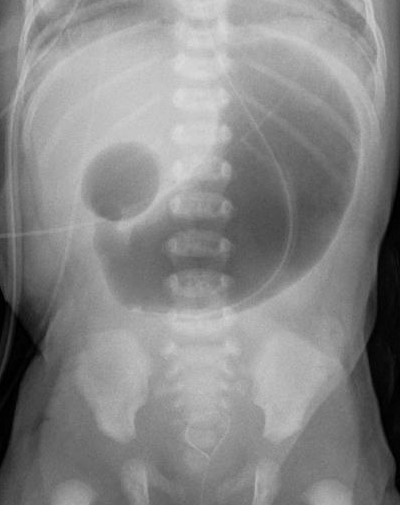
Atresia do intestino delgado
📋 Origem dos dados
Esta página agrega dados de fontes públicas e oficiais. Dados sobre cobertura no SUS (PCDT, CEAF) são verificados ativamente por agente proativo (ver badge no infobox). Demais dados têm atribuição de fonte + data da última sincronização — clique para abrir o original.
- Doença rara (ontologia)
- fonte: Orphanet
- Identificador unificado
- fonte: MONDO
- Genética mendeliana
- fonte: OMIM
- Codificação WHO/SUS
- fonte: WHO ICD-10 / DATASUS
- CID-11 (futuro)
- fonte: WHO ICD-11
- NIH/GARD
- fonte: GARD (NIH)
- Indexação biomédica
- fonte: MeSH (NLM)
- Dado público estruturado
- fonte: Wikidata