
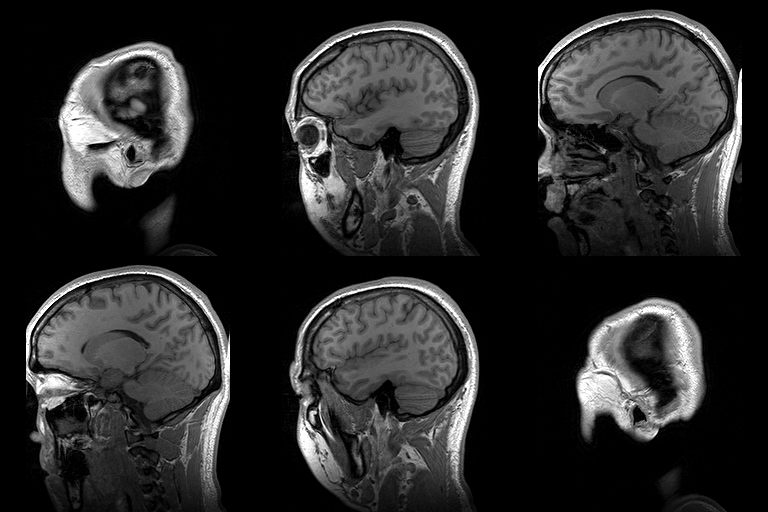
A síndrome de Weaver (SWS) é uma doença rara que afeta vários sistemas do corpo. Ela é caracterizada por estatura alta, uma aparência facial específica (com olhos mais espaçados e queixo recuado) e deficiência intelectual em graus variados. Outras características podem incluir dedos das mãos e dos pés permanentemente curvados, pele macia e fofa, hérnia umbilical e um choro baixo e rouco.
Introdução
O que você precisa saber de cara
A síndrome de Weaver (SWS) é uma doença rara que afeta vários sistemas do corpo. Ela é caracterizada por estatura alta, uma aparência facial específica (com olhos mais espaçados e queixo recuado) e deficiência intelectual em graus variados. Outras características podem incluir dedos das mãos e dos pés permanentemente curvados, pele macia e fofa, hérnia umbilical e um choro baixo e rouco.
Escala de raridade
<1/50kMuito rara
1/20kRara
1/10kPouco freq.
1/5kIncomum
1/2k
Encontrou um erro ou informação desatualizada? Sugira uma correção →
Entender a doença
Do básico ao detalhe, leia no seu ritmo
Preparando trilha educativa...
Sinais e sintomas
O que aparece no corpo e com que frequência cada sintoma acontece
Partes do corpo afetadas
+ 35 sintomas em outras categorias
Características mais comuns
Os sintomas variam de pessoa para pessoa. Abaixo estão as 99 características clínicas mais associadas, ordenadas por frequência.
Linha do tempo da pesquisa
Encontrou um erro ou informação desatualizada? Sugira uma correção →
Genética e causas
O que está alterado no DNA e como passa nas famílias
Genes associados
3 genes identificados com associação a esta condição. Padrão de herança: Autosomal dominant, Not applicable.
Curadoria gene-doença
fontes oficiaisHistone methyltransferase that dimethylates Lys-36 of histone H3 (H3K36me2). Transcriptional intermediary factor capable of both negatively or positively influencing transcription, depending on the cellular context
NucleusChromosome
Sotos syndrome
An autosomal dominant, childhood overgrowth syndrome characterized by pre- and postnatal overgrowth, developmental delay, intellectual disability, advanced bone age, and abnormal craniofacial morphology including macrodolichocephaly with frontal bossing, frontoparietal sparseness of hair, apparent hypertelorism, downslanting palpebral fissures, and facial flushing. Common oral findings include: premature eruption of teeth; high, arched palate; pointed chin and, more rarely, prognathism.
Polycomb group (PcG) protein. Component of the PRC2 complex, which methylates 'Lys-9' (H3K9me) and 'Lys-27' (H3K27me) of histone H3, leading to transcriptional repression of the affected target gene (PubMed:15225548, PubMed:15231737, PubMed:15385962, PubMed:16618801, PubMed:17344414, PubMed:18285464, PubMed:28229514, PubMed:29499137, PubMed:31959557). The PRC2 complex may also serve as a recruiting platform for DNA methyltransferases, thereby linking two epigenetic repression systems (PubMed:123
Nucleus
Catalytic subunit of the PRC2/EED-EZH2 complex, a Polycomb group (PcG) complex that methylates 'Lys-9' (H3K9me) and 'Lys-27' (H3K27me) of histone H3, leading to transcriptional repression of the affected target gene (PubMed:14532106, PubMed:15225548, PubMed:15385962, PubMed:16618801, PubMed:16936726, PubMed:17344414, PubMed:22323599, PubMed:24474760, PubMed:26581166, PubMed:30026490, PubMed:30923826). Able to mono-, di- and trimethylate 'Lys-27' of histone H3 to form H3K27me1, H3K27me2 and H3K27
Nucleus
Weaver syndrome
A syndrome of accelerated growth and osseous maturation, unusual craniofacial appearance, hoarse and low-pitched cry, and hypertonia with camptodactyly. Distinguishing features of Weaver syndrome include broad forehead and face, ocular hypertelorism, prominent wide philtrum, micrognathia, deep horizontal chin groove, and deep-set nails. In addition, carpal bone development is advanced over the rest of the hand.
Variantes genéticas (ClinVar)
1.799 variantes patogênicas registradas no ClinVar.
Classificação de variantes (ClinVar)
Distribuição de 531 variantes classificadas pelo ClinVar.
Vias biológicas (Reactome)
11 vias biológicas associadas aos genes desta condição.
Diagnóstico
Os sinais que médicos procuram e os exames que confirmam
Tratamento e manejo
Remédios, cuidados de apoio e o que precisa acompanhar
Onde tratar no SUS
Hospitais de referência no Brasil e o protocolo oficial do SUS (PCDT)
🇧🇷 Atendimento SUS — Síndrome Weaver
Selecione um estado ou use sua localização para ver resultados.
Dados de DATASUS/CNES, SBGM, ABNeuro e Ministério da Saúde. Sempre confirme a disponibilidade diretamente com o estabelecimento.
Pesquisa ativa
Ensaios clínicos abertos e novidades científicas recentes
Pesquisa e ensaios clínicos
Nenhum ensaio clínico registrado para esta condição.
Publicações mais relevantes
Minimally Humanized Ezh2 Exon-18 Mouse Cell Lines Validate Preclinical CRISPR/Cas9 Approach to Treat Weaver Syndrome.
Weaver syndrome is a rare neurodevelopmental disorder that encompasses macrocephaly, tall stature, obesity, brain anomalies, intellectual disability, and increased susceptibility to cancer. This dominant monogenic disorder is caused by germline variants in enhancer of zeste 2 polycomb repressive complex 2 subunit (EZH2), a key epigenetic writer. Unfortunately, there are no effective treatments for Weaver syndrome. However, preclinical results support the potential for therapeutic gains, despite the prenatal onset. Thus, for the first time, we tested whether CRISPR/Cas9 gene-editing strategies may be able to "correct" a Weaver syndrome variant at the DNA level. We initiated these preclinical studies by humanizing the region surrounding the most-common recurring patient-variant location in mouse embryonic stem cells (ESCs). Humanization ensures that DNA-binding strategies will be directly translatable to human cells and patients. We then introduced into ESCs the humanized region, but now carrying the Weaver syndrome EZH2 variant c.2035C>T p.Arg684Cys, and characterized the enzymatic properties of this missense variant. Our data showed a significant and dramatic reduction in EZH2-enzymatic activity, supporting previous cell-free studies of this variant as well as in vitro and in vivo mouse work by other teams. Intriguingly, this most-common variant does not create a complete loss-of-function, but rather is a hypomorphic allele. Together with prior reports describing hypomorphic effects of missense EZH2 variants, these results demonstrate that the etiology of Weaver syndrome does not require complete loss of EZH2 enzymatic activity. Toward therapy, we tested four CRISPR gene-editing strategies. We demonstrated that Streptococcus pyogenes Cas9 (SpCas9) showed the highest variant correction (70.5%), but unfortunately also the highest alteration of the nonvariant allele (21.1-26.2%), an important consideration for gene-editing treatment of a dominant syndrome. However, Staphylococcus aureus Cas9 (SaCas9) gave a variant correction (52.5%) that was not significantly different than SpCas9, and encouragingly the lowest alteration of the nonvariant allele (2.0%). Thus, the therapeutic strategy using the small SaCas9 enzyme, a size that allows flexibility in therapeutic delivery, was the most optimal for targeting the Weaver syndrome EZH2 variant c.2035C>T p.Arg684Cys.
From Overgrowth to Complex Malformations: A Novel EZH2 Variant Reveals the Expanding Clinical Spectrum of Weaver Syndrome.
Weaver syndrome is a rare congenital overgrowth disorder caused by pathogenic EZH2 variants. This study reports a novel EZH2 variant associated with atypical manifestations, including severe bilateral camptodactyly and complex brain malformations. A 4-year-old Taiwanese female exhibited classical Weaver syndrome features including macrosomia, macrocephaly, hypertelorism, and developmental delay, plus atypical findings of severe bilateral camptodactyly and complex brain malformations. Neuroimaging revealed corpus callosum dysgenesis with rostral agenesis and genu hypoplasia, bilateral frontal lobe hypoplasia, and an arachnoid cyst. The patient demonstrated global developmental delay with marked motor impairment but less severely affected speech and cognition, consistent with mild intellectual disability. Whole-exome sequencing identified a novel de novo pathogenic variant in EZH2: c.449T>C (p.Ile150Thr), affecting a highly conserved amino acid within the SANT domain. This case broadens the clinical spectrum of Weaver syndrome by highlighting severe camptodactyly and complex brain malformations as possible EZH2-related manifestations. The corpus callosum dysgenesis suggests a wider role of EZH2 in neurodevelopment than previously recognized. The novel SANT domain variant may explain the severe phenotypic presentation. The novel EZH2 variant c.449T>C (p.Ile150Thr) expands the molecular and phenotypic spectrum of Weaver syndrome. These findings underscore the importance of comprehensive neuroimaging and molecular genetic testing in suspected cases, particularly atypical presentations.
Clinical and genetic characterization of Weaver syndrome: A case report of an EZH2 mutation and review of the literature.
Weaver syndrome is a rare congenital overgrowth disorder characterized by a wide spectrum of clinical manifestations that often overlap with other overgrowth syndromes. It is primarily caused by pathogenic variants in the Enhancer of Zeste Homolog 2 (EZH2) gene on chromosome 7q36.1. Globally, fewer than 70 cases have been reported, with only a few documented in the Chinese population. We report a 13-day-old Chinese male infant, born with macrosomia (birth weight: 5.04 kg), who was admitted for persistent neonatal jaundice. Physical examination and subsequent follow-up revealed accelerated postnatal growth and characteristic craniofacial features, including a broad forehead, hypertelorism, epicanthal folds, a flat nasal bridge, and low-set ears. His length, weight, and head circumference consistently plotted above the 97th percentile for his age. Additional findings included large hands and feet. The child was ultimately diagnosed with "Weaver syndrome." DNA nanoballs were prepared with a universal sequencing reaction kit and subjected to paired-end sequencing on the MGISEQ-2000 platform. The resulting reads were aligned to the human reference genome hg19 (GRCh37). After removing PCR duplicates, single nucleotide polymorphisms and insertions/deletions were identified and annotated against established variant databases. The potential pathogenicity of the identified variants and their structural impact on the protein were evaluated using computational prediction tools. This analysis revealed a missense variant in the EZH2 gene (NM_004456.4:c.2050C>T) in the proband, resulting in an arginine-to-cysteine substitution at codon 684 (p.Arg684Cys). In accordance with American College of Medical Genetics and Genomics guidelines, this variant was classified as pathogenic. Subsequent Sanger sequencing confirmed it as a de novo mutation. The patient received multidisciplinary guidance for neurodevelopmental, speech, and behavioral therapy. He remains under regular follow-up to monitor his growth and development. This report documents a new case of Weaver syndrome in China harboring a de novo EZH2 mutation, expanding the genotypic and phenotypic spectrum of this disorder in the Chinese population. Our findings underscore the critical role of genetic testing in achieving a definitive diagnosis for rare overgrowth syndromes, facilitating early intervention and appropriate management.
Dominant-negative effects of Weaver syndrome-associated EZH2 variants.
Heterozygous missense mutations in EZH2 cause Weaver syndrome (WS), a developmental disorder characterized by intellectual disability and overgrowth. EZH2 encodes the enzymatic subunit of Polycomb repressive complex 2 (PRC2), which mediates monomethylation, dimethylation, and trimethylation of histone H3 lysine 27 (H3K27me1/2/3). Most WS-associated EZH2 variants lack functional characterization but are presumed loss-of-function. However, the lack of early truncating mutations in EZH2 led us to hypothesize a dominant-negative mechanism for WS, which was supported by our structural analysis of all known WS-associated EZH2 variants. We isogenically modeled 10 representative variants in embryonic stem cells and showed that they reduce global H3K27me2/3 with concomitant increases in H3K27ac and chromatin decompaction. Notably, the pattern of H3K27me2/3 reductions indicated dominant-negative interference on PRC2 activity even when WS variants were expressed at low levels. RNA-seq identified weakly Polycomb-bound genes that lose canonical PRC1 (cPRC1) occupancy and become derepressed, including several phenotypically relevant growth control genes. Comparative analysis of a gain-of-function EZH2 variant causing growth restriction revealed reciprocal chromatin and transcriptional changes compared with WS-associated variants. Taken together, our findings support a model in which EZH2 variants associated with opposing developmental growth syndromes affect not only H3K27me3 but also intergenic H3K27me2, chromatin architecture, and cPRC1 recruitment.
Tatton-Brown-Rahman-Syndrome-associated DNMT3A mutations de-repress cortical interneuron differentiation to disrupt neuronal network function.
Pathogenic mutations in DNMT3A cause Tatton-Brown-Rahman Syndrome (TBRS), a disorder characterized by somatic overgrowth of multiple tissues including the brain and intellectual disability (OGID). Here, we investigated TBRS etiology using new human pluripotent stem cell models, modeling varying levels of TBRS-associated loss of DNMT3A function. We identified lineage-specific overgrowth in TBRS ventral forebrain medial ganglionic eminence (MGE)-like progenitors, due in part to increased signaling through the PIK3/AKT/mTOR pathway that could be modulated to ameliorate this phenotype. By contrast, reduced DNA methylation during MGE-like progenitor differentiation into GABAergic interneurons caused premature expression of neuronal and synaptic genes, triggering precocious neuronal maturation. As a result, TBRS GABAergic neurons exhibited hyperactivity sufficient to alter the development and structure of neuronal networks, likely contributing to the intellectual disability and autism spectrum disorder common to TBRS patients. Together, this work elucidates new roles for DNMT3A-mediated gene repression in human cortical development, identifying critical requirements for regulating GABAergic neuron production and neuronal network function. These findings also provide evidence for interrelated pathogenic mechanisms underlying TBRS and other OGIDs, including PIK3CA-related overgrowth syndrome and Weaver Syndrome, providing a foundation and rationale for future studies to identify common paradigms to treat these related disorders. EZH2-related overgrowth is a variable overgrowth syndrome characterized by tall stature, macrocephaly, variable intellect (ranging from normal intellect to severe intellectual disability), characteristic facial appearance, and a range of associated clinical features including advanced bone age, poor coordination, soft, doughy skin, camptodactyly of the fingers and/or toes, umbilical hernia, abnormal tone, and hoarse, low cry in infancy. Brain MRI has identified abnormalities in a few individuals with EZH2-related overgrowth. Neuroblastoma occurs at an increased frequency in individuals with a heterozygous EZH2 pathogenic variant. There is currently no evidence that additional malignancies (including hematologic malignancies) occur with increased frequency, though a few have been reported. The diagnosis of EZH2-related overgrowth is based on detection of a heterozygous germline EZH2 pathogenic variant on molecular genetic testing. Treatment of manifestations: For individuals with developmental delay and/or learning disability, referral for learning/behavior/speech assessment and support may be indicated. Occasionally, toe camptodactyly may require surgical release. Physiotherapy may be of benefit to those experiencing joint pain secondary to ligamentous laxity or joint contractures. Standard treatment with appropriate specialist referral(s) is indicated for epilepsy, scoliosis, and other clinical issues. Surveillance: Regular medical follow up of young children with EZH2-related overgrowth to monitor developmental progress, camptodactyly (for resolution/improvement), and/or hypotonia; medical follow up of older children/teenagers who do not have medical complications may be less frequent. If scoliosis is present, monitoring per the recommendations of an orthopedist. Clinicians should have a low threshold for investigating any possible tumor-related symptoms. There are no internationally ratified surveillance guidelines for screening of neuroblastoma in individuals carrying inactivating EZH2 pathogenic variants, but US guidelines recommend imaging and urine biochemistry surveillance until age 10 years. Pregnancy management: Families and their health care providers should be made aware that an affected baby may be large so that appropriate delivery plans can be made. EZH2-related overgrowth is inherited in an autosomal dominant manner. Some individuals diagnosed with EZH2-related overgrowth have an affected parent; some individuals diagnosed with EZH2-related overgrowth have the disorder as the result of a de novo EZH2 pathogenic variant. The proportion of individuals with EZH2-related overgrowth caused by a de novo pathogenic variant is unknown. Each child of an individual with EZH2-related overgrowth has a 50% chance of inheriting the pathogenic variant; the phenotype in individuals who inherit a familial EZH2 pathogenic variant cannot be predicted. Once the pathogenic variant has been identified in an affected family member, prenatal and preimplantation genetic testing are possible.
Publicações recentes
From Overgrowth to Complex Malformations: A Novel EZH2 Variant Reveals the Expanding Clinical Spectrum of Weaver Syndrome.
Clinical and genetic characterization of Weaver syndrome: A case report of an EZH2 mutation and review of the literature.
📖 RevisãoDominant-negative effects of Weaver syndrome-associated EZH2 variants.
📖 RevisãoTatton-Brown-Rahman-Syndrome-associated DNMT3A mutations de-repress cortical interneuron differentiation to disrupt neuronal network function.
📚 EuropePMC82 artigos no totalmostrando 63
From Overgrowth to Complex Malformations: A Novel EZH2 Variant Reveals the Expanding Clinical Spectrum of Weaver Syndrome.
Children (Basel, Switzerland)Clinical and genetic characterization of Weaver syndrome: A case report of an EZH2 mutation and review of the literature.
MedicineDominant-negative effects of Weaver syndrome-associated EZH2 variants.
Genes & developmentTatton-Brown-Rahman-Syndrome-associated DNMT3A mutations de-repress cortical interneuron differentiation to disrupt neuronal network function.
bioRxiv : the preprint server for biologyA New Case with Weaver Syndrome: Delineating Natural Course and Growth Pattern, Further Clarifying Clinical Phenotype.
Molecular syndromologyMinimally Humanized Ezh2 Exon-18 Mouse Cell Lines Validate Preclinical CRISPR/Cas9 Approach to Treat Weaver Syndrome.
Human gene therapy[Genetic defects in Braunvieh cattle of Switzerland - an overview].
Schweizer Archiv fur TierheilkundeDysmorphic syndromes with overgrowth - systematic review. Part 1 - monogenic syndromes.
Pediatric endocrinology, diabetes, and metabolismIntrauterine growth in chromatinopathies: A long road for better understanding and for improving clinical management.
Birth defects researchBiallelic loss-of-function variants of EZH1 cause a novel developmental disorder with central precocious puberty.
American journal of medical genetics. Part AClinical Case of Mild Tatton-Brown-Rahman Syndrome Caused by a Nonsense Variant in DNMT3A Gene.
Clinics and practiceExpanding the Phenotypic and Genotypic Spectrum of Weaver Syndrome: A Missense Variant of the EZH2 Gene.
Molecular syndromologyDelayed diagnosis of cervical myelopathy in an adult with Weaver syndrome.
PM & R : the journal of injury, function, and rehabilitationA mouse model of Weaver syndrome displays overgrowth and excess osteogenesis reversible with KDM6A/6B inhibition.
JCI insightEpigenetic Causes of Overgrowth Syndromes.
The Journal of clinical endocrinology and metabolismNovel mouse model of Weaver syndrome displays overgrowth and excess osteogenesis reversible with KDM6A/6B inhibition.
bioRxiv : the preprint server for biologyA de novo missense variant in EZH1 associated with developmental delay exhibits functional deficits in Drosophila melanogaster.
GeneticsImagawa-Matsumoto syndrome: SUZ12-related overgrowth disorder.
Clinical geneticsGeneration of DNA Methylation Signatures and Classification of Variants in Rare Neurodevelopmental Disorders Using EpigenCentral.
Current protocolsDMRscaler: a scale-aware method to identify regions of differential DNA methylation spanning basepair to multi-megabase features.
BMC bioinformaticsThe epigenetic state of EED-Gli3-Gli1 regulatory axis controls embryonic cortical neurogenesis.
Stem cell reportsA PNPLA8 frameshift variant in Australian shepherd dogs with hereditary ataxia.
Animal geneticsNeurophysiological Characterization of Posteromedial Hypothalamus in Anaesthetized Patients.
Brain sciencesPediatric cervical kyphosis in the MRI era (1984-2008) with long-term follow up: literature review.
Child's nervous system : ChNS : official journal of the International Society for Pediatric NeurosurgeryApproach to the Patient With Pseudoacromegaly.
The Journal of clinical endocrinology and metabolismCommentary: Posteromedial Hypothalamic Deep Brain Stimulation for Refractory Aggressiveness in a Patient With Weaver Syndrome: Clinical, Technical Report, and Operative Video.
Operative neurosurgery (Hagerstown, Md.)Commentary: Posteromedial Hypothalamic Deep Brain Stimulation for Refractory Aggressiveness in a Patient With Weaver Syndrome: Clinical, Technical Report and Operative Video.
Operative neurosurgery (Hagerstown, Md.)Posteromedial Hypothalamic Deep Brain Stimulation for Refractory Aggressiveness in a Patient With Weaver Syndrome: Clinical, Technical Report and Operative Video.
Operative neurosurgery (Hagerstown, Md.)A novel EZH2 gene variant in a case of Weaver syndrome with postaxial polydactyly.
American journal of medical genetics. Part AStructural basis for PRC2 engagement with chromatin.
Current opinion in structural biologyH3 K27M and EZHIP Impede H3K27-Methylation Spreading by Inhibiting Allosterically Stimulated PRC2.
Molecular cellOlfactory Malformations in Mendelian Disorders of the Epigenetic Machinery.
Frontiers in cell and developmental biologyDNA Methylation Signature for EZH2 Functionally Classifies Sequence Variants in Three PRC2 Complex Genes.
American journal of human geneticsRare SUZ12 variants commonly cause an overgrowth phenotype.
American journal of medical genetics. Part C, Seminars in medical geneticsPRC2-complex related dysfunction in overgrowth syndromes: A review of EZH2, EED, and SUZ12 and their syndromic phenotypes.
American journal of medical genetics. Part C, Seminars in medical geneticsPRC2 functions in development and congenital disorders.
Development (Cambridge, England)Histone H3 tail binds a unique sensing pocket in EZH2 to activate the PRC2 methyltransferase.
Proceedings of the National Academy of Sciences of the United States of AmericaThree additional patients with EED-associated overgrowth: potential mutation hotspots identified?
Journal of human geneticsEED and EZH2 constitutive variants: A study to expand the Cohen-Gibson syndrome phenotype and contrast it with Weaver syndrome.
American journal of medical genetics. Part ANovel SUZ12 mutations in Weaver-like syndrome.
Clinical geneticsScreening genetic diseases prevalence in Braunvieh cattle.
Tropical animal health and productionLoss of maternal EED results in postnatal overgrowth.
Clinical epigeneticsFurther delineation of Malan syndrome.
Human mutationCo-occurrence of a maternally inherited DNMT3A duplication and a paternally inherited pathogenic variant in EZH2 in a child with growth retardation and severe short stature: atypical Weaver syndrome or evidence of a DNMT3A dosage effect?
Cold Spring Harbor molecular case studiesAllosteric Activation Dictates PRC2 Activity Independent of Its Recruitment to Chromatin.
Molecular cellClinically suspected anaphylaxis induced by sugammadex in a patient with Weaver syndrome undergoing restrictive mammoplasty surgery: A case report with the literature review.
MedicineNovel de novo mutation affecting two adjacent aminoacids in the EED gene in a patient with Weaver syndrome.
Journal of human geneticsHigh Yield of Pathogenic Germline Mutations Causative or Likely Causative of the Cancer Phenotype in Selected Children with Cancer.
Clinical cancer research : an official journal of the American Association for Cancer ResearchEzh2 Mutations Found in the Weaver Overgrowth Syndrome Cause a Partial Loss of H3K27 Histone Methyltransferase Activity.
The Journal of clinical endocrinology and metabolismThe phenotype of EZH2 haploinsufficiency-1.2-Mb deletion at 7q36.1 in a child with tall stature and intellectual disability.
American journal of medical genetics. Part ARecommendations for Cancer Surveillance in Individuals with RASopathies and Other Rare Genetic Conditions with Increased Cancer Risk.
Clinical cancer research : an official journal of the American Association for Cancer ResearchMutations in Epigenetic Regulation Genes Are a Major Cause of Overgrowth with Intellectual Disability.
American journal of human geneticsMutations in genes encoding polycomb repressive complex 2 subunits cause Weaver syndrome.
Human mutationEZH1 and EZH2 promote skeletal growth by repressing inhibitors of chondrocyte proliferation and hypertrophy.
Nature communicationsNovel EED mutation in patient with Weaver syndrome.
American journal of medical genetics. Part APhenotypic and genetic effects of recessive haplotypes on yield, longevity, and fertility.
Journal of dairy scienceConfirmation of a non-synonymous SNP in PNPLA8 as a candidate causal mutation for Weaver syndrome in Brown Swiss cattle.
Genetics, selection, evolution : GSEAnesthetic management of a patient with Weaver syndrome undergoing emergency evacuation of extra-dural hematoma: A case report and review of the literature.
Saudi journal of anaesthesiaEZH2 mutation in an adolescent with Weaver syndrome developing acute myeloid leukemia and secondary hemophagocytic lymphohistiocytosis.
American journal of medical genetics. Part AWeaver Syndrome-Associated EZH2 Protein Variants Show Impaired Histone Methyltransferase Function In Vitro.
Human mutationNSD1 mutations generate a genome-wide DNA methylation signature.
Nature communicationsOral, radiographical, and clinical findings in Weaver syndrome: a case report.
Special care in dentistry : official publication of the American Association of Hospital Dentists, the Academy of Dentistry for the Handicapped, and the American Society for Geriatric DentistryA novel mutation in EED associated with overgrowth.
Journal of human geneticsAssociações
Organizações que acompanham esta doença — pra ter apoio e orientação
Ainda não temos associações cadastradas para Síndrome Weaver.
É de uma associação que acompanha esta doença? Fale com a gente →
Comunidades
Grupos ativos de quem convive com esta doença aqui no Raras
Ainda não existe comunidade no Raras para Síndrome Weaver
Pacientes, familiares e cuidadores se organizam em comunidades pra compartilhar experiências, fazer perguntas e se apoiar. Você pode ser o primeiro.
Tire suas dúvidas
Perguntas, dicas e experiências compartilhadas aqui na página
Participe da discussão
Faça login para postar dúvidas, compartilhar experiências e interagir com especialistas.
Fazer loginDoenças relacionadas
Doenças com sintomas parecidos — ajudam quem ainda está buscando diagnóstico
Referências e fontes
Bases de dados externas citadas neste artigo
Publicações científicas
Artigos indexados no PubMed ligados a esta doença no grafo RarasNet — título, periódico e PMID direto da fonte, sem intermediação de IA.
- Minimally Humanized Ezh2 Exon-18 Mouse Cell Lines Validate Preclinical CRISPR/Cas9 Approach to Treat Weaver Syndrome.
- From Overgrowth to Complex Malformations: A Novel EZH2 Variant Reveals the Expanding Clinical Spectrum of Weaver Syndrome.
- Clinical and genetic characterization of Weaver syndrome: A case report of an EZH2 mutation and review of the literature.
- Dominant-negative effects of Weaver syndrome-associated EZH2 variants.
- Tatton-Brown-Rahman-Syndrome-associated DNMT3A mutations de-repress cortical interneuron differentiation to disrupt neuronal network function.
- EZH2-Related Overgrowth.
Bases de dados e fontes oficiais
Identificadores e referências canônicas usadas para montar este verbete.
- ORPHA:3447(Orphanet)
- OMIM OMIM:277590(OMIM)
- MONDO:0010193(MONDO)
- GARD:7878(GARD (NIH))
- Variantes catalogadas(ClinVar)
- Busca completa no PubMed(PubMed)
- Q4348144(Wikidata)
Dados compilados pelo RarasNet a partir de fontes abertas (Orphanet, OMIM, MONDO, PubMed/EuropePMC, ClinicalTrials.gov, DATASUS, PCDT/MS). Este conteúdo é informativo e não substitui avaliação médica.
Conteúdo mantido por Agente Raras · Médicos e pesquisadores podem colaborar
Síndrome Weaver
📋 Origem dos dados
Esta página agrega dados de fontes públicas e oficiais. Dados sobre cobertura no SUS (PCDT, CEAF) são verificados ativamente por agente proativo (ver badge no infobox). Demais dados têm atribuição de fonte + data da última sincronização — clique para abrir o original.
- Doença rara (ontologia)
- fonte: Orphanet
- Identificador unificado
- fonte: MONDO
- Genética mendeliana
- fonte: OMIM
- Codificação WHO/SUS
- fonte: WHO ICD-10 / DATASUS
- CID-11 (futuro)
- fonte: WHO ICD-11
- NIH/GARD
- fonte: GARD (NIH)
- Indexação biomédica
- fonte: MeSH (NLM)
- Dado público estruturado
- fonte: Wikidata