
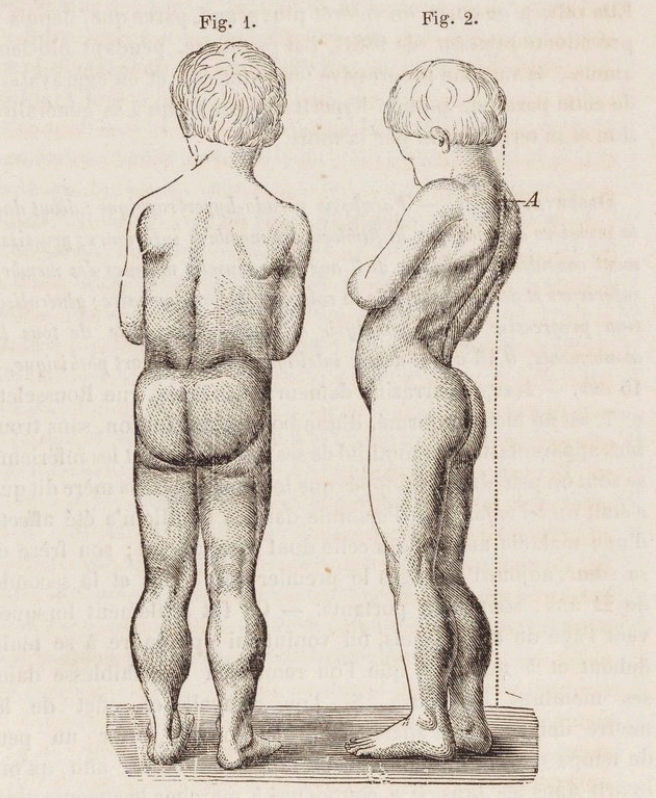
Miosclerose é uma doença muscular rara e genética (hereditária), que não causa a degeneração progressiva dos músculos (não é uma distrofia). Ela se manifesta por encurtamentos e rigidez dos músculos e articulações, que surgem cedo na vida, são espalhados pelo corpo e pioram com o tempo. Isso causa uma limitação grave dos movimentos em quase todas as articulações do corpo (como as do tronco, ombros, quadris, joelhos, cotovelos, mãos e pés), dificuldades para andar na primeira infância e o hábito de andar na ponta dos pés. Os pacientes geralmente apresentam músculos finos, endurecidos e com consistência de madeira, fraqueza leve nos músculos dos ombros, quadris e das partes mais próximas dos braços e pernas, fraqueza moderada nas partes mais distantes (mãos e pés), e escoliose (curvatura da coluna). A biópsia muscular (um exame de um pequeno pedaço do músculo) revela uma deficiência parcial de colágeno VI na membrana que envolve as fibras musculares, e a ausência total de colágeno VI ao redor da maioria dos pequenos vasos sanguíneos (capilares) que nutrem os músculos.
Introdução
O que você precisa saber de cara
Miosclerose é uma doença muscular rara e genética (hereditária), que não causa a degeneração progressiva dos músculos (não é uma distrofia). Ela se manifesta por encurtamentos e rigidez dos músculos e articulações, que surgem cedo na vida, são espalhados pelo corpo e pioram com o tempo. Isso causa uma limitação grave dos movimentos em quase todas as articulações do corpo (como as do tronco, ombros, quadris, joelhos, cotovelos, mãos e pés), dificuldades para andar na primeira infância e o hábito de andar na ponta dos pés. Os pacientes geralmente apresentam músculos finos, endurecidos e com consistência de madeira, fraqueza leve nos músculos dos ombros, quadris e das partes mais próximas dos braços e pernas, fraqueza moderada nas partes mais distantes (mãos e pés), e escoliose (curvatura da coluna). A biópsia muscular (um exame de um pequeno pedaço do músculo) revela uma deficiência parcial de colágeno VI na membrana que envolve as fibras musculares, e a ausência total de colágeno VI ao redor da maioria dos pequenos vasos sanguíneos (capilares) que nutrem os músculos.
Escala de raridade
<1/50kMuito rara
1/20kRara
1/10kPouco freq.
1/5kIncomum
1/2k
Encontrou um erro ou informação desatualizada? Sugira uma correção →
Entender a doença
Do básico ao detalhe, leia no seu ritmo
Preparando trilha educativa...
Sinais e sintomas
O que aparece no corpo e com que frequência cada sintoma acontece
Partes do corpo afetadas
+ 6 sintomas em outras categorias
Características mais comuns
Os sintomas variam de pessoa para pessoa. Abaixo estão as 15 características clínicas mais associadas, ordenadas por frequência.
Linha do tempo da pesquisa
Encontrou um erro ou informação desatualizada? Sugira uma correção →
Genética e causas
O que está alterado no DNA e como passa nas famílias
Genes associados
1 gene identificado com associação a esta condição. Padrão de herança: Autosomal recessive.
Collagen VI acts as a cell-binding protein
Secreted, extracellular space, extracellular matrixMembrane
Bethlem myopathy 1B
A form of Bethlem myopathy, a slowly progressive muscular dystrophy characterized by joint contractures, most frequently affecting the elbows and ankles, and muscle weakness and wasting involving the proximal and extensor muscles more than the distal and flexor ones. The clinical onset more often occurs in childhood or adulthood, but it can be prenatal with decreased fetal movements or neonatal with hypotonia. The hallmark of Bethlem myopathy is long finger flexion contractures. Inheritance can be autosomal dominant or autosomal recessive.
Variantes genéticas (ClinVar)
577 variantes patogênicas registradas no ClinVar.
Classificação de variantes (ClinVar)
Distribuição de 52 variantes classificadas pelo ClinVar.
Vias biológicas (Reactome)
8 vias biológicas associadas aos genes desta condição.
Diagnóstico
Os sinais que médicos procuram e os exames que confirmam
Tratamento e manejo
Remédios, cuidados de apoio e o que precisa acompanhar
Onde tratar no SUS
Hospitais de referência no Brasil e o protocolo oficial do SUS (PCDT)
🇧🇷 Atendimento SUS — Miosclerose
Selecione um estado ou use sua localização para ver resultados.
Dados de DATASUS/CNES, SBGM, ABNeuro e Ministério da Saúde. Sempre confirme a disponibilidade diretamente com o estabelecimento.
Pesquisa ativa
Ensaios clínicos abertos e novidades científicas recentes
Pesquisa e ensaios clínicos
Nenhum ensaio clínico registrado para esta condição.
Publicações mais relevantes
Landscape Analysis of COL6A1, COL6A2, and COL6A3 Pathogenic Variants in a Large Italian Cohort Presenting with Collagen VI-Related Myopathies: A Nationwide Report.
Collagen VI is an extracellular matrix component encoded by COL6A1, COL6A2 and COL6A3 genes. Causative variants in these genes are associated with the following collagen VI-related myopathies: severe Ullrich congenital muscular dystrophy (UCMD), milder Bethlem myopathy (BM) and intermediate phenotypes (INT). We report the mutation landscape of COL6A genes in 138 Italian patients affected with a collagen VI-related phenotype. The patient cohort included 44 (32%) UCMD, 9 (7%) INT, 61 (44%) BM and 21 (15%) INT/BM patients; 3 patients (2%) with a myosclerosis myopathy (MM) phenotype were also considered. We identified 104 different variants: 26 in COL6A1 (25%), 52 in COL6A2 (50%) and 26 in COL6A3 (25%). The variant spectrum includes missense, splicing, small indel, frameshifting and nonsense variants. Glycine substitutions in the triple helical domain of the collagen VI protein are the commonest variants and occur in all phenotypes. Our genetic profiling disclosed a unique mutation scenario and phenotypic association of the COL6A2 gene with respect to COL6A1 and COL6A3, which may be related to a different evolutive history. Landscape mutation analysis of variants occurring in ultrarare conditions, such as collagen VI-related myopathies, is crucial to better understand the variations' profile and to gain insight into fundamental knowledge about gene structure and its evolutive origin.
Adverse events associated with aromatase inhibitors: an analysis of real-world datasets and drug-gene interaction network.
Aromatase inhibitors (AIs) are commonly used to treat postmenopausal hormone receptor positive breast cancer, but there is currently a lack of comprehensive safety reports on AIs in large-scale cohorts. We conducted a retrospective pharmacovigilance survey based on the FDA Adverse Event Reporting System, retrieving relevant reports from the 2004 to the 2023, aiming to conduct a comprehensive comparative analysis of adverse reactions associated with AIs. In addition, we elucidated the potential toxicological mechanisms of AIs related adverse events through functional enrichment analysis. A total of 7,933 adverse event reports related to AIs were collected, and there were 642 positive signals at the preferred term level. The top three signal intensities for anastrozole are: antiphospholipid syndrome, plantar fasciitis and autoimmune pancreatitis. The top three signal intensities for letrozole are: androgenetic alopecia and myosclerosis, pneumonic herpes virus. The top three signal intensities for exemestane are: infection reactivation, thyroxine free decreased and dilatation atrial. In terms of onset time, letrozole has the earliest onset time overall, followed by exemestane, and finally anastrozole. Our research corroborates the typical adverse events linked to AIs while highlighting potential safety concerns in their real-world clinical application.
New Clinical and Immunofluoresence Data of Collagen VI-Related Myopathy: A Single Center Cohort of 69 Patients.
Pathogenetic mechanism recognition and proof-of-concept clinical trials were performed in our patients affected by collagen VI-related myopathies. This study, which included 69 patients, aimed to identify innovative clinical data to better design future trials. Among the patients, 33 had Bethlem myopathy (BM), 24 had Ullrich congenital muscular dystrophy (UCMD), 7 had an intermediate phenotype (INTM), and five had myosclerosis myopathy (MM). We obtained data on muscle strength, the degree of contracture, immunofluorescence, and genetics. In our BM group, only one third had a knee extension strength greater than 50% of the predicted value, while only one in ten showed similar retention of elbow flexion. These findings should be considered when recruiting BM patients for future trials. All the MM patients had axial and limb contractures that limited both the flexion and extension ranges of motion, and a limitation in mouth opening. The immunofluorescence analysis of collagen VI in 55 biopsies from 37 patients confirmed the correlation between collagen VI defects and the severity of the clinical phenotype. However, biopsies from the same patient or from patients with the same mutation taken at different times showed a progressive increase in protein expression with age. The new finding of the time-dependent modulation of collagen VI expression should be considered in genetic correction trials.
Collagen VI in the Musculoskeletal System.
Collagen VI exerts several functions in the tissues in which it is expressed, including mechanical roles, cytoprotective functions with the inhibition of apoptosis and oxidative damage, and the promotion of tumor growth and progression by the regulation of cell differentiation and autophagic mechanisms. Mutations in the genes encoding collagen VI main chains, COL6A1, COL6A2 and COL6A3, are responsible for a spectrum of congenital muscular disorders, namely Ullrich congenital muscular dystrophy (UCMD), Bethlem myopathy (BM) and myosclerosis myopathy (MM), which show a variable combination of muscle wasting and weakness, joint contractures, distal laxity, and respiratory compromise. No effective therapeutic strategy is available so far for these diseases; moreover, the effects of collagen VI mutations on other tissues is poorly investigated. The aim of this review is to outline the role of collagen VI in the musculoskeletal system and to give an update about the tissue-specific functions revealed by studies on animal models and from patients' derived samples in order to fill the knowledge gap between scientists and the clinicians who daily manage patients affected by collagen VI-related myopathies.
Autosomal dominant Ullrich congenital muscular dystrophy due to a de novo mutation in COL6A3 gene. A case report.
Mutations in the genes encoding collagen VI cause Bethlem myopathy (MIM 158810), Ullrich congenital muscular dystrophy (MIM 254090), and myosclerosis myopathy (MIM #255600). BM is a dominantly inherited disorder, characterised by proximal muscle weakness and joint contractures mainly involving the elbows, ankles, and fingers, which usually follows a relatively mild course. By contrast, UCMD is a severe muscular dystrophy characterized by early onset, rapidly progressive muscle wasting and weakness, proximal joint contractures and distal joint hyperlaxity. Rapid progression usually leads to early death due to respiratory failure. UCMD is usually inherited as an autosomal recessive trait though dominant de novo heterozygous variants have recently been reported. We describe a further patient with UCMD classical presentation who showed, at the NGS analysis, the de novo variant c.6210+1G > A in the intron 16 of the gene COL6A3, known in the literature as pathogenic (VCV0000949S6.5).
Publicações recentes
Landscape Analysis of COL6A1, COL6A2, and COL6A3 Pathogenic Variants in a Large Italian Cohort Presenting with Collagen VI-Related Myopathies: A Nationwide Report.
Adverse events associated with aromatase inhibitors: an analysis of real-world datasets and drug-gene interaction network.
New Clinical and Immunofluoresence Data of Collagen VI-Related Myopathy: A Single Center Cohort of 69 Patients.
Collagen VI in the Musculoskeletal System.
Autosomal dominant Ullrich congenital muscular dystrophy due to a de novo mutation in COL6A3 gene. A case report.
📚 EuropePMC9 artigos no totalmostrando 6
Landscape Analysis of COL6A1, COL6A2, and COL6A3 Pathogenic Variants in a Large Italian Cohort Presenting with Collagen VI-Related Myopathies: A Nationwide Report.
BiomoleculesAdverse events associated with aromatase inhibitors: an analysis of real-world datasets and drug-gene interaction network.
Expert opinion on drug safetyNew Clinical and Immunofluoresence Data of Collagen VI-Related Myopathy: A Single Center Cohort of 69 Patients.
International journal of molecular sciencesCollagen VI in the Musculoskeletal System.
International journal of molecular sciencesAutosomal dominant Ullrich congenital muscular dystrophy due to a de novo mutation in COL6A3 gene. A case report.
Acta myologica : myopathies and cardiomyopathies : official journal of the Mediterranean Society of MyologyTendon Extracellular Matrix Remodeling and Defective Cell Polarization in the Presence of Collagen VI Mutations.
CellsAssociações
Organizações que acompanham esta doença — pra ter apoio e orientação
Ainda não temos associações cadastradas para Miosclerose.
É de uma associação que acompanha esta doença? Fale com a gente →
Comunidades
Grupos ativos de quem convive com esta doença aqui no Raras
Ainda não existe comunidade no Raras para Miosclerose
Pacientes, familiares e cuidadores se organizam em comunidades pra compartilhar experiências, fazer perguntas e se apoiar. Você pode ser o primeiro.
Tire suas dúvidas
Perguntas, dicas e experiências compartilhadas aqui na página
Participe da discussão
Faça login para postar dúvidas, compartilhar experiências e interagir com especialistas.
Fazer loginDoenças relacionadas
Doenças com sintomas parecidos — ajudam quem ainda está buscando diagnóstico
Referências e fontes
Bases de dados externas citadas neste artigo
Publicações científicas
Artigos indexados no PubMed ligados a esta doença no grafo RarasNet — título, periódico e PMID direto da fonte, sem intermediação de IA.
- Landscape Analysis of COL6A1, COL6A2, and COL6A3 Pathogenic Variants in a Large Italian Cohort Presenting with Collagen VI-Related Myopathies: A Nationwide Report.
- Adverse events associated with aromatase inhibitors: an analysis of real-world datasets and drug-gene interaction network.
- New Clinical and Immunofluoresence Data of Collagen VI-Related Myopathy: A Single Center Cohort of 69 Patients.
- Collagen VI in the Musculoskeletal System.
- Autosomal dominant Ullrich congenital muscular dystrophy due to a de novo mutation in COL6A3 gene. A case report.Acta myologica : myopathies and cardiomyopathies : official journal of the Mediterranean Society of Myology· 2022· PMID 35832501mais citado
Bases de dados e fontes oficiais
Identificadores e referências canônicas usadas para montar este verbete.
- ORPHA:289380(Orphanet)
- OMIM OMIM:255600(OMIM)
- MONDO:0009714(MONDO)
- GARD:17325(GARD (NIH))
- Variantes catalogadas(ClinVar)
- Busca completa no PubMed(PubMed)
- Q55782133(Wikidata)
Dados compilados pelo RarasNet a partir de fontes abertas (Orphanet, OMIM, MONDO, PubMed/EuropePMC, ClinicalTrials.gov, DATASUS, PCDT/MS). Este conteúdo é informativo e não substitui avaliação médica.
Conteúdo mantido por Agente Raras · Médicos e pesquisadores podem colaborar
Miosclerose
📋 Origem dos dados
Esta página agrega dados de fontes públicas e oficiais. Dados sobre cobertura no SUS (PCDT, CEAF) são verificados ativamente por agente proativo (ver badge no infobox). Demais dados têm atribuição de fonte + data da última sincronização — clique para abrir o original.
- Doença rara (ontologia)
- fonte: Orphanet
- Identificador unificado
- fonte: MONDO
- Genética mendeliana
- fonte: OMIM
- Codificação WHO/SUS
- fonte: WHO ICD-10 / DATASUS
- CID-11 (futuro)
- fonte: WHO ICD-11
- NIH/GARD
- fonte: GARD (NIH)
- Indexação biomédica
- fonte: MeSH (NLM)
- Dado público estruturado
- fonte: Wikidata