
A xantinúria tipo II, um tipo de xantinúria clássica, é um distúrbio autossômico recessivo raro do metabolismo das purinas, caracterizado pela deficiência da xantina desidrogenase e da aldeído oxidase, levando à formação de urolitíase xantina urinária e levando, em alguns pacientes, à insuficiência renal. Outras manifestações menos comuns incluem artropatia, miopatia e úlcera duodenal, enquanto alguns pacientes permanecem assintomáticos.
Introdução
O que você precisa saber de cara
A xantinúria tipo II, um tipo de xantinúria clássica, é um distúrbio autossômico recessivo raro do metabolismo das purinas, caracterizado pela deficiência da xantina desidrogenase e da aldeído oxidase, levando à formação de urolitíase xantina urinária e levando, em alguns pacientes, à insuficiência renal. Outras manifestações menos comuns incluem artropatia, miopatia e úlcera duodenal, enquanto alguns pacientes permanecem assintomáticos.
Encontrou um erro ou informação desatualizada? Sugira uma correção →
Entender a doença
Do básico ao detalhe, leia no seu ritmo
Preparando trilha educativa...
Sinais e sintomas
O que aparece no corpo e com que frequência cada sintoma acontece
Partes do corpo afetadas
+ 5 sintomas em outras categorias
Características mais comuns
Os sintomas variam de pessoa para pessoa. Abaixo estão as 12 características clínicas mais associadas, ordenadas por frequência.
Linha do tempo da pesquisa
Encontrou um erro ou informação desatualizada? Sugira uma correção →
Genética e causas
O que está alterado no DNA e como passa nas famílias
Genes associados
1 gene identificado com associação a esta condição.
Curadoria gene-doença
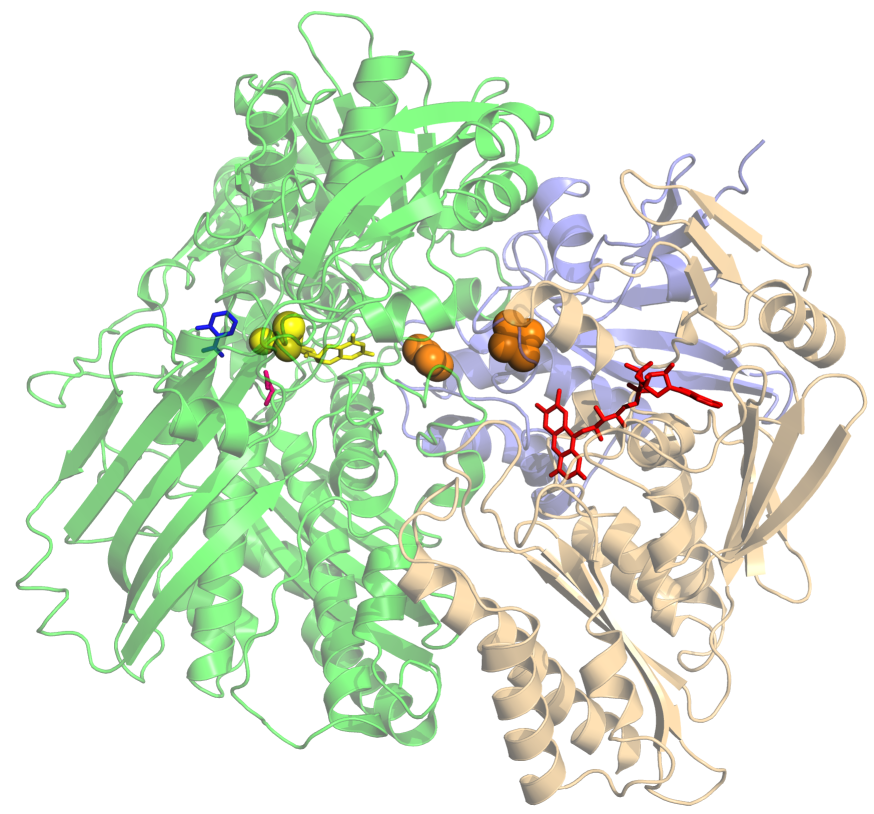
fontes oficiaisSulfurates the molybdenum cofactor (PubMed:34356852). Sulfation of molybdenum is essential for xanthine dehydrogenase (XDH) and aldehyde oxidase (ADO) enzymes in which molybdenum cofactor is liganded by 1 oxygen and 1 sulfur atom in active form (PubMed:34356852). In vitro, the C-terminal domain is able to reduce N-hydroxylated prodrugs, such as benzamidoxime (PubMed:16973608)
Xanthinuria 2
A disorder characterized by excretion of very large amounts of xanthine in the urine and a tendency to form xanthine stones. Uric acid is strikingly diminished in serum and urine. In addition, XAN2 patients cannot metabolize allopurinol into oxypurinol due to dual deficiency of xanthine dehydrogenase and aldehyde oxidase.
Variantes genéticas (ClinVar)
92 variantes patogênicas registradas no ClinVar.
Classificação de variantes (ClinVar)
Distribuição de 945 variantes classificadas pelo ClinVar.
Vias biológicas (Reactome)
1 via biológica associada aos genes desta condição.
Diagnóstico
Os sinais que médicos procuram e os exames que confirmam
Tratamento e manejo
Remédios, cuidados de apoio e o que precisa acompanhar
Onde tratar no SUS
Hospitais de referência no Brasil e o protocolo oficial do SUS (PCDT)
🇧🇷 Atendimento SUS — Xantinúria tipo II
Selecione um estado ou use sua localização para ver resultados.
Dados de DATASUS/CNES, SBGM, ABNeuro e Ministério da Saúde. Sempre confirme a disponibilidade diretamente com o estabelecimento.
Pesquisa ativa
Ensaios clínicos abertos e novidades científicas recentes
🟢 Recrutando agora
1 pesquisa recrutando participantes. Converse com seu médico sobre a possibilidade de participar.
Outros ensaios clínicos
Publicações mais relevantes
A nonsense mutation in the Mocos gene induces xanthinuria, obstructive nephropathy, and anemia in rats.
Xanthinuria type II is a rare hereditary disorder caused by mutations in the MOCOS gene, leading to dual deficiency of xanthine dehydrogenase and aldehyde oxidase. To establish a robust animal model for this condition, we generated Mocos knock-in (KI) rats carrying the Arg419Ter nonsense mutation identified in Japanese patients. Homozygous KI rats exhibited severe growth retardation, anemia, and reduced survival, with all individuals dying by 14 weeks of age. Biochemical analyses revealed elevated levels of hypoxanthine and xanthine, along with decreased uric acid in both serum and urine, confirming xanthinuria. Homozygous KI rats also showed increased blood creatinine (CRE) and urea nitrogen (UN), and decreased urinary CRE and UN, indicating renal dysfunction. Histopathological examination showed obstructive nephropathy characterized by tubular atrophy, crystal deposition, and inflammation. Compared to existing mouse models, Mocos KI rats demonstrated extended lifespan, enabling more detailed investigation of disease mechanisms. This rat model provides a valuable tool for studying the pathogenesis of xanthinuria type II and exploring potential therapeutic strategies.
Clinical and genetic analysis of MOCOS gene-related hypouricemia.
Uric acid is an important metabolic end-product in the human body, and metabolic abnormalities involving uric acid are receiving increasing attention. This study involved clinical assessment and genetic testing of a 40-year-old male patient who presented with the main complaint of hypouricemia for 7 years. In addition to hypouricemia, the patient showed low urinary uric acid levels, low uric acid excretion rate, and nephrolithiasis. His younger brother also showed extremely low serum uric acid levels. Trio-whole-genome sequencing (trio-WGS) showed that the proband and his younger brother had a compound heterozygous molybdenum cofactor sulfurase (MOCOS) genotype with the pathogenic variant c.1272T>A (p.Cys424Ter) and the likely pathogenic variant c.1418C>T (p.Ser473Leu). The final diagnosis was Xanthinuria type II. A review of the literature for cases of Xanthinuria type II revealed reports describing 25 patients from 17 families. All 25 patients showed very low serum uric acid levels, eight showed urinary tract stones, and three reported joint or limb pain. Truncation pathogenic or likely pathogenic variants of the MOCOS gene accounted for nearly half of the cases, and p.Arg419Ter and p.Thr349Ile were the two most frequent variants. The p.Cys424Ter variant reported in this study is a new pathogenic site that has not been reported previously. Sustained low serum uric acid levels may indicate monogenic uric acid metabolism disorders, and these patients should undergo genetic testing. In patients diagnosed with xanthinuria type II caused by MOCOS gene variants, the use of purine drugs should be prohibited to avoid serious adverse events. Given the severe defects in the MOCOS gene-deficient mouse model, additional research is needed to clarify the clinical profile of Xanthinuria type II and the other roles of MOCOS in metabolic pathways.
MOCOS-associated renal syndrome in a Brown Swiss cattle.
A recessive form of MOCOS-associated xanthinuria type II is described in Tyrolean grey cattle. A similar case was identified in a 5-month-old Brown Swiss calf with hoof overgrowth, rough coat, urine sediment, and pneumonia. To characterize the disease phenotype, to evaluate its genetic etiology, and to determine the prevalence of the deleterious allele in the Brown Swiss population. An affected calf, its parents, and 65 441 Swiss dairy cattle. The affected animal was clinically examined and necropsied. Microarray genotyping was used to determine the genotypes and to assess the frequency of the MOCOS allele in a Brown Swiss control cohort. Ultrasonography revealed hyperechoic renal pyramids with multifocal distal shadowing and echogenic sediment in the urinary bladder. Necropsy revealed suppurative bronchopneumonia and urolithiasis. Histology revealed numerous nephroliths with multifocal chronic lymphohistiocytic interstitial infiltrates, fibrosis, tubular degeneration, chronic multifocal glomerulonephritis with sclerosis, and bilateral hydronephrosis. Dysplastic changes were observed in the corium of the claw and the cornea. Genetic testing identified the homozygous presence of a known MOCOS frameshift variant in the case. Both parents were heterozygous and the prevalence of carriers in genotyped Brown Swiss cattle was 1.4% (342/24337). The findings were consistent with the diagnosis of a recessive renal syndrome similar to xanthinuria type II described in Tyrolean grey cattle. The prevalence of the deleterious MOCOS allele is low in the Brown Swiss breed. However, mating of carriers should be avoided to prevent further losses.
Deletion of Mocos Induces Xanthinuria with Obstructive Nephropathy and Major Metabolic Disorders in Mice.
Xanthinuria type II is a rare autosomal purine disorder. This recessive defect of purine metabolism remains an under-recognized disorder. Mice with targeted disruption of the molybdenum cofactor sulfurase (Mocos) gene were generated to enable an integrated understanding of purine disorders and evaluate pathophysiologic functions of this gene which is found in a large number of pathways and is known to be associated with autism. Mocos-deficient mice die with 4 weeks of age due to renal failure of distinct obstructive nephropathy with xanthinuria, xanthine deposits, cystic tubular dilation, Tamm-Horsfall (uromodulin) protein (THP) deposits, tubular cell necrosis with neutrophils, and occasionally hydronephrosis with urolithiasis. Obstructive nephropathy is associated with moderate interstitial inflammatory and fibrotic responses, anemia, reduced detoxification systems, and important alterations of the metabolism of purines, amino acids, and phospholipids. Conversely, heterozygous mice expressing reduced MOCOS protein are healthy with no apparent pathology. Mocos-deficient mice develop a lethal obstructive nephropathy associated with profound metabolic changes. Studying MOCOS functions may provide important clues about the underlying pathogenesis of xanthinuria and other diseases requiring early diagnosis.
Urolithiasis due to Hereditary Xanthinuria Type II: A Long-term Follow-up report.
Publicações recentes
A nonsense mutation in the Mocos gene induces xanthinuria, obstructive nephropathy, and anemia in rats.
Clinical and genetic analysis of MOCOS gene-related hypouricemia.
MOCOS-associated renal syndrome in a Brown Swiss cattle.
Deletion of Mocos Induces Xanthinuria with Obstructive Nephropathy and Major Metabolic Disorders in Mice.
Urolithiasis due to Hereditary Xanthinuria Type II: A Long-term Follow-up report.
📚 EuropePMC160 artigos no totalmostrando 11
A nonsense mutation in the Mocos gene induces xanthinuria, obstructive nephropathy, and anemia in rats.
Experimental animalsClinical and genetic analysis of MOCOS gene-related hypouricemia.
Frontiers in geneticsMOCOS-associated renal syndrome in a Brown Swiss cattle.
Journal of veterinary internal medicineDeletion of Mocos Induces Xanthinuria with Obstructive Nephropathy and Major Metabolic Disorders in Mice.
Kidney360Urolithiasis due to Hereditary Xanthinuria Type II: A Long-term Follow-up report.
Indian pediatricsBeware of the Uric Acid: Severe Azathioprine Myelosuppression in a Patient With Juvenile Idiopathic Arthritis and Hereditary Xanthinuria.
Journal of clinical rheumatology : practical reports on rheumatic & musculoskeletal diseasesXanthine urolithiasis: Inhibitors of xanthine crystallization.
PloS oneThiopurine-induced toxicity is associated with dysfunction variant of the human molybdenum cofactor sulfurase gene (xanthinuria type II).
Toxicology and applied pharmacologyHereditary xanthinuria is not so rare disorder of purine metabolism.
Nucleosides, nucleotides & nucleic acidsA case of xanthinuria type I with a novel mutation in xanthine dehydrogenase.
CEN case reportsUsing Next-Generation Sequencing to Identify a Mutation in Human MCSU that is Responsible for Type II Xanthinuria.
Cellular physiology and biochemistry : international journal of experimental cellular physiology, biochemistry, and pharmacologyAssociações
Organizações que acompanham esta doença — pra ter apoio e orientação
Ainda não temos associações cadastradas para Xantinúria tipo II.
É de uma associação que acompanha esta doença? Fale com a gente →
Comunidades
Grupos ativos de quem convive com esta doença aqui no Raras
Ainda não existe comunidade no Raras para Xantinúria tipo II
Pacientes, familiares e cuidadores se organizam em comunidades pra compartilhar experiências, fazer perguntas e se apoiar. Você pode ser o primeiro.
Tire suas dúvidas
Perguntas, dicas e experiências compartilhadas aqui na página
Participe da discussão
Faça login para postar dúvidas, compartilhar experiências e interagir com especialistas.
Fazer loginDoenças relacionadas
Doenças com sintomas parecidos — ajudam quem ainda está buscando diagnóstico
Referências e fontes
Bases de dados externas citadas neste artigo
Publicações científicas
Artigos indexados no PubMed ligados a esta doença no grafo RarasNet — título, periódico e PMID direto da fonte, sem intermediação de IA.
- A nonsense mutation in the Mocos gene induces xanthinuria, obstructive nephropathy, and anemia in rats.
- Clinical and genetic analysis of MOCOS gene-related hypouricemia.
- MOCOS-associated renal syndrome in a Brown Swiss cattle.
- Deletion of Mocos Induces Xanthinuria with Obstructive Nephropathy and Major Metabolic Disorders in Mice.
- Urolithiasis due to Hereditary Xanthinuria Type II: A Long-term Follow-up report.
Bases de dados e fontes oficiais
Identificadores e referências canônicas usadas para montar este verbete.
- ORPHA:93602(Orphanet)
- OMIM OMIM:603592(OMIM)
- MONDO:0011346(MONDO)
- GARD:5620(GARD (NIH))
- Variantes catalogadas(ClinVar)
- Busca completa no PubMed(PubMed)
Dados compilados pelo RarasNet a partir de fontes abertas (Orphanet, OMIM, MONDO, PubMed/EuropePMC, ClinicalTrials.gov, DATASUS, PCDT/MS). Este conteúdo é informativo e não substitui avaliação médica.
Conteúdo mantido por Agente Raras · Médicos e pesquisadores podem colaborar
Xantinúria tipo II
📋 Origem dos dados
Esta página agrega dados de fontes públicas e oficiais. Dados sobre cobertura no SUS (PCDT, CEAF) são verificados ativamente por agente proativo (ver badge no infobox). Demais dados têm atribuição de fonte + data da última sincronização — clique para abrir o original.
- Doença rara (ontologia)
- fonte: Orphanet
- Identificador unificado
- fonte: MONDO
- Genética mendeliana
- fonte: OMIM
- Codificação WHO/SUS
- fonte: WHO ICD-10 / DATASUS
- CID-11 (futuro)
- fonte: WHO ICD-11
- NIH/GARD
- fonte: GARD (NIH)
- Indexação biomédica
- fonte: MeSH (NLM)