
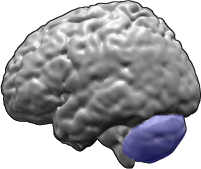
Ataxia cerebelar é uma forma de ataxia originada no cerebelo. A ataxia congênita não progressiva (ACNP) é uma apresentação clássica das ataxias cerebrais.
Introdução
O que você precisa saber de cara
Visão geral
A ataxia cerebelosa congênita autossômica recessiva é uma doença genética rara que afeta o cerebelo, a parte do cérebro responsável pelo equilíbrio e coordenação dos movimentos. Ela está presente desde o nascimento (congênita) e é herdada de forma autossômica recessiva, o que significa que ambos os pais precisam carregar uma cópia do gene alterado para que a doença se manifeste. A condição pode causar dificuldades motoras, cognitivas e outras alterações no desenvolvimento.[1][3]
Sinais e sintomas
Os sinais e sintomas da ataxia cerebelosa congênita autossômica recessiva são variados e podem incluir: anormalidades do movimento (como ataxia — falta de coordenação), hipotonia axial (fraqueza muscular no tronco), comprometimento cognitivo, deficiência intelectual grave, dificuldades alimentares, fala monótona e neuropatia periférica. Também podem ocorrer alterações estruturais, como atrofia cerebral, pedúnculo cerebelar superior alongado, aplasia do bulbo olfatório, padrão giratório simplificado do cérebro e sinostose metópica (fusão precoce dos ossos do crânio). Outros achados incluem polidactilia (pré-axial ou pós-axial), dedos curtos, anormalidades do 5º metacarpo e da falange distal do polegar, epífise em forma de cone, narina única, vermelhão do lábio superior em tenda, sinusite crônica, inflamação intersticial renal, neoplasia do fígado e ataxia cerebelar associada à marcha quadrúpede.[1][3]
Causas genéticas
A doença é causada por alterações (mutações) em genes específicos. Os genes associados incluem: CWF19L1, RNU12, RPGRIP1L, ATP8A2, CA8, ZNF423, ATCAY, PMPCA, TMEM138, TMEM237, TUBB2B e VLDLR. Cada um desses genes fornece instruções para proteínas importantes para o funcionamento do cerebelo e de outras partes do sistema nervoso. A herança é autossômica recessiva, ou seja, a pessoa precisa herdar uma cópia alterada do gene de cada um dos pais para desenvolver a condição.[1][4]
Diagnóstico
O diagnóstico é baseado na avaliação clínica dos sintomas e na confirmação por meio de testes genéticos. Existem 517 variantes genéticas registradas no ClinVar associadas a esta condição, e pelo menos um teste genético está disponível para identificar mutações nos genes relacionados. O diagnóstico diferencial inclui outras ataxias hereditárias e condições que afetam o cerebelo.[1][4][5]
Tratamento e manejo
Atualmente, não há cura para a ataxia cerebelosa congênita autossômica recessiva. O manejo é multidisciplinar e foca no alívio dos sintomas e na melhora da qualidade de vida. Pode incluir fisioterapia, terapia ocupacional, fonoaudiologia, suporte nutricional e acompanhamento neurológico. Não há medicamentos específicos aprovados para o tratamento da doença. A cobertura pelo SUS é considerada mínima, e não há procedimentos específicos listados para esta condição.[1][5]
Tratamentos citados na literatura
A literatura científica (fonte PubTator3) menciona algumas substâncias em estudos relacionados a esta doença, mas é importante destacar que são associações mineradas de publicações e não representam recomendações de tratamento. As substâncias e o número de publicações associadas são: Water (3), Inosine (2), Adenine (1), Ascorbic Acid (1), Atrazine (1), Bupropion (1), Carbon Monoxide (1), Carbon (1), Chlorophyll (1) e Cotinine (1). Nenhuma dessas substâncias tem eficácia comprovada ou é aprovada para o tratamento da condição.[5]
Prognóstico e qualidade de vida
O prognóstico varia de acordo com a gravidade dos sintomas e o envolvimento de múltiplos sistemas. O comprometimento cognitivo e motor pode ser significativo, exigindo cuidados contínuos. A qualidade de vida pode ser melhorada com intervenções de suporte e acompanhamento médico regular. Não há dados específicos sobre expectativa de vida para esta condição.[1][3]
Conteúdo informativo gerado e mantido automaticamente a partir de fontes oficiais (Orphanet, HPO, OMIM, SUS). Não substitui avaliação médica.
Ataxia cerebelar é uma forma de ataxia originada no cerebelo. A ataxia congênita não progressiva (ACNP) é uma apresentação clássica das ataxias cerebrais.
Encontrou um erro ou informação desatualizada? Sugira uma correção →
Entender a doença
Do básico ao detalhe, leia no seu ritmo
Preparando trilha educativa...
Sinais e sintomas
O que aparece no corpo e com que frequência cada sintoma acontece
Visão geral
A ataxia cerebelosa congênita autossômica recessiva é uma doença genética rara que afeta o cerebelo, a parte do cérebro responsável pelo equilíbrio e coordenação dos movimentos. Ela está presente desde o nascimento (congênita) e é herdada de forma autossômica recessiva, o que significa que ambos os pais precisam carregar uma cópia do gene alterado para que a doença se manifeste. A condição pode causar dificuldades motoras, cognitivas e outras alterações no desenvolvimento.[1][3]
Sinais e sintomas
Os sinais e sintomas da ataxia cerebelosa congênita autossômica recessiva são variados e podem incluir: anormalidades do movimento (como ataxia — falta de coordenação), hipotonia axial (fraqueza muscular no tronco), comprometimento cognitivo, deficiência intelectual grave, dificuldades alimentares, fala monótona e neuropatia periférica. Também podem ocorrer alterações estruturais, como atrofia cerebral, pedúnculo cerebelar superior alongado, aplasia do bulbo olfatório, padrão giratório simplificado do cérebro e sinostose metópica (fusão precoce dos ossos do crânio). Outros achados incluem polidactilia (pré-axial ou pós-axial), dedos curtos, anormalidades do 5º metacarpo e da falange distal do polegar, epífise em forma de cone, narina única, vermelhão do lábio superior em tenda, sinusite crônica, inflamação intersticial renal, neoplasia do fígado e ataxia cerebelar associada à marcha quadrúpede.[1][3]
Causas genéticas
A doença é causada por alterações (mutações) em genes específicos. Os genes associados incluem: CWF19L1, RNU12, RPGRIP1L, ATP8A2, CA8, ZNF423, ATCAY, PMPCA, TMEM138, TMEM237, TUBB2B e VLDLR. Cada um desses genes fornece instruções para proteínas importantes para o funcionamento do cerebelo e de outras partes do sistema nervoso. A herança é autossômica recessiva, ou seja, a pessoa precisa herdar uma cópia alterada do gene de cada um dos pais para desenvolver a condição.[1][4]
Diagnóstico
O diagnóstico é baseado na avaliação clínica dos sintomas e na confirmação por meio de testes genéticos. Existem 517 variantes genéticas registradas no ClinVar associadas a esta condição, e pelo menos um teste genético está disponível para identificar mutações nos genes relacionados. O diagnóstico diferencial inclui outras ataxias hereditárias e condições que afetam o cerebelo.[1][4][5]
Tratamento e manejo
Atualmente, não há cura para a ataxia cerebelosa congênita autossômica recessiva. O manejo é multidisciplinar e foca no alívio dos sintomas e na melhora da qualidade de vida. Pode incluir fisioterapia, terapia ocupacional, fonoaudiologia, suporte nutricional e acompanhamento neurológico. Não há medicamentos específicos aprovados para o tratamento da doença. A cobertura pelo SUS é considerada mínima, e não há procedimentos específicos listados para esta condição.[1][5]
Tratamentos citados na literatura
A literatura científica (fonte PubTator3) menciona algumas substâncias em estudos relacionados a esta doença, mas é importante destacar que são associações mineradas de publicações e não representam recomendações de tratamento. As substâncias e o número de publicações associadas são: Water (3), Inosine (2), Adenine (1), Ascorbic Acid (1), Atrazine (1), Bupropion (1), Carbon Monoxide (1), Carbon (1), Chlorophyll (1) e Cotinine (1). Nenhuma dessas substâncias tem eficácia comprovada ou é aprovada para o tratamento da condição.[5]
Prognóstico e qualidade de vida
O prognóstico varia de acordo com a gravidade dos sintomas e o envolvimento de múltiplos sistemas. O comprometimento cognitivo e motor pode ser significativo, exigindo cuidados contínuos. A qualidade de vida pode ser melhorada com intervenções de suporte e acompanhamento médico regular. Não há dados específicos sobre expectativa de vida para esta condição.[1][3]
Conteúdo informativo gerado e mantido automaticamente a partir de fontes oficiais (Orphanet, HPO, OMIM, SUS). Não substitui avaliação médica.
Partes do corpo afetadas
+ 118 sintomas em outras categorias
Características mais comuns
Os sintomas variam de pessoa para pessoa. Abaixo estão as 333 características clínicas mais associadas, ordenadas por frequência.
Linha do tempo da pesquisa
Encontrou um erro ou informação desatualizada? Sugira uma correção →
Genética e causas
O que está alterado no DNA e como passa nas famílias
Genes associados
27 genes identificados com associação a esta condição.
Spinocerebellar ataxia, autosomal recessive, 17
A form of spinocerebellar ataxia, a clinically and genetically heterogeneous group of cerebellar disorders. Patients show progressive incoordination of gait and often poor coordination of hands, speech and eye movements, due to degeneration of the cerebellum with variable involvement of the brainstem and spinal cord. SCAR17 features include non-progressive congenital cerebellar ataxia, mildly delayed walking with an unsteady gait and frequent falls, dysarthria, dysmetria, hypotonia in the extremities, truncal ataxia, increased reflexes in the lower extremities, and intellectual disability.
Negatively regulates signaling through the G-protein coupled thromboxane A2 receptor (TBXA2R) (PubMed:19464661). May be involved in mechanisms like programmed cell death, craniofacial development, patterning of the limbs, and formation of the left-right axis (By similarity). Involved in the organization of apical junctions; the function is proposed to implicate a NPHP1-4-8 module. Does not seem to be strictly required for ciliogenesis (PubMed:19464661). Involved in establishment of planar cell p
CytoplasmCytoplasm, cytoskeleton, cilium basal bodyCytoplasm, cytoskeleton, cilium axonemeCytoplasm, cytoskeleton, microtubule organizing center, centrosomeCell junction, tight junction
Catalytic component of a P4-ATPase flippase complex which catalyzes the hydrolysis of ATP coupled to the transport of aminophospholipids from the outer to the inner leaflet of various membranes and ensures the maintenance of asymmetric distribution of phospholipids (By similarity). Able to translocate phosphatidylserine, but not phosphatidylcholine (PubMed:34403372). Phospholipid translocation also seems to be implicated in vesicle formation and in uptake of lipid signaling molecules (By similar
MembraneGolgi apparatus membraneEndosome membraneCell membranePhotoreceptor outer segment membranePhotoreceptor inner segment membrane
Cerebellar ataxia, impaired intellectual development, and dysequilibrium syndrome 4
An autosomal recessive, congenital cerebellar ataxia associated with dysarthia, quadrupedal gait and intellectual disability.
Does not have a carbonic anhydrase catalytic activity
Spinocerebellar ataxia, autosomal recessive, 34
A form of spinocerebellar ataxia, a clinically and genetically heterogeneous group of cerebellar disorders due to degeneration of the cerebellum with variable involvement of the brainstem and spinal cord. SCAR34 is characterized by congenital cerebellar ataxia associated with dysarthia, quadrupedal gait and intellectual disability.
Transcription factor that can both act as an activator or a repressor depending on the context. Plays a central role in BMP signaling and olfactory neurogenesis. Associates with SMADs in response to BMP2 leading to activate transcription of BMP target genes. Acts as a transcriptional repressor via its interaction with EBF1, a transcription factor involved in terminal olfactory receptor neurons differentiation; this interaction preventing EBF1 to bind DNA and activate olfactory-specific genes. In
Nucleus
Nephronophthisis 14
An autosomal recessive disorder manifesting as infantile-onset kidney disease, cerebellar vermis hypoplasia, and situs inversus. Nephronophthisis is a progressive tubulo-interstitial kidney disorder histologically characterized by modifications of the tubules with thickening of the basement membrane, interstitial fibrosis and, in the advanced stages, medullary cysts.
Functions in the development of neural tissues, particularly the postnatal maturation of the cerebellar cortex. May play a role in neurotransmission through regulation of glutaminase/GLS, an enzyme responsible for the production in neurons of the glutamate neurotransmitter. Alternatively, may regulate the localization of mitochondria within axons and dendrites
Cell projection, axonCell projection, dendritePresynapseMitochondrionCell projection, growth coneCytoplasm
Cerebellar ataxia, cayman type
Found in a population isolate on Grand Cayman Island and causes a marked psychomotor retardation and prominent nonprogressive cerebellar dysfunction including nystagmus, intention tremor, dysarthria, and wide-based ataxic gait. Hypotonia is present from early childhood.
Substrate recognition and binding subunit of the essential mitochondrial processing protease (MPP), which cleaves the mitochondrial sequence off newly imported precursors proteins
Mitochondrion matrixMitochondrion inner membrane
Spinocerebellar ataxia, autosomal recessive, 2
A form of spinocerebellar ataxia, a clinically and genetically heterogeneous group of cerebellar disorders due to degeneration of the cerebellum with variable involvement of the brainstem and spinal cord. SCAR2 is characterized by onset of impaired motor development and ataxic gait in early childhood. Additional features often include loss of fine motor skills, dysarthria, nystagmus, cerebellar signs, and delayed cognitive development with intellectual disability.
Required for ciliogenesis
Vacuole membraneCell projection, cilium
Joubert syndrome 16
An autosomal recessive disorder characterized by oculomotor apraxia, variable coloboma, and rare kidney involvement. Neuroradiologically, it is characterized by an abnormally large interpeduncular fossa, giving the appearance of a molar tooth on transaxial slices (molar tooth sign). Additional variable features include retinal dystrophy and polydactyly.
Component of the transition zone in primary cilia. Required for ciliogenesis
MembraneCell projection, cilium
Joubert syndrome 14
An autosomal recessive disorder characterized by severe intellectual disability, hypotonia, breathing abnormalities in infancy, and dysmorphic facial features. Neuroradiologically, it is characterized by cerebellar vermian hypoplasia/aplasia, thickened and reoriented superior cerebellar peduncles, and an abnormally large interpeduncular fossa, giving the appearance of a molar tooth on transaxial slices (molar tooth sign). Additional variable features include renal disease, abnormal eye movements, and postaxial polydactyly.
Tubulin is the major constituent of microtubules, a cylinder consisting of laterally associated linear protofilaments composed of alpha- and beta-tubulin heterodimers (PubMed:23001566, PubMed:26732629, PubMed:28013290). Microtubules grow by the addition of GTP-tubulin dimers to the microtubule end, where a stabilizing cap forms. Below the cap, tubulin dimers are in GDP-bound state, owing to GTPase activity of alpha-tubulin. Plays a critical role in proper axon guidance in both central and periph
Cytoplasm, cytoskeleton
Cortical dysplasia, complex, with other brain malformations 7
A malformation of the cortex in which the brain surface is irregular and characterized by an excessive number of small gyri with abnormal lamination. Polymicrogyria is a heterogeneous disorder, considered to be the result of postmigratory abnormal cortical organization.
Multifunctional cell surface receptor that binds VLDL and transports it into cells by endocytosis and therefore plays an important role in energy metabolism. Also binds to a wide range of other molecules including Reelin/RELN or apolipoprotein E/APOE-containing ligands as well as clusterin/CLU (PubMed:24381170, PubMed:30873003). In the off-state of the pathway, forms homooligomers or heterooligomers with LRP8 (PubMed:30873003). Upon binding to ligands, homooligomers are rearranged to higher orde
Cell membraneMembrane, clathrin-coated pit
Cerebellar ataxia, impaired intellectual development, and dysequilibrium syndrome 1
An autosomal recessive, congenital, non-progressive cerebellar ataxia associated with disturbed equilibrium, delayed ambulation, intellectual disability, cerebellar hypoplasia and mild cerebral gyral simplification. Additional features include short stature, strabismus, pes planus and, rarely, seizures.
Component of the tectonic-like complex, a complex localized at the transition zone of primary cilia and acting as a barrier that prevents diffusion of transmembrane proteins between the cilia and plasma membranes. Involved in centrosome migration to the apical cell surface during early ciliogenesis. Required for ciliary structure and function, including a role in regulating length and appropriate number through modulating centrosome duplication. Required for cell branching morphology
Cytoplasm, cytoskeleton, cilium basal bodyCytoplasm, cytoskeleton, microtubule organizing center, centrosome
Meckel syndrome 1
A disorder characterized by a combination of renal cysts and variably associated features including developmental anomalies of the central nervous system (typically encephalocele), hepatic ductal dysplasia and cysts, and polydactyly.
Required during ciliogenesis for tubulin glutamylation in cilium. Probably acts by participating in the transport of TTLL6, a tubulin polyglutamylase, between the basal body and the cilium
Cytoplasm, cytoskeleton, microtubule organizing center, centrosomeCell projection, ciliumCytoplasm, cytoskeleton, cilium basal body
Joubert syndrome 15
An autosomal recessive disorder presenting with cerebellar ataxia, oculomotor apraxia, hypotonia, neonatal breathing abnormalities and psychomotor delay. Neuroradiologically, it is characterized by cerebellar vermian hypoplasia/aplasia, thickened and reoriented superior cerebellar peduncles, and an abnormally large interpeduncular fossa, giving the appearance of a molar tooth on transaxial slices (molar tooth sign). Additional variable features include retinal dystrophy, renal disease, liver fibrosis and polydactyly.
Involved in early and late steps in cilia formation. Its association with CCP110 is required for inhibition of primary cilia formation by CCP110 (PubMed:18694559). May play a role in early ciliogenesis in the disappearance of centriolar satellites and in the transition of primary ciliar vesicles (PCVs) to capped ciliary vesicles (CCVs). Required for the centrosomal recruitment of RAB8A and for the targeting of centriole satellite proteins to centrosomes such as of PCM1 (PubMed:24421332). Require
Cytoplasm, cytoskeleton, microtubule organizing center, centrosomeCytoplasm, cytoskeleton, microtubule organizing center, centrosome, centriolar satelliteNucleusCell projection, ciliumCytoplasm, cytoskeleton, cilium basal bodyCytoplasm, cytoskeleton, microtubule organizing center, centrosome, centrioleCytoplasmic vesicle
Joubert syndrome 5
A disorder presenting with cerebellar ataxia, oculomotor apraxia, hypotonia, neonatal breathing abnormalities and psychomotor delay. Neuroradiologically, it is characterized by cerebellar vermian hypoplasia/aplasia, thickened and reoriented superior cerebellar peduncles, and an abnormally large interpeduncular fossa, giving the appearance of a molar tooth on transaxial slices (molar tooth sign). Additional variable features include retinal dystrophy and renal disease. Joubert syndrome type 5 shares the neurologic and neuroradiologic features of Joubert syndrome together with severe retinal dystrophy and/or progressive renal failure characterized by nephronophthisis.
Involved in vesicle trafficking and required for ciliogenesis, formation of primary non-motile cilium, and recruitment of RAB8A to the basal body of primary cilium. Component of the tectonic-like complex, a complex localized at the transition zone of primary cilia and acting as a barrier that prevents diffusion of transmembrane proteins between the cilia and plasma membranes. Involved in neuronal differentiation. As a positive modulator of classical Wnt signaling, may play a crucial role in cili
Cytoplasm, cytoskeleton, cilium basal bodyCell junction, adherens junctionCytoplasm, cytoskeleton, microtubule organizing center, centrosome, centriole
Joubert syndrome 3
A disorder presenting with cerebellar ataxia, oculomotor apraxia, hypotonia, neonatal breathing abnormalities and psychomotor delay. Neuroradiologically, it is characterized by cerebellar vermian hypoplasia/aplasia, thickened and reoriented superior cerebellar peduncles, and an abnormally large interpeduncular fossa, giving the appearance of a molar tooth on transaxial slices (molar tooth sign). Additional variable features include retinal dystrophy and renal disease. Joubert syndrome type 3 shows minimal extra central nervous system involvement and appears not to be associated with renal dysfunction.
Functions as a negative regulator of the PI3 kinase/PI3K activity associated with endosomal membranes via BECN1, a core subunit of the PI3K complex. By modifying the phosphatidylinositol 3-phosphate/PtdInsP3 content of endosomal membranes may regulate endosome fusion, recycling, sorting and early to late endosome transport (PubMed:26783301). It is for instance, required for the delivery of cargos like BST2/tetherin from early to late endosome and thereby participates indirectly to their degradat
Early endosome membraneLate endosome membraneLysosome membraneCytoplasmic vesicle, autophagosome membraneMitochondrionCytoplasm, cytosol
Cerebellar ataxia, impaired intellectual development, and dysequilibrium syndrome 2
An autosomal recessive, congenital cerebellar ataxia associated with cerebellar hypoplasia, intellectual disability, and inability to walk bipedally, resulting in quadrupedal locomotion as a functional adaptation. Additional findings include generalized brain atrophy and mild hypoplasia of the corpus callosum.
Component of the tectonic-like complex, a complex localized at the transition zone of primary cilia and acting as a barrier that prevents diffusion of transmembrane proteins between the cilia and plasma membranes. Required for ciliogenesis and sonic hedgehog/SHH signaling (By similarity)
CytoplasmCytoplasm, cytoskeleton, cilium basal body
Meckel syndrome 6
A disorder characterized by a combination of renal cysts and variably associated features including developmental anomalies of the central nervous system (typically encephalocele), hepatic ductal dysplasia and cysts, and polydactyly.
May be involved in transcriptional regulation
Nucleus
Required for ciliary structure and function. Part of the tectonic-like complex which is required for tissue-specific ciliogenesis and may regulate ciliary membrane composition (By similarity). Involved in centrosome migration to the apical cell surface during early ciliogenesis. Involved in the regulation of cilia length and appropriate number through the control of centrosome duplication. Is a key regulator of stereociliary bundle orientation (By similarity). Required for epithelial cell branch
Cell membraneEndoplasmic reticulum membraneCell projection, ciliumCytoplasm, cytoskeleton, cilium basal body
Phosphatidylinositol (PtdIns) phosphatase that specifically hydrolyzes the 5-phosphate of phosphatidylinositol-3,4,5-trisphosphate (PtdIns(3,4,5)P3), phosphatidylinositol 4,5-bisphosphate (PtdIns(4,5)P2) and phosphatidylinositol 3,5-bisphosphate (PtdIns(3,5)P2) (By similarity) (PubMed:10764818). Specific for lipid substrates, inactive towards water soluble inositol phosphates (PubMed:10764818). Plays an essential role in the primary cilium by controlling ciliary growth and phosphoinositide 3-kin
Cytoplasm, cytoskeleton, cilium axonemeGolgi apparatus, Golgi stack membraneCell membraneCell projection, ruffleCytoplasmNucleus
Joubert syndrome 1
A disorder presenting with cerebellar ataxia, oculomotor apraxia, hypotonia, neonatal breathing abnormalities and psychomotor delay. Neuroradiologically, it is characterized by cerebellar vermian hypoplasia/aplasia, thickened and reoriented superior cerebellar peduncles, and an abnormally large interpeduncular fossa, giving the appearance of a molar tooth on transaxial slices (molar tooth sign). Additional variable features include retinal dystrophy and renal disease.
Plays a role in the microtubule-dependent coupling of the nucleus and the centrosome. Involved in the processes that regulate centrosome-mediated interkinetic nuclear migration (INM) of neural progenitors and for proper positioning of neurons during brain development. Also implicated in the migration and selfrenewal of neural progenitors. Required for centriole duplication and maturation during mitosis and subsequent ciliogenesis (By similarity). Required for the recruitment of CEP295 to the pro
Cytoplasm, cytoskeleton, microtubule organizing center, centrosome
Short-rib thoracic dysplasia 13 with or without polydactyly
A form of short-rib thoracic dysplasia, a group of autosomal recessive ciliopathies that are characterized by a constricted thoracic cage, short ribs, shortened tubular bones, and a 'trident' appearance of the acetabular roof. Polydactyly is variably present. Non-skeletal involvement can include cleft lip/palate as well as anomalies of major organs such as the brain, eye, heart, kidneys, liver, pancreas, intestines, and genitalia. Some forms of the disease are lethal in the neonatal period due to respiratory insufficiency secondary to a severely restricted thoracic cage, whereas others are compatible with life. Disease spectrum encompasses Ellis-van Creveld syndrome, asphyxiating thoracic dystrophy (Jeune syndrome), Mainzer-Saldino syndrome, and short rib-polydactyly syndrome.
Required for ciliogenesis and sonic hedgehog/SHH signaling. Required for the centrosomal recruitment of RAB8A and for the targeting of centriole satellite proteins to centrosomes such as of PCM1. May play a role in early ciliogenesis in the disappearance of centriolar satellites that preceeds ciliary vesicle formation (PubMed:24421332). Involved in regulation of cell intracellular organization. Involved in regulation of cell polarity (By similarity). Required for asymmetrical localization of CEP
Cytoplasm, cytoskeleton, microtubule organizing center, centrosomePhotoreceptor inner segmentCytoplasm, cytoskeleton, microtubule organizing center, centrosome, centrioleCytoplasm, cytoskeleton, cilium basal body
Joubert syndrome 23
A mild form of Joubert syndrome, a disorder presenting with cerebellar ataxia, oculomotor apraxia, hypotonia, neonatal breathing abnormalities and psychomotor delay. Neuroradiologically, it is characterized by cerebellar vermian hypoplasia/aplasia, thickened and reoriented superior cerebellar peduncles, and an abnormally large interpeduncular fossa, giving the appearance of a molar tooth on transaxial slices (molar tooth sign). Additional variable features include retinal dystrophy, renal disease, liver fibrosis, and polydactyly.
Component of a multiprotein complex required for the assembly of the RNA endonuclease module of the integrator complex (PubMed:39032489). Associates with INTS9 and INTS11 in the cytoplasm, stabilizing the INTS9-INTS11 heterodimer and blocking the active site of INTS11 (PubMed:39032489). BRAT1 then joins the complex and plugs the active site of INTS11, leading to WDR73 release and nuclear import of INTS9 and INTS11 (PubMed:39032489)
CytoplasmCytoplasm, cytoskeleton, spindleCytoplasm, cytoskeleton, spindle poleCleavage furrow
Galloway-Mowat syndrome 1
A form of Galloway-Mowat syndrome, a severe renal-neurological disease characterized by early-onset nephrotic syndrome associated with microcephaly, central nervous system abnormalities, developmental delays, and a propensity for seizures. Brain anomalies include gyration defects ranging from lissencephaly to pachygyria and polymicrogyria, and cerebellar hypoplasia. Most patients show facial dysmorphism characterized by a small, narrow forehead, large/floppy ears, deep-set eyes, hypertelorism and micrognathia. Additional variable features are visual impairment and arachnodactyly. Patients may die in early childhood. GAMOS1 inheritance is autosomal recessive.
May play a role in cell-cycle-dependent microtubule organization
Cytoplasm, cytoskeleton, microtubule organizing center, centrosomeCytoplasm, cytoskeleton, spindleCytoplasm, cytoskeleton, spindle poleCell projection, cilium
Joubert syndrome 21
A disorder presenting with cerebellar ataxia, oculomotor apraxia, hypotonia, neonatal breathing abnormalities and psychomotor delay. Neuroradiologically, it is characterized by cerebellar vermian hypoplasia/aplasia, thickened and reoriented superior cerebellar peduncles, and an abnormally large interpeduncular fossa, giving the appearance of a molar tooth on transaxial slices (molar tooth sign). Additional variable features include retinal dystrophy, renal disease, liver fibrosis, and polydactyly.
Transmembrane component of the tectonic-like complex, a complex localized at the transition zone of primary cilia and acting as a barrier that prevents diffusion of transmembrane proteins between the cilia and plasma membranes. Required for ciliogenesis and sonic hedgehog/SHH signaling (By similarity)
Cell projection, cilium membrane
Joubert syndrome 20
A disorder presenting with cerebellar ataxia, oculomotor apraxia, hypotonia, neonatal breathing abnormalities and psychomotor delay. Neuroradiologically, it is characterized by cerebellar vermian hypoplasia/aplasia, thickened and reoriented superior cerebellar peduncles, and an abnormally large interpeduncular fossa, giving the appearance of a molar tooth on transaxial slices (molar tooth sign). Additional variable features include retinal dystrophy and renal disease.
Essential for primary ciliogenesis and embryonic development, facilitating the activation of Hedgehog (Hh) signaling pathway. Disrupts the interaction of GLI2 and GLI3 with the negative regulator SUFU. Inhibiting SUFU's interaction with GLI2 promotes the entry of GLI2 into the nucleus, allowing it to activate Hh target gene expression. Disrupting SUFU's interaction with GLI3 prevents its conversion into the repressor form, leading to increased nuclear GLI3 and enhanced Hh signaling. Required for
MembraneCytoplasm, cytoskeleton, cilium basal body
Joubert syndrome 2
A disorder presenting with cerebellar ataxia, oculomotor apraxia, hypotonia, neonatal breathing abnormalities and psychomotor delay. Neuroradiologically, it is characterized by cerebellar vermian hypoplasia/aplasia, thickened and reoriented superior cerebellar peduncles, and an abnormally large interpeduncular fossa, giving the appearance of a molar tooth on transaxial slices (molar tooth sign). Additional variable features include retinal dystrophy and renal disease.
Medicamentos aprovados (FDA)
1 medicamento encontrado nos registros da FDA americana.
Variantes genéticas (ClinVar)
517 variantes patogênicas registradas no ClinVar.
Vias biológicas (Reactome)
51 vias biológicas associadas aos genes desta condição.
Diagnóstico
Os sinais que médicos procuram e os exames que confirmam
Tratamento e manejo
Remédios, cuidados de apoio e o que precisa acompanhar
Onde tratar no SUS
Hospitais de referência no Brasil e o protocolo oficial do SUS (PCDT)
🇧🇷 Atendimento SUS — Ataxia cerebelosa congênita autossômica recessiva
Centros de Referência SUS
24 centros habilitados pelo SUS para Ataxia cerebelosa congênita autossômica recessiva
Centros para Ataxia cerebelosa congênita autossômica recessiva
Detalhes dos centros
Hospital Universitário Prof. Edgard Santos (HUPES)
R. Dr. Augusto Viana, s/n - Canela, Salvador - BA, 40110-060 · CNES 0003808
Serviço de Referência
Hospital Infantil Albert Sabin
R. Tertuliano Sales, 544 - Vila União, Fortaleza - CE, 60410-794 · CNES 2407876
Serviço de Referência
Hospital de Apoio de Brasília (HAB)
AENW 3 Lote A Setor Noroeste - Plano Piloto, Brasília - DF, 70684-831 · CNES 0010456
Serviço de Referência
Hospital Estadual Infantil e Maternidade Alzir Bernardino Alves (HIABA)
Av. Min. Salgado Filho, 918 - Soteco, Vila Velha - ES, 29106-010 · CNES 6631207
Serviço de Referência
Hospital das Clínicas da UFG
Rua 235 QD. 68 Lote Área, Nº 285, s/nº - Setor Leste Universitário, Goiânia - GO, 74605-050 · CNES 2338424
Serviço de Referência
Hospital Universitário da UFJF
R. Catulo Breviglieri, Bairro - s/n - Santa Catarina, Juiz de Fora - MG, 36036-110 · CNES 2297442
Atenção Especializada
Hospital das Clínicas da UFMG
Av. Prof. Alfredo Balena, 110 - Santa Efigênia, Belo Horizonte - MG, 30130-100 · CNES 2280167
Serviço de Referência
Hospital Universitário Julio Müller (HUJM)
R. Luis Philippe Pereira Leite, s/n - Alvorada, Cuiabá - MT, 78048-902 · CNES 2726092
Atenção Especializada
Hospital Universitário João de Barros Barreto
R. dos Mundurucus, 4487 - Guamá, Belém - PA, 66073-000 · CNES 2337878
Serviço de Referência
Hospital Universitário Lauro Wanderley (HULW)
R. Tabeliao Estanislau Eloy, 585 - Castelo Branco, João Pessoa - PB, 58050-585 · CNES 0002470
Atenção Especializada
Instituto de Medicina Integral Prof. Fernando Figueira (IMIP)
R. dos Coelhos, 300 - Boa Vista, Recife - PE, 50070-902 · CNES 0000647
Serviço de Referência
Hospital Pequeno Príncipe
R. Des. Motta, 1070 - Água Verde, Curitiba - PR, 80250-060 · CNES 3143805
Serviço de Referência
Hospital Universitário Regional de Maringá (HUM)
Av. Mandacaru, 1590 - Parque das Laranjeiras, Maringá - PR, 87083-240 · CNES 2216108
Atenção Especializada
Hospital de Clínicas da UFPR
R. Gen. Carneiro, 181 - Alto da Glória, Curitiba - PR, 80060-900 · CNES 2364980
Serviço de Referência
Hospital Universitário Pedro Ernesto (HUPE-UERJ)
Blvd. 28 de Setembro, 77 - Vila Isabel, Rio de Janeiro - RJ, 20551-030 · CNES 2280221
Serviço de Referência
Instituto Nacional de Saúde da Mulher, da Criança e do Adolescente Fernandes Figueira (IFF/Fiocruz)
Av. Rui Barbosa, 716 - Flamengo, Rio de Janeiro - RJ, 22250-020 · CNES 2269988
Serviço de Referência
Hospital São Lucas da PUCRS
Av. Ipiranga, 6690 - Jardim Botânico, Porto Alegre - RS, 90610-000 · CNES 2232928
Serviço de Referência
Hospital de Clínicas de Porto Alegre (HCPA)
Rua Ramiro Barcelos, 2350 Bloco A - Av. Protásio Alves, 211 - Bloco B e C - Santa Cecília, Porto Alegre - RS, 90035-903 · CNES 2237601
Serviço de Referência
Hospital Universitário da UFSC (HU-UFSC)
R. Profa. Maria Flora Pausewang - Trindade, Florianópolis - SC, 88036-800 · CNES 2560356
Serviço de Referência
Hospital das Clínicas da FMUSP
R. Dr. Ovídio Pires de Campos, 225 - Cerqueira César, São Paulo - SP, 05403-010 · CNES 2077485
Serviço de Referência
Hospital de Base de São José do Rio Preto
Av. Brg. Faria Lima, 5544 - Vila Sao Jose, São José do Rio Preto - SP, 15090-000 · CNES 2079798
Atenção Especializada
Hospital de Clínicas da UNICAMP
R. Vital Brasil, 251 - Cidade Universitária, Campinas - SP, 13083-888 · CNES 2748223
Serviço de Referência
Hospital de Clínicas de Ribeirão Preto (HCRP-USP)
R. Ten. Catão Roxo, 3900 - Vila Monte Alegre, Ribeirão Preto - SP, 14015-010 · CNES 2082187
Serviço de Referência
UNIFESP / Hospital São Paulo
R. Napoleão de Barros, 715 - Vila Clementino, São Paulo - SP, 04024-002 · CNES 2688689
Serviço de Referência
Dados de DATASUS/CNES, SBGM, ABNeuro e Ministério da Saúde. Sempre confirme a disponibilidade diretamente com o estabelecimento.
Pesquisa ativa
Ensaios clínicos abertos e novidades científicas recentes
Ensaios em destaque
🟢 Recrutando agora
1 pesquisa recrutando participantes. Converse com seu médico sobre a possibilidade de participar.
Outros ensaios clínicos
Publicações mais relevantes
Publicações recentes
Refining the phenotype of the THG1L (p.Val55Ala mutation)-related mitochondrial autosomal recessive congenital cerebellar ataxia.
Autosomal-recessive congenital cerebellar ataxia is caused by mutations in metabotropic glutamate receptor 1.
CAMOS, a nonprogressive, autosomal recessive, congenital cerebellar ataxia, is caused by a mutant zinc-finger protein, ZNF592.
Nonprogressive autosomal recessive ataxia maps to chromosome 9q34-9qter in a large consanguineous Lebanese family.
Associações
Organizações que acompanham esta doença — pra ter apoio e orientação
Ainda não temos associações cadastradas para Ataxia cerebelosa congênita autossômica recessiva.
É de uma associação que acompanha esta doença? Fale com a gente →
Comunidades
Grupos ativos de quem convive com esta doença aqui no Raras
Ainda não existe comunidade no Raras para Ataxia cerebelosa congênita autossômica recessiva
Pacientes, familiares e cuidadores se organizam em comunidades pra compartilhar experiências, fazer perguntas e se apoiar. Você pode ser o primeiro.
Tire suas dúvidas
Perguntas, dicas e experiências compartilhadas aqui na página
Participe da discussão
Faça login para postar dúvidas, compartilhar experiências e interagir com especialistas.
Fazer loginDoenças relacionadas
Doenças com sintomas parecidos — ajudam quem ainda está buscando diagnóstico
Referências e fontes
Bases de dados externas citadas neste artigo
Publicações científicas
Artigos indexados no PubMed ligados a esta doença no grafo RarasNet — título, periódico e PMID direto da fonte, sem intermediação de IA.
- Refining the phenotype of the THG1L (p.Val55Ala mutation)-related mitochondrial autosomal recessive congenital cerebellar ataxia.
- Autosomal-recessive congenital cerebellar ataxia is caused by mutations in metabotropic glutamate receptor 1.
- CAMOS, a nonprogressive, autosomal recessive, congenital cerebellar ataxia, is caused by a mutant zinc-finger protein, ZNF592.
- Nonprogressive autosomal recessive ataxia maps to chromosome 9q34-9qter in a large consanguineous Lebanese family.
Bases de dados e fontes oficiais
Identificadores e referências canônicas usadas para montar este verbete.
- ORPHA:98095(Orphanet)
- MONDO:0020043(MONDO)
- GARD:19412(GARD (NIH))
- Variantes catalogadas(ClinVar)
- Busca completa no PubMed(PubMed)
- Q55346091(Wikidata)
Dados compilados pelo RarasNet a partir de fontes abertas (Orphanet, OMIM, MONDO, PubMed/EuropePMC, ClinicalTrials.gov, DATASUS, PCDT/MS). Este conteúdo é informativo e não substitui avaliação médica.
Conteúdo mantido por Agente Raras · Médicos e pesquisadores podem colaborar
Ataxia cerebelosa congênita autossômica recessiva
📋 Origem dos dados
Esta página agrega dados de fontes públicas e oficiais. Dados sobre cobertura no SUS (PCDT, CEAF) são verificados ativamente por agente proativo (ver badge no infobox). Demais dados têm atribuição de fonte + data da última sincronização — clique para abrir o original.
- Doença rara (ontologia)
- fonte: Orphanet
- Identificador unificado
- fonte: MONDO
- NIH/GARD
- fonte: GARD (NIH)
- Dado público estruturado
- fonte: Wikidata
- Medicamentos aprovados FDA
- fonte: FDA OpenFDA
- Ensaios clínicos
- fonte: ClinicalTrials.gov