
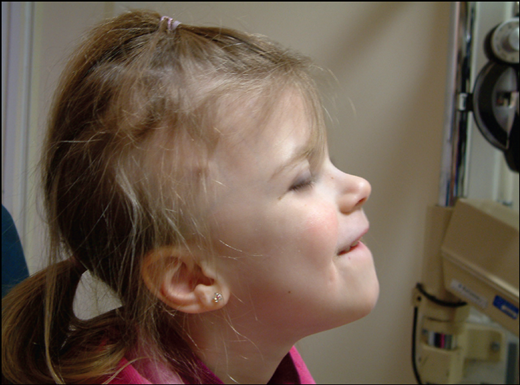
Uma síndrome, que pode ser classificada entre as síndromes neurocutâneas, associa anormalidades do cerebelo (rombencefalossinapsis), dos nervos cranianos (anestesia do trigêmeo) e do couro cabeludo (alopecia). Foi relatado em 11 indivíduos até agora. Outras características observadas nos pacientes foram craniossinostose, hipoplasia médio-facial, opacidades corneanas bilaterais, orelhas de inserção baixa, baixa estatura, comprometimento intelectual moderado e ataxia. Hiperatividade, depressão, comportamento autolesivo e transtorno bipolar também foram relatados.
Introdução
O que você precisa saber de cara
Uma síndrome, que pode ser classificada entre as síndromes neurocutâneas, associa anormalidades do cerebelo (rombencefalossinapsis), dos nervos cranianos (anestesia do trigêmeo) e do couro cabeludo (alopecia). Foi relatado em 11 indivíduos até agora. Outras características observadas nos pacientes foram craniossinostose, hipoplasia médio-facial, opacidades corneanas bilaterais, orelhas de inserção baixa, baixa estatura, comprometimento intelectual moderado e ataxia. Hiperatividade, depressão, comportamento autolesivo e transtorno bipolar também foram relatados.
Escala de raridade
<1/50kMuito rara
1/20kRara
1/10kPouco freq.
1/5kIncomum
1/2k
Encontrou um erro ou informação desatualizada? Sugira uma correção →
Entender a doença
Do básico ao detalhe, leia no seu ritmo
Preparando trilha educativa...
Sinais e sintomas
O que aparece no corpo e com que frequência cada sintoma acontece
Partes do corpo afetadas
+ 12 sintomas em outras categorias
Características mais comuns
Os sintomas variam de pessoa para pessoa. Abaixo estão as 51 características clínicas mais associadas, ordenadas por frequência.
Linha do tempo da pesquisa
Encontrou um erro ou informação desatualizada? Sugira uma correção →
Genética e causas
O que está alterado no DNA e como passa nas famílias
Nenhum gene associado encontrado
Os dados genéticos desta condição ainda estão sendo catalogados.
Diagnóstico
Os sinais que médicos procuram e os exames que confirmam
Tratamento e manejo
Remédios, cuidados de apoio e o que precisa acompanhar
Onde tratar no SUS
Hospitais de referência no Brasil e o protocolo oficial do SUS (PCDT)
🇧🇷 Atendimento SUS — Síndrome Gómez-López-Hernández
Selecione um estado ou use sua localização para ver resultados.
Dados de DATASUS/CNES, SBGM, ABNeuro e Ministério da Saúde. Sempre confirme a disponibilidade diretamente com o estabelecimento.
Pesquisa ativa
Ensaios clínicos abertos e novidades científicas recentes
Pesquisa e ensaios clínicos
Nenhum ensaio clínico registrado para esta condição.
Publicações mais relevantes
Partial Rhombencephalosynapsis Presenting in an Adult with Cerebello-Trigeminal-Dermal Dysplasia.
Gomez-Lopez-Hernandez syndrome (GLHS), also known as cerebello-trigeminal-dermal dysplasia, is a neurocutaneous disorder typically presenting in childhood. GLHS is characterized by rhombencephalosynapsis (RES) and partial alopecia, with or without trigeminal anesthesia. We describe a rare case of GLHS in a paucisymptomatic adult who presented with new-onset seizure-like activity. Magnetic resonance imaging revealed partial midline fusion of the cerebellar hemispheres, incomplete development of vermis, and slight medialization of the dentate nuclei: all consistent with the diagnosis of RES. Radiographic evidence combined with partial alopecia, truncal ataxia, and muscular hypotonia are suggestive GLHS diagnosis. Our report not only highlights the importance of maintaining GLHS on the differential for new-onset seizure-like activity, but also demonstrates how patients with GLHS may be minimally symptomatic and diagnosed in adulthood. The Gomez-Lopez-Hernandez syndrome (GLHS), or cerebellotrigeminal-dermal dysplasia, is a rare condition that affects both the nervous system and the skin. It involves abnormal development of the brain, partial alopecia [thinning of hair], and loss of sensation in the face. One specific brain malformation, called rhombencephalosynapsis (RES), results from abnormal formation of the cerebellum and is seen in GHLS.Both RES and GLHS present early in childhood, and cases presenting later in life are exceptionally rare. Here we describe a young adult with RES and GLHS whose normal development and mild clumsiness eluded recognition by doctors until early adulthood when she presented with a single seizure.
Nanopore long-read sequencing analysis reveals ZIC1 dysregulation caused by a de novo 3q inversion with a breakpoint located 7 kb downstream of ZIC1.
Zic family member 1 (ZIC1), a gene located on chromosome 3q24, encodes a transcription factor with zinc finger domains that is essential for the normal development of the cerebellum. Heterozygous loss-of-function of ZIC1 causes Dandy-Walker malformation, while heterozygous gain-of-function leads to a multiple congenital anomaly syndrome characterized by craniosynostosis, brain abnormalities, facial features, and learning disability. In this study, we present the results of genetic analysis of a male patient with clinically suspected Gomez-Lopez-Hernandez syndrome. The patient displayed multiple congenital abnormalities, including bicoronal craniosynostosis, characteristic facial features, cerebellar malformation with rhombencephalosynapsis, and temporal alopecia, and a de novo inversion of chromosome 3q. Breakpoint analysis using a Nanopore long-read sequencer revealed a breakpoint in the distal centromere of 3q24 located 7 kb downstream of the 3' untranslated region of ZIC1. On the basis of the clinical similarities, we concluded that the abnormalities in this patient were caused by the transcriptional dysregulation of ZIC1. We hypothesize the underlying molecular mechanisms of transcriptional dysregulation of ZIC1 such as the abnormalities in topologically associated domains encompassing ZIC1. This study highlights the usefulness of long-read sequencing in the analysis of de novo balanced chromosomal abnormalities.
The Gomez-Lopez-Hernandez Syndrome: The Contribution of 2 Hispanic Giants of Pediatric Neurology.
The specialty of Pediatric Neurology emerged during the 20th century, a period in which many neurologists played significant roles in revolutionizing this field. Two acclaimed pediatric neurologists of Hispanic origin, Drs Manual Gomez and Arturo Lopez-Hernandez, made substantial contributions to the literature on pediatric neurology. One of their remarkable contributions was their discovery of a new, rare neurocutaneous syndrome with variable phenotype, the Gomez-Lopez-Hernandez syndrome (GLHS). Here, we describe the current understanding of GLHS and the historical background of how 2 celebrated Hispanic pediatric neurologists discovered this rare, sporadic syndrome during a time when there was a limited representation of minorities in the medical profession.
Prenatal Diagnosis of Gómez-López-Hernández Syndrome.
Gómez-López-Hernández syndrome (GLHS), also known as cerebello-trigeminal-dermal dysplasia, is an extremely rare neurocutaneous disease, classically described by the triad of rhombencephalosynapsis (RES), bilateral focal alopecia, and trigeminal anesthesia. The clinical and radiographic spectrum of GLHS is now known to be broader, including craniofacial and supratentorial anomalies, as well as neurodevelopmental issues. Here, we present a case of antenatally diagnosed GLHS with RES, hydrocephaly, and craniofacial anomalies identified on ultrasound (low-set ears with posterior rotation, hypertelorism, midface hypoplasia, micrognathia, and anteverted nares) which were confirmed by autopsy after termination of pregnancy at 23 weeks of gestation. As no known genetic causes have been identified and the classical triad is not applicable to prenatal imaging, prenatal diagnosis of GLHS is based on neuroimaging and the identification of supporting features. In presence of an RES associated with craniofacial abnormalities in prenatal (brachycephaly, turricephaly, low-set ears, midface retrusion, micrognathia), GLHS should be considered as "possible" according to postnatal criteria.
Rhomboencephalosynapsis: Review of the Literature.
Rhombencephalosynapsis is a rare congenital anomaly, characterized by partial or total agenesis of the cerebellar vermis with midline fusion of the cerebellar hemispheres, dentate nuclei, and the superior cerebellar peduncles, creating the distinctive keyhole appearance of the fourth ventricle. Rhombencephalosynapsis can be isolated or can occur in association with other congenital anomalies and syndromes such as Gómez-López-Hernández syndrome (GLHS) or VACTERL: vertebral anomalies (V), anal atresia (A), cardiovascular defects (C), esophageal atresia and/or tracheoesophageal fistula (TE), and renal (R) and limb/radial (L) anomalies. Recent advances in prenatal imaging have resulted in an increasing rate of prenatal diagnosis of abnormalities of the posterior fossa including rhombencephalosynapsis. Patients with rhombencephalosynapsis may present with motor developmental delay, ataxia, swallowing difficulties, muscular hypotonia, spastic quadriparesis, abnormal eye movements, and a characteristic "figure-of-eight" head shaking. Cognitive outcome varies from severe intellectual disability to normal intellectual function. Rhombencephalosynapsis with VACTERL is often associated with severe cognitive disabilities, whereas patients with GLHS may have better cognitive function. The most common associated findings with rhombencephalosynapsis include hydrocephalus, mesencephalosynapsis, holoprosencephaly, pontocerebellar hypoplasia, corpus callosum dysgenesis, and absence of septum pellucidum. Patients can be categorized into 4 groups: 1) rhombencephalosynapsis associated with GLHS; 2) rhombencephalosynapsis with VACTERL; 3) rhombencephalosynapsis with atypical holoprosencephaly, and 4) isolated rhomboencephalosynapsis. The etiology of rhombencephalosynapsis is unknown. Here, we discuss several hypotheses about its etiology.
Publicações recentes
Partial Rhombencephalosynapsis Presenting in an Adult with Cerebello-Trigeminal-Dermal Dysplasia.
Nanopore long-read sequencing analysis reveals ZIC1 dysregulation caused by a de novo 3q inversion with a breakpoint located 7 kb downstream of ZIC1.
The Gomez-Lopez-Hernandez Syndrome: The Contribution of 2 Hispanic Giants of Pediatric Neurology.
Prenatal Diagnosis of Gómez-López-Hernández Syndrome.
Rhomboencephalosynapsis: Review of the Literature.
📚 EuropePMC37 artigos no totalmostrando 24
Partial Rhombencephalosynapsis Presenting in an Adult with Cerebello-Trigeminal-Dermal Dysplasia.
Epilepsy & behavior reportsNanopore long-read sequencing analysis reveals ZIC1 dysregulation caused by a de novo 3q inversion with a breakpoint located 7 kb downstream of ZIC1.
Journal of human geneticsThe Gomez-Lopez-Hernandez Syndrome: The Contribution of 2 Hispanic Giants of Pediatric Neurology.
Journal of child neurologyPrenatal Diagnosis of Gómez-López-Hernández Syndrome.
Fetal diagnosis and therapyRhomboencephalosynapsis: Review of the Literature.
World neurosurgeryGómez-López-Hernández syndrome: a case report on pediatric neurotrophic corneal ulcers and review of the literature.
Journal of AAPOS : the official publication of the American Association for Pediatric Ophthalmology and StrabismusGomez-López-Hernandez syndrome: the triad of cerebello-trigemino-dermal dysplasia.
BMJ case reportsThe Forgotten Phacomatoses: A Neuroimaging Review of Rare Neurocutaneous Disorders.
Current problems in diagnostic radiologyClinical and molecular evaluation of 13 Brazilian patients with Gomez-López-Hernández syndrome.
American journal of medical genetics. Part ATeaching NeuroImages: Trigeminal Ganglia Hypoplasia as Imaging Clue for the Diagnosis of Gómez-López-Hernández Syndrome.
NeurologyA child with rhombencephalosynapsis, agenesis of the trigeminal ganglion and optic coloboma (without alopecia): a variant of the cerebellotrigeminal dermal dysplasia?
Clinical dysmorphologyDevelopmental risk for mood dysregulation in a pediatric case of Gómez-López-Hernández syndrome: Neurocognitive considerations.
Clinical neurology and neurosurgeryDiagnosis of rhomboencephalosynapsis by MRI in a 5-year-old child.
Radiology case reportsGomez-López-Hernández syndrome: A case report with clinical and molecular evaluation and literature review.
American journal of medical genetics. Part AGenetic evaluation including exome sequencing of two patients with Gomez-Lopez-Hernandez syndrome: Case reports and review of the literature.
American journal of medical genetics. Part AMystery Case: Bilateral alopecia as clue to diagnosis of Gomez-Lopez-Hernandez syndrome in a 38-year-old man.
NeurologyUnsolved recognizable patterns of human malformation: Challenges and opportunities.
American journal of medical genetics. Part C, Seminars in medical geneticsCo-occurrence of Gomez-Lopez-Hernandez syndrome and Autism Spectrum Disorder: Case report with review of literature.
Intractable & rare diseases researchCongenital Hydrocephalus: Gómez-López-Hernández syndrome. An underdiagnosed Syndrome. A clinical case.
Revista chilena de pediatriaParieto-occipital alopecia in early infancy mandates cranial imaging.
Clinical dysmorphologyGomez-Lopez-Hernández syndrome: First reported case from the Indian subcontinent.
Intractable & rare diseases researchPERIOPERATIVE CARE OF AN INFANT WITH GOMEZ-LOPEZ-HERNANDEZ SYNDROME.
Middle East journal of anaesthesiologyGómez-López-Hernández Syndrome: A Case With Schizophrenia.
Biological psychiatryGómez-López-Hernández Syndrome: A Rare Cause of Bilateral Nonscarring Alopecia.
Pediatric dermatologyAssociações
Organizações que acompanham esta doença — pra ter apoio e orientação
Ainda não temos associações cadastradas para Síndrome Gómez-López-Hernández.
É de uma associação que acompanha esta doença? Fale com a gente →
Comunidades
Grupos ativos de quem convive com esta doença aqui no Raras
Ainda não existe comunidade no Raras para Síndrome Gómez-López-Hernández
Pacientes, familiares e cuidadores se organizam em comunidades pra compartilhar experiências, fazer perguntas e se apoiar. Você pode ser o primeiro.
Tire suas dúvidas
Perguntas, dicas e experiências compartilhadas aqui na página
Participe da discussão
Faça login para postar dúvidas, compartilhar experiências e interagir com especialistas.
Fazer loginDoenças relacionadas
Doenças com sintomas parecidos — ajudam quem ainda está buscando diagnóstico
Referências e fontes
Bases de dados externas citadas neste artigo
Publicações científicas
Artigos indexados no PubMed ligados a esta doença no grafo RarasNet — título, periódico e PMID direto da fonte, sem intermediação de IA.
- Partial Rhombencephalosynapsis Presenting in an Adult with Cerebello-Trigeminal-Dermal Dysplasia.
- Nanopore long-read sequencing analysis reveals ZIC1 dysregulation caused by a de novo 3q inversion with a breakpoint located 7 kb downstream of ZIC1.
- The Gomez-Lopez-Hernandez Syndrome: The Contribution of 2 Hispanic Giants of Pediatric Neurology.
- Prenatal Diagnosis of Gómez-López-Hernández Syndrome.
- Rhomboencephalosynapsis: Review of the Literature.
Bases de dados e fontes oficiais
Identificadores e referências canônicas usadas para montar este verbete.
- ORPHA:1532(Orphanet)
- OMIM OMIM:601853(OMIM)
- MONDO:0011157(MONDO)
- GARD:229(GARD (NIH))
- Busca completa no PubMed(PubMed)
- Q25324175(Wikidata)
Dados compilados pelo RarasNet a partir de fontes abertas (Orphanet, OMIM, MONDO, PubMed/EuropePMC, ClinicalTrials.gov, DATASUS, PCDT/MS). Este conteúdo é informativo e não substitui avaliação médica.
Conteúdo mantido por Agente Raras · Médicos e pesquisadores podem colaborar
Síndrome Gómez-López-Hernández
📋 Origem dos dados
Esta página agrega dados de fontes públicas e oficiais. Dados sobre cobertura no SUS (PCDT, CEAF) são verificados ativamente por agente proativo (ver badge no infobox). Demais dados têm atribuição de fonte + data da última sincronização — clique para abrir o original.
- Doença rara (ontologia)
- fonte: Orphanet
- Identificador unificado
- fonte: MONDO
- Genética mendeliana
- fonte: OMIM
- Codificação WHO/SUS
- fonte: WHO ICD-10 / DATASUS
- NIH/GARD
- fonte: GARD (NIH)
- Indexação biomédica
- fonte: MeSH (NLM)
- Dado público estruturado
- fonte: Wikidata