
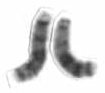
A Monossomia 13q14 é uma síndrome rara que acontece por uma alteração nos cromossomos, causada pela falta de um pedaço (deleção parcial) no braço longo do cromossomo 13. Ela é caracterizada por atraso no desenvolvimento, dificuldade de aprendizado em diferentes níveis, retinoblastoma (um tipo de câncer raro nos olhos) e características físicas diferentes no rosto e na cabeça. Isso inclui, por exemplo, cabeça menor ou mais alongada que o normal, testa alta e larga, sobrancelhas marcadas, lóbulos das orelhas grossos e virados para a frente, nariz curto com a ponte nasal (parte de cima) larga e a ponta arredondada, filtro (o sulco entre o nariz e o lábio superior) proeminente, e boca grande com lábio superior fino e lábio inferior grosso e virado para fora. Outras características relatadas incluem peso alto ao nascer, cabeça maior que o normal, pinealoma (um tipo de tumor na glândula pineal), aumento do fígado, hérnia inguinal e criptorquidia (testículos que não desceram).
Introdução
O que você precisa saber de cara
A Monossomia 13q14 é uma síndrome rara que acontece por uma alteração nos cromossomos, causada pela falta de um pedaço (deleção parcial) no braço longo do cromossomo 13. Ela é caracterizada por atraso no desenvolvimento, dificuldade de aprendizado em diferentes níveis, retinoblastoma (um tipo de câncer raro nos olhos) e características físicas diferentes no rosto e na cabeça. Isso inclui, por exemplo, cabeça menor ou mais alongada que o normal, testa alta e larga, sobrancelhas marcadas, lóbulos das orelhas grossos e virados para a frente, nariz curto com a ponte nasal (parte de cima) larga e a ponta arredondada, filtro (o sulco entre o nariz e o lábio superior) proeminente, e boca grande com lábio superior fino e lábio inferior grosso e virado para fora. Outras características relatadas incluem peso alto ao nascer, cabeça maior que o normal, pinealoma (um tipo de tumor na glândula pineal), aumento do fígado, hérnia inguinal e criptorquidia (testículos que não desceram).
Escala de raridade
<1/50kMuito rara
1/20kRara
1/10kPouco freq.
1/5kIncomum
1/2k
Encontrou um erro ou informação desatualizada? Sugira uma correção →
Entender a doença
Do básico ao detalhe, leia no seu ritmo
Preparando trilha educativa...
Sinais e sintomas
O que aparece no corpo e com que frequência cada sintoma acontece
Partes do corpo afetadas
+ 20 sintomas em outras categorias
Características mais comuns
Os sintomas variam de pessoa para pessoa. Abaixo estão as 60 características clínicas mais associadas, ordenadas por frequência.
Linha do tempo da pesquisa
Encontrou um erro ou informação desatualizada? Sugira uma correção →
Genética e causas
O que está alterado no DNA e como passa nas famílias
Genes associados
1 gene identificado com associação a esta condição. Padrão de herança: Not applicable.
Tumor suppressor that is a key regulator of the G1/S transition of the cell cycle (PubMed:10499802). The hypophosphorylated form binds transcription regulators of the E2F family, preventing transcription of E2F-responsive genes (PubMed:10499802). Both physically blocks E2Fs transactivating domain and recruits chromatin-modifying enzymes that actively repress transcription (PubMed:10499802). Cyclin and CDK-dependent phosphorylation of RB1 induces its dissociation from E2Fs, thereby activating tra
NucleusCytoplasm
Childhood cancer retinoblastoma
Congenital malignant tumor that arises from the nuclear layers of the retina. It occurs in about 1:20'000 live births and represents about 2% of childhood malignancies. It is bilateral in about 30% of cases. Although most RB appear sporadically, about 20% are transmitted as an autosomal dominant trait with incomplete penetrance. The diagnosis is usually made before the age of 2 years when strabismus or a gray to yellow reflex from pupil ('cat eye') is investigated.
Variantes genéticas (ClinVar)
1.289 variantes patogênicas registradas no ClinVar.
Vias biológicas (Reactome)
18 vias biológicas associadas aos genes desta condição.
Diagnóstico
Os sinais que médicos procuram e os exames que confirmam
Tratamento e manejo
Remédios, cuidados de apoio e o que precisa acompanhar
Onde tratar no SUS
Hospitais de referência no Brasil e o protocolo oficial do SUS (PCDT)
🇧🇷 Atendimento SUS — Monossomia 13q14
Selecione um estado ou use sua localização para ver resultados.
Dados de DATASUS/CNES, SBGM, ABNeuro e Ministério da Saúde. Sempre confirme a disponibilidade diretamente com o estabelecimento.
Pesquisa ativa
Ensaios clínicos abertos e novidades científicas recentes
Pesquisa e ensaios clínicos
Nenhum ensaio clínico registrado para esta condição.
Publicações mais relevantes
First report on chromosomal abnormalities in Eastern Morocco: Identification of a new case of a de novo partial trisomy 13q using single-nucleotide polymorphism array.
Chromosomal abnormalities are the main cause of birth defects, intellectual disability, and miscarriages. They contribute to significant human morbidity and infant mortality. Here we report for the first time the chromosomal abnormalities encountered in the population of Eastern Morocco. Furthermore, we describe a new case of a de novo partial trisomy 13q combined with a terminal deletion in an 11-day-old girl. From November 2015 to March 2022, 195 patients from the BRO Biobank who were clinically suspected of having chromosomal abnormalities were referred to the cytogenetics laboratory of the Genetics Unit of the Faculty of Medicine and Pharmacy of Oujda for cytogenetic study. Karyotyping analysis was performed on peripheral blood samples using standard R banding techniques. To identify single-nucleotide polymorphism (SNP) and copy number variants (CNVs), Illumina SNP array was used. Among 195 studied cases, 32 (16.4 %) had abnormal karyotypes, of which 12 cases had numerical aberrations while 20 cases had structural aberrations. The most common numerical aberrations were Turner syndrome and Down syndrome followed by Edward, Patau, and Klinefelter syndromes. For structural aberrations, translocations were the most common, followed by derivative chromosomes, inversions, deletions, and an addition on chromosome 13 identified in an 11-day-old girl. To further characterize this addition, SNP array was carried out and revealed a 58.8-Mb duplication in region 13q14.3q34 associated with a 1-Mb deletion in region 13q34. Follow-up parental chromosomes analysis showed normal karyotypes for the parents, confirming that this partial trisomy 13q was de novo. Comparison of the phenotype associated with this novel duplication on chromosome 13q with those previously reported confirmed the considerable variability in the phenotype of the patients with partial trisomy 13q. This study provided the first report on chromosomal abnormalities in Eastern Morocco and it enriched the phenotype spectrum of partial trisomy 13q and further confirmed the genotype-phenotype correlations. Furthermore, these findings justify the need to set up microarray comparative genomic hybridization techniques in Morocco for better genetic diagnosis.
Complex translocation leading to13q interstitial deletion in a Moroccan child with retinoblastoma and intellectual disability.
Retinoblastoma (RB) is the most common malignant intraocular tumor in children; it affects their eyes often even prenatally. RB may be sporadic or familial, due to germinal mutation in RB1 gene or by abnormal chromosomal abnormalities involving RB1 gene, located in 13q14. Monosomy of subband 13q14 as a partial deletion can also be responsible for RB with additional symptoms. The latter may be RB associated with psychomotor retardation, macrocephaly, broad forehead, thick earlobes, and bulbous nose. We present here the case of a boy from a consanguineous marriage with bilateral retinoblastoma, intellectual disability and facial dysmorphic features. Classical and molecular cytogenetics were used to recognize genotype-phenotype association. The karyotype showed a three way translocation involving chromosomes 5, 12 and 13. Further molecular cytogenetics analysis revealed a deletion of 13q14 involving the tumor suppressor gene RB1. This case highlights the impact of classical and molecular cytogenetics in diagnosis of rare genetic syndromes and for the genetic counselling of patients and their families. Pure molecular karyotyping analyses would miss the underlying chromosomal mechanism leading to the rearrangement.
13q Deletion Syndrome Involving RB1: Characterization of a New Minimal Critical Region for Psychomotor Delay.
Retinoblastoma (RB) is an ocular tumor of the pediatric age caused by biallelic inactivation of the RB1 gene (13q14). About 10% of cases are due to gross-sized molecular deletions. The deletions can involve the surrounding genes delineating a contiguous gene syndrome characterized by RB, developmental anomalies, and peculiar facial dysmorphisms. Overlapping deletions previously found by traditional and/or molecular cytogenetic analysis allowed to define some critical regions for intellectual disability (ID) and multiple congenital anomalies, with key candidate genes. In the present study, using array-CGH, we characterized seven new patients with interstitial 13q deletion involving RB1. Among these cases, three patients with medium or large 13q deletions did not present psychomotor delay. This allowed defining a minimal critical region for ID that excludes the previously suggested candidate genes (HTR2A, NUFIP1, PCDH8, and PCDH17). The region contains 36 genes including NBEA, which emerged as the candidate gene associated with developmental delay. In addition, MAB21L1, DCLK1, EXOSC8, and SPART haploinsufficiency might contribute to the observed impaired neurodevelopmental phenotype. In conclusion, this study adds important novelties to the 13q deletion syndrome, although further studies are needed to better characterize the contribution of different genes and to understand how the haploinsufficiency of this region can determine ID.
Myofibroblastoma of the breast showing rare palisaded morphology and uncommon desmin- and CD34-negative immunophenotype: A case report.
Myofibroblastoma is a rare benign mesenchymal tumor typically arising in the breast. We report a diagnostically challenging case of myofibroblastoma of the breast showing a rare palisaded morphology and an uncommon desmin- and CD34-negative immunophenotype. A 73-year-old man underwent an excision for an 8 mm-sized breast mass. Histology revealed that the tumor was composed of fascicles of bland spindle cells showing prominent nuclear palisading and Verocay-like bodies. First, schwannoma, malignant peripheral nerve sheath tumor, and synovial sarcoma were suspected given the palisaded morphology. However, none of them was confirmed by immunohistochemical or molecular analyses. Next, a palisaded variant of myofibroblastoma was suspected by the morphology and coexpression of estrogen, progesterone and androgen receptors, BCL2 and CD10 in immunohistochemistry. However, the key diagnostic markers, desmin and CD34, were both negative. Finally, the diagnosis of myofibroblastoma was confirmed by detecting RB1 loss in immunohistochemistry and monoallelic 13q14 deletion (RB1 and FOXO1 loss) by fluorescence in situ hybridization assay. For the correct diagnosis of myofibroblastoma, it is important for pathologists to recognize the wide morphological spectrum, including a palisaded morphology, and the immunophenotypical variations, including desmin- and CD34-negative immunophenotypes, and to employ a comprehensive diagnostic analysis through combined histological, immunohistochemical and molecular evaluations.
Characterization of CD34-deficient myofibroblastomas of the breast.
Mammary myofibroblastoma is a benign spindle cell tumor that can show variable morphologic patterns and lines of differentiation. Diffuse and strong immunohistochemical expression of CD34 is a characteristic of myofibroblastoma and greatly aids in confirming a diagnosis. Myofibroblastoma has been shown to belong to a family of CD34-positive tumors with similar morphology that show a deletion of 13q14, which includes RB1 and FOXO1A genes. The purpose of this study was to better understand a subset of myofibroblastomas that is characteristically CD34-deficient by immunohistochemistry. Six myofibroblastomas were studied by immunohistochemistry and fluorescence in situ hybridization (FISH) for RB1. Patients included five women and one man, aged 41-85 years (median, 52.5). Tumor size ranged from 0.4 to 1.5 cm (mean, 0.95). Tumors showed spindle cell morphology in five cases and epithelioid features in one case. Two tumors showed complete lack of CD34 staining. The remaining showed weak focal or weak patchy CD34 staining. Dichotomous staining was seen in one case with CD34-positive spindle cell areas and CD34-negative myxoid areas. All six tumors showed ER expression, five of six showed desmin expression, and four of six showed bcl-2 positivity. Two of six (33.3%) tumors showed deletion of RB1 by FISH, including one that showed loss of Rb immunohistochemical staining. Myofibroblastomas uncommonly show absent/focal expression of CD34, a potential diagnostic pitfall, particularly in small samples. Characteristic staining with other immunohistochemical markers is seen which can aid in confirming the diagnosis. These tumors may harbor deletion of RB1, similar to CD34-positive myofibroblastomas, and this deletion may not correlate with loss of Rb by immunohistochemistry.
Publicações recentes
Ultrasound-guided nusinersen administration for spinal muscular atrophy patients with severe scoliosis: an observational study.
Integrating ontologies of rare diseases and radiological diagnosis.
📚 EuropePMCmostrando 11
First report on chromosomal abnormalities in Eastern Morocco: Identification of a new case of a de novo partial trisomy 13q using single-nucleotide polymorphism array.
Archives de pediatrie : organe officiel de la Societe francaise de pediatrieComplex translocation leading to13q interstitial deletion in a Moroccan child with retinoblastoma and intellectual disability.
Ophthalmic genetics13q Deletion Syndrome Involving RB1: Characterization of a New Minimal Critical Region for Psychomotor Delay.
GenesMyofibroblastoma of the breast showing rare palisaded morphology and uncommon desmin- and CD34-negative immunophenotype: A case report.
Pathology international[Clinical Features and Response to Treatment in Newly Diagnosed Multiple Myeloma Patients with Deletion 17P].
Zhongguo shi yan xue ye xue za zhiCharacterization of CD34-deficient myofibroblastomas of the breast.
The breast journalLoss of a chromosomal region with synteny to human 13q14 occurs in mouse chronic lymphocytic leukemia that originates from early-generated B-1 B cells.
LeukemiaCase report: Concomitant Chronic Lymphocytic Leukaemia and Cytogenetically Normal de novo Acute Leukaemia in a Patient.
Annals of clinical and laboratory scienceNarrowing the critical region for overgrowth within 13q14.2-q14.3 microdeletions.
European journal of medical geneticsGenomic and Clinicopathologic Features of Primary Myelofibrosis With Isolated 13q Deletion.
Clinical lymphoma, myeloma & leukemiaPostnatal diagnosis of constitutive ring chromosome 13 using both conventional and molecular cytogenetic approaches.
Genetics and molecular research : GMRAssociações
Organizações que acompanham esta doença — pra ter apoio e orientação
Ainda não temos associações cadastradas para Monossomia 13q14.
É de uma associação que acompanha esta doença? Fale com a gente →
Comunidades
Grupos ativos de quem convive com esta doença aqui no Raras
Ainda não existe comunidade no Raras para Monossomia 13q14
Pacientes, familiares e cuidadores se organizam em comunidades pra compartilhar experiências, fazer perguntas e se apoiar. Você pode ser o primeiro.
Tire suas dúvidas
Perguntas, dicas e experiências compartilhadas aqui na página
Participe da discussão
Faça login para postar dúvidas, compartilhar experiências e interagir com especialistas.
Fazer loginDoenças relacionadas
Doenças com sintomas parecidos — ajudam quem ainda está buscando diagnóstico
Referências e fontes
Bases de dados externas citadas neste artigo
Publicações científicas
Artigos indexados no PubMed ligados a esta doença no grafo RarasNet — título, periódico e PMID direto da fonte, sem intermediação de IA.
- First report on chromosomal abnormalities in Eastern Morocco: Identification of a new case of a de novo partial trisomy 13q using single-nucleotide polymorphism array.Archives de pediatrie : organe officiel de la Societe francaise de pediatrie· 2024· PMID 38262863mais citado
- Complex translocation leading to13q interstitial deletion in a Moroccan child with retinoblastoma and intellectual disability.
- 13q Deletion Syndrome Involving RB1: Characterization of a New Minimal Critical Region for Psychomotor Delay.
- Myofibroblastoma of the breast showing rare palisaded morphology and uncommon desmin- and CD34-negative immunophenotype: A case report.
- Characterization of CD34-deficient myofibroblastomas of the breast.
- Ultrasound-guided nusinersen administration for spinal muscular atrophy patients with severe scoliosis: an observational study.
- Integrating ontologies of rare diseases and radiological diagnosis.
Bases de dados e fontes oficiais
Identificadores e referências canônicas usadas para montar este verbete.
- ORPHA:1587(Orphanet)
- OMIM OMIM:613884(OMIM)
- MONDO:0013481(MONDO)
- GARD:16570(GARD (NIH))
- Variantes catalogadas(ClinVar)
- Busca completa no PubMed(PubMed)
- Q21154056(Wikidata)
Dados compilados pelo RarasNet a partir de fontes abertas (Orphanet, OMIM, MONDO, PubMed/EuropePMC, ClinicalTrials.gov, DATASUS, PCDT/MS). Este conteúdo é informativo e não substitui avaliação médica.
Conteúdo mantido por Agente Raras · Médicos e pesquisadores podem colaborar
Monossomia 13q14
📋 Origem dos dados
Esta página agrega dados de fontes públicas e oficiais. Dados sobre cobertura no SUS (PCDT, CEAF) são verificados ativamente por agente proativo (ver badge no infobox). Demais dados têm atribuição de fonte + data da última sincronização — clique para abrir o original.
- Doença rara (ontologia)
- fonte: Orphanet
- Identificador unificado
- fonte: MONDO
- Genética mendeliana
- fonte: OMIM
- Codificação WHO/SUS
- fonte: WHO ICD-10 / DATASUS
- CID-11 (futuro)
- fonte: WHO ICD-11
- NIH/GARD
- fonte: GARD (NIH)
- Indexação biomédica
- fonte: MeSH (NLM)
- Dado público estruturado
- fonte: Wikidata